Social Media

The rise of women’s indecency on social media

By Abbas Datti

Both Islamic and Hausa traditions instruct women to cover up their bodies and guard against indecency when it comes to dressing. But sadly, in the modern age of social media, the issue of indecent exposure of bodies by women on TikTok, Instagram, Facebook and other social media platforms has become a problematic issue.

It is sad to note that the ease with which social media allows people to post whatever content they wish to share has created and exposed potential Nicki Minajs and Rahama Sadaus living in the comfort zones of our different homes.

While many women use social media platforms to express themselves and market their commodities for trade, some choose to show their bodies for public viewing. One wonders how this Indecent exposure emerged, raising questions about the potential consequences and societal well-being

We must blame Hausa Kannywood actresses and Nollywood celebrities for promoting this indecency to boost their social media handles and gather many more followers. It has now become a usual trend, particularly on TikTok, to see girls of different age brackets dancing and shaking their asse, exposing their naked cleavages, thereby promoting provocative sexual desires in our youths. 

The portrayal of the woman’s body has recently found its way into public spaces through various social media platforms, prompting discussions on one’s reputation and its impacts on younger audiences.

This phenomenon has also sparked discussions on the responsibility of social media platforms to regulate content, with calls for stricter guidelines to maintain a balance between freedom of expression and preventing the normalisation of explicit content.

As conversations evolve, finding common ground that respects individual expression while considering the broader societal impact remains challenging. The digital age demands ongoing regulations about the changing norms and ethics of online behaviour, urging individuals, influencers, and platforms to reflect on their roles in shaping the online landscape.

Abbas Datti writes from Kano via abbasdatti448@gmail.com.

Celebrity status and its impact on the millennials

By Al-Jannat Mohammed

The distinction between one’s private and public life is becoming more and more hazy in a time when social media dominates. Celebrities, who were formerly admired for their abilities and accomplishments, now have to navigate a world in which the public is interested in every aspect of their lives.

The younger generation has been influenced by this culture of perpetual exposure, as they readily divulge personal information online, undermining the idea of privacy. The story of Nigerian actor, Yul Edochi, and his second wife is a compelling illustration of this phenomena, and offers a prism through which to consider the effects of this invasion of privacy.

Without a doubt, the emergence of social media has completely changed how people communicate, making it possible to share information instantly with anyone on the planet. The loss of personal boundaries that results from people voluntarily disclosing their private lives to the world is the drawback, though.

Because they are in the public glare, celebrities have been hardest hit by this cultural change. For example, Yul Edochi’s second marriage turned into a social media show, with every detail of their union, family dynamics, and personal hardships visible to everybody with an internet connection.

Beyond just celebrities, this tendency affects the younger generation as well, who have grown up in a time of continual communication. Many people reveal personal information about themselves online because they want to be validated and accepted by others.

The younger generation frequently compromises privacy in the chase of likes, comments and virtual acceptance, whether it be for relationship milestones or personal struggles. This raises questions about how such behaviour may affect people’s general well-being, self-esteem and mental health in the long run.

Although the loss of privacy is a complicated problem with wide-ranging effects on the society, there may be ways to lessen its effects. Above all, it is critical to teach the next generation the value of establishing and upholding limits. Giving people the skills to decide what parts of their lives are best kept private helps them feel more in charge of their own story.

Prioritising digital literacy education is important, with a focus on the lasting nature of online content and the possible repercussions of excessive sharing.

Social media sites can also be extremely important in encouraging responsible sharing. Pop-up reminders and privacy checklists are two examples of features that can be implemented to encourage users to reconsider sharing sensitive information and prevent impulsive sharing.

Platforms should also make investments in strong privacy settings so that users may decide who can see their content. Encouraging social media usage in a way that is balanced and respects one’s personal limits sends a strong message about how important privacy protection is.

In the end, the degradation of privacy in the era of celebrity culture is a complex problem that calls for cooperation from people, organisations, and digital platforms. Fostering a healthier connection with the digital world requires finding a balance between the advantages of connectedness and the maintenance of personal boundaries.

We may endeavour to create a culture that values and respects privacy in an increasingly connected world by embracing responsible sharing behaviours, encouraging digital literacy, and setting positive examples.

Al-Janat Mohammed is an NYSC corps member with PRNigeria in Abuja

The hidden reality of life in Europe

By Aminu Mohammed

This article was inspired by a recent post by Dr Muhsin Ibrahim on Facebook regarding money belonging to someone named “Hassan Idris” sent through his PayPal account. Muhsin made the post asking the person to identify himself by sending him a message. However, soon after, he was inundated with messages from people seeking help in various forms. Some even asked him for money, assuming he had won a lottery or had ample cash stocked somewhere.

This issue not only worried me but also made me sad about the attitude of our youths. So that you know, I also live in Germany. I am yet to fathom the reason for the sudden influx of requests based on a Facebook post. Is it desperation, greed, ignorance, or the belief that money grows on trees in Europe?

I have thought about this issue and wondered why this behaviour occurred. Is it that the economic situation in the country has impoverished a large segment of society, making people desperate and in dire need of free money? What could be the reason behind this attitude?

I want to make it clear that I am aware of the difficult economic situation in Nigeria due to inflation and other factors. I also understand that there are genuine people who are in dire need of help and who reach out to Muhsin for support. However, I want people to know that just because Muhsin lives and works in Germany, it does not mean he is rich.

The Untold Story About Europe

Europe is often seen as a paradise with streets paved with gold and abundant wealth. However, the reality is different. Life in Europe is not as easy as it seems. Homelessness and begging are common in countries such as France, Italy, the Netherlands and the United Kingdom. In London alone, at least 167,000 people are homeless due to the high cost of living. Comparably, a great number of immigrants, among them Africans, are stuck in Europe and unable to return home because they are afraid of what is ahead.

 Although the standard of living is high in Germany and the government provides stipends for jobless citizens, there are still poor people, beggars and homeless people in the country. In my former city, Kiel, I have seen people sleeping in public buildings and bank corridors, even during the harsh winter months. I recently saw a naked woman amongst the homeless folks at the Hamburg Central Station, probably suffering from mental illness. It was heartbreaking.

Despite these challenges, there are still opportunities for people with relevant skills to excel and succeed in Europe. Even without a university education, one can live a good life in Germany by being disciplined and hardworking.

Rising Living Expenses

The ongoing war between Russia and Ukraine has brought about significant economic changes in Europe, particularly in Germany. As a result of Germany’s reliance on Russia for affordable energy, particularly gas, to power its numerous industries, the country has been severely impacted. Germany had to look for alternative gas sources, mainly from Norway and the Middle East. This has led to an increment in energy costs and subsequently affected the cost of living and production.

The high cost of living has affected many families, with numerous individuals struggling to pay their bills monthly. The rat race has worsened, and many people live paycheck to paycheck. Groceries and the prices of other goods have doubled or, in some cases, even more. This is in addition to an increase in rent, energy, water bills, etc.

2024 Goals

It is an incredible experience to step out of your comfort zone and explore new places in life. However, before travelling to any country, please conduct thorough research and set reasonable expectations. Life is not always easy, but you can succeed with diligence, perseverance, and hard work.

Set your goals for this year, and take concrete steps to achieve them. Additionally, aim to acquire new digital skills to increase your earning potential. I wish you the best as you enter the New Year with renewed energy and determination.

Aminu Mohammed wrote this article from Ingolstadt, Germany. He can be reached at gravity23n@gmail.com.

What are you bringing to the table: Reflections

By Abdelghaffar Amoka

I have read comments from some ladies on social media that they can’t marry a man who earns less than a certain value, for example, N300k. I have no issue with setting such a minimum. I am of the school of thought that a man should be able and ready to take care of a woman before making that marriage decision. It is okay to set a minimum amount that the man must bring to the table. But that means you must have also set a minimum you are bringing to the table. So, what are you bringing to the table?

Don’t tell me about your body because we all have a body we are bringing to the table. Of course, your fine face and body shape may be the first point of attraction to a man. He will be wow! See beautiful face! See fine shape! Lower your gaze, bro. But that is just a motivation. A man needs more than a pleasing face in a woman/wife to keep him going. In the words of Jim Ryun, “Motivation gets you started, but habit keeps you going”. There must be something to keep you going, or else it crashes. 

In 2012, shortly after returning from the UK, I got into a talk with a lady I really liked. She told me she, too,really liked me, but her feelings for me were not enough to survive a lifetime relationship. I was happy with her honest submission. That was the most honest response I have got from a lady. So, both parties must bring something that will keep a lifetime relationship. That thing is most likely beyond your pretty face and his 300k. 

There are different kinds of wives. The normal wife and the Trophy wife. Do you want to be a Trophy wife? Your body is all that is needed to be. You can be brainless; it doesn’t matter; your value is in your physical appearance. You are just a status symbol who has to ensure a flawless look to enhance the social status of your husband. He sure knows you need that money to spend on your looks to stay attractive to him and the clients you are to impress. He will make provision for that. They (Trophy wives) seem to serve the same purpose as models. 

For the normal wife, your value is not your physical appearance but your personality. The same personality that made you feel he would be a great husband and father to your kids. Husband and wife are full-fledged partners in making their home happy and prosperous. They are supposed to be loyal and faithful to one another and genuinely interested in each other’s welfare and the welfare of their children. A woman is expected to exercise a humanising influence over her husband and to soften the sternness inherent in his nature.

While a fine face could be the motivation for a lifetime relationship, we are expected to bring our heads to the table. We should be able to share ideas. He should be somebody to look up to and be able to be your guide. He should also be able to tell you the ideas in his head for your input and criticism. You should be his second opinion. You should be able to help him grow his ideas.

A man is enjoined to also educate and develop the women in his care so that they cultivate the qualities in which they, by their very nature, excel. You should be willing for that development. You should be able to transform your ideas into a product, even from your kitchen, to support yourself. He will want to come home and be told: “Sweetheart, I have done so and so to transform the 100k you gave me the other time to 120k and have got so, and so plans to re-invest it for more gain”. He will be like, Yeah! That is my wife.

He may not need the money as he is responsible for taking care of you. But you should be able to support yourself in some things. You can also voluntarily support him without asking. Marriage is about growing a family. It’s not just about bringing a minimum of N300k to the table. The N300k may still not be enough if she doesn’t have what it takes to manage it. It is having what it takes to help him manage and maximise his resources for the family. 

You are not a commodity. You are priceless. Stop objectifying yourself. Your worth and potential are in your head. It does not lie on that flaunted sexualised fatty part of the body. Your value is unquantifiable. Stop putting a price tag on yourself. Not even the pleasure derived from talking with each other can be priced. No amount of money can buy that. Take a lesson from those humble, beautiful women and wives who are professionals and entrepreneurs. There are a number of them that I admire every day.

To brothers, if you are looking for a Trophy wife, ensure you have the cash to maintain the trophy. Her flawless look must be kept intact against all odds. 

Dear friends, be yourself and listen to yourself. Relationships are not destined to be or not to be. They work because the people involved find something interesting about themselves and are willing to make sacrifices to make it work. I hope to write about my mother someday. Don’t live by social media. Don’t get carried away by social media euphoria. Don’t let some frustrated individuals on the net confuse you. The value of family is priceless. Let’s bring our heads to the table to build that small empire for a beautiful family. 

Abdelghaffar Amoka Abdelmalik, PhD, wrote from Ahmadu Bello University, Zaria. He can be reached via aaabdelmalik@gmail.com.

A serious humour: Bello Galadanchi’s comedy skit for social commentary

By Sa’id Sa’ad

Earlier this year – when Bello Galadanci’s videos were becoming popular on digital platforms – a colleague posted a video of his skit on his WhatsApp status. From what might be a simple curiosity, I asked him if he knew who the person was – of course, expecting him to at least know a bit – but he replied that he did not know him beyond his not-so-much-funny recent “comedy skits.”

That was weeks after the publication of my recent essay, A Crack on Hadiza Gabon’s Wall: Humanizing Northern Nigeria Storytelling, where I described what the show meant to storytelling in Northern Nigeria and the impact of what I called “hypocritical denial and intentional lack of acknowledgement” from the northern community. As it has always been, I bumped into a tweet where a young person from “northern” Nigeria condemned the entire comedy skits made by Bello Galadanci. If I weren’t from the North, I would have wondered why Northern consumers always find a way to devalue Northern content creators in whatever discipline. But I didn’t, because I understood the game. So. Well. It is nothing to raise a brow at, mainly because, as creatives, criticism as such is often expected, “Thanks for the PR” was the short response Galadanchi gave him.

Even with the recent trooping of young creators into the skit-making industry in Nigeria, majorly due to its financial and digital-popularity lakes tunnelled by TikTok, Instagram and YouTube, one could guess accurately – as most other useful or even useless “developmental” growth – that adoption of content creation as a business by young people in Northern Nigeria, came very late, as well. It is difficult to mention by name – the northern skit creators who began early – and still maintain the same consistency as one would mention Taoma or Aproko Doctor or Mr. Macaroni from the South. Only Galadanchi and a few others still retain their craft consistently.

Many young people in northern Nigeria continue to comment, criticise, or label Bello Galadanchi and his skits in multiple ways.

Aside from the unpopular northern Nigeria population that perceives his skit as the “working-for-the-white” theory (or the painting north black belief), and the many who – due to educational standards and exposure – fail to comprehend the satirical nature of his contents, most of those who do not find him funny do so due to Broda-Shaggying or Sabinufying Galadanchi’s skit.

Unlike most skit makers in Nigeria, whose focus is majorly only on sowing laughter and entertainment into the market and reaping their golds, built on creative juice – Galadanchi’s contents are meant for social and political commentary using humour and satire. Backed by journalism, creative, and educationalist careers, it might seem almost impossible for Galadanchi – even by himself – to create non-questionable or fluid content only meant for laughter because creatives are muscled with the hunger to correct and change using their art. His could be simplified as addressing serious problems without being too serious.

Therefore, this makes it difficult for those Broda-Shaggying and Sabinufying him to comprehend the content as, thus, they expect a consciously endowed full-length comedy. I don’t mean to belittle content created by skit makers whose conscious aim is to create a hundred-percent comedy piece. However, expecting an all-comedy-induced piece from a skit maker whose purpose is challenging social and political ills using humour could be as good as expecting something from nothing.

While writing this essay, I shared on WhatsApp status a short clip from an interview Bello Galadanchi granted CGTN where he sat on stairs with three other Chinese, in a swagger-spirited looks with polished accent and blonde hair. Most GenZ’s (respectfully) responded to have known him only through his comedy and never “expected” him to be this “polished”, so far away from what they expected Dan Bello (his character) to be.

That means most of those who denigrate his content would have been from their “expected lens” through which they measure him to be. As argued in my previous essay above – could this also be what I called “hypocritical denial and intentional lack of acknowledgement” of the northern population for contents and creators coming from the north? Because, of course, what Bello Galandanchi is doing for northern Nigeria-specific social and political issues is what Aproko Doctor is exactly doing for Nigeria’s health sector and health-related issues.

Though satire could emerge in professional, amateur, elitist, and popular forms, those who do not comprehend his satire might also be due to their level of comprehension rather than the perceived educational standard or exposure. However, I believe both play a role here. Of course, satire is meant to use humour and irony to criticise, as in the case of the Nigerian writer Elnathan John with his famous book, Be(com)ing Nigerian. However, because Galadanci focuses on the “North”, he is quickly labelled with the “working-for-the-white theory”.

Perhaps if Elnathan’s book was a digital piece as Galadanci’s – and produced in the same form and language – the same label could have been blanketed for him, too. Sometimes, the theory sounds a lot like a comedy skit as well because even a deported northerner fighting the cause of his people – in any way different from the (usual) northern norms – would be considered brainwashed to work for the whites.

More so, those who do not comprehend the satire in the contents are often blindfolded from seeing the patriotism in these pieces. If not for a deep love for a people, I wonder how one would continue to create these provocative contents that question deep political ills in the region. While also soaking insults from young people in the same region who barely understood the depth of what his craft was uprooting.

However, looking at his pieces of art critically (beyond Broda-Shaggying them), how they are deeply immersed in satire and sheer creativity, one could vividly tell how varying it is from the contents created by other skit makers. If other skit makers called theirs “contents”, a creative could easily describe Galadanchi’s as a “piece of art”. The beauty in the work is so immense that one could smell creative fragrances all over the place.

Imagine if the digital youths in the north focus on – if not creating – promoting creators from the region rather than policing social media in the holy name of the north. Imagine if we all question the system in the individual creative juices deposited in us. Imagine if we learn to place a market value on the creators and contents from the north rather than wasting our time watching these wayward girls crowd-chasing nonsense on TikTok in Hausa and serving them to your screen back-to-back. Imagine if we focus on the problems rather than those who help us understand the problem. Imagine if we don’t call for the heads of those who create alphabets to remind us of where we are.

Galadanchi didn’t just find questioning the ill social and political system for Nigerians in Nigeria. He has lived with the system, experienced the system and carried dozens of scars from the system to wherever the world took him.

If these pieces of art are what come out from creatives whom the ill Nigerian system has wounded, then very soon, the Bello Galadanchi in all of us will prevail.

Sa’id Sa’ad is a Nigerian writer, poet, and playwright from Maiduguri. He won the Peace Panel Short Story Prize 2018 and the NFC Essay Prize 2018. He tweets @saidsaadwrites and can be reached directly via saidsaadabubakar@gmail.com.

One life, one liver: Hello North, a hero has fallen – Adieu Dr Tijjani Ibrahim

By Fadhila Nuruddeen Muhammad

The journey towards becoming a doctor often begins in childhood, driven by a deep desire to help others and positively impact people’s lives. For many, like myself, the path may take unexpected turns, leading to different callings. I recall my childhood fascination with medicine, even playfully emulating the role of a doctor in my school days, using improvised tools such as cloth face masks and hand gloves to “perform surgery” on classmates’ pens. I’d then transfer the ink from one tube to another, all to save my classmates from running out of ink. Life has a way of guiding us, and for me, that path led to journalism.

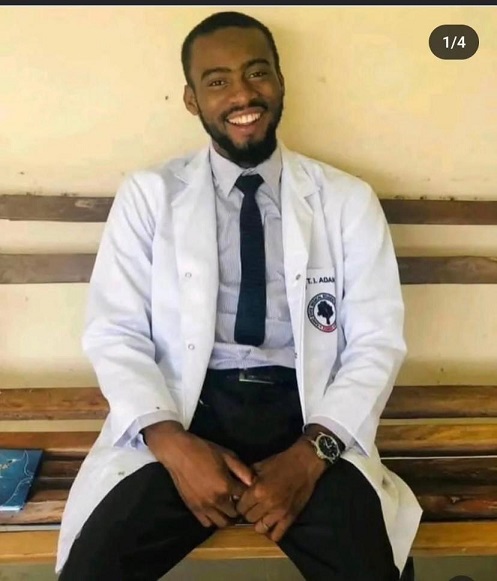
Tijjani Ibrahim, however, followed his childhood passion to become a committed and dedicated young medical doctor. His journey was filled with promise, but it took an unfortunate turn when he was diagnosed with advanced Chronic Liver Disease, Liver Cirrhosis, a consequence of Hepatitis B Viral Infection in June 2023.

Dr Aisha Danbatta, a medical consultant at Murtala Muhammad Specialist Hospital, explained Hepatitis B as a global health challenge that targets the liver, causing both acute and chronic illnesses. “This virus can be transmitted through various means, such as from mother to child, unscreened blood transfusions, exposure to contaminated materials, sexual contact with an infected partner, and even through saliva. Unlike HIV, Hepatitis B has a longer lifespan, making it easier to transmit.”

Dr Danbatta emphasised the prevalence of undiagnosed cases due to a lack of immunisation, leaving many unaware of their condition. Those diagnosed often struggle to afford vital tests like viral load measurements, which determine the quantity of the virus in the blood and assess the extent of liver damage. Physical examinations, ultrasounds, and fibroscans are also crucial in evaluating liver fibrosis and scarring monitoring the progression of the disease.

Dr Tijjani was first at the National Hospital, Abuja, where he was doing his house job and diagnosed with Liver Cirrhosis at the same hospital in June this year. The cost of his treatment was quite high, and he could not afford it. The National Hospital Abuja could only support his medical bills by creating an official memo. He was later transferred to Aminu Kano Teaching Hospital in Kano.

Hamza Danyaro, a friend of the late Dr Tijjani Ibrahim, explained that “his return to Kano was motivated by the hope that the National Medical Association (NMA) Kano State chapter could provide support. However, it was revealed that to benefit from their assistance, he needed to complete his National Youth Service Corps (NYSC), pay his dues, and work for at least a month or two before becoming eligible.”

“Tijjanii was not strong enough to go through these. Instead, we rallied to seek help from dignitaries such as politicians, the House of Representatives members of his local government in Kumbotso, and organisations. Unfortunately, the lengthy protocols inherent in today’s politics prevented direct outreach,” Danyaro added.

Tijjani was left with no other option than to seek funds. His friends organised the fundraising. The campaign was expected to raise a sense of urgency and necessity to help support a young medical doctor with funds to support his medical bills. This kind of transparency can prompt people to contribute to the cause. But only a tiny amount was raised after several days of campaigns.

Fauziyya D. Sulaiman, a philanthropist with a heart of gold, shared her disappointment on social media, writing, “It’s unfortunate that despite our community boasting politicians and business leaders among us, we couldn’t muster N25,000,000 to support Tijjani. If this were about some trivial matter, you would have seen some of us at the forefront. This is undeniably a disgrace.”

Dr Khalid Sunusi Kani, a medical doctor and health advocate, penned an open letter addressed to President Bola Ahmad Tinubu through Solacebase online newspaper. In this heartfelt letter, he expressed the critical need for Dr Tijjani Ibrahim’s services in Nigeria, emphasising the pressing issues within the country’s healthcare sector and the alarming rate of “brain drain syndrome.”

He wrote, “Your Excellency, Nigerians too are in desperate need of his services, looking at the manpower deficit in the health sector and the rate at which we suffer from ‘brain drain syndrome.’ I strongly believe Nigeria and Nigerians are unprepared and cannot afford to lose someone like Dr. Tijjani Ibrahim.”

Chronic Hepatitis B places individuals at a high risk of cirrhosis and liver cancer, leading to severe health consequences. In July 2023, the World Health Organization revealed that 296 million people were living with chronic hepatitis B infection in 2019, with 1.5 million new conditions occurring yearly. While there is no specific treatment for acute hepatitis B, medicines can effectively slow the progression of cirrhosis, reduce the incidence of liver cancer, and improve long-term survival.

Dr Tijjani Ibrahim died on September 6, 2023. His dedication to the medical field and his efforts to make a difference in the lives of others will be remembered and cherished.

Witnessing a doctor who devoted his life to saving countless others facing such challenging circumstances is genuinely disheartening. He dedicated his life to the mantra of ‘One Life, One Liver,’ yet our society struggled to come together to save his life. In a world where trivial issues on social media can garner an astonishing number of likes, it’s heartbreaking that Tijjani needed just 25,000 people to contribute a mere dollar each or someone who can just pay the total amount.

Tijjani’s story serves as a poignant reminder of the power of collective action and the importance of rallying together to support those in need, especially those who have dedicated their lives to serving others. Let us reflect on this unfortunate situation and take it as a call to action. Together, we can make a difference and ensure that the heroes who dedicate their lives to saving others do not suffer in silence.

“One Life, One Liver”: A heartfelt tribute to a fallen hero leaving an indelible mark on the world. May Allah rest his soul, amin.

Fadhila Nuruddeen Muhammad is a social media influencer based in Kano and can be reached via fadhilamuhd@gmail.com.

Reviving our nation

By Nafisa Ismail Sadiq

In a world brimming with distractions, it’s time for us to turn our gaze inwards and confront the pressing issues that plague our society. As citizens of this great nation, we often find ourselves ensnared by fleeting trends and shallow debates, all while the true problems continue to fester unchecked. It’s high time for a transformative shift, a change that will not only uplift us but also propel us towards a brighter future.

In Nigeria, a land rich in culture and potential, we are facing challenges that demand our immediate attention. Instead of delving into the depths of our problems, we gravitate towards inconsequential matters that only steer us away from progress. Our nation is grappling with issues like poverty, unemployment, and a crumbling education sector. These are the trends that should be at the forefront of our collective consciousness, yet they remain overshadowed by trivial concerns.

Consider the paradox of our society, where wrongdoers are hailed as heroes and those who strive to create a positive impact are left to languish in obscurity. Our universities, once shining beacons of knowledge, are now plagued by neglect and inadequate resources. Educators, who hold the power to shape the minds of the next generation, struggle to make ends meet. The rising cost of living juxtaposed with stagnant salaries has left them in a dire predicament.

Our dependence on imports further weakens our economy and undermines our potential for self-reliance. Instead of leveraging our resources to bolster local industries, we remain fixated on foreign goods that drain our wealth. We must learn from those who have charted their own course to development, adopting strategies that suit our unique circumstances while staying true to our cultural identity.

The power of social media is undeniable, yet we often wield it irresponsibly. We showcase the inconsequential, turning a blind eye to the stark realities that demand our attention. People are suffering, struggling to find their next meal, while the rich amass greater fortunes. The ever-widening wealth gap is a stark reminder of our misplaced priorities.

It’s time to redirect our focus, to channel our collective energy into tackling the issues that truly matter. Poverty, education, employment – these are the trends we should be confronting head-on. By acknowledging and addressing the hardships that many endure, we can foster a society that thrives on compassion and cooperation.

As we stand at this crossroads, let us unite to create a narrative of change and hope. Let us shatter the shackles of complacency and dare to dream of a Nigeria where progress is not just an aspiration, but a reality. The path won’t be easy, but it’s one that promises fulfillment, prosperity, and a legacy of positive transformation.

It’s time to rise above the noise, to champion the causes that truly define us. Together, let’s pave the way for a better tomorrow, one in which our efforts reflect our values and our actions resonate globally. The change begins with us – let’s make it count.

Nafisa Ismail sadiq is a 300-level student in the Department of Mass Communication, Bayero University Kano. She can be reached via nafisasadiq005@gmail.com

Twitter changes own logo

By Muhammadu Sabiu 

Elon Musk, the owner of Twitter, and its new CEO announced on Sunday that the social media platform would get rid of its bird emblem, change its name to X, and soon enter the payment, banking, and commerce sectors. 

According to the design website Creative Bloq, Twitter, which was founded in 2006, gets its name from the sound of birds chirping. 

The firm has used avian branding ever since purchasing a stock symbol of a light blue bird for $15. 

Late Sunday night, Twitter CEO Linda Yaccarino tweeted a photo of the company’s new logo: a white X on a black background. She wrote, “X is here! Let’s proceed. 

Later on the same Sunday, Musk also updated his profile image to the business’s new logo, which he dubbed “minimalist art deco,” and his Twitter bio to “X.com,” which now reroutes to twitter.com. 

“If a good enough X logo is posted tonight, we’ll make (it) go live worldwide tomorrow,” Musk tweeted.

To wash, or not to wash: The bloody Samaritans contemplated

To wash, or not to wash: that is the question

‘Whether it is nobler in the mind to suffer the slings and arrows of outrageous’ servitude,

or to take a stand against a sea of troubles, mediocrity and ‘by opposing, end them?’

Since washing the husband’s clothes has found its way to the topmost topic worthy of discussion amidst many other issues ravaging our dear region, let’s talk about it then. We are unserious, first of all, I must admit. After wasting time and energy on such trivial topics, I wonder how we still expect an actual transformation to occur. How is that possible?

By the way, washing the husband’s clothes is not a crime; it fetches rewards from Allah and love from (some) husbands. If you want to be a diligent wife and conquer his heart by washing his clothes, please do, as there’s no user guide to a successful marriage. Just do what works for you. But remember, no good husband will wish slavery and suffering upon his wife. If he/she has the means to make life easier for you and they are not doing that, then dear, you are probably with the wrong partner.

Who are you married to? A lover or a husband?

Yes, because it’s about time we differentiate between the two. But I was married to both in one person, so to say that I washed his clothes out of love shouldn’t be surprising. We were newly married then. I was young (and not naive, thanks), energetic, and most of all, wanted to prove the ‘I am a good wife’ point. We both were pursuing our masters in India, so whenever he had classes and I didn’t, I would wash and iron his clothes before he returned. I love to see him appreciate me. That ‘Allah ya yi miki albarka‘ meant a lot to me, and I would do anything to get those blessings.

So while I was washing, he would try to dissuade me. Other times he would join when he was around, and because I wouldn’t stop, he searched, found and patronised dry cleaners in the neighbourhood until we got our washing machine. So, whether or not to do these little things is absolutely perspectival. I washed not just his clothes but those soiled with poop and vomit (when he was sick). It doesn’t make me feel lesser, and I would do that again if necessary because if I don’t, who will? I did it diligently, with enthusiasm and so much pride.

Moreover, that made us happier; it fetched me lots of love and admiration and earned me a good repute. As such, he washed mine and the kids’ too. We were abroad without any other relative, so whenever I put to bed, he’d be fully in charge of the laundry – and other domestic chores. What is love and compassion in marriage for?

I have seen similar arguments about cooking as well. So if you say women shouldn’t care for or serve their husbands in these little ways, how else should they do it if he is not rich enough to afford such services? Just how?

I am not saying being a slave is the only way to a man’s heart; instead, I want to rebuke the adamant claims that rule out the possibility of making these little gestures. If care is not taken, someday, women will argue about whether to have intercourse with their husbands. Hello!

It saddens me every time I see women following a so-called ideology trashing the institution of marriage – in the guise of ‘woke-ness’, for we may escape the traps of their unwavering criticisms, but what about our kids? The louder their voices, the more sceptical the next generation would be about marriage. Many youths are now feeling pessimistic about the whole idea of marriage – thanks to influencers and bloggers. Remember, if we continue to applaud life without marriage, we will watch our societies relapse into lethargic savagery.

I am not saying being a slave is the only thing about marriage; no, there’s a lot more. But please, let’s engage in marital discourses more positively and always keep in mind that the younger generation is watching. Marry, wash or cook if you want to, and if you don’t want to, just shut up! We shouldn’t be accomplices to the tacit agenda infesting our region.

Please do not misconstrue my opinion. Being servitude isn’t the key to every man’s heart. It depends on the man and the circumstances. Also, washing his clothes (among other courtesies) wouldn’t keep him, if you like wash his clothes and all of his village people’s, he will replace you in a snap if he wants to. No amount of endurance, sacrifice, compassion and diligence would guarantee that you have won him, my dear; only a man that wants to be kept can be kept.

So, as you put all your efforts into building your home, do everything for Allah’s sake to earn His pleasure only because man is naturally dynamic. Wash if you want to, I reiterate, but remember, it’s not your religious duty as a wife. However, you may do it for the fun of it. Be a bloody Samaritan. It’s fun! What is love without compassion and foolishness? Although my ‘breakfast’ was just recently served, I choose to say objectively: Marriage is sacred and an achievement, take it or leave it!

Yours humbly,

Dr Sadiya Abubakar

Bauchi husband killer, netizens and the other side of the story 

By Lawan Bukar Maigana 

Maimunatu Suleiman, 21, stabbed her husband, Aliyu Mohammed Gidado, to death on July 5th, 2023, in their residence at Kofar Dumi in Bauchi State, Nigeria. 

Since then, I have read different narratives about the tragic incident. Some said she killed him because it was a forced marriage, while others said she murdered him because of his willingness to remarry. 

As a trained journalist and fact-checker, I needed to investigate the narratives’ source, save the public from being misled by merchants of misinformation and fake news, and feed the crowd with authentic information.  

Using Facebook, I identified his neighbour and demanded that he send me his phone number so we could talk about the incident, and he did. He told me that Aliyu and his wife married in January 2020 and have one child—a boy. 

“Their marriage was out of love. Everybody knows them, and most people in their area have admired them because of their love for each other which culminated in their marriage. 

“And they never had any serious issues until recently when Aliyu realised that Maimuna had been going out without his permission as her husband.

“Aliyu returned home three days ago and expressed sadness about her deviant conduct, which later resulted in a serious misunderstanding between them that nearly broke their marriage, but his father and older brother intervened”, the neighbour explained.

On the day the incident happened, Gidado’s father saw Maimunatu’s friend coming out of their house after they spent hours in her room holding her plasma TV, but he didn’t talk to them. 

It is a tradition in their house that the last person who comes in after 10:00 pm ensures everyone is around before closing the gate. 

Wednesday night after 10 pm, his older brother called his name and asked if he was around so he would lock the gate, but Aliyu didn’t answer. His brother asked thrice but to no avail. 

Worriedly, his brother approached his room and observed that he was gasping for breath. He quickly got back to his room and took a touch and entered the room and saw his brother soaked in blood while his wife, the prime suspect, was facing him. 

That was when he quickly called their father to see what happened and subsequently sought help from their neighbours to rush their brother to the hospital. Unluckily, Gidado died before they got to the hospital. 

Out of patience, concern, and resilience, they rushed his wife to the hospital, thinking she was stabbed. The doctors informed them that she was safe and had only sustained bruises on her stomach. 

After she regained consciousness, Gidado’s father asked what had happened, and she told them that thieves had jumped over the fence and killed her husband when she went to the toilet to pour her child’s urine. 

She even told them that the thieves ran with her plasma TV, unknown to her that the bereaved old man saw her friends going with her plasma TV hours before the unfortunate incident but didn’t argue with her. 

Curiously, the victim’s father told her that there was no way thieves would jump over the fence without being seen by a tea seller beside their gate, whose place is always busy with people. 

After discovering that she was suspicious, they called police on her. 

The cops took her to the station, where she confessed that she stabbed him twice in his chest because of a misunderstanding in the evening. 

It was also reliably confirmed that she has a three-month pregnancy for Gidado. 

Therefore, those who said the murderer was forcefully married to him are just lying to the public. Their marriage was out of enormous love. 

Similarly, an Abuja-based lady Maryam Sanda mercilessly stabbed her husband to death on November 2017. 

Many media outlets, largely online alongside social media influencers, had disseminated unverified chronicle stories about the tragic incident without confirmation from the parties involved. 

Sharing unfiltered and fabricated information is seemingly becoming a norm in Nigeria among media outlets and internet users to manipulate people’s perceptions of facts. 

It is necessary to call on spreaders of information and netizens to please desist from sharing unverified information and cultivate the habit of digging into stories before publishing them. 

Please pray for the repose of Gidado and his mother. She died in early January 2023. 

Lawan Bukar Maigana writes from Borno and can be reached via email:lawanbukarmaigana@gmail.com.