Shehu Buba

I Have Nothing to Hide: Senator Shehu Buba Denies Banditry, Terrorism Links, Submits Self to DSS, Police, DIA


By Abdullahi Mukhtar Algasgaini

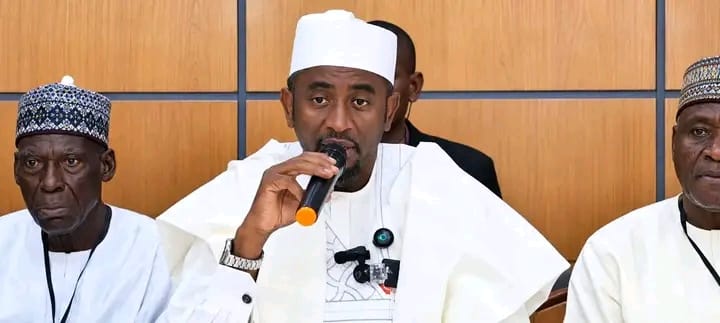
Senator Shehu Buba Umar has vehemently denied allegations linking him to banditry, terrorism financing, kidnapping, and other violent crimes, describing the claims as “politically motivated smear campaigns” that have persisted since 2014.

Addressing a press conference in Abuja on Monday, the Bauchi State lawmaker said the allegations had reached a point where “silence is no longer sufficient,” particularly given their implications for national security and public confidence in security institutions.

“I categorically and unequivocally deny these allegations. I have never sponsored, financed, armed, facilitated, or supported banditry, terrorism, kidnapping, or any criminal organization or activities whatsoever,” Umar declared.

The senator, who previously served as Chairman of the Senate Committee on National Security and Intelligence, announced that he had voluntarily submitted himself to the Department of State Services (DSS), the Nigerian Police Force, and the Defence Intelligence Agency (DIA) for thorough investigation.

Through his legal team led by Yakubu Chonoko Maikyau, SAN, former President of the Nigerian Bar Association, Umar said formal letters had been written to the three agencies requesting comprehensive investigations into every allegation against him.

“I have nothing to hide and I have nothing to fear from any legitimate investigation,” he stated. “I do not believe allegations of terrorism, banditry, and kidnapping against a serving senator of the Federal Republic of Nigeria should be allowed to remain matters of social media speculations. These are serious crimes; they should be investigated seriously.”

The senator issued a direct challenge to his accusers, inviting politicians, activists, social media influencers, and journalists to present any credible evidence to security agencies rather than hiding behind “edited videos, insinuations, propaganda, or anonymous allegations.”

He also revealed that he had made himself available to international bodies, including Amnesty International, and expressed willingness to cooperate with all relevant security agencies.

Umar stated that if a prima facie case is established against him based on credible evidence, he is prepared to face prosecution, and would accept the consequences prescribed by law if found guilty by a competent court.

Reflecting on his tenure as Senate Committee Chairman on National Security and Intelligence, Umar noted that his legitimate engagements with military, intelligence, and security agencies were now being “distorted and weaponized” to create a false impression of relationships with criminal elements.

The senator disclosed that he had previously pursued lawful remedies against his accusers, including a September 2025 petition to the Nigerian Police Force that resulted in criminal proceedings currently before the Federal High Court in Abuja.

He further revealed that one Hassan Sani Hussain, believed to be behind several allegations, is reportedly operating from Niger Republic, with the matter reported for INTERPOL intervention and legal counsel engaged in Niger Republic to pursue appropriate measures.

“I seek no special treatment. Let every allegation be subjected to impartial scrutiny, let every piece of evidence be examined, and let the truth prevail,” Umar concluded.

Bauchi Senator, Shehu Buba, Rejects Banditry Allegations, Says Viral Videos Fabricated

By Sabiu Abdullahi

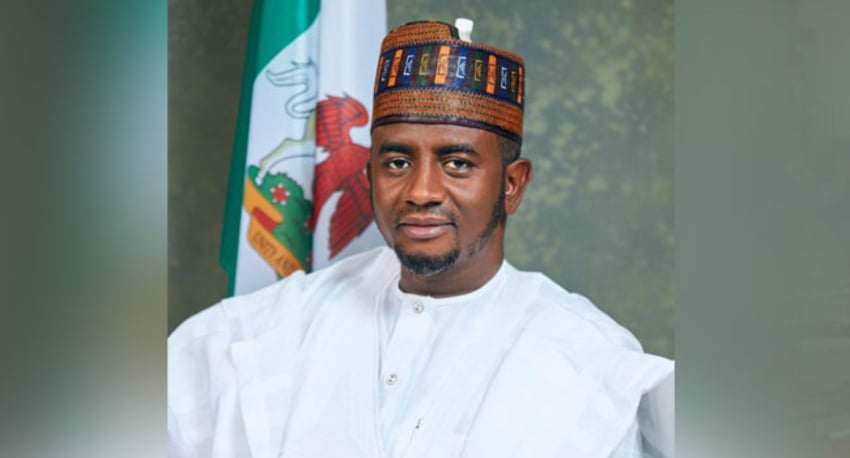
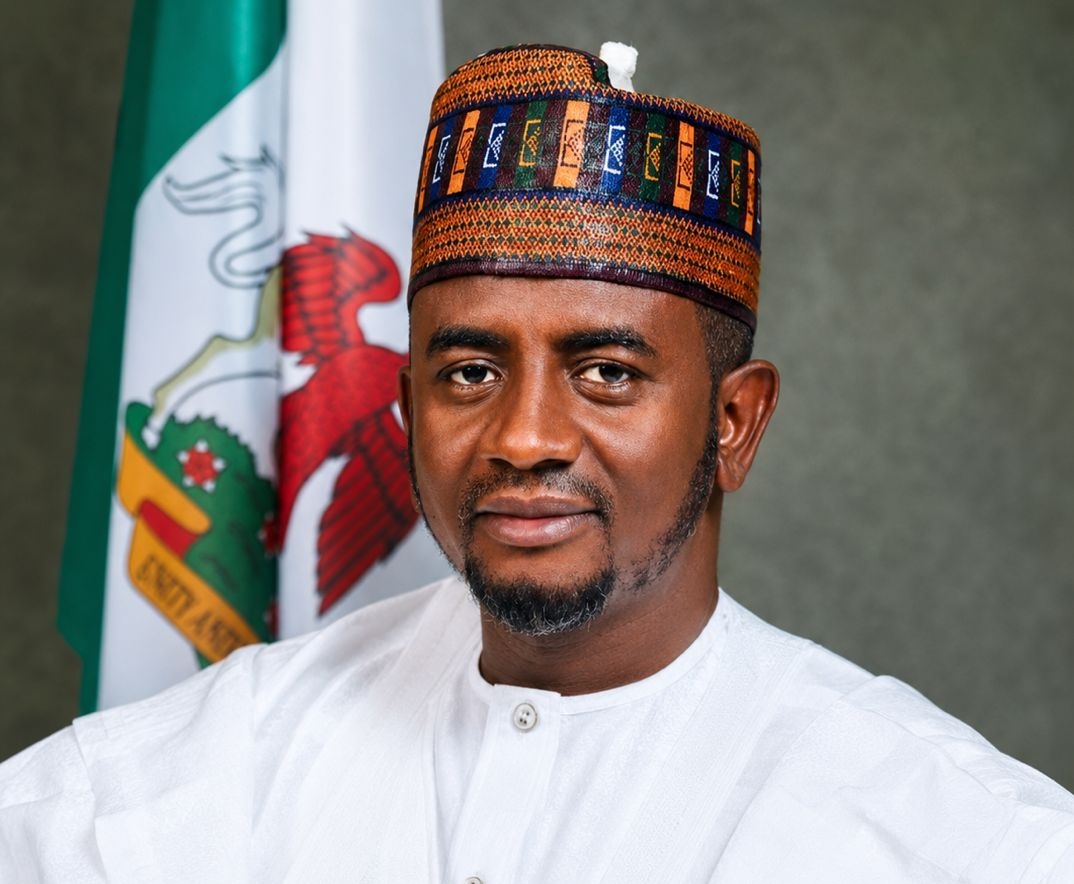
Senator Shehu Buba, who represents Bauchi South Senatorial District, has rejected fresh allegations that he has links with bandit groups, describing the claims and videos circulating on social media as false and part of an alleged campaign against his reputation.

Buba, a former Chairman of the Senate Committee on National Security and Intelligence, has faced allegations of connections with suspected bandits since 2024. He has repeatedly denied the allegations.

The latest controversy followed videos shared by a content creator identified as ‘D English Alhaji’, who claimed that suspected bandit leaders had visited the senator’s residence.

The controversy was further fueled by comments from a resident identified as Hassan, who accused Buba of being among politicians allegedly supporting bandits in the area.

Hassan also claimed that persons associated with the wanted bandit kingpin, Dogo Gide, were brought to Abuja for specialised training through an aide of the senator.

However, Buba rejected the claims in a statement issued on Sunday with the title, “Setting the Record Straight: My Response to Fabricated Videos, False Allegations and a Sustained Campaign of Disinformation.”

The senator, who currently chairs the Senate Committee on Livestock and Animal Husbandry and is seeking the Bauchi governorship ticket of the Peoples Redemption Party, said he had previously chosen not to respond because of the sensitive nature of his former security-related responsibilities.

He stressed that his decision to remain silent should not be taken as an inability to defend himself.

He said, “For much of my public life, I have resisted the temptation to respond to every allegation, criticism or provocation directed at me. Citizens have a legitimate right to scrutinise those entrusted with public responsibility, and public officials must be prepared to account for their conduct.

“My election as senator representing Bauchi South Senatorial District — and particularly my responsibility as chairman of the Senate Committee on National Security and Intelligence — reinforced the need for restraint. National security demands discretion.

“Operational successes cannot always be publicised without jeopardising ongoing efforts, exposing sources or endangering individuals and communities involved in sensitive interventions.”

Buba traced the allegations against him to an incident on September 15, 2024, involving Umar Shayi, whom he said led a militia group said to be operating as hunters for the Bauchi State Agency for Vigilante and Youth Empowerment.

He said two charcoal sellers were allegedly killed during the incident.

According to Buba, he visited the victims’ families after the incident and demanded justice. He said his intervention later became the basis for claims that he was connected to banditry.

“This campaign dates back to September 15, 2024, when Umar Shayi led a militia group purported to be hunters working for the Bauchi State Agency for Vigilante and Youth Empowerment. The group reportedly killed two charcoal sellers who were conducting their lawful business.

“As the elected senator representing the district, I visited the families of the deceased to condole with them and called on the relevant authorities to ensure justice is served. I also vowed to pursue lawful action on behalf of both the deceased and the injured victims.

“I condemned the killings and urged the government to institute safeguards against abuses by those entrusted with protecting citizens,” he said.

The senator alleged that Abubakar Bununu, Bauchi State Commissioner for Internal Security and Home Affairs, later publicly associated him with banditry after his intervention.

He also referred to an earlier allegation that he sponsored a suspected bandit leader to attend the 2024 Hajj. Buba said he denied the claim and asked security agencies to investigate it.

The lawmaker said, “Following my intervention, the Bauchi State Commissioner for Internal Security and Home Affairs, Abubakar Bununu, publicly linked my name to banditry — an allegation I rejected as false and unsupported by evidence.

“Subsequently, Governor Bala Mohammed petitioned President Bola Tinubu that I sponsored a ‘bandit kingpin’ to perform the 2024 Hajj through an aide named Yahaya Ibrahim.

“I categorically denied these allegations. I stated that I had no aide by the name cited and invited security agencies to investigate.”

Buba said his support for pilgrims, educational initiatives, medical assistance and empowerment programmes had been based on recommendations from community and religious leaders.

He added that he instituted a defamation case, CV/413/2024, at the High Court of the Federal Capital Territory over the allegations.

Senator Explains Viral Videos

Buba also gave an account of how some of the photographs and videos now circulating online originated.

He said a young man named Hassan Husseini was introduced to him in 2024 as an orphan who needed educational support.

According to the senator, he enrolled Husseini in a private college and an Islamic school in Kaduna and also gave him a bicycle.

He said Husseini later abandoned his studies and asked for financial assistance to start a car dealership. Buba said he rejected the request and advised him to return to school.

“I later discovered that, while under my care, he had recorded photographs and videos of visitors to my residence. These materials later formed the basis of allegations circulated on social media,” Buba said.

He alleged that some people who circulated the materials later demanded money from him.

The senator said he petitioned the Nigeria Police Force on September 9, 2025, which resulted in the arrest and investigation of several suspects.

According to him, five suspects were arraigned before Justice Rita Ofili-Ajumogobia of the Federal High Court in Abuja on October 30, 2025.

“After the videos circulated and those sharing the videos and photos demanded money as extortion, I petitioned the Nigeria Police Force on September 9, 2025. Several individuals were arrested and investigated.

“On October 30, 2025, five suspects were arraigned before Justice Rita Ofili-Ajumogobia of the Federal High Court, Abuja, in Charge No. FHC/ABJ/CR/526/2025, on charges including criminal conspiracy, cyberstalking, criminal defamation, advance-fee fraud and extortion.

“The matter is before a competent court, and I will refrain from comments that could prejudice the proceedings. The next hearing is scheduled for September 29, 2026,” he said.

On the latest videos, Buba said the footage had been presented falsely as proof that bandit leaders visited his residence.

He said the videos actually contained unrelated footage, including images of Hajj returnees who visited his residence in 2023.

[OPINION]: Bauchi 2027: Why Shehu Buba Has Become the Man to Watch

By Ismail Ahmad Misau

Politics often produces moments that alter the direction of public discourse and reshape the calculations of political actors. Bauchi State appears to be witnessing one of such moments. Across political gatherings, community meetings, marketplaces, social media platforms, and informal discussions, one name continues to dominate conversations with remarkable consistency: Senator Shehu Buba.

What is unfolding in Bauchi today is more than a routine political realignment. It is a phenomenon that has attracted widespread attention from political observers, party leaders, opinion molders, youth groups, traditional stakeholders, and ordinary citizens. The departure of Senator Shehu Buba from the APC and his subsequent emergence as the leading figure within the PRP has introduced a new dynamic into the political landscape of the state.

Many analysts now regard his movement as one of the most consequential political developments in recent Bauchi history. Whether one supports him or not, there is little disagreement that his growing influence has significantly altered political calculations ahead of the next electoral cycle.

From Party Pillar to Political Force

Senator Shehu Buba is not a strange politician seeking relevance. He entered this phase of his political journey with substantial credentials and an established record of public service.

As a serving Senator representing Bauchi South Senatorial District, he has occupied strategic positions in the National Assembly, including leadership responsibilities in committees related to national security and intelligence as well as livestock development. These assignments have placed him at the center of critical national conversations concerning security, economic diversification, rural development, and agricultural transformation.

Within Bauchi State, his supporters frequently point to his accessibility, grassroots engagement, constituency interventions, and commitment to party development as factors that strengthened his political standing over the years.

For many APC supporters, Senator Shehu Buba was viewed as one of the party most visible and influential figures in the state. His ability to mobilize supporters, attract political stakeholders, and maintain a strong grassroots network earned him considerable respect across various segments of the political spectrum.

However, politics is often shaped as much by perception as by reality. As his political profile continued to rise, many observers believed that competing ambitions and internal political interests created tensions within the party structure. These developments eventually culminated in his decision to seek a new political platform.

The PRP Gamble That Changed the Conversation

When Senator Shehu Buba announced his departure from the APC and aligned himself with the PRP, reactions were mixed.

Some viewed the decision as risky. Others saw it as a bold political statement. Yet few anticipated the speed with which the new movement would gain momentum.

What has happened since then has surprised many political watchers.

The PRP, a party that previously occupied a less prominent position in contemporary Bauchi politics, suddenly became the focus of statewide attention. Political stakeholders who had previously remained on the sidelines began reassessing their options. Youth groups, community leaders, former party officials, and political actors from different backgrounds increasingly gravitated toward the new platform.

In politics, momentum is often as important as structure. Once a movement begins attracting influential personalities and generating public enthusiasm, it acquires a self sustaining character. That appears to be what many observers are now witnessing in Bauchi State.

The growing support for Senator Shehu Buba has transformed the PRP from a peripheral participant into a significant factor that cannot be ignored in future political contests.

Why Many See Him as a Serious Governorship Contender

Every election cycle produces aspirants, but only a few emerge as genuine contenders capable of commanding statewide attention.

Several factors explain why many supporters and political analysts increasingly view Senator Shehu Buba as a strong governorship prospect.

First is experience. His political journey has traversed both local and national levels. As a former Executive Chairman of Toro Local Government, one of the largest local government areas in Nigeria, he gained firsthand exposure to governance, administration, community engagement, and public sector management.

His tenure in the Senate further expanded his understanding of policy making, legislative processes, security challenges, and national development priorities.

Second is visibility. Unlike many politicians whose influence is concentrated within limited geographical areas, Senator Shehu Buba has cultivated networks that extend across different local government areas and demographic groups.

Third is public perception. Many of his supporters view him as a politician who combines political experience with accessibility. In an era when citizens increasingly demand leaders who understand everyday realities, such perceptions can become a powerful electoral asset.

A Movement Beyond Party Lines

Perhaps the most remarkable aspect of the Senator Shehu Buba phenomenon is its ability to attract support beyond traditional party boundaries.

Political movements become formidable when they transcend partisan loyalties and appeal to broader aspirations. In many communities across Bauchi State, support for Senator Shehu Buba is increasingly being framed not merely as party affiliation but as a collective desire for a different political direction.

This explains why individuals from various political backgrounds continue to show interest in his movement.

The attraction is not limited to career politicians. Young people seeking opportunities, community leaders demanding greater development, professionals advocating institutional reforms, and ordinary citizens concerned about governance challenges are all becoming part of the wider conversation surrounding his political future.

Such cross sectional appeal often represents a significant advantage in competitive electoral environments.

Reshaping the Political Landscape

The rise of Senator Shehu Buba has introduced fresh uncertainty into the calculations of rival political camps.

For established political actors, the emergence of a rapidly expanding movement requires strategic adjustments. Political parties that previously focused their attention elsewhere must now account for a new force capable of influencing voter behavior and altering electoral outcomes.

The significance of this development extends beyond party competition. It is forcing broader conversations about governance, leadership quality, economic development, education, youth empowerment, infrastructure, healthcare, and security. These are issues that remain central to the aspirations of the people of Bauchi State.

As the political environment evolves, voters are likely to evaluate candidates not only on party platforms but also on their perceived competence, credibility, vision, and capacity to deliver tangible results.

The Leadership Question

At the heart of every governorship contest lies a fundamental question: who possesses the experience, vision, and leadership capacity to address the challenges facing the state?

Supporters of Senator Shehu Buba argue that his administrative background, legislative experience, grassroots connections, and understanding of security issues position him favorably to provide such leadership.

Bauchi State, like many states across Nigeria, faces complex challenges that require practical solutions and strategic thinking. Issues relating to economic growth, educational advancement, agricultural productivity, infrastructure expansion, youth employment, and community security remain priorities for citizens.

Many believe that future leadership must combine experience with innovation, political influence with public accountability, and ambition with a genuine commitment to service.

For an increasing number of observers, Senator Shehu Buba has emerged as a figure capable of embodying those expectations.

Conclusion: A Political Wave That Cannot Be Ignored

Political history is often shaped by moments when individuals transform public sentiment into organized political movements.

Whether viewed from the perspective of supporters, opponents, or neutral observers, the rise of Senator Shehu Buba represents one of the most significant political developments currently unfolding in Bauchi State.

His transition from the APC to the PRP has not diminished his influence. If anything, it has amplified it. His growing coalition of supporters, expanding grassroots network, and increasing visibility across the state suggest that he has become a central figure in discussions about the future of Bauchi politics.

As the journey toward the next governorship election continues, one reality appears increasingly clear: Senator Shehu Buba is no longer merely participating in the political conversation. He is helping to define it.

If current trends continue, his political movement may well become one of the decisive factors shaping the future direction of Bauchi State.

Ismail Ahmad Misau
Political Communication Aide to Hon. Dr. Bello Aliyu Abubakar Shinge