The Trailer Crash That Left Metal in My Hand
By Ibrahim Happiness
Every day on Nigerian roads, lives are put at risk not only by reckless driving but also by a transport system that forces heavy-duty trailers and smaller vehicles to share the same lanes and the same dangers. It is a problem visible in plain sight on roads used daily by millions of Nigerians, yet it has never received the urgency it deserves.
Drive from Abuja through Lugbe and Giri, all the way to Gwagwalada, and the evidence is everywhere. Trailers line both sides of the road, some parked, some moving, others broken down in the middle of traffic without warning. Small cars are forced through spaces that should not exist. Motorcycles weave dangerously beside giant wheels. Tricycles take risks next to vehicles many times their size.
And when something goes wrong, whether a tyre bursts, brakes fail, or a driver misjudges, it is rarely the trailer that suffers most. It is the smaller vehicles. It is ordinary people simply trying to get to their destinations.
Traffic gridlock along these routes has become routine. Commuters travelling from Abuja to places like Gwagwalada often spend hours trapped in traffic, sometimes late into the night, because trailers block stretches of road, refuse to give way, park carelessly, or are simply too large for the roads they use. Some people sleep in their cars because there is nowhere else to go.
I know this not only through observation but also through painful personal experience that I carry every day in my hand, in my eye, and in my memory.
On a rainy Sunday morning, 11 June 2023, my grandfather and I left home early for church. It was around 7 a.m. The road was slippery, visibility was poor, and, like many Nigerian families, we were simply trying to travel safely.
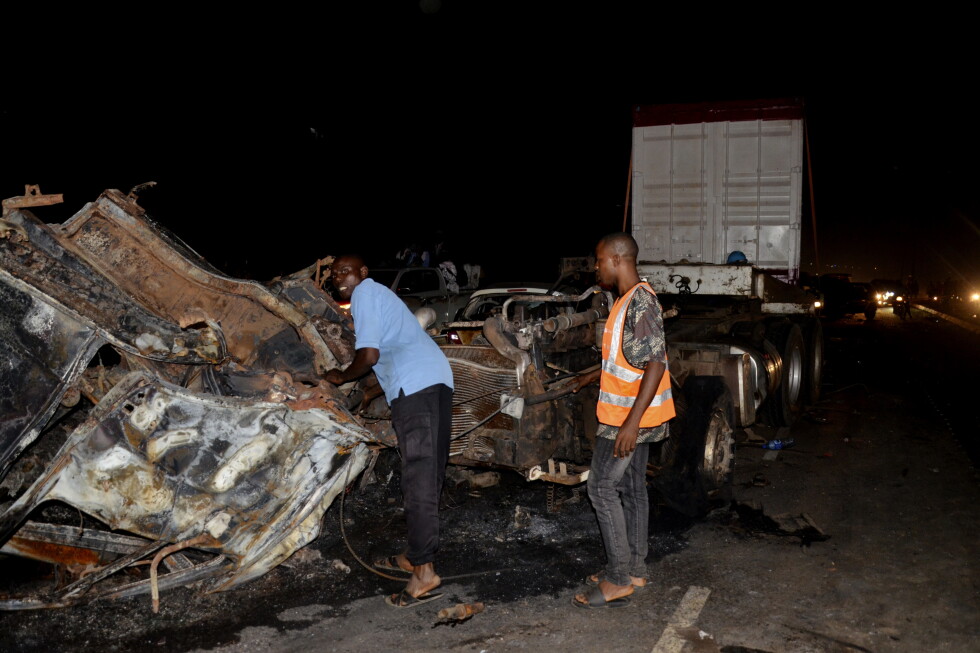
Then everything changed. A trailer was parked in the middle of the road. Whether it had broken down or been abandoned, I cannot say. What I know is that it sat there in the rain, without warning signs, cones, or visible hazard lights.
A car rammed us from behind. The impact was sudden and violent. My grandfather lost control, and we were pushed into the parked trailer. What followed changed my life forever.
Shards of glass flew into my face and tore my eyeball. My hand was badly broken. In the first moments after the crash, I could not see at all. The pain was intense, but the darkness was worse. Not knowing whether my sight would return is something I would not wish on anyone.
The next day, I underwent eye surgery. Even then, my vision did not return immediately. I spent more than three months in the hospital, undergoing treatment, recovering, and living with uncertainty. My family stood by me, both emotionally and financially, and I remain grateful to them. Slowly, my sight returned. Today, I do not take that blessing for granted.
My hand became another battle. The damage was so severe that surgeons inserted a metal implant to hold the bones together. That implant remains in my hand today. It still causes pain, limits movement, and brings daily discomfort. But I am alive, and that is what I hold on to.
The trailer driver denied responsibility, claiming the vehicle was moving at the time of the crash. It was not. It was parked in the middle of the road. Yet denial was easier than accountability, as is too often the case in trailer-related accidents in Nigeria.
That metal in my hand, the surgery on my eye, the months I lost, and the burden my family carried are why I am writing this.
Because my story is not unique, it is one of countless stories that unfold on Nigerian roads every year. Many never make the news. Many families never receive justice. Many lives are permanently altered while the system remains unchanged.
The Lugbe-Gwagwalada road tells this story every day. Like many highways in and around Abuja, it serves workers, students, worshippers, traders, and families. Yet trailers operate there without the infrastructure, discipline, or dedicated space that vehicles of that size require.
The result is chaos so normalised that many people no longer question it. They accept it as the price of travelling in Nigeria, but it should not be.
There is also a serious economic cost. Heavy-duty trailers damage road infrastructure faster than government repair budgets can keep pace with. Their immense weight, especially when overloaded, destroys road surfaces, creates potholes, and weakens road foundations. Billions of naira are spent annually on repairs, much of it due to damage caused by heavy vehicles using roads never designed to withstand such loads.
Yet the idea of dedicated trailer lanes, properly built, clearly marked, and strictly enforced, remains an afterthought rather than an urgent national priority.
Other countries have addressed this challenge. Many highways around the world provide separate lanes for heavy vehicles because planners recognise that vehicles with vastly different sizes, speeds, and stopping distances should not compete for the same space. It is not a complicated policy. It is common sense and saves lives.
Nigeria must now make the same move. Dedicated trailer lanes would reduce accidents, ease congestion, save commuters valuable time, cut road maintenance costs, and protect lives.
No one should carry metal in their hand for life because a trailer was carelessly parked on the road. No one should spend months in the hospital fighting to regain their sight because proper traffic systems are lacking.
This is not a luxury demand. It is not unreasonable. It is a practical, lifesaving measure whose time has long since come. Heavy-duty trailers need their own lanes.
Ibrahim Happiness is a 300-level Strategic Communication student at the University of Abuja and an intern at IMPR. She can be reached at happinessibrahim11@gmail.com.
