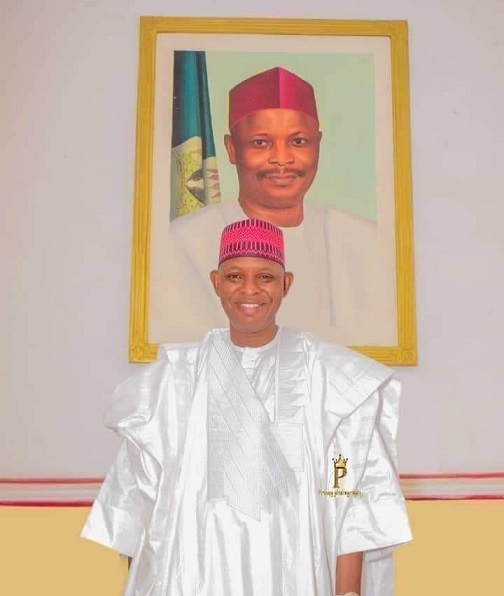
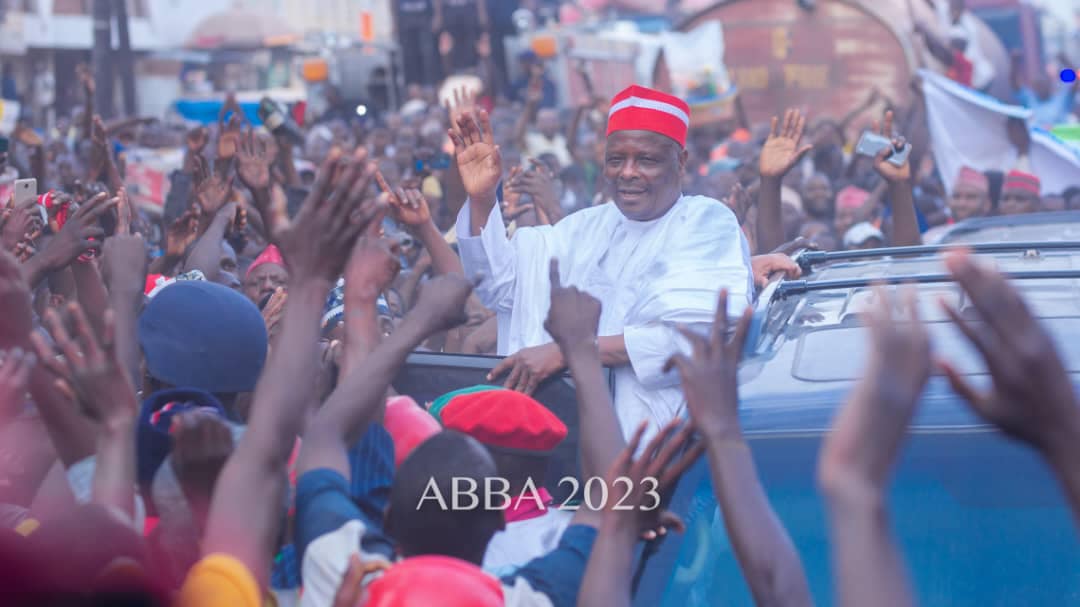
Rabiu Musa Kwankwaso

Kano State Foreign Scholarships: Review and Recommendations

By Mahmud Aminu Dambazau

One of the trending topics in the past weeks has been the increase in registration fees of students by Bayero University, Kano. Before that, the University of Maiduguri, Federal University Dutse, University of Uyo and several others had increased theirs, and of course, it was anticipated following the revelation from the federal government that it could no longer fund universities.

I am glad the state universities in Kano have not toed that path yet, as several state universities have followed suit or tried to. Engr Rabi’u Kwankwaso’s administration has, among its biggest achievements, sponsored thousands of students abroad and within the country for undergraduate and postgraduate studies. While such numbers were unprecedented and unmatched by any other state administration, there is a need to reflect, assess the previous intervention, and possibly look for alternative ways to achieve the same result without necessarily taking the same route.

Many students had dropped out of tertiary institutions even when they had a passion for the study and were lucky to pass all stages of admission simply because they could not afford the then registration fees. A day hardly passes during registrations by tertiary institutions without students begging for public support to pay their fees on radio programs in the state. Now that most of these institutions have increased their fees which are in most cases more than 100%, we are likely to have an influx of dropouts across the state. With few job opportunities and frustrations of a crumbled dream, such could threaten a volatile security situation. More students will benefit from a home-based scholarship, even if partly, than a foreign one.

Between 2011 to 2015, when Kwankwaso sent students abroad, a dollar was exchanged for less than ₦200. With the dollar now fluctuating around ₦800. It means what would be spent for a single student now would be more than what was paid for three students then; if they are to be sent to the same institutions, fees will remain unchanged. Is Kano generating at least three times what was developed during Senator Kwankwaso’s administration, even if other factors were to be constant?

I have friends that had graduated years back from private universities within the country who were also sponsored by the then administration but are unable to serve their country (NYSC) or secure employment with the government because the schools have not issued their original results to them due to inability of the successive administration to complete their payments. A relative of mine could only graduate from India because her father paid her outstanding fees.

I have heard different appeals from students sent to different countries but later abandoned after Kwankwaso’s tenure. Wouldn’t it be better to investigate and ensure all those previously sponsored thoroughly have successfully graduated and issued their original results and then devise a sustainable plan for similar future interventions even if it is to be continued?

The Kwankwaso administration established more than 20 different institutes, none of which are currently functioning. I am glad; HE Abba Kabir Yusuf had, among his first acts in government, visited the Reformatory Institute, Kiru and given directives for its revival, among others. To borrow the title of Prof. Isa Ali Pantami’s recent book, Skills Rather than Just Degrees, re-establishing these institutions will allow even those who have already acquired degrees to further polish them with relevant skills. Reviving them will certainly gulf millions if not billions. All other stages of education at the state are currently requiring urgent attention.

Recent pictures from the once glorious Science and Technical Schools Board schools are disturbing. Bringing back these institutes, Technical Schools; Schools for Arabic Studies; Adult and Nomadic schools, without doubt, are better avenues to invest rather than foreign scholarships.

Again, as an alternative to foreign scholarships, why not invest the money in needed infrastructures in our universities, get them the latest equipment and employ on contract foreign scholars while giving them specific targets to train a certain number of masters and PhD students? With that, a considerably greater number of students would benefit, meaning more research output, recognition, and higher ranking of the state universities and might even attract foreign students or grants.

Lastly and more importantly, there is a saying, thus, “Teach a man to fish rather than give him a fish”. Some months back, just before the elections, a friend of mine who graduated with a first-class degree from Bayero University, Kano, and a distinction during his masters at a university in India sponsored by the Kwankwasiyya Foundation appealed to his followers on Twitter to vote for the NNPP, at least so he and of course, others could further their studies once more, abroad. For him, it would be a PhD. There are currently multiple scholarship opportunities, such as the PTDF, especially for students with excellent results. There are even more opportunities from several universities, including some of the best universities in the world. In almost every instance, those who get such opportunities from Nigeria are usually from the southern part of the country, who are more informed and enlightened in aspects like this.

An association, Arewa Youth Mentorship Forum, comprising mainly academics that secured foreign scholarships, is mentoring the younger ones from the North. Luckily, many succeeded in securing scholarships for both undergraduate and postgraduate levels. I came across a post on their Telegram group earlier this week where they provided a list of universities in the US that offer scholarships to even second-class lower and third-class graduates. If second-class and third-class graduates could get foreign scholarships, why should scarce resources be expended on sending those who could easily get such scholarships to institutions that even the government could probably not afford to send them?

If the Kano state government can utilise these opportunities and provide an avenue for these graduates to be mentored, trained and guided on securing foreign scholarships, more students would benefit. In contrast, the government can invest the scholarship money in other areas requiring more urgent attention.

Mahmud Aminu Dambazau can be contacted via madambazau@gmail.com.

Gov. Yusuf meets designer of demolished Golden Jubilee roundabout, vows to rebuild it

By Uzair Adam Imam

The Kano State Governor, Abba Kabir Yusuf, has met with the designer of the demolished Kano Golden Jubilee Edifice of the Government House Roundabout.

The governor who made this disclosure Monday on his verified Twitter handle, said the roundabout will be reconstructed along Na’ibawa Flyover, Zaria Road.

According to the governor, the demolition of the Government House Roundabout was for security purposes and structural considerations.

He stated, “Recently, we took the decision to move the Kano Golden Jubilee Edifice from the Government House Roundabout, due to security and structural considerations. 

“It was therefore in that regard, I met with its designer, at the structure’s new home, along the Naibawa Flyover, Zaria Road. 

“Our government is highly committed to the massive improvement of Kano’s infrastructural architecture, and its accessibility to all,” he added.

The Daily Reality recalls that the demolition of the roundabout a few weeks ago generated painful arguments with many people saying the demolition was meant to satisfy the political anger of the Abba’s Godfather, Kwankwaso, against the immediate past governor, Ganduje.

Kano reopens applications for foreign, local scholarships for indigenes

By Ahmad Deedat Zakari 

The Kano State Government has resumed awarding local and foreign postgraduate scholarships to indigenes of the state. 

This was made public on Friday through a statement signed by the Secretary to the Kano State Government, Dr Abdullahi Baffa Bichi.

Dr Bichi called for entreaties from qualified Kano graduates. Graduates with first-class honours who are from the state and are medically fit to travel abroad are eligible to apply. 

He also noted that the last time the state awarded scholarships of this kind was in 2025, during the administration of Senator Rabiu Musa Kwankwaso.

Part of the statement reads: 

”Applications are invited from suitably qualified graduates for Kano State postgraduate foreign and local scholarships for the 2023/2024 Academic Session.

Recall that the last scholarship was offered in 2015 by Sen. Rabiu Musa Kwankwaso’s Administration which sponsored the third batch of 503 first-class graduates to 14 different countries.

After eight years without postgraduate foreign scholarship by the last administration, H.E. Engr. Abba Kabir Yusuf, The Executive Governor of Kano State, has approved the resumption of the postgraduate foreign and local scholarship with effect from the 2023/2024 Academic Session.”

Applicants are called on to fill out relevant application forms obtainable for free from www.kanostate.gov.ng/scholarship_application.

The state concludes that:

“Eligible applicants would be invited for a screening interview.

Completed application forms together with copies of credentials (indigene certificate, medical certificate, birth certificate, Primary School Certificate, WASC/GCE/SSCE certificate, Degree certificate etc) should be submitted to the secretariate of the screening committee, Old Conference Room, Office of the Secretary to the State Government, Cabinet Office, 1 Wudil Road, Kano within two weeks of this advertisement.”

Are Nigerians fair to Buhari?

By Prof. Abdussamad Umar Jibia

Many years ago, when I was a young lecturer at Kaduna Polytechnic, I had a discussion with a senior colleague of mine. I have always disliked having disagreements with my seniors because I easily admit defeat as I don’t want to appear disrespectful. 

My discussion with the Chief Lecturer was around General Muhammadu Buhari’s achievement as PTF Chairman. The senior colleague, who bitterly disliked Buhari, was of the opinion that PTF under Buhari “did nothing except for some roads he constructed around Katsina”. When he was reminded that the road he followed daily to work was constructed by Buhari’s PTF, the man vehemently denied it even though it was well known to all the people around the Tudun Wada area of Kaduna, and he could easily find out in case he forgot. But his mind was beclouded by hatred. Hatred stinks, and it blinds.

My discussion with my senior colleague came to my mind this week while I was travelling back to Kano from Kaduna. For two decades before Buhari assumed office as a civilian President, this road had become one of the most dilapidated in the country, and Nigerians, including myself, wrote to call the attention of President Buhari to it while his administration was still taking off. These calls did not fall on deaf ears, and even Buhari’s enemy cannot deny that the quality of work done in the renovation is high.

Of course, more work is needed on the Kaduna-Abuja side, and although it is ongoing, it is clear that the project will outlive the Buhari administration, which has less than three weeks to go. His is, however, much better than PDP governments that were more interested in politics than service.

Two other projects attracted my attention while on the same journey. They are the Kaduna-Kano-Maradi rail line and the famous AKK gas pipeline project. The speed at which the two projects are being pursued is high, but the completion date can obviously be no earlier than May 29, 2023.

On December 25, 2018, while travelling along the Kano-Katsina highway, I stopped at Tsanyawa to take a picture of an accident caused by Rabiu Musa Kwankwaso’s five-kilometre project. The five-kilometre project was a failed project of the Kano State Government under Engr. Dr Rabiu Musa Kwankwaso, in which a five-kilometre length of the expressway was supposed to be built in each local Government headquarters.

For local government headquarters on major federal highways like Tsanyawa, Bichi, Rimin Gado, etc., the state government only succeeded in spoiling Federal roads on which partitions were made without increasing the widths of the roads. I displayed the picture on my Facebook page with a call to Kano State Government to correct the mistake it made. 

Two years later, on 24th October 2020, I stopped at the same spot in Tsanyawa and took another picture of the road after Buhari’s dualization project. The dualization solved the problem in both Bichi and Tsanyawa, the two local government headquarters on that road. I am personally happy that the dualization of the Katsina-Kano road was embarked upon by the Buhari administration because it is the road I ply more than any other in my life.

So why are we only looking at the mistakes? Were our expectations from Buhari too high? Did his mistakes overshadow his achievements? Or are we simply difficult to satisfy?

A fair answer is to say, “All of the above”. You may not be happy to hear that, but it is my opinion.

I have never seen people more expectant than Nigerians. When they love a person, he is fault-free and infallible. Anyone who disagrees with him must be insulted and disgraced. He will solve all their problems. I think that is why when they eventually hate the same person, they go to another extreme of not seeing anything good with them. Buhari is a victim of this, unfortunately. Examples of other objects of extreme blind love by their supporters are Peter Obi and Rabiu Kwankwaso.

What about the mistakes? Are they too many or too grave, or both? Are all of them mistakes or blunders? Or are they simply contempt for Nigerians or some groups thereof by President Buhari?

I sometimes wish Buhari did not accept to become the President. Many people are at a loss about how he simply allowed innocent people to continuously be killed in his home state while speaking about defeating Boko Haram in the faraway North East. By the time he leaves at the end of this month, President Buhari will leave Katsina more insecure than he met it. Last week, a major national daily reported the migration of dreaded bandits in large numbers from Zamfara to Katsina state. 

On several occasions, when Buhari was asked about banditry in the North West, he dismissed it as a fight between people of the same culture and tradition. This can mean farmers/herders or Hausa/Fulani communal clash. Many victims like me are not happy with this kind of response and see it as the reason why well-known bandits’ kingpins are operating freely in our state, kidnapping, enslaving, killing, raping, etc. 

The least corrupt Nigerian politician I know will leave Nigerians in a more difficult economic hardship than he met them. I observed Nigerians taking a long time comparing their income and prices of foodstuffs (yes, food, not any luxury item) in 2015 when Buhari came and in 2023 when he is leaving. Nigerians are suffering.

What about Education? Buhari kept poor people’s children at home for eight months last year and many months in 2020 while his children were schooling in Europe is an indication of the contempt he has for the poor people of Nigeria who formed his support base. The number of out-of-school children is rising. The Almajiri Education Commission should have come earlier, but it is still a welcome development which we hope the incoming President should implement with the seriousness it deserves.

Finally, Nigerians are also difficult and unfair. When they love a politician, they don’t consider him a human being with strengths and weaknesses. If they do that at the beginning, they will certainly be fair to him at the end. But like some binary machines, they only have two states; absolute love and absolute hate.   

Prof. Abdussamad Umar Jibia wrote from Bayero University, Kano. He can be contacted via aujibia@gmail.com.

The antics of Kano throne: History may repeat itself

By Sadiq Ilyas

In 2017, Governor Abdullahi Ganduje reportedly disagreed with Sarki Muhammadu Sanusi II’s critical comments about the government’s handling of the state’s finances. Sanusi accused the government of mismanagement and corruption, particularly about the state’s debts.

The disagreement between the two escalated in 2019 when the Kano State government created four other emirates, reducing the powers of the Emir of Kano, who was Sanusi then. 

Sanusi challenged the creation of the emirates in court, arguing that it was politically motivated and designed to weaken his position as emir. However, in March 2020, a Kano State High Court ruled that creating the emirates was legal.

In March 2020, Sanusi was removed from his position as Emir of Kano by the Kano State government, citing insubordination and disrespect to the governor and other officials. Sanusi denied the allegations and challenged his removal in court, but his efforts were unsuccessful.

Since the removal of Sanusi as the 14th Emir of Kano, many people have reacted differently, and that generated sympathy around the Emir, who was seen as a victim, while the Governor is seen as the villain. 

The Kano Governorship election result is believed to be won majorly as protest votes against Ganduje’s policies, including creating new emirates and his perceived allegation of corruption. On the other hand, the New Nigeria People’s Party, NNPP, gave a margin of 128,000 votes to the ruling All Progressives Congress, APC. Although the APC plans to challenge the victory in court, the likelihood of overturning the election is slim.

The 14th Emir of Kano is believed to have supported the NNPP with many antics. First was his appearance in a white and red outfit, the Kwankwasiyya insignia, just before the election when he visited his mother. People also rumour that he financed the campaign of the NNPP of the Governor-elect Abba Kabir Yusuf. Though the 14th Emir was out of the country during the election period, he was believed to be in Makkah praying for the victory of the Governor-elect.

Since the announcement of the Governorship results in Kano, social media space was filled with slogans such as “Sabon Gwamna, Sabon Sarki”, meaning “new Governor, new Emir”. The atmosphere in the Emir’s palace becomes tense, and the Emir’s outfit choice for the Hawan Daushe Durbar says it all. He wore golden armour, which some analysts say is a sign of confrontation in times of war. But now that the battle with swords is over, the question is who is playing with the lion’s tail. 

Kwankwaso VS Ganduje

In a recent interview with reporters, Senator Rabiu Musa Kwankwaso, the leader of the NNPP and presidential candidate of the party in the 2023 election, has stated that the incoming government of Abba Yusuf, the Governor-elect of Kano State, will review the dethronement of the 14th Emir of Kano, Muhammadu Sanusi II.

“We tried not to intervene in the issue of bringing or removing any Emir. But now, an opportunity has come. Those given this opportunity will sit down and see the issues. Then, they will look at what they are expected to do. Besides the Emir, even the emirate has been divided into five places. All these need to be studied,” Kwankwaso stated.

He also said that, as elders, they would continue to advise the incoming government to do the right thing.

Meanwhile, Kano State Governor, Dr Abdullahi Umar Ganduje, has reiterated that the four new emirates created by his administration are here to stay.

“The four new emirates are a symbol of unity, progress, and the well-being of the people. They were created to honour the people of these regions and recover the reputation of the traditional institutions,” Ganduje said during the Workers’ Day celebrations held at Sani Abacha Stadium in Kano.

He added that the emirates were created to upgrade and promote their tradition, and they have brought development to these places. “I assure you that these emirates are permanent. They have come to stay. Even if we are not in government, these emirates are untouchable. I promise you this by the grace of God, they have come to stay,” he added.

It remains to be seen how the situation will unfold in Kano State regarding the dethronement of Sanusi II and the creation of new emirates.

History may repeat itself

During the administration of Governor Abubakar Rimi in the late 1970s and early 1980s, there was an attempt to create five emirates in Kano state by splitting the Kano Emirate into five. 

This move was met with opposition by some members of the royal family and other traditional rulers, who saw it as an attempt to weaken the influence of the Kano Emirate.

However, Governor Rimi went ahead with the plan and created the new emirates of Gaya, Karaye, Bichi, Rano, and Kano. 

The Kano Emirate was reduced in size and given a more ceremonial role, while the new emirates were granted more administrative and political powers.

When Governor Sabo Bakin Zuwo took over in 1983, he reversed the decision and restored the Kano Emirate to its original size and status, with the other emirates abolished. 

His decision was seen as an attempt to restore the traditional balance of power and to address the concerns of those who opposed the creation of the new emirates.

In 2019, Governor Abdullahi Ganduje created four new emirates in Kano State, including Gaya, Karaye, Bichi, and Rano, in addition to the Kano Emirate. The move was met with controversy and legal challenges, with some arguing that it was politically motivated and aimed at reducing the influence of the Kano Emirate. This followed the dethronement of the 14th Emir Muhammadu Sanusi II. And from all indications, history may repeat itself, with the NNPP becoming a new government.

Experts opinion 

Following the recent dethronement of Sanusi as Emir of Kano and the creation of new emirates by the Ganduje administration, Nadir Nasidi, a historian at the Ahmadu Bello University Zaria, has spoken out against the move, stating that it is unnecessary and unpalatable.

In an interview, Nasidi stated, “Kano is the only emirate in the whole country with one unifying emir, but the creation of unnecessary emirs isn’t a palatable one. Many people, including myself, told the Ganduje administration that what he was doing wasn’t a good one.”

While acknowledging that Sanusi’s dethronement was final and he could not be brought back, Nasidi suggested that the other emirates be reduced to local chiefs under the overall Emir of Kano, who would be chosen from among the existing kings.

He said, “Nobody will bring back Sanusi. He’s gone already. But the other emirates must be reduced to local chiefs under the overall emir of Kano. They can choose amongst all the kings one person to be the overall king.”

Nasidi’s suggestion comes amid ongoing debates about the wisdom and legality of creating new emirates in Kano State. The creation of four new emirates in the state was met with widespread criticism, with some people accusing the government of trying to weaken the influence of the Emir of Kano.

Critics argue that the move is politically motivated and aimed at reducing the Emir’s power and influence. On the other hand, supporters of the new emirates say that it will promote development and bring the government closer to the people.

As the debate continues, it remains to be seen whether the incoming administration will consider Nasidi’s suggestion or continue with its plans to bring back Sanusi Lamido as the Emir and reverse the creation of the emirates in Kano State.

Sadiq Ilyas wrote via silyas1989@gmail.com.

Bombshell: Allegations on the last-minute looting of public properties in Kano

By Auwal Umar

The transition process, as it is seen today in the Kano political culture, is something that can be squarely described as unprecedented if the nonchalant and lackadaisical attitude exhibited by the Kano state government is looked into properly. The transition chairman appointed by His Excellency, Governor-elect Engr. Abba Kabir Yusuf, Abdullahi Baffa Bichi, had decried the total absence of any cooperation, not even lack of it, from the Kano state government to form its own transition committee with a deliberate view to scuttling the smooth transition process.

Myriad of pictures going viral of one of the best social investments that the state has ever witnessed was initiated by Dr Rabi’u Musa Kwankwaso in his second spell as a governor, on which he spent 2.4 billion to empower the teeming youth in the state with employment opportunities across the 44 local government areas. Unfortunately, despite the suffocation of the process to make it work as planned for the public to benefit, now this invaluable treasure meant for the public good has been reduced to something like booty looted at the last minute to deprive the good people of Kano of the initial goals.

In addition to thousands of sewing machines that have been metaphorically remanded and cut off from the general public good, some reports of many mysterious disappearances of public properties should be thoroughly investigated when Engr. Abba assumes the number one seat in the state.

It is normal for any right-thinking person to believe that a leader should be a father figure so engrossed in compassion, sympathy and empathy. Still, here in Kano, despite all the wanton destruction and disruption they brought to drag Kano down, all they have is total apathy towards the awful loss they brought about to the state. It is unimaginable to expect what we see today from the people who should regard the Kano people as their sons and daughters with every sense of mercy and magnanimity.

It should not go in vain; all the perpetrators have to be brought to book. Impunity is the main motive behind the abuse of any public office in this country. The more it is welcome, the faster public institutions are utterly weakened. The ills and evils meted out by these people should be revisited judicially. I hope they will serve as a deterrent to others.

Anyone that seems to be conversant with the art of governance knows fully well that Engr. Abba Kabir, alias Abba Gida-Gida has a hefty mountain to move. One can say with a sense of certainty that the outgoing government has braced for the moment to meet out their concealed evil intent against the incoming administration. May he take off his Babba Riga and roll up his sleeves to make Kano breathe again. I hope people should learn to forbear some certain inconveniences. Most importantly, Abban Kanawa needs sincere prayers from the teeming Kano populace for success.

Auwal Umar writes from Kano and can be reached via: auwaluumar9@gmail.com.

Rarara’s Invective Barbs: innuendoes, body shaming, and Kano politics

By Prof. Abdalla Uba Adamu

For the past 43 years that I have been a researcher, there were two areas I stay clear of: politics and religion. If you see my hand in any of these two, then the entry point is popular or media culture. For instance, I have recorded a lot of Kano Qadiriyya’s Anfasu zikr, not as a devotee, but as an ethnomusicologist – focusing on the body percussion and movements (after studying the wonderful works of Margaret Kartomi on body percussion while in Morocco). Similarly – and to balance things somewhat – I recorded Tijjaniyya zikr sessions at Chiranci in the city of Kano as part of a larger study on religious performances. All my recordings were uploaded to a dedicated YouTube public channel. I was, therefore, amused when people try to pigeonhole me either as Qadri or Tijjani. I am neither.

Politically, I am apolitical, meaning I really don’t care who rules the country. I don’t even vote, having done once a long time ago (at the insistence of a dear friend), and promised never to do it again. But performance arts brought my attention to protest songs and the prosecution of singers in Kano. The end product was a paper, “Poetic Barbs: Invective Political Poetry in Kano Popular Culture” which I am sure is floating somewhere in a modified form. And I thought that was it.

In 2014 I came across a song that I found amusing. I was playing it on my laptop when someone exhibited surprised that I was listening to the songs of Dauda Adamu Abdullahi Kahutu, with a stage name of Rarara. That was the first time I even heard the name. The song was “Zuwan Maimalafa Kano.” It attracted my attention in two ways. First, its lyrical construction, as well as its delivery, was just amazing. Rapid fire. He should have been a rapper, a genre of music I am totally besotted on (old school DMX, 2Pac, Snoop Dogg, Ice Cube, Queen “The Equalizer” Latifah, y’all). It was clear Rarara was singing off the cuff, not reading from a setlist or lyrical sheet. Second, it was the most detailed invective song I have heard in the Hausa Afropop music genre. I started digging and latched on to him and his songs. So, for the last seven years or so, I have been following every song he released using the invective matrix.

So, what is an invective song? Invective is the literary device in which one attacks or insults a person or thing through the use of abusive language and tone. If you like, “zambo/shaguɓe”. Invective is often accompanied by negative emotion. Invective can be divided into two types: high and low invective. High invective requires the use of formal and creative language, while Low invective, on the other hand, makes use of rude and offensive images. From 2010, Rarara became a master of popular Hausa invective oral poetry. He used his skills to abuse, insult and body shame anyone he was paid to insult. Including former masters and associates.

A pattern evolved. His switchbacks. Chronologically, his earliest non-invective song was “Saraki Sai Allah” (in honour of then Governor Ibrahim Shekarau’s turbaning as Sardaunan Kano in 2010 by the late Emir of Kano, Alhaji Ado Bayero). In 2011 – barely a year later – when Shekarau failed to anoint Rarara’s ‘master’, Deputy Governor Abdullahi T. Gwarzo, to succeed him, Rarara became ballistically invective – and established a career in body shaming, abuses and innuendoes against various previous masters. Shekarau bore the blunt of colorist abuses – often a case of the kettle calling the pot black. No one was spared his invective barbs. Deeply cut. Insulting. Spread over 39 songs, from 2014’s “Malam Ya Yi Rawa Da Alkyabba”, to 2023’s “Tangal-Tangal.”

I have seen social media calling Rarara out on his not being a Kano indigene, getting rich in Kano through his songs, and yet insulting Kano’s leaders. This is all true. However, ‘da ɗan gari a kan ci gari’ (enemy within). Only about three songs in my analytical corpus by Rarara were free-standing (i.e., unsponsored). All the others were commissioned and paid for – by politicians from Kano, to abuse other politicians from Kano. Rarara always acknowledges his sponsors in the opening doxology of his performances.

Rarara was a highly unprincipled and unethical businessman. Show him the money, and he will praise his closest friend and abuse the friend’s enemy. Show him more money, and he will insult the same friend he praised, and heap praises on the enemy he insulted. Does anyone remember that the glorified “Ɗan Ƙaramin Sauro” (irritating mote) was part of the demeaned “Banza Bakwai” (Bastard Seven)? The bromance did not end well, did it? Business unusual.

In any event, Rarara’s invective braggadocio came back to hit him hard on 5th April 2023 when his opponents used his mother’s picture in unflattering terms and splattered it all over social media and gave her a feminine variation of an insulting name he used against one of his targets. Apparently when the shoe is on the other foot, it pinches.

Thus, instead of focusing on political ideology and promises of creating a better life for the electorate, often politicians in Kano (and I think Kano, as usual, is the only state that uniquely does this) would pay more attention to denigrating, shaming, and condemning opposing candidates, creating an unfavorable imagery of the politician to prevent his being voted. Rarara was a perfect malleable puppet in this process. He has the same emotional value to Kano politicians as an alien from Saturn. Despite his lyrical brilliance and acerbic wit, he was expendable. How many singers from Kano can you recall doing the same invective insults as Rarara to Kano politicians? Two? Three? Their corpus is not as extensive as that of Rarara. Conversely, how many politicians from Katsina pay Rarara money to insult other Katsina politicians? I can only remember one.

Wary of possible legal action against direct defamatory speeches, politicians often find it easier to engage what I call ‘political drones’ to communicate their defamatory messages through the popular medium of singing. In this way, when push comes to shove, it is the singer who would face legal – or in some cases, physical – wrath in one way or other. Unethical singers like Rarara – who was arrested, but not charged in 2014 over “Zuwan Maimalafa Kano” – were willing to pay the price in exchange for the stupendous amount of money they will receive. At least they will have enough for medical care when their houses were wrecked, assaulted and incapacitated to continue singing.

And the politician who caused it all? He can’t even remember the song that made him popular, having moved on to greener political pastures. Until the next election cycle when he will latch on another expendable drone to help him heat up the polity through more invective songs using campaign words he does not have the guts to utter himself.

Rarara’s defense of not uttering specific names in his invective taunts and body shaming do not stand up to scrutiny under Nigeria’s defamation laws, and demonstrates that while he was a brilliant lyricist, he needs to understand the law. This is because his invective defamation in the form of his songs is publicly available (indeed, he made them so), created a narrative about individuals that are easily identifiable either by their physical appearance or public behavior, created a negative impression on the person being so targeted, and was not misquoted as Rarara’s utterances (from his songs) were publicly available and subject to an only interpretation as intended. A clever prosecutor would have enough to jail Rarara on listening to any of his invective songs, if someone complained hard enough.

Invective songs can often have their positive sides in the sense of making politicians – or their targets – aware of public perception of their misdemeanors, or at most, errant behaviors. Rarara’s invective narrative in the selected songs I analyzed, however, do not demonstrate their oversight functions in public accountability for politicians. Regardless of whether explicit names were uttered or not, their narrative was focused on kicking them when they are down, and subjecting them to public ridicule. This questions the artistry of Rarara as a purveyor of aesthetic values of the Hausa oral arts.

Academicians ignore Rarara and his art – and I think that’s a mistake. True, some would argue that his songs have no aesthetic, intellectual or ideological value. On the contrary, they do. In their own way. They are beautiful as lyrical discourses. His delivery is truly artistic, even if the content is inelegant. Unlike other songs in the repertoire of political communication, his are not protest songs, and thus lack ideological focus. They neither educate, illuminate or illustrate any aspect of political culture. They only entertain – at the expense of the dignity of the people he attacks. His songs synthesize Hausa rural lexicon overlayered with abusive, often self-constructed urban jargon to enhance general appeal – and act as rabble rousers for politicians who think like him. It is a unique, if unadmirable business model in the performing arts.

Subsequently, Rarara’s songs cannot be compared, by any stretch of imagination, with the classical Hausa protest poets such as Sa’adu Zungur, Mudi Sipikin, Aƙilu Aliyu, Abba Maiƙwaru and Aminu Kano, whose artforms were fueled by educative political ideology, certainly not profit. Mudi Sipikin, for instance. used his poetry to attack the system of colonial rule. Aƙilu Aliyu wrote poems directly attacking the NPC. Abba Maiƙwaru wrote a 10-line NEPU poem for which he and Aminu Kano were arrested in the mid-1950s.

Zungur used his poetry originally to warn the emirs of the north of the necessity for reform, as illustrated in his central work, Jumhuriya ko Mulukiya [Republic or Monarchy]. In this work, he called for political and social problems to be solved on the basis of the existing Islamic institutions, rejecting alien political concepts. He later used his poetry to appeal directly to the common people. In a similar vein, one of the earliest poems written for a northern political party was by Aminu Kano, and called ‘Waƙar Ƴancin NEPU-Sawaba’ [Freedom poem for NEPU-Sawaba], and published in 1953 and put in the final form by Isa Wali. It was one of the earliest statements of Nigerian nationalism.

Despite all these, I argue that as researchers we can’t afford to ignore a current of knowledge flowing right at our feet. But the cold shoulder given to Rarara by our community, opposed to Aminu Ladan Abubakar (ALAN Waƙa) who is a toast to the academic and intellectual community, merely emphasizes the expendable and ephemeral nature of Rarara’s art. Ten years after the release of any ALA song, it will still have relevance. The relevance of Rarara’s songs rarely last to the next song release. Instantly forgettable.

Nevertheless, just as we struggled for the recognition and documentation (if not acceptance) of the Kano Market Literature in the 1990s when everyone was denigrating it, we need also to document the stream of popular culture, including Rarara – warts and all – flowing around us at all times. As far as I can see, only Maikuɗi Zukogi has focused attention on two of Rarara’s songs. More needs to be done.

As soon as I tell myself that I will wrap up the research, he will release a song insulting a former master or associate. Subsequently, I delayed publishing the research until he insulted two people, and true to expectations, he did. These were President Muhammadu Buhari (Matsalar Tsaro) and Governor Abdullahi Umar Ganduje (Lema ta sha ƙwaya). With the ‘Hankaka’ barb against Ganduje in the Lema song, my fieldwork became almost complete. His destruction of “ɗan ƙaramin sauro” leaves only the references to be completed. As I argued, based on his corpus, Rarara sells to the highest bidder with neither conscience nor ideology. The huge profit he makes serves as insurance against future loss of earnings when Kano politicians become mature enough to stop patronizing him to insult each other (and themselves) and utilize his skills in more constructive ways.

My thanks to a team of eager research assistants, headed by my ever-faithful and close companion, Hassan Auwalu Muhammad – a former songwriter and lyricist himself. He was the one who mainly, patiently, transcribed the songs, which I wove into a narrative going to almost 40 pages! I plan to upload the lot during my Summer break when the children are all here on holiday! By then, the threatened wobbling ‘Tangal-Tangal’ had stopped and probably settled for a four-year legal battle.

Professor Abdalla Uba Adamu can be contacted via auadamu@yahoo.com.

Kwankwaso, Kwankwasiyya and Arewa beyond 2023

By Aminu Alhassan Kuba

During the 2023 general elections, Eng. Rabiu Musa Kwankwaso contested for the office of the President Federal Republic of Nigeria under his newly registered party, the New Nigeria People’s Party (NNPP). Unfortunately, he came a very distant 4th, winning just one State out of 36 plus the Federal Capital Territory, Abuja, with a little over 1 million votes. His party also presented candidates for the governorship in a few other states apart from Kano, and the closest it came to winning apart from Kano was in Taraba.

Before the elections, Senator  Rabiu Musa Kwankwaso had been engaged in a fierce political battle with his erstwhile political friend and deputy and present governor of Kano State, Dr Abdullahi Umar Ganduje.

In 2015, Kwankwaso supported Ganduje to succeed him, but afterwards, trouble started. In a video I watched sometime in 2018, Ganduje accused Kwankwaso of envy. He said he did everything to respect and be loyal to his former boss, but it seemed Kwankwaso wanted everything. He accused Kwankwaso of wanting to be governor by proxy.

The fight between the two finally culminated in the now infamous inconclusive governorship election of 2019, where Kwankwaso tried to unseat Ganduje and replace him with his former PA, former commissioner, son-in-law, now governor-elect Eng. Abba Kabiru Yusuf. In that titanic battle for Kano, Ganduje emerged victorious.

The win led to other unfortunate matters, including the dethronement and banishment of the then Emir of Kano, His Royal Highness Muhammadu Sanusi II, the balkanisation of the Kano Emirate into five (5) smaller entities and the eventual appointment of two of Sanusi’s cousins among others as Emirs of Kano and Bichi, respectively.

In the succeeding four years, the political rivalry and fight between Kwankwaso and his old friend and political ally only intensified, culminating in the defeat of Ganduje’s candidate by same Kwankwaso’s son-in-law Eng. Abba Kabir Yusuf in the just concluded governorship election in the State.

Following NNPP’s victory, Kwankwaso’s supporters mainly and some commentators have sought to present Kwankwaso as some political wizard in Northern Nigeria. While this is true to a certain degree and circumstance, it is more accurate if Kano and not Northern Nigeria was the point of reference.

Kwankwaso has indeed managed to remain politically relevant compared to his Northern governor colleagues, alongside whom he contested and won elections to become governor in 1999. However, since his stated goal is not to become or produce the governor of Kano State but to lead Nigeria as President and Commander in Chief, the fairest comparison should be with those who have demonstrated similar ambition. And in this category, the most worthy comparison should be with the President-elect, His Excellency Asiwaju Bola Ahmad Tinubu, former Senator and Governor of Lagos State.

This comparison is even worthier considering that Lagos and Kano share similarities in population, political history, economy and commercial relevance to South and Northern Nigeria, respectively.

Let’s take a dive

In 1992 when Tinubu won a seat to become Senator of the Federal Republic, Kwankwaso won one in Nigeria’s House of Representatives and became its deputy speaker.

In 1999, both Tinubu and Kwankwaso contested and won to become governors of Lagos and Kano, respectively.

In 2003, while Tinubu was re-elected for a second term in office despite Obasanjo’s backstabbing and cynical takeover of the entire South West (except Lagos, of course), Kwankwaso lost his seat to a former permanent secretary, Malam Ibrahim Shekarau, whom he had humiliated and relegated to a classroom teacher. Shekarau went on to serve two full terms as governor of Kano. Kwankwaso was eventually appointed Minister of Defence by Obasanjo.

In 2011 Kwankwaso returned to Kano for a second shot and won. He served the next four years, delivering spectacularly on the massive infrastructural transformation of Kano and investing heavily in education and social services. In addition, he provided scholarships to hundreds of Kano indigenes to undertake postgraduate studies around the world. By the end of his tenure in 2015, he easily transited to the Senate under the newly minted alliance party, the APC, with General Muhammadu Buhari’s CPC, Asiwaju’s AC and Atiku’s rebellious PDP G-5 governors.

 In the same period, Tinubu chose not to run for office but worked to build a formidable political base with the South West as its fulcrum, installing governors in at least four of the region’s six States, many of them his former commissioners and going beyond to support former comrade Adam Oshiomhole to take Edo from the PDP.

In the same period, Tinubu not only built the Lagos-Ogun axis as Nigeria’s financial and economic powerhouse, but his former appointees also became a Vice-President, ministers, governors, chief executives of agencies and parastatals of the Federal Government.

Kwankwaso and his Kwankwasiyya movement have failed to go beyond the borders of Kano into neighbouring states like Jigawa, Katsina, Kaduna, Bauchi, etc.

Notably, they have ruled Kano with his former deputy turned adversary for 16 years. Despite its industrial and commercial potential, Kano has failed to significantly grow its internal revenue base to compete favourably with its peers in the country. In a shocking manifestation of its leadership crisis, a civil service state like Kaduna now generates more internal revenue than Kano.

Again, in education, Kano tops the list of states with the most out-of-school children. This is where I find difficulty in understanding Kwankwaso’s education investment model of sending vast numbers of Doctors, Pharmacists, Nurses, Engineers and other university graduates outside Nigeria to undertake postgraduate studies while millions of children are roaming the streets wretched, hungry and illiterate.

While I do not begrudge the beneficiaries of his scholarship largesse, many of whom I know personally, I think the billions of naira public funds he spent in that endeavour would have been best spent in strengthening Kano’s capacity to educate its underprivileged poor urban and rural population.

Therefore, it’s now twenty-four years after Kwankwaso and Tinubu first became governors; Tinubu could comfortably lose Lagos but still win in the rest of Nigeria and become President; Kwankwaso could only win his Kano and ended up a distant 4th in the same presidential race. This is a testament to how far both have come.

To bolster the point further, while Kwankwaso has managed to build a competent and diverse political team across Nigeria, on the one hand, even in his beloved Kano and over 24 years, he could only find his son-in-law and former PA worthy of his trust to become governor.

Beyond Kano in the wider Arewa, he has failed to create a political support base. Instead, he is mainly seen as the head of a violence-prone, uncouth, fanatic and cult-like group willing to insult and denigrate anyone who dares to disagree with its methods. This is not without justification either. Evidence in utterances, actions and inactions from him, his closest lieutenants and supporters that they are willing to use violence to achieve political ends when push comes to shove.

The behaviour of his supporters after the governorship election in Kano in which his candidate was declared the winner and his silence speak volumes. After attacking and burning down Rarara’s property within the Kano metropolis, no word of condemnation or reproach came from the Madugu [leader] or this party.

Despite Kwankwaso’s failings, however, at this moment of Nigeria’s political journey, Arewa needs a viable opposition to put the APC-led government on its feet from May 29th this year. And Kwankwaso’s NNPP, with a base in Kano, could position itself as a viable platform for the role. From the results of both Presidential and Governorship elections so far declared and its history in this part of Nigeria, PDP can no longer pose a serious challenge to the ruling APC.

Now practically wiped out of the North East, North West and North Central except in some minority enclaves like Taraba and Plateau and unfortunate governance failure examples like Zamfara and possibly Adamawa, PDP is practically dead. In Bauchi and Adamawa (maybe), I don’t see PDP surviving beyond 2027. All these added that Alhaji Atiku Abubakar, its leading financier, is now both old and tired. A Kwankwaso-led NNPP could therefore become a viable alternative for the greater North.

But for NNPP and Kwankwaso to take up this role, I suggest they need to rebrand; Kwankwaso needs to convince the rest of Arewa and Nigeria that his movement can grow beyond the personality cult Kwankwasiyya is now.

He must also convince the rest of Arewa and Nigeria that Kwankwasiyya is not a violence-prone provincial cult that quickly resorts to arson and looting at the slightest opportunity. Finally, he must convince the rest of Nigeria that when his interests clash with that of the State, that of the State will take precedence and that he is willing and able to reign in his supporters.

Aminu writes from Kaduna and can be reached via aminukuba@yahoo.com.

Abba’s supporters jubilate in Kano

By Uzair Adam Imam

As votes were cast yesterday, the Kano State people continue to wait for the official announcement of the Governorship and the State House of Assembly elections` results by the Independent National Electoral Commission (INEC).

The umpire electoral body has this evening started the official announcement of the result today as returning officers of various polling units across the 44 local government areas submitted their elections results to the INEC.

However, some supporters of Eng. Abba Kabir Yusuf, the gubernatorial candidate of Dr Rabiu Musa Kwankwaso`s New Nigerian Peoples Party (NNPP), have started celebrations, given the wave of success they see from the results of various local government areas of the state.

The supporters took to their various social media platforms to celebrate Eng. Abba Kabir Yusuf said they foresee a better Kano under his administration, adding that they voted for him to continue the good work of his political godfather, Eng Rabi`u Musa Kwankwaso.

The supporters predicted that Abba would win the election, and their posts, “Abba is coming, in sha Allah”, went viral on Facebook, Twitter and WhatsApp, among many other social media platforms, including Tiktok.

Eng. Abba Kabir Yusuf, popularly known as Abba Gida-Gida, has been the major opponent of Dr Nasir Yusuf Gawuna, the gubernatorial candidate of the All Progressive Congress (APC).

Gawuna, who is the Deputy Governor of the state, was nominated by Governor Abdullahi Umar Ganduje to succeed him.

During the BBC`s debate for the governorship candidates in the state, Gawuna was also reported to have said that he would continue the good works of all his predecessors, Malam Ibrahim Shekarau, Eng. Rabi`u Musa Kwankwaso and Dr. Abdullahi Umar Ganduje.

Other candidates include Sadiq Wali of the Peoples Democratic Party (PDP), Sha`aban Sharada of the Action Democratic Party (ADP), and Malam Ibrahim Kalil of the African Democratic Congress (ADC), among other candidates.

Kawu Sumaila, the Sabo Bakin Zuwo of our time

By Mukhtar Sani Yusuf 

I heard Senator-elect Honourable Kawu Sumaila describing himself and Senator Rabiu Musa Kwankwaso as Sabo Bakin Zuwo and Aminu Kano of our time in an interview he granted to local radio stations in Kano a few days after he was declared the winner of the just concluded election on Kano South Senatorial district under the platform of New Nigeria People’s Party (NNPP). Perhaps, Kawu Sumaila’s analogy has to do with the relationship that existed between Malam Aminu Kano and Aliyu Sabo Bakin Zuwo, the relationship between a leader and his disciple and those who fought and championed the course of emancipation of the poor people and the downtrodden. Kwankwaso and Kawu are now under the same umbrella, as a political leader and his loyalist following the same path of fighting for the common man’s rights.

Although Malam Aminu Kano and Alhaji Sabo Bakin Zuwo are household names in the political history of Nigeria and Kano state in particular, Kawu Sumaila’s recent statement aroused my attention as passionate of political history to take a deep dive into the political history of the two ace politicians of the blessed memory. And in this piece of writing, I laid my emphasis on where Bakin Zuwo and Kawu Sumaila shared some similarities and differences.

According to Wikipedia, “Sabo Bakin Zuwo had no background in formal education, he missed the opportunity to get formal education at an early age but was said to enrol himself at the age of sixteen at Shahuci primary school adult literacy class in 1950-1954, Igbo community school Sabon Gari and a course on local government administration in ABU Zaria. He also attended Malam Aminu Kano political school in Sudawa, Kano. An outspoken politician, Zuwo was said to have used radio more effectively than any other politician in Northern Nigeria. He was elected to the Senate in 1979 and sponsored more bills than any other senator at the time.”

Unlike Bakin Zuwo, Kawu Sumaila acquired formal education at an early age. He attended Sumaila  Gabas Primary School, Sumaila, and Government Secondary Sumaila, where he earned his First School Leaving Certificate and Secondary School Leaving Certificate in the years 1976 & 1988, respectively. He proceeded to Bayero University Kano and acquired a Diploma and an Advanced Diploma in Educational Management before he was elected to the House of Representatives in 2003 and spent 12 years representing Sumaila/Takai Federal constituency. Like Bakin Zuwo, Kawu utilises radio oftentimes to enlighten the local populace. An outspoken lawmaker, Kawu sponsored many important bills that reshaped the status of Nigerians during his days in the House of REPs.

In the 1983 gubernatorial election in Kano, Bakin Zuwo contested the election under the platform of PRP and defeated former governor Alhaji Abubakar Rimi. Even though he had the shortest reign as a governor of Kano state from October to December of 1983, he is remembered for his act of closing down the popular palace cinema in Kano, which was considered the haven of immorality at the time after listening to the yearnings of people. 

Like Bakin Zuwo, Kawu also contested the seat of Kano state governor in 2015 after he finished three tenures in the House of Representatives. He later withdrew the contest on the day of the APC primary election to support the candidacy of the current governor of Kano state, Dr Abdullahi Umar Ganduje. He was appointed SSA to the president on National Assembly matters shortly after president Buhari emerged as president of the Federal Republic of Nigeria in 2015.

In what appears similar to the act of Alhaji Sabo Bakin Zuwo in 2016, there was a public outcry in Kano on the federal government’s proposed film village to be cited in the state after listening to the peoples’ call who vehemently rejected the project, Kawu singlehandedly took the bull by the horns to approach the president on the matter. This single act led the federal government to rescind its position about the project.

One thing I learned about Alhaji Sabo Bakin Zuwo and Senator-elect Kawu Sumaila, which they shared in common, is vociferousness in voicing out their stance, especially when fighting for the interest of their people.

Hon. Kawu Sumaila is now elected Senator who will represent the people of Kano South in the Red Chamber, and before he was elected, he reached the pinnacle of formal education as he bagged PhD in political science.

Mukhtar Sani Yusuf wrote from Kano and can be reached via mukhtarsaniyusuf678@gmail.com.