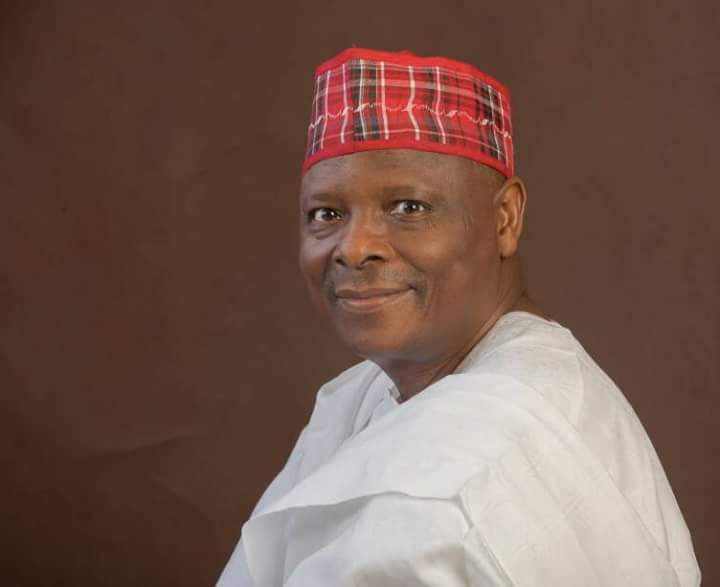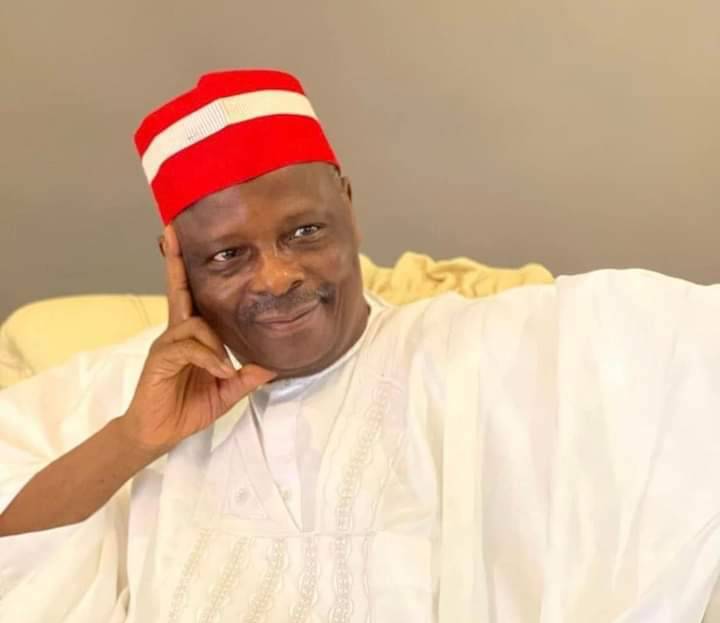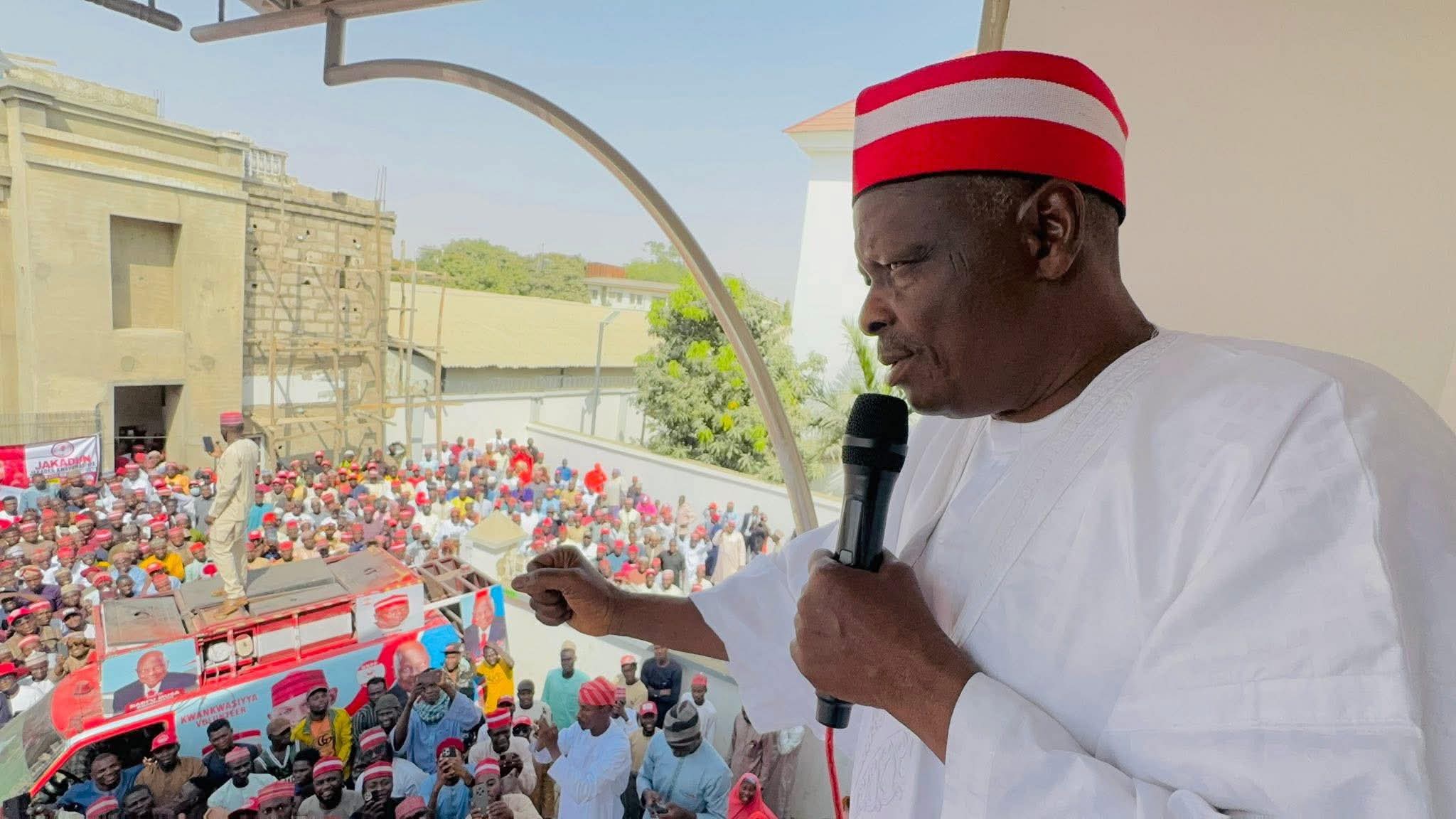
Rabiu Musa Kwankwaso

Kwankwaso softens stance to supporters on APC defection

By Uzair Adam

Former Kano State Governor and leader of the Kwankwasiyya Movement, Senator Rabiu Musa Kwankwaso, has said mounting political tension and pressure on grassroots officials informed his decision to allow some of his supporters in the state to align with the All Progressives Congress (APC).

Kwankwaso made the disclosure in a video message that went viral on Tuesday evening, where he described the political climate in Kano as increasingly tense and emotionally draining for local government officials following the political dominance of former Governor Abdullahi Ganduje and President Bola Ahmed Tinubu.

He said the situation had taken a serious toll on several chairmen, councillors and other political appointees, many of whom reached out to him in distress.

According to Kwankwaso, some of the officials were experiencing sleepless nights and deep confusion, while others reportedly required medical attention due to the pressure they were under.

“Many chairmen and councillors called me to explain what they were going through. Some could not sleep, some were deeply confused, and some were even placed on hospital drips,” he said.

The former governor explained that the rising tension compelled him to consult widely in order to reduce the hardship being faced by his loyalists, noting that many of their legitimate expectations from government were yet to be met.

He said maintaining a rigid political position under such circumstances could have worsened the suffering of the affected officials, which led to the decision to allow them to take steps that would bring relief.

“We agreed that all chairmen, councillors, supervisory councillors and anyone who was asked to sign should go ahead and do so. We have no issue with that,” Kwankwaso said.

He dismissed suggestions that the move was linked to early preparations for the 2027 general elections, stressing that the time for such political battles had not yet arrived.

“2027 is still far away. We pray that Allah spares our lives to reach that time. Our supporters are everywhere; we know them and they know themselves,” he added.

Kwankwaso expressed hope that the decision would help calm political tension in Kano State, particularly among those he said were being subjected to pressure, while thanking residents of the state for their patience and understanding.

He also praised Governor Abba Kabir Yusuf, noting that the governor had recently acknowledged the achievements of the Kwankwasiyya administration and highlighted actions of the immediate past government which, according to him, hindered progress in the state.

In the video, Kwankwaso further alleged that the state government had introduced measures aimed at intimidating local government officials and political appointees.

He claimed that chairmen, councillors, secretaries and other office holders were allegedly compelled to write their names on lists indicating whether they supported the Kwankwasiyya movement or the Ganduje political camp.

Describing the practice as unacceptable, Kwankwaso said such actions would discomfort any well-meaning resident of Kano State, regardless of political affiliation.

He also reflected on the 2015 political transition, alleging that acts of betrayal at the time resulted in years of hardship for his supporters.

“We looked back at history and remembered what happened in 2015, when our supporters suffered for eight years because of political disloyalty,” he said.

The video has continued to generate reactions within and outside Kano State, with supporters and critics offering differing interpretations of Kwankwaso’s remarks and the broader political implications.

Gov Yusuf reaffirms loyalty to Kwankwaso, dismisses rift rumours

By Uzair Adam

Kano State Governor, Abba Kabir Yusuf, has dismissed claims suggesting a rift between him and his political mentor, Senator Rabiu Musa Kwankwaso, emphasizing that no one can succeed in creating division between them.

The governor made the clarification on Tuesday in Madobi during a ceremony marking Kwankwaso’s 69th birthday.

He reiterated his unwavering loyalty to the former governor and vowed to continue upholding the ideals and vision of the Kwankwasiyya movement.

“Those within and outside trying to create a quarrel between me and our leader, Engineer Rabiu Musa Kwankwaso, will not succeed,” Yusuf stated.

He described Kwankwaso as a divinely inspired leader whose principles have guided the political direction of Kano State, adding that he would remain committed to sustaining his legacy.

Governor Yusuf also prayed for long life and good health for the NNPP national leader, describing him as a visionary whose leadership continues to inspire progress across the state.

Speculations about tension between the duo had surfaced in recent months following the emergence of a movement called “Abba Tsaya da Kafarka” (Abba Stand on Your Feet), allegedly led by former Secretary to the State Government, Dr. Baffa Bichi, and ex-Commissioner for Transport, Alhaji Salisu Digol.

The movement was said to be pushing for greater administrative independence for Yusuf’s government, a development that fueled rumours of a possible power struggle within the Kwankwasiyya political family.

NNPP disowns Kwankwaso, says he can’t contest 2027 presidency on its platform

By Uzair Adam 

The New Nigeria Peoples Party (NNPP) has declared that its 2023 presidential candidate, Senator Rabiu Musa Kwankwaso, no longer has the party’s platform to contest against President Bola Tinubu or any other presidential hopeful in the upcoming 2027 elections.

This was announced in a statement on Saturday by the party’s National Chairman, Dr. Agbo Major, in response to comments made by Buba Galadima, who claimed that Kwankwaso would remain in the NNPP and contest the next presidential election on its ticket.

Galadima had dismissed speculations that Kwankwaso was defecting to the All Progressives Congress (APC), insisting the former governor would strategically stay in the NNPP until the 2027 political whistle is blown. He also urged Nigerians to support Kwankwaso’s presidential ambition.

However, Dr. Agbo refuted Galadima’s claims, stressing that both Kwankwaso and Galadima had long been expelled from the party for anti-party activities and therefore could not speak for or use the NNPP for any political ambition.

“Our Memorandum of Understanding with the Kwankwasiyya Movement, led by Kwankwaso, ended shortly after the 2023 elections. We cannot allow Kwankwaso back into the NNPP because of the internal crises and legal battles he caused,” Agbo stated.

He alleged that Kwankwaso attempted to hijack the party by changing its logo to reflect the Kwankwasiyya movement’s identity, which was later reversed through court intervention after a controversial convention in Abuja.

Agbo also dismissed the possibility of Kwankwaso receiving another automatic ticket from the NNPP, stating that such a privilege would not be granted again.

“Kwankwaso is known for joining only political parties where he can control leadership. But here, that era is gone. His ambition is dead on arrival,” Agbo added.

While affirming Kwankwaso’s constitutional right to contest any office, Agbo emphasised that the NNPP would not be involved in any antagonism against the President or other political parties.

He said the party is now considering fresh aspirants ahead of 2027 and will ensure due process and transparency in selecting its next presidential candidate.

“The NNPP has moved on. We will not be drawn into needless controversies. We advise Kwankwaso to form his own party if he still wants to pursue his ambitions,” Agbo concluded.

NNPP dismisses claims of Kwankwaso’s planned defection to APC

By Uzair Adam 

The New Nigeria People’s Party (NNPP) in Kano State has dismissed rumours suggesting that its 2023 presidential candidate, Senator Rabiu Musa Kwankwaso, is planning to defect to the All Progressives Congress (APC).

The state party chairman, Hashimu Dungurawa, made this known while reacting to growing speculation surrounding Kwankwaso’s alleged defection.

Dungurawa stressed that neither Kwankwaso nor the NNPP had any intention of joining the APC, which he described as a party that has failed Nigerians.

“Definitely, we (NNPP) don’t have that interest or intention. We see them (APC) as enemies of democracy. Look at where they’ve led the country today. People are only waiting for the day of the election to teach them a lesson,” Dungurawa stated.

He further noted the steady decline in the APC’s electoral support, saying, “In 2015, they had almost 20 million votes. In 2019, they got 16 million, and in 2023, it dropped to 8 million votes.”

This comes after the Chairman of the APC in Kano State, Abdullahi Abbas, welcomed the idea of Kwankwaso joining the APC but stated that it would be under certain conditions.

APC, PDP, and the rest: A three-way battle for 2027

By Zayyad I. Muhammad

As politicking for the 2027 elections gradually gains momentum, both new and familiar scenarios will inevitably emerge. Nigeria’s political landscape is dynamic and often shaped by geopolitical factors, and 2027 will be no exception.

The truth is, despite its internal wranglings and historical baggage, any coalition that does not have the PDP as its central pillar is unlikely to achieve the kind of national spread required to win a presidential election in Nigeria. The PDP, with its extensive grassroots network and long-standing presence across all six geopolitical zones, remains the only opposition party with a truly nationwide structure, even if its influence has somewhat waned in recent years.

Peter Obi and Rabiu Musa Kwankwaso, notable third-force figures from the 2023 elections, lack enthusiasm for any clearly defined coalition. Obi appears ready to pursue the presidency again, but the conditions that fueled his surprising 2023 performance- particularly the support from urban youth and disenchanted Christian voters— have significantly waned. This support was initially driven by fear over Tinubu’s Muslim-Muslim ticket, which caused concerns among Christians. Today, that fear has faded, and ironically, the Muslim-Muslim arrangement includes more Christian participation in government than anticipated.

Kwankwaso, on the other hand, appears to have adopted a more pragmatic, localised approach- ‘ state capture. Kwankwaso’s posture suggests a strategy of quiet autonomy: “I have Kano; let me control it. I won’t interfere with you, and don’t interfere with me.” This ‘state capture’ mentality may give him relevance at the regional level but severely limits his national appeal.

President Tinubu, meanwhile, has carelessly  or perhaps inadvertently squandered the political capital that the APC enjoyed in the North from 2015 to 2023. During that period, the APC could count on overwhelming support from northern voters , often to the extent that votes from a single state could nearly cancel out those from entire geopolitical zones elsewhere. That dominance was largely tied to a geopolitical strongholds strategy . Tinubu’s failure to maintain and galvanize this strategy will eat up the APC’s traditional votes in the North, which are very key for the APC’s return to a second term.

Furthermore, Tinubu has, whether knowingly or not, revitalised the dormant CPC bloc — a faction of the APC that once represented the ideological and political base of Buhari’s loyalists. Now, with the central leadership perceived as disconnected from northern interests, the CPC bloc sees an opportunity to reassert itself. In regions like the Northwest, particularly, this could lead to a realignment of loyalties, with Tinubu’s influence weakening in favor of those viewed as more authentically representing northern interests. 

Nepotism is nepotism. While Buhari’s nepotism was largely regional and driven by northern priorities, Tinubu’s appears more ethnic and focused on Lagos, which could prove politically costly if not urgently recalibrated. That said, Tinubu still has time and political tools to course-correct before 2027, if he chooses to use them wisely.

The current coalition promoters, however, appear to be relying on an outdated strategy. The 2015-style bandwagon movement, built around the idea of ‘change,’ is unlikely to resonate with voters in 2027. Buhari’s eight-year presidency has left a mixed legacy, with many citizens feeling disillusioned by the unmet expectations. The old formula simply won’t work again.

In 2027, two key elements will determine electoral success, not only at the center but also in the states: substantial resources, both financial and structural , and science. The days when charisma and rhetoric alone could deliver victory are over. Any political group serious about winning must adopt a data-driven strategy. This entails conducting thorough research into voter behavior, turnout patterns, demographic shifts, and regional voting strengths. 

It also requires understanding the psychology of the electorate, particularly among young voters, who now constitute a decisive segment. Apolitical political scientists, data analysts, and behavioural experts will play a more vital role than ever before. Without this approach, even the best-funded campaign could fall flat.

Finally, it is important to accept that the coalition model of 2015 and the voting behavior of 2023 are not likely to repeat themselves. Nigeria’s political terrain has evolved, so to speak . As of today , although tomorrow is uncertain, the three major blocs heading into the 2027 elections appear to be Tinubu’s APC, the PDP, and the rest . It is shaping up to be a near-zero-sum game. 

Zayyad I. Muhammad writes from Abuja via zaymohd@yahoo.com.

Echoes of the past, choices of today: Will Kano’s throne withstand the test of time and wisdom?

By Usman Abdullahi Koli

The grandeur of Kano’s emirate is not merely an inheritance of a throne but the custodianship of a deep-rooted history, culture, and tradition that represents the very soul of African heritage. From the era of Bagauda to the reign of Ado Bayero, the emirate has stood as a symbol of resilience, dignity, and continuity. 

Today, as the emirship tussle continues, it presents a defining moment not just for those directly involved but for the entire Kano people, whose unity and stability rest upon the wisdom of their leaders. It is a moment that demands measured actions, guided by history and the sacrifices of great monarchs who prioritised the collective good over personal ambitions.

The Kano Emirate is no stranger to succession disputes; however, history has shown that wise leaders have navigated such crises with patience, foresight, and a commitment to preserving the integrity of the institution. From the reign of Emir Muhammadu Sanusi I to that of Ado Bayero, the emirate has undergone significant transitions- some peaceful, others contentious- but ultimately resolved with a sense of responsibility toward the larger interest of Kano.

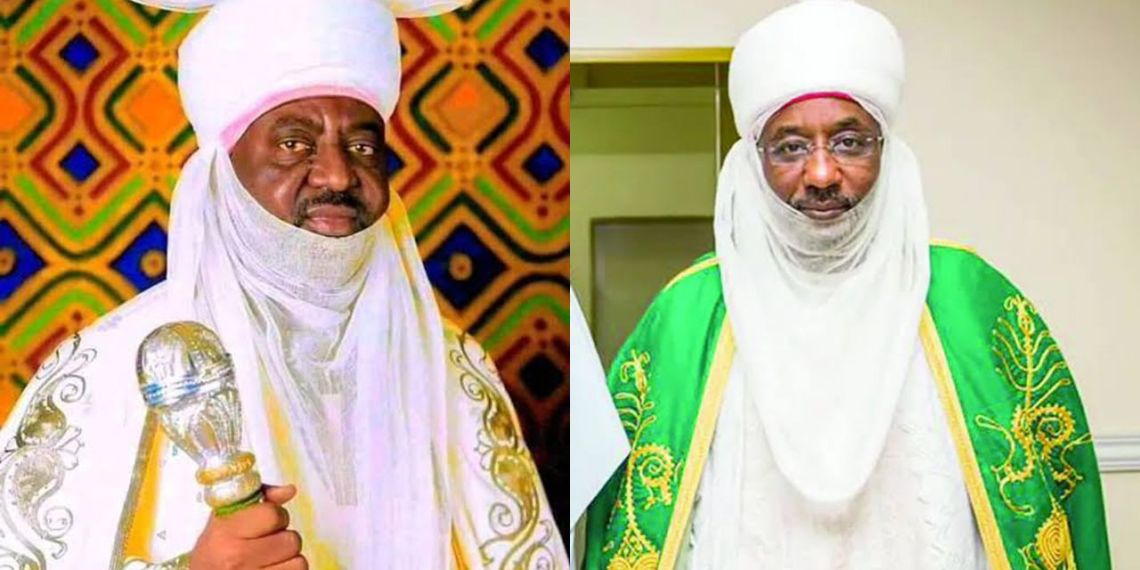
Today, we see echoes of the past in the contest between Emir Muhammadu Sanusi II and Emir Aminu Ado Bayero. While the legal and political dimensions of the crisis continue to unfold, the moral weight on those involved is immense. The key question remains: Will the dignity, harmony, and prestige of Kano take precedence over personal interests, or will history remember this episode as a moment of avoidable discord?

History is replete with examples of monarchs who faced displacement yet responded with wisdom, ensuring that their thrones remained symbols of honour rather than sources of division. In 1936, King Edward VIII of Britain abdicated the throne out of personal conviction, avoiding a constitutional crisis. 

More recently, King Juan Carlos of Spain voluntarily stepped aside to preserve national unity and dignity. Within Africa, deposed monarchs have often demonstrated restraint, placing the peace of their people above personal grievances.

A particularly relevant example is Emir Muhammadu Sanusi II, who, despite the political implications of his removal in 2020, did not rally his supporters to contest the decision. Instead, he accepted his fate with remarkable composure, trusting in destiny and the historical cycle that governs leadership.

Governor Abba Kabir Yusuf is enormously responsible for ensuring that his administration’s actions do not fuel unnecessary tensions in Kano. While he holds constitutional authority over traditional institutions, wisdom dictates that such decisions be made with a far-reaching vision that safeguards Kano’s unity, stability, and the sanctity of its traditions. Political decisions should not be allowed to erode the revered position of the emirate.

To Emir Aminu Ado Bayero, this moment calls for deep introspection on the true essence of leadership. His revered father, Emir Ado Bayero, was an emblem of peace, patience, and sagacity. The respect he commanded was not merely because he sat on the throne but because of his ability to navigate crises with wisdom. Now, his son faces a historic test: will he allow personal ambition to override Kano’s peace, or will he embrace the noble path of sacrifice? The decisions he makes today will shape how history remembers him.

To Emir Muhammadu Sanusi II, his reinstatement is a return to power and an opportunity to lead with renewed wisdom and vision. His expectations are immense—not for vengeance or retribution, but for reconciliation and statesmanship. The people of Kano look up to him to use his vast experience, intellect, and leadership to heal divisions, restore trust, and solidify the emirate as a pillar of stability.

Kano is more than a city; it symbolises Africa’s resilience, culture, and civilization. The emirate embodies centuries of tradition that must not be tarnished by personal conflicts. The world is watching, and history is recording. The real question is not who occupies the throne today, but how that throne is preserved for generations to come.

It is crucial for external influences, particularly those in Abuja, to respect the Kano State Government’s decision. The constitution recognizes states as custodians of their emirates, and any interference from outside forces risks escalating tensions rather than resolving them. Political insinuators should avoid fueling discord and instead honour the autonomy of Kano’s leadership.

Now, the great tradition of the Sallah Durbar, which both factions claim to organise, must not become a battleground for supremacy. The grand procession, deeply embedded in Kano’s cultural and Islamic identity, is meant to unite, not divide. It should not be reduced to a contest of power. Both sides must recognize that personal ambitions should never overshadow the collective peace of Kano. True leadership is tested not in times of comfort, but in moments of crisis, and the world is watching to see whether wisdom or ego will prevail.

Great monarchs are remembered not for how fiercely they fought to retain power, but for how wisely they managed transitions, prioritized peace, and left behind legacies of honor. The lessons of Kano’s past emirs—from Bagauda to Ado Bayero—should serve as a guide for present leaders. These revered figures ruled with dignity, wisdom, and a profound sense of duty to their people.

Those who occupy the throne today must consider: Will they be remembered for upholding this legacy or for diminishing it?

May wisdom prevail over pride, and may Kano remain the fortress of culture, tradition, and unity it has always been.

Usman Abdullahi Koli wrote via mernoukoli@gmail.com.

2027: Aregbesola, Kwankwaso hold ‘strategic meeting’ in Lagos

Former Minister of Interior Rauf Aregbesola and ex-Kano State Governor Rabiu Kwankwaso recently met in Lagos for a “strategic” discussion in preparation for the 2027 general elections.

“Aregbesola and Kwankwaso just completed a marathon meeting in Lagos where they strategised on the 2027 election,” a source within the party disclosed.

This development follows the recent exit of Aregbesola’s political group, Omoluabi Progressives, from the All Progressives Congress (APC).

Abosede Oluwaseun, the group’s spokesperson, explained that their decision to leave was due to issues such as “ostracisation from the party, suspension and expulsion of leaders without fair hearing, and continuous denigration of the structure.”

Shortly after, the APC in Osun State expelled Aregbesola, citing alleged anti-party activities. Aregbesola, who served as Osun’s governor from 2010 to 2018 under the APC and later as a minister in former President Muhammadu Buhari’s administration, now finds himself at the center of discussions on forming a coalition to challenge the ruling party in the upcoming elections.

In recent months, key opposition figures have been holding similar strategic meetings. In November, former Vice President Atiku Abubakar met with Peter Obi of the Labour Party (LP) over breakfast in Adamawa.

In January, Nasir el-Rufai, former Kaduna governor, and Hamza Al-Mustapha, a former aide to the late Sani Abacha, convened in Abuja alongside other politicians in a meeting organized by Shehu Gabam, the national chairman of the Social Democratic Party (SDP).

Kwankwaso, who was the New Nigeria People’s Party (NNPP) presidential candidate in the 2023 elections, has remained a significant figure in opposition politics.

Meanwhile, Ajuji Ahmed, the NNPP chairman, recently stated that while the party is not currently engaged in coalition discussions, it is open to the possibility in the future.

Kwankwaso denies rumours of power-sharing deal with Atiku, Obi

By Uzair Adam 

Senator Rabiu Musa Kwankwaso, former governor of Kano State and presidential candidate of the New Nigeria People’s Party (NNPP), has dismissed rumours suggesting he entered a power-sharing agreement with opposition candidates Atiku Abubakar of the Peoples Democratic Party (PDP) and Peter Obi of the Labour Party (LP).  

In an interview with the BBC, Kwankwaso expressed anger over the claims, describing them as baseless fabrications intended to mislead the public. 

He alleged that Atiku’s camp had met with regional leaders, including clerics, to promote the false narrative.  

“This issue deeply angers me—to hear that respected elders are spreading lies about something that never happened. 

“I was told that nearly 45 clerics were gathered and informed about this fabricated story. I did not appreciate this at all,” he said.  

Kwankwaso further clarified the alleged agreement, which claimed Atiku would serve as president for four years, followed by Kwankwaso for another four years, and Peter Obi for eight years, stating categorically, “This is completely false; such an agreement never existed.”  

Reflecting on his departure from the PDP to join the NNPP, Kwankwaso said he left the party to escape the “humiliation” he and his supporters faced. 

He emphasised that such incidents reinforced his decision to forge a new political path.  

“Such lies and deceit are precisely why we left. Myself, Peter Obi, Wike, and others all left. Now they are coming back, asking us to help those who humiliated us to achieve their goals,” he said.

What sets Kwankwaso apart in Nigeria’s political landscape

By Aiman Fodio

I respect Senator Rabiu Musa Kwankwaso as a leader and admire his dedication to charitable causes, especially education. He is, by no means, a saint; he is human, like all of us, subject to the frailties that come with the human condition. Yet, when we consider moral reasoning, pragmatism in leadership, ethical choices, and the complex compromises of politics, I believe he emerges as a stand-out figure in Nigeria’s presidential landscape today.

We all concur that the nation cannot grow without a productive, well-educated populace. Therefore, we must commend his efforts in providing scholarships and educational support to countless underprivileged youths. 

In Nigeria, where quality education is often reserved for the privileged few, he at least tried to bridge that gap. These are nothing short of transformative. He’s not just speaking abracadabra on X (Twitter) about change; he actively works to make it accessible, particularly for those who need it most. Don’t just come and tell me that he did all that with the government money or looted; I challenge you to bring someone with a comparable track record which surpasses his commitment to uplifting the marginalised.

As we know, Nigeria is a developing nation grappling with the intricacies of governance that differ from those in developed and developing countries. This climate needs politicians who starkly contrast with the transactional politics that often dominate our region. 

Kwankwaso is unique in that his power hinges on support from ordinary Nigerians, while many of his contemporaries are tethered to elite alliances. This dynamic has made him the Jagora—leader and guide—to many, though some may derisively label him the ‘Local Champion’.

Most (about 95%) oppose him with divisive ideologies that tarnish his reputation and undermine his connection with his supporters. Many view his popularity with scepticism, trying to erode his strong rapport with his base. Yet, Kwankwaso resonates with the public, not because of propaganda, but because of his track record and genuine empathy. For this reason, he remains one of the few politicians whose influence is authentically rooted in the people’s will, making him a formidable figure on the national stage.

One aspect of Kwankwaso’s political style that I find particularly troubling is the pervasive influence of godfatherism. It’s disheartening to observe his tendency to exert undue influence over his protégés, such as Governor Abba. This dynamic creates a political climate where loyalty to a godfather supersedes the imperative of serving the collective interests of the populace. 

Godfatherism has no place in a progressive political landscape; it stifles authentic leadership and compromises the integrity of those who are meant to govern. Kwankwaso should let Governor Abba Kabir Yusuf focus on the ideals that empower him, granting him the latitude to evolve and serve his constituents with the autonomy they deserve. That would earn Kwankwaso more respect.

Despite this concern, I firmly believe that Kwankwaso remains one of the most qualified and deserving candidates to lead Nigeria. The need to choose the “lesser of two evils” becomes glaringly apparent in a milieu often characterised by many less competent alternatives.

While no leader is without their shortcomings, his extensive experience and interest in uplifting the marginalised position him as a formidable candidate. We must weigh our options carefully, recognising that his potential to enact positive change far outweighs the flaws that may come with his political relationships. Ultimately, our choice should reflect the need for a leader who prioritises the people over personal ambition, and I still see that potential in him.

Aiman Fodio wrote via aimanfodio@gmail.com.

Kwankwasiyya Movement: A Model of excellence in aspirants’ selection

By Dr. Mansur Hassan

The Kwankwasiyya movement, founded and led by Senior Dr. Rabi’u Musa Kwankwaso, has emerged as a dominant force in Nigerian politics, particularly in Kano State. With a reputation for championing transparency, good governance, and the empowerment of the masses, Kwankwasiyya has also developed a unique and highly effective method for selecting political candidates. This process reflects the movement’s deep-rooted commitment to democracy, grassroot participation, and merit-based leadership.

A Thoughtful Approach to Candidate Selection

At the heart of the Kwankwasiyya movement’s political ideology is the belief that leadership should reflect the will of the people while upholding competence, dedication, and integrity. In line with these principles, the movement has designed a multi-layered process for selecting candidates for both primary and secondary elections, ensuring that only the best and most qualified individuals are chosen to represent the party.

The selection process begins at the local level, where the local government caucuses play a crucial role. The caucus engages in a consensus-building exercise among the aspirants within the constituency. This initial step underscores the movement’s emphasis on local representation and grassroots decision-making, allowing the community to participate in choosing those who will best serve their interests.

In cases where the consensus fails and the local leadership is unable to agree on a single candidate, a screening process is initiated. This screening is designed to assess the qualifications, leadership capabilities, and electability of the aspirants. The goal is to streamline the number of candidates, ensuring that only the most capable individuals advance to the next stage.

The Role of the National Leader

Once the screening process is complete, the shortlisted candidates are presented to the national leader, Senior Dr. Kwankwaso, for final review. Here, the movement’s supreme leader plays a pivotal role in ensuring that the selected candidates align with the values and vision of the Kwankwasiyya movement. Dr. Kwankwaso, with his vast political experience and insight, assesses whether the shortlisted candidates truly reflect the will and aspirations of the people. If there is any indication that the candidates do not align with popular sentiment, the national leader has the authority to call for further changes, ensuring that the process remains fair and representative.

However, when the consensus and the screening process successfully produce a candidate that meets both the local caucus’s approval and the movement’s broader ideological standards, the national leader endorses the candidate. This method guarantees that the selected candidates are not only popular but also competent, ethical, and aligned with the movement’s long-term vision for societal progress and development.

An Open Democratic Platform

Despite the careful and thoughtful selection process, the Kwankwasiyya movement remains committed to upholding democracy within the party. For any aspirant who feels dissatisfied with the outcome of the selection process, the opportunity to contest in the party primaries remains open. This option ensures that all candidates have a fair chance to present their case to the party’s larger membership, maintaining transparency and inclusivity within the movement.

This democratic safety valve is another reason why Kwankwasiyya’s method of candidate selection stands out. It allows for robust internal debate and competition while ultimately reinforcing party unity and strength.

A Cornerstone of Political Dominance

The Kwankwasiyya movement’s candidate selection process is a key factor behind its sustained political dominance in Kano State and its growing influence across Nigeria. The movement’s ability to produce competent, popular, and well-prepared candidates has earned it the trust of the people. The process ensures that leadership emerges from a foundation of integrity, merit, and accountability, reflecting the movement’s broader commitment to progressive governance.

Beyond mere electoral success, the Kwankwasiyya movement represents a political ideology that is centered on empowering the masses, fostering development, and ensuring that governance is responsive to the needs of the people. Its candidate selection process is a reflection of this ideology, ensuring that leadership is not imposed but earned through consensus, merit, and democratic principles.

Conclusion

The Kwankwasiyya movement, under the guidance of Senior Dr. Rabi’u Musa Kwankwaso, has set an exemplary standard for political organization and candidate selection. By balancing grassroots participation with strong national leadership, the movement has created a model that ensures only the best candidates emerge, reinforcing its dominance and appeal. As Kwankwasiyya continues to grow in influence, its political ideology and practices will undoubtedly shape the future of Nigerian politics, setting a standard for others to follow.

Mansur Hassan, PhD
Secretary, Kwankwasiyya movement
Kano state.