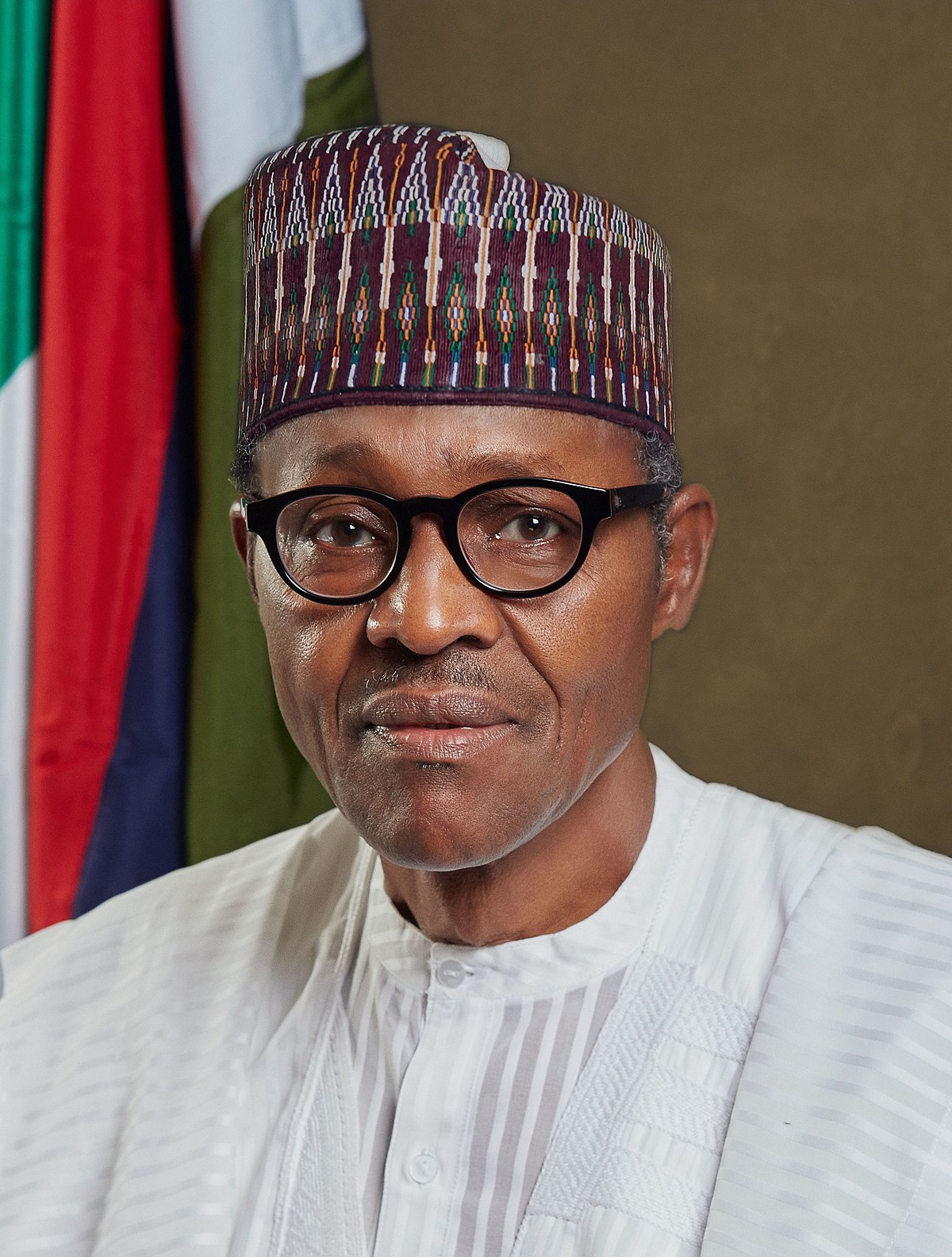
President Muhammadu Buhari

Buhari launches Dangote Refinery in Lagos

By Ahmad Deedat Zakari

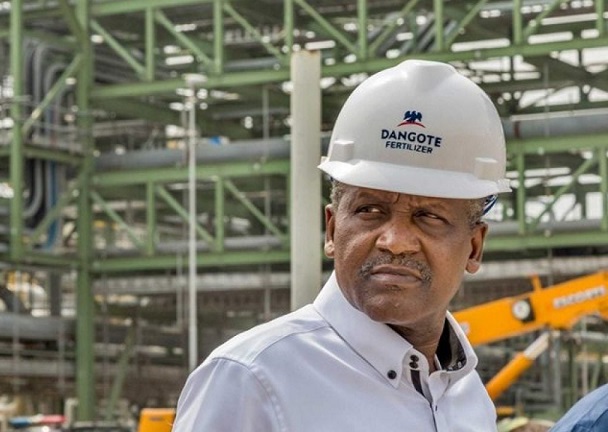
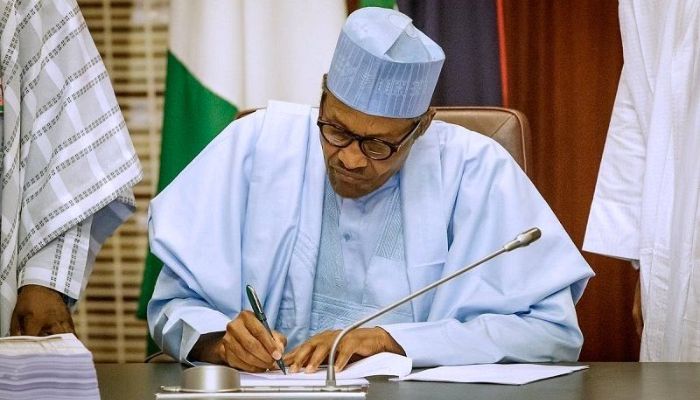
Barely seven days before the expiration of his final tenure, President Muhammadu Buhari launched the long-awaited Dangote Refinery in Lagos. The newly commissioned refinery is the first private-owned oil refinery in Nigeria. 

The President was flanked by many dignitaries from within and outside Nigeria during the unveiling. He described the refinery as a ‘game changer’ for the country’s economy. 

“This clearly makes this event a notable milestone for our economy and a game changer for the downstream petroleum product market not only in Nigeria but the entire African continent,” He said.

The accomplished businessman and owner of the refinery, Alhaji Aliko Dangote, gave the welcome remark at the unveiling ceremony.

He thanked President Muhammadu Buhari for his support and said he was his source of inspiration at times he felt like giving up. 

He also appreciated the Governor of the Central Bank of Nigeria, Godwin Emefiele, for ‘moving mountains’ in the course of the project. 

The billionaire also revealed that the first product of the $12 billion facility “will be in the market before the end of July, beginning of August this year”.

“Beyond today’s ceremony, our first goal is to ramp up production of the various products to ensure that within this year, we’re able to fully satisfy our nation’s demand for higher quality products,” he said.

The Dangote Petroleum Refinery and Petrochemical is the largest single-train refinery in the world and has a capacity of 650,0000 capacity a day.

Academic dream: My research, my citations, my h-index, and the “true impact”

By Prof. Abdelghaffar Amoka

Colleagues have been sharing their experiences as academics in Nigerian universities with several reactions. The essence is not to discourage people from going into academia but to know what lies ahead of you if you want to go into academia. Like most colleagues, I had no idea of the challenges in Nigeria’s academia when I was so eager to join. For example, I never knew the job is for 24 hours, and that promotion is based on research output you will fund from your pocket.

After graduating in 1999, I looked forward to being part of the academia. During my youth service in Kano, I visited the HoD of Physics, ABU Zaria, Prof I. B. Osazuwa, to discuss my “academic dream”. He directed me to the late Prof. N. I. Hariharan. I met him, and he advised that I should enrol for MSc. So, in 2001 on my way from Kano, I stopped over in Zaria, purchased the PG form, and left for Lagos.

As we were job-hunting in Lagos, I remember my friend and Brother, Yusuf Osafore, saying it appears I was not taking the job hunting seriously but was more concerned with pursuing a Master’s degree. My looking forward to becoming an academic was so apparent to people around me. Then, I eventually got hired in March 2005. It was a dream come true. I have finally joined the group of intellectuals. The “most revered” group in the society. A group of knowledge generators. A group of reservoirs of knowledge.

After a few months in the university, they revealed the reality of Nigerian academia. The fact that I had no prior knowledge of. There are, of course, viable ideas, but they die within the university walls because the political class isn’t interested in them. The ideas are published, but it is just for promotion’s sake. I paid N7,000 or so to publish my first paper in a Nigerian university-based academic journal in preparation for the next promotion to Lecturer II. These made me begin to meditate on “my academic dream”.

In 2007, I had the opportunity to visit ICTP for a two weeks workshop, and my interaction there revived my academic dream. Then, in 2009, I got lucky and left the country for my PhD, strengthening my revived “academic dream”. My joy knew no bounds when I published my first research paper in an Elsevier-indexed Q1 journal in 2011. From then on, the papers kept coming.

There are two publication options. You either publish in close access journals where publishers are paid for access to your research work, or you pay between $1,500 to $3,500 to publish as open access for everyone to have access. I remember spending some dollars in 2014 to publish the last paper from my PhD work in Elsevier’s Sustainable Materials and Products journal as open access. That money came from my salary in Norway.

We were told that research impact is based on the number of citations one has. Something they called h-index was brought to classify our research impact. I began to monitor my citations and h-index on Scopus, ResearchGate, and Google Scholar. I usually wear a smile on my face whenever I receive citation alerts. As the promotion period approached, I counted my number of publications and was excited as my number of citations grew. We began to use Scopus h-index to rate academics. Unfortunately, we get carried away so much that if you talk too much, we ask, “What is your Scopus h-index?”

The irony is that you look for money (either grant or personal fund) to do research and get it published in a reputable journal after rigorous reviews (reviewers work for free) and are excited for an additional paper to your credit. Brag that you have so many articles in indexed journals and get promoted for a peanut added to your salary. In Nigeria, you become a Professor to earn about 440 USD (N325,000) per month. You proudly go around with the title (Prof). Meanwhile, a multi-billion dollars cooperation makes money from your sweat and the knowledge you have laboured to create. And all that we are happy with are citation alerts, a growing h-index, and promotions that come with peanuts.

The best publication time is during our young age. As we grow older, our students take over the writing. Then, the university will ask why you are the paper’s first, second, or last author. They have got no idea how it was funded. The academic dream can truly be defined as spending our entire youth creating knowledge and paying a billion-dollar corporation to take it from us in exchange for career capital that you can then use to buy meaningless promotions from other exploited individuals.

Sometime back, I logged into the university network, and the research output of a senior colleague on Google Scholar was highlighted on the university webpage with thousands of citations and a high h-index. So I decided to follow the link to check mine. Mine was very much below his, but it wasn’t that bad. So then, I sat down and began to question the true impact of my research work beyond what Google Scholar has evaluated.

Do a mere citation of our publications truly translate into research impact? Research is global, but you should see your work impact your immediate environment. We have Professors with thousands of citations that can’t present an inaugural lecture, faculty colloquium, or even a departmental seminar; so, what is the impact of our research on our immediate community?

I tried to reflect on our impact, especially as Professors and Farooq Kperogi came to mind. I remember checking on him on Scopus when he became a Professor in the US. However, when I later reflected on his writeups on Nigeria’s sociopolitical scene and the healthy discussions he had generated towards repositioning the country, I began to realise that Farooq has made much more impact on Nigeria than many of us with a better presence on Google Scholar, Researchgate, and Scopus.

Let me introduce myself properly—a Professor of Physics specialising in dielectrics and high-voltage electrical insulation. I have 33 research documents indexed in Scopus and an h-index of 11, 13, and 14 in Scopus, Reseachgate, and Google Scholar, respectively. In addition, I have about 585 citations on Google Scholar. My published research articles are on high-voltage insulation. Still, the articles and the citations, put together, have not impacted our electricity network in Nigeria, which is on a breakdown spree. So, what, then, is my impact?

Universities are identified as keys to innovation, from developing new ideas to providing state-of-the-art facilities. Industrialists and managers of the countries engage them in keeping the workflow full of new ideas. But in Nigeria, our university system has been made the most insignificant institution that has been reduced to lecture rooms. We only publish to avoid perishing.

Everywhere in the world, academics are respected and heard when they talk. But in Nigeria, especially during the Buhari government, they are tagged as enemies to crush. Our universities were once places where policies evolved. Academics generated ideas that shaped the country. Discussions in academia are used to shape the policy development of our nation. The golden time of Bala Usman can never be forgotten. What happened to those intellectual discussions? Who killed it? We now chase appointments within and outside the universities, especially after we become ‘Professors’.

Nigeria has been messy for the last eight years, and universities are in the worst state ever. But the government of Buhari used eight years to run away from education stakeholders’ engagement. The political class are educated people with no value for the education of the people. The best gift that Buhari gave to the people that so loved him was to strangulate the public universities for the people. Rather than having a public engagement on how to salvage the situation he was well aware of before his appointment, the outgoing Education Minister, Adamu Adamu, described the backwardness that they have imposed on us as “self-imposed backwardness” and their idea of the solution is by approving the establishment of more substandard private universities in the North.

The incoming government of Bola Ahmed Tinubu needs to come in with a clean and open mind to engage the academia with sincerity. They should look at ASUU as partners in progress rather than enemies to crush. The solutions to our problems are right in our hands if we are willing to engage each other. On the other hand, academia needs to start looking beyond publishing, not to perish. We need to start thinking beyond journal publication impact that has no impact on our immediate constituency, Nigeria. We need to wake up and revive the golden days of Bala Usman on our university campuses.

©Amoka

Are Nigerians fair to Buhari?

By Prof. Abdussamad Umar Jibia

Many years ago, when I was a young lecturer at Kaduna Polytechnic, I had a discussion with a senior colleague of mine. I have always disliked having disagreements with my seniors because I easily admit defeat as I don’t want to appear disrespectful. 

My discussion with the Chief Lecturer was around General Muhammadu Buhari’s achievement as PTF Chairman. The senior colleague, who bitterly disliked Buhari, was of the opinion that PTF under Buhari “did nothing except for some roads he constructed around Katsina”. When he was reminded that the road he followed daily to work was constructed by Buhari’s PTF, the man vehemently denied it even though it was well known to all the people around the Tudun Wada area of Kaduna, and he could easily find out in case he forgot. But his mind was beclouded by hatred. Hatred stinks, and it blinds.

My discussion with my senior colleague came to my mind this week while I was travelling back to Kano from Kaduna. For two decades before Buhari assumed office as a civilian President, this road had become one of the most dilapidated in the country, and Nigerians, including myself, wrote to call the attention of President Buhari to it while his administration was still taking off. These calls did not fall on deaf ears, and even Buhari’s enemy cannot deny that the quality of work done in the renovation is high.

Of course, more work is needed on the Kaduna-Abuja side, and although it is ongoing, it is clear that the project will outlive the Buhari administration, which has less than three weeks to go. His is, however, much better than PDP governments that were more interested in politics than service.

Two other projects attracted my attention while on the same journey. They are the Kaduna-Kano-Maradi rail line and the famous AKK gas pipeline project. The speed at which the two projects are being pursued is high, but the completion date can obviously be no earlier than May 29, 2023.

On December 25, 2018, while travelling along the Kano-Katsina highway, I stopped at Tsanyawa to take a picture of an accident caused by Rabiu Musa Kwankwaso’s five-kilometre project. The five-kilometre project was a failed project of the Kano State Government under Engr. Dr Rabiu Musa Kwankwaso, in which a five-kilometre length of the expressway was supposed to be built in each local Government headquarters.

For local government headquarters on major federal highways like Tsanyawa, Bichi, Rimin Gado, etc., the state government only succeeded in spoiling Federal roads on which partitions were made without increasing the widths of the roads. I displayed the picture on my Facebook page with a call to Kano State Government to correct the mistake it made. 

Two years later, on 24th October 2020, I stopped at the same spot in Tsanyawa and took another picture of the road after Buhari’s dualization project. The dualization solved the problem in both Bichi and Tsanyawa, the two local government headquarters on that road. I am personally happy that the dualization of the Katsina-Kano road was embarked upon by the Buhari administration because it is the road I ply more than any other in my life.

So why are we only looking at the mistakes? Were our expectations from Buhari too high? Did his mistakes overshadow his achievements? Or are we simply difficult to satisfy?

A fair answer is to say, “All of the above”. You may not be happy to hear that, but it is my opinion.

I have never seen people more expectant than Nigerians. When they love a person, he is fault-free and infallible. Anyone who disagrees with him must be insulted and disgraced. He will solve all their problems. I think that is why when they eventually hate the same person, they go to another extreme of not seeing anything good with them. Buhari is a victim of this, unfortunately. Examples of other objects of extreme blind love by their supporters are Peter Obi and Rabiu Kwankwaso.

What about the mistakes? Are they too many or too grave, or both? Are all of them mistakes or blunders? Or are they simply contempt for Nigerians or some groups thereof by President Buhari?

I sometimes wish Buhari did not accept to become the President. Many people are at a loss about how he simply allowed innocent people to continuously be killed in his home state while speaking about defeating Boko Haram in the faraway North East. By the time he leaves at the end of this month, President Buhari will leave Katsina more insecure than he met it. Last week, a major national daily reported the migration of dreaded bandits in large numbers from Zamfara to Katsina state. 

On several occasions, when Buhari was asked about banditry in the North West, he dismissed it as a fight between people of the same culture and tradition. This can mean farmers/herders or Hausa/Fulani communal clash. Many victims like me are not happy with this kind of response and see it as the reason why well-known bandits’ kingpins are operating freely in our state, kidnapping, enslaving, killing, raping, etc. 

The least corrupt Nigerian politician I know will leave Nigerians in a more difficult economic hardship than he met them. I observed Nigerians taking a long time comparing their income and prices of foodstuffs (yes, food, not any luxury item) in 2015 when Buhari came and in 2023 when he is leaving. Nigerians are suffering.

What about Education? Buhari kept poor people’s children at home for eight months last year and many months in 2020 while his children were schooling in Europe is an indication of the contempt he has for the poor people of Nigeria who formed his support base. The number of out-of-school children is rising. The Almajiri Education Commission should have come earlier, but it is still a welcome development which we hope the incoming President should implement with the seriousness it deserves.

Finally, Nigerians are also difficult and unfair. When they love a politician, they don’t consider him a human being with strengths and weaknesses. If they do that at the beginning, they will certainly be fair to him at the end. But like some binary machines, they only have two states; absolute love and absolute hate.   

Prof. Abdussamad Umar Jibia wrote from Bayero University, Kano. He can be contacted via aujibia@gmail.com.

Senator Ndube to drag Buhari to court over $800 million loan plan

By Uzair Adam Imam

There are still debates on the Presidency`s plan to collect $800 million loan from the World Bank. The money is said to be used to succour to the poorest of the poor upon removal of the petrol subsidy in the country.

President Muhammadu Buhari had sought the Senates approval to collect the debt few days to leave office as the President of Nigeria.

Ali Ndube, the senator representing Borno South, has threatened to drag President Muhammadu Buhari to the court over this plan.

The senator stated this in an iverterview on Trust TV`s Daily Politics, describing the attempt as unfair, illegal and unconstitutional.

Ndume stated that, “I will go to court on that because it is unfair, illegal and unconstitutional. Let me give you example, we are two now in the studio and you say you are going to borrow one million and share among the two of us, how are you going to select the two?

“Beside that if you are giving to the two and they are the ones to pay that is okay but it is all Nigerians that will pay.

“If you give Nigerians today ₦4,000 randomly, how fair is that? In fact, it is unconstitutional because the constitution of Nigeria does not allow you to discriminate.

“These guys they will just use grammar to confuse this old man (Buhari) and he will just approve. He (Buhari) doesn’t understand this, they just want to steal the money, we cannot continue to allow this kind of things.

“What they are targeting is what they can get out of it not, what Nigerians can get, you can quote me on that, any of them come to challenge me on TV, I will come back to explain myself, they are misleading the President,” he stated.

Buhari wants Senate to approve $800 loan request

By Muhammadu Sabiu 
 
President Muhammadu Buhari asked the Senate on Wednesday to approve a $800 million loan to fund the National Social Safety Network Programme.
 
During the Senate’s Wednesday plenary session, Ahmed Lawan, who is the President of the Senate, read a letter from Buhari that contained the request.
 
The money, according to the President, will be distributed to 10.2 million low-income and destitute households for a period of six months, with a predicted multiplier effect of 60 million people.
 
To ensure proper implementation, the president therefore asked the lawmakers to take action quickly.

2023 elections most authentic since independence – FG

By Uzair Adam Imam

The Federal Government of Nigeria has described the recently concluded 2023 general elections as the most authentic ever held in Nigeria since independence.

The Minister of Information and Culture, Lai Mohammed, disclosed this yesterday while fielding questions from journalists after the FEC meeting.

He stated that despite efforts by the opposition parties to delegitimize the election, it was the most transparent, freest and authentic ever held in Nigeria.

Muhammed disclosed this as one of the reasons President Muhammadu Buhari refused to interfere with the Adamawa State poll debacle.

He added that the issue was strictly the responsibility of the Independent National Electoral Commission to sort out the matter

According to the Minister, it is not in Buhari’s character to micromanage the government’s institutions.

Mohammed said: “I don’t think that this government has ever intervened in the way the Independent National Electoral Commission conducts its elections.

“So, there’s no need for us to intervene. It was an entirely INEC matter, and INEC handled it.

“The chairman of INEC is in charge of all employees in INEC, and he’s handling it. So, what do you want the government to do?”

Why Nigerians should thank Peter Obi

By Prof. Abdussamad Umar Jibia

The 2023 general elections have come and gone, and like every set of elections, there are winners and losers. Typical of Africans, those who lost alleged rigging and those who won hailed the process.

In addition to winners and losers, there are other people we should cheer for their roles in the elections. First, we should give credit to President Muhammadu Buhari for being true to his promise of organizing free, fair and credible elections. The President himself has observed that Nigerian voters have become more sophisticated. One manifestation of this is that voters no longer vote along party lines. It doesn’t matter if he is a card-carrying member of a political party; once a Nigerian voter sees a better candidate in another party, they go for them. That is the new normal if you like, and it is a good lesson for our politicians.

We must also hail the INEC Chairman. Just like his colleague Prof. Attahiru Jega, Prof. Mahmoud Yakubu has shown an uncommon tolerance in dealing with politicians, even in extreme cases in which an ordinary person would lose control.

My man of the day is His Excellency Peter Obi, a former Governor of Anambra State. I have never met Peter Obi, and he did not attract my attention until he began to claim that he wanted to become Nigeria’s president. From the way he started up to the time he crashed, I knew that Obi didn’t have a good understanding of the country he wanted to govern.

First, Obi wanted it under the PDP. Despite being a failed party, a PDP ticket would have earned Peter Obi a distant second regardless of the part of the country he is coming from. When he could not clinch its ticket, he jumped to the Labour Party. Then he started his campaign, the method of which we all saw.

The part of his political activity that we should thank Peter Obi for is his ability to solve one of the greatest puzzles of the Nigerian census. I mean the question of religion.

Nigeria is a big country with a Muslim majority and a minority that includes a good number of Christians and some pagans. Nigeria’s last census that collected data on religious affiliations was in 1963. According to the 1963 census results, there were 47.2 % Muslims, 34.3% Christians and 18.5% others. In the North, the ratio was 71.7% Muslims, 9.7% Christians and 18.6% others.

Talking about South West, the 1963 census figures identified the present-day Oyo, Lagos, Ogun and Osun as Muslim-majority states, with only Ondo and Ekiti as Christian-majority states.

Subsequent censuses either did not capture religion like the case of the 1991 and 2006 censuses or were cancelled due to controversies surrounding their conduct which was the case with the 1973 census.

Demographic experts make projections based on past trends, fertility and mortality rates and in the case of religious proselytization, migration, etc. The Ibrahim Badamasi Babangida administration decided to remove religion in the 1991 census due to bogus claims of being majority especially made by the church, and since then, the Nigerian Population Commission has avoided conducting standard projections involving religious affiliations.

Without a head count and/or unbiased, professionally made projections, Nigerians are continuously bombarded with unrealistic population figures. At one point in time, Christians claimed that they constituted more than 45% of the Northern Nigerian population, a claim ignored by Muslims for being ridiculous.

While ordinary Nigerians can be misled by propaganda, politicians looking for votes have always been calculative in their determination of who constitutes the majority and should attract their campaign and who is a liar.

And it is not difficult to figure out. Political affiliation in Nigeria is a good pointer to religious affiliation. For example, it is well known that Northern Christians do not vote for Muslims, whereas the former are in the majority. The examples are many and well-known. Thus, the number of Christian elected politicians in a particular state would approximately tell you the percentage of Christians in that state. In addition, the number of predominantly Muslim states with large populations like Kano and Katsina makes the population of the two Christian-majority states of Plateau and Benue a joke.

As a politician who needs votes of the majority to win a national election, Obi should have known all these figures and used them to gauge his level of preparedness. Unfortunately, he lost it and was going from one Church to another, vividly falling into the propaganda trap of the Church. He was carried away by the belief that the Middle Belt is Christian. But where is the Middle Belt? Is it North Central? Who, among the Governors of Niger, Kwara, Nasarawa, and Kogi, is a Christian? Obi was simply too naïve.

However, it is not bad at all. The clergy campaigned for him. Christians were mobilized nationwide. The outcome is what the NPC could not achieve in its censuses. Christians overwhelmingly voted for Obi. The number of Muslims who voted for him was simply insignificant, just like the number of Christians who voted for the Muslim-Muslim ticket of Tinubu-Shettima. The few Christians who did not vote for Obi were seen campaigning for PDP. Overall, more than 14 million voted for either Tinubu or Atiku, both of whom are Muslims. Even if we take 10% of that and add it to Obi, Christians are still a small minority.

As Muslims, we have avoided these arguments as we consider them unhealthy since, after all, our eternal prosperity in Islam is not dependent on whether or not Muslims are in the majority at a particular time or location. But we have been boxed into it, and it is helpful.

Professor Abdussamad Umar Jibia wrote from Kano. He can be reached via aujibia@gmail.com.

For Government’s Success: An open advice to President-Elect Bola Ahmed Tinubu (I)

BY Umar Ardo, PhD

PREAMBLE

First, let me seize this opportunity to congratulate Sen. Bola Ahmed Tinubu on his well-deserved victory in an unarguably the most keenly contested presidential election in Nigeria’s history. For me, I feel fulfilled in that the incipient seed of this outcome was sown by my humble self way back in January 2012, when I conceived the idea of the merger between Buhari’s CPC and Tinubu’s ACN, premised on the former being President and the latter Vice President. Aware of the previous failed attempt at such a merger, I sold the idea to Buhari in such a way and manner that I was confident he would accept. Even though he had then publicly announced that 2011 would be his 3rd and final attempt to contest for the presidency if he lost that year’s election, it turned out easy for me to get his buy-in to the idea as within three hours, he consented and promised me of approaching Tinubu with the plan. I then knew my job was done, as I was certain Tinubu, too, would consent to it.

And lo and behold, about five weeks later, Buhari called me to a meeting in Abuja, at which he briefed me on his meeting with Tinubu on the merger and that the man had accepted the proposition. I felt elated, knowing there and then that change had come to the country. The rest, as they say, is now history. (The details on this concept and how it was worked out are contained in chapter 7 of my book titled “Court and Politics: Chronicling my Experience in the Nigerian Theatre”, published by Sungai Books; New Jessy, USA, 2020. Both the president and the president-elect have copies of the book).

2. THRUST OF THIS ADVICE

Now, having won this hard-earned victory against so many odds, it is important for the sake of the country and the President-elect’s legacy that the regime succeeds. And this success is largely dependent on, among three other things, the thorough implementation of government policies.

The campaign manifesto of the President-elect has no doubt enunciated laudable core policy initiatives capable of resolving the teething problems facing this country. But this will depend largely on one thing – i.e. diligent implementation! In practical terms, this means that:-

➢ No matter how good a policy, maybe its end product lies in implementation;

➢ Citizens assess governance by what is implemented on the ground, and so citizens interact with public policies only at the implementation level;

➢ As the regime starts its term in office, it must ensure that its policies are fully implemented; and

➢ Without fully implementing its policies and making a difference at the implementation level, the regime also risks ending up a failure like previous regimes.

Yet, the major recurrent concern of governance in Nigeria over the years has been the failure to implement policies as conceived and formulated by governments successfully.

3. JUSTIFICATION

The fact that successive governments, not excluding the outgoing one, would come up with laudable policy initiatives, well-conceived and elaborately articulated, but eventually fail at the implementation level, to the disappointment of the public and discredit of the government itself, calls for a new approach to public policy implementation in Nigeria. To this end, it is important to highlight that:-

➢ The primary reason for this gap between excellent policy initiatives and pitiable policy implementation is mainly a lack of [or poor] monitoring and evaluation mechanism;

➢ Even with a strong will on the part of leadership, it has always been difficult to get things to happen in government organisations because of endemic vested interests that create resistance, inertia, discouragements and even sabotage to such policy implementation attempts; and

➢ Good ideas and the will of the government to implement the same are not sufficient; drive and follow-through are equally important, yet often insufficiently appreciated and applied.

Against this backdrop, so as to help the government overcome these challenges and make a difference in performance and achieve set policy objectives, I respectfully make this open advice for the kind consideration and approval of Mr President-elect, please.

4. ACTION STEPS

➢ Establish a Policy Implementation, Monitoring and Evaluation [PIME] Unit under the Office of the President by means of an Executive Order; and

➢ Appoint a Special Adviser to the President on Policy implementation, Monitoring and Evaluation as head of the Unit. Such a person must be knowledgeable, patriotic, trusted and of impeccable character.

5 STRUCTURE, FUNDING AND MODE OF OPERATION

➢ The PIME Unit is to be a policy Monitoring and Advisory Outlet constituted by an Executive Order to operate within the Office of the President;

➢ The Head of the Unit should report directly to the President;

➢ The Unit’s budgetary funding is to be within the budgetary provisions of the presidency; and

➢ Hold monthly 1hr Update Briefing Sessions with the President on the activities, findings and suggestions of the Unit for any further necessary actions.

6. AIMS AND OBJECTIVES OF THE UNIT

The PIME Unit should have the following aims and objectives:-

➢ To ensure full implementation of government policies, designs, projects and programmes for efficient delivery of expected results;

➢ To devise and drive new national policy-performance-design capable of reversing the endemic failure syndrome in policy implementation by the government; and

➢ To create and sustain a positive image of the government in terms of policy and budgetary implementation attitudes nationwide.

7. SCOPE AND FUNCTIONS OF THE UNIT

The PIME Unit should have the following scope and functions:-

➢ Design, develop and implement a systemic monitoring and evaluation framework to track, monitor, assess and report on the performance of all entities in relation to the government’s plans, activities and timeframes so as to improve the quality and quantity designs in policy, programme and/or project implementation relative to government interests;

➢ Monitor, assess and evaluate the performance of ministries, agencies, institutions, departments, projects and programmes of the government to ensure compliance with policy intentions, outputs, outcomes and impact on the polity;

➢ Organize, undertake and provide [if, where and when necessary] training and technical assistance to implementing entities and partners on specific policy implementation initiatives as may be required for the attainment of government goals;

➢ Produce and submit monthly Reports and prepare presentations of the Unit’s activities, findings and recommendations to the president;

➢ Advice the president on all issues relating to the full implementation of government policies, programmes, projects and obligations; and

➢ Perform any other scope and function as may be assigned to it by Mr President.

8. EXPECTED BENEFITS AND SIGNIFICANCE OF THE UNIT

The PIME Unit will yield the following benefits:-

➢ It will ensure that government policies, programmes and projects are fully implemented as conceived, and government’s goals are achieved;

➢ It will end the failure syndrome of government in policy implementation forthwith and ensure rapid and visible development of the country;

➢ It will establish and maintain inter-agency coordination in policy implementation and provide a consolidated source of information showcasing policy implementation progress, highlight lapses where they occur and devise necessary corrective measures forthwith, hence allowing operators to learn from each other’s experiences, building on expertise, knowledge and synergy;

➢ It will generate written reports that will contribute to transparency, accountability and efficiency, allowing lessons to be shared more easily and experiences and templates used as bases for steering decision-making processes;

➢ It will establish and deepen the culture of transparency, accountability and efficiency in public institutions and public services; and

➢ It will provide the presidency with a veritable measurement tool of the performances of public institutions and public servants.

9. CONCLUSION

The rationale for this open advice now is that I feel Nigerians are actually tired of the unending cycle of failures of successive governments of the country and that we need to put a halt to it. The sole objective of this memo, therefore, is to help create the needed momentum from the start of the incoming Tinubu-led regime that will make it succeed in breaking this failure syndrome in the most critical area where all other regimes had failed – policy implementation; to positively enhance the developmental fortunes of our country, and as a result at once mould public opinion favourable to President Tinubu and his new regime, both at home and abroad. This way, one will fill more gratified that one’s efforts in trying to bring positive change to our country and society have at last yielded fruits.

Buhari fires NIPC boss

By Ahmad Deedat Zakari

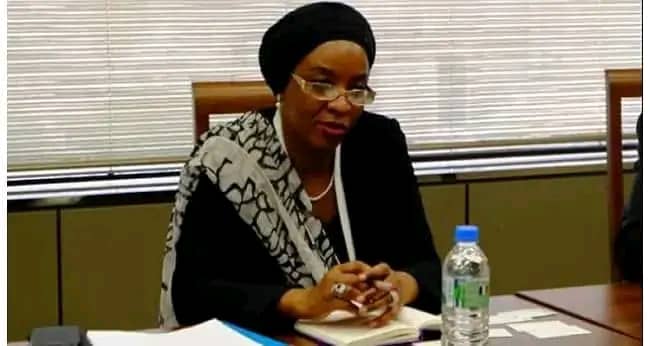
President Muhammadu Buhari has sacked the Executive Secretary and Chief Executive Officer of the Nigeria Investment Promotion Commission, Saratu Umar.

The Special Adviser to the President on Media and Publicity, Femi Adesina, disclosed this in a statement he signed on Thursday.

According to Mr Adesina, the President has communicated the directive of Umar’s termination of appointment to the Honourable Minister of Trade and investment, Otunba Richard Adeneyi Adebanjo.

He also stated that the president ordered that the most senior director in the commission takes over immediately.

The statement reads: “President Muhammadu Buhari has terminated the appointment of Hajiya Saratu Umar as the Executive Secretary/Chief Executive Officer of the Nigeria Investment Promotion Commission (NIPC), with immediate effect.

In a directive to the Honourable Minister of Industry, Trade and Investment, Otunba Richard Adeniyi Adebayo CON, the President also mandated the most senior Director in the Commission to immediately take over in the interim. “

An open letter to the President-elect and APC’s National Working Community

By Mu’azu Ibn Abdallah

Firstly, I would like to begin by congratulating you on the success of the APC in the recently concluded national elections in which the party won the presidency and majority of seats in both the upper and lower chambers of the national assembly, and also the majority of the governorships and state assembly seats in the country. This is indeed a remarkable achievement which, if adequately sustained, would continue to position the party as the ruling party in the country and the largest political party in Africa.

It is obvious that Nigerians voted for the party because they believed in the messages of RENEWED HOPE which our party promised them. They hope for a better life and a prosperous future, which we can only deliver as a party if we adhere to the principles of social justice, equity and social inclusion.

As the party is set to make a formal announcement with regards to the zoning of political leadership in the country and with the President-elect and Vice President-elect already coming from the South-West and North-East geopolitical zones, respectively, I am strongly drawing the attention of the members of the National Working Committee (NWC) of the party, President Muhammad Buhari, the President-elect Asiwaju Bola Ahmad Tinubu and all other critical stakeholders in the party to consider, as a matter of necessity and in the best interest of the party and the spirit of equity and social justice, zoning the Presidency of the 10th Senate to the North-West especially taking into consideration of the following reasons.

First, there is a need for the party to demonstrate clearly that it always appreciates and rewards members’ confidence, support and loyalty by zoning the senate presidency to the North-West where it got the highest votes from. This will pave the way for the emergence of a competitive race among the zones as to who will produce the highest votes for the party in the subsequent elections, which will, in turn, leads to more and more votes for the party.

Moreover, this has been the tradition in the political arrangement of Nigeria since the return of democracy in 1999, where the region that gives the ruling party the highest votes is favoured for such a position. For instance, during the era of President Olusegun Obasanjo, PDP zoned the senate presidency to the South-East fact that the zone overwhelmingly voted for the PDP. Also, during the tenures of Late President Yar Adua and President Jonathan Senate Presidency was zoned to North-Central Zone for the same reason. Therefore, in the present circumstance, the North-West zone, due to its significant contribution to the victory of APC in the presidential election (the highest votes of 2.7 million among the geopolitical zones in the country), deserved to be rewarded with the senate presidency, especially, looking at the fact that the zone has never produced a senate president despite its strategic relevance in the Nigerian politics.

Secondly, as the largest political party in Africa, the party is expected to draw lessons and experiences from the just concluded 2023 general elections and embark on early preparations and strategic planning towards the 2027 elections so as to address some of the challenges faced in the recent elections and to make sure that RENEWED HOPE is extended to 2031 and beyond. The party should do everything humanly possible to avoid the costly mistakes of losing Kano, Kaduna and Katsina, which ideally should have cost the party its success (if not for the disorganisation of the opposition and the confidence of the Nigerians in the party’s candidates).

Historically, these three states are strategic in Nigerian politics just like California in American politics, and the time to start planning for the recovery of the 3Ks (and the entire north-west and Nigeria in general) is now, specifically by zoning the senate presidency to the zone and ensuring a competent and high-profile politician with a record of effective political strategy and the confidence of the electorates is elected into the coveted position. This would help APC to address the existential threats posed by Sen Rabi’u Kwankwaso’s NNPP, which caused the APC significant harm in the recent elections.

Thirdly, the Senate presidency is a sine qua non to the success of every democratic administration, a sensitive office that may make or mar the realisation of the APC’s much anticipated RENEWED HOPE, and the party should try as much as possible to avoid the repeat the circumstances similar to what transpired in the build-up to the inauguration of the 8th senate which subsequently led to the emergence of the leadership against the party aspiration (including some positions going to the opposition party). To avoid this, the party should, as a matter of national interest and social justice, zone the presidency to the North-West zone due to the fact that the zone is still the stronghold of the APC (with the highest number of registered voters, the highest number of APC card-carrying members, five state Governors and many members of the National Assembly). Also, the zone is blessed with high-profile politicians who can network and canvass the support of senators-elect from across the geopolitical zones for whoever emerges as the candidate from the zone.

Coincidentally, the North-West zone is blessed with a wide range of high-ranking law-makers with effective legislative and administrative experience to fit into the job and, if elected and can efficiently and excellently provide the president-elect with the requisite collaboration and support required for synergy and complementarity to deliver his mission of RENEWED HOPE to the Nigerians. Top on this list is Senator Barau I. Jibrin CON, representing Kano North Senatorial district, who recently declared his interest in running for the post.

Senator Jibrin, a third-term law-maker who has demonstrated his political capability by winning the Kano North senatorial seat continuously for three consecutive elections, and more importantly, in the most recent election, despite the threats of annihilation faced by APC he was able to strategically endure the NNPP’s onslaught and return his senatorial district to the APC and as well large proportion of votes for the presidential candidates. Senator Jibrin is a politician with solid experience and impeccable pedigree, a track record of success working both as a lawmaker and administrator but one who has never been involved in any scandal or incidents any corrupt practices by any of the federal government anti-corruption bodies.

Finally, there is no doubt in the fact that the success or otherwise of the president-elect’s administration and its ability to deliver the much celebrated RENEWED HOPE depends largely on the type of legislative leadership he will work with, as such, for the success of his administration, the president-elect needs no other person as the president of the senate than Senator Barau Jibrin.

Barau is a soft-spoken, laid-back, highly motivated and experienced legislator who has the respect and cooperation of his colleagues and has been responsible and successful in every position he has held due to his approachability and humbleness. An experienced law-maker who has held the position of the appropriations committees in both the House of Representatives and the Senate and has been successful in discharging his duties and guaranteeing thorough budget oversight. Senator Barau has also served as the vice-chairman of the Senate’s committee on Petroleum Resources (Downstream) and later as chairperson of the same committee. He has previously held various positions, such as the chairman of the Kano state Investment and Properties Ltd, Kano state commissioner of Science and Technology and a member of a committee Budgetary procedure.

Conclusively, the just concluded elections have further indicated that Nigerians have higher hope for a better Nigeria, they have spoken with their votes on the direction they want the country to advance, and the elections have indicated that Nigerians have confidence in APC. And from his acceptance speech when INEC issued him with the certificate of return, the President-Elect has clearly demonstrated his commitment and motivation to embark on the renewal journey which he promised Nigerians during the campaigns. As such, he needs a committed and motivated President of the Senate with whom they can deliver effectively to Nigerians the better life and prosperity promised in the RENEWED HOPE messages. To achieve this, the President-Elect must work with an equally motivated, experienced and committed President of the Senate. Among all those who are capable and eligible to contest for the senate presidency, no candidate befits such an exalted position more than Senator Barau Jibrin.

Muazu ibn Abdallah wrote from the Department of Sociology, Federal University Dutse and can be reached via muazuabdullahi29@gmail.com.