Poverty

Who enables hungry leaders to steal from the marginalised poor?

By Haroon Aremu

The world is reeling from a relentless storm of inflation that knows no borders. Post-pandemic recoveries have become nightmares for many, with economies struggling to keep pace with skyrocketing demands. Disrupted supply chains—fueled by the devastation of COVID-19 and further shattered by the Russia-Ukraine war—have left nations gasping for stability. Commodity prices for essentials like oil, gas, and food have surged, igniting a crisis felt most acutely by those already on the edge of survival.

Global inflation hit 8.8% in 2022, shrinking consumer spending and pushing 150 million people into extreme poverty. Economic slowdown and uncertainty have gripped every continent, turning hopeful recoveries into distant dreams. In one sentence, we can say, “The Global Economic Chaos: A World on Fire”. But if the global economy is trembling, Africa—already vulnerable—is teetering on the brink of collapse.

With inflation soaring to 12.3%, Africa is caught in a spiral of despair. Food inflation hit 15.6% in 2022, driven by droughts, conflict, and the uncontrollable price surge. Energy costs have become unmanageable, soaring by 20.5%, and with local currencies crumbling against the U.S. dollar, daily survival has become a question mark for millions.

The hope of a unified, self-reliant Africa through initiatives like the African Continental Free Trade Area (AfCFTA) seems increasingly remote as corrupt leadership and poor economic management derail potential progress. Sigh, Africa’s Plight: A Heavy Toll on the Weakest

Now to Nigeria’s Economic Downfall: A Land Bleeding Under the Weight of Inflation. Nigeria! Africa’s largest economy is sinking under the weight of its own ills. With inflation at a devastating 31.7% as of February 2024, Nigerians face a nightmare scenario where everyday life becomes a battle for survival. 

Food prices have skyrocketed due to domestic challenges like drought, conflict, and the fallout from removing fuel subsidies. Transportation costs have become unbearable, and with the Naira weakening against foreign currencies, the cost of imported goods has skyrocketed.

Yet, these economic problems are not only the result of natural or external factors. Nigeria’s reliance on oil exports has left its economy vulnerable to the volatility of global oil prices. Corruption and inefficient supply chains worsen the impact, while a broken infrastructure leaves the country incapable of delivering basic services.

As Nigeria’s economy crumbles, its leaders—those entrusted with the nation’s welfare—have instead chosen to enrich themselves. Public funds meant for development are looted, while ordinary citizens—whether struggling innocents or corrupt poor—are left in despair. Yahaya Bello and Rochas Okorocha have been accused of dipping their hands into funds meant to lift Nigeria out of the abyss. The worst part? The justice system, weak and compromised, seems incapable of holding them accountable.

Yahaya Bello, for instance, has mastered the art of playing “hide and seek” with the law, knowing that in a system as broken as Nigeria’s, his chances of facing real consequences are slim to none. Meanwhile, regular citizens, including “yahoo boys” and even innocent individuals, are being hunted and prosecuted with swift brutality. This stark contrast between how the law treats the powerful and the powerless is a cancer eating away at the soul of the nation. Who protects the people if the leaders steal from the innocent and the corrupt?

Should all this be blamed solely on President Bola Ahmed Tinubu? Or is there a broader problem that goes deeper into the fabric of Nigeria’s leadership and society?

The mismanagement of Nigeria’s resources is not only the fault of a select few in power. It is the collective failure of all those in leadership positions who have turned governance into a self-serving endeavour. Governors, senators, and other public officials have consistently failed to deliver on their promises, leaving citizens to bear the brunt of their incompetence.

But are the citizens themselves free of blame? The culture of apathy that pervades Nigerian society has allowed this systemic rot to fester. When people fail to hold their leaders accountable by demanding better governance or active civic participation, they become complicit in destroying their nation.

If Nigeria continues on this path of corruption, injustice, and economic decay, the consequences will be catastrophic. The poverty rate is already climbing at an alarming pace, with an estimated 87 million Nigerians living below the poverty line. This number will only increase as inflation pushes basic commodities out of reach for the average citizen.

Social unrest is bubbling beneath the surface, waiting for a spark. Frustration and desperation are building, and if left unchecked, they could lead to widespread violence and instability. As Nigeria’s institutions crumble, its brightest minds will continue to flee the country in search of greener pastures, further accelerating the brain drain that has left Nigeria without the intellectual capital it needs for progress.

Decisive action is required to prevent Nigeria from falling into the abyss. For the government, transparency and accountability must become non-negotiable. Strengthening institutions, particularly the justice system, is critical if corruption is to be rooted out. Public funds must be directed toward tangible development, focusing on infrastructure, education, and healthcare.

For citizens, the time for apathy is over. A collective awakening is needed, where people demand better governance at all local and federal levels. Nigerians must realise that their silence is contributing to the nation’s downfall. Only through collective effort—by both government and citizens—can the cycle of corruption and economic ruin be broken.

Haroon Aremu Abiodun is a mass communication graduate and an NYSC member of the PRNigeria Center in Abuja. He can be contacted via exponentumera@gmail.com.

Nigeria at 64: A country of possibilities still struggling

By Usman Muhammad Salihu and Muhammad Umar Shehu

As Nigeria celebrated its 64th independence anniversary a few weeks ago, it is essential to reflect on the nation’s potential and the persistent challenges that continue to hinder its progress. Despite being blessed with vast natural resources and a vibrant population of over 200 million people, Nigeria’s struggles have deepened rather than improved over the past year. From widespread poverty to increasing insecurity, the country’s path to growth remains uncertain unless urgent and substantial action is taken.

Poverty in Nigeria continues to be one of the most pressing challenges. A significant portion of the population, over 40%, still lives below the poverty line. As the cost of living soars and job opportunities remain scarce, millions of Nigerians find themselves trapped in cycles of deprivation. While government programs aimed at alleviating poverty have been implemented, the results have mainly been insufficient due to inefficiency, poor implementation, and corruption. 

The lack of job creation remains a critical concern. Despite having a young and dynamic population, many Nigerians face an uncertain future as there are not enough opportunities for them to contribute to the nation’s economic growth. The high unemployment rate, particularly among the youth, exacerbates feelings of hopelessness, contributing to social unrest.

Corruption continues to plague every sector of Nigerian society, from the public to the private sector. It has been described as a systemic problem deeply embedded in the fabric of governance, politics, and even business practices. Public funds for infrastructure development, healthcare, education, and poverty alleviation are often diverted for personal gain, leaving the masses to suffer.

Though active in many areas, the fight against corruption has proven ineffective in bringing about substantial reform. The long-standing lack of political will and the entrenchment of corrupt practices ensure that those in power remain immune from real accountability. Until corruption is thoroughly tackled, Nigeria’s progress will continue to be hampered.

One of the most alarming issues Nigeria faces today is the increasing insecurity. What began as localised conflicts in specific regions has evolved into nationwide terror. Terrorist groups, bandits, and separatist movements are now operating with impunity across the country. The rise in violent crimes, abductions, and ethnic clashes has not only resulted in loss of lives but has also displaced millions, further straining the nation’s resources.

Investors remain wary of Nigeria’s unstable environment, while everyday Nigerians are forced to live in fear. Insecurity has undoubtedly slowed economic activity, as businesses are reluctant to set up or expand in areas prone to violence. The government’s inability to secure the nation and protect its citizens is a glaring failure that demands urgent attention.

The educational sector, too, is still struggling. Though the government has made some efforts to reform education, such initiatives have not yielded the desired results. The country’s education system remains underfunded and ill-equipped to handle the growing demands of a population that values knowledge and skills as the gateway to prosperity.

A critical shortage of teachers, infrastructure, and learning materials leaves millions of children and young adults without access to quality education. Many Nigerian students are forced to attend overcrowded classrooms, while those in rural areas often lack basic educational resources. The result is a generation of young people who are ill-prepared to face the challenges of the modern world.

Unemployment remains at an all-time high. The nation’s reliance on oil as its primary source of revenue has left it vulnerable to global price fluctuations, causing economic instability. Additionally, the lack of diversification into other sectors, such as agriculture, manufacturing, and technology, limits job creation.

Without a comprehensive economic overhaul focusing on sustainable development and the growth of non-oil sectors, Nigeria’s economy will continue to stagnate. The country must invest in infrastructure, create an environment that nurtures entrepreneurship, and promote policies that stimulate job creation.

The question is not whether Nigeria has the potential to be great but whether its leaders can rise to the occasion and make the necessary changes to unlock that potential. There is no shortage of resources in the country—natural, human, or financial. What is lacking is effective governance, transparency, and leadership that prioritises the needs of the people over personal gain.

The Nigerian government must take decisive action to address poverty, reduce corruption, enhance security, and overhaul the education system. Citizens, civil society organisations, and the private sector must also play their part by demanding accountability, fostering innovation, and supporting initiatives that contribute to national development.

At 64, Nigeria remains a land of possibilities. However, unless these challenges are addressed, the country will continue to suffer, and the future will remain uncertain. It is time for bold steps and concrete reforms to secure the next generation’s prosperous and peaceful future.

Usman Muhammad Salihu was among the pioneer cohorts of the PRNigeria Young Communication Fellowship, along with Muhammad Umar Shehu. They can be reached at muhammadu5363@gmail.com.

Nigeria at the crossroads: Should this be our reality?

By Rabi Ummi Umar

A reality check is not a punishment but a reminder to refocus. – Unknown. 

Monday is the day of the week that people generally dislike. It is usually laden with the stress of getting to work early and getting the job done. I contend I have grown past the assertion that all days of the week are the same to me. Some think Mondays set the tone for the week. 

As I finished up my work for the day, feeling a sense of reprieve, I began browsing through various travel apps in search of a ride home. It is always like this when I finish my 9-to-5 weekday. Only this time, it was different. Rides were scarce, and frustration started to creep in as it also started to rain cat and dog.

The driver arrived, and I hastily exited the building to meet him outside. Upon reaching the vehicle, we exchanged pleasantries as I promptly fastened my seatbelt and leaned against the window, savouring the decidedly cold air while simultaneously trying to make sense of the chaos surrounding me.

My frustration mounted as we remained stuck around the office vicinity, surrounded by a series of sounds. Cars honked incessantly, drivers venting their frustration at the gridlocked roads, and some bumped into each other. It was not difficult to guess that their anger was from waiting in long queues at the filling stations and the urge to make some money before the end. Should this be our reality? 

Meanwhile, commuters on the road struggled to secure a ride home because some who own vehicles have abandoned them. Hawkers shouted and called out to prospective customers to patronise them. The standard of living is expressly high; they are fighting tooth and nail to feed their families. Should this be our reality?

Nigerians have gone from one issue to the other, but the most recent and important is the fuel hike, which most Nigerians rely on. This has affected so many lives, from pedestrians and drivers to heads of households and children. Should this be our reality? 

Many people are suffering, even dying. You can hardly make ends meet even with your money; imagine not having any for basic necessities. The question of “Renewed Hope” still lingers in the hearts of Nigerians as we are forced to adapt to every unfavourable situation. Should this be our reality? 

Citizens have gone from hoping for renewed hope to just wanting to be alive. Things have taken extreme turns, and no one even knows where we are heading. Talk more about the final destination. Should this be our reality? 

As I watched these events unfold in just minutes, road traffic getting worse and rain still drizzling, my mind jolted back to Maiduguri. The people are still struggling with the damage to so many lives and properties. How pathetic, I thought. Should this be their reality? 

How are they coping? How are they coming to terms with this loss? Do they have shelter to take refuge under when it pours like this? I tried to put myself in their shoes, and this exercise only made me even more appreciate all I have now. 

Earlier, I was scrolling through my TikTok app and stumbled upon a shocking sight: suspected bandits doing a ‘giveaway’ on TikTok. My jaw dropped. We have all been forced to familiarise ourselves with the unsettling reality that terrorists have a presence on social media. Still, the audacity of openly carrying out such an act is genuinely alarming. It seems they no longer have any regard for authority. Should this be our reality? 

I went onto ‘X’ to clear my head after what I had just witnessed, and lo and behold, someone had already tweeted about it. They wrote, “Bandits dey do giveaway for TikTok, God which kind country you put me so.” I could not resist tapping into the replies, and while some were humorous, they only pointed out that we were doomed. Should this be our reality? 

Many people find it funny; some even want to participate because the country is tough. But this is highly concerning. Our reality is so concerning. Are we really succumbing to these? Should this be our reality? 

This is the state of the nation—Nigeria. As the quote above suggests, a reality check is not a reprimand but a chance to recalibrate. Therefore, it is time for the government and citizens to work together for a better reality!

Rabi Ummi Umar is an intern at PRNigeria and a student at Al-Hikmah University, Ilorin. She can be reached at rabiumar058@gmail.com.

President Tinubu: ‘Water don pass garri’

By Muhammad Danjuma Abubakar

In a democracy, citizens’ expression of choice for candidates is guided by factors such as hopes for peace, security, and welfare; better economic opportunities; effective and efficient management of resources; diversity and inclusion; practical respect for civil liberty and freedom; and regards for the constitution and constitutionalism, among others. This democratic choice is reflective of their collective aspirations for better well-being. 

From this expression of choice comes citizens justified high expectations from those they give mandates; this is why it is an indictment on the collective conscience of those elected to call for patience, prayers, and understanding from those who entrust them, as it undermines the initial trust and confidence placed on the elected by the electorates. 

Prayers, patience, and understanding are not required to run for office in Nigeria. Therefore, it is unreasonable for elected officials to demand these from the public to justify their failures.

Voters assess candidates based on their competence, experience, and fairness. Even during elections, voters are often impatient and look for leaders who will perform extraordinary feats and effectively meet their needs.

In this context, the expectations of Nigerians from President Tinubu, like those of Buhari, were high, spurred by his campaign promises and the political image and antecedents he portrayed to Nigerians.

This said, without fear of contradiction, President Tinubu was presented to innocent Nigerians with amplified messages like he is an architect of economic transformation, a builder of modern Lagos, a mentor of human resources, a top recruiter of quality talent, a bridge builder, a Nigerian with a broad national stature, and a kingmaker with little desire for power. Even the aftermath of his elections has shown a different picture. 

Even in the run-up to the election period, Tinubu stumbled and fumbled many times in words and deeds, either knowingly or unknowingly. 

First, he awed Nigerians by asserting that it was his turn to rule the country (Emi lokan) as if the elective office was an arranged turn-by-turn affair. Such a public statement, which appears to subordinate citizens’ interests, could be intolerable in more exposed democratic climes.

In addition to that controversy, he also went to the extreme by emotionally blackmailing his predecessor, Buhari, claiming he single-handedly made him president, as though he only constituted millions of voters.

As a politician, Tinubu’s political gamesmanship is second to none. This is why, knowing that large chunks of votes would come from the North, a Muslim-dominated region of the country, he decided to choose Shettima—a northern Muslim—as his running mate, despite criticisms from adherents of other faiths.

This move proved successful, as he was declared duly elected by the nation’s electoral umpire, INEC. But it is frustrating and worrisome that we are not better off as citizens and as a nation.

For the records, this is not suggesting that Tinubu’s predecessor left the power better than he met it, considering many shortcomings of his administration, including alleged high-scale corruption under his ‘nose’. Yet, the severity of this administration’s hardships and bad economic conditions surpasses’ Buhari’s.

Under Tinubu’s administration, life for the average Nigerian has taken a drastic turn. Poverty has deepened, and insecurity in the North has deteriorated much faster and worse than during Buhari’s tenure.

 This worsening condition is reflected in various negative indicators, including the soaring inflation rates in basic life necessities, such as food. 

An average Nigerian has not forgotten, not even at all, that during Buhari’s presidency, four good slices of meat were sold at N300 in the North. And a mudu of garri (cassava flour) was being sold for the same N300. The price of a mudu is now the price of a cup. 

Our situation today is akin to what a Nigerian street man would say: ‘Water don pass garri,’ which translates to ‘water has surpassed soaked cassava flour.’ This invariably means a terrible situation that has gone out of control, just as it appears to have gone out of the control of Tinubu’s presidency. 

The only way left for the suffering masses to voice their pains to a government that chooses to be tight-lipped is through peaceful protests legitimized under our constitution, which Tinubu himself led several times but is now not comfortable with and so perceived to be ruthlessly suppressing with state forces, harassments and intimidating the starving angry poor.

The DSS and police, expected to uphold professionalism, etiquette, justice, and respect for the rule of law, are focused on arresting and intimidating perceived ‘persons of interest.’ How on earth do the masses deserve such cruelty? The masses with whom lie the true powers in a democracy! 

As a matter of fact, why shouldn’t the common masses be outraged? Insecurity is at its worst. Inflation has soared to an unprecedented 33%. Amid pervasive hunger and widespread poverty, the government splurges on private jets and extravagant renovations for the VP’s residence. 

Meanwhile, educational institutions’ workers, including the NLC, are often treated dismissively, with no government-backed economic opportunities for the poor, the vulnerable, and even the educated youths. 

Having achieved his long-time ambition of becoming President, Tinubu only seems preoccupied with the temporary power of his office. His long arms of presidential powers reinforce the perception of vindictiveness against those perceived as either not in his good books or his predecessor’s appointees. 

Through the excesses of federal powers, it suffices to believe that federal powers subtly dabbled in issues outside its mandate, including the Kano Emirate saga, the Fubara vs. Wike conflict, and Ndume’s removal as Senate Chief Whip.

As for Sen. Ndume, are we to link his current travails to his choice in the run-up to the APC 2023 Presidential primaries?

 In the build-up to the APC Presidential primaries, Senator Ndume didn’t hide his mobilization and support for Tinubu’s co-contestant, Rotimi Amaechi. 

Talking about appointments, the current administration has also been accused of stripping northerners of their key positions and replacing them with Lagos men who had failed to deliver the same Lagos, which he was credited with its heights and development. 

One may rightly argue that the Buhari presidency, in a similar fashion, rewarded the region that gave him the highest votes through appointive positions. But it is worthy of note that Tinubu’s highest election votes also came from the northern region.

 Yet, this predominantly Muslim-dominated region is neglected. For instance, the Baro Port in Niger State, a significant project for the benefit of the entire North, is yet to receive any sincere attention, even with over 30 trillion Naira budget now in effect.

 For Tinubu’s presidency, water don pass garri since this is not what Nigerians voted for and hoped for. The administration is out of touch with people’s needs, and its actions are in sharp contrast with expectations.

Muhammad Danjuma Abubakar is a public affairs commentator and lives in Minna, Niger State. He wrote via muhammadcares4u@gmail.com.

Looting under the guise of hunger must stop

By Tajuddeen Ahmad Tijjani

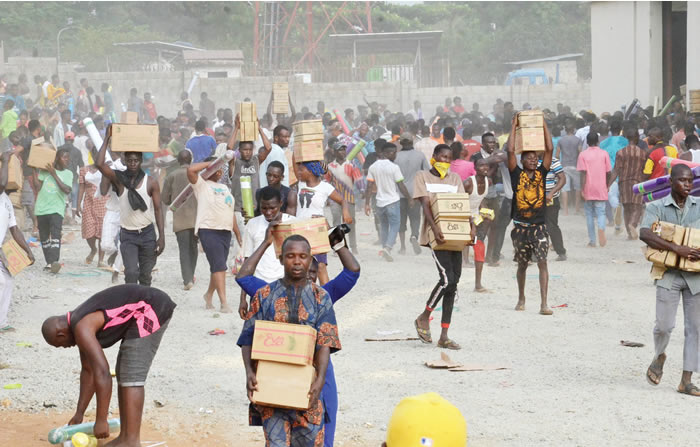
The country has sadly, in recent times, witnessed pockets of protests and widespread agitation over the rising cost of living and skyrocketing prices of foodstuffs.

“In the past few weeks, residents of Kano, Ogun, Niger, and Oyo States have taken to the streets to protest the high cost of living caused by spiralling inflation in the country.”

In times of desperation, especially when our leaders are too much for themselves and care less for those they govern, calling for them to sacrifice while at the same time living flamboyantly at the expense of society, however, when basic needs like food and shelter too often become scarce, individuals may resort to extreme measures to survive. Looting, particularly of public goods or food supplies, usually occurs under the guise of hunger, with perpetrators justifying their actions as necessary for survival. 

While the act may stem from a genuine need, its consequences extend far beyond the immediate acquisition of goods. No one can deny the fact that we’re having a trying time as a country. However, this should not justify the unfortunate events happening in the country. It’s a crying shame people are taking laws into their own hands at a time when we need all hands on deck to surmount the pervasive insecurity in the land. 

Firstly, we should remember that looting undermines social order and exacerbates existing societal inequalities. When individuals or groups resort to looting goods belonging to marketers or producers, they bypass established systems of fairness, creating unnecessary chaos and insecurity in society. This erodes trust in institutions and undermines the rule of law, leading to further social unrest and instability. No one can tell where we are headed as a country of diversity. Moreover, looting disproportionately affects the sense of reason, exacerbating social disorder and perpetuating cycles of poverty.

However, we all lamented the current economic hardship facing the country resulting from inflation caused by the federal government’s policies. However, the consensus among the average Nigerian is that the current administration deliberately inflicts misery and poverty on the citizens, though they keep telling us that tough decisions are necessary, which usually bring about good things in the future. But not in the case of Nigeria. Where reversed is the case in some instances.

Moreover, the psychological impact of looting cannot be overstated. Communities already reeling from the effects of poverty, conflict, or natural disasters are further traumatised by the breakdown of social order and the loss of trust in their fellow citizens. As a matter of urgency and necessity, the government, traditional rulers, and community leaders shouldcome out boldly condemning and discouraging the recent looting of people’s goods. Silence can lead to hopelessness and despair, exacerbating social tensions and hindering progress. We can’t continue this way as a civilised society that is expected to move forward in the community of the nation. 

Furthermore, looting undermines efforts to build a resilient and sustainable nation by depleting public trust and damaging societal value. 

While looting public goods under the guise of hunger may seem like a desperate act of survival, its consequences are far-reaching and detrimental to society. From undermining social order and exacerbating inequalities to hampering economic growth, however, I appeal to the government to stand by its responsibility in Addressing the root causes of poverty and inequality, strengthening social safety nets, and promoting sustainable development are essential steps in mitigating the desperation that drives individuals to resort to looting in times of crisis.

The widening gap between average Nigerians and those in government is too broad; policies that would make all Nigerians feel the impact of leadership should be implemented.

Therefore, I appeal to all those in authority and philosophies to educate society and allow them to understand their boundaries. The government should create an environment that offers the larger population a sense of belonging and shun all violent acts undermining constituted authority. After all, if Nigerians strive in various endeavours, the government will have a smooth way of implementing its policies to benefit all.

Tajuddeen Ahmad Tijjani Writes from Galadima Mahmoud Street, Kasuwar Kaji Azare, Bauchi State.

Hardship: Woman drops own children at police station, commits suicide

By Uzair Adam Imam

A mother of three has committed suicide due to incessant economic hardship after abandoning her children at a police station in Enugu State.

It was gathered that the woman went to Ogui Road police station with the children, handed them to officers, stripped herself naked and run under the moving vehicle which crushed her to death.

The ages of the three children are reportedly six, four, and two. Her husband allegedly ran away from home months ago due to increased hardship, abandoning his wife and children.

When asked about their father, the eldest of the children simply said he was lost. She could not provide any other information about their family, town, or residential address.

The wife of Enugu State Governor, Nkechinyere Mbah, who rushed to the police station upon learning about the incident, was told that the woman might have been suffering from depression.

Mbah was touched by the development. She said she would take care of the children and educate them from nursery school to university.

She announced that sponsorship for the children would be undertaken by her Custos Care Foundation.

Mbah also directed the immediate relocation of the children from the station to a home where the state government could take care of them.

She urged people who suffer from depression to seek counseling and avoid rash decisions.

She also urged the Commissioner, Ministry of Children, Gender and Social Development, Ngozi Enih, to intensify sensitisation and counselling, especially for the depressed.

The impact of poverty on health, education, social structure, and crime

By Umar Sani Adamu

Poverty has far-reaching consequences on various aspects of society, including health, education, and social structure. Understanding these repercussions is crucial for addressing the root causes and developing effective strategies to alleviate poverty and its associated issues.

1. Health

Poverty significantly impacts health outcomes. Limited access to nutritious food, clean water, and adequate healthcare services contributes to a higher prevalence of malnutrition, infectious diseases, and chronic conditions among the impoverished. Lack of resources often results in substandard living conditions, exposing individuals to environmental hazards. Additionally, stressors associated with financial insecurity can lead to mental health issues, further exacerbating the overall health burden.

2. Education

Poverty creates barriers to educational attainment. Families struggling with economic hardships may prioritise immediate needs over investing in education. Children from impoverished backgrounds often face challenges such as inadequate access to quality schools, resources, and educational support. Limited access to books, technology, and extracurricular activities hinders their development. As a result, the cycle of poverty continues, as these individuals may find it challenging to break free from their circumstances through education.

3. Social Structure

The social fabric of a community is intricately linked to economic well-being. Poverty can contribute to the fragmentation of social ties as individuals grapple with the stress and uncertainty of their circumstances. Communities with high poverty rates may experience increased social inequality and a lack of social cohesion. This can manifest as reduced community engagement, weakened support networks, and a diminished sense of belonging.

4. Crime

Poverty is often identified as a significant factor contributing to crime. Several mechanisms explain this relationship. Firstly, individuals in poverty may resort to criminal activities as a means of economic survival. Limited opportunities for legitimate employment can lead some to engage in illegal activities to meet basic needs. Additionally, impoverished communities may experience higher rates of substance abuse, which can further contribute to criminal behaviour.

Furthermore, the lack of access to quality education and limited social support in impoverished areas can result in a higher prevalence of delinquency. The frustration and hopelessness stemming from persistent poverty may lead individuals, particularly young people, towards criminal behaviour as an alternative to breaking free from their challenging circumstances.

Addressing the Link Between Poverty and Crime

A multi-faceted approach is necessary to mitigate poverty’s impact on crime. Policies to reduce poverty through economic empowerment, education, and healthcare access are crucial. Investments in education, vocational training, and job creation can provide individuals with opportunities to escape the cycle of poverty and reduce the likelihood of resorting to criminal activities.

Social support programs that strengthen community bonds, mental health services, and addiction rehabilitation can address some of the root causes of criminal behaviour associated with poverty. Additionally, targeted efforts to improve law enforcement-community relations and reduce systemic inequalities can contribute to crime prevention.

In conclusion, poverty has profound consequences on health, education, and social structure, with a direct link to increased crime rates. Breaking this cycle requires comprehensive strategies that address the systemic issues contributing to poverty and simultaneously provide individuals and communities with the tools and resources needed for positive transformation.

Umar Sani Adamu (Kawun Baba) wrote via umarhashidu1994@gmail.com.

A stark warning for economic hardship

By Bilyamin Abdulmumin

For some weeks, witchcraft news has been making rounds in the North. Several trained bloodsuckers were rumoured to be sucking blood from their victims. Videos of such incidents went viral on social media, especially Facebook and WhatsApp. Some individuals, particularly women who appeared to be victims themselves, were allegedly caught in the act of trying to suck their victims’ blood.

In one video, a woman alleged to be a witch was seen surrounded by a swarm of youth while another lady fainted, her body lying on the floor. To resuscitate her, the purported witch woman was asked to skip her, and intriguingly, she woke up. But in another video, the victim couldn’t wake up, so voices from the background kept shouting: skip three times!

Many burning questions arise when it comes to claims of witches. Challenging this perception, one Islamic scholar presented a compelling argument. He asked, ‘Why are the victims always poor and destitute?’ According to the Sheikh, he has never heard of a governor’s mother, a minister, or any public figure’s mother being paraded as a witch. This argument deals a significant blow to proponents of witchcraft.

Another similar question is: Why do claims of witchcraft usually originate in rural environments? The more rural the area, the greater the belief in witch existence. I discussed this scenario with a roommate some years ago, and he mentioned that he also had reservations about the issue of witches. He shared an anecdote about their younger sister, whose alleged ‘witchiness’ would never surface except when it was time for her to return to boarding school. She would always be fine at other times, but whenever school resumption was near, she would seem to change, which raised suspicions of foul play. However, this guy would climb down the pedestrian; he seemed torn between his thoughts and societal beliefs. In the same conversation, he defended the notion that rural areas have more witches because they have forests everywhere. What a ditch in logic!

I have once turned around to make a prank on witch allegations. While Nigeria was at a crossroads, a time in 2014 when Boko Haram, the partial removal of fuel subsidies, and the depreciating value of the naira to the dollar combined to wreak havoc on the masses. Similar rumours erupted, claiming that when one received a call from a certain number, their blood would be sucked away. I decided to play a prank. I saved my number as that controversial number in my friend’s phone contact and then called him. Immediately, he began reciting every prayer known to him.

Several theories have been put forward to explain the phenomenon of witchcraft in the North. One theory suggests that the nation’s predicament could have given birth to such rumours. Bulama, a famous cartoonist, also lends credence to this opinion. He created a cartoon depicting a man happily devouring at a food junction. Upon seeing him, a passerby paused to ask his companion, ‘Isn’t he the person being witch-hunted?’ The other person, intrigued, replied, ‘He’s being witch-hunted by hunger.

Another theory also suggests that it could be government propaganda. According to this view, the government might be making a clandestine move to divert public attention amid economic hardship. This theory can’t be outrightly denied because, as the saying goes, ‘biri yayi kama da mutum’ (Monkeys resemble humans!).

Public belief could also play a significant role. Doctors have told us several times that the efficacy of medication has a strong correlation with the patient’s beliefs. In other words, the more patients believe in the potency of the drug, the more effective it is. For instance, our Fulani herders are said to never recover from illness without injections. The average Fulani herder believes that injections are the only way to recover from illness. So, when they are down with malaria, for instance, they have to get an injection to recover, whereas city dwellers can recover with just drugs.

The issue of rumour-mongering during periods of instability is not unique to Nigeria or Africa alone. After the Second World War, the atmosphere was filled with fear and uncertainty, and everybody was looking for someone or something to blame. Suddenly, the myth of the Bermuda Triangle (Devil’s Triangle) emerged. With several aircraft and ships disappearing mysteriously without a trace, this section of the North Atlantic Ocean was believed to possess some supernatural power that not even a bird could dare cross. Several decades later, the myth survives.

Bilyamin Abdulmumin can be reached via bilal4riid13@gmail.com.

Tinubu’s 100 days: The ticking time bomb and the danger of the elite’s silence

By Abdelghaffar Amoka

It is 100 days in office and six months after President Bola Ahmed Tinubu won the election, and the government seems directionless. It is more news that the hardship that President Muhammadu Buhari introduced us to has multiplied. Whether he removed the fuel subsidy or Buhari did, he has no excuse to be clueless for the past six months on the way forward. He asked for the job.

My problem is how our leaders are comfortable putting burdens on the people, burdens they have not prepared them to carry. There was a plan to remove the fuel subsidy. Common sense should tell them that it will affect purchasing power. It is that simple. But why was it so difficult to put up a parallel plan to stabilise the purchasing power of the people once the subsidy was removed? How some people are comfortable with a policy that does not follow the natural law of growth and development beats my imagination.

When a child is born, he is nurtured and trained to become an adult. He is either sent to school or learns a trade and gets empowered to take responsibility. He then gets a wife, has kids, and starts to take responsibility. Imagine giving the boy a wife with kids at 15 without empowering him to take care of the responsibility and expecting him to be fine. It is against the law of nature to burden anyone without preparing him for it.

Fuel subsidy removal was a long battle, and many people have campaigned to remove fuel subsidies since 2010. They made it look like the removal would save the government money for infrastructure and do wonders. But they never discussed the consequences of the removal on the people. How much have we saved for 100 days, and what have we achieved with it? What infrastructure is better than the general well-being of the people?

Funny enough, some of the advocates of the subsidy removal are currently complaining about the hardship on the land. That made me wonder what they were thinking when advocating for the removal. Some are even intellectuals. They thought subsidy was like a tap that you just switch off, and everything is fine. They think it’s that simple. The state government has now given money to share some stuff as palliative. Is 5kg of rice or Semovita all we need to overcome this heartless burden? Who are the people giving them economic advice?

There are three schools of thought on the post-fuel subsidy removal. Those benefitting from the removal will never see anything wrong with it. Those who feel we should endure the hardship and wait for the government to invest in infrastructure. Then, those who see everything wrong with the removal instead of fighting the corruption that shrouded fuel subsidies.

We are being advised to cut our expenses. They seem to have agreed with Buhari’s “Sharholiyah” (wasteful spending) principle. Where is the waste to cut? Those people think everyone has as much as they have to spend. How do you expect a junior staff working at the federal secretariat earning about N40k monthly to cut his expenses and manage? What will he cut? How do you expect a graduate working at the federal secretariat and earning about N60k monthly to cut costs? What will he cut?

For the first time since I became an adult,  federal government workers are being asked to work 2 or 3 days a week to reduce the cost of going to the office. Unfortunately, that will not help reduce the cost of living.

Fuel subsidy is removed, and we are expected to be patient and cope. School fees have increased due to the present economic reality, as acknowledged by FG, and we are expected to come with it. Floating naira to dollar in a country that imports 80% of its needs is a disaster.

The danger of keeping quiet.

It is no more news that crime rates have increased over the last months and are getting worse. Meanwhile, there are three classes of people: the upper, middle, and the lower class. The upper class is inaccessible. They have security escorts, bulletproof cars, tall fences, and gigantic gates with security dogs. The kids are abroad or well-secured. The middle class is accessible and lives not far away from the lower class. As far as the lower class is concerned, the upper and middle classes ( a fast-depleting class) are responsible for the difficulties they are experiencing.

As long as you can still manage to drive your car and feed, you belong to the haves as far as the lower class is concerned. As the crime rate soars, your house will be the first target to be vandalised and bugled. This narration from my friend, Muhammed Hashim Suleiman, keeps ringing the bell in my ear. The narration keeps reminding me of our likely danger in this situation. 

He managed to muster the courage to buy a few litres of petrol for his old Tokunbo car. The petrol station was swarming with people, young and old, not buying petrol but waiting for any buyer to saunter in, and they descended on that unlucky buyer begging for alms. After he purchased the few litres he could afford, entering his car became a struggle because the beggars were begging between him and the car. He silently ignored them and found his way inside the car. Then, a very old woman stood before the car until the petrol attendant shouted at her. 

Instead of leaving the front of my car, the old woman walked towards the driver’s side. On reaching his window, in a cold voice, she said: “Kun kwashe kuɗin ƙasar, kun bar mu da yunwa, yanzu muna roƙon ku abun da zamu ci amma kun hana mu. Wallahi, idan muka mutu da yunwa, sai Allah ya kama ku.” That: “You people have stolen the nation’s money and left us in hunger, now we are begging you for what to eat, but you won’t give us. If we die of hunger, I swear God will never allow you free.”

We are all victims of public embezzlement, but the old woman who happened to belong to the lower class is unaware of it. As we keep quiet adjusting to living with the burden placed on us by these elitists in government, know that the lower class that has been driven far below the poverty line has placed you on the same page with those that have stolen the nation’s money.

It is 100 days of disaster. I hope the government gets its acts together and be purposeful. Any government that fails in the general well-being of the people is a failed government.

Dear Nigerians who are supposed to be in the middle class but tending towards the lower class, If nothing is done and the time bomb should explode, you will be the first casualty. Your silence will cost you a lot. That will be a double casualty for a crime you and I are victims of.

Abdelghaffar Amoka Abdelmalik, PhD, wrote from Ahmadu Bello University, Zaria. He can be reached via aaabdelmalik@gmail.com.

On Tinubu’s “Renewed Hope” and the challenges faced in Nigeria

By Muhammad Sagir Bauchi

John Maynard Keynes was an economist who lived in the 1930s. He developed macroeconomic ideas parallel to the classical school of economics that believe in absolute economic freedom, which needs no government intervention to stabilise an economy when it’s disequilibrium.

The classical school ideas were centred around economic growth and freedom. During the 1930s great depression, many Western policymakers were proponents of classical schools. They believed that the economic downturn would be corrected by less government intervention (deregulation) in the economy and by encouraging businesses and investors to take advantage of the lower input and prices to pursue their businesses-interest.

In that regard, it would return output and prices to equilibrium. But to Keynes, the economic meltdown proved the classical notion flawed and needs rejigged. As there was low output corresponded with a high rate of unemployment and price instability. These inspired Keynes to think differently, which led him to develop the macroeconomic ideas that, according to him, represent the reality of economic downturn.

Keynes advocates for government intervention during an economic meltdown through spending, which will create jobs to stimulate more demand in the face of the economic slump, restoring the economy to equilibrium and not allowing businesses and investors to determine the fate of the economy. Although this theory is practicalised and in constant play in a capitalist model of the economy, it has the major implication of pushing the government to excessive borrowing to spend, making it a constant state of indebtedness without an end in sight. These formed the basis of Keynes’s famous quote, “In the long run, we are all dead”.

In Nigeria, the previous administration of President Muhammadu Buhari succeeded in administering poor economic policies, which plunged the economy into a slumpy state. Despite his huge spending, his utopian economic policies yielded close to zero positive results. Likewise, his border closure policy enriched a few local intensive rice farmers and deprived millions of their cross-border businesses. Even as the local farmers could not bridge the demand gap in rice production, he blocked major rice importers from bridging the gap.

No thanks to his performance in transportation and insecurity, where major roads in some parts of the country were constructed/renovated, while other populated regions were neglected, railways began to function. On the security side, fewer successes were recorded in the fight against secessionists, banditry and kidnappings, thus leaving some regions at the mercy of bandits, kidnappers and IPOB terrorists. Although, a remarkable success was recorded in the fight against Boko Haram terrorists.

Inflation, insecurity, communal clashes, unemployment, epileptic labour strike and high cost of living became the hallmark of the last administration, borne out of poor economic policies.

Tinubu, Renewed Hope and New Nigeria

In his effort to correct the economic sufferings caused by the wayward policies of the previous administration, President Bola Ahmed Tinubu is trying to implement economic policies that have long-term impacts. This has started with subsidy removal on some essential goods and services, more government spending, the introduction of students loan, unification of exchange rates, suspension of taxes on some commodities and services,  and others. These and many more policies are classical economic policies that have long-run positive impacts on the economy. In the long run, the downturn would be corrected, and the hardworking would have something to take home.

During his inauguration, President Bola Ahmed Tinubu announced the removal of subsidies on petroleum products. Without a doubt, the subsidy is a heavy burden to Nigeria’s economy, which few exploit to their advantage. Due to the problematic nature of the subsidy scheme, almost all the previous democratic presidents had promised to remove it at a time, for the same reasons that it has become a burden to the state, it is riddled with corruption, and only a few are enjoying it at the expense of the state, leaving the majority with negative consequences.

The country is entangled in a constant state of borrowing to finance the subsidy payment, which hinders it from funds to finance major infrastructural projects, social welfare programs and reforming the security sector to a variant capable of meeting these modern-day challenges. Therefore, if the subsidy scheme is abolished, funds will be available to finance all the critical sectors. If it can be done honestly and transparently, it is a legitimate cause worthy of support and sacrifice, but corruption in all levers of governance is what makes one sceptical of the government’s commitment to transparency and accountability in governance and its sincerity in abolishing the subsidy.

However, looking at the current state of the nation’s economy, petroleum subsidy is the only guaranteed general state welfare that will be enjoyed by all and has a general impact on the whole population. It directly links to transportation, manufacturing, energy, school fees, foodstuff prices, services and many more necessities. Any slight impact on the prices of petroleum products leads to inflation, a hike in transport fees, job cuts and high unemployment prospects.

Subsidy Against Subsidy Removal:

According to reports, the government has proposed a monthly N8000 allowance to be shared with 12 million households in the country for six months. Additionally, One Hundred Billion is marked for road construction, several billion for the judiciary, Seventy Billion for the national legislative welfare, and Eighteen Billion for agriculture. These are proposed as remedies to cushion the effect of petroleum products subsidy removal for the time being. No doubt, there are clear misplacements of priorities in this proposal.

If the policymakers are honest to cushion the effect of the subsidy removal, the agricultural sector is the most critical sector that needs urgent intervention to create windows that would encourage farmers to access soft loans, low-cost hybrid seeds, subsidised chemicals and fertilisers, and other farming implements. This would allow them the plant with ease; as such, the multiplier effects would be: the availability of food products in the market and the moderate prices of food items due to the subsidised mechanisms that farmers enjoyed. This would have a real positive impact on the common man’s life. But giving out Eight Thousand Naira to 12 million families could only cushion the immediate impact, exposing them to more suffering and an uncertain long-term future.

Now, let us examine the palliative distribution formula according to regions as reported; if numbers are anything to go by in governance, the majority must have his way, while the minority can have a say. If this is true, one will find it difficult to understand the rationale behind giving out 57% of N500bn to the South West Region of 47 Million people at the expense of the North West, a region with a stunning population of over 49 Million which was given only 4% out of that total amount. If population matters in the distribution of wealth, then there is an undeniable discrepancy here.

What is more alarming and unbalanced is how the Northeast region is almost left out of this allocation, even with its unprecedented challenges in social, political and economic destruction by Boko Haram insurgency, high poverty index and outrageous numbers of out-of-school children, it was reported that only 1% of that N500Billion is allocated to the region. This region comprises six states, with a population of 26 million and millions of internally displaced persons (IDPs) from within and neighbouring regions.

Frankly, I don’t want to believe that this administration has started on the wrong footing, with a preference for nepotism and sectionalism in the administration of appointments and lopsided distribution of the country’s wealth in this critical economic period. I hope President Tinubu will work hard to change this narrative and give hope to a renewed Nigeria.

This is a clear indication that some parts of the country will continue to be preferred over others by the present administration, even that fortnight, it was the primary beneficiary of the immediate administration of a Northerner, a president who mysteriously supervised the underdevelopment of his region to developed other regions economic future.

Muhammad Sagir Bauchi wrote via ibrahimsagir1227@gmail.com.