Politics

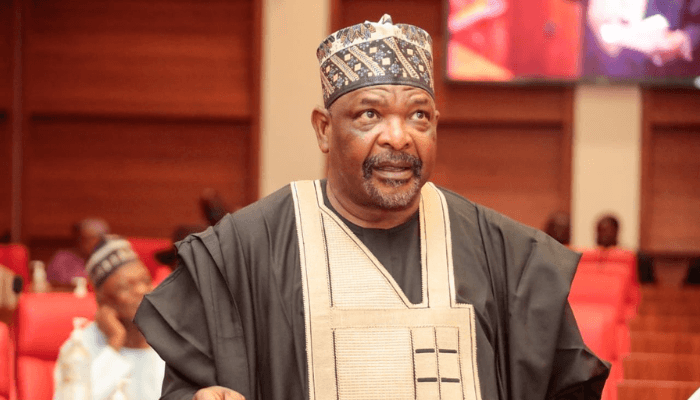
From progress to politics: Hadejia Chairman’s effort to erase Hon. Abdukadir Umar Bala’s impact

By Garba Sidi.

It is with deep concern and growing anxiety that we observe the unfortunate political manipulation of development projects initiated by the former Chairman of Hadejia Local Government, Hon. Abdulƙadir Umar Bala, popularly known as T.O. Instead of initiating new projects of his own, the current Chairman, Honourable Yaro Abba Ari, has resorted to politicizing the legacy of his predecessor by either repainting existing infrastructure or dismantling projects completed under T.O.’s administration.

One glaring example is his unnecessary repainting of the town’s main gate — a project that had already been fully executed and completed before T.O.’s exit from office. Rather than embarking on a new initiative, the current chairman chose to repaint the already beautified gate just to claim credit, an act which many see as wasteful and driven by political jealousy.

Even more disturbing is his decision to demolish the small market built by the former chairman at Kofar Mandara within the town of Hadejia. That market had provided a much-needed business environment for local traders and also brought ease to residents in the neighbourhood who could access daily essentials without travelling far. This demolition represents not only a disregard for community welfare but also an irresponsible squandering of public funds invested in the project — an act that is completely unjust and alarming.

As it stands today, Honourable Yaro Abba Ari has spent a whole year in office as the new Chairman of Hadejia Local Government. Yet, there are no visible new projects or initiatives that have directly benefited the people of Hadejia. All we witness are his constant movements and public appearances with little or no tangible impact. The people of Hadejia continue to ask what exactly his administration is focused on, but we have yet to find a convincing answer.

Under the leadership of the former Chairman, Hon. Abdulƙadir Umar Bala (T.O), every ward or neighbourhood facing electricity challenges was provided with solar-powered streetlights. This significantly reduced crime and improved safety at night in those areas.

Moreover, the former Chairman supported the initiative of His Excellency Governor Malam Umar Namadi (Ɗanmoɗi), who had trained young people in borehole repairs. T.O. ensured that these skilled youths were employed by the local government to repair all faulty boreholes within Hadejia, thereby empowering them and improving access to clean water.

Recognising the water challenges faced by communities that rely on electric-powered boreholes, T.O. made it a point to distribute petroleum to every ward whenever there was a power outage. This allowed residents to run generators and continue to access water without interruption.

During his time in office, when Hon. Bala (T.O) noticed an increasing number of beggars — including women, young girls, and children — which was becoming a social problem, he initiated a reintegration program. He sent them back to their hometowns and provided them with startup capital to help them become self-reliant.

He also took decisive action against the growing problem of prostitution, especially among independent sex workers residing in the Gandun Sarki area. He ensured their relocation to their families and provided support to improve their lives, thereby contributing to the moral and social well-being of the entire Hadejia community.

In addition, the former Chairman did not forget the prisoners. He routinely visited the correctional facility in Modaci, Hadejia, to provide food and welfare materials to inmates, showing that his concern extended even to those behind bars.

He constructed numerous shops, aiming to stimulate the local economy and provide employment opportunities for the youth, paving the way for economic self-dependence.

Given all these progressive and people-centred efforts made by Hon. Abdulƙadir Umar Bala (T.O.) during his tenure, it is truly disheartening and alarming to witness the destruction and politicisation of his legacy. This act is motivated by political rivalry and not the public interest.

I am calling on the people of Hadejia to rise and take action — to rescue our town from the regressive direction it is being pushed into. We must unite to defend and preserve the progress that has been made, and ensure that our leaders are held accountable, not driven by political envy but by the duty to serve.
‎Politics: A game of this world for the next

By ‎Sadiq Aliyu Waziri

‎With cliches such as the game of politics, playing politics, the political arena, politics is a dirty game, politics is a game of chess, politics is a game of power, politics is a game of cat and mouse, and many others alike, which metaphorically compare politics to a game, many that participate in it think it is a game-literally. It was Dr. Abdulaziz T. Bako who made the analogy, on Facebook sometime back, of how football fans supported their clubs to how many Nigerians took politics. However, is politics a game? 

‎The former Nigerian President, General Muhammadu Buhari, passed away two days ago. Moments after the announcement, photos of the widow of the late former President were seen circulating on social media. The images were captioned, stating that the deceased had bequeathed her to seek forgiveness from Nigerians on his behalf. She pleaded with Nigerians to forgive her husband before he was laid to rest. ‎

‎Since the announcement of the passing, followed by Aisha Buhari’s words, people became divided, with a section of them expressing their shock, forgiving and praying for the deceased. In contrast, others reminisce about Buhari’s time in office, voice out their dismay, and even go to the extent of publicising their rejection of the late President’s prayer. Again, there has been another section of people who even publicly celebrate the death. 

‎Let us recall that Buhari, just two years ago, was the most powerful, famous, and arguably the most loved Nigerian politician before he came to power in 2015. Who would have thought then that people would say unkind words about him or even celebrate his death? People idolised him; they fought and died for this man to gain power. 

‎Perhaps seeing Buhari’s widow, who at once felt she could not put up with a teasing statement from an immature university student, at people’s mercy, begging on her husband’s behalf, might make those who “play” the “game” of politics rethink their position, to realise that it is not a game. It never has been and never will be. 

‎To many of the player-participants, politics is merely a game to be played and won, with the ultimate goal of securing leadership positions and staying relevant. To many of the supporter-participants, it serves as an avenue to support and cheer the players, making money, securing appointments in some cases, and engaging in trolling one another. They come out and defend whatever wrong their bosses do and discredit and blemish whatever right their rivals do, simply because it’s all a game to them.‎

‎If they take politics as a game, it is at their own peril. And, it is high time that the people who participate in politics and take it as such understood that politics touches people’s lives. And that they do not have separate lives from their political activities. Every action, decision, cheer, support, defending, discrediting, blemish, etc., will be accounted for. They could view politics as a game, if that is what they choose, but it’s about this world for the next one.   

‎Sadiq Aliyu Waziri wrote via sawaziry@yahoo.com.

Ahmad Uthman Muhammad: The epitome of purposeful leadership

By Lukman Dahiru 

Ahmad Uthman Muhammad is a beacon of hope and environmental stewardship in Nigeria. He is particularly noted for his tireless efforts in combating climate change. As the founder of the Purelife Foundation, he has spearheaded numerous tree-planting initiatives that have significantly contributed to reforestation and environmental conservation efforts across the region. His dedication to this cause has not only earned him respect but also the prestigious traditional title of ‘Inuwar Kasar Hausa’ in Daura, Katsina State, a recognition of his commitment to the land and its people.

From a young age, Ahmad has exhibited a rare blend of passion, vision, and action, equipping him excellently for any role in politics. In addition to his environmental efforts, his philanthropy has impacted numerous lives, highlighting his commitment to social welfare. His work with the Purelife Foundation has demonstrated his ability to mobilise communities for a greater cause, uniting individuals from diverse backgrounds to strive towards the common objective of a greener, more sustainable future. 

Ahmad’s venture into politics would mean introducing fresh, dynamic leadership to Adamawa’s political sphere. His understanding of environmental issues is not merely academic but practical, having implemented successful projects that could be scaled up for broader impact. His approach to politics would likely focus on sustainable development, ensuring that economic growth does not come at the expense of the environment. 

Imagine the potential benefits if Ahmad Uthman Muhammad became a federal legislator: his advocacy for policies promoting ecological balance, initiatives for green jobs, and legislation supporting renewable energy projects could have a profound impact nationwide. Moreover, his philanthropy extends his influence into areas like education, health, and social services, where his charitable initiatives could inspire policy changes that address poverty and support the underprivileged. 

Ahmad’s youthful dynamism would likely bring fresh perspectives to education, health, and infrastructure, fostering policies encouraging youth empowerment and innovation. His understanding of community needs, evidenced by his work with the Purelife Foundation, suggests he could push for legislation that enhances social services, supports local economies, and ensures more equitable resource distribution across the country. 

Ahmad’s connection with the community, evidenced by his traditional title, suggests a deep understanding of local culture and needs. This understanding would ensure that his representation would be effective and empathetic. His bid for the House of Representatives is not about personal ambition but about extending his environmental advocacy and philanthropy into the legislative arena, where they can have a wider impact. 

In conclusion, Ahmad Uthman Muhammad embodies a new wave of leadership—one that prioritises the health of the planet alongside the prosperity of its people. His background, achievements, and vision position him as a promising candidate who could effect significant positive change. His philanthropy emphasises his commitment to not only environmental but also social issues, establishing him as a holistic leader for the future.

Lukman Dahiru wrote from Yola, Nigeria, via ldahyru@gmail.com.

Nigeria’s cycle of greed: When will the poor breathe?

By Muhammad Umar Shehu

Nigeria is arguably the only country where the impoverished masses are forced to manage the situation as it is while those in power enjoy life to the fullest. People endure abject poverty, yet our leaders show no sympathy for humanity.  

Nigerian politicians lack compassion, empathy, and conscience for the populace. In this country, the poor must bear the suffering their leaders impose while so-called politicians revel in its intensification. Hunger is a condition no human can survive, yet our leaders compel us to endure it. 

The Nigerian economy is in a dire state because the government is being run by the incompetent, corrupt, unscrupulous, and among the least qualified. One thing I’m sure of is that Nigerian politicians would rather sell their country for power and wealth than pave the way for the poor.

Nigeria’s leaders have turned governance into a tool for personal enrichment. Public healthcare, education, and infrastructure funds vanish into private accounts, leaving citizens to endure crumbling hospitals, overcrowded schools, and impassable roads. While politicians flaunt luxury cars and foreign estates, millions struggle to afford one meal daily. This intentional neglect ensures the masses remain too desperate to challenge their oppressors. 

Coming back to the basics, in the past, before the 2023 general election, the nation’s current president, Bola Ahmed Tinubu, had been weaponizing hope with the slogan “Let the poor breathe”. Do the poor people actually breathe? And when are they going to breathe in this country of plenty?  

Nigerian politicians are used to using fake campaign promises to lobby votes from the poor masses. Still, they cannot be found once the election ends, and those campaign promises become unfulfilled. All my life, I’ve never seen people as shameless as Nigerian politicians. After all the fake promises, they still return during another election cycle with more fake promises. Are you not ashamed of yourselves at all?

Nigerian politicians hoard resources for themselves, raise their own salaries and silence dissent with violence. Meanwhile, families starve, workers go unpaid, pensioners are left starving, and youth lose hope. Until Nigerians unite to reject this cycle of greed, suffering will remain our nation’s legacy.

Muhammad Umar Shehu wrote from Gombe State and can be reached via Muhammadumarshehu2@gmail.com.

Tesla sales plunge in Europe and UK amid Musk’s controversial politics

By Maryam Ahmad

Tesla is experiencing a sharp decline in sales across Europe and the UK, with analysts pointing to CEO Elon Musk’s political controversies as a key factor.

In January, Tesla sales plummeted by 59.5% in Germany compared to the previous year despite an overall rise in electric vehicle (EV) registrations. France recorded an even steeper drop of 63%, while UK sales fell by 8%, with no Tesla model ranking among the top 10 best-selling cars.

Industry experts suggest Musk’s public support for far-right figures and controversial statements have alienated European consumers, many of whom favour progressive policies. This backlash, coupled with Tesla’s ageing model lineup and delays in launching the refreshed Model Y, has led potential buyers to turn to competitors.

While Tesla remains a dominant force in the global EV market, the recent downturn underscores the growing impact of Musk’s political stance on the company’s brand and sales performance.

Usman Adamu Sufi: The last hope

By Abubakar Ibrahim Bako

The Bauchi State political permutation has just started growing, leaving the electorate with futile calculations that would re-jeopardize the state to another version of where it is now. However, since the 2023 general elections, many politicians of substance have gone away from their political allies. But Hon. Usman Adamu Sufi, despite not aspiring for an elective post during the past elections, remains a single person committed to touching the lives of the good people of Bauchi State.

On the plus side, Sufi has garnered goodwill from all sides of the state for the past many years, making the state’s products eagerly await the day they will pay him back for the contributions he has been offering to the state. People’s sympathy is what every politician dreaming of becoming successful needs.

Mr. Adamu’s political dexterity makes him stronger than those who went away from their people until the eve of another election. Notwithstanding, electorates want someone to visit them in the form of condolences, wedding ceremonies, and other things that will make people feel a sense of concern for the commoners.

In addition, Hon. Usman Adamu Sufi appears to be the only person who will play the card for the position of governor without much ado or political stress. This is because he is very clean and healthy, which could pave the way for him to be sold to the electorate, making it difficult for others to win against him.

The way people troop to his camp in the state alerts one to start thinking by saying, “What is this gentle dashing out to them?” Okay, as he is fondly called, Sufi becomes a household name for the humane action he always displays. One can hardly wake up in the morning without hearing about the gesture he extends. He is always making headlines in the state.

Being the last hope for the electorate, I would like to encourage Hon. Usman Adamu Sufi to keep doing what he has been doing to make the lives of commoners manageable. Equally, I would like to urge the people of Bauchi State to be hell-bent on canvassing their massive support for him in any elective post to which he might aspire.

Abubakar Ibrahim Bako writes from Fanfon Shanu, AzareBauchi State via Abubakaribrahimbako@gmail.com.

Nigerian Senators’ diatribe and their corrupt national budget opprobrium

By Nura Jibo

Senator Abdul Ningi remains a hero of Nigeria’s democracy. His revelations, as the senator from Edo North implied, will haunt their reputation, causing them to receive years of contempt and opprobrium from the Nigerian people.

No one takes any of the current Nigerian senators seriously.

The entire country and world leaders view their tongue-lashing as an overt confession to the national budget’s animadversion. What irony!

Indeed, the mentality of Nigerian politicians, both young and old, is the same. To enter politics, contest, “win” either fairly or by crooked means, and serve the 1st, 2nd, 3rd, and 4th terms.

This could be easily spotted in the Senate chamber. It is full of geriatrics who served eight years as governors in their respective states and have now become senators to take cover in the Senate and hide their political obloquy.

In the past two days, Nigerians have been left in no doubt that the Nigerian senators, including their Senate President, are already in a state of disgrace resulting from public opprobrium. And this is quite understandable.

There is no way a Nigerian citizen could trust any senator with his hard-earned electoral vote. Unless the senator steals it by fabricating figures the way they surreptitiously did in the 2023 national budget, where some of them were allocated ₦500 million as publicly confessed by one of their own!

For one of their own to call all of them culpable, or better yet, culprits, is certainly an obloquy and political hara-kiri—an indelible series of political somersaults.

What Senator Ningi presented was a testament to the fact that the entire Senate is now embroiled in a disturbing saga of corruption and self-incrimination, demonstrating a reckless disregard and disrespect for the public good.

Indeed, this Senate’s attitude is certainly an intentional breach of decorum that exposes them to the vagueness, vagaries, verbosity, and waffle of their statutory unconscionability!

May Allah SWT save Nigeria and its people from this kind of Senate’s malicious misrepresentation(s) of the people under the tutelage of budget padding.

Who are the North’s next political leaders?

By Zayyad I. Muhammad

In northern Nigeria, discussions on leadership succession and selection processes usually arise prominently only when the region is not in power at the center. Attention to these issues appears to be less pronounced when the North holds central power.

In four to eight years, the dynamics of politics in Northern Nigeria will witness a major shift because the current ‘Class 1’ political leaders will retire due to old age. For instance, in eight years, the former President Muhammadu Buhari will be 90, the former Vice President, Alhaji Atiku Abubakar will be 86, the former President, Ibrahim Babangida, will be 91, Mamman Daura will be 93, Murtala Nyako will be 90, former Head of State Abdulsalam Abubakar will be 90, former Head of State Yakubu Gowon will be 98, and General Aliyu Gusau will be 89. Also, General TY Danjuma will be 94, Sani Zangon Daura will be 94, Ango Abdullahi will be 84, Abdullahi Umar Ganduje will be 83, etc. Their age will eventually phase them out of active politics.

For ‘Class 2’ political leaders, some will also grapple with old age, and their faces are too familiar to the public. In 8 years, Nasir El-Rufai will be 72, Ali Modu Sharif will be 76, Rabiu Musa Kwankwaso will be 76, Ahmed Lawan will be 73, Aliyu Wamako will be 79, and Nuhu Ribadu will be 72. Bala Mohammed will be 74, Governor Inuwa Yahaya will be 71, George Akume will be 79, and Governor Abdullahi Sule will be 73, while the current Vice President, Kashim Shettima will clock 66, which is fairly good for him. However, globally, in recent times, people in their 80s have clinched the presidency of their countries, indicating that age is gradually becoming inconsequential in political contests.

However, the individuals poised to play a prominent and vital role, naturally succeeding the ‘Class 1’ political leaders, include some state governors completing their second terms in the 4 years and other political figures who are relatively young and have excelled in their positions. Notable among them are Governors Babagana Zulum (63), Ahmadu Umaru Fintiri (64), who is performing wonders in Adamawa despite its meager resources, Simon Lalong (69), Yahaya Bello (57), Mai Mala Buni (65), Senator Aminu Tambuwal (58), Speaker Tajuddeen Abbas (60) and many more in both the public and private sectors. While the dynamics remain uncertain over the next 4–8 years, it promises to be an intriguing new chapter in the political leadership of Northern Nigeria.

Furthermore, the next leadership of the North may emerge in contrast to our existing selection process, a process that was always haphazard and mostly shrouded by the vestiges of personal interests. It has often been devoid of the sub-national’s or country’s interests. This time around, someone’s performance in public office may play a vital role in his or her emergence as the leader of the North. The Northern masses are now more concerned about development-oriented personalities than just political names. Performance is key.

And the dynamics of the Nigerian political landscape are changing overtime as well. The country needs a well-planned leadership succession arrangement. This is even more crucial because the nation is a developing country. A structured political succession plan will free the current age-old leadership from the burden of ‘carrying the camel and its loads’.

Though our succession planning, especially in the North, has been happening within the spheres of political leadership in Nigeria, it was based on some old systems and outdated processes, so to speak, for example, when former President Olusegun Obasanjo was tackled on his choice of former President Umaru Musa Yar’Adua while being fully aware of the latter’s health condition, Obasanjo said his decision was based on the information available to him and Yar’Adua’s honesty. This has brought to the fore the need for the North and the Nigerian political leadership at large to cultivate the culture of having succession advisors and employ the science of succession. It will help them make sound decisions for the transition of leadership between the current generation of leaders and potential younger successors while still maintaining some sort of political relevance and influence.

Unfortunately, the current political leadership has a poor mentorship system, especially in terms of teaching the art of politics and participation in national politics. The most hit are often their offspring and lieutenants; they are mostly engaged in power play and wealth accumulation, forgetting the importance of leadership and governance . Thus,  when they find themselves in power, they become confused with power.

Let us also not forget that picking a successor in Nigeria is a painstaking job because of the complex nature of Nigeria’s politics. Our fault lines, apparent influence of geography, tongue and faith in our polity are some of the factors responsible for this. For instance, the political geography of the North has a large number of these political leaders, and the region has some of the oldest people in the national and state assemblies, including commissioners and council chairs.

The north’s “Class 1” political leadership must establish a well-organized yet practical succession plan – a crucial step for them, their politics and the region. Notably, some governors who will conclude their final terms in 2027, having excelled in their roles, should naturally be the future political leaders in the North and at the center.

Zayyad I. Muhammad writes from Abuja, 08036070980, zaymohd@yahoo.com

Why struggle for political power cannot save the North

By Aminu Mohammed

This article may ruffle feathers and annoy some people, but it is done with good intentions. I have observed youths’ excitement and political campaigns for presidential candidates on different social media platforms. In some cases, friends and associates have turned to foes for having opposing views on their candidates. Some even terminate a business relationship because of politics.

Indeed, I am aware of the difficulties faced by the people, especially the increasing cost of living worsened by inflation. Nigerians are suffering because of the bad economic policies of the present government and the ongoing depreciation of the Naira, which has plunged millions of people into poverty. In other words, people’s living standards are getting worse, as life was better a decade ago than now.

First, I want to clarify that I’m not too fond of politics and have no interest in any presidential candidate for the 2023 elections. However, as a Nigerian, I am a bit worried about how our people campaign for their candidates on social media platforms. Some clerics have gone to the extent of warning people not to vote for candidates outside their region. Unfortunately, the northern youth have not learnt any lesson in the last seven years.

The fact of the matter is that the current structure and governance system only benefits the elite and their cronies, as well as a coterie of aides, while most people are pauperized. The northern youths who are dissipating energy on these presidential candidates should note that the elite do not care about them but their aggrandizement. The northern political elites are hiding under the name “Arewa” to deceive the masses while using proceeds of corruption to buy properties in London, Dubai, New York, Kuala Lumpur and Paris.

Have they pondered to ask why public universities were closed for eight months, and the elite did not see the urgency to address the plight of the striking lecturers? Has the life of an ordinary northerner improved in the last seven years, although President Muhammad Buhari is in power? Was there any economic transformation in the North in the previous seven years? In my 12 years of experience as a journalist in Nigeria and my interaction with politicians and government officials, I have concluded that politics will not rescue the North, but only an attitudinal change towards entrepreneurship and commerce will change the narrative.

Attitudinal change towards entrepreneurship/commerce

I have never seen a society transformed based on political patronage. I have never seen a prosperous community due to its people being fixated on political power. So let me clarify that our fixation on political power will not save the North. It will not take millions of children out of the streets or rescue our economy.

Our focus should be on improving our economy, empowering women through education, and creating businesses and initiatives that will improve the general well-being of our people. I have seen many cases of global transformation based on entrepreneurship and commerce. For example, we have all witnessed China’s transformation based on the manufacturing and development of small and medium-scale enterprises. This is also the case with countries in South East Asia such as South Korea, Malaysia and Singapore. Thus, emphasis should be placed on the youths’ personal development and self-reliance. The idea of depending on politicians for handouts instead of pursuing self-reliance in the North should be de-emphasized. No society has prospered based on such practices of handing out peanuts to hangers for survival.

 Acquisition of vocational/ digital skills

Our focus and pursuit of political power have never helped us in the past, and they will not help us going into the future. It only helped to enrich the northern political elite and establishment at the expense of the majority. What will save us is a society with an amalgamation of empowered youths equipped with the requisite education and modern skills relevant to the global economy.

I want to reiterate that our youth should learn vocational skills to support themselves and stop wasting their time blaming their relatives for not helping them or sitting in “Majalisa”. Academically inclined people should learn digital skills offline or online to get remote jobs or fend for themselves. They can also learn digital skills for free on platforms like Coursera, Simplilearn, Udemy, and Udacity, among others. I am appealing to northern youths not to waste their time antagonizing friends and associates over these charlatans masquerading as leaders.

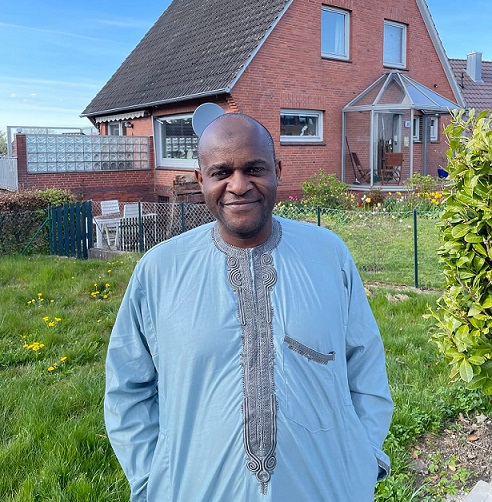
Aminu Mohammed is at the Kiel School of Sustainability, Chrtistan Albrechts Universität zu Kiel, Schleswig Holstein, Germany. He can be reached via gravity23n@gmail.com. 

Big for nothing PDP is 23 years today

By Aliyu Nuhu

Already party stalwarts are beating their chest to celebrate the achievements of the party. They called it Africa’s biggest party (not greatest).

One of the major achievements they continued to hammer was the introduction of GSM communication technology.

The big for nothing party is only talking of GSM as if Nigerians are getting the service for free! The truth is we had GSM because the technology caught up with us. When digital satellite TV came to us, the government of the day didn’t see it as an achievement. PDP and its leaders don’t have an iota of shame.

For the 16 unbroken years they succeeded in turning Nigeria into a one party state. Infact they underdeveloped Nigeria.

Security has never been worse in their time and today’s insecurity was planted by PDP.

Power generation even at peak of rainfalls was a dismal 4400mw after billions of dollars investments.

During their terrible reing there was endemic poverty, unemployment and diseases.

Meanwhile even as the party held on to power for 16 unbroken years there were 6000 abandoned projects that will need N1.5trn to complete. Billions were spent on such projects without result.

Just take a calculator and sum up our capital budgets for 16 years and compare with what PDP left on ground to give you an idea of the crimes of PDP.

Each government jettisoned the projects of the previous government to re-award or start another, forgetting that development must be anchored on continuity and consistency.

The worst of PDP has not yet been seen yet with industrial scale looting that took place in the last government still under investigation. Nigeria was never so brazenly raped like those inglorious years of Jonathan. The man simply opened the treasury vaults and allowed hyenas to feast on it. At times they didn’t even wait for oil proceeds to make it to the treasury. They stole the oil from source and hocked it to international black market.

Between the past presidents and their families, the leadership of National Assembly and their members, Ministers and governors, PDP was able to steal well over 60 Billion dollars from Nigeria and still counting.

PDP made us the most corrupt nation on earth, forget the Transparency International ranking us better figures these years we are the number one most corrupt country in the world no thanks to PDP. Nigeria is the indisputable champion of corruption and graft in the world.

And PDP slogan has been “things shall always get better”.

Better for them as from all counts they are the sworn undertakers of Nigeria and it’s poor citizens.

When they told us to tighten our belts they loosened theirs.

We have seen it before, somebody in the size of Boni Haruna went to government house to emerge with the tommy of James Ibori.

And they said we should be patient, that results of their ingenious hard work will materialise in the year 2020. We are in 2021 now and APC that is made up of PDP members is even becoming our heartless undertaker, nailing our coffin finally.

When we thought APC has come to set things right we realize we are just dealing with the same brand of oppressors. Today APC chairman Abdullahi Adamu was a former PDP chairman, an endorsement that both parties are just different sides of the same coin.