Plateau State

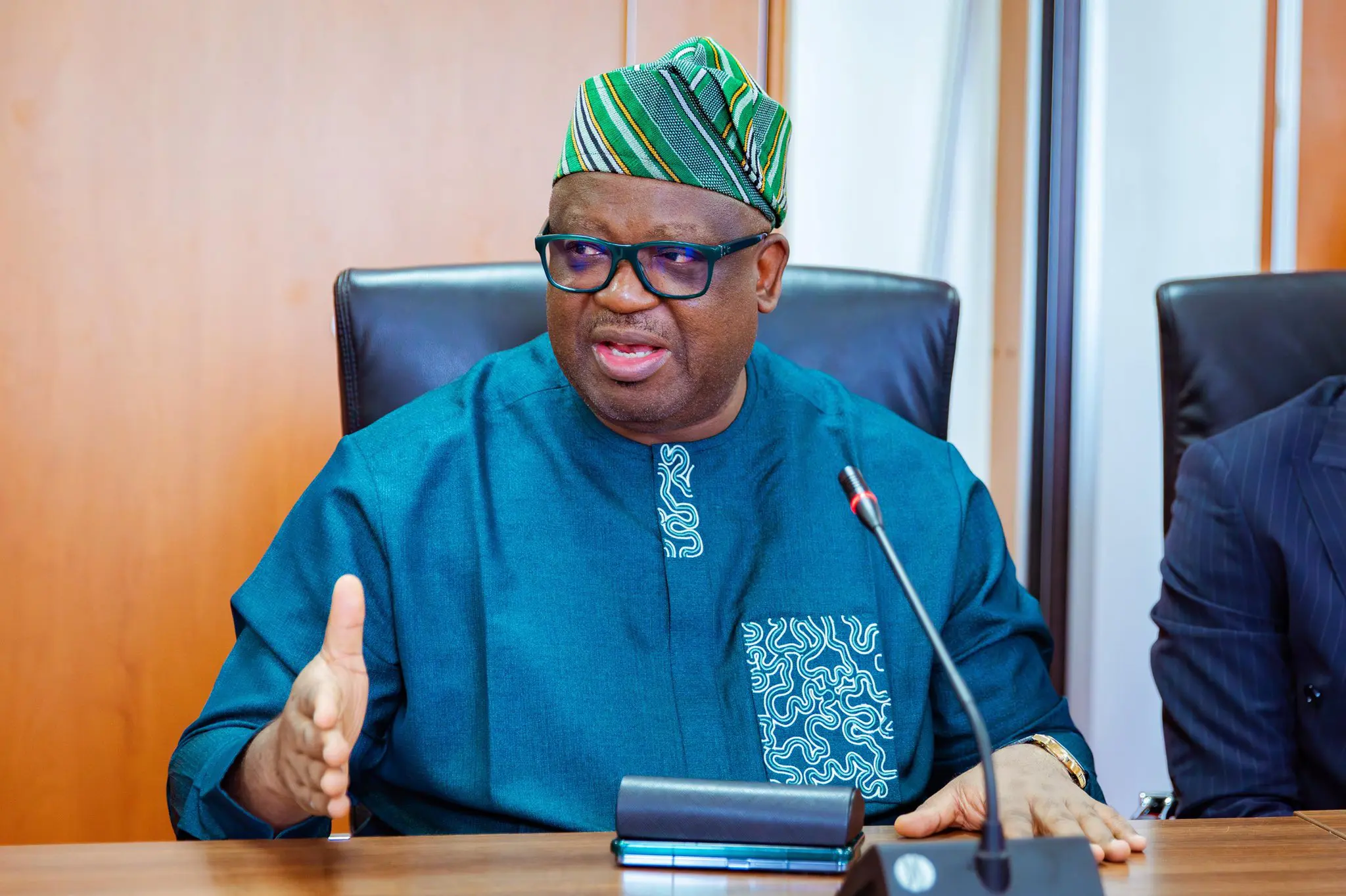
Plateau Governor Mutfwang defects from PDP

By Ibrahim Yunusa

Plateau State Governor, Caleb Mutfwang, has officially resigned from the Peoples Democratic Party (PDP), citing the need for purposeful leadership, clarity of direction, and improved service delivery.

In a letter dated December 29, addressed to the Chairman of the PDP in Ampang West Ward, Mangu Local Government Area, Governor Mutfwang expressed that the current political reality necessitated a shift in platform.

He wrote: “Given the realities of the moment and guided by my commitment to purposeful leadership, clarity of direction, and service delivery, I am compelled to seek an alternative political platform.”

Rumours of the governor’s potential defection had been circulated, with reports suggesting he had been in talks with the ruling, All Progressives Congress (APC).

His official exit from the PDP appears to confirm those earlier speculations.

Influencer Aisha Falke shares harrowing past amid renewed tensions over Kebbi schoolgirls’ abduction

By Hadiza Abdulkadir

A detailed personal account posted by northern Nigerian social media influencer Aisha Falke has drawn significant public attention as debates intensify over insecurity and religious rhetoric in the region.

Falke, founder of the popular online platform Northern Hibiscus, published a two-part account describing how her family narrowly escaped an attack during the 2001 ethno-religious crisis in Jos. In the account, she recalls waking to reports of killings at roadblocks and later watching her mother’s Christian friend—described as a close family companion—allegedly approach their home with a machete as mobs advanced toward their neighbourhood.

According to her narration, the family fled moments before large groups of armed youths descended on the area. She also recounted scenes of panic on the roads as fleeing residents warned of roadblocks where travellers were reportedly attacked and burned.

Falke’s post has generated extensive reactions across northern Nigeria, with many users describing it as a reminder of the human toll of past communal violence.

The renewed attention comes as security agencies continue the search for 25 Muslim schoolgirls abducted from their school in Kebbi State last week. The incident has prompted widespread condemnation, though it has unfolded alongside online claims by some groups alleging “genocide against Christians” in the region—claims many northern residents and government officials dispute, arguing that ongoing attacks by bandits and insurgents have targeted communities irrespective of religion.

Falke did not link her story to the Kebbi abductions, but analysts say the timing has contributed to broader conversations about the dangers of inflammatory narratives and the need for balanced reporting on insecurity.

Authorities have not yet provided updates on the rescue operation, while families of the abducted students continue to appeal for swift action.

DSS apprehends suspected arms dealer in Plateau State

By Hadiza Abdulkadir

The Department of State Services (DSS) has announced the arrest of Musa Abubakar, believed to be a major supplier of arms to criminal groups in Plateau State and northern Nigeria. The operation was based on intelligence reports leading to his detention on November 12, 2025.

A DSS source confirmed that Abubakar admitted to producing and distributing high-calibre weapons and ammunition used in violent attacks across Plateau and neighbouring regions.

The arrest followed a targeted raid on his weapons manufacturing facility in Mista Ali, Bassa Local Government Area, Plateau State. Authorities reportedly found Abubakar with IED components, chemicals, and manufacturing equipment, all seized by DSS operatives.

This development comes days after the recapture of Abdulazeez Obadaki, alias Bomboy, a prison escapee linked to the Owo and Deeper Life Church attacks. DSS headlined recent successes in counterterrorism efforts, including the detention of nine high-profile suspects involved in incidents in Plateau and Benue states.

Among those detained is Timna Manjol, 46, who pleaded guilty to firearms charges related to the attacks, according to court documents. Manjol is affiliated with First Baptist Church in Mangu, Plateau.

Security analysts view these arrests as part of the DSS’s ongoing crackdown on violent extremism in the region.

Nigerian Film Corporation, Plateau Gov’t to deepen partnership in film development

By Hadiza Abdulkadir

The Managing Director of the Nigerian Film Corporation (NFC), Ali Nuhu, has met with the Executive Governor of Plateau State, His Excellency Caleb Manasseh Mutfwang, to discuss strengthening collaboration between the Corporation and the state government.

During the meeting in Jos, the Plateau State capital where the NFC is headquartered, both parties explored ways to expand their long-standing partnership in promoting film production, nurturing local talents, and positioning Plateau as a central hub for Nigerian and African cinema.

Ali Nuhu noted that the discussion centered on the shared belief in the power of storytelling to shape perception, promote unity, and drive development. He emphasized that Plateau State, with its stunning landscapes and rich cultural heritage, has long been a home for some of Nigeria’s most compelling stories.

“Our goal,” he said, “is to ensure that those stories are not only told but also seen, heard, and celebrated across the world.”

The persecution of Hausa people in Nigeria must stop

By Salisu Uba Kofar Wambai

The safety and dignity of Hausa people in Nigeria are increasingly under threat. The recent spate of brutal killings targeting innocent Hausa travellers across various regions of the country is both alarming and unacceptable. 

Disturbingly, the North Central and Southern parts of Nigeria, in particular, are turning into graveyards for members of the Hausa community, despite the hospitality and freedom non-indigenes continue to enjoy in Hausa land—where people from across the country have settled peacefully, enjoying all rights guaranteed under the Nigerian Constitution, including freedom of movement and residence.

The recent killing of two Hausa tanker drivers in the South-East came as a shock. They were attacked and butchered while trying to repair their broken-down vehicle. Similarly, the horrific massacre of Hausa hunters in an incident that sent shockwaves across Nigeria and beyond speaks volumes about the rising hostility against the Hausa community.

Equally tragic was the killing of Hausa travellers in Plateau State who were on their way to honour a wedding invitation. Their brutal slaughter reflects the growing dehumanisation of Hausa people, treated like cockroaches in a country they call home. In Benue State, two sons of renowned Islamic scholar, Malam Ibrahim Khalil, were also gruesomely murdered, as though their lives meant nothing.

These atrocities raise serious questions: Are we to fold our arms while our people are slaughtered day after day? Where are our political leaders? Where are the Hausa individuals within the security and intelligence networks? Is silence the best they can offer? Or is the Hausa community being pushed to a point where it might be forced to retaliate?

This alarming trend must not be ignored. The examples highlighted are only a fraction of the broader pattern of persecution being endured by Hausa people across the country. Despite being one of the most accommodating and detribalized ethnic groups in Nigeria, the Hausa are being pushed to the wall—and if this continues, the unity of the Nigerian federation could be at serious risk.

Urgent action is required. These barbaric attacks must stop, and those responsible must be brought to justice. The time to act is now.

31 Muslim passengers lynched in Plateau: ABU Muslim Forum demands justice

By Muhammad Sulaiman Abdullahi

The Muslim Forum of Ahmadu Bello University (ABU), Zaria, has condemned the brutal lynching of 31 Muslim passengers in Mangu Local Government Area of Plateau State, describing the attack as a “horrific act of savagery and barbarism.”

According to the Forum’s statement, signed by its Secretary-General, Dr. Munir Sani Ari, the victims—travelling in an 18-seater bus marked “ABU-Zaria”—were ambushed on Friday, June 20, 2025, while seeking directions in Mangu. Twelve passengers were reportedly killed and burned on the spot, while 18 others sustained serious injuries and are currently receiving medical care following military intervention.

Among the deceased was a staff member of ABU’s Department of Physics, who was reportedly transporting women and children to a wedding. The Forum emphasised that this was not an isolated incident but part of a “disturbing pattern of impunity-driven violence” against Muslims in Plateau State.

Criticising the response by Mangu LGA Chairman, Mr. Emmanuel Bala, who attributed the massacre to a “case of mistaken identity”, the Forum labelled the remark as “futile and insulting,” citing social media posts glorifying the attack as evidence of premeditated hate.

The Forum issued a set of urgent demands, including a full and independent investigation, public prosecution of those responsible, prompt compensation for victims, and immediate government intervention to prevent future attacks. It also called on the Kaduna State Government to support the victims’ families and cover medical expenses.

The Forum warned that continuing to fail to act decisively would only deepen national tensions, urging authorities to pursue justice beyond “mere rhetoric.”

A call for religious balance in Plateau State

By Malam Aminu Wase

Plateau State is a richly diverse and vibrant community, home to people of various ethnic and religious backgrounds. We are one family, destined by God to live together in peace and mutual respect. Sadly, this unity is too often ignored when it comes to leadership, particularly the highest office in the state. The persistent adoption of a Christian-Christian gubernatorial ticket threatens the very foundation of our coexistence.

It is time for Plateau to embrace equity, justice, and inclusiveness. For too long, Muslims in the state have been marginalised in political leadership, particularly at the executive level. This exclusion must end. I firmly believe that the next governorship candidate, regardless of religion, should choose a Muslim as a running mate. A Muslim-Christian or Christian-Muslim ticket would truly reflect the spirit of fairness and unity we all profess to uphold.

For more than two decades, Muslims in Plateau State have shown unwavering political support for Christian-led tickets, believing in the promise of shared governance and mutual respect. From Wase to Kanam, Jos North to Shendam, Barkin Ladi to Quanpaan, Mangu, and other local government areas, Muslim communities have consistently turned out in large numbers to vote, not out of compulsion, but from a sincere desire to contribute to the democratic process and to foster unity across religious lines. Yet, this goodwill has not been met with reciprocity.

Despite making up a significant portion, nearly half of the state’s population, Muslims remain glaringly absent from the highest levels of leadership. This is not merely a matter of political imbalance but a painful reminder that inclusion and equity remain elusive. When a group that has given so much continues to receive so little in return, it breeds frustration, weakens trust, and threatens the very cohesion that Plateau so desperately needs. We cannot claim to be united while one half of our people are repeatedly shut out of the room where decisions are made.

Our call is simple: include us. Recognise our presence. Acknowledge our contributions. Let us build a Plateau where everyone feels seen, respected, and valued regardless of faith.

Personally, some of the most meaningful relationships in my life have been with my Christian friends, friendships that began in the classrooms of Pilot Central Primary School in Wase, grew stronger at Government Science College Wase, and deepened further during my university years. These bonds have shown me the beauty of unity, the strength of mutual respect, and the power of shared dreams. That is why it pains me deeply to see Muslims continually left out of leadership. It feels like a betrayal of the unity we have lived and believed in. If we can walk together in friendship, why can’t we lead together in governance on the Plateau?

In the Wase Local Government, Christians are a minority, yet they have never been treated as outsiders. They have held key positions, including that of the Deputy Chairman, and many have benefited from the federal appointments from the Rt Hon Ahmed Idris Wase, the immediate past Deputy Speaker of the Nigerian House of Representatives, thanks to his inclusive leadership. This is what true leadership should look like, recognising every citizen’s worth, regardless of faith or number. It proves that fairness is not a favour, it’s a duty. If such inclusive governance can be practised locally, why can’t it be replicated across the entire state?

Plateau belongs to all of us. We must build a future where leadership reflects our shared diversity. Let’s end the cycle of exclusion and embrace a new era of fairness, justice, and genuine unity.

Malam Aminu Wase writes from Kaduna State. He can be reached at aminusaniusman3@gmail.com.

The normalisation of atrocities on our roads: A call for accountability

By Kabiru Danladi Lawanti, PhD 

I cannot recall any incident where a vehicle or travellers were targeted simply because they were from Plateau State, in retaliation for the atrocities being committed by these savages.

Please, I challenge anyone to provide a single example—since 1914—where innocent travellers were attacked in Kebbi, Sokoto, Zamfara, Katsina, Niger, Kano, Jigawa, Bauchi, Gombe, Yobe, Adamawa, or Borno simply because they were seen as the “other.” 

Yet, we have countless documented cases from Tinno, Mambilla, Takum, etc., in Taraba; Riyom, Barikin Ladi, Jos, Mangu, etc., in Plateau; Agatu, Makurdi, etc., in Benue; and Gonin Gora, Koi, etc., in Kaduna, where innocent travellers were blocked, maimed, and killed—dismembered and buried or even burned alive—solely because of their identity as “others.”

These are normalised atrocities. The perpetrators are getting away with it because there have been no consequences. Only God knows how many lives have been lost in this manner between 2002 and 2025. 

Many of these crimes are well documented—some even recorded and posted by the criminals themselves, proudly sharing selfies while committing barbaric acts. Remember the Eid day massacre in Jos? Or the genocide in Mambilla? These incidents are documented by security agencies.

Tragically, these criminal gangs enjoy the backing of some politicians and community leaders. Take, for instance, the disturbing justification offered by the Chairman of Mangu Local Government Area regarding the killing of wedding-bound travellers from Zaria. Is that how a leader is supposed to speak?

Even more worrying is how these barbaric acts are celebrated on social media. Look at the screenshot of Kefas Gyang Pam that went viral yesterday, or the posts from a Facebook group in Bokkos openly celebrating the gruesome attack on the innocent Zaria travellers.

These individuals are not ghosts. They are known. And they can be easily traced.

Kabiru Danladi Lawanti, PhD, wrote from Ahmadu Bello University, Zaria.

The killing of Zaria travellers: A wake-up call to our failing conscience

By Muhammad Umar Shehu 

I read with deep shock and sorrow about the gruesome murder of innocent travellers from Basawa in Zaria LGA of Kaduna State. It is heartbreaking and disturbing. 

What is happening to our society? When did we become so heartless that taking a human life no longer moves us? When did we start watching these tragedies unfold without reacting, without speaking, without demanding justice? This is not normal. We are clearly losing our sense of humanity and conscience.

The killing of these travellers is wicked, and it must be condemned in the strongest terms. No matter the excuse, mob action is mob action. Whether it happens in Plateau, Uromi, Kaduna, or anywhere else, it is lawlessness. It is cruel. And it has no place in any society that wants to grow, that wants peace, that wants justice. The moment we begin to justify the unjustifiable, we open the door to more bloodshed and deeper division.

The Federal Government, Plateau and Kaduna State Governments, security agencies, traditional rulers, religious leaders, and all other concerned stakeholders must rise to the occasion. This crime must not go unpunished. It is not enough to issue statements. Action must follow. Those behind this evil must be arrested, investigated properly, and brought to justice. That is the only way this act can serve as a warning to others. We cannot continue to act as if all is well when innocent lives are being wasted with no consequences.

It is painful to admit, but we have become a society where people record killings with their phones instead of stepping in to stop the madness. Where is our sense of community? Where is our compassion? The silence and indifference from many quarters are just as dangerous as the violence itself. We must speak up, we must act, and we must demand better from those who claim to lead and protect us.

The media, civil society, and the public must not let this incident be buried under the weight of the next trending story. These lives mattered, and these families deserve answers. We must keep the pressure on until justice is served. A society that fails to protect the innocent will one day be a danger to everyone, including those who look away.

May the Almighty Allah forgive the victims, grant them eternal peace, and give their families the strength to bear this painful loss. And may we, as a people, wake up before it is too late.

Muhammad Umar Shehu is a writer and social commentator from Gombe and can be reached via umarmuhammadshehu2@gmail.com.

Letter to President Tinubu on Yelwata and Jos massacres

Dear Mr President, 

1. I hope you had a safe return after the visit to Yelwata, Benue State, to assess the killing spree that occurred there last week. While people like Mr Peter Obi and Dele Farotimi criticised your trip as one lacking compassion, I believe your presence there meant something. It is better than not going there. It means you have first-hand knowledge of how defenceless Nigerians are killed, not just in Benue, but across Nigeria, especially in the North. 

2. I write to draw the urgent attention of Your Excellency to a fresh tragedy. This afternoon, several national newspapers reported the killing of 12 Muslim passengers travelling from Zaria to Qua’anpan Local Government Area of Plateau State. They were ambushed in the Manjul community, Mangu Local Government Area, Plateau State. These innocent Muslim travellers were killed, and subsequently burned in the bus conveying them. Nineteen others are now nursing various degrees of injuries.

3. A survivor among the victims of this dastardly act was interviewed, and he remarked that they lost direction. Upon stopping and asking for directions, the locals at Manjul remarked that these are Hausa people and that they should be killed. In their words, as reported, “These are Hausa people, let’s kill them!”. This chilling statement underscores where we are as a country. Anyway, they successfully killed 12 and injured 19. It is in today’s newspapers – Daily Nigerian, Daily Trust, The Daily Reality, Punch Newspapers. 

4. Mr. President, no citizen should be targeted for their ethnicity or religion. Whether in Yelwata or Yorro, Mangu or Malete, Nigerians must be free to travel safely. Nigeria has tolerated this barbarism for too long. If terrorists in the forests remain elusive, those living in communities and attacking travellers should not be. What excuse does the state have when killers who can be easily traced and apprehended go unpunished? This silence by the system sends one loud message: you can kill and walk away. 

5. This is not the first time such horror has unfolded in Plateau State. In 2021, 20 members of the Tijjaniyya sect were killed in Rukuba, Jos, on their way home from a religious event in Bauchi. It is now 4 years. No justice has been served yet. In 2018, General Idris Alkali (rtd), a senior military officer and Chief of Army Administration, was ambushed and killed. His body was thrown into a pond in Dura Du. Suspects were arrested, but 7 years later, justice is being delayed. 

6. These cases remain open wounds. Mr. President, your influence should not stop at sympathy and condolence visits. Nigerians will feel more confident if you direct a full, public, and timely investigation into these recent attacks in Yelwata and Mangu. The perpetrators should be found, prosecuted, and punished—not just for justice but as a deterrent. Otherwise, each incident becomes an invitation for the next mob to strike.

7. Your Excellency, the time to act is now. Nigerians are watching. We can, for once, surprise the world and Nigerians themselves to know that Nigeria is not a jungle where anyone kills at will and goes about their everyday business. Where is the sanctity of life in this country? If the government cannot break this wanton bloodshed, then who will? You can decide to break this bad culture of letting killers get away. You can choose to be different from your predecessors. You can decide to let Nigerians know that this can be curtailed. Let this be the turning point. We have to give justice some opportunity to speak louder than violence. At this time, let us give the killers an opportunity to know that Nigeria is not a lawless country. 

8. Thank you. 

Ibrahiym A. El-Caleel wrote from Zaria, Kaduna State.