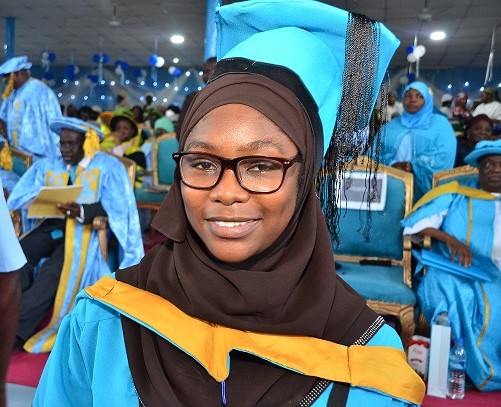
My life, my choice: Why I rejected university job for catering (II)
By Aisha Musa Auyo
Coursework lasted for four months. I enjoyed it as it’s Psychology, and got excellent results. But I couldn’t go back as planned, as I had already enrolled my kids in school. I complained to my parents about my lack of a job and how relatively boring it was to stay without my husband. They promised to do something about that. I ventured into the catering business full-time while my husband and I were still making plans to reunite. Fortunately, another transfer was by the corner, so the goal is to wait and see the posting. Living alone was getting harder for him and affecting his work productivity. No man wants to go home to an empty house. No man wants to be eating out every day; the inconveniences are just too numerous.
On my side, I felt empty and taking care of the home and raising the kids alone was taking a toll on me. He could only come once a month and spend two to three days. His kids saw him as a stranger. Although we were constantly on video calls, it’s not the same as being present.
An opportunity for a university job came, but I rejected the offer, explaining that we were leaving as soon as the transfer came out. The one and half years we did apart as couples have taught us never to try that again; I’ve changed my decision on work. I called my husband, told him about the offer, and made it clear I was not accepting it. He advised I should not do anything hasty, but I remained unshaken. Any job that would tie me to one place and make me apart from my husband is not worth it. At that time, the transfer came out, and the location was not travel-friendly. His workload too would not allow unnecessary travel, so the job is a big No for me.
However, People judge from afar and couldn’t hide their disappointment of me not working in a cooperative world. A neighbour looked into my face and told me, ‘if you reject the job because of your husband, I swear you will regret this decision’.
I was not saying I would not work outside my kitchen, but whatever my work is, it shouldn’t be the one that would split my family apart. One should not be surprised if they see me working outside home tomorrow if the work was within the place I stay and can offer transfer whenever we are made to leave the state. So, yes, my future work should revolve around my husband’s work state.
But for now, I choose catering, and I decide to do what works for me. Who knows it, feels it. Those who mattered have accepted and made peace with my decision. The challenge now is balancing the catering business with my PhD thesis.
Let me explain why my parents want us to pursue these degrees. They are university professors, have few kids, with guaranteed pension and gratuity. So, they don’t need any financial help from us. But they want us to be independent and financially stable. In addition, they want us to be highly educated and respected. As parents of girls, in this era of divorce, irresponsibility, and many life uncertainties, they know the best they could give us is this education.
Our parents often tell us that they’re not rich; they won’t leave us with mansions and millions when they die. This education is the only legacy they have, and I understand them. The University environment does that to its inhabitants. This is a general problem ‘we quarters’ children’ face.
A neighbour of mine whom we came from the same quarters made a similar decision not to work or further her education. She told me how her dad used to compare her to coursemates, that they’re all PhD holders now and doing great things in the university. Thus, he always begged her to at least further her education. To our parents, a bachelor’s degree is never enough.
To say I’m grateful to my parents is an understatement. Wallahi, I often cry, knowing I can never pay them for all they did to me. They’ve given and are still giving me the best of everything; we are over-pampered. We are the envy of our peers, and we have achieved so much at young ages due to their persistence and guidance. It’s not only Boko (Western education) they gave us; they also ensured all of us have memorised the Quran at young ages and have attended multiple Islamic schools and conferences.
Moreover, they have our best interests at heart; they are even overprotective. So I’m not only grateful, but I always feel indebted. All I do is pray for them to have the best of here and hereafter. Now, this story is history as I’ve eaten my cake and still have it. I’m doing my PhD while my family have been reunited. A postgraduate program is temporary and flexible. I’m glad I followed my parents’ advice, thanks to them, I’ll be a young Dr soon inshaAllah.
The lessons here are:
1. Allow, guide and encourage children to follow their dreams and passion. The result is a win-win, as parents won’t have to push the kids to work or study hard. Passion naturally breeds excellence.
2. Don’t make or set life goals too early. Be open-minded. The definition of success is very dynamic. Our dreams can change as we advance in age and transition from stage to stage in life.
3. Accept people’s decisions even if you have power over them. Just pray, and let them face the consequences. If it turns out good, that’s great. If it turns out bad, that’s a lesson, not a failure. All decisions are born from real-life experiences and or reading that change one’s line of thinking or learning an idea somewhere that sparks one’s interest in something.
4. When your passion is what you do for a living, your life will be happier thus healthier. The fulfilment and peace are on another level.
5. Diversify your knowledge and skill. Don’t just dwell on a single niche and plan your life around that. Don’t pigeonhole your thinking into believing that “I am a civil servant” or “I am a business person” and nothing else. It’s too dangerous. Life is dynamic; even if you chase degrees, learn a skill or trade. Government jobs are not guaranteed. Priorities also change, especially for women. For instance, my catering business has never been affected, even though I’ve been moving around. Cooperate jobs will not have been this flexible.
6. Read, read, and read. Learn, unlearn, and relearn. Reading is an art that teaches one about life beyond their daily reality. Reading could help you avoid many problems, crises, and misunderstandings. Reading changes one’s outlook towards life makes one understand himself, those around him and the world better.
7. People should learn to mind their business and respect other people’s choices. Every individual is entitled to their decision. Making derogatory comments, asking personal questions, or judging based on half-baked information hurts. Many people think my husband, as an Ustaz, dictates my decision to be a housewife for now. On the contrary, he supports, pushes, and encourages me to work hard on my school projects. When I told him about the university job offer, he was willing to sacrifice. I single-handedly decided to reject it. He promotes my thesis and business on their tv channels. He pays for my air tickets whenever I need to see my supervisor and lots more.
8. Sometimes, one needs to stand firm on his decision, especially about his own life. Sometimes, one needs to put himself first; it’s not selfishness.
9. A married woman can actualise her dreams, career, and aspirations with a husband’s support.
10. To achieve greatness, one needs to make sacrifices. Success has never been achieved without struggle.
Finally, and most importantly, pray hard for God’s guidance on whatever decision or journey you want to embark upon. With a clean heart and good intentions, trust Allah to be always there for you.
Aisha Musa Auyo is the CEO of Auyo’s Cuisine and wrote from Abuja. She can be contacted via aishamuauyo@gmail.com.