Petrol price

Dangote Blames Cross-Border Smuggling For High Petrol Prices

By Sabiu Abdullahi

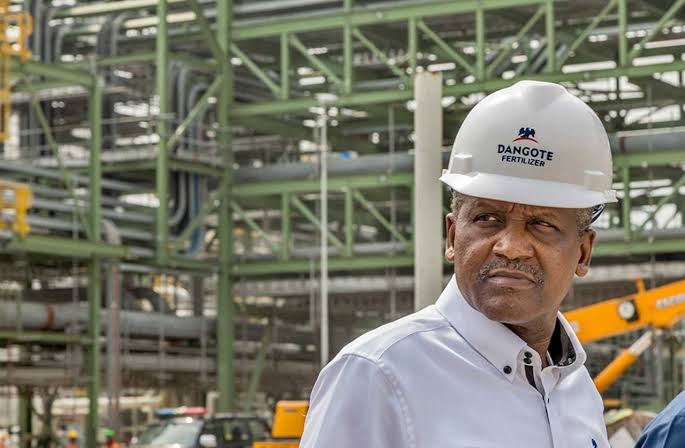
President of Dangote Industries Limited, Aliko Dangote, has linked part of the high cost of petrol in Nigeria to the continued smuggling of the commodity into neighbouring countries.

Dangote said petrol sells for between 30 and 50 per cent more in some neighbouring countries than in Nigeria, a price difference he said encourages traders to move the product across the borders for higher returns.

He made the remarks during an interview aired on Arise TV on Tuesday, where he discussed petrol prices, domestic supply and the possible impact of the ongoing crisis in the Middle East.

Addressing concerns over the cost of petrol in Nigeria, Dangote said the price should be considered alongside what consumers pay in neighbouring countries.

“You know, expensive is relative. In the sense that today, maybe, you know, a lot of them, there’s ignorance also. What they need to do is ask, what is the neighbour’s price?”

The businessman said the price gap had continued to encourage the movement of locally produced petrol out of Nigeria.

“I don’t know if you know that there’s still a lot of smuggling of the same petrol we are producing to our neighbouring countries.”

Dangote explained that petrol prices in neighbouring countries were significantly higher than those in Nigeria, making cross-border sales attractive to traders.

“Because those neighbouring countries are about 30 to 50 per cent more expensive than Nigeria. So, it’s not actually like for like.”

He cited Niger as an example, saying petrol sold at N1,350 in Nigeria could fetch between 20 and 25 per cent more across the border.

“And people can now go and ask, okay, fine, what is the price of, even now at N1,350? Okay, the price in Niger is 20 to 25 per cent more than Nigeria,” he said.

Dangote questioned what other legitimate business could offer such an immediate return.

“So, what business are you going to do that will make you have an instant 25 per cent return?” he asked.

He also described how petrol intended for the Nigerian market could be diverted towards border communities for resale.

“So, it means that, yes, you take the [petrol], you go and take it across the border. You pretend you are taking it to Sokoto, you go and just take it to Ilela, and you sell.

“Actually, they don’t have.”

According to Dangote, the cross-border movement reduces the amount of petrol available within Nigeria because traders can obtain higher returns outside the country.

Beyond the issue of price, Dangote warned that the ongoing crisis in the Middle East could create a different challenge for Nigeria’s petroleum market.

He said the major concern could shift from the cost of petrol to the availability of the product.

“And the problem now, going forward, I must also warn that this crisis in the Middle East is not even about price; it’s about availability,” Dangote said.

He, however, assured Nigerians that his refinery would continue to supply the domestic market despite possible disruptions in the international energy market.

“We will deliver to Nigeria. Nigerians don’t need to worry. There will not be any shortage from our own part.

“There won’t be any shortage. There will not be any queues. We will make sure that we keep satisfying the market, despite all odds,” Dangote added.

His comments came shortly after the Dangote Petroleum Refinery and Petrochemicals opened its N2.15tn initial public offering (IPO) on the Nigerian Exchange.

The IPO comprises 4.1 billion ordinary shares priced at N525 each, with a minimum subscription of 10 shares worth N5,250. The offer is open to retail, institutional and eligible African investors and is scheduled to close on October 13, 2026.

The Strait of Hormuz and Nigeria’s Energy Paradox

By Inusa Rabiu Isah

As tensions continue to rise around the Strait of Hormuz, global oil prices are climbing again, shipping risks are increasing, and analysts are warning that any prolonged disruption in the Gulf region could trigger another major energy shock. For many Nigerians, the immediate reaction is predictable: “Nigeria will benefit because we are an oil-producing country.” Yet every major oil shock continues to expose the same uncomfortable reality: despite its enormous crude oil reserves, Nigeria remains dangerously vulnerable to global energy instability.

The Strait of Hormuz, located between Iran and Oman, is one of the world’s most strategic energy transit routes. According to the International Energy Agency (IEA), about 20 million barrels per day of crude oil and petroleum products passed through the Strait in 2025, representing roughly one-fifth of global oil consumption and nearly 25% of global seaborne oil trade. In addition, the United States Energy Information Administration (EIA) reports that around 20% of global LNG trade moves through the same corridor.

This explains why instability around Hormuz immediately affects global energy markets. The concern extends beyond crude supply to tanker movements, shipping insurance, freight costs, refinery feedstock availability, refined product pricing, and market speculation.

Similarly, past disruptions such as the 1973 oil embargo, the Gulf Wars, and the 2022 Russia–Ukraine conflict demonstrated how geopolitical instability can rapidly trigger inflation across import-dependent economies through higher fuel, transport, and food costs.

Nigeria is no exception.

Although Nigeria is one of Africa’s largest crude oil producers, the country still operates an economy heavily dependent on imported energy-linked systems. Millions of households and businesses rely on petrol and diesel generators due to an unstable electricity supply, while transport and logistics remain overwhelmingly road-dependent. Consequently, rising diesel and petrol prices quickly spread across the economy.

The first major mistake in many public discussions is the assumption that higher crude prices automatically benefit Nigeria. Oil revenue depends not only on price, but also on production volume.

According to Nigerian Upstream Petroleum Regulatory Commission (NUPRC) data released in April 2026, Nigeria’s combined crude oil and condensate production rose to about 1.546 million barrels per day in March 2026. However, crude oil production excluding condensates stood around 1.382 million barrels per day, still below Nigeria’s OPEC quota of approximately 1.5 million barrels per day.

Therefore, higher crude prices alone cannot guarantee stronger economic benefits unless production remains stable, oil theft is reduced, and export infrastructure functions efficiently.

The second mistake is confusing crude oil price with petrol price. Nigerians do not buy crude oil at filling stations; they buy refined petroleum products. Petrol and diesel prices are influenced not only by crude benchmarks but also by refining margins, freight charges, foreign exchange rates, logistics, taxes, insurance, and marketer margins.

This is where Nigeria’s foreign exchange challenge becomes critical. A weaker naira significantly increases the cost of refined products and energy-related imports. Since the removal of fuel subsidies, domestic fuel prices now respond more directly to global market volatility. Consequently, international oil shocks now transmit faster into local petrol and diesel prices.

Although the Dangote Refinery represents a major improvement in Nigeria’s downstream petroleum sector, local refining alone cannot completely shield the country from global oil-price volatility. Crude feedstock pricing remains internationally linked, and refined product prices still respond to international market conditions. Nonetheless, the refinery remains a critical step toward improving Nigeria’s long-term energy security and reducing import dependence.

Recent domestic fuel data already show how exposed Nigeria’s economy remains. National Bureau of Statistics (NBS) data indicated that the average retail petrol price rose to about ₦1,288.54 per litre in March 2026, while diesel prices recorded an estimated 16.05% month-on-month increase during the same period.

These are not just economic statistics. They affect transport fares, food prices, manufacturers, small businesses powering generators, and millions of Nigerians already struggling with inflation.

Meanwhile, Nigeria’s deeper challenge remains structural energy vulnerability. Electricity supply is weak, gas infrastructure is underdeveloped, rail freight systems are limited, and strategic fuel reserves are inadequate. Under these conditions, every major disruption in global energy markets quickly evolves into domestic inflation and economic hardship.

The policy lesson is therefore clear: Nigeria must stop celebrating rising oil prices without asking whether the country is structurally prepared to benefit from them. Nigeria must raise and sustain crude oil production, strengthen domestic refining, expand gas infrastructure, develop strategic fuel reserves, and treat energy security as an economic-security issue rather than merely a petroleum-sector issue.

Conclusively, the Strait of Hormuz may be geographically distant from Nigeria, but its economic consequences can reach Nigerian households within days. That is the reality of today’s interconnected global oil market. Until Nigeria builds real energy resilience, global oil shocks will continue producing the same painful irony: a country rich in crude oil, yet perpetually vulnerable to energy insecurity and affordability.

Engr. Inusa Rabiu Isah, GMNSE, MIAENG, is a petroleum engineer and energy analyst with interests in petroleum economics, energy security, and sustainable industrial development. He writes from Abuja and can be reached via inusarabiuisah@gmail.com.

Petrol price hits 617 per litre in Abuja

By Ahmad Deedat Zakari

The price of Premium Motor Spirit, PMS, popularly known as petrol, is now about 617 Naira per litre.

Customers reportedly purchased the product at 617 per litre at the Central part of Abuja on Tuesday.

The Price of PMS skyrocketed following the declaration of subsidy removal by President Bola Ahmad Tinubu in May.

The product, which was sold at about 540 in May, is now being sold at about 617 Naira in some parts of the country.

However, Malam Abdulmajeed, a Cybercafe operator in Zaria, confirmed to The Daily Reality that the price has not changed in Zaria.

As regards the reported price increase in Abuja and other parts of the country, the Nigeria Midstream and Downstream Petroleum Regulatory Authority (NDMPRA) is yet to comment on it at the time of filling this report.