PDP

Kaduna LG Polls: Why Gov. El-Rufai lost own polling unit, ward

By Mohammed Zayyad

Mallam Nasir El-Rufai is one of the best performing governors in Nigeria. So far, he is the best Governor of Kaduna State in recent times. However, Mallam lost his polling unit and ward in the local government elections conducted by the Kaduna State Independent Electoral Commission on September 04, 2023.

Governor El-Rufai voted at Unguwan Sarkin polling unit 001 in Kaduna North LGA of the state. Mohammed Sani, the presiding officer, announced the final results: Unguwan Sarki Ward 007 Kaduna North Chairmanship, the People Democratic Party (PDP) scored 1,235 votes while the ruling All Progressive Congress (APC) scored 948 votes, while for the councillorship position, PDP garnered 1,405 votes while the APC was behind with only 804 votes.

Unfortunately, though, the election witnessed low voter turnout and challenges in some polling units as the wrong machines were deployed. El-Rufai himself expressed disappointment about the low turnout of voters in the council polls. He said: “What worries me is that I noticed that people didn’t turn out much,” This could be one of the reasons the APC did poorly at Governor El-Rufai’s unit, the party may say.

The big questions are: Why should a performing governor’s party be rejected by the people at the governor’s polling unit? Why should a performing governor lose at his polling unit and ward? Are the people angry with the governor, his party, including his government? Are the people not happy with the way the beautiful Kaduna Urban Renewal is being handled? Is the current insecurity the state is witnessing a significant factor? Is it the issue of the sack of workers? Is the Kaduna state government out in touch with the real ordinary people? So many questions require answers because the result is a big political statement from the people to the governor,  his government and his party.

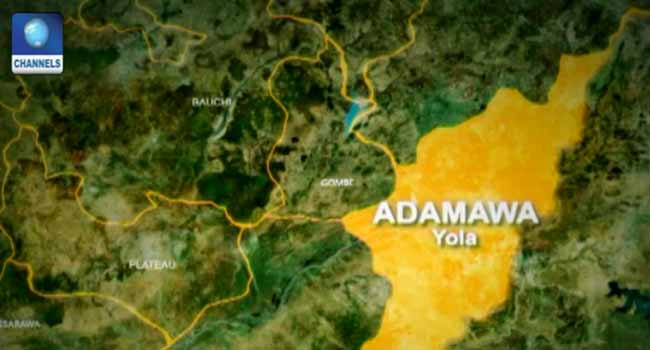
Some political pundits believe that Mallam Nasir El-Rufai’s major error is that his government is not doing well in balancing policies, development, and politics. The pundits further said this is a reminder that development in a poor society must and should always consider the people’s survival first. An example was the former governor of Adamawa state, Muhammadu Umaru Bindow, who did very well in constructing roads, bridges and hospitals. Still, the people denied him and his party the APC a second term because Bindow failed in workers’ salaries and human development.

Nevertheless, El-Rufa’i is still the best governor Kaduna State has had so far. APC may go on to win the majority of the local government councils as the results come it. Still, some pockets of the results have given the opposition more strength to fight more and take advantage of areas the government is lagging. One simple example is how one of the governorship hopefuls, Honourable Ahmad Tijjani Umar, is smartly mobilising the youth and building bridges while taking advantage of the government’s weak areas. It seems it is working well for him and his party to win support from the ordinary people.

Governor  El-Rufa’i should be commended for conducting a free and fair election and using modern technology to advance democracy. Furthermore, the governor’s polling unit and ward results have given the governor some clues and the need for readjustments and adjustments for future politics.

Zayyad I. Muhammad writes from Abuja, zaymohd@yahoo.com.

Bichi Wedding Gathering: lessons to the discerning minds

By Adamu Bello Mai-Bodi

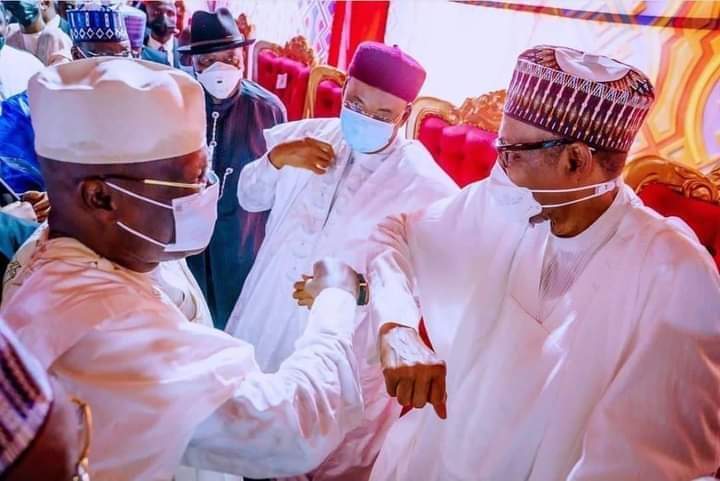
The wedding Fatiha of Yusuf Buhari and the daughter of Sarkin Bichi was held with pomp and pageantry. All roads led to Bichi on Friday, 18 August 2021. As many as 80 aircraft brought guests to kano to witness the first son’s tying the knot to a Bayero descendent princess. To the amazement of many, the guests were dignitaries and politicians of different persuasions from across the country, who, albeit their differences, gathered to bless the occasion while they wine, dine, and exchange banters with each other. 

The sportsmanship they exhibited was awe-inspiring and outlandish for Nigerian politicians. It may be unintentional, but it should be an eye-opener to Nigerians at the bottom of the ladder. It sent a strong message to the youths, especially bootlickers, sycophants and the so-called media warriors who are ever ready to insult, blackmail, curse, condemn, disrespect and assassinate the characters of their bosses’ supposed political enemies at the expense of their self-esteem. There is no point in attacking and counterattacking one another in defence of these pretenders who only follow their aggrandisements without definite ideology whatsoever.

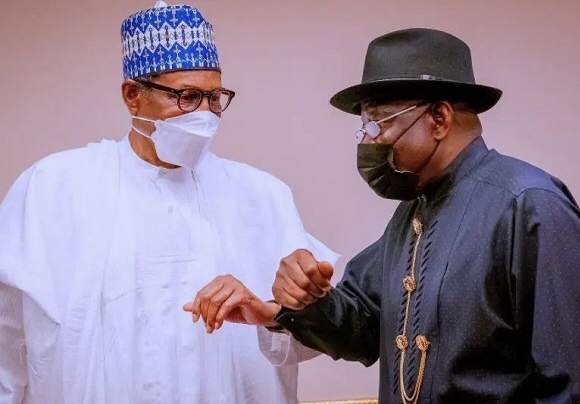
On Friday, the cliche about “no permanent friend or enemy in politics” was in full gear at Bichi Emir’s palace. Buhari, Atiku and Jonathan were present. Many former and serving Ministers, Governors, Senators Representatives and many other shot callers bundled themselves in Bichi palace with no regard to PDP, APC, South, North or East etc. Everyone was eventually their brothers’ keepers. Most notable was the unexpected comradeship between the former Aviation Minister Femi Fani Kayode and Malam Isah Pantami, the current Minister of Communication and Digital Economy. Given the hostility shown by the former towards the latter, many people were shocked.

If these old guys can forget their bitter differences and mingle to celebrate and or commiserate with one another depending on the situation, I think the downtrodden, especially youth are in a better position to embrace the culture of tolerance and to desist from being the tool for political attacks between these dissemblers who would be at each other’s throats only when their whims and caprices differ and would befriend themselves when their path crosses.

Hopefully, many discerning minds would heed this event and free themselves from unnecessary hatred, criticism, and resentment. Let love, mutual respect and fair play lead the way in all endeavours regardless of affiliations, be it political, regional or religious. “Experience,” they say, “is the best teacher”. May we be guided.


Adamu Bello Mai-Bodi writes from Gidado Bombiyo residence, K/kaji Azare.

Pantami: Should we worry about the current situation or the Minister’s past?

By Bilyaminu Abdulmumin

Perspective is what makes any matter arising be two way. Hiding behind this aegis, everyone will prefer to go with the view that suits them. This is similar to what I learned from a Nigerian saying, mind the message, not the messenger. Those who the message favours would go with it; otherwise, they would instead focus on the messenger.

Similar to this phenomenon in court proceedings is the aspects of either substance to the case or technicalities. So, all evidence would be presented in a case; you will think that’s the end for the accused, only for him to turn around and rely on technicalities. 

Before the historic 2015 general election, the then ruling party, PDP, sought to cling to General Muhammadu Buhari’s WAEC certificate. The attempt was to take on the person of Buhari instead of what he stood for, but it failed. I doubt he had written the exam, but he possibly rode on the back of official consent to progress. So the allegations could be valid, just like the claims he stood for. It depends on what favours who.

However, the Tsunami of change at the time was too strong to allow taking on the Buhari’s past. This is the kind of force required to douse the rising dust against Dr Ali Isa Pantami, the Communication and Digital Economy minister.

There are emerging signs of commitments from the Minister Pantami to revamp the sector. It is easy to understand how this will go a long way to better the nation’s insecurity.

The abuse of SIM cards in Nigeria has been very rampant, lamented by many. Bandits increasingly go on rampage, kidnapping and negotiating for ransoms undetected. Getting the SIM in Nigeria is as easy as anything effortless. Therefore, heinous activities by the underworld men continue in perpetuity. So the Minister wants to bring sanity to the ministry.

For auditing purposes, a directive was issued to halt the sale, activation, and registration of new SIM cards on December 9, 2020. Without reference to any conspiracy theories, those who are not happy with the development instead chose to descend on the Minister’s previous affiliations and sympathies. The views that the Minister reportedly renounced.

In a desperate attempt to propagate this interest, to say the least, one news media ended up undoing itself by displaying timid journalism prowess in its inability to differentiate truth from myth. 

This media published the famous video of fierce debate between Dr Pantami and Muhammad Yusuf, using it as evidence for the latter’s terrorism tendency. If there is any evidence that could absolve Pantami from what they claim, it is that debate, not what the Pantami distractors want us to understand. However, we can still learn a lesson from the development.

Dr Pantami, a rare gem in the north, an authority on both Islamic and secular education, would display the human sign (weakness) by renouncing the views he held earlier in his life. It is an excellent reason to keep on any idea between iron fist and kid-glove; it is religiously and politically wise. A similar issue is currently hunting Governor Nasir El-Rufa’i.

A video recently shared by 21st-century chronicles El-Rufa’i taking full advantage of insecurity during the Jonathan administration to score points for himself and his party.  El-Rufa’i criticised everything about insecurity in the video that he is not doing today. No regard to the reasons he gave as to why he has changed his decision.

The current standoff between Pantami and his distractors is an attempt to look beyond the effort being made in the country’s communication sector. But as for those calling for secured Nigeria, let the audit for SIM subscribers and vision for the country’s database (linking the NIM and upcoming BVN) continues.

Bilyamin Abdulmumin is a Chemical engineering PhD student at Ahmadu Bello University, Zaria. He can be reached via bilal4riid13@gmail.com.

Ideology-free parties are Nigeria’s political nightmares

By Salisu Uba Kofar Wambai

One of the basic tenets of democratic principles is building political parties on sound ideological ground. Ideology is an orientation that characterised the thinking of a group or nation. Thus, the people of the same thoughts on running public affairs come together to establish a party, preaching the gospel of a particular ideology to ascertain its primary objective in government or public sphere if they’re voted through an electoral process.

However, the missteps and embarrassing blunder committed by the Nigerian politicians in the party formation in 1998-1999 democratic process was enormous, and the country is paying the huge price now. The politicians then were overwhelmed with the military government’s commitment to hand over power to the civilians. Unfortunately, they hurriedly built the parties; thereby, the ideological consideration of the politicians was grossly undermined. The parties were just a kind of machine to let the military go.

The people democratic party (PDP) encompassed and encapsulated politicians of different ideologies by looking at their political background, which is the machine that shapes and moulds their thoughts and ideological thinking style. How can one explain forming a party with unrepentant progressives like Abubakar Rimi, Solomon Lar and topnotch conservatives like Lawal Kaita and Alex Ekueme in the same party! They had different ideological backgrounds by all calculations. They were purely strange bedfellows.

The other two most notable parties then were APP and AD. APP were just people who lost grips of power with the death of General Sani Abacha with revivalism agenda, and AD was nothing more than ethnic and regional irredentists. Therefore, the parties were all ideological-free. Their main aim was only to let the military go and let the civilians take over.

The PDP experienced intense intraparty wrangling and turmoil because the party’s bigwigs were not ideologically the same. And this led to much chaos and internal divides among them, which led to a new crop of politicians as governors hijacking the party and get rid of them politically with the backup of the presidency. It was the beginning of governor-turn-emperor as we see it today.

Retrospectively, in the First and Second Republics, the politicians had based-ideology. For example, it was NEPU that produced Malam Aminu Kano, who had been a minister and yet died with only 112 Naira in his bank account because the ideology of his party was to emancipate the masses from the subjugation of elites and traditional oligarchs who formed their NPC as a party with their aim of maintaining the status quo. And in the Second Republic still, the parties were ideological because PRP was an offshoot of NEPU, and NPN was NPC. That’s why the politics then was not much of the money-bags type. The political parties’ members were committed to bringing change according to their ideological bearings.

The late Malam Aminu Kano

The politics of ideology produced the likes of former governor Balarabe Musa, who died with only his old tractor as a farmer. It produced people like Abubakar Rimi, who had to secure a bank loan as a governor before he built his house and left the government house with only 50 thousand Naira in his possession. It produced Aminu Kano, who had not even had a paltry freezer in his room, rather a traditional (randa) muddy-pot.

We had equally seen the lifestyle of Prime Minister Tafawa Balewa and the late Northern Premier Sir Ahmadu Bello Sardauna. It was all politics of ideology that made them. They all left this world owning only a local house in their towns when they could accumulate a lot had wished so.

Today’s ideology of our politicians is nothing more than gripping onto power, begin to run the governments like their personal companies, enrich themselves at the expense of the masses, building mansions, accumulating senseless wealth through looting and embezzlement, creating laws that only serve their interest, flaunting their newfound wealth and leaving their subjects dying in poverty and diseases.

Nevertheless, you can hardly find a politician who represents his people in the National Assembly, not a billionaire or close to billionaire status today. You can only see the effects of all these borrowings with them, leaving the electorate with no security and with nothing called social amenities.

It is up to our youth to form or join the ideological political trains, form parties of explicit ideologies, and bring positive changes if they want their names to be written with gold and remembered as heroes like Aminu Kano.

Salisu Uba Kofar Wambai writes from Kano State and can be reached via salisunews@gmail.com.

Shehu Sani, supporters may soon join PDP

By Sumayyah Auwal Usman


The former senator representing Kaduna Central Senatorial District, Senator Shehu Sani and his supporters are considering defecting to the People’s Democratic Party (PDP), The Daily Reality has learnt.


Following his recent resignation from the People’s Redemption Party (PRP), Senator Sani and his supporters have been conducting a series of meetings on the issue and that they would soon come up with a stand. Recently, the former lawmaker hosted the 23 PDP local government party chairmen amid PDP defection rumours. Penultimate weeks ago, Senator Sani also visited some PDP bigwigs in the state, including former governors Ahmed Mohammed Makarfi, Alhaji Mukhtar Ramalan Yero, and former gubernatorial aspirant, Isah Ashiru Kudan. 


No details were revealed about deliberations between Sani and the party chairmen and his visits to PDP stakeholders in the state. Still, sources have confirmed to The Daily Reality that the move was part of Sani’s swift consultation of power brokers in the PDP towards having a soft landing on a likely defection to the party. 
It will be recalled Senator Sani joined the PRP in October 2018 after he failed to win the primary elections of the All Progressives Congress (APC) for the 2019 Kaduna central senatorial seat. He served on the platform of the APC but was critical of President Muhammadu Buhari and Governor El-Rufai’s governments from 2015-2019.

A pointer to a tough post-2023

 As we move closer to 2023, when power may be shifted to the South, social and political events point to a bleak future for the North. The North/South relationship is at its lowest level; tension is growing by the day, the body polity is being heated, and behind the scene, enemies of the country are planting the seeds of animosity. 

A bad omen is set for a bleak 2023 early this month when the Southern governors met in Lagos. Their communique strongly called for a power shift to the South come 2023. The governors had forgotten that leadership rotation was the brainchild of the North, that it was a political concession meant to heal old wounds following the June 12 political turmoil. They also forgot that when President Umar Musa died two years into his first term, the same South flouted the power shift arrangement. Former President Jonathan openly said this section of the country hated him because they said the power shift arrangement be honoured. 

Two recent social unrests define the Noth/South relationship and the political tension that’s setting. First was a disagreement between a Northerner, tomato seller and a Yoruba woman that degenerated into killings and displacement of mostly Northerners in Ibadan. Then came the IPOB’s sit-at-home order in the South East, where ethnic persecution of the Northerners ensued. Many were killed and hundreds displaced.

Recently, there seems to be a collective animosity towards the North and whatever the North represents. The problem with many Nigerians is that they can’t differentiate between elitism, elitist tendencies and the massive social gaps between the two classes. Historically, these same elites from either side of the divide have been known to exert elitist solidarity in perpetuating their own interests, in the process, alienating the masses. 

Most of these Southern grievances emanate from skewed political appointments by President Buhari. They forget that Buhari’s government is the reincarnation of Jonathan’s. Once, Air Marshall Alex Badeh, Major General Minimah, Air Vice Marshall Amosu were chiefs of defence, army staff and air staff, respectively. Only Admiral Jibrin was from another faith. Moreover, the President, Secretary to the Government, Senate President, Speaker of the House of Representatives, Minister of Finance were from the same faith. The same with the ‘Kitchen Cabinets.’ Remember the powerful economic team? Hausas say ‘idan ɗan maye ya manta…’

Granted that President Buhari’s government suffers from poor public relations from the President himself to his public relations team. So also was Jonathan. Towards the end of 2014 and the beginning of 2015, shortly before the general elections, Jonathan and his wife, Patience, went to churches in Abuja and South East preaching the gospel of hatred. I am not condoning nor defending the present arrangement, far from that; I am reminding us about the past lest we forget. 

The recent Afenifere political blunder is a clear pointer that Southerners would politically persecute the Northerners when power is shifted to the South. Afenifere strikes intentionally and timely to cause disaffection. Like Chalie Hebdo, they know that to Muslims, Prophet Muhammad (SAW) is the centre of gravity; he’s the Prophet, the Divine link, the undisputed spiritual leader, the guide, the intercessor, the light, the mercy and blessing to humanity. To the Muslims, Prophet Muhammad (SAW) is the best that could happen to the world. Yet, they intentionally came out to hurt feelings and cause disaffection.

They claimed to be liberals, but where’s the so-called liberalism when you lack empathy? Where’s the so-called freedom of expression when it overlooks inclusion ànd pluralism? Where’s the so-called free press when it can’t draw a line between the intellectual identification of feelings, sensitivity, thoughts of a people on the one hand, and on the other hand, the subjective urge to exhibit petty tribal solidarity?  

What Afenifere does is self-immolation. This is because there’s no ethnic group in Nigeria that’s socio-culturally cohesive, an ethnic group that’s equally infiltrated by the two major religions like Yoruba. Religious consciousness is new to them. Now the Yoruba Muslims would undoubtedly realise that Afenifere doesn’t represent them. Thus, setting an unprecedented social trajectory of an ethnic group stratified along religious faultline. It would be the worst-case scenario, for this would divide families, friends, and social groups along religious lines as is found in the North, the root cause of social unrest.

The North may have a majority in the service chiefs and defence, yet they can’t secure the North from the clutch of marauding bandits. We have the minister of finance who can’t lessen the Noth’s skydiving poverty! 

As 2023 draws closer, it seems, whoever is selected to be president from the South, there may be the tendency of political persecution of the North, and the basis of this would be justified on the failure of the current leadership to stabilize the region. When finally we demand attention, they would respond that our kin couldn’t give us what we demand from them. For now, the sociopolitical trajectories portend a bleak future. But for now, only time will tell.

Salisu Yusuf can be reached at salisuyusuf111@gmail.com.

Of rotational presidency and whatnots

By Abu Haneef 

It is true that the North and South have rotated the presidency from the inception of the Fourth Republic in 1999 until Jonathan truncated it in 2011 after the demise of Umaru Musa Yar’adua. Many have argued that it was practically challenging to stop an acting president from contesting just because of an unconstitutional gentleman agreement, which was put in place by not-so-gentle politicians to rotate the presidency between the North and the South. Although not a valid justification to scrap that agreement, the argument is not entirely incorrect; who could have stopped Jonathan if he wasn’t patriotic enough to put the country ahead of himself? No one.


All that is now history. But what isn’t history is how all the proponents of the rotational presidency during Jonathan are now speaking against rotation; in the very same manner, those that argued against the rotational presidency during Jonathan are now suddenly making a case for rotation. The way both sides exchanged arguments with the change of personalities proves that those arguments were never in favour of the reasons given in the first place. 


While there are some good arguments for and against the rotational presidency in Nigeria, there will never be a good argument for scrapping it when that benefits you, only to turn around and demand rotation when it does not. This double double-standard is against fair play. 


Now let us analyse the case. While the argument for the rotational presidency is valid on the grounds of national security and stability, there are many things wrong about how we are understanding and approaching the rotation—from its premises to our assumptions thereof and many things in between. 


Anyone who understands Nigeria’s politics knows that religion, rather than ethnogeography, is the biggest faultline, albeit with a bit of ethnogeographic connotations here and there. This explains why since 1999, almost all Northern Christians voted for Southern Christians (except where both contenders were Muslims, and even then, they preferred PDP simply for being “more Christian”), despite sharing the same geopolitical threats and opportunities with the Northern Muslims they rejected. Yet, notwithstanding this apparent reality, we chose to premise our rotation on ethnogeographical consideration rather than religion (I’m not making a case for religion here, I’m only analysing our presidential rotation). 


Now let us ask ourselves, what happens if we rotate the presidency to the South and a Muslim, backed by Northern voters, emerges as the president? He would have been a Southern president who would not give the South a sense of belonging. The same will have been the case if a Northern Christian emerges as president. So our current premise for rotation is faulty, and those responsible for it know this; they are only ashamed to premise our rotational presidency on religion because of the global stigma religion faces today. 


Another critical question we haven’t convincingly answered in Nigeria is population spread across Nigeria’s ethnogeographical constituents and religions. Doing this would have removed the heat generated on the polity by the many unrealistic demands currently put forward by all sections of the country. However, we have so many issues to solve, and the best way to start is to answer all the critical demographical questions we haven’t. Only then will every section understand its proper place in the scheme of things, as there are currently huge delusions by many country sections. 


Another problem with this rotation is our constitution, which does not recognise it. This is problematic because people at the opposite faultline can only surrender power based on trust. There is no guarantee that the other region will yield power according to agreed terms. We had seen that in 2011 when Jonathan contested against PDP’s zoning arrangement. Therefore, the question of constitutionality in rotating the presidency must be answered to address the current distrust in the polity. 


Another valid question to answer on presidential rotation is that of fairness, particularly with the way and manner we have seen many agitations for resource control, which led to the creation of 13% Derivation, Ministry of Niger Delta and Niger Delta Development Commission (NDDC). Suppose we agree that they deserve more resources only because God planted those resources in their land. In that case, the North can also argue that they deserve to retain political power because the same God that chose to bless Niger Delta with hydrocarbon decided to bless the North with a larger population. Suppose it is fair for Niger Delta to demand resource control. In that case, it is certainly reasonable for the North to require strict adherence to the democratic principle of majority retaining power at all times. That is one consistency of truth we must not skip in our national discourse. 


Conclusively, I submit that the only thing correct about the rotational presidency we argue for or against is the idea of having or not having it, but everything else has either been misunderstood, refused to be understood or deliberately misrepresented. And in these tiny details and questions we repeatedly miss lies most of the solutions we seek elsewhere. 


Abu Haneef can be reached via imabuhaneef@gmail.com.

The Electoral Act: Where is APC’s Progressivism?

I wonder why the APC senators mostly stood against the clause that sought to operationalize the electronic transmission of election results.

I thought APC as a party was supposed to embody the ideals of political progressivism and was not created and sold to the people as a mere alternative political party with almost the same modus operandi as the others. I thought it was supposed to be a positive paradigm shifter and a status quo disrupter. But they have proven us wrong. 


Debates over this issue took a very heated dimension on the floors of both chambers of the National Assembly, and I wonder why. I understand there are certain concerns around issues like the devices to be used in the transmission of the results; how the results would be authenticated digitally before transmission; how the relevant stakeholders(e.g. party agents, observers) would be able to access the original results as transmitted; how accountability and transparency will be entrenched especially regarding public access to results and of course the issue of internet connectivity and inadequate digital infrastructure.


But if we are really determined, are there no answers and solutions to all these questions and concerns? Where is the APC’s commitment to innovation and “change”? 


This is how I visualize the entire process in the simplest terms:

 
Firstly, on registration of party agents (and independent observers, both local and international) for each polling unit by INEC. The commission would take all necessary details, including biometrics and create a profile for each of them on the INEC system. As such, all agents and observers would have access to their profiles on an app developed specifically for the elections. Of course, rigorous training of agents would be done to this effect. All political parties would also have accounts on the platform(perhaps to be operated by the Chairmen of the Parties). 


Secondly, after the elections, the transmission of results can only be done after validation and authentication by all party agents registered(and official observers) in the polling units. This can be done in many ways. One way is by barcode scanning. This way, the agents’(and observers’) mobile application would allow the scanning of the barcodes of the digital results as compiled so that immediately the barcode is scanned, the agents would be sent the result sheet on their mobile app as tabulated for verification(just as we use our XENDER app). On verification, the agents would accept or decline(in cases that warrant such). If accepted, the agents would still, after accepting their devices, go further to verify their acceptance with a biometric scan(thumbprint) on the device of INEC. Only then will the result be transmitted. 


Thirdly, immediately after transmission, INEC will send originally certified and legally admissible copies of the verified and authenticated result to the accounts(profiles) of the party agents and the central party account(profile). The result will also be immediately published on the elections website and projected at the polling unit for public consumption. 


On connectivity, INEC might choose to use the networks of the local service providers operating in Nigeria or partner with reputable international service providers. I prefer the latter because of the argument that almost 50% of the polling units we have do not have internet coverage. The government might partner with companies like SpaceX that provide satellite internet services with the capacity of delivering 150mbps internet speed to any place on the planet via satellite. All that is needed is a small kit at every polling station. There are also many other companies the country can partner with to optimize the device with satellite internet functionality that will guarantee internet connectivity almost anywhere in the world with appreciable speed, for example, companies like Thuraya, Iridium, Inmarsat etc. Of course, under the supervision and protection of the nation’s digital firewall. In this case, all polling units would have the digital infrastructure necessary for this purpose. 


Are these things possible, or they are just too fictional and unrealistic? 


If they are possible, then what is all this noise around e-transmission of election results? Or are we just not yet ready for such a revolutionary change towards more transparency and accountability in our election processes? 


Why is APC hell-bent on amplifying a limitation that they have done nothing to improve as justification for their scepticism towards e-transmission of the election result? Why are they not talking solutions and alternative routes towards achieving e-transmission just as they did vehemently when the PDP postponed elections in 2015 because of the insecurity in the North East? I wonder how they would have reacted if they were still in the opposition, but given their reaction to the issue of card readers while they were, I strongly believe they would have supported e-transmission. 


Some of them argue that even the United States, by virtue of the Protecting American Votes and Elections Act of 2019, use conventional ballot papers for voting. And I ask, is electronic voting the same thing as the electronic transmission of results? Have they ever wondered how they get live election result updates on channels like CBN, ABC, FOX etc.? Don’t they know of the National Election Pool in the US and Edison Research which provide real-time election results? 


Some are sceptical because such a network is susceptible to cyber intrusion. And I ask why the pessimism? Can we not trust the same cybersecurity infrastructure that protects our national security data(in DIA, NIA, DSS etc.) to offer befitting protection to a network that will be used just for electronic transmission of election results? 


So many questions for the APC! 


And here is the subtlety, the initial clause in section 52(3), as presented, already had the practicability condition; “The Commission may transmit results of elections by electronic means where and when practicable.” So this was the original clause. 


Then it was amended to this by both chambers of NASS; “The commission may consider electronic transmission provided the national network coverage is adjudged to be adequate and secure by the Nigerian Communications Commission and approved by the National Assembly.” 


In the amendment, the National Assembly subtly gave itself the exclusive power for approval subject to the NCC assessment and network coverage report. This is in absolute contravention with section 78 and Third Schedule Part 1, F, S.15 of the Constitution of the Federal Republic of Nigeria as amended. Per these extant provisions, the constitution has given exclusive rights and powers to INEC in the matters of the conduct, supervision, undertaking and organization of elections in Nigeria. Hence, the unconstitutionality of subjecting INEC’s powers to the approval of the NCC and the NASS. 


We are ashamed by the actions of the APC towards this issue because we believed that any initiative that holds the potential of improving transparency in election proceedings in this country ought to be unconditionally supported, especially by the APC. But, sadly, that is not the case. 


Abdulhaleem Ishaq Ringim is a political and public affairs analyst. He writes from Zaria and can be reached through haleemabdul1999@gmail.com.

Certificate of Survival

By Amir Abdulazeez

Some weeks ago, I was caught up in a debate involving some people trying to justify the Federal Government of Nigeria’s ban on Twitter and those who opposed it. If I am to be fair to both groups, every side had some very good points, strong enough to sway a neutral person to their side. However, one thing remains fundamental and clear even to the debaters; the Twitter ban will not solve any of our short and long-term problems, including the very ones for which the Federal Government used to justify the ban.

It will not be difficult for any critical observer to note that the Buhari administration had not taken lightly any action that will or can undermine official state authority or that of the President since its coming in 2015. This is perhaps why over 1000 Shiites were allegedly killed in the administration’s early days for blocking the way of the Chief of Army Staff, among other things. It may also be why IPOB and End SARS protesters were not treated with the kid gloves with which bandits and mass murderers of ordinary citizens are apparently treated. Twitter had not offended ordinary Nigerians as much as it had offended the Presidency and hence the ban. Regardless, at least the ban is a strong message that not everything can be tolerated by Nigeria, especially the sort of highhanded arbitrariness on the part of the social media tech giant.  

A few hours before the ban came into effect, I was surfing the platform to catch up with the day’s national and international news when I came across an interesting statement credited to ex-Senator Dino Melaye.  Melaye was reported to have said that any Nigerian that survived this APC’s administration to its end alive deserves a certificate of survival. I don’t know whether he actually said that or not, but the statement is typical of him. Besides, the truth is that ordinary Nigerians are currently receiving the suffering of their lives.

According to the Consumer Price Index report, recently released by the National Bureau of Statistics (NBS), Nigeria’s inflation rate for May 2021 stands at 17.93%, a slight drop from April 2021, which was 18.12%. Food which is the most critical item, recorded an inflation rate of 22.28% in May. This is the highest since April of 2017. Nigeria ranks 13th in the global inflation table and 7th in Africa, making it among the worst worldwide. At less than $80 per month, Nigeria’s minimum wage is one of the poorest in the world. A substantial percentage of the Nigerian population has been reduced to begging. The crime rate in almost every state of the federation is on the increase; income is static, expenditure is growing, no jobs and opportunities.

The Consumer Price Index (CPI) measures the change over time in the prices of 740 goods and services consumed by people for day-to-day living. The index weights are based on expenditures of both urban and rural households in the 36 states. How good a measure it is to quantify our real suffering from this hyperinflation is another question of its own.

Our real problem is that these figures only give us an idea but not an accurate picture of the cost of living in the country. We all know that these figures are mainly hypothetical; we have essential goods and services that have recorded a 100% increase in prices within weeks. Another concern is that other countries facing inflation are somehow doing well relatively. For example, the twelve countries worse than Nigeria in the global inflation ranking are better off in terms of peace and security (except maybe Syria) and prosperity (except perhaps Sudan and South Sudan).

The country faces multiple, unprecedented and overwhelming security challenges from all fronts. With no clear end in sight, many people in some parts of the country live every day in uncertainty while helplessly waiting for the worst. In parts of Katsina, Zamfara, Kaduna and Niger States, people live to tell the daily stories of tragedy while hopelessly waiting to be consumed like their brethren. Survival has become a privilege these days.

The government is overwhelmed and had resorted to foreign debts to keep the collapsing economy working. Nigeria’s External Debt has reached $32.9 billion US Dollars as of March 2021. Roughly, each Nigerian is indebted to the tune of 65,000 to 70,000 Naira at the official exchange rate of dollar to Naira. We have not stopped borrowing; a substantial amount of our current and future budgets still depends on external borrowing. We are not talking of internal debt.

Ordinary Nigerians are finding life unbearable. Are these sufferings temporary? What are we doing to stop this? Why is every previous year better?  How does the future look like for ourselves and our children? How many of us will survive this? Is survival our emerging national culture and priority? People are employing any available means to stay alive, thereby gradually turning societies into jungles where everyone wants to thrive even at the expense of others.

What is the overall implication of all these? Now here comes the real danger. When a greater majority of a country’s citizens are preoccupied with how to survive, no one will be left to create and add the value that will take the country to the promised land. When most people spend 75% of their time trying to fetch their families amidst rising costs and harsh conditions, they can only spend the remaining 25% to rest against the subsequent struggle, leaving them with zero time to think and create anything. When almost everyone lives to attain Dino Melaye’s survival certificate, we will have no other aspirations other than food and shelter. The result will be a backward nation that will remain static for only God knows when.

We cannot say that the current government is doing nothing about all these challenges, but they are doing nothing revolutionary. Measures like N-power, Conditional Cash Transfer and the likes are cosmetic, inadequate and unsustainable. Even their effects in the short term are too minimal to reflect on the general quality of national life. First and foremost, the country must have a comprehensive and exhaustive national development plan with inputs from local, state and federal stakeholders. This plan must be well developed, implemented and not politicized. If needs be, it should be backed by legislation. Government appointees at any time must be people that understand and can implement that plan religiously irrespective of their demography and political affiliations.

The development plan should strengthen sectors like manufacturing, power, infrastructure, security, and justice because such sectors can automatically create and consolidate direct and indirect development. For example, if there is adequate security and power supply, independent businesses would run for 24 hours. When some people who conduct businesses during the day are asleep, some others resting during the day will operate businesses during the night. Nigerian companies will work for 24 hours with no valuable time to waste, thereby hugely increasing productivity. We should be able to produce most of the goods we import.

When power is available, thousands of jobs would be created both directly and indirectly. Therefore, rather than investing in providing direct jobs that cannot satisfy all, let the government strengthen security and power.  We have seen what the telecommunication and entertainment industries have done to our economy through direct and indirect jobs creation with ripple effects. I think that success can be replicated in many other sectors. When this is done, governments will rely on happy and self-employed citizens for taxes rather than the other way round.

Unfortunately, we cannot implement essential solutions now and then because politics has been our number one national priority since 1999. This has made many people lose interest in providing any meaningful input to the Nigerian development discourse. I have received countless messages over the last eight months, including from some newspaper editors over my long break from analytical writing with some enquiring on what must be responsible. I usually didn’t have any consistent answer; sometimes, I’ll only compose any reply that comes to mind.

Whatever will be said has been said many times before. We just lack the will as a nation to take the bull by the horn. Just some days ago, a reader reminded me that it had been a year since I wrote an opinion piece asking why. I doubted and quickly went to my personal online blog only to confirm what he said was indeed true. I was surprised myself; the reader didn’t know that I am currently battling to obtain my own Certificate of Survival.

Twitter: @AmirAbdulazeez

A refresher for southern governors

By Abu Haneef


The governors of southern Nigeria held a meeting in Lagos on Monday, July 5, 2021. They, among other things, demanded the return of the presidency to the South in 2023. They also rejected two sections of the recently passed Petroleum Industry Governance Bill (PIGB). While the governors are entitled to their opinion, the return of the presidency to the South will however require much more than a demand from the governors—it will require fielding a Southerner that can win in a free contest. As for the rejection of some sections of the PIGB, their opinion on such a legislative matter is hardly any different from that of ordinary Nigerians and indeed of no legal significance to the implementation of PIGB. Perhaps they need to summon their legislators for an honest discussion. 


Between the 4th and 9th legislative assemblies in Nigeria, the PIGB was stalled for over 20 years due to unrealistic demands by many interest groups. This has led to the inefficient utilisation of our petroleum resources and the inability to open our economy to private investments. Therefore, the passage of this bill brought a huge sigh of relief to many who appreciated the impact its delay had on our development and economy. And today, PIGB is arguably the most debated bill in Nigeria’s history. 


The two sections contended by the governors are the allocation of 3% of NNPC’s profit to host communities (they need more) and 30% of the profit to exploration activities in the basins (they need less exploration elsewhere). 


Although the situation of the host communities is something every Nigerian should be sympathetic to, such sympathy should not mean giving them everything while other regions suffer deprivation. The host communities have 13% derivation, deducted from government revenues (not just oil). They also have a federal ministry dedicated to their needs and another government parastatal, the Niger Delta Development Commission (NDDC). Although these considerations will not replace what the region has lost (and is still losing) of its livelihood to oil exploration activities, particularly those illegal activities by the locals, it nonetheless does not justify the denial of the country to increase its revenue by exploring the basins. And lest they forget, the oil in Niger Delta was explored through revenues from our erstwhile groundnut pyramids. It also does not justify the disproportionate allocation of the nation’s resources to them exclusively. 


For example, in addition to sums budgeted for the Ministry of Niger Delta and the NDDC, Delta State alone received almost N190 billion in federal allocation in 2020, which roughly equates to what was received by four North-Eastern states of Bauchi, Borno, Gombe, and Adamawa during the same period. And this will be more appreciated when the difference in population and landmass is added to the analysis. 


I’m not mentioning this to suggest that the host states (which now include Bauchi and Gombe States, by the way) do not deserve this patronage. Still, I do so to disagree that the nation has neglected them as always projected when the leaders require additional resources of those communities. And looking at the resources allocated to the host communities in the last decade alone, their leaders, rather than Federal Government, are the ones guilty of this neglect. 


But all this argument and counter-argument can only be a lamentation or justification, depending on what side of the divide you find yourself, as those saddled with the constitutional responsibility of determining the matter have done so, albeit after a very long time. And any effort to undermine the National Assembly is actually a renegotiation of this country through the back door, which any reasonable person should not contemplate at this critical period of our history. 


As for the governors’ request for the presidency to be returned to the South in 2023, they, particularly those amongst them who championed the jettisoning of zoning arrangement in 2011, such as Wike, need to be reminded that if the aggressor forgets quickly, the victim does not. 


In 2011, the South, led by President Jonathan and many of those clamouring for it today, abolished zoning in defiance of all reasons and a gentleman agreement established by the North to protect the South that is unarguably the minority in Nigeria. This is true regardless of how one chooses to look at it—either by landmass or population. 

Now that zoning has been thrown into the bin of our history by the South; the presidency shall remain open to a free contest by all. And even if this zoning arrangement will be revisited in the future, not now, if you ask me; a good lesson needs to be taught and learned on the importance of the sacrosanctity of agreements, or else, we may see a repeat of the logically fallacious arguments tossed left, right and centre in the justification of abandoning zoning by the same actors calling for its return today. 


Abu Haneef can be reached via imabuhaneef@gmail.com.