Palestine

Mainz lose court appeal over Anwar El Ghazi’s dismissal

By Maryam Ahmad

Bundesliga club Mainz 05 have lost their appeal against the unfair dismissal ruling in favour of Dutch winger Anwar El Ghazi, who has been awarded €1.7 million in compensation.

A German labour court had earlier found that the club acted unlawfully when it terminated El Ghazi’s contract in November 2023 following social-media posts he made during the Gaza–Israel crisis. The arbitration panel upheld that decision, rejecting Mainz’s argument that the posts constituted grounds for immediate dismissal.

In a statement, Mainz said it accepted the ruling but stressed its commitment to maintaining its internal code of conduct. El Ghazi welcomed the outcome, describing it as a vindication of his right to express his views.

Over 100 killed in Israeli strikes on Gaza amid ceasefire dispute

By Maryam Ahmad

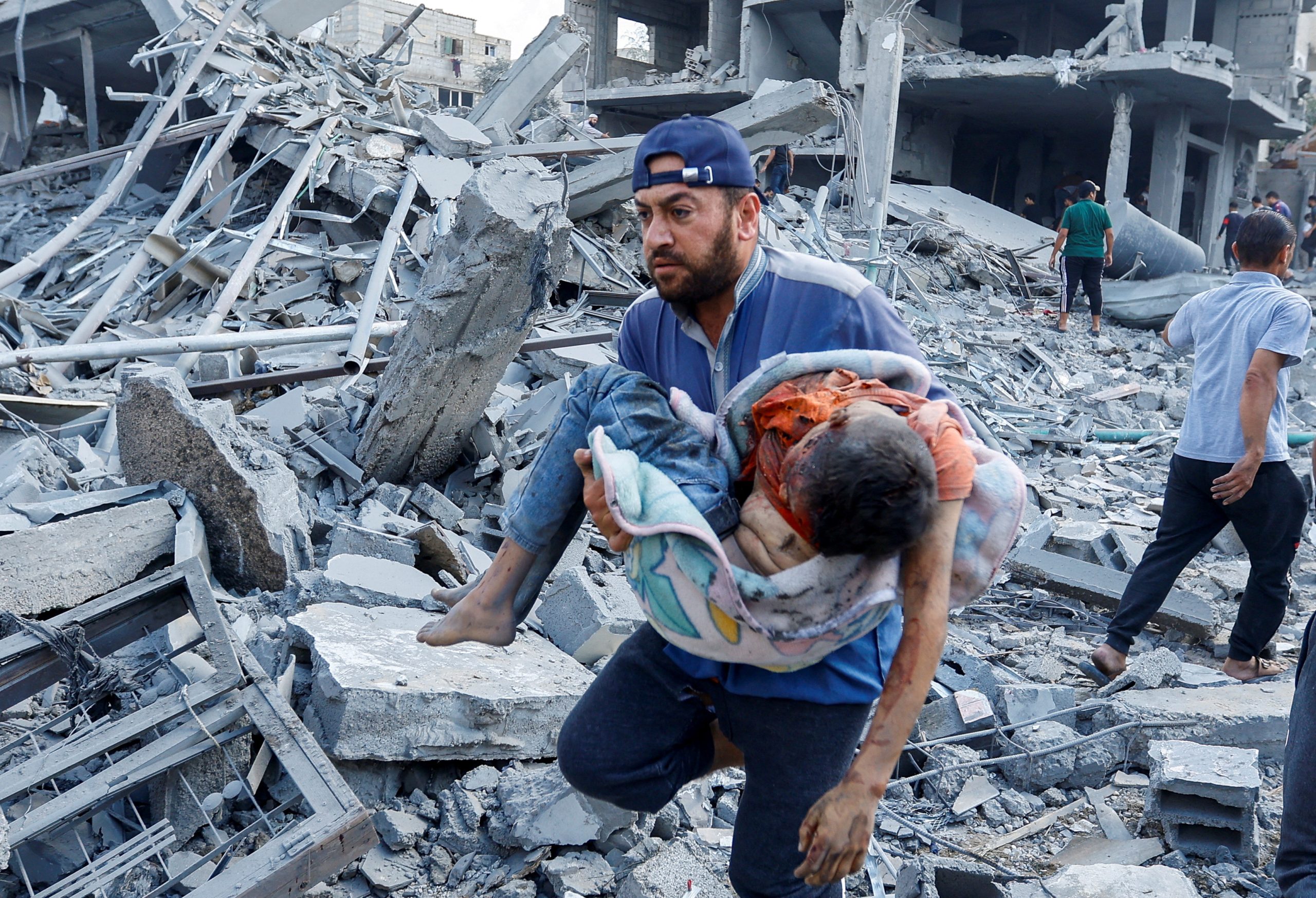
More than 100 people were killed in a series of Israeli airstrikes across Gaza on Tuesday, according to health officials in the enclave. The strikes came shortly after Israel accused Hamas of violating a fragile ceasefire agreement — an allegation Hamas has denied.

Palestinian health authorities said the attacks targeted several densely populated areas, leaving scores of civilians among the dead and many others injured. Rescue teams continued to search through the rubble for survivors late into the night.

In a statement, Hamas rejected Israel’s claims of ceasefire breaches and accused Israel of deliberately escalating the conflict. The group also said Israeli authorities had prevented the return of the bodies of Israeli hostages who were killed during earlier clashes.

The renewed violence has raised fears of a broader breakdown in the ceasefire, which had offered a brief respite after months of devastating fighting. International calls for restraint have grown as humanitarian conditions in Gaza continue to worsen.

Palestinian refugee turned Nobel Laureate: Omar Yaghi wins 2025 Nobel Prize in Chemistry

By Muhammad Abubakar

Omar Yaghi, a Palestinian-born scientist whose journey began in a refugee family in Jordan, has been awarded the 2025 Nobel Prize in Chemistry.

The Royal Swedish Academy of Sciences announced the honour earlier today, recognising his pioneering work in designing and developing new classes of materials that have revolutionised the field of chemistry.

Speaking to reporters while in transit between flights, Yaghi reflected on his humble beginnings: “My parents could barely read or write. It’s been quite a journey. Science allows you to do it.”

Born to Palestinian refugees who fled to Jordan, Yaghi’s journey to scientific excellence was far from straightforward. As a young student, he was drawn to the beauty of chemistry, a fascination that eventually led him to develop metal-organic frameworks (MOFs), materials now vital in energy storage, clean water production, and environmental sustainability.

Yaghi described his motivation as both artistic and intellectual: “I set out to build beautiful things and solve intellectual problems.”

For many across the Arab world, especially Palestinians, Yaghi’s achievement serves as an inspiring reminder that brilliance can arise from the most difficult beginnings.

Netanyahu vows to block Palestinian state project, describes it as ‘national suicide’

By Abdullahi Mukhtar Algasgaini

In a fiery speech at the United Nations General Assembly, Israeli Prime Minister Benjamin Netanyahu pledged to prevent the establishment of a Palestinian state, accusing Western nations of rewarding terrorism and pushing Israel toward “national suicide.”

Addressing the assembly on Friday, Netanyahu sharply criticized recent decisions by Britain, France, and other powers to recognize a state of Palestine.

“Israel will not allow you to shove a terrorist state down our throats,” he declared, arguing that such moves send a message that “murdering Jews pays off.”

The speech came amid ongoing efforts by US President Donald Trump to secure a ceasefire in Gaza.

Trump, following Netanyahu’s address, stated, “I think we have a deal.” However, Netanyahu vowed to continue Israel’s military campaign against Hamas, promising to “finish the job.”

Netanyahu’s appearance at the UN was marked by controversy. Facing an International Criminal Court arrest warrant for alleged war crimes, he took an unusual route to New York.

As he spoke, several delegations walked out, and protesters gathered nearby calling for his arrest.

The Israeli leader aggressively defended his country’s actions in Gaza, challenging genocide allegations and stating that civilians were urged to flee.

The conflict, triggered by Hamas’s October 7, 2023, attack that killed 1,219 people in Israel, has resulted in over 65,549 Palestinian deaths, according to the Hamas-run health ministry.

Netanyahu also claimed parts of his speech were broadcast via loudspeakers in Gaza, aimed at both Hamas leaders and the remaining Israeli hostages, assuring them, “We have not forgotten you.”

Italy gripped by strikes over weapon shipments to Israel

By Muhammad Abubakar

Italy is witnessing widespread labour unrest as dockworkers, unions, and students have launched strikes and demonstrations to protest the shipment of weapons to Israel amid the Gaza conflict.

In Ravenna, Mayor Alessandro Barattoni and local authorities stopped two trucks carrying explosives meant for Haifa, citing solidarity with Palestinians and concerns over loopholes allowing arms transit through Italy.

In Genova, dockworkers participating in a strike have blocked access roads to the port and rallied under the banner of preventing Italian ports from facilitating arms transfers. Similar protests are underway in Livorno. Public transportation services have been disrupted in cities such as Rome and Milan, and several schools have been closed.

Unions are demanding that the Italian government suspend both commercial and military cooperation with Israel, close legal loopholes related to transit of arms, lift any humanitarian blockade on Gaza, and formally recognise the State of Palestine.

The protests highlight increasing internal tensions in Italy’s politics, especially under Prime Minister Giorgia Meloni’s government, which has traditionally aligned more with Israel diplomatically. Observers suggest the strike actions test if citizen and labour moral pressure can influence the government to curb arms exports and transit.

Canada, Australia and UK formally recognise Palestinian state

By Muhammad Abubakar

In a historic diplomatic shift, the governments of Canada, Australia, and the United Kingdom have formally recognised the State of Palestine. The announcement, made in a joint statement on Sunday, marks a significant moment in international support for Palestinian statehood.

Leaders of the three countries said the recognition was aimed at advancing a just and lasting peace in the Middle East, reaffirming their commitment to a two-state solution. They urged both Israel and Palestine to return to negotiations and called for an immediate halt to violence in the region.

The move has been welcomed by Palestinian officials, who described it as a “courageous step towards justice and self-determination.” However, Israel has expressed strong opposition, warning that such recognition could undermine peace efforts.

The decision by three of the world’s most influential Western nations is expected to increase pressure on other countries to follow suit, potentially reshaping the dynamics of the Israeli-Palestinian conflict on the global stage.

Eric Cantona calls for UEFA and FIFA to ban Israel as Spain proposes a World Cup boycott

By Muhammad Abubakar

Former Manchester United legend Eric Cantona has called on football’s governing bodies, UEFA and FIFA, to impose an immediate ban on Israel over its ongoing military actions in Gaza. Cantona, known for his outspoken views, said football cannot remain silent while civilians continue to suffer.

His statement comes amid growing international pressure on Israel, with Spain reportedly considering a boycott of the upcoming World Cup should the situation persist. 

Spanish officials have hinted that participation in global tournaments could be reconsidered if FIFA does not take more decisive action.

The calls echo previous instances where sporting sanctions were used as leverage against states accused of human rights violations, most notably the bans imposed on apartheid-era South Africa and, more recently, Russia following its invasion of Ukraine.

Neither UEFA nor FIFA has officially responded to Cantona’s demand or Spain’s potential boycott threat, but the developments add further weight to the debate over the role of football in addressing global conflicts.

Israel cuts funding for national film awards after Palestinian story wins

By Sabiu Abdullahi

Israel’s Culture Minister, Miki Zohar, has vowed to halt government support for the country’s national film awards after a Palestinian-themed movie, The Sea, claimed the top honor at the Ophir Awards.

The film tells the story of Khaled, a 12-year-old boy from the occupied West Bank who dreams of reaching Tel Aviv to see the Mediterranean Sea. It won Best Film at the Ophir Awards, Israel’s equivalent of the Oscars.

By winning, The Sea will now represent Israel in the Best International Feature Film category at next year’s Academy Awards.

In a post on X, Zohar lashed out at the outcome. “There is no greater slap in the face of Israeli citizens than the embarrassing and detached annual Ophir Awards ceremony.

Under my watch, Israeli citizens will not pay from their pockets for a ceremony that spits in the faces of our heroic soldiers.”

Reports in Israeli media suggest it is unclear whether the minister has the authority to pull state funding from the awards.The film also swept other top categories.

Thirteen-year-old Muhammad Gazawi, who plays Khaled, became the youngest ever to win Best Actor in the history of the Ophir Awards.

His character is stopped at an Israel Defense Forces checkpoint during a school trip and barred from entering Tel Aviv.

He later sneaks into Israel to try to reach the sea, while his father, an undocumented worker, searches frantically for him.

Producer Baher Agbariya, while accepting the award, said the movie stood for “every child’s right to live in peace, a basic right we will not give up on.”

Zohar, however, repeated his criticism, labeling the event “embarrassing and detached.”

Defending the jury’s decision, Assaf Amir, chair of the Israeli Academy of Film and Television, argued that the selection carried a message of hope.

“As the never-ending war in Gaza takes a terrible toll in death and destruction, the ability to see the ‘other’… gives small hope. In the face of the Israeli government’s attacks on Israeli cinema and culture, and the calls from parts of the international film community to boycott us, the selection of The Sea is a powerful and resounding response.”

The controversy erupted against the backdrop of mounting global condemnation of Israel’s military campaign in Gaza.

According to the Hamas-run health ministry, more than 65,000 Palestinians, nearly half of them women and children, have been killed since October 2023.

The war began after Hamas-led fighters attacked southern Israel on October 7, 2023, killing about 1,200 people and taking 251 hostages.

This week, a United Nations commission of inquiry accused Israel of committing genocide in Gaza. Israel’s foreign ministry dismissed the findings as “distorted and false.”

The film industry has also been caught up in the political storm. Earlier this year, thousands of Hollywood figures signed a pledge refusing to work with Israeli film institutions they accused of being “implicated in genocide.”

The United Nations and eight decades of impotence

By Amir Abdulazeez

The United Nations is currently holding its 80th General Assembly sessions in New York. Some days earlier, the U.S. State Department, under the pretext of national security and anti-terrorism laws, revoked visas for dozens of Palestinian officials, including President Mahmoud Abbas slated to participate, at the General Assembly and a high-level two-state conference. This move drew criticism from the UN itself, EU and some human rights groups, with calls to relocate Palestinian-related meetings outside New York. This echoes historical precedents, notably the 1988 visa denial to Late Yasser Arafat, which forced the UN to shift one of its sessions to Geneva to allow him participate.

Although the 1947 ‘Headquarters Agreement’ obliges the United States to admit all UN participants, Washington occasionally and selectively invokes security and legal excuses to discriminate between entrants. Such practices explain how the UN’s operations remain vulnerable to U.S. control, thereby undermining its independence, authority and credibility. As the UN marks the 80th anniversary of the ratification of its charter on 24th October 2025, the organization which was founded on the ashes of World War II in 1945 faces an existential crisis of credibility and effectiveness.

While it has achieved notable successes in humanitarian aid, educational research and global environmental and health initiatives, its core mission of maintaining international peace and security has been repeatedly undermined by structural and diplomatic flaws. The organization’s inability to meaningfully respond to crises from Syria to Ukraine and most visibly in the Israeli-Palestinian conflict, has exposed fundamental weaknesses that warrant urgent reform. The UN’s record is one of profound paradox: a body designed for action but often defined by its inaction. Nowhere is this impotence more starkly illustrated than in its 70 years’ failure to resolve the Palestinian question or to hold Israel accountable for its international impunities.

From the outset of the Israeli-Palestinian conflict, the United Nations assumed a central role by proposing the 1947 Partition Plan, which sought to establish separate independent states for both parties. Although initially conceived as a potential path to peace, the plan was never enforced and the UN has since struggled to translate its own decisions into reality. Further failures are documented in a paper trail of unimplemented resolutions: Security Council Resolution 242 (1967) called for Israel’s withdrawal from territories occupied during the Six-Day War; Resolution 338 (1973) and countless subsequent resolutions reaffirmed this demand that was not only ignored but instead empowered Israel’s massive expansion of illegal settlements.

Beyond the unimplemented resolutions, a critical UN failure in this regard is that of narrative framing. It has been unable to consistently enforce a foundational principle: that the right to self-determination for one people (Israelis) cannot be predicated on the denial of that same right to another (Palestinians). The organization’s various bodies often treat the conflict as a symmetrical dispute between two equal parties, rather than an asymmetrical struggle between a nuclear-armed occupying power and a stateless, occupied population living under a brutal blockade.

The core of the UN’s ineffectiveness lies in the flawed decision-making structure of its Security Council, where the five permanent members (United States, Russia, China, France and United Kingdom) hold the autocratic privilege of veto power. This system of outdated World War II geopolitics has frequently paralyzed the organization in hours of need. Since 1946, the veto has been selfishly exercised about 300 times. Between 2011 and 2023, Russia and China blocked 16 resolutions on Syria, enabling the Assad regime’s brutal campaign against civilians. The United States, meanwhile, has used its veto more than 50 times to shield Israel from accountability, making Palestine the single most vetoed issue in UN history. Instead of serving as a platform for global security, the Council has become an arena for shameless and hypocritical power politics.

The General Assembly, despite representing all 193 member states equally, has been relegated to a largely ceremonial role in matters of international peace and security. While the Assembly can pass resolutions by majority vote, these carry no binding legal force and are routinely ignored by powerful nations. The 2012 resolution calling for an arms embargo on Syria passed with 133 votes but had no practical effect, as Russia continued supplying weapons to the Assad government. This has created a two-tiered system where the views of the international majority are systematically subordinated to the interests of Security Council Super Powers.

The selective enforcement of international law has become a defining hallmark of UN impotence. While the organization has at times demonstrated resolve such as coordinating global sanctions against apartheid South Africa in the 1980s or authorizing military intervention in Libya in 2011, its responses to other similar crises have been inconsistent and politically driven. Similarly, the International Criminal Court, often operating with UN support, swiftly indicted leaders of Liberia, Sudan and Libya, yet no Western or allied leaders like George W. Bush or Tony Blair have been held to account for baseless interventions in Iraq, Afghanistan or Yemen. These double standards have eroded the UN’s credibility and moral authority, particularly in the Global South, where it is increasingly viewed as an instrument of Western hegemony.

The UN’s peacekeeping apparatus, while successful in some contexts, has also demonstrated significant limitations when confronting determined state actors. The United Nations Disengagement Observer Force (UNDOF) on the Golan Heights and the United Nations Interim Force in Lebanon (UNIFIL) have maintained buffer zones during their operations, but have been powerless to prevent violations by all parties. During the 2006 Lebanon War and subsequent conflicts, these forces could only observe and report violations rather than enforce compliance.

Financial manipulation has emerged as another tool of selective pressure within the UN system. The United States, which contributes 22% of the UN’s regular budget, has repeatedly withheld or threatened to withhold funding to pressure the organization on specific issues. In 2018, the Trump administration cut $285 million from UN peacekeeping operations and reduced contributions to various UN agencies. The UN’s human rights mechanisms face similar challenges of selective application and political manipulation. The Human Rights Council, reformed in 2006 to address criticisms of its predecessor, continues to be influenced by bloc voting and political considerations rather than objective human rights assessments. Countries with questionable human rights records have served on the Council while using their positions to deflect criticism and protect allies.

Critics argue that the UN has become a stage for symbolic debates while real decisions and tangible actions are outsourced to global bullies like the US, less formal coalitions like the NATO and regional actors like the EU. For example, the U.S.-brokered Abraham Accords normalized relations between Israel and several Arab states without addressing core Palestinian concerns while side-lining the UN. Similarly, its response to Russia’s invasion of Ukraine in 2022 was limited to humanitarian aid and symbolic condemnation, as bodies like EU looked more relevant and assertive.

The rise of new global powers and changing geopolitical realities have rendered the UN’s 1945 structure increasingly obsolete. Reform proposals have circulated for decades but have consistently failed due to the resistance of existing power holders. Things have changed since World War II, nations have evolved, others have declined and hence the UN must be reformed to reflect current realities. The permanency of the Security council membership must be reviewed and the senseless veto authority must be abolished or modified along the lines of justice and accountability. As the United Nations approaches its 80th anniversary, the choice is clear: fundamental reform or continued irrelevance.

Maintaining the United Nations system costs about $50–55 billion per year, not counting military deployments and opportunity costs. Beyond money, states commit significant diplomatic, military, humanitarian and bureaucratic resources to maintain their participation. This makes the UN one of the most resource-intensive international organizations ever created. Without serious reforms to address structural inequalities, eliminate veto abuse and restore the primacy of international law over great power politics, the UN risks becoming a historical footnote rather than the cornerstone of the global governance its founders envisioned. The international community must decide whether it will tolerate continued dysfunction or demand the transformative changes necessary to address 21st century challenges.
Israel is committing genocide in Gaza, scholars say

By Muhammad Abubakar

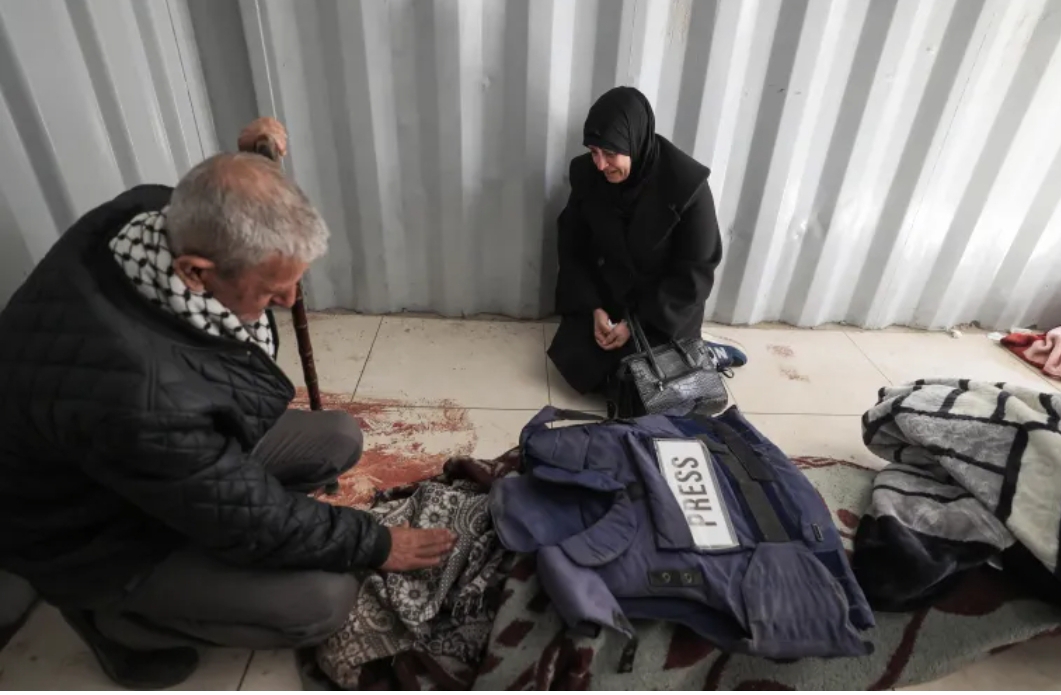
The world’s foremost body of genocide experts has declared that Israel’s military campaign in Gaza meets the legal definition of genocide.

In a resolution issued this week, the International Association of Genocide Scholars (IAGS) urged Israel to “immediately cease all acts that constitute genocide, war crimes and crimes against humanity against Palestinians in Gaza.”

The association cited starvation, the blocking of humanitarian aid, and forced displacement among the practices that, in its view, fulfill the criteria set out under international law.

The resolution adds to growing international pressure as civilian casualties and a deepening humanitarian crisis continue to draw condemnation from human rights groups and global leaders.