Nuclear

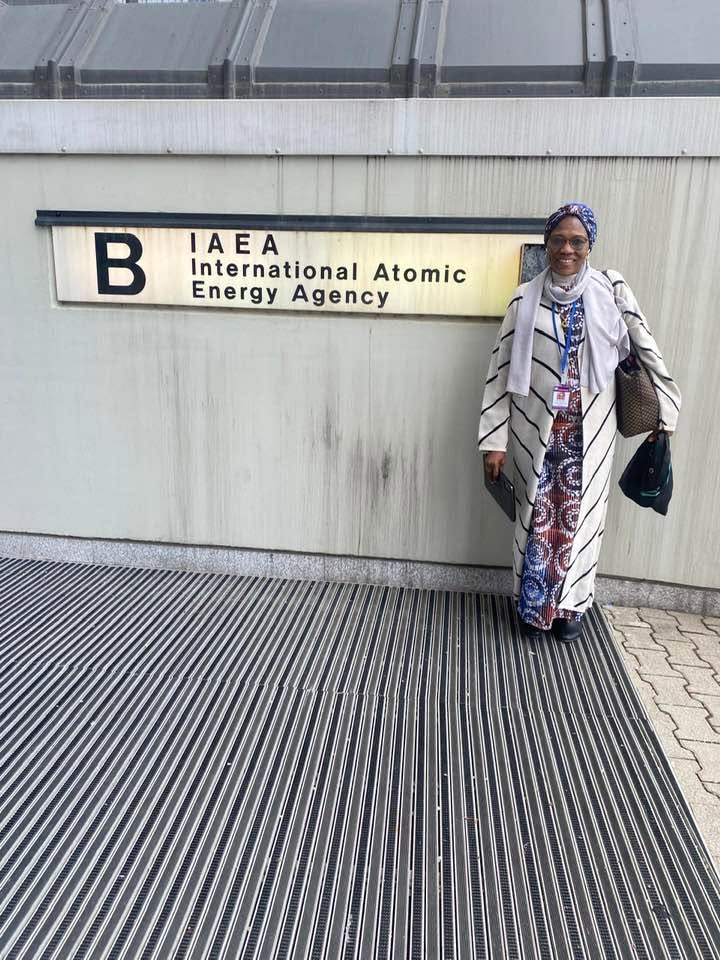
BUK Physicist Rabia Sa’id Appointed to UN Scientific Panel on Nuclear War

By Hadiza Abdulkadir

Professor Rabia Salihu Sa’id, a renowned atmospheric and space-weather physicist at Bayero University, Kano (BUK), has been appointed by United Nations Secretary-General António Guterres to a prestigious 21-member Independent Scientific Panel on the Effects of Nuclear War.

The newly formed global panel, established following UN General Assembly Resolution 79/238, brings together leading international experts to assess the physical, environmental, climatic, radiological, and socioeconomic consequences of a potential nuclear conflict.

Professor Sa’id holds a Bachelor of Science, Master of Science, and PhD in Physics from Bayero University, Kano, alongside an additional M.Sc. in Environment and Development from the University of Reading in the United Kingdom. 

Professor Sa’id’s academic career began at BUK in 1999 as a Graduate Assistant, eventually leading to prestigious international research fellowships, including work at the Institute of Applied Physics at the University of Bern in Switzerland as well as recognition from the Ford Foundation and the Elsevier Foundation.

Professor Sa’id’s appointment underscores Nigeria’s growing prominence in high-level scientific diplomacy and global policy formulation. The panel’s work marks the first comprehensive, UN-backed synthesis of nuclear war impacts in over three decades, leveraging modern climate modelling and technological advances to update global risk assessments.

Speaking on the scope of the initiative, UN officials noted that the panel will examine local, regional, and global ramifications of nuclear detonation, providing crucial data to inform international security policies. 

The group’s findings will be compiled into major reports ahead of key international security summits, offering updated science to aid in nuclear risk reduction and disarmament strategies.

Professor Sa’id, widely recognised for her contributions to physics education, environmental research, and advocacy for women in STEM, joins a diverse international team tasked with delivering these critical scientific evaluations over the next two years.

U.S. Intelligence: Iran not actively pursuing nuclear weapon, capability still years away

By Muhammad Sulaiman

U.S. intelligence assessments have concluded that Iran is not currently pursuing a nuclear weapon, despite heightened regional tensions and fears of escalation. According to officials cited by CNN, Iran would still need up to three years to produce and deliver a nuclear warhead to a target of its choosing, should it decide to take that path.

These revelations come amid a dramatic military conflict between Israel and Iran that erupted earlier this month. On June 13, Israel launched a wide-ranging preemptive military campaign—codenamed Operation Rising Lion—against Iran, targeting over 100 sites including nuclear facilities in Natanz, Isfahan, and Tehran.

The Israeli strikes killed at least 224 people and injured more than a thousand, many of them civilians. Civilian infrastructure, including hospitals and power stations, was also severely damaged.

Iran retaliated with Operation True Promise 3, unleashing a massive barrage of over 150 ballistic missiles and more than 100 drones against Israeli military bases and infrastructure. Dozens of Israelis were injured, several seriously.

Despite the intensity of the conflict, U.S. intelligence officials maintain that Iran has not made the political decision to weaponize its nuclear program. While uranium enrichment activities continue, they have not reached a threshold indicating imminent nuclear arms development.

The ongoing war has raised concerns among international observers, with legal experts warning that elements of the Israeli offensive may violate international law. As both sides continue exchanging fire, diplomatic efforts face severe obstacles, and fears grow of further escalation in an already volatile region.

Qatar urges global efforts to place Israeli nuclear facilities under IAEA oversight

By Hadiza Abdulkadir

The State of Qatar has called for increased international efforts to ensure that all Israeli nuclear facilities are placed under the supervision of the International Atomic Energy Agency (IAEA). Additionally, Qatar has urged Israel to join the Treaty on the Non-Proliferation of Nuclear Weapons (NPT) as a non-nuclear state.

The appeal was made by Qatar’s Ambassador and Permanent Representative to the United Nations Office and International Organizations in Vienna, Jassim Yacoub Al Hammadi, during a session of the IAEA Board of Governors. His remarks focused on the ongoing situation in the occupied Palestinian territories and concerns over Israel’s nuclear capabilities.

Al Hammadi emphasized the importance of global institutions upholding their commitments under the UN Security Council, General Assembly resolutions, and IAEA regulations. He also referenced the 1995 NPT Review Conference, which called for Israel to subject all its nuclear sites to IAEA safeguards.

The Qatari diplomat stressed that numerous international resolutions have explicitly urged Israel to join the NPT as a non-nuclear state. He called on the international community to take concrete steps to ensure compliance with these longstanding global commitments.

This statement aligns with Qatar’s foreign policy advocating nuclear non-proliferation and regional stability. Israel’s nuclear program has long been contentious in diplomacy, with increasing calls for transparency and oversight.

As tensions persist in the Middle East, Qatar’s renewed appeal highlights the ongoing debate over nuclear security and the role of international oversight in maintaining global peace.

NSC launches special programme to counter smuggling of nuclear materials 

By Sabiu Abdullahi 

The Nigeria Customs Service (NCS) has unveiled the Radiological and Nuclear Detection Programme (RANDA), a groundbreaking initiative aimed at curbing the smuggling of nuclear materials. 

This strategic programme was officially announced by the Comptroller-General of Customs, Bashir Adewale Adeniyi MFR, during the inauguration of a 4-day capacity-building workshop organised by the World Customs Organisation (WCO) on December 12th, 2023. 

Addressing participants at the workshop, Assistant Comptroller General Malanta Yusuf noted the importance of RANDA, stating that it will equip Customs officials with the necessary expertise to effectively detect and combat the illicit trafficking of radiological and nuclear materials.

This training, Yusuf stressed, will enhance cross-border security and foster a deeper understanding of the complex challenges involved in this innovative approach. 

Furthermore, Yusuf commended the leadership of the Customs Service for its unwavering commitment to innovation, acknowledging the vital role training plays in improving overall performance.

He specifically highlighted the WCO’s contribution to equipping officers with cutting-edge knowledge and skills. 

“We are determined to ensure Officers benefit from such trainings organized by the World Customs Organization,” stated Yusuf, “because the Comptroller-General has firmly placed innovation as a cornerstone of our advancement.” 

CSC Nafi’u Abubakar, the Nigeria Customs Service Radiation Safety Officer, lauded the CGC’s decisive approval of RANDA, further underscoring its unique nature.

Abubakar noted that this program positions Nigeria as a global leader in adopting this innovative approach to combatting nuclear smuggling. 

“The training was truly exceptional,” Abubakar declared, “and its benefits will have a profound impact on the Nigeria Customs Service, significantly advancing our capabilities.” 

The initiative’s potential to revolutionise border security was further stated by Dr. Isa Sambo, FSI, Director of Radiological Safety at the Nigeria Nuclear Regulatory Authority.

Dr. Sambo praised the CGC’s forward-thinking decision, acknowledging its potential to eliminate border crimes and significantly enhance Nigeria’s ability to tackle emerging threats.

He affirmed, “This move will undoubtedly position Nigeria at the forefront of global efforts to secure borders against the illicit trafficking of radiological and nuclear materials.”