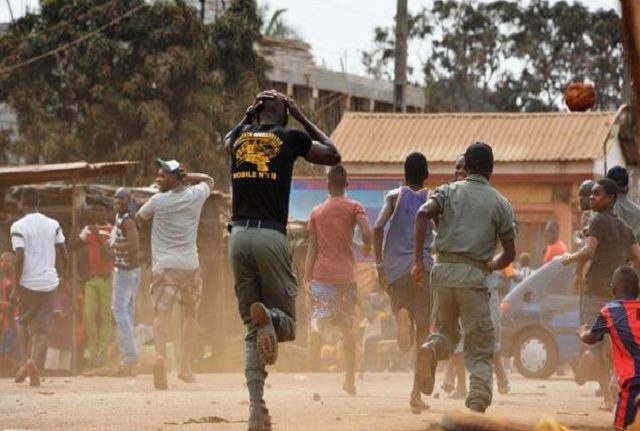
While travelling in some parts of the Plateau state, please be cautious and vigilant. It’s unfortunate that some blood-sucking people don’t know their enemy and enjoy attacking innocent travellers passing their towns, not knowing we are all victims of the same system.
I don’t honestly know their aims. Do they want to turn every federal road that crosses their towns or within the state into gallows, a wasteland, battlefields, graveyards of multiple unknown bodies, or maybe something else of their making?
I nearly lost my life yesterday! Not only that, but I nearly lost my breath, lost the life beating inside me, but my strength and courage and determination and experience, like echoes of vigil nights, disappeared within seconds. Not only that, but I think casualties are not the death of those who started the war or those prowling grievance.
Not only that, but I believe casualties are those who keep quiet, who have the opportunity to talk but keep quiet, and those who smile every day when their next-door neighbours are in tears. But how can we together hold and retrieve ourselves back from this brainwashing?
So, I began to wonder what’s more important than human life. What’s more critical than togetherness, than friendships and relationships and progress? What’s more significant than peace, development, progress, success, love, respect, responsibility, and understanding? What’s peace if we can’t go anywhere inside our towns?
What friendship if we can’t befriend someone from another tribe, village, or country? What’s love if we can’t love and respect what others revere? What’s the progress if we can’t put one block over another? What’s progress if we can’t come together? What’s the responsibility if we can’t be accountable for our mistakes?
What’s faith? What’s a belief if we can’t respect other people’s choices and generational values? What’s up if there are no others? How can you, without reason, kill someone for someone’s sin or mistake? Why punish an innocent traveller for a sin they didn’t commit or knew nothing about?
Imagine we spent half our day alongside the road linking Mararraban Jama’a to Abuja, waiting for death, revenge, hatred, or the taste of human blood to leave people’s minds. We stayed as the only means of safety in our possession. We waited for God’s intervention, waiting and waiting, and I pray for no one to wait for this type of wait… waiting without knowing where death would come from.
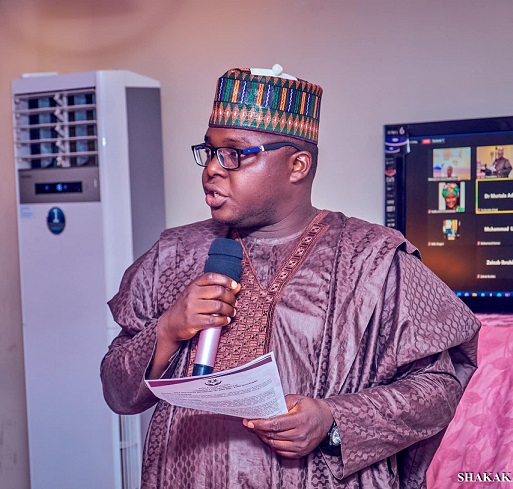
Usaini Abubakar wrote from Jos, Plateau State. He can be reached via usainiabubakaradam5091@gmail.com.
His name was Tijjani, and nicknamed Ma’aslam. He mainly lived in the Sabon Sara ward, Kano city, but was a common sight along the Mandawari junction to Kasuwar Kurmi corridor in the 1960s.
Everyone considered him nuts. Apparently, he built a single-storey building without stairs to access the upper floor. He did not think a door was necessary for any structure either, so the building had no doors. He simply jumped up to the upper floor at night and jumped down in the morning. It was enough for the ward head to report him to the Jakara magistrate for him to be locked up on insanity charges.
During the hearing, he was given a basket to fetch water. He simply laughed at the judge, informing him that only a madman would attempt to fetch water in a basket. The judge threw the case out, declaring him perfectly rational. He may be nuts – although eccentric was more apt to describe his behaviour. But then, it takes a certain amount of nuttiness to be an innovator. And he was an innovator.
As children – and I am talking 1960s inner city Kano – we simply referred to him as Ma’aslam. He, I would argue, planted the seeds of onomatopoeic intertextuality in Hausa popular culture, at least in Kano. This was the process of picking up an element of popular culture, say, a song, converting it side-by-side into a different language (intertextual), using ‘sound-alike’ of the original (which is onomatopoeia) into a new one. A quick example was the Bob Marley hook:
Get up, stand up,
Stand up for your rights
Sadi Sidi Sharifai, a Kano onomatopoeic superstar, converted this to:
Jallof, Jallof,
Jallop, sai da rice
Try singing both the original and Sadi’s interpretation, and you have become an onomatopoeic star yourself!
In 1967, the American super soul star James Brown & the Famous Flames recorded the stunning live double album of their concert at the Apollo Theatre in New York. It was, perhaps unimaginatively enough, titled, ‘Live at Apollo.’ A standout track on the album was ‘I Feel Alright’. Its choral hook was:
‘Hey, hey, I feel alright
One time, uh!’
The album of the concert was released on 16th August 1968. I was 12 years old then, and still now, totally wired in music, complete with a Ukulele guitar, given to me by David Hofstad (author of Tabarmar Kunya play). My Dad, an avid music lover, noting my attachment to the song which was played on the radio, simply bought the double album for me at Musa Zamani Record store in Fagge (are there any old codgers who remember this record store?). I played it to death on the old Grundig music player we had then.
Back to Tijjani Ma’aslam. With his eccentric behaviour categorising him as loony, Ma’aslam started reciting the ‘Dalailul Khairat’, a celebrated manual of salutations upon the Prophet Muhammad (SAW), written by Muhammad ibn Sulayman al-Jazuli in 15th century Morocco. What was unique about Ma’aslam’s open-air recitation, however, was that he adopted the James Brown meter in the song, ‘I Feel Alright’, as his chorus. His rendition of the hook for his recitation of the Dalai’lu was:
Mujibun, Mujabun,
Afiyan, Afuyan,
Rasulillahi
Ahlan wa Sahlan
Rasulillahi
This was accompanied by James Brown’s dance moves (shown on Television’s Soul Train, which was available in a few houses that he might have access to). Maybe he was not reciting the salutations in their structured order, but at least his verses were discernible, as the Dalai’lu itself was recited in a song form by many reciters in Kano. What he did, and did it differently, was using a foreign music meter to make it more accessible. This formula was to be adopted by the Ushaqu Indiya group of devotional singers in the city of Kano (actually along the same neighbourhood as Tijjani Ma’aslam). More of this in subsequent articles/posts.
Tijjani Ma’aslam’s delivery mode was intertextually onomatopoeic to ‘Hey, hey, I feel alright’. The chorus was ‘Rasulillahi’. Ma’aslam was usually followed by a gaggle of kids echoing the chorus while he merrily led the way, clapping his hands, dancing and reciting the names of the Prophet from the Dalai’lu. Elders were bemused at the spectacle and simply labelled Ma’aslam crazy. He might have been. He certainly was not following the sequencing of the Salawat from the book. But his performances opened a door.
Up the road from his haunt and covering the same zone was the Palace cinema. This was built and completed in 1951 and opened in 1952. Palace cinema became an instant hit with the youth, closeted in the city and without any visible means of night-time entertainment. Before its opening, and still a carryover from the World War II years (1939 to 1945), a curfew used to be imposed on city residents at 8.00 p.m. With the relaxation of the curfew, the few neighbourhood plazas (dandali) that offer games for youth (both boys and girls) were no match for the sheer spectacle of a massive screen accompanied by loud music. The predominant films shown in the cinema were cowboy or mainstream European films. However, after independence in October 1960, Indian films started to be shown from November 1960 in Kano cinemas. Early films screened included Cenghiz Khan, Jaal, Sangeeta, Raaste Ka Patthar, Waqt, Amar Deep, Rani Rupmati, Dharmatama, Dost, Nagin and thousands of others. The one that caught massive imagination in Kano’s inner city, however, was Rani Rupmati, originally released in India in 1957 but only found its way to Kano cinemas in the 1960s.
Like all Indian films, at least from what the industry refers to as Bollywood, Rani Rupmati had a lot of songs – in fact, its overall screenplay is based on two people united by their love of music. However, two songs from the film caught Kano’s inner city imagination, ‘Itihaas Agar Likhna Chaho’ and ‘Phool Bagiya Mein Bulbul Bole.’ Interestingly, there was no choreographic dancing in these two songs, unusual for general Bollywood films but typical of earlier, more historical and artistic ones.
The first, ‘Itihaas’, sung by Lata Mangeshkar, has a great hook that, thanks to Tijjani Ma’aslam, became domesticated by kids along his sphere of influence and Palace cinema zone. It goes something like this:
Itihaas agar likhana chaho /
Itihaas agar likhana chaho /
Azaadi ke mazmoon se /
…
To seencho apni dharti ko /
Veeroon tum upne khoon se /
Har har har Mahadev /
Allaho Akubar /
Har har har Mahadev /
Allaho Akubar /
Sung within the backdrop of a band of warriors getting ready to go into a battle, led by a woman (the titular Rani Rupmati), it certainly gave the picture of a woman more enlightening than what was both the Hausa and Indians are used to. The film itself endeared itself to Hausa through the modesty of the women – shy drooping kohl-enhanced eyes with long blinking lashes, fully clothed (even the swimming scene shows the singers fully clothed in the river), with sari that resembles Hausa wrapper (zani), lots of jewellery, and stunning beauty. A Hausa common saying of the period was, ‘Allah, kai ni Indiya ko a buhun barkono’/God, let me visit India even in a sack of pepper. That was how besotted Hausa youth were to the beautiful Indian women seen on the screen, giving a false impression that every single Indian woman is beautiful.
Hausa youth, inspired by Tijani Ma’aslam, quickly domesticated the chorus of the song as:
Ina su cibayyo ina sarki / where are the warriors, where the is king?
Ina su waziri abin banza / And the useless vizier?
Mun je yaƙi mun dawo / we have return from the war
Mun samo sandan girma / and we were victorious
Har har har Mahadi / hail, hail the reformer
Allahu Akbar / Allah is the Greatest
Har har har Mahadi / hail, hail the reformer
Allahu Akbar / Allah is the Greatest
In an interesting case of lyrical substitution, the Hausa intertextual transcription captured the scene of the song as shown in the film, if not the actual meaning of the words. Loosely translated, the original verse was urging warriors to defend their land with their lives and become part of history. The chorus translates as ‘Let each of us sacrifice ourselves to Mahadev’.
While Mahadev was a reference to the Indian deity, Shiva, this pantheistic line was followed by a monotheistic reference to Allah, the Supreme Being in Islam. Thus, two contrasting religious sentiments were expressed in the song. It was likely that S. N. Tripathi, who directed the film and composed the music, introduced the chorus to attract both Hindu and Muslim audiences. After all, while Rani was a Hindu, her love interest in the film, Baaz Bahadur, was a Muslim. The expression, however, has since then been used as a slogan of communal harmony between often warring Hindu and Muslim communities in India.
But more stunningly, the Hausa version substituted the word ‘Mahadev’ with ‘Mahadi’. The Hausa heard ‘Mahadi’ (guided one), not ‘’Mahadev’, which worked perfectly well. Substituting Mahadev for Mahadi Islamized the song, as it were. In Islamic eschatology, Mahdi is a messianic deliverer who will fill the earth with justice and equity, restore true religion, and usher in a short golden age lasting seven, eight, or nine years before the end of the world.
The second song from the film, ‘Phool Bagiya Mein Bulbul Bole’ (also sung by Lata Mangeshkar, with Mohammed Rafi), also inspired onomatopoeic intertextually but further afield from Kano and bizarrely entered into Hausa urban legend of the 1960s. Its first verse goes something like this:
Phul bagiya me bulbul bole /
Daal pe bole koyaliya
Pyaar karo /
Pyaar karo rut pyaar ki aayi re /
Bhanwaro se kahati hain kaliya /
Ho ji ho ho ji ho ho ji ho /
Ho ji ho /
What Hausa youth heard in the choral refrain was ‘Hotiho’, not ‘Hojiho’, and in the film Rani Rupmati, the lady (played by Nirupa Roy) came to be referred to as Hotiho. The Hausa griot, Mamman Shata (d. 1999) popularised the word (which has no particular meaning) in his song, Mallam Sidi, ‘Mijin Hotiho’/Mallam Sidi, Hotiho’s husband.
In the film, there was no marriage between Rani and Baaz Bahadur because she said she was ‘married to her music’, despite living with him after running away from home to avoid death from a chalice of poison given to her by her father to avoid the shame of her rejecting a chosen husband. In all their dialogues, Rupmati and Baaz Bahadur stress their shared love for music, not their love for each other. So, Shata did not accurately describe the relationship in the film. However, such deep film analysis is not important to the transnational interpretation of Shata of Baaz Bahadur as a signature tune for a hen-pecked husband. Shata’s interpretation of the actor who played Rani’s lover was certainly in order as he was effeminate and obsessed with music rather than empire building, despite being heir to a throne. It was even Rani who led their army into war. He was wounded in the battle and ran away.
Another Hausa griot, Ali Makaho (d. 1984), known famously for his anti-drug song, ‘Mandula’, briefly referenced Rani Rupmati in another of his songs.
Za ni Kano / I’m going to Kano
Za ni Kaduna / I’m going to Kaduna
Mu je Katsina lau za ni Ilori / Let’s go to Katsina and Ilorin
Na je Anacha / I will go Onitsha
Ni ban san kin zo ba / I didn’t know you had arrived
Da na san kin zo ne / If I had known you have arrived
Da na saya miki farfesu / I ‘d have bought you [pot of] pepper soup
Hitoho hotiho /
Hotiho hotiho /
With a comedy skit thrown in, Ali Makaho’s rendering uses Phoolbagiya’s meter to narrate a series of anticipated travels over northern Nigeria. As an intertextual comedy, it worked and remained of his most memorable skits.
A third Hausa griot to adapt a song from Rani Rupmati was Abdu Yaron Goge, who played the goge (a large fiddle played with a bow). Abdu picked ‘Raat Suhani’ from the film for his adaptation. Since, unlike the other griots who used the elements of the songs from the film, Abdul was a musician, he used two approaches – first was rendering the symphonic structure of the opening bars of the actual composition, Raat and playing it on his fiddle, then secondly, he onomatopoeically appropriated Mangeshkar’s lyrics as Hausa version. The original lyrics were as follows:
Raati Suhani /
djoome javani /
Dil hai deevana hai /
Tereliye /
Tereliye /
These lines were pure expressions of love the protagonist has for her lover, especially ‘in the beauty of the night’ [raati Suhani]. Abdu Yaron Goge’s rendition was as follows:
Mu gode Allah, Taro / We should thank Allah, people
Mu gode Allah, Taro / We should thank Allah, people
[These lines vocalized the opening bars of Raat]
Duniya da daɗi /This world is nice
Lahira da daɗi / The hereafter is nice
In da gaskiyar ka / If you are truthful
Lahira da daɗi / The hereafter remains nice
In babu gaskiyar ka / If you are untruthful
Lahira da zafi / The hereafter is blazing
Thus, in a single verse (which he kept repeating over and over till the end of the performance), Abdul Yaron Goge borrowed a popular musical motif from another culture and domesticated it to Hausa entertainment. At the same time, he delivered a message totally different from the original meaning.
There were, of course, many other onomatopoeic intertextual interpretations of Indian film songs, but the three songs from Rani Rupmati, predated by Tijjani Ma’aslam’s innovative use of foreign motifs, were the definitive pioneers in music. In Literature, look towards Abubakar Imam and Magana Jari Ce. The intertextual origins of Hausa arts, of course, started in the 1930s; but its migration to music was certainly in the 1960s. It spawned a Hausa Cinema industry which was labeled ‘Kanywood’ in 1999, a few years before the term ‘Nollywood’ to refer to the Nigerian English language cinema, was created.
On a final note, Nazeer Abdullahi Magoga, a Kano ‘Indian’ (who speaks the language fluently, to the shock of BBC Delhi, who sent a crew to interview him in Kano, in Hindi) composed a song for the Centre for Hausa Cultural Studies, Kano which I was heading, but which I had to pause due to lack of funding. He used the Raat Suhani meter and used both Hausa and Hindi lyrics in his wonderfully beautiful tribute to the Centre. A link to the song on YouTube is given below. To really appreciate Nazeeru’s performance, listen to the original Raat Suhani from the film Rani Rupmati, also provided in a link.
Cibiyar Nazarin Al’adun Hausa by Nazeer Magoga [Raat Suhani template]
I wake up with a demanding subject of debate – English Language as a measure of intelligence. Be that as it may, whether language, English or any other language, will be considered as a measure of intelligence is a non-binary proposition. As a linguist, I know it requires explicit and implicit discourse that will result in a logical conclusion. Hence the question:
Is language a measure of intelligence?
The 1950s is the year American linguists will see the improved acceptance of the Sapir-Whorf Hypothesis, popularly known as ‘Linguistic Relativism’. In the 1920s, Edward Sapir and a co-researcher, Benjamin Lee Whorf, made a sudden revelation to the American Society of Social Sciences that language shapes how one sees the world. Sapir-Whorf Hypothesis belongs to behavioural sciences.
This statement only explains that language is like a window, a spyglass through which speakers of that language build cognitive mechanisms to view, perceive, and explore the world and beyond, like Alice (in Wonderland), who studies the utopian world through the ‘Looking Glass’. It goes far as saying that to have a second language is to have a second soul – that is too important to say.
In sum, Linguistic Relativism allows one to see that fundamental differences between languages exist, and language actively influences the speaker’s worldview – concept formation, concept perception and concept interpretation. We kept rolling on this hypothesis till 1950, when the idea went out of favour. Cognitive Psychologist such as Chomsky sends this idea out of propulsion.
Around the 1960s and 1970s, Cognitive Psychologists studying mental processes such as creative thinking, problem-solving, and attention mapping rejected the idea. They found vulnerabilities in the Sapir-Whorf Hypothesis, such as conceptualisation which says if a given concept is unavailable in a given language, the speakers of that language won’t understand that concept is untrue. Also, language does not control our ability to reason. However, they argue that because speakers of different languages think differently doesn’t tell us whether it’s a language that shapes thought or vice versa.
Language as a measure of intelligence, influence or determinant?
We have seen the roles of language as a tool, what it’s and what it’s not. So now let’s return to the topic of the debate – the English Language as a measure of intelligence. But before we answer this question, let’s draw clear patterns. We may even breakdown the above question as follows:
Does language influence how we view and form reality (partial), or simply determine how we view and create reality (absolute)?
I believe the above questions will leave many strangled at the end of the tether. So let’s explore together how language works in real-life situations and see whether we can answer the questions appropriately.
Generally, linguists assert that language is a human invention – and it amounts to intelligence to invent a phenomenon as complex as language. It’s an essential tool to convey our mental processes to correspond to the physical and abstract world. It’s also considered one of the salient features of humans above other animals that are far more intelligent than human beings. Language makes our destiny clear and gives us a sense of humility, responsibility and belongingness.
Speaking of the English language, it is considered as the world language. It’s a first language to many people and a second language to many others. However, it has the largest stock in Literature. About 60% of contemporary knowledge is written in English, and a large share of ancient world knowledge is translated into it. This will give one confidence to say that your ability to navigate in English will determine the amount of knowledge one can acquire. The greater the amount, the higher the level of intelligence.
Law as a profession revolves around language proficiency. Characteristics of being a good lawyer include mastery of language(s). The ability to read, write, speak, and listen with unquestionable prowess. The greater the competence, the greater the performance and vice versa. The same applies to medical doctors.
For example, a lawyer with good command of English is likely to win cases. While a lawyer with bad command of English will not only fail but he’s also putting the life of his clients at risk. He will make the matter worse, complicate the process, and wrong justice will be served since the judge(s) depend on his presentation of reality.
Dear readers, for obvious reasons, don’t let anyone anywhere rob you of your conscience. Learning the English language is pragmatic and a must in the twenty-first century. However, while learning the language is necessary, being an expert is only advantageous. It will place you above yourself and many others and reward you in many ways: financial rewards and leadership roles. It can also earn you respect and integrity, among other things.
Wole Soyinka has been enjoying favours worldwide because he is considered intelligent, and his intelligence is tied to his mastery of the English language. As a Muslim, I believe if your mastery of (the English) language is utilised in good ways, it can earn you rewards hereafter. Translation of the Holy Qur’an from Arabic to English is an excellent example of the English language as a measure of intelligence.
The ability to communicate effectively in the official language of one’s country is a hallmark of education and social mobility. Mastery of the official language is essential for communication and for accessing educational, economic, and social opportunities.
Language proficiency is a barometer of education and intelligence. One’s ability to articulate themselves with precision and clarity in the official language of their country is a reflection of their level of education, critical thinking, and cognitive abilities. Proficiency in the official language is integral to formal education, typically mandatory for accessing higher education and advanced employment opportunities.
Furthermore, proficiency in the official language is crucial for social mobility. Communicating effectively in the official language is paramount to accessing educational, economic, and social opportunities. Individuals who lack proficiency in the official language face barriers to accessing these opportunities, resulting in social exclusion.
Additionally, proficiency in the official language is pivotal for national integration and unity. A shared language promotes a sense of national identity and solidarity, fosters social cohesion, and enhances cultural exchange and understanding. The ability to communicate in the official language facilitates participation in democratic processes and civic engagement, promoting active citizenship and democratic values.
In conclusion, proficiency in the official language of one’s country is a crucial aspect of education, social mobility, national integration, and democratic participation. Therefore, it is imperative to prioritise language learning and provide equitable opportunities for all individuals to develop their language skills and reach their full potential. Doing so will foster inclusive and cohesive societies that value linguistic diversity and promote social and economic progress for all.
We all know and believe that marriages are associated with numerous cultures. These cultures come together to add flavour to the unforgettable memories that would be created in the minds of the brides and grooms during so many events of marriage celebrations.
The indelible joys and memories of marriage ceremonies usually transcend to even the minds of parents, friends, and relatives of both the brides and grooms. So, the importance of all the events associated with marriage ceremonies cannot be overemphasised in many cultures.
However, adopting the so-called Western civilisation has marred many events associated with marriage ceremonies, especially in the Northern-Muslim societies of Nigeria.
For instance, not more than a decade ago, the bride’s popular “Kamu” or “Sa lalle” usually took place in a sister’s house to the bride’s mother. And the people that would be in attendance at this event will comprise only the closest friends of the bride and some of her few female acquaintances.
Unfortunately, today, such events usually take place in outside rented event centres where the groom and his friends could be in attendance too. Not only that, it’s possible for a dance competition between the groom and bride, or between the groom’s friends and the bride’s friends during this historically decent event.
The most moving part is that it’s now a normal and unpreventable trend in so many events associated with marriage ceremonies that the brides must appear almost half-naked. So instead of the decent “riga da zani of Atamfa“, the bride will wear a Western wedding gown.
Even if the dresses are tailored locally, they will not only be diaphanous that one can see through, they are ensured to be tight enough to reveal all the contours and bumps in the bride’s body. And it’s in this kind of dress that the dancing will take place. So common. Are we really in our senses?
Remember, I insinuated earlier that parents usually attend these kinds of events. Can’t they stop it? Is it now normal for them too? I am sure our forefathers are not like this. And they didn’t train their children to be like this. Why only us?
The Kano State government, under the administration of HE Dr. Abdullahi Umar Ganduje spent eight years without offering employment opportunities to the state’s youth, only to make such opportunities available after losing the 2023 election. The added insult to injury is that these opportunities are being sold for exorbitant prices, ranging from N50,000 to N100,000.
This kind of behavior is not only unethical but also unacceptable in a society that aspires to be just and fair. Employment opportunities should be based on merit and offered to those who are most qualified for the job, not to those who can afford to pay for them.
The fact that such opportunities are being sold at all is evidence of a corrupt and dysfunctional system that is failing to serve the interests of the people.
It is particularly troubling that this situation has arisen in Kano State which happens to be a home to a large population of young people who are in dire need of meaningful employment. Youth unemployment has been a major challenge in Nigeria, and Kano State is no exception.
It is estimated that over 50% of the state’s youth are unemployed or underemployed, a situation that is fueling poverty, social unrest, and other negative outcomes.
The failure of governments at all levels to address this issue during their eight-year tenure of the current dispensation is a clear indication of the lack of concern from the outgoing administration of APC for the well-being of the state’s youth.
Instead of investing in job creation and skills development programs, they chose to focus on other priorities, leaving the youth to languish in poverty and hopelessness. This is a failure of leadership, and it should not be tolerated.
It is also alarming that the situation is unlikely to change, as the person who is widely believed to be responsible for this state of affairs, Governor Ganduje, is not expected to change his ways.
The fact that he is accused of being behind the sale of employment opportunities further underscores his lack of concern for the welfare of the people. It is clear that he has lost touch with the realities on the ground and is more interested in consolidating his power than in serving the interests of the people.
In conclusion, the situation in Kano State is a sad reminder of the many challenges that Nigeria is facing as a country. Youth unemployment is a major issue, and it requires urgent and sustained action by the government and other stakeholders.
The sale of employment opportunities is a symptom of a deeper malaise that is undermining the country’s development and progress. It is time for all Nigerians to demand better from their leaders and to work towards building a more just and equitable society.
Mansur Hassan, PhD is a lecturer in the Department of Mathematics, Yusuf Maitama Sule University He can be reached via mhassan@yumsuk.edu.ng
English is the official language of Nigeria, and it’s often considered a measure of intelligence. However, it’s important to provide some context for this claim. Many Nigerians learn English as a second language, and it’s often used in formal education and business settings. Therefore, having a sound command of English can be an essential asset for success in these fields.
While it’s true that speaking good English does not necessarily make one intelligent, the ability to communicate effectively in the language is often associated with intelligence. In addition, studies have shown that individuals who speak multiple languages tend to have higher cognitive abilities than those who speak only one language.
Furthermore, evidence suggests that individuals with a poor command of English are often perceived as less intelligent. This may be partly because English proficiency is often associated with higher education and social status. Therefore, those who struggle with English may be perceived as lacking in these areas.
However, it’s important to note that English proficiency is not the only measure of intelligence. Many other factors contribute to one’s intelligence, including problem-solving skills, creativity, and emotional intelligence. Therefore, it’s important not to rely solely on English proficiency as a measure of intelligence.
While English proficiency is essential for success in Nigeria, it’s important to recognise that it’s not the only measure of intelligence, as I have come to understand in my many years of learning and teaching English. Individuals who struggle with English may still be intelligent in other areas, and it’s important not to make assumptions based solely on language proficiency.
I was drawn into this debate by Abubakar Shuaibu Rimi when he mentioned my name under the status update of one of his Facebook friends on the above subject. Rimi wanted to hear my side of the argument. I am not supposed to say something on this issue because it’s my area of specialisation. But I am writing on it to make some clarifications.
First language is a name given to either native speakers or those who acquire a language from early childhood; I mean those whose parents are non-natives but who are exposed to the language after birth. So first language is learned successfully during childhood without the need for a formal setting. First language is, in fact, acquired (acquisition), not learned, because a child is endowed with what linguists call LCD, a natural gift endowed by God so that a child will automatically acquire any language he’s exposed to.
The first language is learned with less effort because the acquirer acquires it subconsciously, as he’s not even aware of grammatical rules.
A second language learner, on the other hand, is someone who learns a language later after acquiring his native language. It’s usually through the formal setup and is leaned consciously with a lot of effort. While the first language is natural, the second language is a gift(intelligence), as the learner learns it consciously aware of grammar and can talk of the rules.
Second language learner is intelligent because:
In second language learning, the learner grapples with linguistic elements such as grammar, syntax, phonology, phonetics, sociolinguistics, morphology, semantics, etc. Whenever he’s speaking in the target language, he’s conscious of almost all of them, yet you say he’s unintelligent!
When learning a second language, the learner must scale cultural barriers and embrace certain new cultural elements in the target language. In other words, he must acculturate by bypassing what linguists call social and psychological distances.
Part of the learner’s acculturation is to learn how to use the new target language independently of his mother tongue, even though traces of his first language can be found in his expressions.
A second language learner must be intelligent enough to fight certain linguistic impediments such as systematic errors, mistakes, language interference, transfer, and interlanguage and learn the language, not his own.
A second language learner must pass certain difficulties to learn, especially when he passes 15 years, as his linguistic receptors in the brain are becoming strained, therefore, making learning more difficult.
The question ‘Is the English language not a measure of intelligence?’ may only be applicable to native speakers because they have learned the language since childhood and in their linguistic environment. Even this claim is contestable. This is because not all speakers of a language communicate with it efficiently. A select few do. For example, if the late Ɗan Masanin Kano or the former Emir of Kano, Muhammadu Sanusi II, addresses a Hausa audience in Hausa, people tend to listen because any one of the two masters the art of speaking even in Hausa. Can you call any one of the two dull?
So not only the English language, which isn’t our language, even a good Hausa speaker is intelligent because an unintelligent man can’t organise his words to impress an audience. Also, a good native/non-native Arabic speaker is also intelligent enough to organize his words to communicate impressively, so also is a Hausa native who communicates in either Fulfulde, Yoruba, etc.
Generating some linguistic elements such as grammar, phonetics, phonology, morphology, syntax, semantics, etc and combining them to negotiate meaning isn’t an unintelligent job. Not all language users combine the spoken and written expertise of language. The Hausa oral skills of Ɗan Masanin Kano, for example, wouldn’t be a sign of dullness but intelligence.
In other words, reaching linguistic “competence and performance” (the ability to combine sounds and meaning to communicate) even for native speakers isn’t a simple act of a simpleton, for not all language users are endowed with the skill to communicate well.
According to the Oxford Dictionary, Urology, also known as genitourinary surgery, is the branch of medicine that focuses on surgical and medical diseases of the urinary tract and the male reproductive organs. Organs under the domain of urology include the kidneys, ureters, adrenal glands, urinary bladder, urethra and the male reproductive system.
On the 19th of April 2023, Dr Amina Buba became the youngest urologic surgeon in Nigeria, the 7th female urologist in our country and the first Muslim woman in Nigeria to bear that title. Amina truly has shattered the glass ceiling! She is an inspiration to young women all around the world that anything is possible.
Amina was born in Lagos and attended St. Jude’s private School in Festac Town, Lagos. Then she started her secondary school at Federal Government College, Kwali, Abuja, before she transferred to Federal Government Girls College, Bwari, Abuja. After completing her junior secondary school there, she moved to El-Amin International School, Minna, where she completed her senior secondary school and then proceeded to her A-levels at Irwin College Leicester, England.
Amina also studied medicine at Brighton & Sussex Medical School, Brighton, England and then did her Master’s in Tropical Medicine & International Health at the Prestigious London School of Hygiene and Tropical Medicine, where she gained an MSc. as well as a diploma in Tropical Medicine and Hygiene. Shen then did her surgical residency in Abuja, Nigeria, which she recently completed.
When asked about why she chose this particular field, Amina says that she has always wanted to be a doctor, and when she qualified as a doctor, she knew that she wanted to be a surgeon but wasn’t sure of the surgical speciality. She began her residency programme with a posting in urology, and she fell in love with urology instantly because it is such a diverse surgical speciality, and you get to operate on the entire urinary tract as well as the male genital tract. There are also so many facets to it; there are paediatric urology, reconstructive urology, and upper and lower tract surgeries.
She further says that there are also plenty of opportunities to engage in both open and minimally invasive surgery, that is, laparoscopic, robotic and endoscopic surgeries. She was also drawn to it because, as a junior resident, she had 5 amazing consultants who, despite the strains of an under-resourced working environment, ensured that their patients got the absolute best.
Another interesting thing about the field, according to her, is that most urology patients have fixable problems and so it is really satisfying to identify a pathology in a patient, operate on it and discharge a happy, healed patient. She also added that urology is a fantastic speciality with so much room for growth.
She gave thanks to her mentors because they have been encouraging, and says she has had excellent teachers. Speaking about some of the challenges she faced, she says that they were there but were minimal and mainly from her peers questioning her decision to specialize in urology. This also prompted her to carry out a questionnaire-based survey on patients’ perceptions of having a female urologist. And interestingly, the majority of patients have absolutely no qualms at all.
In her practice, she has seen that even the few patients who seem sceptical tend to relax once she starts talking to them and establishes a rapport. She also says that she has had patients who specifically only want to see her, and she also added that when people are sick, they just want a good doctor and don’t care about their gender. She jokingly often asks people who question a decision to specialize in a primarily male-dominated area; “what of the men in gynaecology”. They only see women, but at least as a urologic surgeon, she sees both male and female patients. Another challenge she faced in training which she says is not peculiar to her, is the lack of facilities in Nigerian Teaching Hospitals. Our government really ought to do better.
And when asked about her family’s view on it she says that they were extremely supportive, and she really would not have been here if she didn’t have such supportive parents. Amina also says that her two elder sisters have been supportive, and they cheer her on in the process because the training is strenuous, emotionally and physically demanding and without her family’s support, it would have been impossible.
She also states that they have gone through the entire journey with her, and she appreciates them tremendously. She adds that she had some really supportive friends and bosses who have always cheered her on, and finally, her advice to young girls, especially in Northern Nigeria, is they should believe in themselves and strive for excellence, don’t settle for mediocrity. Pray hard, establish a good relationship with God and work hard.
Amina also has this to say “Pray like you are not working and work like you are not praying”. The world is our oyster, and there are so many glass ceilings waiting to be shattered! She concludes by thanking Allah for the mercies he has shown to her and by saying if she can do it, then anybody can. She hopes that her achievement will inspire young ladies to realize that there is so much that needs to be done.
Kamal is a student of Mass Communication from Skyline University Nigeria. He writes from Kano, Nigeria.
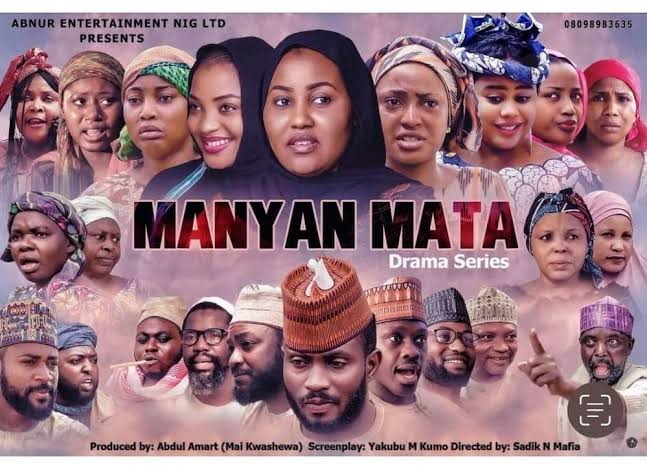
In my opinion, Mayan Mata is one of the best series, if not the best movie ever produced in Kannywood. The movie portrays the vicious circle of poverty, a retinue of marriages, the mutilation of pregnant women and how children in society are raised with no regard for their futures.
Sadik Sani Sadik thinks nothing a man should be ashamed of if he bullies his wife. In the series, his pregnant wife faces a crisis despite her pregnancy. Unfortunately, they lost the child by miscarriage. Jamila Nagudu experiences petty humiliation after her one and only child is taken to Almajiranci. Daso’s son is a nasty disciple, too, a spoiled one. He was taken to Almajiranci when he was a child. He follows the gang and gets spoiled.
The movie portrays what really sabotages relationships, couples and children’s futures. The best part of this movie tells us that there are people in society with more clout who show no concern for other children and other women whose lives have been shattered by the cruelty of their spouses. I became truly interested in the movie after I watched some episodes. And I have seen many things that happen in real life portrayed in the movie. The director has done a wonderful job.
Kannywood should continue to bring cultural identities into its movies. The director also depicts literature, art and culture in the movie, and all these can be vividly seen in the different scenes of the film. Literature, art and culture are not something we can simply despise. They are like the air we breathe. And If we cut them off, the whole world will suffer.
Literature has enormously helped so many movies to gather an audience because of its literariness. Manyan Mata pictures exactly what is happening in our communities nowadays. It shows how parents treat their children with contempt. The director shows us how our societies are sliding backwards and experiencing immaturity.
But the best part of it, however, is that it teaches us how to understand the beauty of humanity, that everyone’s life matters.
Fati Washa experiences a worst-case scenario with her deceased mother’s co-wife. After watching the scene where her mother’s co-wife was trying to burn her schoolbooks rudely, I sensed that the movie is trying to tell us that societies that achieve better prosperities are those where huge investments are made in education. These are societies where every child is allowed to go to school to learn. This part also attempts to show us that every child should have access to education so that just and egalitarian societies can be built.
I hope the director will continue to fight inequality and bring sameness because that is what brings safety, security and a sense of belonging among people.