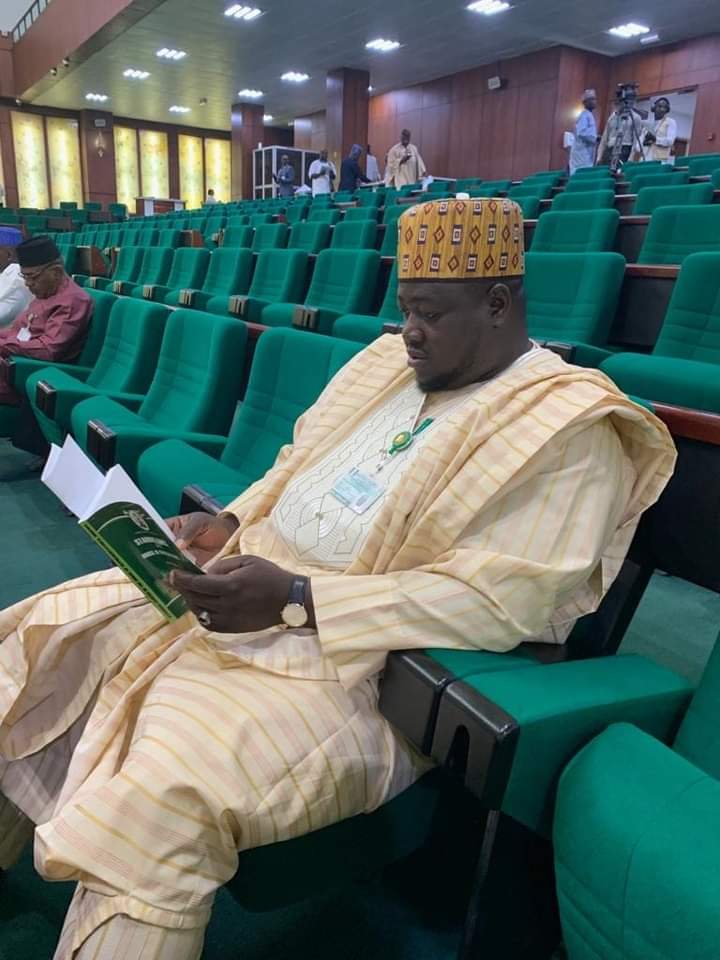
By Abu Haneef
The governors of southern Nigeria held a meeting in Lagos on Monday, July 5, 2021. They, among other things, demanded the return of the presidency to the South in 2023. They also rejected two sections of the recently passed Petroleum Industry Governance Bill (PIGB). While the governors are entitled to their opinion, the return of the presidency to the South will however require much more than a demand from the governors—it will require fielding a Southerner that can win in a free contest. As for the rejection of some sections of the PIGB, their opinion on such a legislative matter is hardly any different from that of ordinary Nigerians and indeed of no legal significance to the implementation of PIGB. Perhaps they need to summon their legislators for an honest discussion.
Between the 4th and 9th legislative assemblies in Nigeria, the PIGB was stalled for over 20 years due to unrealistic demands by many interest groups. This has led to the inefficient utilisation of our petroleum resources and the inability to open our economy to private investments. Therefore, the passage of this bill brought a huge sigh of relief to many who appreciated the impact its delay had on our development and economy. And today, PIGB is arguably the most debated bill in Nigeria’s history.
The two sections contended by the governors are the allocation of 3% of NNPC’s profit to host communities (they need more) and 30% of the profit to exploration activities in the basins (they need less exploration elsewhere).
Although the situation of the host communities is something every Nigerian should be sympathetic to, such sympathy should not mean giving them everything while other regions suffer deprivation. The host communities have 13% derivation, deducted from government revenues (not just oil). They also have a federal ministry dedicated to their needs and another government parastatal, the Niger Delta Development Commission (NDDC). Although these considerations will not replace what the region has lost (and is still losing) of its livelihood to oil exploration activities, particularly those illegal activities by the locals, it nonetheless does not justify the denial of the country to increase its revenue by exploring the basins. And lest they forget, the oil in Niger Delta was explored through revenues from our erstwhile groundnut pyramids. It also does not justify the disproportionate allocation of the nation’s resources to them exclusively.
For example, in addition to sums budgeted for the Ministry of Niger Delta and the NDDC, Delta State alone received almost N190 billion in federal allocation in 2020, which roughly equates to what was received by four North-Eastern states of Bauchi, Borno, Gombe, and Adamawa during the same period. And this will be more appreciated when the difference in population and landmass is added to the analysis.
I’m not mentioning this to suggest that the host states (which now include Bauchi and Gombe States, by the way) do not deserve this patronage. Still, I do so to disagree that the nation has neglected them as always projected when the leaders require additional resources of those communities. And looking at the resources allocated to the host communities in the last decade alone, their leaders, rather than Federal Government, are the ones guilty of this neglect.
But all this argument and counter-argument can only be a lamentation or justification, depending on what side of the divide you find yourself, as those saddled with the constitutional responsibility of determining the matter have done so, albeit after a very long time. And any effort to undermine the National Assembly is actually a renegotiation of this country through the back door, which any reasonable person should not contemplate at this critical period of our history.
As for the governors’ request for the presidency to be returned to the South in 2023, they, particularly those amongst them who championed the jettisoning of zoning arrangement in 2011, such as Wike, need to be reminded that if the aggressor forgets quickly, the victim does not.
In 2011, the South, led by President Jonathan and many of those clamouring for it today, abolished zoning in defiance of all reasons and a gentleman agreement established by the North to protect the South that is unarguably the minority in Nigeria. This is true regardless of how one chooses to look at it—either by landmass or population.
Now that zoning has been thrown into the bin of our history by the South; the presidency shall remain open to a free contest by all. And even if this zoning arrangement will be revisited in the future, not now, if you ask me; a good lesson needs to be taught and learned on the importance of the sacrosanctity of agreements, or else, we may see a repeat of the logically fallacious arguments tossed left, right and centre in the justification of abandoning zoning by the same actors calling for its return today.
Abu Haneef can be reached via imabuhaneef@gmail.com.