NITDA

Only ASUU can decide on end to strike, says Chris Ngige

By Ahmad Deedat Zakari

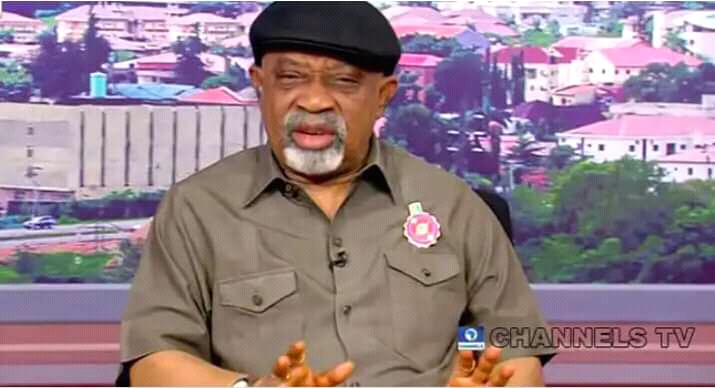
Nigeria’s Minister of Labour and Employment, Chris Ngige, on Thursday,  April 21, 2022, said the decision to halt the ongoing strike solely lies with the Academic Staff Union of Universities,  ASUU. 

Ngige said this on Channels TV while featuring as a guest in the televised program ‘Politics Today.’

According to Ngige, the time the strike will end is only for ASUU to decide and that it is expected of the Union to decide if they have the student’s best interest at heart. 

On when the strike, which has crippled academic activities in Nigeria’s public universities, will end, the Labour Minister said, “It depends on ASUU. The ball is in their court. They should go and meet the Benimi Briggs Committee and look at what the committee is doing and make further inputs so that work can be accelerated, ” he said

Ngige added that ASUU’s attitude towards the labour crisis is not helping the situation. 

“ASUU has to come down from their high horse. You cannot go and start intimidating people in NITDA and threatening the Minister of Digital Economy and Communication with revocation of his professorship that he is a fake professor. You go to ABU and say you are going to withdraw the certificate of the director of NITDA. That’s bullying. It is not allowed in Labour negotiations,” he stated.

NITDA strengthens relationship with Google

By Ahmad Deedat Zakari

The Nigerian Information Technology Development Agency, NITDA, strengthens its relationship with Google West Africa. 

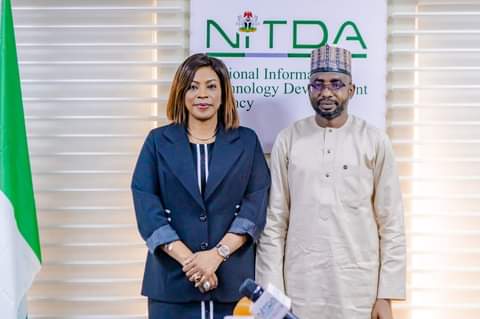
The NITDA Director-General, Kashifu Inuwa, made this known on Friday, April 8, 2022, while playing host to the Google West African Director, Juliet Ehimuan, in Abuja.

“If we can come together to strengthen the collaboration, we will eliminate duplication of efforts and working in silos,” He said.

 Mr Inuwa emphasized the importance of a good relationship between the two organizations and the aim of governmental regulations. 

“Together, we can achieve greater results. Governmental regulations are not to stifle or be an obstacle to your business; rather, it is to enable and unlock more opportunities and protect your business and our citizens,” He stated

Mr Inuwa also commended the effort of Google in the capacity building of Nigerians with a plan to train about five million Nigerians.  

Ehimuan, in her remarks, thanked NITDA for being one of Google’s major partners in the public sector with precedence of a great working relationship.

She confirmed the fact that Google has invested in a lot of capacity building over the years.

“Our initial estimate is to contribute directly and indirectly to create about 1.6 million jobs over time and work around device financing in partnership with telcos to make sure that people have access either through infrastructure or device data to gauge the digital world”, she disclosed.

According to Ehimuan, they will be about 300 million more internet users in Africa in the next five years, which will translate to more jobs and an enormous contribution to Nigeria’s Gross Domestic Product (GDP).

Pantami and the bitter taste of politics (II)

By Aminu Nuru

As a man of God in power, Pantami has been anticipated to promote justice and fairness to all, doggedness in executing the rule of law and consistent due process while amicably working to advance his ministry. Unfortunately, however, some of his decisions, actions and inactions shatter this goodwill, clearly undermining what he should – or was expected to – represent.

Given the above, it is fair to say that Pantami’s reputation as an ambassador of the faithful and clergies in the corridor of power is being tarnished and marred with shameful inadequacies that are not worthy of emulation. From the onset, it is important to state that some of those rumpuses may not be disassociated with Pantami’s status of being the first Imam of Jumma’a cum notable Islamic cleric to be a member of Nigerian’s apex council of power execution. However, some of them are avoidable if he had approached and dealt with specific issues differently and wisely.

Barely a few weeks after his appointment as Minister, Pantami’s name began to trend in what seemed to be his first scandal in office. Pictures of some luxurious apartments were shared on social media with the allegation that he owns them. Perhaps, other Ministers occupied better, polished and more luxury apartments, but nobody cared to nail them down for their exotic preferences despite being in the same shoes as him. This should tell Pantami that his colleagues may be excused and get away with so many other things while he would not. This is obviously because of his antecedents as an Islamic cleric.

One would think this politically-driven furore would be an eye-opener to Pantami and should guide his future decisions and endeavours henceforth; it should dawn on him that things will never be the same for him again; that certain things about his life and that of his family, relatives and even close friends would be twisted and become a source of gossip on the cyberspace from now. Therefore, he should thread carefully

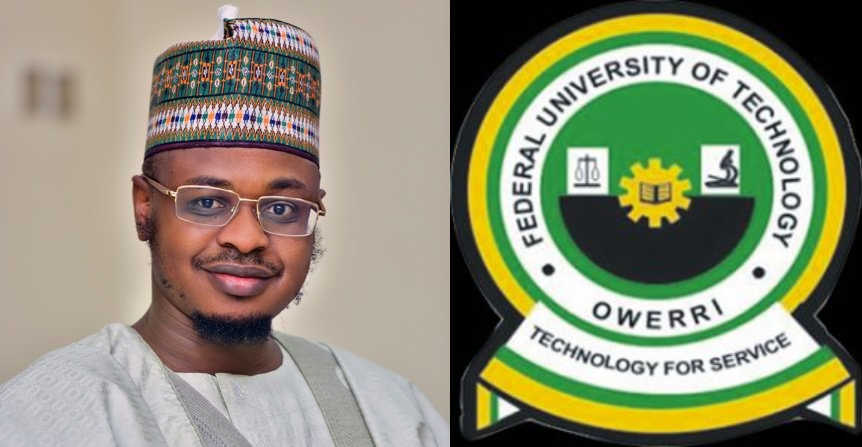
But Pantami appears not to appreciate the complexities of his new reality. If not, why would someone as blessed as Pantami allow his name to linger in a scandal of dubious professorship appointment (promotion) by the Federal University of Technology, Owerri? Let’s assume that the fuss generated by the position is a work of his foes and mischief-makers, and there’s nothing wrong with it. Still, the ensuing controversies are not suitable for his image as an Islamic cleric.

It is such a shame that a man of his calibre would allow his love for title to overshadow his conscience. If I were Sheikh Pantami, I would get rid of this appointment to save what remains of my image. And after my tenure as minister, I will go back to university to become a legit professor, proving my capability to be one. But because of what seems to be an untamed ego, Pantami will not succumb to the voice of ethical and moral principles and do that. On the contrary, he remains adamant and shows no sign of withdrawing the appointment sooner or later.

The Academic Staff Union of Universities (ASUU) opposes the appointment vehemently. But, in what seems to be a reprisal move to frustrate its struggle, NITDA, an agency under Pantami’s ministry, discredited ASUU’s proposal of UTAS. This came after NITDA’s earlier proceedings showed that UTAS passed the integrity test with 93% aggregate.

In another twist, Pantami’s Ministry of Communication and Digital Economy fails to complete its initiation of NIN-SIM enrolment and verification, which should curtail digital-related crimes in the country. This single policy, if fully executed, will be one of the most significant legacies of Pantami’s stewardship. Yet, just this morning, several media outlets reported that the exercise, which deadline was earlier scheduled to be January 2021, has been extended yet again for the tenth time. Again, this shows weakness and a lack of political will and patriotism.

Before coming to office, nobody would believe that Pantami would be engaged in an unfortunate political twist like this. It is now clear that Pantami is becoming more partisan and a career politician; his status as a strict technocrat in the corridor of power has noticeably changed now. In fact, political moles carrying his posters which bear the inscription “Digital 2023”, were sighted at the just concluded national convention of the All Progress Congress (APC). It will not be a surprise if Pantami contests in the forthcoming general election.

While it is within his constitutional right to do so, he should bear in mind the embodiment of the institution he represents and the challenges ahead. He should know that he is in politics and public service to set, among other things, precedence for others to follow. I hope that he will face, manage and swallow the bitter taste of politics with wisdom, courage and ethical and moral principles. I hope that his decision and indecision will not further generate unfortunate controversies. I hope that he will remain steadfast to his religion while promoting the rule of law, due process and good governance for Nigerians.

Aminu Nuru wrote from Bauchi. He can be contacted via aminuahmednuru@gmail.com.

Pantami’s ministry and NITDA responsible for prolonged strike, says ASUU

By Ahmad Deedat Zakari

The Academic Staff Union of Universities (ASUU) has asked Nigerians to hold the Ministry of Communication and Nigerian Information Technology Development Agency (NITDA) responsible for the lingering impasse between ASUU and the Federal Government.

ASUU Zonal Coordinator, Buchi Zone, Professor Lawan Abubakar, briefed reporters on Monday, March 4, 2022, in Jos, where he alleged NITDA is misleading Nigerians on the credibility and acceptability of UTAS which he said has passed the integrity test. 

“Ironically, NITDA, in conjunction with its parent Ministry (The Ministry of Communications where Pantami is minister), is seriously sabotaging the government at resolving the impasse. This is obviously capable of prolonging the current strike, thereby bringing untold hardship on Nigerian University students and the University System.” Prof. Abubakar stated

He further explained that NITDA, who scored UTAS high in the past, can not suddenly say UTAS failed integrity test. 

“After scoring UTAS this high, NITDA went further to contradict itself by making a fallacious statement that UTAS has failed integrity tests. The union wonders how a score of 97.4% will amount to failure.

“The Union still agreed to another Test by NITDA on March 8, 2022, in the presence of observers front the Federal Ministry of Education/National Universities Commission (NUC), Federal Ministry of Finance/OAGF, Federal Ministry of Labour and Employment and the National Salaries, Income and Wages Commission.

“This most recent test still scored UTAS 99.3% in all the Tests metrics. ASUU is Therefore surprised that NITDA, having scored UTAS this high on two different occasions, unpatriotically went to the press to deliberately mislead the public into believing that UTAS has failed Integrity tests again.” Prof Abubakar clearly explained.

Therefore, he called on Nigerians and the Federal Government to call the Ministry of Communications and NITDA to order to resolve the labour crisis.

DG NITDA, Kashifu Inuwa, visits ENGAUSA Hub, assesses its developmental ideas

By Engr. Mustapha Habu

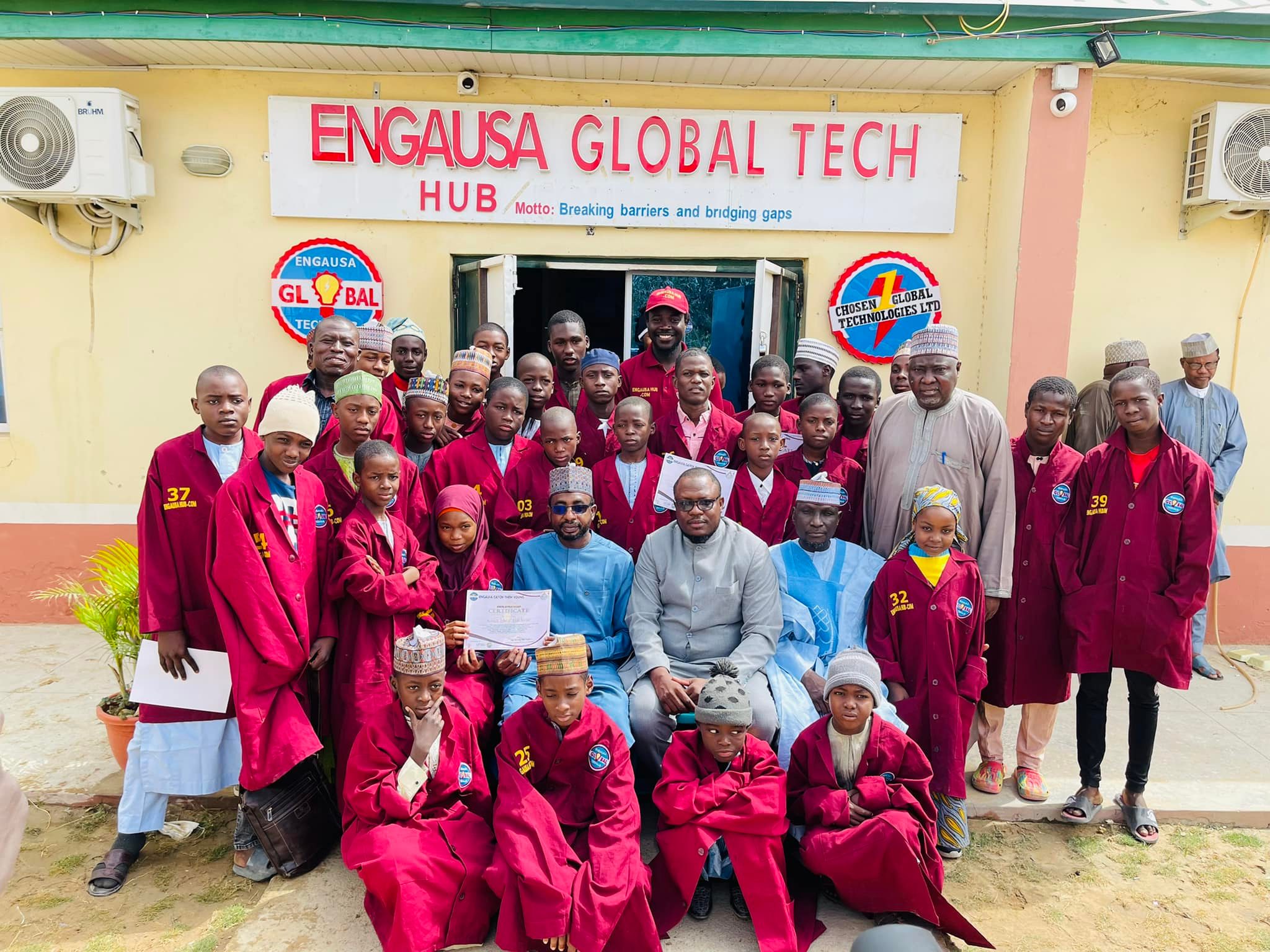
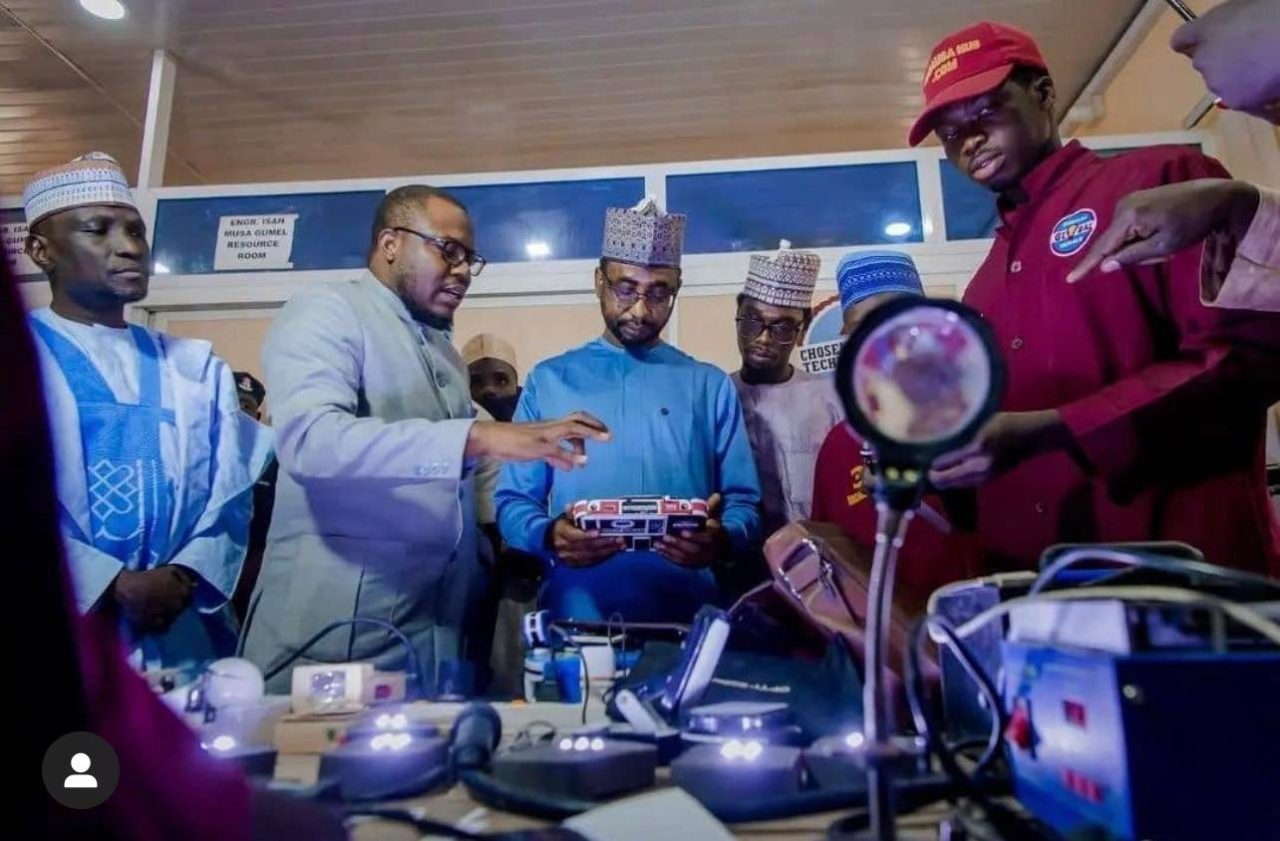
The Director-General, NITDA, Malam Kashifu Inuwa, paid an assessment visit to Engausa Global Tech. Hub to assess the level of development achieved by the Hub and the impacts of its initiatives after it emerged as a beneficiary of a grant from NITDA last year.

ENGAUSA had been able to train 313 young people within two years (2019-2020). However, after winning the grant, the number surges dramatically. Today ENGAUSA has successfully trained 800 young people in 2021. The NITDA, in conjunction with ENGAUSA, will therefore conduct an end-of-training event in January 2022.

Before the end-of-the-year break commenced, Malam Kashifu assessed the expertise of 50 primary and secondary school kids, who were trained under a theme titled ENGAUSA CARCH THEM YOUNG.

ENGAUSA presented to the DG what was being invented by young people and Almajiris at ENGAUSA HUB. He was also happy and surprised how they make inventions without having gone to higher schools—as some of them are dropouts with expertise in drawing and innovation of the modern time.

Others on SIWES from various universities and those that have not got the opportunity to further their education are already into robotics and the Internet of Things (IoT).

The Hub introduced other graduates out of the 60 who established their firms after getting trained at ENGAUSA Hub. The firms include THE D E-SERVICES, DASHERE ELECTRIC SERVICES, SD GLOBAL TECHNOLOGIES, and so on.

An outstanding mentee who invented a mathematics learning app called HausaMaths was also introduced to the DG. Another one also built a science and technology teaching app in the Hausa language called Bemitela.Africa.

The DG also met some young people employed by companies in Kano and Abuja, namely JETSON ENGINEERING (that deploys them to COSGROVE estate sites in Abuja), CHOSEN ONE GLOBAL TECH LTD, which has sites in Abuja, Kano, Kaduna, and other states in the northern part of the country.

ENGAUSA HUB presented some 10 Almajiris enrolled for the ENGAUSA CATCH THEM YOUNG and have followed the footsteps of the rest in areas of graphic design and innovation. One of the Almajiris has even been employed by ENGAUSA HUB for his outstanding performance. Alhaji Yahaya Yusuf Kwande (who is not from Kano) is the one who sponsored the registration of the Kano Almajiris.

The able DG of NITDA assured ENGAUSA HUB that his agency would collaborate with the Hub in promoting such developmental projects across the states in Nigeria.

As of the time of writing this, ENGAUSA is part of the Technology Incubation Center (of NBTI) established to work under the custody of the Federal Ministry of Science Technology and Innovation. We also have a branch on Rijiyar Zaki Gwarzo Road and other cities that we plan to collaborate with within Jigawa, Kaduna, and Abuja to enhance modern skills and ease learning initiatives.

Our door is open for anyone willing to collaborate with us in making this a reality.

The University System and the academic ranking that I know

By Abdelghaffar Amoka Abdelmalik 

We (Nigerians) are a very interesting set of people. God truly took his time to specially create us. In most cases, we look at issues with emotions and live by the moment. For every discussion, especially if it’s on a controversial issue, we choose the side to support based on the personality involved and our loyalty at that moment. We pose to know everything and as online expert commentators on all issues.

A widely publicized questionable promotion by a Nigerian university was observed a few days back that created heated discussions where individuals that have got no idea on how universities work and can’t differentiate between Assistant Professor and Associate Professor were trying hard to defend the questionable act by the university. Some attempted to give a religious colouration because an Islamic Scholar is involved. A popular online public commentator was so sure that the promotion to the rank of what he called a “full professor” has no specific criteria. That, universities can confer professorship to anyone they so wish. Really? By the way, there is no rank called “full-professor” in any Nigerian university.

Let me share my opinion having spent the last 16 years in academia on tenure appointment at Ahmadu Bello University (ABU), Zaria. 5 of these years were spent in Europe; 2 years as a Postdoc at NTNU Trondheim, and 3 years for PhD/Part-time teaching assistant at Leicester. While I was at Leicester for graduation in July 2012, my second PhD supervisor hosted me in his house at Market Harborough. During our conversation, I asked him about the criteria to get the position of a Lecturer at Leicester and other universities in the UK and he said PhD with 5 journal articles in reputable journals. I asked about Professors and he smiled and responded that it is about how much money your innovative ideas can bring to the university. Professors are the lifeline of the universities in the UK as they are relied upon to attract grants/funds to the university. He added that you can be just Lecturer or Senior Lecturer till retirement if you can’t attract enough grants to earn a promotion.

Dear Nigerians, Professorial rank is not an honorary rank. Not in the British university system and not in any university in Nigeria. There are criteria to get to the rank. Search online, and you will find the promotion criteria/guidelines for several universities around the world. There is a strict guideline for promotion to the rank of Professor or any other rank in all the universities around the world. For Nigeria, I find the university of Ilorin promotion guidelines very interesting. It is a progressive and result-oriented promotion guideline. The guideline if implemented judiciously will place the university in a scholarly database visible to the world of research. I am hoping that other universities in Nigeria will adopt something similar.

For some universities in Nigeria, to be qualified to be promoted to the rank of Professor, you must have published a minimum of 15 journal articles in “non-predatory” journals, have 7 conference proceeding/conference papers, be involved in community service, have supervised at least 2 PhD students, involved in teaching and research for at least 3 years after the last promotion to the rank of Reader (Associate Professor), etc.

Meanwhile, before you get to that highest university rank, a fresh PhD with 3 journal publications and 2 conference papers may be employed as Lecturer II or Lecturer I. You are expected to teach for the next 3 years, research within that year and publish a total of 6 journal papers and 4 conference proceedings/papers to be promoted to the rank Senior Lecturer.

As Senior Lecturer, you are expected to be involved in postgraduate and undergraduate teaching and supervision for 3 years, supervise at least 1 PhD student, published a total of 10 journal papers and 5 conference proceedings/papers, engage in community service to be qualified for a promotion to the rank of a Reader (Associate Professor). And from there to the rank of Professor after satisfying the minimum condition stated above.

Every Nigerian public university is established with an Act of the National Assembly. They are independent of each other. They have their respective Governing Councils that steer their activities. Some academics rise faster by moving from one university to another. But for you to move from one university to another, you must secure a fresh appointment at the university you want to move to. You can then transfer your service from the old to the new public university in Nigeria. That is how it works.

The point to note is that a university cannot offer a promotion to an academic in another university. A non-faculty member and without employment history cannot be offered a promotion in any university except NUC has approved a rank called “Honorary Professor” for politicians.

Dr Isa Ali Ibrahim (aka Sheikh Pantami) was a lecturer at ATBU Bauchi from 2004 to January 2014 according to his ResearchGate profile. He proceeded on study leave in 2010 to Robert Gordon University, Scotland for his PhD. Immediately after his PhD in January 2014, he got an appointment as an Assistant Professor at the Islamic University of Medina. Some said his rank at the Saudi University was Associate Professor. But I doubt if any serious university will employ a fresh PhD as Associate Professor. He spent 2 years 7 months at the Saudi university before he terminated his contract to pick up the political appointment at NITDA in 2016. 

Meanwhile, it is not certain if he absconded from ATBU to pick up the Saudi job or ATBU has no bond for their PhD scholars that went on study fellowship. He left Saudi Arabia to pick up the appointment with the government in 2016. He has worked as DG and is now a minister for the past 5 years. He seems to have no link with any university over the last 5 years and specifically no employment history with FUTO. But only to see the advertorial from Zamfara state governor on a national daily congratulating the Sheikh for his promotion to the rank of “Full Professor” in 2021 by the Council or Senate of the University. He was said to have published 160 papers. Papers that could not be found on the database of scholarly articles.

The advertorial raised questions and discussions started. From his history in academia, he seems not to possess the requirement for the said new rank. He is not involved in teaching and research for the last 5 years. Meanwhile, as a Minister of the Federal Republic, he can’t even take up another Federal government job except he resigns. If FUTO actually needed him for whatever reason, they could have hired him as a Visiting Professor, which is a part-time job and it is allowed. They can then offer him the position of Professor when he is done with his political appointment as long as he is willing to live, teach, do research, and supervise postgraduate students at FUTO. 

During the discussion, some irrelevant points were raised. It is to note that during the time of Aristotle, Albert Einstein, Marie Curie, and up till Wole Soyinka’s period, you can be a Professor without a PhD. But that is not the case now. For now, you can’t be a Professor (aside Medical Consultants) without a PhD. There is an ongoing discussion on the need for Medical Consultants to have a PhD to become Professors. People are quick to mention Dr Bala Usman even though he was not relevant in the discussion. The highly respected critic was qualified to be a Professor but chose not to be a Professor for personal reasons. 

Yes, we have issues of irregularities in the appointment and promotion in some of our universities and we hope that the Governing Councils of the respective universities can put an end to that someday as we work towards regaining the lost glory. But this questionable promotion at FUTO of a PhD with 2 years 7 months post-PhD teaching and research experience and 3 visible materials on Scopus and without employment history in the university, seems to be part of such irregularities.

Dear University managers, we have a responsibility to protect the university system and the ranks which are reserved for only those in the university that have worked for it and merited it in accordance with the university guidelines. We should not let it go the way of honorary degrees that are allegedly being purchased by politicians that are hungry for titles. 
ASUU has over the years worked very hard for the Autonomy of the universities, especially the federal universities, to shield them from political interference that is crippling the university system in Nigeria. We are still struggling with the principle of university autonomy even with the existence of the Autonomy Act. Let’s not give room for the interference to take new dimensions. We all need to rise against the irregular appointment and promotions like this so that it will not become a norm like honorary doctorate that is allegedly sold to politicians.

Dear Sheikh Pantami, you are a highly respected Islamic Scholar that I want to believe is not looking for titles. Titles can’t add value to your personality and what you stand for. It has no value for the hereafter. You have recorded notable achievements as a Cleric and as DG of NITDA and the Minister of Communications. It is obvious you have a love for academics. Just be patient and finish your assignment as the Minister. You can then join us in Bauchi or Owerri to mentor the next generation of cyber security experts, and you will rise to become a highly decorated Professor.

Dear Executive Secretary of NUC, I hope you will read this piece and take appropriate action to protect the little integrity left in our universities.

Abdelghaffar Amoka Abdelmalik writes from Zaria and can be reached through aaabdelmalik@gmail.com.
Connecting the unconnected: How CITAD is bridging digital divide in Northern Nigeria

By: Ali Sabo

Internet connectivity is becoming part and parcel of humans’ lives all over the globe. However, the story in the undeveloped countries, especially those living in the African continent, is different and not encouraging. Millions of people in Africa are finding it difficult to access this network, and even in places where these networks exist most of the time, it’s inefficient and costly. Moreover, the emergence of the covid-19 pandemic has exposed how fragile humans are and their dependence on the services internet provides to their daily lives.

Reports have indicated that only less than 50% of the Nigerian population is connected or has access to the internet. Of this 50%, many do not have the resources to own smartphones or computers that will allow accessing these services due to the high level of poverty ravaging the majority of the country’s population. To ensure more people are connected and have access to internet services in Nigeria, the government, through its communications agencies such as Nigerian Communications Commission (NCC) and National Information Technology Development Agencies (NITDA), have brought about many programs such as Universal Service Provision Fund (USPF) and provide free computers and internet services to some communities and academic institutions in the country.

Non-profit organizations such as the Centre for Information Technology and Development (CITAD), whose main focus is using Information and Communication Technology (ICT) to empower citizens, have initiated many programs that will liberate Nigerian people from this digital “darkness” and make the country one of the developed nations in terms of internet connectivity and other areas of human development as the internet gives people ample opportunities in their academic pursuit, businesses and in the health care sector, among others.

To ensure no one is left behind in the process, CITAD in 2016 launched the Digital Livelihood program, which centred on training women on digital technology and digital entrepreneurship in northern Nigeria, focusing on Abuja rural communities, Kano and Bauchi states. It, later on, included Jigawa State. The program has achieved tremendous success as the lives of hundreds of young girls and women have been changed and transformed. Many trained girls have now become digital entrepreneurs; graphic designing, web designers, online marketers etc. In an interview in one of the Nigerian Newspapers, one of the beneficiaries, Sadiya Danyaro, stated that the training “has drastically changed her life and made her become an employer rather than a job seeker. She also described the training as the turning point of discovering her passion and dream”. 

Before the commencement of the community network project by CITAD, supported by the Foreign, Commonwealth and Development Office (FCDO) through the Association for Progressive Communication in Nigeria, CITAD had set up seven (7) computers in the past centres in two states in Nigeria. The aim was to ease internet access to these underserved and neglected communities in terms of internet connectivity. The communities are Tungan Ashere, Dakwa Community, Pasepa, Gaube and Leleyi Gwari in rural Abuja communities, Jama’are and Itas-Gadau in Bauchi State.

At the peak of the Covid-19 pandemic, which highlighted the need and necessity of connecting everyone with an affordable and efficient internet connection, the community network project was launched by APC with support of FCDO in three continents; Africa, Asia and Latin America and championed by CITAD in Nigeria. Community networks are telecommunications infrastructure deployed and operated by local groups to meet their own communication needs and also a communications infrastructure, designed and erected to be managed for use by local communities. This communication needs can be voice, data, etc. and can be a point of convergence for community to come together to address their common community problems.

This initiative is aimed at enhancing the capacity of communities to design, deploy and manage community networks to meet their communication needs while at the same time engaging regulators and other relevant policymakers to enact policies and provide the support that could enhance the flourishing of community networks in the country. Due to resource constraints, CITAD piloted some sites in seven communities across three states: Jama’are and Itas in Bauchi State, Kafanchan in Kaduna State, and four sites in the rural communities of Federal Capital Territory, Abuja (Tungen Ashere, Dakwa Community, Pasepa and Leleyi Gwari).

Some of the activities carried out by CITAD under this project include training of the community champions in these communities on the need for setting up community network centres in these areas and on advocacy to engage their representatives more effectively; forming a community network advisory committee which consists of individuals from Civil society Organizations, ICT sector, Government and members of the communities; high-level engagements with government (NCC and NITDA), engagement with House of Representatives and championing discussions on designing policies on community network in Nigeria.   

So far, with persistent engagements and advocacies visits by CITAD, progress on setting up community networks in Nigeria has been made. Through the House Committee on ICT, the Nigerian government has drafted a bill that contains provisions on community networks; Itas and Jama’are local governments, both in Bauchi State, have donated a piece of land to CITAD to build community network centres in their communities. In addition, following meetings with CITAD, NCC has indicated that it will develop a policy to guide the development of community networks in the country.

Ali Sabo is the Campaigns and Communications Officer of CITAD and can be reached via his email address: aliyuncee@gmail.com or his Twitter handle @a_sabo12.

Kashifu Inuwa’s two years at NITDA

By Adamu Usman Garko

It was not startlingly surprising when Dr Isa Ali Pantami, on one of his official sojourns to Mallam Kashifu Inuwa’s hometown, did a public eulogy of the NITDA Boss as one of the most inquisitive, determined, and honest persons he has effaced in his sojourn as a public figure. This encouraged the Honourable Minister to recommend Kashifu to the President as a befitting figure to head NITDA spearheading IT operations under the Ministry of Communications and Digital Economy. 

Kashifu has efficiently headed NITDA for two graceful years, and at this point, it is crucial that we retrospect on his strides borne out of his application of experiential know-how coupled with sterling leadership since his resumption to office. After graduating from the renowned Abubakar Tafawa Balewa University, Kashifu furthered to the Massachusetts Institute of Technology (MIT), a world-class institution famed for her vast repository of tech training and knowledge. 

After graduating cum laude with a master in IT Operations, Business Transformation and Solution Architecture, Kashifu proceeded to arm himself with professional certifications to deepen his technical expertise and broaden his capacity from Harvard University, the University of Cambridge, and IMD Business School. 

Asides from his stellar strides in the classroom, he has exemplified his technical expertise in public and private capacities including but not limited to the Central Bank of Nigeria (CBN), Galaxy Backbone, and IP Operations team, where he championed numerous projects aimed at helping the society at large. 

Hence, leading NITDA (National Information Technology Development Agency) in this graceful and glorious manner should be no subject of surprise. Still, a candid appraisal of his strides since the resumption of office is important to inspire other agency heads in the country about the prospects and potentials hidden in Nigeria as a whole, especially in the IT sector. 

In just two years of taking over from Dr Isa Ali Pantami, Kashifu Inuwa has made notable strides, especially in positioning the agency as an inextricable player in the IT sector of the country. Most recently, the agency, under Kashifu’s authority has kick-started capacity development programs on e-governance and digital infrastructure for executive members of all states in Nigeria and has begun the execution of this program in Kano state, Nigeria. 

Also, under the able leadership of Kashifu, the launch of the Nigerian National Public Key Infrastructure has seen the light of the day. In addition, the NITDA Strategic Road Map and Action Plan 2021–2024, which is in line with the digital economy policy and strategy for a digital Nigeria that was launched on the 20th anniversary of the agency, has also been on a high rise. 

In addition, the spike in the contribution of ICT to the nation’s gross GDP from 0.5% in 2001 to about 14% in 2020, which has paved the way for innovative creations in the sector, is all thanks to policies implemented by Kashifu’s office in conjunction with the Ministry of Communications and Digital Economy at large. In the same light, with programs like the Digital State Initiative, the National Adopted School For Smart Education (NASSE), among other programmes that have catered to the capacity development of the country’s young population, the Digital Nigeria dream keeps inching closer to actualisation. 

To augment the aforementioned contributions, the agency has continually distributed digital gadgets and equipment to the Nigerian populace and NGOs, which are inclusive and consistently equipped and funded digital economy centres countrywide. This has birthed pioneer sterling projects like creating a National Center for Artificial Intelligence and Robotics, the first of its kind in the country, to oversee the harness of the largess of potentials the AI industry can bring to the country. Also, The National Policy on Virtual Engagement in the Public Service has witnessed smooth execution.

It will be herculean to detail the strides of Mallam Kashifu Inuwa as the Chairman of the NITDA in just one article. However, as a loyal protégé of Dr. Isa Ali Pantami, Mallam Kashifu has proven time, and over that quality leadership is not impossible with the right people in the right positions, which has positioned him as the subject recipient of numerous awards from various fronts. Most recently, The Northern Youth Council of Nigeria tagged him as the “Icon of Humanitarian Service,” an award of excellence as SDG Humanitarian Icon of Societal Transformation, the Blueprint Public Service Award, among others that testify to the excellence of Kashifu Inuwa. 

There is hope!


Adamu Usman Garko writes from the city of Gombe State.