Nigeria

Sanusi’s longtime fuel subsidy stance and the harsh reality of implementation

By Lawan Bukar Maigana

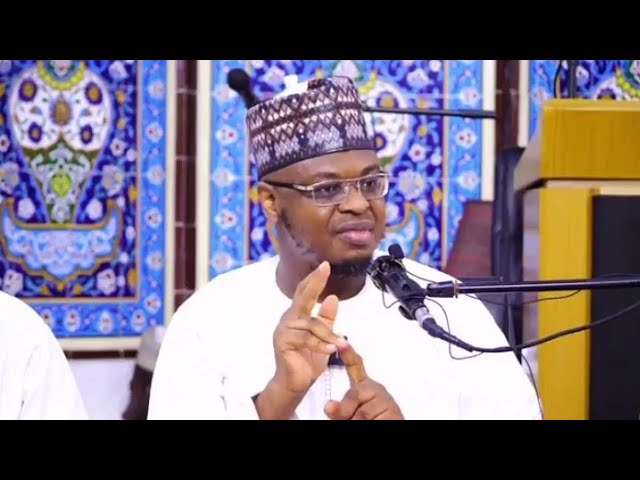
At a birthday lecture titled “Weaponisation of Poverty as a Means of Underdevelopment: A Case Study of Nigeria,” organised in honour of former Governor Rotimi Amaechi at the Continental Hotel in Abuja, the Emir of Kano, Sanusi Lamido Sanusi, bitterly complained about the unprecedented hardship Nigerians face today. 

According to him, the inflation and poverty gripping the nation are the direct consequences of loving to rule over people rather than loving them through developing favourable policies. That’s what I understand from his statement. But isn’t the fuel subsidy removal connected mainly to the realities he pointed out? 

Many might forget, or conveniently overlook, that this same Sanusi Lamido Sanusi has been one of the strongest advocates for removing fuel subsidies since 2012. Years ago, I heard him proudly state on BBC Hausa that he had repeatedly advised President Muhammadu Buhari to remove subsidies and shut down Nigeria’s borders. 

Respectfully, Buhari granted only one of his two wishes—closing the borders while leaving fuel subsidies intact. The subsidies lingered for years, postponed amid fears of political backlash.

Under President Bola Ahmed Tinubu, the fuel subsidy has finally been removed. The impact on ordinary Nigerians has been brutal—prices for fuel and essential commodities have surged, sending inflation into uncharted territory. People are being hunted by hunger and economic hardship like never before.

In this context, I believe Sanusi’s recent criticisms miss the mark. If anyone deserves celebration, it is President Tinubu,who dares to implement what Sanusi himself recommended years ago. Blaming Tinubu alone, even though Sanusi didn’t mention his name, for the hardship is unfair because he and other elite policymakers never offered concrete solutions or mitigating measures to cushion the blow on the poor when pushing for subsidy removal.

It is important to remind Nigerians that the blame for this economic situation is shared, not the fault of any one individual or administration. As the former Governor of the Apex Bank, Sanusi is part of the problem he now publicly laments. He advocated for the policy without proposing corresponding safety nets or economic reforms to soften the impact. The failure to plan has cost Nigerians dearly.

At the Abuja event, Sanusi asked a question that cut to the heart of leadership in Nigeria: “Do we as leaders truly love Nigerians, or do we just like ruling over them?” The answer is painfully obvious: too many leaders are interested in power for power’s sake. They seek to rule over the masses rather than serve them by crafting policies that uplift the poor.

This question should prompt serious reflection. If policymakers want to see genuine progress, they must remember that leadership is more than advising harsh policies; it is about standing with the people during the painful transitions these policies cause. It is about preparing the ground and providing support systems before asking citizens to bear the burden of economic reforms.

Nigeria’s elites, including Sanusi, need to own their history, yesterday. They must remember their past advocacies and be willing to share responsibility when those policies create hardship. It is easy to blame the current government for long-advocated but poorly planned decisions. It is far harder to admit one’s role in the consequences.

The harsh reality is that many elites conveniently forget their yesterday—the positions they took and the policies they championed. When those policies are finally implemented, and Nigerians bear the consequences, those same elites criticise the outcomes as if they had no hand in shaping them.

The lesson here is clear: policymaking in Nigeria must be holistic. It must consider not only economic theories but also social realities. Removing subsidies may be necessary, but without effective mitigation strategies, it becomes a weapon of poverty, inflicting untold suffering on the most vulnerable.

So, as Nigerians struggle with inflation and hardship, we should remember the true colours of our elites. They must be held accountable—not only for the policies they recommend but also for the human cost of those policies.

Lastly, I ask again: Should those who recommend harsh policies also bear part of the responsibility for their outcomes? The answer is a resounding yes. True leadership demands not just bold ideas but also the courage to accept the consequences and work tirelessly to protect the people.

Lawan Bukar Maigana is a journalist, humanitarian, Pan-Africanist, and social commentator. He’s known as Ibn Maigana on Facebook.

He stood, he served, he inspired: My tribute to Dr Bala Maijama’a Wunti

By Usman Abdullahi Koli, ANIPR

It is difficult to tell the story of a man whose life was not just lived but felt deeply, genuinely, and profoundly. It’s over now, the last file signed, the final handshake exchanged, the door gently closed behind a man whose entire life has been anything but ordinary.

As of May 30, 2025, Dr. Bala Maijama’a Wunti stepped out of public service, quietly bowing out from a remarkable journey that shook boundaries, lifted lives, and left behind a trail of courage, dignity, and truth. I find it not only fitting but necessary to say this: Now that it is done, let this be my tribute.

Much has been said, written, and whispered in admiration since his retirement announcement. But what I pen today is not a replica of what others have offered. This is personal. This is from a heart that was moved years ago when I sat quietly among students of ATBU Bauchi, listening to a man speak not as a bureaucrat, not as a technocrat, but as someone who had walked through fire barefoot and came out not burnt, but better.

He wasn’t speaking to impress. He was telling the truth, raw and unfiltered. He spoke of days when meals were not guaranteed, when dreams seemed laughable in the face of brutal reality. He described the hunger, the worn sandals, the sleepless nights, and how faith became his pillow. I remember that moment clearly. That day, in that humble auditorium, something shifted. It wasn’t just a speech. It was a defining moment for him and for us who listened.

In that moment, I carried three life lessons from Dr. Wunti—ones he never explicitly taught but demonstrated through his life.

First: Prayer is not optional. I have never encountered a man more grounded in submission to the Divine. No matter how tight his schedule, how demanding the office, and how crucial the meeting was, he found time to pause and connect with his Creator. And he did it not out of habit but conviction. It shaped everything about him: his calm, clarity, and confidence.

Second: He never forced what his heart didn’t embrace. Dr. Wunti did not do things just to tick boxes. He left it alone if his soul wasn’t aligned with a cause. This rare integrity gave his actions an unusual depth. Whether leading multi-billion-naira reforms or quietly helping an ailing community clinic, he did so with full acceptance and sincerity.

Third: Compassion wasn’t a virtue for him; it was a reflex. He gave not because he had to, but because he knew what it felt like to need and not have. Every school he built, child he sponsored, borehole he commissioned, and hospital bill he paid came from a heart softened by experience. He remembered. And in remembering, he uplifted.

Born in Bauchi, in a household where survival often came before ambition, Dr. Bala Wunti grew up in the shadows of lack. But he did not let it define him. Instead, he let it refine him. He pushed through school with sheer determination — from Chemistry at Ahmadu Bello University, Zaria, to earning his MBA in Marketing from ATBU Bauchi, and a Postgraduate Diploma in Management. These were not just academic milestones but small battles won against the odds.

Then came the Nigerian National Petroleum Corporation (NNPC). He joined in 1994, and what followed was a remarkable odyssey. From Production Programming Officer to GM Corporate Planning, and eventually MD of the Petroleum Products Marketing Company (PPMC), he did not just fill positions — he transformed them. His work at NAPIMS as Group General Manager changed how Nigeria handled petroleum investments. Projects like Operation White restored sanity to a system many had given up on.

But beyond strategy and structure, he brought the soul into the system. He refused to let numbers dehumanise policy. He saw the downstream sector not as a marketplace but as a lifeline, and he made it work for people, not just profits.

Still, if you asked Dr. Wunti his proudest achievements, he would not point to the boardroom. He would likely tell you about the girl in Dass who got a scholarship and later became a pharmacist, or the widowed mother in Katagum who now has a roof over her head. He would tell you about community boreholes, school renovations, and the youth he mentored who are now leaders in their own right.

He didn’t just serve; he saw. He saw people not as statistics but as stories. And he listened. And when he could, he helped. Quietly. No cameras. No hashtags.

In his family, Dr. Wunti is not the oil executive; he is Abba. A father who sits with his children teaches them not just by advice, but by example. A husband who understands that love is shown in small acts, in presence, in patience. He did not let success steal him away from those who mattered most. He carried them with him.

Now that his chapter in public service closes, many will remember Dr. Wunti for the policies he shaped, the reforms he led, and the titles he bore. But I will remember him for something more enduring: the humanity he never let go of.

Some may chase greatness by building empires. But some, like him, choose to make people. And when people grow, they remember. They speak. They write just like I am doing now.

Dr. Bala Maijama’a Wunti didn’t retire. He simply stepped into another phase of influence that does not require office walls or government files. His impact now lives in the echoes of children’s laughter in classrooms he built, in the gratitude of patients treated in hospitals he supported, and in the hearts of all of us lucky enough to know the kind of man he truly is.

Thank you, sir, for rising and taking many of us along with you.

This is not goodbye. It’s an honour.

Usman Abdullahi Koli wrote via usmankoli31@gmail.com.

FG deploys additional troops in Benue

By Anwar Usman

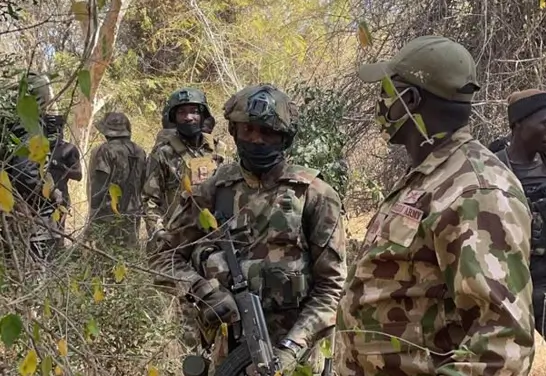
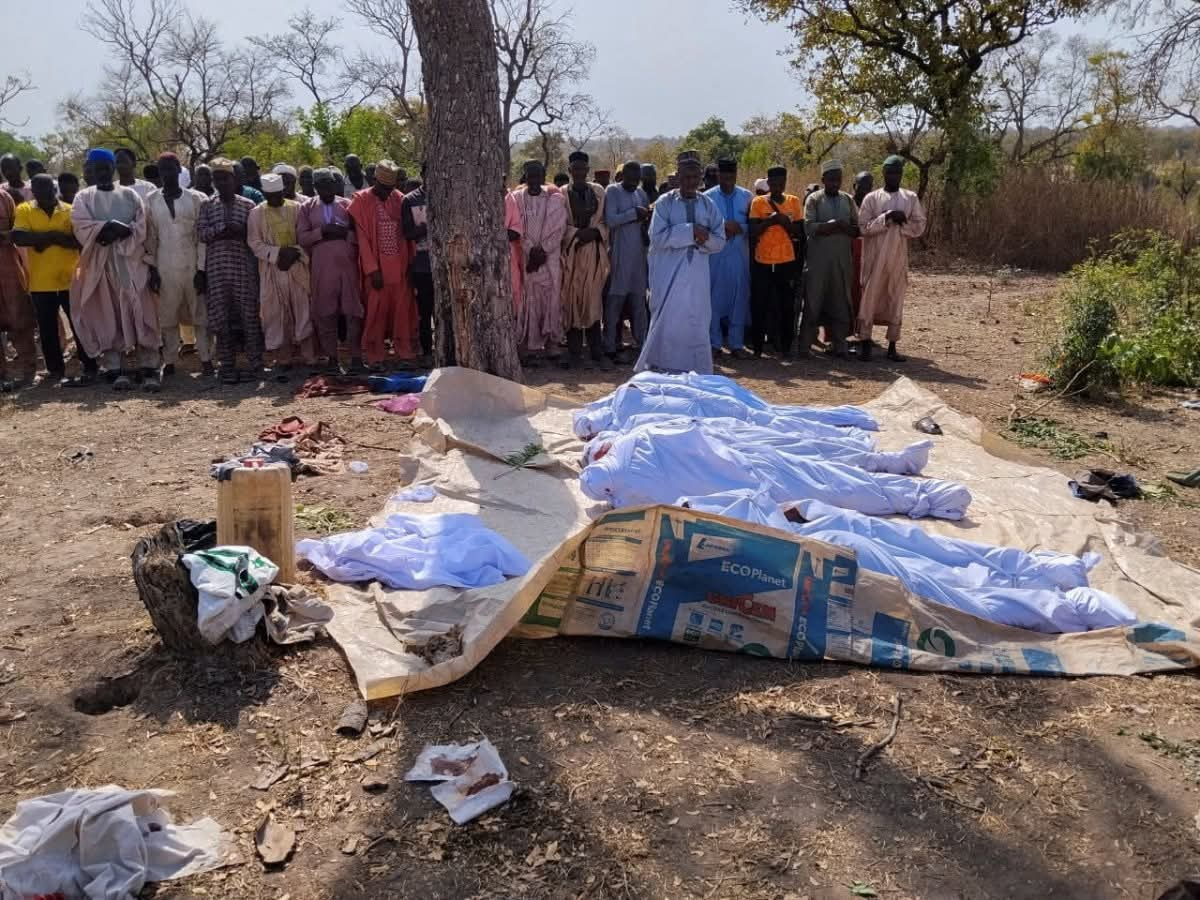
The Federal Government has deployed additional troops to Benue State in response to the latest deadly attack in Yelewata, Guma Local Government Area, which claimed the lives of many of residents.

The Secretary to the Government of the Federation, George Akume, stated this on Monday in a statement.

Akume condemned the deadly attack and reiterated the federal government’s commitment to end the violence.

He said President Bola Tinubu swiftly ordered a full-scale military operation to flush out the perpetrators and restore peace in the area, following the “mindless and disheartening” killings in the state.

He said, “I express profound appreciation to President Bola Tinubu for his swift directive for a full security operation to rid Benue of these killers and bring the perpetrators to justice. It is to be noted also, that the federal government has rendered assistance through NEMA, while more troops have been deployed to Benue state to handle the explosive situation.

“Expressing grief over the merciless killing of many of innocent men, women, and children in the state, Akume described the incident as a wound to the country.

He said, “The continued bloodletting and mindless killings across Benue State are both disheartening and utterly condemnable.

“This latest reprehensible act, one among too many, is not merely a tragedy for Benue; it is a deep wound to the soul of our nation.

“These dastardly acts are not restricted to Benue State alone. Plateau and Zamfara states also suffer the same fate. These killings are economically deterministic, not religiously driven.”

Akume called on leaders and stakeholders in Benue to set aside all differences and urgently unite to chart a sustainable path to peace.

He further stated that “We must rise above division and act decisively to protect our people and preserve our future”.

The SGF urged all Nigerians, regardless of faith or belief, to uphold peace and brotherhood.

Nigerian health worker jailed in UK for kissing vulnerable patient

By Hadiza Abdulkadir

A UK court has sentenced Nigerian health worker Adewale Kudabo to six months in prison for kissing a vulnerable patient in his care, in what the judge described as a “serious abuse of trust.”

Kudabo, who was employed at a care facility in England, was found guilty of engaging in inappropriate and non-consensual physical contact with a patient. The court heard that the victim was emotionally and mentally vulnerable, and unable to provide informed consent.

Presiding Judge Alex Menary said Kudabo’s actions represented “a gross violation of professional boundaries,” and stressed the duty of care owed by healthcare workers to those they serve.

Henry Fernnandez, the prosecutor, said Kudabo was allocated to bathe the patient who was in a lot of pain.

When finished bathing the patient, Kudabo reportedly kissed her on the lips

“The patient was dependent on your care and protection,” Judge Menary said during sentencing. “Instead, you exploited that vulnerability.”

In addition to the prison sentence, Kudabo has been removed from the health care register and is barred from working in the care sector in the future.

Tinubu orders crackdown on Benue violence, urges Governor Alia to lead peace talks

By Abdullahi Mukhtar Algasgaini

President Bola Tinubu has directed security chiefs to enforce his earlier orders to restore peace in Benue State following renewed deadly clashes.

The president’s directive comes after fresh reprisal attacks claimed multiple lives, prompting an immediate security intervention. Security operatives, including intelligence agencies, the police, and the military, have been deployed to the state to oversee operations and stabilize the situation.

Tinubu also tasked Governor Hyacinth Alia with initiating reconciliation talks between warring groups, including farmers and herders, to end the cycle of violence.

Condemning the killings as “inhuman and anti-progress,” Tinubu warned political and community leaders against inflammatory statements that could escalate tensions.

He urged them to restrain aggressors and support efforts for lasting peace.

“The bloodletting must stop. Security agencies must arrest and prosecute perpetrators on all sides,” Tinubu stated. “Governor Alia must now act as a statesman, foster dialogue, and ensure justice for all parties. Benue’s people deserve peace, and leaders must work together to achieve it.”

The president’s intervention follows growing concerns over unchecked violence in the state, with calls for decisive action to prevent further casualties.

NYSC urges corps members to make lasting impact during service year

By Abdullahi Mukhtar Algasgaini

The National Youth Service Corps (NYSC) has called on 2025 Batch ‘A’ Stream II corps members to use their service year to create meaningful impact in their host communities. The appeal was made during the swearing-in ceremony of newly deployed corps members across the nation.

The Board Secretary noted that the one-year NYSC programme offers a unique opportunity for young graduates to foster national unity and contribute to community development.

“I encourage you to make a difference through projects that improve lives and leave lasting legacies. Exceptional corps members will be recognized and honored for their dedication and innovation,” he stated.

He also assured corps members of their safety, noting that the government is collaborating with security agencies to ensure their protection throughout the service year.

Additionally, he encouraged them to embrace the orientation programme and serve with patriotism, while highlighting opportunities for outstanding corps members to work with the Board upon request.

Ex-president, Abdulsalami, celebrates 83rd birthday as Tinubu hails his legacy

By Abdullahi Mukhtar Algasgaini

President Bola Tinubu has paid tribute to former Head of State, General Abdulsalami Abubakar (rtd), as he marks his 83rd birthday, commending his pivotal role in Nigeria’s transition to democracy and his enduring contributions to national peace.

In a statement, Tinubu praised Abubakar’s leadership in steering Nigeria from military rule to democracy in 1999, calling it a defining moment in the nation’s history.

He also lauded the retired general’s ongoing work with the National Peace Committee in fostering dialogue and credible elections. “General Abubakar is a patriot of uncommon integrity whose service continues to inspire,” Tinubu said. “His devotion to Nigeria’s unity and stability remains exemplary.”

The President wished him good health and strength in the years ahead, as the nation honors his legacy.

Human minds, Nigerian youth and why self-awareness matters

By Arita Oluoma Alih

Anthony de Mello’s book The Prayer of the Frog explores human nature. An excerpt states, “Human beings react, not to reality, but to ideas in their heads.” The writer illustrates this concept with a metaphorical story about a pestilence travelling rapidly to a particular city. 

The pestilence met someone on the way who asked why he was speeding. He replied, “I am going to kill 1,000 lives.” On his way home, he met the same person, who said, “You killed 50,000 lives, not 1,000.” He replied, “I killed 1,000 lives; the rest died of fear.”

This phenomenon expounds how the human mind works. The additional 49,000 died solely due to fear and the thought of being killed, demonstrating the powerful impact of perception on reality. The human mind can be potent and perilous, as people’s thoughts and fears can shape their experiences and outcomes.

As simple as the words ‘self-awareness’ may sound, they hold significance. Just like people will say some statements do not hold water, these have a lot of water. Many folks do not understand what it means to be self-aware. 

Self-awareness shields you from manipulation in today’s complex world. It keeps you alive and conscious, helps maintain spiritual balance, gives you a sense of identity, and enables you to reflect on your personality, allowing you to stand firm in the face of adversity.

While I was reflecting on my personality, including my purpose and fears about not achieving certain things before reaching a certain age and how it may affect my mental health, self-awareness of these concerns led me to plan countermeasures if I don’t achieve them as envisioned.

Before proceeding, self-awareness needs to be understood: what is the self, what is awareness, and what does the compound term self-awareness entail? The self refers to a person’s entirety, encompassing their sense of identity, being, character traits, and individuality, distinguishing them from others. 

On the other hand, awareness is an individual’s capacity for reasoning and knowledge about things, including how to navigate potentially distressing situations; it’s essentially consciousness of mind. Self-awareness is the development of a conscious mind that observes, perceives thoughts, and reflects on its own personality.

I am an advocate of self-awareness because it helps shape lives. It enables one to stand firm on one’s goodwill. It helps self-discovery and ultimately prevents manipulation into doing something against one’s conscience and purpose.

Although an important life tool, many youth do not understand self-awareness and its significance. In a society where immorality is becoming the norm, do youths know how not to allow themselves to be convinced that such acts and other social vices are not the norm in a society that craves growth?

To thrive, we must answer these questions as youth in a Nigeria with over 200 million people, where the national grid is constantly collapsing, where the ASUU is always on strike over wages, where the farmers-herders clash is unending, and where politicians are continually toiling with the masses’ intelligence.  

In all these, self-awareness comes into play through self-interrogation. For example, will I allow myself to be used as a thug for politicians because of some necessities? Your answers and actions reflect your level of consciousness. When ASUU is on strike, you ask yourself, “What do I do with my time?” and so on. 

The power of observation, a component of self-awareness, is often underrated. Pay attention to your surroundings and the people you interact with. Notice their level of self-awareness, openness to learning, and mindset. Surround yourself with positivity, as those lacking these traits often spread negativity, which is not good for either growth or development.

This also takes us back to a story from Anthony de Mello’s The Prayer of the Frog, in which a Viennese surgeon taught his students that a surgeon needs two gifts: freedom from nausea and the power of observation. He demonstrated this by dipping one finger into a foul-smelling fluid and licking another, testing his students’ observation skills. While they passed the first test by showing no nausea, they failed the second by not noticing the surgeon’s trick. This underscores the veracity of observation.

Thus, navigating the murky waters of life, especially for Nigeria’s youthful population, requires one to train their mind and be self-aware because self-awareness begets self-consciousness and self-observation.

Arita Oluoma Alih writes from Abuja and can be reached at aritaarit118@gmail.com.

Nigeria condemns Israeli strike on Iran, urges immediate ceasefire

By Hadiza Abdulkadir

The Federal Government of Nigeria has strongly condemned Israel’s recent unprovoked strikes on Iran, which have triggered a fresh wave of hostilities between the two Middle Eastern powers. In a statement issued on Friday, the Nigerian government described the escalating conflict as a grave threat to regional and global peace.

The Ministry of Foreign Affairs, through its spokesperson, Kimiebi Imomotimi Ebienfa, expressed deep concern over the sustained missile and aerial exchanges between the Islamic Republic of Iran and the State of Israel, calling for an “immediate cessation of hostilities” and restraint from both parties.

“The continued cycle of retaliation not only endangers civilian lives but threatens to plunge the broader Middle East into further instability, with implications for international security and economic development,” the statement read.

Nigeria, which has long championed non-aggression and multilateral diplomacy principles, urged Iran and Israel to return to dialogue and constructive engagement. The government also called on the United Nations Security Council and the broader international community to intensify de-escalation efforts and provide diplomatic platforms for resolution.

Reaffirming its stance against military confrontation, the statement noted that “military action is not a substitute for negotiation” and that lasting peace must be built on diplomacy, mutual respect, and adherence to international law.

“Nigeria stands ready to support all genuine efforts aimed at de-escalating tensions and promoting peace in the region,” the Ministry added.

The statement comes amid growing international alarm over the potential fallout of the conflict, which many fear could destabilise the already volatile Middle East and disrupt global economic and political systems.

NAHCON begins return journey of Nigerian pilgrims

By Uzair Adam 

The National Hajj Commission of Nigeria (NAHCON) has commenced the return transportation of Nigerian pilgrims from Saudi Arabia, with 1,310 already flown back home from Jiddah.

According to data released by Malam Shafii Mohammed, Principal Information Officer of NAHCON, four Nigerian Hajj air carriers operated a total of four flights as part of the initial phase of the inbound operation.

MaxAir flight VM269 departed Jeddah for Bauchi at 08:07 hrs, carrying 551 pilgrims and seven officials. Flynas flight XY9006 left for Kebbi at 09:45 hrs with 413 pilgrims and six officials onboard. 

UMZA flight UY3534 took off for Abuja at 13:12 hrs with 41 pilgrims and 122 officials, while Air Peace flight APK7901 departed for Owerri at 23:45 hrs, transporting 305 pilgrims and seven officials.

It was gathered that about 63,000 Nigerian pilgrims participated in the just-concluded 2025 Hajj.