Nigeria

MRA raises alarm over rising attacks on journalists in Tinubu era

By Uzair Adam

Media Rights Agenda (MRA) has expressed deep concern over what it described as a sharp rise in attacks on media freedom and civic expression in Nigeria, particularly the misuse of the Cybercrime Act by law enforcement agencies to intimidate and penalize journalists and government critics.

The concern was raised in a mid-term assessment report of President Bola Tinubu’s administration released on Monday.

Titled “The Onslaught Intensifies: A Mid-term Assessment Report on Media Freedom under the Tinubu Administration,” the report documents 141 cases of attacks on journalists, media workers, and citizens between May 29, 2023, and May 29, 2025, for peacefully expressing their views on issues such as governance, economic challenges, and security.

According to MRA, 61 of these incidents—representing over 43%—were carried out by personnel of the Nigeria Police, while the Department of State Services (DSS) was responsible for seven cases.

Together, the two agencies accounted for nearly half of all recorded violations.

The report held the Tinubu-led government responsible for these abuses, citing Principle 20(5) of the Declaration of Principles on Freedom of Expression and Access to Information in Africa, which holds states accountable for violations committed by law enforcement and other state actors against media practitioners.

In the report’s preface, MRA’s Executive Director, Edetaen Ojo, highlighted the use of repressive laws like the Cybercrime Act to suppress journalists, alongside politically motivated sanctions, arbitrary arrests, surveillance, and censorship of government-owned media outlets.

Ojo described the report as a necessary intervention amid growing threats to Nigeria’s democratic values, stressing that its goal is not just to criticize but to document and analyze the government’s impact on freedom of expression.

Among the report’s most troubling revelations is the continued abuse of Section 24 of the Cybercrime Act (2015), which has been frequently used to arrest, detain, and prosecute journalists and social media users for online expressions deemed critical of the government.

The report documented several such cases, including the arrests of Emmanuel Uti of the Foundation for Investigative Journalism (FIJ), blogger Destiny Ekhorutomuen in Edo State, four staff members of Informant247 in Kwara State, lawyer and activist Dele Farotimi, and others who faced harsh bail conditions or prolonged detention.

MRA noted that international concern over the misuse of the Act reached a peak in June 2025, when the Heads of Mission of the United States, United Kingdom, Canada, Norway, and Finland issued a joint statement condemning the Nigerian government’s abuse of the law and calling for urgent reforms.

The report also criticized the government’s treatment of peaceful protests as criminal acts, pointing out cases where even minors were charged with treason—a capital offence—for simply demonstrating.

Journalists covering such protests were often brutalized, detained, or had their equipment confiscated or destroyed, with no perpetrators brought to justice.

Commenting on the report’s release, MRA’s Communications Officer, Idowu Adewale, described it as troubling that President Tinubu—once a pro-democracy activist and media proprietor—is now at the helm of an administration increasingly defined by repression.

The organization called on all stakeholders, including media professionals, civil society, the judiciary, the legislature, and international partners, to pressure the Nigerian government into enacting reforms that protect media freedom, free expression, and democratic principles.

Hausa digital neologisms

By Prof. Abdalla Uba Adamu 

Let me start with a context. It happened on June 27, 2024, Gabon’s Show on YouTube.

“Zarmalulu no work” was an expression uttered by TikTok influencer Sayyada Sadiya Haruna, describing the state of her marriage to another TikToker, Abubakar Ibrahim, a Hausa Rapper based in Kano, northern Nigeria, and known by the stage name G-Fresh Alamin. She used the expression during her interview with Hadiza Aliyu Gabon, a Kannywood (Hausa cinema of northern Nigeria) film actress, in an episode of Gabon’s YouTube Show, “Gabon,” on June 27, 2024. Haruna used the expression to inform Gabon and her viewers that G-Fresh was impotent on their wedding night, using ‘Zarmalulu’ as a social code for his non-performing reproductive organ.   

The expression, which quickly became a meme referring to the male sexual organ and its (dis)abilities, became a trending term in Hausaphone social media counterculture, and G-Fresh, usually full of swagger and macho posturing, was highly ridiculed and his swagger deflated, as it were. In this process, Haruna has provided males with an easy way of explaining their erectile dysfunction to either their partners or their healthcare provider in a less embarrassing and amusing way. The use of the term openly reveals a growing vocabulary of erotic neologisms in Hausa social media and reflects the emergence of what I refer to as Hausa digital counterculture.

This media incidence – which received massive views, significantly improving Gabon’s financial standing – reflects one of the fascinating aspects of language development within the context of media anthropology. I am pretty sure that Margaret Mead, the doyen of cultural anthropologists, would have welcomed social media and its potential in studying digital natives. Safer, too. With the increasing creation of conventional and alternative communities on social media, a new discipline has emerged to enable people to study others without the necessity of being in the same physical space and time with them. So, what exactly is “media anthropology”? 

Media anthropology is the ethnographic and critical study of how media—especially digital and social media—are embedded in the cultural, social, political, and economic lives of people. It is a subfield of anthropology that examines how people create, utilise, interpret, and are influenced by media in their daily lives. It blends the traditional ethnographic methods of anthropology—such as participant observation and in-depth interviews—with the analysis of media technologies and content.

My initial focus was on Hausa literature and its transformations – from physical print to online publishing, then to the film industry – encompassing feature films and distribution through tapes, CDs, DVDs, and YouTube series. I then moved on to music, from griot wordsmiths to rap and hip hop. It was all pretty exciting. Then, social media made its entrance and created multiple new entries into the field. 

As a media anthropologist, I immerse myself in communities—both online and offline—to understand how people engage with digital media. For this study, I focused primarily on Facebook as a social network. Hundreds of communities were created on Facebook—mainly by young people—that discuss a wide range of topics, providing a rich source of data concerning youth subcultures and how social networks offer a subversive template for creating new identities and expressions. 

As I swing from one community to another – using Robert Kozinet’s Netnographic methods – I began to notice a new pattern of language usage among young Hausa online digital natives. Then I started gathering new words and expressions that offer alternative meanings to their conventional ones. For the most part, they tended to be innocuous, while hiding a deeper, often darker meaning, and are essentially communicated to ingroup members of the communities. Quite rapidly enough, some of the words began to take on a new urban lexicon on their own. 

A typical example is “capacity,” an innocuous word that means exactly what it says: maximum production or containment. Yet, digital natives have turned it into “kafasiti” to indicate an urban cool, swagger, ability, capability, “arrived”, etc. The word is now used in multiple forms and contexts to refer to attainment of either distinction or class (“Alaji, wallahi an baza kafasiti a bikin nan”). 

But, then, old words have always had new meanings in Hausaphone urban language use. For instance, “shege” is literally a bastard in Hausa, but recontextualised to mean “an expert” or “outstanding.” “Mugu” (bad) became an adjective for extremities (“mugun kyau”, extreme beauty). “Arne” (pagan) transformed into contemporary “bro” (kai arne, yaya dai/yo, bro, wazzup?). “Kwaro” (insect) translates into a tenacious, usually studious person. For southern Nigerians, “Aboki” is an imagined insult referring to any northerner, whether Hausa or not, rather than “friend,” its actual meaning. 

Hausa digital natives utilise the unconventionality of the social media they inhabit to create neologisms that often reflect hidden, dark, or altered meanings, frequently dealing with in-group lexicons. After trawling through various sites and TikTok videos, I was able to gather approximately 35 neologisms and incorporate them into a paper I am still working on. 

Looking at these digital coinages and the transformation of words, I was struck by the fact that many of them refer to bawdy or sexually suggestive language along the entire sexual preference spectrum. They tend to be more common in social networks (e.g., Facebook, WhatsApp, Telegram, Signal), where interactions are mainly conversational, than in visual social media (e.g., TikTok, Instagram). The reason is that visuality often identifies the person easily, and in Kano, an Islamicate state in northern Nigeria, this could lead to prosecution on moral grounds. On social networking sites, users often use aliases instead of their real names. Such anonymity gives them the freedom to express their thoughts and use these neologisms in their correct grammatical sense. The sentences are meaningful only to in-group members, within or outside the online communities. 

Examples include “Malam Zakari da almajirai biyu”, referring to the male reproductive organs. “Kaya” (load, baggage) referring to trophy (girl, money, etc), “tarkon alƙali” (judge’s trap/jailbait) for pedophilic behaviour, royal rumble (orgy) and murfi (cover) referring to lesbian activity.

As I noted, over 70% of the neologisms in my collection were bawdy and sexually slanted. Their creators chose the anonymity of online communities not only to create new coinages but also to perpetuate them, without any fear of social labelling or prosecution. Some of these words will gradually become part of conventional social usage, along with their attendant meanings. There is no stopping them. Their very existence highlights another way social media is influencing our culture, language, and traditions. 

But, what do you think – good, bad, indifferent? Whatever your feeling, what can we do about it? Hausa is not the only language facing this, though. A recent book by Adam Aleksic, Algospeak: How Social Media Is Transforming the Future of Language” (July 15, 2025), reveals the international nature of this phenomenon through “algorithmic speech”. As the blurb indicates:

“From ‘brainrot’ memes and incel slang to the trend of adding ‘-core’ to different influencer aesthetics, the internet has ushered in an unprecedented linguistic upheaval. We’re entering an entirely new era of etymology, marked by the invisible forces that drive social media algorithms. Thankfully, Algospeak is here to explain. As a professional linguist, Adam Aleksic understands the gravity of language and its use: he knows how it has evolved and changed, how it reflects society, and how, in its everyday usage, we carry centuries of human history on our tongues…New slang phrases emerge and go viral overnight. Accents are shaped or erased on YouTube. Grammatical rules, loopholes, and patterns surface and transform language as we know it. Our interactions, social norms, and habits—both online and in person—shift into something completely different.”

No, I don’t have “eCopy” to Acibilistically share. You gotta buy the original print copy if you are interested in the way in which social media usage transforms contemporary language. I can give you the cover of the book for free, though!

Troops kill 3 terrorist bandits in Sokoto

By Anwar Usman

Troops of the Joint Task Force under Operation Fansan Yamma have eliminated three notorious kingpins in Sabon Birni Local Government Area of Sokoto State.

The operation, which took place on Friday, was a carefully executed ambush between Mallamawa and Mazau villages in the Tsamaye/Mai Lalle District.

According to military authorities, the terrorists, identified as Kachalla Nagomma, Gurmu, and Ali Yar Daribiyar, were intercepted while attempting to extort ransom and levies from locals in the area.

Three AK-47 rifles with magazines and a motorcycle were recovered from the scene during the operation.

The success of the mission has been met with widespread jubilation in the affected communities of Mai Lalle, Tsamaye, Rimaye, and nearby areas in Sabon Birni and Goronyo LGAs.

Residents of the communities, terrorised by the activities of the neutralised criminals and their foot soldiers, expressed happiness and renewed confidence in the security efforts.

Operation FANSAN YAMMA, a security task force aimed at restoring peace and stability across Nigeria’s North West and parts of the North Central region, reiterated its commitment to intensifying counter-terrorism efforts in collaboration with local communities.

The Media Information Officer of OPFY, Captain David Adewusi, in a statement issued on Saturday called on the public to continue sharing genuine information that’ll help the ongoing military operations.

He further stated that “the Joint Task Force remains resolute in its mission to eradicate terrorism and restore lasting peace to all affected areas”.

Barau flags off constitution review in Kano, calls for inclusive reform

By Uzair Adam

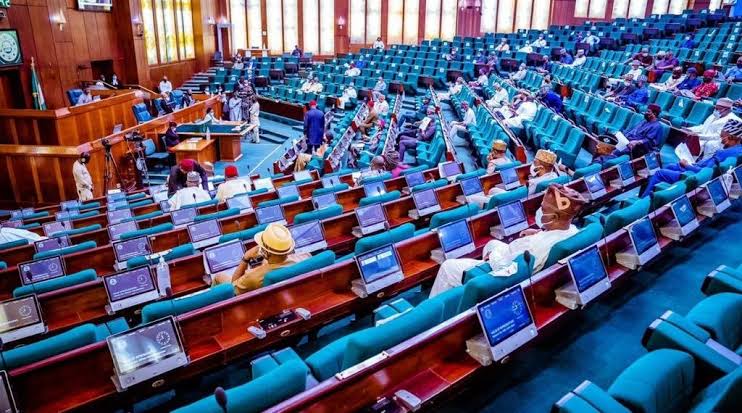
Deputy Senate President and Chairman of the Senate Committee on the Review of the 1999 Constitution, Senator Barau I Jibrin, on Saturday, July 26, 2025, declared open the North West Zonal Public Hearing of the Committee in Kano.

The two-day public hearing aims to gather input from citizens and stakeholders across the zone on proposed amendments to the 1999 Constitution.

The Daily Reality gathered that this is part of a broader nationwide exercise by the National Assembly to foster inclusive governance and constitutional reform.

Barau explained that the Kano session had been previously postponed out of respect for the late business magnate, Alhaji Aminu Dantata, and former President Muhammadu Buhari, GCFR, both of whom passed away earlier this month.

In his opening remarks, Barau reiterated the importance of citizen engagement in the reform process.

He noted that while Nigeria has undergone five constitutional alteration phases since 1999, several key issues remain unresolved.

“Many of these challenges cannot be addressed by regular legislation alone. We must be honest about our commitment not just to the letter of the Constitution, but to its spirit,” he said.

The Deputy Senate President highlighted that the 10th Senate established the Constitution Review Committee to lead a consultative process that reflects national consensus.

He said the Committee received hundreds of memoranda on major national concerns, including electoral and judicial reform, local government autonomy, gender representation, traditional institutions, and security structure.

“These memoranda have been translated into draft Bills which we are now bringing back to the people for further discussion,” he added.

Barau assured participants that the Committee remains impartial and open to all views, encouraging stakeholders to offer their contributions freely and responsibly.

He stressed the need for intergovernmental cooperation in ensuring that any agreed constitutional changes are properly implemented.

“A law that is not put into effect is as good as not passed,” he remarked.

The Senate Committee chairman also acknowledged the support of Kano State authorities, fellow legislators, civil society organisations, and development partners, describing their involvement as a vital step in strengthening Nigeria’s democratic institutions.

The hearing continues on Sunday, July 27.

Disability is not a license to bed

Street begging is often wrongly associated with disability. When someone loses a leg, an arm, their sight, or any part of their body, many assume that the next step is to become a street beggar — as though it’s prescribed. This harmful stereotype is one of the reasons PWDs are widely known for begging.

I have personally experienced this bias before. It happened when I got out of a tricycle that had pulled up at Kabuga Underway. I was unfamiliar with the area and trying to find my way to Bayero University, Kano (New Site). I approached a passerby and handed him a scrap of paper on which I had written:

“Assalamu Alaykum. Please, where can I get a tricycle to the BUK New Site?”

The man was around thirty to thirty-three years old. He had a neatly trimmed beard, wore a stylish sky-blue shirt paired with dark jeans, and black shoes.

To my surprise, he refused to collect the paper. Instead, he reached into his pocket and brought out a one-hundred-naira note and offered it to me. I was stunned and disappointed.

I declined the money and insisted that he read the paper. Reluctantly, he took it, read it, and then immediately apologised. He directed me to the place where I could find a tricycle to BUK.

I didn’t hold it against him. I understood. He had likely encountered deaf individuals who were begging with a solicitation note on the streets and had generalised.

But this is precisely why I strongly condemn street begging. Disability should never be an excuse for begging. PWDs should not be reduced to beggars simply because of their condition. We must challenge this narrative.

Instead, society should actively support PWDs. Disabilities can indeed limit one’s ability to perform certain tasks. But that doesn’t mean we are incapable. Those who are uneducated should be empowered with vocational skills to start small businesses. Those who are educated should be given equal opportunities for employment.

The real problem is not disability. It is the lack of support, education, and inclusion. Street begging is not a destiny for PWDs. With the proper support, we can live independently, contribute meaningfully to society, and break this damaging stereotype.

Ibrahim Tukur is a Disability Rights and Inclusion Advocate. He can be reached via email at: inventorngw@gmail.com.

Over 200 women empowered with N50k in Kano by Zam-Zam, Light Up Orphans Foundation

By Uzair Adam

More than 200 women in Kano have received financial support from Zam-Zam Educational Initiative in partnership with the Light Up Orphans Foundation, as part of efforts to cushion the effects of the current economic hardship in the country.

The empowerment programme, which took place on Thursday at the premises of Zam-Zam College in Kano, saw each beneficiary receive N50,000 in cash to support their livelihood and small-scale businesses.

Speaking during the event, Sheikh Muhammad Aminu Ibrahim Daurawa, proprietor of Zam-Zam and a prominent Islamic scholar, said the initiative was borne out of a desire to support vulnerable women, especially in the face of growing economic challenges.

He was quoted as saying, “We considered giving N20,000 or N30,000 to enable us to reach more people. But we decided on N50,000 to ensure the beneficiaries can do something tangible with the amount, whether in business or home support.”

Sheikh Daurawa explained that the money was given in cash to avoid technical issues and delays often associated with bank transfers.

“Sometimes, people complain that they didn’t receive their share when it’s sent through banks. We wanted to avoid that entirely,” he added.

He also noted that while the team initially preferred a low-key distribution, the event was made public in the interest of transparency and accountability to their donors.

Also speaking at the event, Malam Aisar Fagge, General Manager of Salsabil TV, a media outlet under Sheikh Daurawa, described the gesture as a righteous act that aligns with Islamic values.

“This is one of the most beloved deeds in the sight of Allah — helping those in need, especially women who are struggling to make ends meet,” he said.

The beneficiaries, many of whom appeared visibly elated, expressed appreciation to the organisers, describing the assistance as timely and life-changing.

The Daily Reality learned that the empowerment programme is part of an ongoing commitment by Zam-Zam Educational Initiative and Light Up Orphans Foundation to improve the lives of the less privileged in society, particularly women and orphans.

The illusion of unity in Nigeria

By Muhammad Umar Shehu

Nigeria, as a nation, has always struggled with the idea of unity. From the country’s very foundation, deception has played a central role in shaping the narrative we’ve been led to believe. The idea that we are “one people” is more of a slogan than a reality. The truth is, there has never been genuine unity in the way the state was formed or in how it is currently run.

The political class has done more to divide us than to unite us. Instead of promoting national interest, they manipulate ethnic, religious, and regional sentiments to serve their selfish goals. Over the years, these tactics have created deep hatred and mistrust among citizens. What should have been a diverse but united people has become a society fragmented by deliberate division.

Our leaders talk about unity during campaigns or national crises, but their actions show otherwise. Appointments, projects, and policies are often distributed along lines of loyalty, tribe, or religion rather than merit or national need. This is not only unfair, but also dangerous. It feeds resentment and makes many Nigerians feel like outsiders in their own country.

In almost every region, people feel marginalised. From the South East crying out over exclusion, to the North East lamenting underdevelopment, to the Niger Delta’s struggle over resources, the sense of belonging is weak. When some groups feel like second-class citizens, it becomes nearly impossible to build a strong national identity.

The younger generation is growing increasingly aware of these divisions. Many of them are no longer buying into the false narrative of unity. They see through the hypocrisy and want a country that treats everyone fairly, regardless of background. But without sincere leadership and bold reforms, their hope for a united Nigeria may remain a dream.

Unity cannot be built on lies. It cannot exist where injustice is the norm, where corruption thrives, and where the average citizen feels neglected. We cannot continue to pretend that all is well when millions feel disconnected from the system that claims to represent them.

If Nigeria is ever going to move forward, we must stop repeating slogans and start dealing with the hard truths. The illusion of unity must give way to honest conversations, equitable governance, and deliberate efforts to bridge our divides. Only then can we begin to build a nation where unity is not just a word, but a lived experience.

Muhammad Umar Shehu, who wrote from Gombecan be reached via umarmuhammadshehu2@gmail.com.

Dear President Tinubu, please ban TikTok to preserve our national values

By Malam Aminu Wase 

Your Excellency,

I write with deep concern for the moral and cultural fabric of our nation. It is my humble request that you consider banning the operation of TikTok in Nigeria to restore and preserve the dignity of our country, our religious values, cultural heritage, and the moral upbringing of our youth.

While TikTok is used in many parts of the Western world as a platform for creativity, advertising, and business promotion, the situation in Nigeria is deeply troubling. Instead of being a tool for productivity and education, TikTok has become a channel where inappropriate content thrives, particularly content that undermines our moral values and exposes young people to harmful influences.

In Nigeria today, TikTok is alarmingly associated with immoral displays, including the exposure of private parts by married women, as well as the promotion of prostitution. It has sadly become a platform that contributes to the breakdown of marriages and family structures. Many relationships have been destroyed because of disagreements over the use of this platform, with some spouses refusing to delete their TikTok accounts despite repeated appeals from their partners.

This moral decline is not just a private matter; it affects our collective national conscience and identity. If left unchecked, it may have long-term consequences for future generations.

Therefore, I respectfully urge your administration to take decisive action to regulate or, if necessary, ban TikTok in Nigeria. Such a step would not only protect our societal values but also send a strong message about the importance of discipline, modesty, and responsible use of technology.

Thank you, Mr. President, for your continued commitment to the growth and integrity of our nation.

Malam Aminu Wase writes from Kaduna. He can be reached via aminusaniusman3@gmail.com.

Bauchi governor launches ₦7.8 billion upgrade of state assembly complex

By Sabiu Abdullahi

Bauchi State Governor, Bala Mohammed, has inaugurated the renovation and modernization of the State House of Assembly complex, a project estimated at ₦7.8 billion.

The governor performed the flag-off ceremony on Tuesday, describing the development as part of his administration’s pledge to foster a functional atmosphere for the three arms of government.

“The renovation, remodeling and upgrading of the complex we are witnessing today is a case of equal and just treatment for all the three arms of government which constitute a tripod upon which the government rests,” he said.

Mohammed highlighted the importance of improving the complex to meet the standards expected of such a key institution in governance.

“This project has been awarded at the cost of N7.8 billion for which 50 per cent of the money has already been approved and paid to the contractor and it has a 12 months completion period.

“Indeed, the mutual understanding and respect between the executive and the legislative arms of government has become responsible for the seamless delivery of the dividend of democracy during our time,” he added.

Speaking at the event, Speaker of the Bauchi State House of Assembly, Abubakar Suleiman, recalled that the assembly complex was constructed during the First Republic, in the tenure of the late Governor Abubakar Tatari-Ali.

Since then, he said, only a single minor renovation took place in 2011.

He said the structure had been the core of legislative work in the state for decades and was long due for comprehensive restoration.

“On behalf of all members of the Bauchi state house of assembly, management staff, and all other workers, I express our sincere gratitude to the governor for his visionary leadership and commitment to the development of not only the legislative infrastructure but the entire infrastructure in the state.

“This renovation signifies not only a physical upgrade but also a renewed dedication to transparency, efficiency and service delivery to our constituents.

“The project will modernise our facilities, enhance our working environment and enable us to better fulfill our constitutional responsibilities and service delivery to our constituents,” he said.

The Speaker also encouraged lawmakers, staff, and residents of Bauchi to see the initiative as a collective investment in governance, democracy, and the state’s future.

Also speaking, Commissioner for Housing and Environment, Danlami Kaule, said his ministry, which is in charge of supervising the work, would ensure the contractor maintains the expected quality and delivers the project on schedule.

In defence of Alhaji Auwalu Tijjani Rabiu

By Mohammed Mohammed

Like many others, I was shocked when I recently saw an advisory by the Economic and Financial Crimes Commission (EFCC) declaring Alhaji Auwalu Tijjani Rabi’u wanted for alleged money laundering involving over $1.9 million.  

My shock, and that of many others, stemmed from the general belief in Alhaji Auwalu’s reputation as a businessman of integrity over the years and across his business constituencies in Nigeria, the UAE, and beyond. 

Having gone through the details of the transactions in question, including the reports of a reputable audit firm, which audited the transactions between Alhaji Auwalu and the purported petitioner, one Ifeanyi Ezeokoli, it’s quite clear that the former took advantage of Alhaji Auwalu’s tendency to trust people even without due diligence sometimes, which stems from his sheer clean-mindedness.   

According to the available records, Alhaji Auwalu made an overpayment of more than $3 million to  Ifeanyi Ezeokoli in 2022 as part of a business transaction that spanned a year. And though Ifeanyi was aware of the mix-up behind the regular overpayment, he turned a blind eye and continued receiving payments not due to him. 

And knowing that the bubble would burst one day, he continued to use different companies’ bank accounts, most of which were for third parties, apparently to complicate the auditing of the transactions. Yet, when it appeared to him that his game was over, he came up with an allegation that Alhaji Auwalu owes him over $1.9m, and even went ahead to file a case at the EFCC, which, in turn, declared him wanted. 

However, now that the Federal High Court in Kaduna has issued an interim order restraining the EFCC from taking any measures against Alhaji Auwalu pending the determination of his complaint before it, things have begun to take the right direction, which will undoubtedly culminate in not only absolving Alhaji Auwalu but also enabling him to recover his money from Ifeanyi. 

After all, if for nothing, Alhaji Auwalu is a man whose life seamlessly blends the acumen of business with the compassion of philanthropy. Known across communities not just for his remarkable business success, but more so for his boundless generosity, Auwalu stands tall as a symbol of service and humility. 

Alhaji Auwal’s journey in the business world is one of resilience and integrity. He has built an impressive legacy, earning respect not only for his achievements but for how he achieved them, with fairness, foresight, and a deep sense of responsibility. Yet, what truly sets him apart is that he never allowed success to cloud his sense of duty to others.

Through quiet acts and major initiatives alike, Auwalu has touched countless lives. From supporting the vulnerable and other acts of charity, his contributions have brought light and hope to individuals and entire communities. For many, he is not just a benefactor; he is a lifeline, a silent force who sees a need and responds with action, not applause.

His philanthropy is not showy or self-serving. It is driven by sincere empathy and a belief that every life uplifted enriches us all. Whether in times of ease or crisis, Auwalu has remained steadfast, ever ready to give without hesitation and serve without seeking recognition.

To speak of Auwalu is to talk about impact. His name inspires admiration, but more importantly, it inspires others to give, to build, and to believe in a better world.

Auwalu is more than a businessman. He is a builder of dreams, a guardian of dignity, and a blessing to many.

Mohammed Mohammed wrote from Dubai, United Arab Emirates.