Nigeria

How Army Stings Terrorist Supply Line in Kogi, Seizes Hidden Ammunition Cache

By Abdullahi Mukhtar Algasgaini

Nigerian Army troops have dealt a significant blow to terrorist logistics networks in Kogi State, capturing multiple couriers and intercepting a large stash of ammunition in two separate operations over the past three weeks.

The first strike occurred on March 29, 2026, along the Jamata–Owara road in Lokoja LGA. Soldiers stopped a motorcycle whose rider was flagged as a suspected terrorist supply agent.

Recall that The Daily Reality had reported that troops of the 12 Brigade of the Nigerian Army have stepped up operations over the past three months.

A detailed search revealed the bike had been fitted with a secret compartment designed to smuggle ammunition. That arrest, which intelligence sources linked to a high-profile terrorist cell, paved the way for deeper penetration into the network.

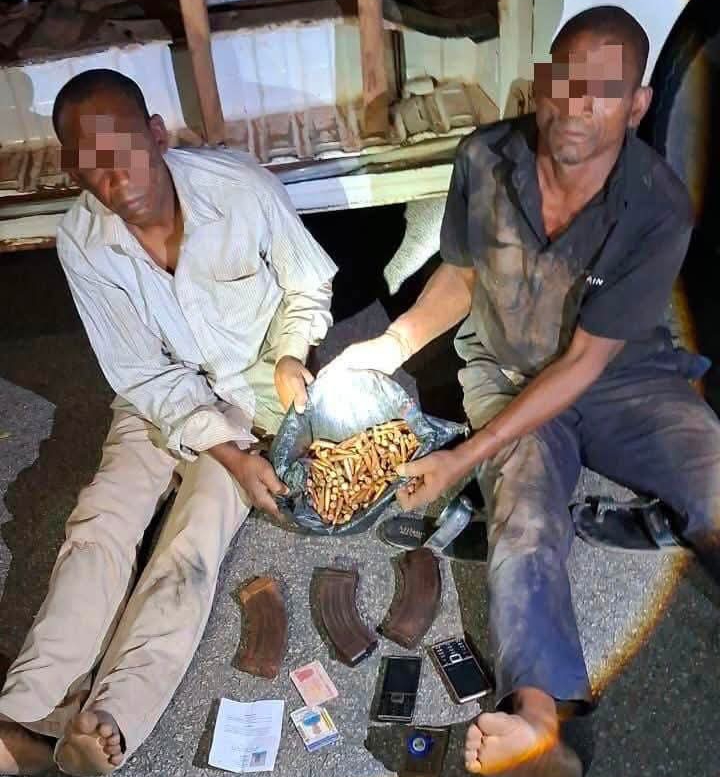
The breakthrough came on April 20, 2026. Acting on a tip, troops set up a snap checkpoint on the Obajana–Kabba road. There, they flagged down a Toyota bus traveling from Makurdi to Obajana. Inside were two suspects—Mallam Zubairu Abubakar and Adamu Abubakar Abdullahi.

A meticulous search of the vehicle turned up a sack containing 314 rounds of 7.62mm (Special) ammunition, hidden with the apparent aim of reviving a previously dismantled supply chain.

Behind the driver’s seat, soldiers also found three AK-47 magazines. Other items seized included two mobile phones, a driver’s license, a National Identification Number slip, and an ID card.

Both suspects were taken into custody along with the recovered materials and handed over to the 12 Military Intelligence Brigade for further investigation.

The army noted that these interceptions follow the earlier capture of Mathew Elisha (alias Nasara), a known ammunition courier on security watch lists.

Together, the operations have seriously disrupted terrorist freedom of movement and logistics in the region, according to Lieutenant Hassan Abdullahi, acting army public relations officer for 12 Brigade.

Nigerian Soldiers Foil Terrorists’ Supply Chain, Seize Ammunition In Kogi

By Sabiu Abdullahi


Troops of the 12 Brigade of the Nigerian Army have stepped up operations over the past three months. The efforts focused on disrupting terrorist activities and breaking their supply chains across the brigade’s area of responsibility.

As part of the operations, soldiers on 29 March 2026 stopped a suspected logistics courier along the Jamata–Owara Road in Lokoja Local Government Area. The suspect was riding a motorcycle. A search of the bike showed it had been altered to include a hidden compartment used to transport ammunition and other materials. Early findings linked the suspect to known terrorist elements. This development prompted further action by the troops.

The crackdown also led to the earlier arrest of a wanted ammunition courier, Mathew Elisha, also known as Nasara. He had been on security watch lists.

In a separate operation on 20 April 2026, troops recorded another breakthrough. The mission followed credible intelligence about the movement of suspected terrorist couriers within the brigade’s operational zone. Soldiers set up a snap checkpoint at Oshokoshoko along the Obajana–Kabba Road in Lokoja Local Government Area.

During the exercise, troops stopped a Toyota bus traveling from Makurdi to Obajana. A detailed search led to the arrest of two suspects identified as Mallam Zubairu Abubakar and Adamu Abubakar Abdullahi.

Troops recovered a sack containing 314 rounds of 7.62mm (Special) ammunition. They also found three AK-47 rifle magazines hidden behind the driver’s seat. Other items recovered included two mobile phones, a driver’s licence, a National Identification Number slip, and an identity card.

Authorities believe the items were meant to help rebuild a disrupted terrorist network.

The suspects and the recovered items have been handed over to the 12 Military Intelligence Brigade for further investigation and necessary action.

The Nigerian Army said the operation highlights the alertness and proactive approach of its troops in restricting the movement of terrorists and weakening their supply systems within the area.

Retired Police Officers Shut Villa Entrance in Protest Against Pension Scheme

By Anwar Usman

Retired police personnel and their families, under the umbrella of the Police Retired Officers Forum of Nigeria, on Monday blocked one of the gates of the Presidential Villa, Abuja, in protest.

The retired officers are demanding the removal of the Nigeria Police Force from the Contributory Pension Scheme, which they described as “fraudulent, illegal, inhumane and obnoxious.”

Protesters carried placards reading “End CPS,” “If military, DSS were removed from PENCOM, why not police?” while many were chanting, “Police dey work, PenCom dey chop.”

The retired officers said the aim of the protest is to call on President Bola Tinubu to assent to the Police Exit Bill passed by the National Assembly on December 4, 2025, and transmitted to the Presidency on March 16, 2026.

They reiteratedthat, the bill, if signed into law, would exempt police personnel from what they called a “slavery and untimely death-inducing pension scheme.”

Speaking in a video of the protest posted by Channels Television, a retired ASP, Nurudeen Dahiru, said, “We are not begging anybody. We have come to fight for our rights. We have suffered.

“We are not here to fight anybody. We are just here to demand for our rights. We have served for 35 years.

“According to the Constitution of the country, when you serve your country for 35 years, you should go home and rest. But see us suffering now. We are not able to take care of our children.

“We have no food to eat. We are dying. Silent killing. So this contributory pension scheme is a killer disease. 35 years is not easy. We are not here to fight anybody.”

Addressing news men, the National Coordinator of the Police Retired Officers Forum of Nigeria, CSP Raphael Irowainu (retd), who led the protest, said the group was at the Villa to press for the President’s assent to the bill exiting the police from the CPS.

“Our major aim here is to prevail on President Bola Ahmed Tinubu to sign our bill by removing police from the Contributory Pension Scheme passed by the National Assembly on 4th December 2025 and transmitted to him on 16th March 2026, into law, nothing more than that.

“The soldiers have been exited, the SSS has been exited, the Air Force has been exited, the Navy has been exited, the National Intelligence Agency (NIA) has been exited. The police, who are the father of them all, are trapped in this obnoxious Contributory Pension Scheme,” he said.

The protest is the latest in a series of demonstrations by retired police officers over the CPS.

FCCPC Refutes Claims of Airtime, Data Credit Ban

By Anwar Usman

The Federal Competition and Consumer Protection Commission (FCCPC) says it has not banned airtime borrowing or data advance services in Nigeria.

The statement comes few days after MTN Nigeria said it was suspending its airtime and data credit advance service, popularly known as “Xtratime” in compliance with the Digital, Electronic, Online or Non-Traditional (DEON) consumer lending regulations, 2025. The regulations were officially gazetted and took effect on July 21, 2025.

In September 2025, FCCPC said the rules, issued under the Federal Competition and Consumer Protection Act (2018), would serve as a comprehensive framework for registration, transparency, and ethical loan recovery.

Also in November 2025, FCCPC set January 5, 2026, as the deadline for full compliance with the regulations.

In an effort t clarity the issue, the commission in a statement on Friday said claims circulating in some media reports and social media posts suggesting it shut down such services are “incorrect”.

“The commission has not prohibited airtime borrowing or data advance services, and no directive was issued preventing consumers from accessing lawful telecom value-added services,” the statement reads.

The commission further revealed that, its intervention in the sector was as a result of complaints from consumers over opaque charges, unexplained deductions, aggressive recovery practices, and poor disclosure standards.

According to the commission, the issues led to the introduction of the Digital Economy and Online Lending (DEON) consumer lending regulations in July 2025 to address abuses in the market.

“The regulations were introduced to curb the excesses of abusive service providers whose practices had generated persistent consumer harm and undermined confidence in the market,” the FCCPC said.

“The primary aim is to promote a fairer and more transparent system by mandating proper registration, responsible lending conduct, clear disclosure of fees and terms, accessible consumer complaint channels, data protection safeguards, stronger accountability for third-party partners, and effective regulatory oversight.”

The agency said some telecom operators engaged in exclusionary arrangements in violation of the Federal Competition and Consumer Protection Act 2018, noting that the regulations were designed to open up the market and encourage fair competition.

Furthermore, the commission accused some vested interests of spreading misinformation to undermine regulatory efforts.

“Attempts to misrepresent temporary service inconvenience as the result of lawful consumer regulation are mischievous. Nigerians deserve accurate information, not sensational claims,” the agency said.

Mahmud Abubakar, Sonfada Etsu Nupe, Passes Away

By Sabiu Abdullahi

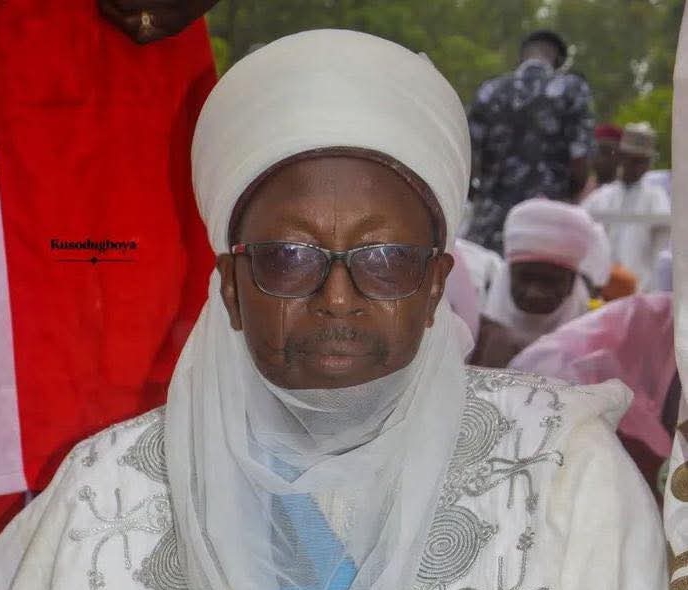
Mahmud Abubakar, the Sonfada Etsu Nupe, has passed away, sparking mourning across Niger State and the Nupe Kingdom.

Governor Umaru Bago expressed sorrow over the development and sent his condolences to Yahaya Abubakar, the Etsu Nupe and chairman of the Niger State Council of Traditional Rulers.

In a statement released on Sunday by the governor’s Chief Press Secretary, Bologi Ibrahim, Bago described the death as a “colossal loss” not only to the Nupe Kingdom but also to the entire state.

He extended his sympathy to the Bida Emirate as well as the immediate family of the deceased, and prayed for Allah to forgive the shortcomings of the late Sonfada and grant him Aljanat Firdaus.

The governor also called on the family to remain committed to prayers for the repose of the deceased’s soul and to uphold his legacy through acts of service to humanity.

Bago recalled the contributions of the late Abubakar to the growth and development of the Nupe Kingdom and Niger State, noting that his impact “will always be acknowledged and re-echoed for many years to come”.

The statement added: “He prays that the immediate family of late Alh. Mahmud will continue to be steadfast in praying for the repose of his soul even as he urges them to emulate his good deeds in serving humanity.”

It further stated: “The farmer governor recalls the numerous contributions made by the late Sonfada in the development of the Nupe Kingdom and the State in general and adds that, his efforts will always be acknowledged and re-echoed for many years to come.”

JAMB Apologises Over UTME Delay, Promises Release of Second Batch Results

By Uzair Adam

The Joint Admissions and Matriculation Board (JAMB) has apologised for failing to release the second batch of the 2026 Unified Tertiary Matriculation Examination (UTME) results as earlier scheduled, assuring candidates that the results would be made available before the end of Sunday.

The board had initially fixed Saturday for the release of the results for candidates who sat for the examination on Friday, April 17, but missed the deadline, sparking frustration among candidates across the country.

In a statement issued on Sunday, JAMB’s spokesperson, Fabian Benjamin, attributed the delay to the absence of the board’s Chief Executive, who was away on official duty.

He said the board regretted the inconvenience caused, noting that the situation was beyond its control.

“We sincerely apologise for the delay in releasing the results for Friday, April 17, which is the second batch in the series as earlier promised,” he said.

Benjamin explained that the Chief Executive had now returned and would oversee the release process.

According to him, the results would be made public later in the day, “surely before nightfall.”

He also acknowledged the anxiety among candidates who had waited late into the night for the results, thanking them for their patience and understanding.

The delay comes shortly after JAMB released the first batch of results for candidates who wrote the examination on Thursday, April 16, with a total of 632,788 results already published.

Obi Maintains He Won 2023 Presidential Election

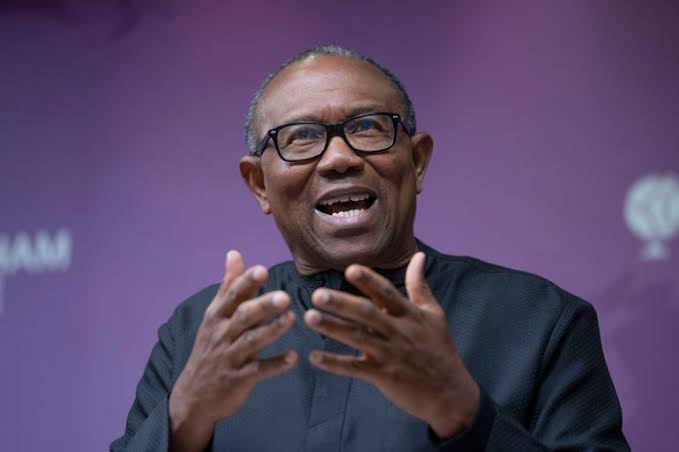
A prominent figure in the African Democratic Congress (ADC), Peter Obi, has restated his claim that he emerged winner of the 2023 presidential election, despite the official results announced by electoral authorities.

Obi spoke on Saturday during the Naija Unfiltered podcast. He said the declared outcome did not match what he believes to be the true result of the poll.

“I can show you today, as far as I’m concerned, I have run election for the office of the President of Nigeria and won. But the system decided otherwise and they know it,” he said.

He stressed the point again, adding: “And we won. I can show you today as far as I’m concerned. I have run election for the office of the President of Nigeria and won. But the system decided otherwise and they know it.”

Obi was the presidential candidate of the Labour Party in the 2023 election. He polled about six million votes in the contest.

Police Arrest 26 Suspects In Katsina Security Operation

The Katsina State Police Command has apprehended 26 suspected miscreants during a late-night operation aimed at improving security in the state capital.

The command’s spokesperson, DSP Abubakar Sadiq-Aliyu, made this known in a statement released on Friday in Katsina. He said the arrests took place in the early hours of April 14 after officers carried out an intelligence-led raid on identified criminal hideouts and black spots across the metropolis.

“The operation, led by the Officer-in-Charge of the Special Weapons and Tactics (SWAT) unit, focused on dismantling gangs linked to public disturbances and unlawful activities,” he explained.

According to the police, the suspects are linked to offences that include gang-related activities and acts that disturb public peace.

Sadiq-Aliyu said officers recovered several items during the operation. These include live ammunition, a sword, two cutlasses, a knife, sticks, a saw, and six mobile phones suspected to be stolen. Other items include substances believed to be Indian hemp, 500 Exol tablets, and a pair of military camouflage shirts.

“All the 26 suspects have been charged to court following the conclusion of investigations,” Sadiq-Aliyu stated.

The Commissioner of Police, Ali Umar-Fage, commended the officers involved in the raid. He also reaffirmed the command’s resolve to continue actions against criminal elements in the state.

He called on residents to support the police with timely and useful information to help prevent crime and improve public safety.

Reports indicate that on the same day, April 14, Governor Dikko Radda signed an executive order that bans thuggery, known locally as Kauraye and Sara-suka, across the Katsina metropolis.

NGO Empowers Girls with Reusable Pad Skills to Tackle Period Poverty in Kano

By Uzair Adam

A non-governmental organisation, Frontier for Gender Advocacy, Accountability and Empowerment Initiative, has trained adolescent girls in Kano on how to produce reusable sanitary pads in a move aimed at improving school attendance.

The Daily Reality reports that the training, conducted under its EmpowerHer Cycle Project, seeks to address period poverty while equipping girls with practical skills, safety and dignity.

Speaking at the programme on Thursday, the organisation’s Executive Director, Barr. Amina Sulaiman, explained that the intervention targets absenteeism among adolescent girls caused by lack of access to menstrual hygiene products.

She said many girls are forced to miss school during their menstrual cycle because they cannot afford sanitary pads, describing the situation as a significant barrier to girls’ education.

“We identified that most girls stay away from school during their period due to inability to afford hygiene products,” she said, adding that the organisation introduced a sustainable solution by training them to produce reusable sanitary pads using accessible materials.

Sulaiman noted that the initiative would ease the financial burden on families, improve school retention and empower the girls with income-generating skills.

She added that beneficiaries could also turn the knowledge into a source of livelihood by producing and selling the pads or teaching others.

According to her, the programme also includes menstrual health education and sensitisation on Gender-Based Violence (GBV), covering identification, prevention and response mechanisms.

She called on parents to prioritise the education of the girl child, stressing that educating girls has far-reaching benefits for both individuals and society.

Sulaiman also commended government support through relevant gender-focused agencies and expressed optimism that continued collaboration would expand the reach of such interventions across Kano State.

In her remarks, the Principal of Government Girls Junior Secondary School, Rijiyar Zaki, Maryam Haruna-Suleiman, described the initiative as timely and impactful, noting that many girls in public schools lack access to sanitary pads, which affects their attendance and participation in class.

“This programme will help our girls learn how to make and use reusable pads, and also pass the knowledge to others,” she said, adding that it would boost their confidence and encourage consistent school attendance even during menstruation.

She urged the organisers to sustain and expand the initiative to reach more schools.

The also gathered that the programme featured hands-on training on reusable pad production, menstrual hygiene management, and the distribution of dignity kits to participants.

The kits contained items such as underwear, soap and detergents to support proper hygiene during menstruation.

Beneficiaries Laud L-PRES Interventions as Mid-Term Review Flags Progress in Kano

By Uzair Adam

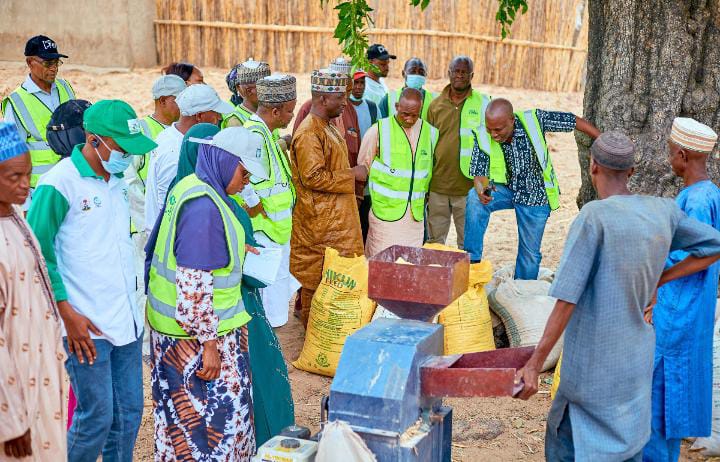
Stakeholders of the Livestock Productivity and Resilience Support Project (L-PRES) on Thursday conducted field visits to key project sites in Kano State, inspecting a range of interventions aimed at boosting livestock productivity, improving processing, and strengthening the entire value chain.

The Daily Reality reports that the tour featured facilities and community-level projects including a livestock service centre under construction, a milk collection hub linking pastoral clusters to markets, and grassroots interventions such as feed processing machines, solar-powered yoghurt processing units, boreholes, and pasture development support.

The inspection, part of the project’s ongoing mid-term review, took participants to the Livestock Service Centre in Bagauda, Bebeji Local Government Area, as well as Dan Tuben Fulani and Gamu Community in Dawakin Kudu, where beneficiaries are already experiencing the impact of the interventions.

Speaking during the visit, the National Project Coordinator of L-PRES, Sanusi Abubakar, said the exercise was aimed at assessing progress on the ground and identifying ways to strengthen implementation in the remaining phase of the project.

He explained that the mid-term review goes beyond meetings and documentation, noting that physical inspection of project sites provides a clearer picture of ongoing activities and their impact.

“We are in Kano for our mid-term review, and part of the agenda is to visit project sites and see what is happening firsthand,” he said, adding that the team was also at a milk collection centre serving clusters in the area to evaluate operations and offer guidance.

Abubakar disclosed that the livestock service centre visited in Bagauda is designed as a hub for multiple livestock-related activities, bringing together services and facilities in one location.

According to him, construction work at the centre is about 30 per cent completed and is expected to be delivered before the end of the year.

He further revealed that the project is working in collaboration with the Kano State Investment Promotion Agency to attract investors who will drive activities at the centre and ensure that livestock farmers benefit from improved infrastructure and services.

The national coordinator noted that beyond infrastructure, L-PRES is supporting clusters with equipment and basic amenities.

He said communities visited are benefiting from interventions such as feed crushing machines, water supply, pasture development and boreholes to enhance livestock productivity.

On sustainability, Abubakar dismissed concerns about possible abandonment of projects, stressing that community ownership remains central to the initiative.

“This facility will not be abandoned. Our goal is to ensure that the cooperatives managing these centres take full responsibility for their maintenance because it is in their own interest,” he said.

He added that government’s role is to provide enabling infrastructure such as roads, administrative buildings, security posts and veterinary clinics, while private investors are expected to drive commercial activities.

Abubakar also highlighted the strategic location of the livestock service centre, noting its proximity to a special agro-processing zone, which he said creates an opportunity for synergy and economic growth.

While responding to questions on export prospects, he said the project is currently focused on strengthening local production and meeting domestic demand, noting that decisions on export would be left to investors once the system is fully operational.

Also speaking, the Kano State Project Coordinator of L-PRES, Salisu Muhammad Inuwa, described the mid-term review as an important milestone for evaluating performance after three years of implementation.

He explained that the six-year project has reached its halfway point, making it necessary to assess achievements and determine whether adjustments are needed.

Inuwa expressed satisfaction with the level of progress recorded in the state, noting that although Kano joined the project later than some states, it has made significant strides.

According to him, Kano has spent about one and a half years on the project and has achieved between 35 and 40 per cent progress within that period.

“We are on the right course based on what we have seen on the field,” he said.

Beneficiaries who spoke during the visit also attested to the impact of the interventions on their livelihoods.

At Dan Tuben Fulani in Dawakin Kudu, a beneficiary, Gambo Abubakar, said the provision of a feed crushing machine—used for grinding animal feed—has transformed livestock management practices in the community.

He explained that the intervention has improved how they feed their animals and addressed several challenges previously faced by herders.

“We are truly excited about the intervention and the enlightenment we received. Some of the support we got was beyond our expectations, and we are very grateful,” he said.

Similarly, Aisha Abubakar Muhammad from Gamu Community in Dawakin Kudu said the support received through the Kano Dairy Cooperative Union has significantly improved their standard of living.

She disclosed that the intervention included the installation of solar power at their yoghurt processing centre, as well as the provision of a borehole and a vehicle to support their operations.

According to her, the improvements have boosted their income and enhanced their productivity, enabling members to meet basic needs and invest in their families.

“Our lives have changed. We can now afford things we could not before, and even our children have returned to school,” she said.

The field visit formed part of broader efforts under the mid-term review to evaluate progress, strengthen implementation strategies and ensure that the project delivers lasting impact across participating communities.