Nigeria

Halal economy in Nigeria: Today’s opportunity, tomorrow’s prosperity 

By Abdullahi Abubakar Lamido 

When Nigeria first introduced Islamic banking more than a decade ago, a section of the public, especially some Christian leaders, cried foul. They labelled it an attempt to Islamise the nation. The word Islamic became synonymous with suspicion. Yet, history has since given its verdict. The same Islamic banking and finance that was once denounced as a tool for religious expansion has now become one of the most credible components of Nigeria’s financial system. Today, the government of Nigeria, regardless of faith or political party, routinely issues Sukuk (Islamic bonds) to finance national infrastructure, build roads, and other developmental projects. 

If Islamic banking did not Islamise Nigeria, how on earth will the halal economy, a trade-based development initiative, suddenly do so?

Unfortunately, some commentators continue to see through the fog of prejudice rather than the lens of global economics. The recently developed Nigerian National Halal Economy Strategy is not a religious project. It is an economic vision. It seeks to position Nigeria within a rapidly expanding global market that respects ethics, transparency, environmental responsibility, and product integrity; values shared by all civilisations, not by Muslims alone.

Globally, the halal economy is estimated at USD 2.3 trillion, excluding Islamic finance. It is growing at an annual rate of around 20 per cent, making it one of the fastest-expanding consumer markets in the world, valued at about USD 560 billion each year. The halal industry, initially rooted in food and beverages, has long transcended its traditional boundaries. It now spans pharmaceuticals, cosmetics, health products, toiletries, medical devices, and even service sectors such as logistics, marketing, media, packaging, branding, and finance. With rising affluence and awareness among global consumers, it has further extended to halal tourism, hospitality, fashion, and lifestyle services.

This development is not driven by Muslims alone. Indeed, the modern halal market is non-exclusive. Increasingly, non-Muslim consumers associate halal with ethical consumerism, animal welfare, environmental stewardship, and quality assurance. The label “halal” has evolved into a global mark of trust, symbolising cleanliness, safety, and ethical production.

Countries far removed from Islam, such as the United States, the Netherlands, Russia, China, and South Africa, are already major players in the halal economy. In the United States, the halal market is worth USD 12 billion annually, with halal food sales growing by more than 70 per cent since 1995. Over 90 per cent of U.S. dry dairy ingredient manufacturers now produce halal products, primarily for export.

In the Netherlands, where Muslims are barely a tenth of the population, non-Muslim Dutch consumers spend approximately USD 3 billion annually on halal food. In the United Kingdom, six million people consume halal meat, three times the Muslim population. These figures prove one thing: halal has gone mainstream. Even Russia is experiencing explosive growth in its halal sector, with domestic demand rising by 30-40 per cent annually. The country now produces around 65,000 tonnes of halal meat each year and hosts major expos such as the Moscow Halal Expo and KazanHalal.

China, with its 23 million Muslims, records 10 per cent annual growth in its halal industry, with trade worth USD 2.1 billion and export products valued at USD 10 million annually from the Ningxia region alone.

Africa, too, is awakening to this opportunity. South Africa—with only two per cent of its population being Muslim—is now one of the five largest producers of halal products globally, thanks to a robust certification infrastructure. Kenya, with a fast-growing halal certification regime, already has more than 150 certified companies serving local and regional markets.

Nigeria, with its vast agricultural resources, strategic location, and large Muslim population, stands at the crossroads of opportunity. The halal economy offers three immediate advantages:

1. Export Expansion: By developing credible halal certification and production infrastructure, Nigeria can unlock access to markets worth over USD 2 trillion, exporting beef, poultry, processed foods, cosmetics, pharmaceuticals, and other halal-compliant goods. Nigerian products can enter Middle Eastern and Asian markets that strictly demand halal certification.

2. Job Creation and SME Growth: The halal economy stimulates employment across value chains—from farm to factory, logistics, certification, branding, and export marketing. It empowers micro and small enterprises while ensuring compliance with ethical standards that appeal to both local and international consumers.

3. National Image and Ethical Standards: Halal certification ensures higher hygiene, traceability, and environmental protection. It is compatible with international standards like ISO and HACCP, thereby enhancing Nigeria’s global competitiveness. In essence, promoting halal is promoting quality, sustainability, and integrity—values that no religion should reject.

The critics who fear the halal roadmap as a step toward Islamisation fail to recognise that halal is an economic term before it is a theological one in this context. It stands for what is wholesome, safe, clean, traceable, and socially responsible. These values are not confined to Islam. They are embedded in Christianity, Judaism, and secular ethics alike.

The halal economy represents a fusion of faith and fairness, ethics and enterprise. It provides a model for a more responsible economic system—precisely the kind of moral economy the world craves in the aftermath of global financial and environmental crises.

When the debate over Islamic banking first arose, the same fear-mongering dominated the headlines. Yet, today, Islamic finance has built roads, schools, and hospitals across Nigeria through Sukuk and other Shari’ah-compliant financing. Christian engineers, contractors, and civil servants have benefitted immensely. The country’s Christian-majority states have received as much as the Muslim ones. No mosque was built, no church destroyed, and no constitution rewritten.

If Islamic banking did not Islamise Nigeria, how will halal exports do so? On the contrary, the halal economy promises to diversify Nigeria’s trade, create jobs, enhance foreign exchange earnings, and promote industrial standards that protect all consumers, Muslims and non-Muslims alike.

Nigeria cannot afford to watch from the sidelines while other nations—Christian, secular, and atheist alike—harvest the fruits of the halal economy. The world is shifting toward ethical consumption, sustainability, and traceable production. The halal brand, far from being divisive, is a passport to global markets.

The Nigeria National Halal Economy Strategy is not about religion; it is about relevance. It is about integrating Nigeria into the trillion-dollar value chain that prizes quality, fairness, and responsibility. Those who see crisis where there is opportunity risk being on the wrong side of history, just as those who once opposed Islamic banking and finance, now benefit from Sukuk-financed roads.

The celebration of the halal economy is not the planting of tomorrow’s crisis; it is the harvest of tomorrow’s prosperity for every Nigerian, regardless of faith. It is time we remove the caps of emotion and prejudice and wear the lenses of reason, tolerance, and progress. Nigeria must embrace every opportunity that promises shared prosperity, job creation, and national development. The halal economy is not about division—it is about direction. It is about placing our nation on the map of global relevance, productivity, and ethical growth. So help us God. 

Amir Lamido wrote from Abuja via lamidomabudi@gmail.com.

Troops kill two BH members in Gwoza ambush, recover logistics supplies

By Sabiu Abdullahi

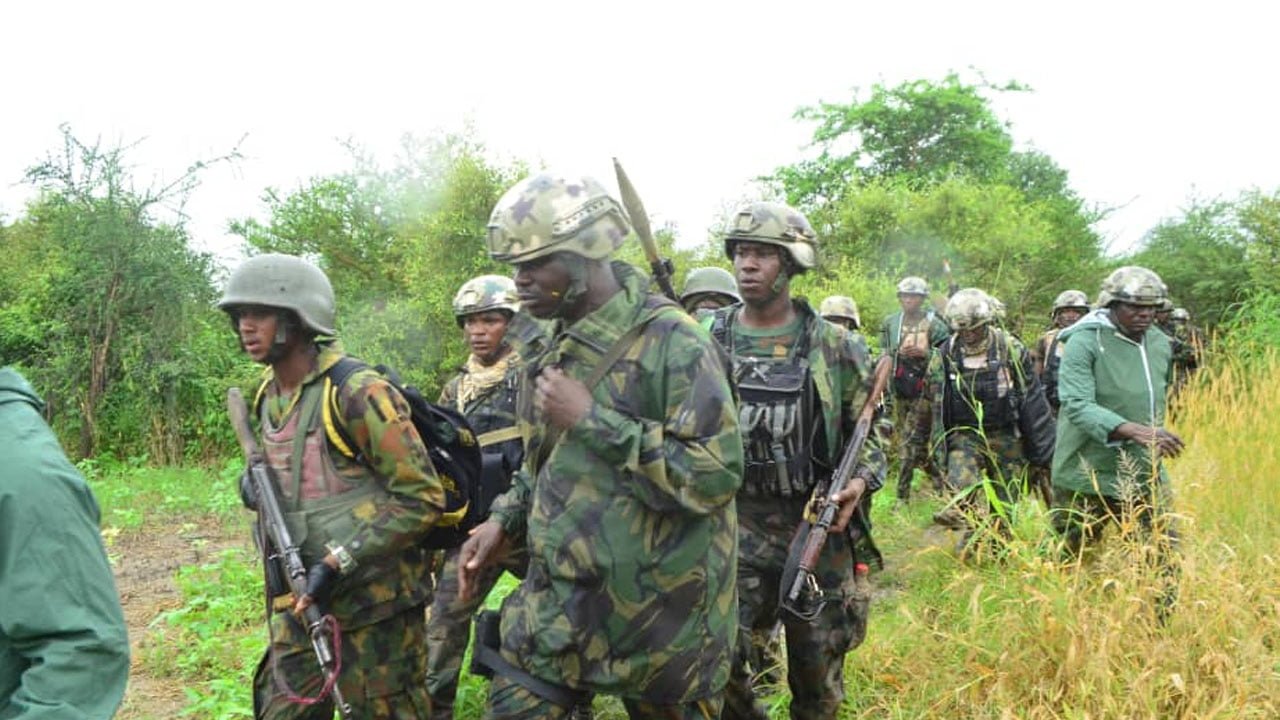
Troops of the Joint Task Force (North East), Operation Hadin Kai, have eliminated two Boko Haram/ISWAP fighters during an ambush around Hudugum village in the Hambagda area along the Gwoza–Limankara road in Borno State.

The operation, which occurred on Wednesday evening, was conducted under Operation Desert Sanity IV/Diligent Search by soldiers of the 192 Battalion (Main) in collaboration with the Civilian Joint Task Force (CJTF).

Security analyst Zagazola Makama disclosed the development in a post shared on X (formerly Twitter) on Thursday. He explained that the troops encountered the terrorists’ logistics team at about 6:30 p.m. and engaged them with superior firepower.

According to Makama, “two insurgents were neutralised while several others escaped with gunshot wounds towards the foothills of the Mandara Mountains.”

He quoted sources as saying, “There was no casualty on the side of the troops, and no equipment was lost during the encounter.”

After the gun battle, the soldiers recovered several items believed to belong to the fleeing terrorists.

These included three bicycles, clothing materials, mats, food seasoning, salt, and other personal belongings.

The troops reportedly returned to base safely around 7:50 p.m. after what was described as a “hitch-free” mission.

The report added that the army plans to conduct further search operations along the escape routes of the terrorists.

It also noted that while the general security situation in the area remains calm, it is still considered unpredictable.

FG pays ₦2.3bn to settle lecturers’ salary arrears

By Abdullahi Mukhtar Algasgaini

The Federal Government has approved the release of ₦2.3 billion for the payment of outstanding salary and promotion arrears owed to lecturers in public universities.

The Minister of Education, Tunji Alausa, made the announcement on Wednesday during a briefing on the government’s ongoing negotiations with the Academic Staff Union of Universities (ASUU) and other tertiary institution unions.

Minister Alausa stated that President Bola Tinubu is dedicated to settling all outstanding welfare and funding issues in a “transparent, fair and sustainable manner.”

Furthermore, the government has approved a significant policy change to prevent future arrears. Starting from 2026, Earned Academic Allowances will be fully integrated into the core salaries of university lecturers.

This measure, according to the Minister, is designed to ensure “prompt, predictable, and sustainable payments” of staff entitlements.

When universities go on strike, who really suffers, and who is to blame?

By Lawan Bukar Maigana 

In Nigeria, university strikes have become an all-too-familiar story, a recurring wound that never seems to heal. Each time ASUU announces an industrial action, lectures stop, campuses grow silent, and dreams are placed on hold. Politicians continue with their schedules, lecturers retreat to side jobs, but the students —the very heart of the education system —are left stranded. They lose time, motivation, and opportunities that they can never fully recover. Yet, as the cycle repeats, one cannot help but ask: who truly bears the weight of these strikes, and who should take responsibility for the damage they cause?

For decades, the Academic Staff Union of Universities (ASUU) has justified its strikes as a means of pressuring the government to honour agreements on better funding, fair wages, and improved infrastructure. These demands are valid. Anyone who has walked through the corridors of a public university in Nigeria would agree that poor facilities, overcrowded lecture halls, and unpaid salaries reflect a deep neglect of education by successive governments.

But while the union’s grievances are understandable, the methods have become controversial. The government, on the other hand, often accuses ASUU of holding the system hostage. It argues that the union’s insistence on strikes as the only bargaining tool cripples progress and punishes innocent students who have no hand in the dispute. In the end, both parties trade blame while the students, the most powerless group in the equation, pay the ultimate price.

A four-year course can easily stretch to six or seven years because of strike interruptions. Many students find their enthusiasm fading over time. Some lose focus entirely and drop out of school. For those who persevere, the delay spills into their plans. By the time they graduate, they are already approaching 28, 29, or even 30, before the one-year NYSC service.

The real tragedy becomes apparent when they start searching for jobs. Most government and private organisations in Nigeria set an age limit of 26 to 30 for entry-level positions. By the time many graduates are done with university and service, they have crossed the threshold. Their only crime is being caught in a system that values bureaucracy over merit and punishes them for something beyond their control.

This is why it is not just an academic crisis; it is an economic one. Each prolonged strike increases youth unemployment and deepens poverty. Parents who struggled to pay tuition watch their investments stagnate, and the nation loses years of productivity from its young minds. How can a country move forward when its brightest are trapped in uncertainty?

Yet, every time negotiations collapse, the conversation focuses on who blinked first, ASUU or the government, not on who bleeds most from the outcome. It is as though the welfare of students matters less than the politics of power and payment. That is the heart of the problem.

Let us be honest. Both parties are culpable. The government’s insensitivity and failure to prioritise education are unacceptable. Budgetary allocations to education consistently fall below UNESCO’s recommended 26 per cent. Lecturers, too, must reflect on whether indefinite strikes remain the most effective way to demand change. It is one thing to fight for rights; it is another to destroy the bridge that connects those rights to the future.

If universities had better funding, research grants, and prompt salaries, ASUU would have no reason to down tools. But if the union continues to rely solely on strikes without exploring alternative forms of advocacy, such as strategic legal action, citizen engagement, or performance-based protests, then students will remain collateral damage in every industrial action.

The solution lies in sincerity from both sides. Government officials must stop making empty promises and start implementing lasting reforms. ASUU must adopt modern negotiation strategies that prioritise students’ interests first. The students themselves must also rise, through constructive activism, to demand accountability from all sides.

Education is not a privilege; it is a right. Every time it is disrupted, a generation loses part of its potential. The government and ASUU must remember that time is not renewable. Every month lost to a strike is a wound that never fully heals for a student.

Some will argue that strikes have brought partial victories such as improved salaries, better agreements, and occasional funding. But these victories often come at too great a cost. Students spend longer years on campus, graduate later, and face tighter job markets. Many lose scholarships or opportunities abroad because their transcripts are delayed or their academic calendars are unpredictable.

A society that allows this cycle to persist undervalues its youth. The damage is not immediately visible, but it later manifests in the frustration of jobless graduates, the rise of social vices, and the erosion of hope. When young people start believing that hard work no longer pays, the nation begins to decay silently.

The truth is simple: when universities are on strike, everyone loses, but students lose the most. They lose time, morale, and faith. And no compensation can restore that lost time.

Until the day Nigeria treats education as a national emergency, not a political bargaining chip, these strikes will continue, and the nation will keep producing delayed graduates and disappointed dreams.

The next time a strike is declared, we should ask not just who is right or wrong, but who is hurting most. Because in the end, it is not the lecturers or the politicians who suffer, it is the students whose futures hang in the balance.

Lawan Bukar Maigana is a media consultant, humanitarian, storyteller, and inspiring diplomat. He can be reached via email at lawanbukarmaigana@gmail.com.

Tinubu withdraws clemency for Maryam Sanda, others convicted of serious crimes

By Muhammad Abubakar

President Bola Ahmed Tinubu has withdrawn clemency earlier granted to Maryam Sanda and other convicts of serious offences following a review of the federal pardon list.

Sanda, sentenced to death in 2020 for killing her husband, was among those removed from the list after consultations with the Council of State and public feedback.

Presidential spokesman Bayo Onanuga said the review was guided by the gravity of certain crimes, public sensitivity, and the need to uphold justice for victims and society.

Offenders convicted of kidnapping, drug trafficking, human trafficking, fraud, and unlawful possession of firearms were also excluded from the clemency list.

President Tinubu further ordered the relocation of the Secretariat of the Presidential Advisory Committee on Prerogative of Mercy to the Federal Ministry of Justice and directed the Attorney-General to issue new guidelines for future exercises.

The President reaffirmed his administration’s commitment to judicial reforms and maintaining public confidence in Nigeria’s justice system.

BREAKING: Tinubu meets new service chiefs at Villa

By Anwar Usman

The president of Nigeria, Bola Tinubu, on Monday, met with the newly appointed service chiefs at the Presidential Villa in Abuja.

In attendance were the Chief of Defence Staff, Lt-Gen Olufemi Oluyede; Chief of Army Staff, Maj-Gen W. Shaibu; Chief of Naval Staff, Rear Admiral I. Abbas; Chief of Air Staff, Air Vice Marshal S.K. Aneke, and Chief of Defence Intelligence, Maj-Gen E.A.P. Undiendeye.

Recall that Tinubu made sweeping changes in the military hierarchy on Friday, October 24, 2025.

According to a statement by the President’s Special Adviser on Media and Public Communication, Sunday Dare, stated that “in furtherance of the efforts of the Federal Government of Nigeria to strengthen the national security architecture.”

According to Dare, the President appointed General Olufemi Oluyede to replace General Christopher Musa as the new Chief of Defence Staff.

The new Chief of Army Staff is Major-General W. Shaibu. Air Vice Marshall S.K Aneke is Chief of Air Staff, while Rear Admiral I. Abbas is the new Chief of Naval Staff. Chief of Defence Intelligence Major-General E.A.P Undiendeye retains his position.

The statement further revealed that, “the President, Commander-in-Chief of the Armed Forces, expresses most profound appreciation to the outgoing Chief of Defence Staff, General Christopher Musa and the other service chiefs for their patriotic service and dedicated leadership.”

Tinubu urged the newly appointed service chiefs to justify the confidence reposed in them by further enhancing the professionalism, vigilance and comradeship that define Nigeria’s Armed Forces.

The quiet decline of memory and the increasing challenge of brain diseases in Nigeria

By Mujahid Nasir Hussain

Every human brain tells a story: of love, memory, and motion. Yet, for many Nigerians, these stories are being erased silently by diseases that steal what it means to be human. Alzheimer’s disease, Amyotrophic lateral sclerosis (ALS), Parkinson’s disease, and other neurodegenerative disorders are creeping into our society, affecting not only the elderly but, increasingly, middle-aged adults as well. Their signs often begin subtly: a forgotten name, a misplaced key, and a trembling hand, until the symptoms grow into something that shatters families and identities alike.

I am writing this piece after World Mental Health Day (October 10) to raise awareness about these devastating but often misunderstood brain disorders, and to emphasise why Nigeria must invest in research that explores the molecular roots of neurodegeneration. Behind every fading memory is a biological story waiting to be told; one that may hold the key to prevention, treatment, and hope.

Globally, neurodegenerative diseases are among the fastest-growing causes of disability and death. According to the World Health Organisation, over 55 million people currently live with dementia, and nearly 10 million new cases are recorded each year. Alzheimer’s disease accounts for about 60–70% of these cases. The burden is not only medical but also social and economic, as families face the heartache of caring for loved ones who may no longer recognise them.

In Africa, the crisis is quietly intensifying. A report by Alzheimer’s disease International estimates that by 2050, over 12 million Africans could be living with dementia, a staggering increase that health systems are unprepared for. In Nigeria, accurate statistics are scarce, but hospital reports and community surveys show a growing number of undiagnosed neurodegenerative cases among the elderly. Unfortunately, in many communities, symptoms of neurodegeneration are still seen through the lens of superstition. Some families attribute forgetfulness to witchcraft or punishment from the gods. As a result, patients are hidden away, untreated, and stigmatised, even when medical help could improve their quality of life.

But beyond the surface symptoms lies a world of molecular complexity. In every neuron, RNA and proteins work together in precise harmony, regulating gene expression and cell responses to stress. These molecules form small, dynamic structures known as RNA–protein assemblies that constantly change shape and function in response to the brain’s needs. When this spatio-temporal regulation is disrupted, the way these structures behave across time and space is disrupted, it can cause proteins to misfold and clump together. These toxic clumps interfere with brain cell function, triggering the gradual degeneration that characterises diseases like Alzheimer’s and Parkinson’s. Think of it like a city whose garbage collectors suddenly go on strike. Waste piles up, streets become impassable, and normal life grinds to a halt. That’s what happens inside the brain when these molecular systems fail. The result is memory loss, confusion, speech problems, tremors, and ultimately, the loss of independence.

Sadly, this understanding of disease mechanisms has not yet translated into practical awareness or local solutions in Nigeria. Our health sector remains focused on infectious diseases like malaria, tuberculosis, and HIV, which are undeniably urgent but overshadow chronic illnesses that also deserve attention. Neurodegenerative conditions receive very little research funding, and only a handful of Nigerian universities have well-equipped neuroscience or molecular biology laboratories. This lack of infrastructure makes it difficult for scientists to explore how environmental, nutritional, and genetic factors specific to African populations contribute to neurodegeneration.

We cannot afford to ignore this any longer. With Nigeria’s population ageing rapidly, the number of people at risk of dementia will rise sharply in the next decade. Families and caregivers already face immense emotional and financial strain. A 2023 study published in Frontiers in Public Health noted that dementia caregiving in Africa often leads to burnout, poverty, and social isolation, especially among women who bear most of the burden. This is more than a medical issue; it is a public health and human rights concern.

Raising awareness is the first step. Nigerians need to understand that persistent memory loss, tremors, or difficulty performing everyday tasks are not normal parts of ageing. They may signal conditions that require medical attention. Community health workers should be trained to identify these early signs, and hospitals should include basic neurological screening as part of routine check-ups for older adults.

The second step is research. As a physiologist, I believe that Nigeria’s greatest untapped potential lies in our young scientists and natural resources. There is growing evidence that certain plant-derived compounds, including those found in Habbatus Sauda (black seed) and other indigenous herbs, have neuroprotective properties. Exploring how these natural products influence RNA–protein interactions could open pathways to affordable treatments tailored to our local context. If supported, Nigerian research could not only advance understanding but also drive innovation in neurodegenerative disease therapy.

Finally, there is the matter of policy. The Nigerian government and health agencies must recognise brain health as a national priority. We need a National Brain Health Initiative, one that funds research, trains neurologists, supports caregivers, and integrates neuroscience into medical education. Just as we have campaigns for malaria and maternal health, we should have campaign awareness for dementia, Parkinson’s, and other neurodegenerative diseases. Without deliberate action, the human and economic costs will be overwhelming in the coming decades.

Our brains define who we are. To lose them is to lose ourselves, and yet millions are slipping away unnoticed. This World Mental Health Day, let us broaden the conversation beyond depression and anxiety to include the silent epidemic of neurodegenerative diseases. Let us replace stigma with understanding, neglect with action, and fear with hope. Nigeria must awaken to this reality — that the future of our nation depends not only on the health of our hearts and bodies but also on the preservation of our minds.

Mujahid Nasir Hussain is a physiologist and an explorative researcher in biomedical sciences with a particular focus on Molecular mechanisms underlying neurodegenerative disorders.

ICAN: Beyond achieving professional qualification

By Sunusi Abubakar

The primary aim of the Institute of Chartered Accountants of Nigeria (ICAN) is not just about producing accountants; it is about shaping the accounting profession through certified professionals who are fair, accountable, and upright. The profession itself is ultimately built on integrity, honesty, and confidentiality.

To many, passing rigorous ICAN examinations is final, but in reality, it is just a mark of resilience, dedication, and discipline. The true essence of becoming a chartered accountant lies in what one can do after achieving the qualification.

Until I became a chartered accountant, I realised that ICAN was never just about exams: it was about preparing me for continuous learning, growth, and responsibility.

According to Merriam-Webster, a professional is defined as “someone who has specialised training, practices in a recognised occupation, and upholds the standards and ethics of that field.” Going by this definition, one can see that professional life doesn’t require only certification but also continuing professional development to meet the demands of the profession.

Becoming a chartered accountant is a way forward to lifelong learning. One has to continue reading from basic accounting knowledge to Artificial Intelligence, Data Analytics, and Sustainability Reporting. One has to attend ICAN’s Mandatory Continuing Professional Development (MCPD) and enrol in short courses or seminars on tax reforms, IFRS updates, and auditing standards. A professional needs to specialise in key accounting areas such as forensic accounting, risk management, or corporate finance, and earn global certifications such as ACCA, CFA, CPA, CIMA, or CIPFA.

As AI becomes a necessity for accountants, professionals need to leverage it by developing both digital and technical skills. Learning data analytics tools like Power BI and Tableau is essential. Professionalism is not just about a certificate but about the value a professional adds in reality. A professional is expected to know everything within the scope of his profession. Leadership, skills, and global exposure are what make one a true professional.

ICAN is just a foundation, but continuous learning makes an accountant truly relevant and competitive.

Sunusi Abubakar, ACA, wrote from Gangare Quarters, Birnin Kudu, Jigawa State.

Nigeria’s health sector and the need to review

By Abdullahi Adamu

Poor health facilities in Nigeria stem from severe underfunding, causing inadequate infrastructure, outdated equipment, drug shortages, and breakdowns in essential services like electricity and clean water. This affects rural and primary healthcare centres most, where facilities are dilapidated and staff insufficient. A shortage of medical professionals and brain drain overloads the system, leading to increased medical tourism and poor outcomes. Healthcare access is severely limited due to various systemic factors. 

Misconceptions about primary health care and poor leadership have hindered the health system, which hasn’t aligned its structures to achieve universal health access. Improving financial access alone won’t suffice without comprehensive primary health care reform to fix system flaws, deliver quality, efficient, acceptable care, and ensure sustainability and growth for the health system and country. A primary health care movement of government health professionals, the diaspora, and stakeholders is needed to drive this change and overcome political inertia.

In 2014, the National Health Act established the Basic Health Care Provision Fund (BHCPF) to address funding gaps hampering effective primary healthcare delivery across the country. The BHCPF comprises 1% of the federal government Consolidated Revenue Fund (CRF) and additional contributions from other funding sources. It is designed to support the effective delivery of Primary Healthcare services, provision of a Basic Minimum Package of Health Services (BMPHS), and Emergency Medical Treatment (EMT) to all Nigerians.

Despite the provisions of the BHCPF, the report’s findings expose the precarious state of healthcare in Nigeria, where access to and utilisation of health services remain marred by systemic challenges across states.

Public health facilities in all 36 states and the FCT are deficient, and the experiences of community members seeking care at these facilities are consistently awful.

Primary Health Care (PHC) is the foundation of the healthcare system in Nigeria and serves as the level at which non-emergency, preventive health issues are addressed. But sadly, many PHC centres in the FCT are poorly equipped and lack well-trained personnel.

 Kulo PHC was built with solid infrastructure and equipped with solar panels as part of a 2019 federal initiative aimed at strengthening primary care in hard-to-reach areas. Today, that promise lies in ruins. The solar panels are now dysfunctional—some stolen, others damaged by harsh weather and lack of maintenance. At night, the clinic plunges into darkness, leaving staff to work by torchlight or with dying cell phone batteries.

Three patients on life support at Aminu Kano Teaching Hospital were reported dead following an interruption to the hospital’s electricity supply by Kano Electricity Distribution Company.

The basic causes of Nigeria’s deteriorating health care system are the country’s weak governance structures and operational inefficiencies.

In 2014, the National Health Act established the Basic Health Care Provision Fund (BHCPF) to address funding gaps hampering effective primary healthcare delivery across the country. The BHCPF comprises 1% of the federal government Consolidated Revenue Fund (CRF) and additional contributions from other funding sources. It is designed to support the effective delivery of Primary Healthcare services, provision of a Basic Minimum Package of Health Services (BMPHS), and Emergency Medical Treatment (EMT) to all Nigerians.

Despite the provisions of the BHCPF, the report’s findings expose the precarious state of healthcare in Nigeria, where access to and utilisation of health services remain marred by systemic challenges across states.

Public health facilities in all 36 states and the FCT are deficient, and the experiences of community members seeking care at these facilities are consistently awful.

The Basic Health Care Provision Fund (BHCPF) was poorly implemented in 13 states.

The basic causes of Nigeria’s deteriorating health care system are the country’s weak governance structures and operational inefficiencies

Abdullahi Adamu wrote via nasabooyoyo@gmail.com. 

Tinubu sacks service chiefs, names new military heads

By Abdullahi Mukhtar Algasgaini

President Bola Tinubu has replaced the country’s service chiefs.The changes, which take immediate effect, were announced in a press release from the State House on Thursday.

The outgoing Chief of Defence Staff, General Christopher Musa, has been replaced by General Olufemi Oluyede. Other new appointments include Major-General W. Shaibu as Chief of Army Staff, Air Vice Marshall S.K Aneke as Chief of Air Staff, and Rear Admiral I. Abbas as Chief of Naval Staff.However, the Chief of Defence Intelligence, Major-General E.A.P Undiendeye, will retain his position.

President Tinubu expressed his “most profound appreciation” to the outgoing service chiefs for their “patriotic service, and dedicated leadership.”

The President charged the newly appointed officers to justify the confidence reposed in them and to further enhance the “professionalism, vigilance and comradeship” of the Armed Forces of Nigeria.

This restructuring is part of the Federal Government’s ongoing efforts to strengthen the national security architecture amidst ongoing security challenges across the country.