Nigeria

CDCFIB adjusts recruitment process, adopts online test for candidates

By Anwar Usman

The Civil Defence, Correctional, Fire and Immigration Services Board has adjust its recruitment process by announcing new updates to its ongoing recruitment exercise, saying shortlisted candidates will now sit for their tests online.

This was revealed in a statement signed by Secretary to the Board, AM Jibril (Maj Gen Rtd) and posted on Tuesday.According to the statement, the recruitment portal will officially close on Friday, November 7 2025.

“The Civil Defence, Corrections, Fire and Immigration Services Board (CDCFIB) wishes to inform all shortlisted applicants that the recruitment portal will officially close on Friday 7th November, 2025,” the statement read.

Applicants are now directed to visit the portal, recruitment.cdcfib.gov.ng, to confirm their status.The board said the online test will run for one week.

The statement revealed that “All shortlisted applicants will take part in an online test, which will commence from Wednesday 12th November 2025 and conclude on Wednesday 19th November, 2025.”

It also clarified that no physical CBT centres will be used.“Applicants are to note that the test will be conducted exclusively online.“Accordingly, all previously allocated CBT centres are distcontinued,” the board said.

Candidates who selected physical CBT locations earlier have been advised to return to the portal to schedule a date and time for their online test.

“Applicants are to ensure they have a stable internet connection, necessary devices to take the online test, as well as carefully follow the instructions on the examination slip to avoid disqualification,” the Board advised.

Jibril assured all that the recruitment process remains transparent.

“The Board wishes to inform the general public that it remains committed to a smooth and transparent recruitment process,” he stated.

China cautions US against interference over alleged Christian persecution

By Uzair Adam

The Republic of China has declared firm support for the Nigerian government as it “leads its people on the development path suited to its national conditions.”

Speaking at a news conference on Tuesday in Beijing, Spokesperson of China’s Foreign Ministry, Mao Ning, said that “as Nigeria’s comprehensive strategic partner, China firmly opposes any country using religion and human rights as an excuse to interfere in other countries’ internal affairs or threatening them with sanctions and force.”

Ning made the remarks while responding to a question on US President Donald Trump’s threat of military action in Nigeria over alleged persecution of Christians.

She also reacted to reports that Venezuelan President Nicolás Maduro is seeking military equipment from China, Russia, and Iran to prepare for possible US attacks.

“China has a clear-cut stance on the US cracking down on so-called ‘drug cartels’ by force in the Caribbean Sea,” Mao said, stressing that China supports combating cross-border crimes through stronger international cooperation, not through threats or use of force.

She stated that, “We stand against moves that undermine peace and stability in Latin America and the Caribbean region, and oppose unilateral and excessive enforcement operations against other countries’ vessels.”

“We hope the US will engage in normal law enforcement and judicial cooperation through bilateral and multilateral legal frameworks,” she added.

On Saturday, Trump ordered the US Department of War to prepare for “possible action” in Nigeria, warning the Nigerian government to act swiftly to end what he described as the “killing of Christians.”

He labelled Nigeria a “disgraced country,” threatening to halt US aid and possibly take military action to “wipe out the Islamic terrorists” allegedly responsible for the violence.

Responding, President Bola Tinubu dismissed the claims, insisting that Nigeria remains committed to religious freedom.

“The characterisation of Nigeria as religiously intolerant does not reflect our national reality. Religious freedom and tolerance have been a core tenet of our collective identity and shall always remain so.”

When Trump strikes, no Nigerian is safe

By Malam Ibrahym El-Caleel

Foreign invaders such as the US, NATO and Russia strike capital cities first, basically to break command and control. This creates a leadership crisis in the country, and this is how armed militia from different parts of the country begin to get stronger. The country’s borders become porous, everything passes through. This effectively means you’d have a full scale war and an insurgency going on. Even after the war when the foreign invader leaves, your insurgency will be there staring into your eyes. Go and take learnings from Libya, Iraq and Afghanistan.

Well, after attacking the nation’s capital, the next thing foreign invaders do is to begin working on their supposed objectives of invading. God forbid they invade Nigeria, but after Abuja, they will be heading to the purported sites of “Christian genocide” to begin the work of “saving Christians”. It is not Kano, or Jigawa or Gombe. It is North-Central, especially states like Plateau and Benue, then perhaps Southern Kaduna. These are the areas constantly flashed in the media, with a claim of Muslims in Nigeria killing Christians, when everyone knows what’s happening there!

Now, the attackers in these locations do not have designated addresses. They are bandits, killer herdsmen, kidnappers and whatnot. They are criminals who live in the bushes and always moving from one area to another. If the US will be able to clinically target them and annihilate them, then this is a very good one. Nigeria will be extremely grateful for this act of charity done from the American taxpayers’ money. Both Nigerian Muslims and Christians will be happy and grateful that the US came and annihilated these bloodthirsty beasts with clinical precision.

However, based on clear antecedents, foreign invaders don’t do this type of job free and with clinical precision. It costs a nation so much to launch an invasion, therefore nobody goes to war “free”. Secondly, interventions like this always come with collateral damage. The undisclosed costs and the collateral damage is what every Nigerian with a functional brain thinks about and shivers. Once you have a functional brain, this uncertainty is what makes you not want US presence on Nigerian soil, whether you are Muslim or Christian.

Now, back to the North-Central. The first collateral damage in Benue and Plateau States is most likely going to have more Christian victims themselves, than Muslim victims. The simple reason is because we all know that Christian population in these states is more than the Muslim population, and this is why both the governor and deputy governor in each of these states are Christian. As a Christian who is cheering Savior Trump, if you are sure that the US will be able to isolate Christian populations from the collateral damage in a densely Christian populated state, then you are good to go with your celebration.

On the flip side, the cost of the war is what I don’t understand. The US is known for fetching available mineral resources after striking nations. I do not know how they plan to tap into Nigeria’s resources because the most liquid resources are located in the South-South (Niger-Delta) region, which is far away from the sites of the so-called “Christian genocide”.

Already, a US politician and advisor of Donald Trump, named Dr Walid Phares posted earlier today that he is advising Donald Trump to establish an emergency base in Port Harcourt, in order to “deter Boko Haram and other jihadist” (his words). He posted this through his handle @WalidPhares on X (formerly, Twitter), see screenshot below.

I am not interested in the conspiracy theories since there must be a background story to the choice of Port Harcourt as a military base. Port Harcourt is considered to be the commercial center of the Nigerian oil industry. It has vast reserves of oil and natural gas, and produces more than 50% of the Nigerian crude oil and gas. It is the chosen location for establishing the US base, and from there will Trump be launching attacks on Boko Haram and other jihadists that are killing Christians.

Trump shouldn’t have much business to do with the South West, except for access to the sea. For South East, may be with Gov Soludo’s recent remarks that Christians are killing Christians in Anambra, Trump might want to go and help out there too. Otherwise, the South East should be okay too. But I looked across the core Muslim North, and I am afraid it might not really be attractive to Trump. There’s really nothing there to take back to Washington, except swathes of farmlands which Bello Turji and his brothers in terror haven’t allowed innocent Muslim farmers access to cultivate.

Additionally, I don’t see any serious Nigerian economy structure that would interest Trump. If he’s coming to the core Muslim North, then it’d be the usual false flag operation as the US did in Iraq. It’d be a cover up to the war crimes it’d commit and the oil benefits it’d get through its Port Harcourt military base. For the gold mines in Zamfara, Sokoto, Kaduna and co, the villagers in those locations have already flew away since the bandits intensified their attacks on those villages. When Trump’s army arrives there, it’d be an engagement with the bandits, and that’s really a good one. The bandits should have a taste of their medicine.

Whenever I see a Nigerian cheering Trump’s arrival, I have to wonder if they’ve really thought it through. Muslims and Christians live side by side across our major cities; both faiths are present virtually everywhere. If a foreign intervention comes, nobody is guaranteed safety. The collateral damage will be real, and I fail to see what’s worth celebrating. And please rest assured, the political elite in Abuja would know in advance and would pack up and leave the country with their families. They would abandon you and the rest of us here with Trump. Maybe after 20 years of foreign involvement, as happened in Iraq and Afghanistan, some of us will finally get a little bit of sense.

Troops foil bandits’ attack, kill 19 in Kano community

By Uzair Adam

Troops of the Joint Task Force, Operation MESA, in Shanono Local Government Area of Kano State, have successfully repelled a bandits’ attack, safeguarding vulnerable communities in the area.

The operation, conducted by personnel of the 3 Brigade, Nigerian Army, followed a credible tip-off on the movement of bandits around Ungwan Tudu, Ungwan Tsamiya, and Goron Dutse axis of Shanono at about 5 p.m. on November 1.

According to a statement issued by Capt. Babatunde Zubairu, Assistant Director, Army Public Relations, 3 Brigade, the troops, supported by other security agencies, engaged the bandits in a fierce gun duel, forcing them to flee.

“It was confirmed that the bandits, who arrived on motorcycles, sustained several casualties during the encounter,” Zubairu stated.

He added that troops stationed at Tsaure community made contact with the attackers, leading to an exchange of fire that resulted in the recovery of several motorcycles and two mobile phones.

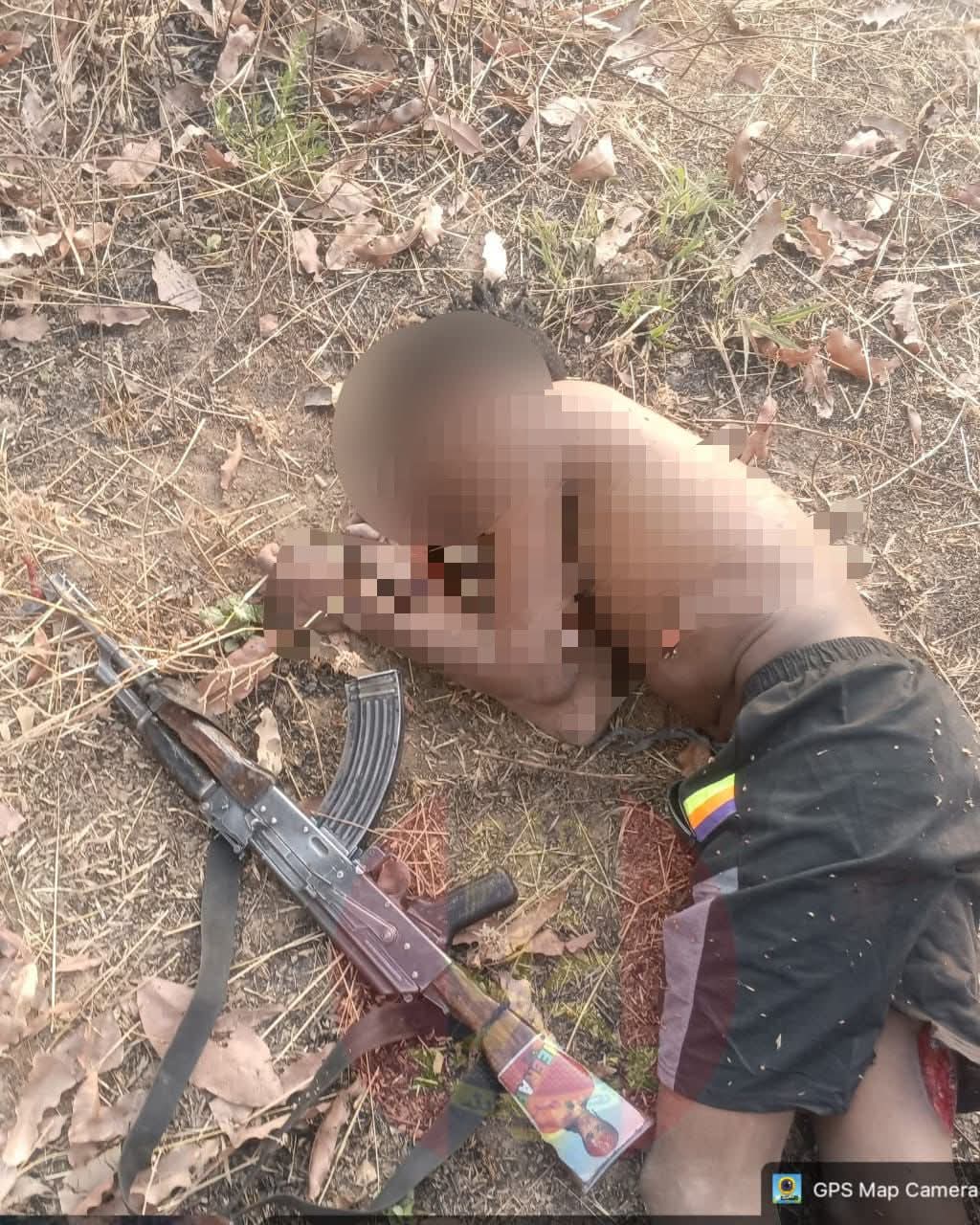
Zubairu disclosed that 19 bandits were neutralised in the operation, while two soldiers and a local vigilante lost their lives.

He said further operations were ongoing in the area to ensure the safety of residents and to prevent future attacks often linked to cattle rustling and other criminal activities.

“The Nigerian Army urges citizens to remain vigilant and promptly report any suspicious movements to security agencies,” Zubairu added.

Meanwhile, the Commander of 3 Brigade, Nigerian Army, Brig.-Gen. Ahmed Tukur, reassured residents of the Army’s unwavering commitment to maintaining peace and security across Kano State in collaboration with other security agencies.

Kannywood expert honours late veteran actor Mallam Nata’ala

By Anas Abbas

A Nigerian academic, Dr Muhsin Ibrahim, who teaches Hausa language and culture at the University of Cologne, Germany, has written a touching tribute to the late Kannywood actor, Alhaji Mato Yakubu, popularly known as Malam Nata’ala (Mai Sittin Goma).

In the tribute shared on social media, Dr Muhsin described the deceased as a talented comedian whose unique performances left lasting memories among Hausa film audiences.

Alhaji Mato Yakubu featured in several Kannywood films, particularly in the Chamama comedy genre, alongside the late Rabilu Musa (Dan Ibro), before the establishment of the Arewa24 channel.

His fame, however, soared through the station’s popular drama series “Dadin Kowa,” where he earned the name Malam Nata’ala for his role as a “loud” but lovable traditional Qur’anic scholar (Alaramma) and a family man constantly mediating between his two quarrelling wives.

Recalling his struggles, Dr Muhsin wrote that the actor’s prolonged illness had earlier drawn public attention, prompting financial assistance from the Yobe State Government and the Government of the Republic of Niger.

The actor later appeared in a video expressing gratitude and looking healthier.

“Many thought his illness was caused by poverty. Some even laughed at the whole issue. Unknown to all, he would pass away a few weeks later,” Dr Muhsin wrote.

He concluded the tribute with prayers: “May Allah (SWT) forgive his shortcomings, ours and those of our loved ones, amin.”

The late Alhaji Mato Yakubu was widely celebrated for his humour and natural acting style, which endeared him to fans across Northern Nigeria.

Army rescues kidnapped victims, recovers N3.8m ransom in Kogi

By Abdullahi Mukhtar Algasgaini

Troops from the 12 Brigade of the Nigerian Army have rescued two kidnapped victims and recovered a ransom of N3.8 million in Kogi State.

The rescue mission was launched on November 2, 2025, following credible intelligence about kidnapping activities along the Itobe–Adumu–Ejule road.

Reports indicated that relatives of the victims were attempting to deliver a ransom for their release.

Acting swiftly, troops from the Forward Operating Base (FOB) in Oguma patrolled towards Achigili Forest to intercept the criminals.

En route, the soldiers were ambushed and came under fire from the bandits.A fierce gun battle ensued, during which the troops overpowered the kidnappers with superior firepower.

The bandits were forced to flee into the forest with gunshot wounds, abandoning their two captives and the ransom money.

The rescued victims were immediately taken to a secure military location for debriefing.

In a significant move, the recovered sum of Three Million, Eight Hundred Thousand Naira (₦3,800,000) was returned to them.

The Nigerian Army, in a statement by Lieutenant Hassan Abdullahi, reiterated its resolve to protect lives and property in the state.

The public was also urged to continue providing timely information to support security agencies in the fight against crime.

Help Nigeria with technology, not threats—Kwankwaso tells Trump

By Uzair Adam

Senator Rabiu Musa Kwankwaso, the presidential candidate of the New Nigerian Peoples Party (NNPP) in the 2023 general elections, has called on U.S. President Donald Trump to assist Nigeria with modern technology to combat insecurity rather than issue threats of military intervention.

Kwankwaso made the appeal in a statement on Sunday while reacting to Trump’s recent remarks accusing the Nigerian government of failing to protect Christians and threatening military action against terrorist groups in the country.

Trump’s statement followed Nigeria’s endorsement of a two-state solution to the Middle East crisis and its condemnation of killings in Gaza—a position that reportedly sparked renewed allegations of “Christian genocide” against the country.

Kwankwaso noted that Nigeria remains a sovereign nation grappling with multifaceted security challenges affecting people of all religions and ethnic backgrounds.

“It is important to emphasise that our country is a sovereign nation whose people face different threats from outlaws across the country.

“The insecurity we face does not distinguish based on religious, ethnic, or political beliefs,” he said.

The former defence minister advised the U.S. government to deploy its influence and resources to help Nigeria address insecurity rather than make divisive statements.

“The United States should assist Nigerian authorities with advanced technology to confront these challenges, rather than issue threats that could further polarise our country,” he stated.

Kwankwaso also urged the Nigerian government to strengthen diplomatic engagement with Washington by appointing special envoys and ambassadors to protect and project Nigeria’s interests globally.

“The Nigerian government should consider appointing special envoys from among its seasoned diplomats to engage the American government.

“It is also necessary to appoint permanent ambassadors to represent our national interests on the global stage,” he advised.

He further appealed to Nigerians to remain united amid increasing international tensions, stressing that this was a time to promote unity over division.

“God bless Nigeria,” he concluded.

Rethinking the “Christian Genocide” narrative: Reflections from Wilton Park

By Dr Samaila Suleiman Yandaki

Nigeria is once again in the global spotlight in the wake of its redesignation as a Country of Particular Concern and the accompanying threat of U.S. military action by the Trump administration to save Nigerian Christians from “genocide”. This narrative is as dangerous as it is familiar, evoking the old imperial logic that simplifies and distorts our complex realities to justify external intervention. As a student of the politics of history and identity conflict, I find this portrayal beyond perturbing and perilous. 

I witnessed firsthand how such perilous narratives were debated in international policy circles when I joined other Nigerian and British stakeholders at a high-level summit at Wilton Park in February 2020 for a dialogue on “Fostering Social Cohesion in Nigeria”. Situated in the serene estate of Wiston House, Steyning, West Sussex, Wilton Park is an Executive Agency of the UK Foreign, Commonwealth and Development Office, widely recognised as a global space for peace dialogues and post-conflict reflection. The meeting was part of the UK government’s follow-up to the Bishop of Truro’s Independent Review on the persecution of Christians worldwide, in which Nigeria was identified as a major flashpoint of “religious violence.” The Truro Report asserted that Nigerian Christians are facing systematic persecution and called upon Western governments to do more to protect them. 

At Wilton Park, we were offered more than an interfaith forum to dialogue; we were given the opportunity to deconstruct the dangerous oversimplifications that have come to characterise Western discourses on Nigeria. Unlike the imperialist gimmicks and threats emerging from Washington today, the British government, through the Foreign and Commonwealth Office, convened diverse stakeholders from Nigeria and the UK – religious leaders, politicians, diplomats, academics, and civil society representatives – to deliberate on the multifaceted security challenges confronting Nigeria and explore ways of building social cohesion. I am not permitted by the Wilton Park Protocol to name participants or cite their specific interventions, but suffice it to say that, with few exceptions, those present were individuals who matter in Nigerian and British policy circles.

The participants spent three days discussing the farmer-herder crisis, the Boko Haram insurgency, and the persistent communal conflicts in the Middle Belt. What struck me most was the consensus among Nigerian participants — Muslims and Christians alike — that the “Christian persecution” framing was profoundly misleading. We emphasised that the reality was far more complex than the narrative of religious persecution suggests. The problem, as several participants observed, is not that Christians do not suffer violence, but that violence in Nigeria is indiscriminate, affecting all communities. To single out one group as uniquely persecuted is to misread the nature of the crisis. 

The Wilton Park approach reflected a subtle but significant shift– the need to appreciate the broader social, political, and environmental dynamics of violence in Nigeria. While the Truro Report relegated these factors to the background, we strongly highlighted them, showing that Nigeria’s crisis is a shared national tragedy rather than a targeted religious war. The goal was to nurture a more nuanced understanding, one that resists the reductive opposition between Muslim perpetrator and Christian victim. 

The meeting concluded on a high note with consensus around the “sensitivity and diversity of conflict narratives,” recognising that every victim’s voice deserves to be heard. It was agreed that shifting the narrative from “Muslims against Christians” and other binary categories must therefore be a priority if we are to avoid deepening existing divisions. The meeting recommended that the Nigerian government should “commission and fund independent, credible research on climate change, number of attacks, crime victims, cattle routes and patterns; develop strategy on how to use data to proactively educate, myth-bust and shape narratives for both sides of the argument; justice and peace training to be included in schools; Government of Nigeria to appoint a National Reconciliation Adviser; establish a Joint Religious Coalition to ensure accountability of government for insecurity and politicisation of conflict; develop religious engagement strategy; and commence dialogue to facilitate creating ‘Code of Conduct’ for religious leaders,” among other actionable recommendations. This later became the groundwork for further peacebuilding engagements between Nigerian and British stakeholders. The Wilton Park dialogue is a model of thoughtful engagement, the kind of thoughtful diplomacy the world requires in times of conflict, not the militarised moralism coming from Washington. 

The question is, what are the true intentions of Trump? Is he genuinely motivated by a humanitarian desire to protect Nigerian Christians, or is this another exercise in the US geopolitical and imperial crusade? History offers little reason for optimism. We know that humanitarian and messianic pretexts always precede Imperial interventions. In the 19th and 20th centuries, colonial logic was a “civilising mission”; today it is “defence of persecuted Christians”. The language changes, but the logic remains the same —define and rule, borrowing from Mahmood Mamdani. The Palestinian literary critic Edward Said describes this imperial habit of defining how others are perceived and how their suffering is interpreted. Therefore, classifying Nigeria—a complex, plural, and Muslim-majority nation—as a persecutor of Christians is a convenient casus belli for Trump, masquerading as a humanitarian concern. 

Meanwhile, I congratulate the proponents of the “Christian genocide” narrative in Nigeria and beyond. We are now officially a Country of Particular Concern, polarised and divided. As the advocates of the narrative await, with self-righteous anticipation, an American-led “rescue mission”, I want to remind them of the devastation that American invasion has brought to nations in the name of salvation: Libya, Iraq, Afghanistan, Syria, Vietnam, Somalia. Each intervention was couched in the language of freedom, yet each left behind broken societies and deepened resentment.

The “Christian genocide” narrative is doubly dangerous: while deepening domestic divisions, it legitimises foreign intervention. This is not to deny the suffering of Christians in parts of Nigeria. Their pain is real and deserves acknowledgement. But this is equally true of Muslims and others who have suffered the same fate. The question is not who suffers most, but how that suffering is framed. 

Ultimately, the Nigerian state bears the greatest responsibility for its failure to protect all its citizens. Endemic corruption, elite impunity, and the persistent inability to provide security for Nigerians have created fertile ground for such divisive narratives to thrive. Unfortunately, the citizens themselves have collectively failed to hold the government accountable for these failures. Instead, they are busying themselves competing for victimhood, thereby creating the conditions for external powers to intervene discursively and politically. It is this vacuum that the Trump administration is filling.  

The task before Nigerian scholars, faith leaders, and policymakers is to reclaim the narrative, not through denial, but through a more honest, inclusive, diplomatic and historically grounded understanding and framing of its own complex realities. The federal government must strengthen its security institutions and reassert the primacy of equal citizenship. All lives matter in Nigeria—Christian, Muslim, and traditionalist alike.

Dr Samaila Suleiman writes from the Department of History, Bayero University, Kano.

How the “Christian Genocide” narrative could cost Tinubu his 2027 re-election

By Misbahu El-Hamza

President Bola Tinubu has finally responded to the false accusation of a “Christian genocide” in Nigeria, a narrative that surfaced in late September. Yet as this claim gains traction in U.S. conservative circles, he should be more worried about his political prospects. The narrative—and U.S. President Donald Trump’s recent call to redesignate Nigeria as a Country of Particular Concern (CPC)—could give Washington both motive and cover to oppose Tinubu’s re-election in 2027, just as former President Goodluck Jonathan alleged of the Obama administration in 2015.

Former President Jonathan publicly claimed that he lost the 2015 election because of U.S. interference. Two issues broadly defined the diplomatic rift between the two governments. The first was Boko Haram’s insurgency and the abduction of the Chibok girls. In a 2018 BBC interview, Jonathan lamented that Nigerians in the U.S. joined public protests there, one of which famously featured Michelle Obama holding a placard with the slogan #BringBackOurGirls.

At the October 2025 launch of ‘SCARS: Nigeria’s Journey and the Boko Haram Conundrum,’ by former Chief of Defence Staff Gen. Lucky Irabor (retd.), Jonathan recalled: “When I was in office, one of the major scars on my government, and one I will retire with, is the issue of the Chibok girls. As Bishop Kukah said, no plastic or cosmetic surgeon will remove it.” The then-opposition under Muhammadu Buhari, which included Tinubu, exploited insecurity for political advantage, a factor that clearly contributed to Jonathan’s loss.

The second, and in my opinion, more damaging rift was Jonathan’s stance against same-sex marriage, reflecting the convictions of most Nigerians. In 2014, he signed the Same-Sex Marriage Prohibition Act, shortly after the Obama administration’s 2011 pledge to “use all the tools of American diplomacy” to promote gay rights globally. Washington’s reaction was swift. The White House warned of possible cuts to HIV/AIDS and anti-malaria funding, while Jonathan’s government held firm. Nigerians applauded him for that. But during the 2015 campaign, the Obama administration’s outreach, including direct appeals to Nigerian voters and a high-profile visit by Secretary of State John Kerry, was widely viewed as tacit support for Buhari, which many Nigerians, including Jonathan himself, believe shaped the election’s outcome.

Insecurity also played a domestic role in Jonathan’s downfall. Nigerians were increasingly alarmed by unrelenting violence—beyond Boko Haram, currently compounded by communal, ethnic, and religious clashes and by banditry mostly in northern Nigeria—that claimed hundreds of innocent lives. Regardless of how the world described it, the reality was and is still tragic. It eroded public trust and patriotism. Yet successive governments, rather than restoring security, have often appeared more concerned with foreign perceptions than with rebuilding national confidence and truly working to end the bloodshed of innocent Nigerians.

So, while Jonathan’s administration angered the Obama White House over the same-sex marriage law, many believe that Tinubu’s has irritated Washington for another reason.

In early September, U.S. Senator Ted Cruz introduced the Nigeria Religious Freedom Accountability Act of 2025 (S.2747) to the U.S. Senate. The bill seeks to sanction Nigerian officials allegedly complicit in “Islamist jihadist violence against Christians and other minorities” and those “enforcing blasphemy laws”. Blasphemy remains an offence under Nigeria’s criminal code and in the twelve northern states operating shari’a law. Yet, the Cruz bill’s language raises serious questions: how would the former officials be identified, and on what evidence? If Washington possesses proof, it has not presented any. Within Nigeria, such accusations often surface in political rhetoric but rarely withstand scrutiny.

Still, Nigeria’s greater “offence” under Tinubu—at least to American conservatives like Bill Maher, Mike Arnold, Ted Cruz, Riley Moore, and now Donald Trump—is its unwavering support for the Palestinian people. Successive Nigerian governments, whether Christian- or Muslim-led, have consistently condemned Israel’s occupation and called for a two-state solution as the only path to peace. This position, long-standing and bipartisan in Nigeria, clashes directly with Washington’s pro-Israel consensus.

After Nigeria’s firm statement at the 80th UN General Assembly in September, Maher went on his HBO show and declared, “I’m not a Christian, but they are systematically killing the Christians in Nigeria,” comparing it to Gaza and calling it “a more serious genocide.” Such claims, amplified by Trump’s rhetoric about “defending Christians,” serve U.S. political optics more than global justice. Recall Trump’s 2020 CPC designation for Nigeria. It was largely symbolic and carried no enforcement before he left office. His renewed posturing appears equally opportunistic.

Tinubu may believe U.S. pressure arises from concern for Christian victims of Islamist violence and that this aligns with Nigeria’s large Christian population. Yet the U.S. record tells a different story. The same establishment that condemns persecution in Nigeria supports Israel’s war in Gaza, where many casualties are both Muslim and Christian Palestinians.

If Nigeria accuses Washington of selective advocacy, it may find sympathy at home, but not in Washington, where lobbying interests dominate the narrative. Assuming that the “Christian genocide” argument will shield Nigeria from criticism would be a miscalculation.

Tinubu is not yet where Jonathan stood in 2015, but the parallels are unmistakable. The Obama administration’s posture during Jonathan’s re-election bid showed how U.S. influence can shape Nigerian politics. A sustained clash with U.S. policy on religious freedom and Palestine, coupled with insecurity and governance failures, could become a tipping point. Avoiding that outcome will require strategic diplomacy (which we have no doubt our president possesses), credible reform, and a domestic agenda rooted in accountability. Nigerians must see real action towards ending Boko Haram and banditry.

This moment demands political acumen and the disciplined management of both security and foreign relations. Tinubu cannot afford to repeat Jonathan’s missteps. In global politics, misreading Washington’s signals has previously cost Nigerian presidents, and history may not be kind to those who fail to learn from it.

Misbahu writes from Kano and can be reached via email: misbahulhamza@gmail.com

Trump warns Nigeria over alleged persecution of Christians, threatens military action

By Uzair Adam

US President Donald Trump has directed the United States Department of War to prepare for what he described as a “possible action” to eliminate Islamic terrorists in Nigeria.

In a post on his Truth Social account on Saturday, Trump cautioned the Nigerian government to urgently address the continued killings of Christians in the country or risk losing all forms of American aid and assistance.

“If the Nigerian Government continues to allow the killing of Christians, the U.S.A. will immediately stop all aid and assistance to Nigeria, and may very well go into that now disgraced country, ‘guns-a-blazing,’ to completely wipe out the Islamic terrorists who are committing these horrible atrocities,” Trump wrote.

He added that he had instructed the Department of War to be ready for immediate action, warning that any attack “will be fast, vicious, and sweet, just like the terrorist thugs attack our cherished Christians.”

The statement came barely a day after Trump redesignated Nigeria as a “country of particular concern,” citing what he called a Christian genocide allegedly perpetrated by radical Islamists.

Responding to the development, President Bola Tinubu rejected Trump’s decision, insisting that Nigeria remains a democracy that guarantees freedom of religion and belief as enshrined in its constitution.