Nigeria

‘Let’s enhance our cooperation to combat smuggling’

By Sabiu Abdullahi

The Comptroller-General of the Nigeria Customs Service (NCS), Adewale Adeniyi, has emphasized the need for stronger collaboration among security agencies to address smuggling and its negative impact on Nigeria’s economy effectively.

Speaking on Thursday, January 23, 2025, at the National Defence College (NDC) in Abuja, Adeniyi delivered a lecture to participants of Course 33, advocating for mutual understanding and partnership among security bodies to combat illegal trade and safeguard economic stability.

“No single agency can effectively combat the complexities of smuggling without the support and cooperation of others,” he stated.

“Collaborating with other security agencies is essential for effective anti-smuggling operations. It is only through synergy that we can reduce these illegal activities to the barest minimum and foster economic growth in Nigeria.”

The lecture, held at the NDC Auditorium, served as a platform for the Customs chief to outline strategies for tackling smuggling and its economic consequences.

The National Defence College, recognized as Nigeria’s top institution for military and strategic studies, hosts participants from diverse sectors, including the armed forces, paramilitary organizations, and the civil service.

Adeniyi’s presentation portrayed the benefits of a unified approach to protecting the nation’s economic interests and reiterated inter-agency cooperation as a critical factor in addressing Nigeria’s security issues.

Attendees, comprising senior officers, faculty members, and participants from across the country, described the lecture as a valuable insight into the interplay of security and economic protection.

Police clarify powers to enter properties without warrant

By Uzair Adam 

The Force Public Relations Officer, ACP Olumuyiwa Adejobi, has clarified that police officers have the legal authority to enter properties without a warrant if they reasonably suspect a crime is being committed.  

Adejobi made the statement on Saturday while responding to a widely circulated video that has drawn public outrage. 

The Daily Reality reports that the footage shows masked armed policemen in unprofessional attire storming a property, allegedly without a warrant.  

In the video, shared by @General_Somto and tagged “What’s Going On Here???,” two masked officers carrying AK-47 rifles demanded access to a house, but the occupants refused, citing the absence of proper identification and a search warrant.  

One of the occupants, believed to be the homeowner, said, “Imagine police people with facemasks come into my house to force our door, saying that we are fraudsters.”  

The officers overheard threatening to enter by force, eventually fired a shot and scaled the fence. Once inside, one officer opened the gate for his colleague.  

Reacting to the incident, ACP Adejobi stated, “The police have the power to break into any house or place where they are reasonably convinced an offence is being committed. That is understandable. 

However, I am not too ok with their dress and appearance. Policemen are not allowed to wear masks or tie headgear.”  

He further questioned the circumstances surrounding the invasion, saying, “What is the offence of the people to have warranted breaking in, and why this dressing? 

“I wish I knew the location so that we could direct these questions to the men involved.”  

The Nigeria Police Force condemned the officers’ actions, describing their conduct as unprofessional while assuring the public of an investigation into the matter. 

Adejobi noted that the video had been forwarded to the relevant authorities to identify and hold the officers accountable.  

The incident has reignited concerns about police brutality, human rights violations, and the need for accountability within the force.

FCT hospitals reopen as doctors end warning strike

By Uzair Adam

The Association of Resident Doctors in the Federal Capital Territory, Abuja, has called off its warning strike following the intervention of the FCT Minister, Nyesom Wike.

In a statement issued on Friday, the President of the Association, Dr. George Ebong, confirmed that the FCTA, under Wike’s leadership, has addressed their key demands.

The doctors had shut down all FCTA-owned hospitals on Wednesday to protest unpaid salary arrears and other unresolved issues.

However, Dr. Ebong announced that members of the association have started receiving alerts for their six-month salary arrears, prompting the decision to end the strike.

According to the statement, Minister Wike also approved and ordered immediate payment of the accoutrement allowance owed to health workers, reduced the medical residency bonding to two years, and sanctioned the immediate employment of additional doctors and allied health workers to address the acute shortage of manpower.

Furthermore, he approved and facilitated the payment of locum doctors and other health workers who were owed outstanding wages.

The association has directed its members to resume work on Saturday, January 25, 2025, averting an imminent indefinite shutdown of hospitals in the capital.

Dr. Ebong expressed appreciation for the minister’s swift response, which resolved the immediate concerns but urged him to address other outstanding demands to prevent future industrial actions.

“These demands include the payment of hazard allowances, upgrading and rehabilitation of healthcare facilities, and converting post-part 2 doctors to consultant cadre,” Dr. Ebong stated.

He further praised Wike’s commitment to transforming the health sector in line with the Renewed Hope Agenda and extended an invitation for the minister to visit district hospitals in the near future.

The association also reaffirmed its support for Wike’s efforts to enhance healthcare delivery in the FCT.

FCT doctors declare three-day warning strike over unpaid salaries, welfare issues

By Uzair Adam 

The Association of Resident Doctors (ARD), Federal Capital Territory Administration (FCTA), has initiated a three-day warning strike in protest of unpaid salaries, allowances, and other unresolved issues. 

The Daily Reality leaned that the strike has disrupted services at government hospitals across Abuja.

In a press briefing held on Wednesday in Abuja, Dr. George Ebong, President of ARD FCTA, explained that the strike followed the expiration of a three-week ultimatum issued last year. 

He lamented the neglect of healthcare workers’ welfare and hospitals in the nation’s capital.

Ebong called for urgent intervention from the Minister of the Federal Capital Territory, Nyesom Wike, to prevent an indefinite closure of hospitals in the region. 

He emphasized that the decision to go on strike was reached after a Congress held by ARD FCTA members on Tuesday.

The strike, which covers all government hospitals in Abuja, from Wuse to Asokoro, Maitama, Kubwa, Zuba, Kwali, Abaji, Nyanya, and others, follows months of unresolved demands. 

The doctors had earlier engaged in multiple dialogues with the authorities but saw no meaningful action, even after the government requested two additional weeks to address their grievances.

“We gave the government a three-week ultimatum to meet our demands, and after meeting them and discussing several times, nothing was done. Not even the minimum things. We expected the government to pay for the six months of unpaid arrears,” Ebong stated.

He criticized the neglect faced by doctors in Abuja, referring to them as “abandoned projects” and highlighting the urgent need for action to prevent the collapse of the healthcare system.

In December, ARD FCTA had warned of a possible shutdown if their demands were not met, with the current strike representing a call for immediate resolution. 

The association has warned that if their issues remain unaddressed after the three-day strike, they will consider an indefinite strike.

The full communique, also released at the press briefing, detailed the various concerns of the association, including unpaid salaries, delays in the Medical Residency Training Fund (MRTF), unfulfilled accoutrement allowances, unpaid hazard allowances, and the lack of necessary hospital equipment. 

The communiqué also stressed the shortage of manpower in the healthcare sector, with many doctors leaving the country due to poor working conditions and lack of support. 

It concluded with a plea for the government to act swiftly to avoid further deterioration of the healthcare system in Abuja.

Preserving the sanctity of the Qur’an: Why “Festival” is the incorrect term

By Abubakar Aminu Ibrahim

Language is a powerful tool. It shapes how we think, communicate, and understand our beliefs. In the Islamic faith, words carry immense weight, for they are tied to sacred meanings and spiritual truths. This is why using the term “Qur’anic festival” to describe any event associated with the Qur’an is both misplaced and misleading. While the word “festival” may seem innocuous, its implications are incompatible with the spiritual essence of the Qur’an and the traditions it upholds.

A festival is often marked by joy, festivities, and entertainment. While it can sometimes carry religious undertones, its modern usage is predominantly cultural or secular. On the other hand, the Qur’an is a divine revelation—a book of guidance, wisdom, and moral discipline. It is meant to elevate the soul, inspire reflection, and connect individuals to their Creator. Associating the Qur’an with a “festival” risks reducing its sacredness to something casual, even trivial.

Consider the Islamic celebrations of Eid al-Fitr and Eid al-Adha. These are joyous occasions deeply rooted in worship, gratitude, and submission to Allah. Their joy is spiritual and reflective, not superficial. To call these occasions “festivals” would diminish their profound meanings. Similarly, attaching the word “festival” to the Qur’an creates a disconnect between its sacred purpose and the secular image that the term often evokes.

Moreover, using the term “Qur’anic festival” opens the door to misinterpretation. To the uninformed, it might conjure images of parades, loud music, or revelry—activities that Islam often cautions against when taken to excess. For instance, a Qur’anic recitation event might aim to deepen one’s connection to Allah, but labelling it a “festival” could unintentionally attract a crowd expecting entertainment rather than spiritual enlightenment. Precision in language is vital in Islamic traditions, and terms like “gathering” or “symposium” better preserve the solemnity of such occasions.

The Qur’an is not just a book; it is Allah’s final message to humanity, and its recitation, study, and understanding are acts of worship. To frame these sacred practices as part of a “festival” undermines the dignity of the Qur’an and the reverence Muslims owe to it. Imagine referring to a gathering for tahajjud (night prayers) or a Qur’anic competition as a “festival.” Such terminology strips the event of its spiritual depth and misrepresents its purpose.

It is also important to, with all sense of humility, caution scholars and traditional leaders against carelessly inventing new terms or traditions on a whim. If some have historically criticised the celebration of Maulud (the Prophet’s birthday) as an innovation, why then should the term “Qur’anic festival” be any less scrutinised? This is not to argue the correctness or incorrectness of the concept of Maulud, Qur’anic events or similar practices but to highlight the inconsistency in applying principles of linguistic and theological precision. The issue is, first and foremost, with the choice of the word “festival” attached to the Qur’an.

The Qur’an deserves words that uplift its message, preserve its sanctity, and reflect its divine status. It is a guidance for humanity, a light for those in darkness, and a connection to Allah that transcends worldly pleasures. Let us honour its dignity by rejecting terms that fail to encapsulate its sacred purpose.

Abubakar Aminu Ibrahim (AbuMuhd) can be reached via matazu247@gmail.com.

Japa: Nigerian hospitals face collapse as health workers exit in droves – CMDs

By Uzair Adam  

The Chief Medical Directors (CMDs) of University Teaching Hospitals and Federal Medical Centres have expressed concerns about a looming staff crisis. Doctors, nurses, and other healthcare professionals are leaving Nigeria in large numbers due to poor salaries and working conditions.  

During the 2025 budget defence session before the House of Representatives Committee on Health Institutions, the CMDs noted that despite significant federal government investments in health infrastructure, the mass exodus of healthcare workers weakens the country’s healthcare delivery system.  

The Chief Medical Director of Lagos University Teaching Hospital (LUTH), Professor Wasiu Adeyemo, described the trend as alarming, warning that if immediate steps are not taken, the nation’s hospitals could soon be empty.  

“Resignations occur almost daily,” Adeyemo stated. “In one or two years, our hospitals may become empty. The main reason people leave is economic. Consultants are earning less than $1,000 monthly. 

“Without addressing remuneration, all government investments in infrastructure will be wasted,” he added.

He reported that LUTH’s 2024 budget included N19.2 billion, with N13.57 billion allocated for personnel and just N33.2 million for overhead costs. 

While personnel performance reached 91 per cent by December, only 45 per cent of the capital project budget had been utilized.  

For 2025, LUTH proposes a budget of N32.7 billion, with N20.3 billion allocated for personnel. 

Adeyemo emphasized the need for improved funding to prevent further resignations and ensure the hospital’s functionality.  

Similarly, the Chief Medical Director of University College Hospital (UCH), Ibadan, Professor Jesse Abiodun, decried delays in releasing budgeted funds. 

He revealed that UCH had a capital appropriation of N5.59 billion in 2024, but only 38 per cent of the funds were released.  

“We still have 72 per cent of the funds outstanding,” Abiodun said. “We could only utilize the 38 per cent because we had prepared a cash plan in advance.”  

UCH has proposed a capital budget of N4.39 billion and an overhead budget of N690 million for 2025, which Abiodun said is insufficient, especially given rising utility costs such as electricity.  

The House Committee on Health Institutions Chairman, Hon. Patrick Umoh, urged the CMDs to provide comprehensive presentations detailing their budgetary needs and challenges. 

He noted that the committee would continue reviewing submissions to address the critical issues facing Nigeria’s tertiary health institutions.  

The CMDs reiterated the urgent need for government intervention, stressing that improving remuneration and timely funding release is crucial to averting a healthcare crisis.

The Evolution of Yan Daba: From warriors to thugs in Kano

By Salisu Uba Kofarwambai

“Daba” comes from the Hausa term for a gathering place where people would sit and converse during their leisure time. Over time, the term took on a different connotation, referring to a spot where idle individuals would congregate, discuss, and plan their criminal activities, often fueled by drug addiction.

Historically, Hausa society had warriors known as Yan Tauri. These brave adventurers possessed magical powers and charms that made them nearly invincible in battle. They were also skilled hunters, often engaging in fierce competition over their prey. However, the Maitatsine crisis in the late 1970s to early 1980s marked a turning point for Yan Tauri. The crisis erupted when the followers of the heretic preacher Maitatsine clashed with the Nigerian government. 

Maitatsine, a Quranic teacher from Cameroon, had attracted a large following in Kano before beginning to preach against orthodox Islamic teachings. He started labelling people as infidels for merely watching TV or drinking tea with milk. When his son was killed at the street fight in Sabon Gari, Maitatsune started attacking people and killed many Kano residents.

The federal government refused to intervene, mainly due to party rivalry and Governor Abubakar Rimi’s criticism of the ruling party, NPN, and President Shehu Shagari. Thus, the Kano state government was left to handle the crisis on its own. The state government enlisted Yan Tauri’s help to combat the Maitatsine followers. Yan Tauri fought bravely, killing many followers, but this exposure to violence and bloodshed had a profound impact on them.

Following the Maitatsine crisis, Yan Tauri began to metamorphose into Yan Daba, a group notorious for their thuggery and violence. Politicians exploited Yan Daba for their gain, employing them as enforcers and thugs. During Governor Rimi’s tenure, the divide within the People’s Redemption Party (PRP) in Kano State further exacerbated the situation. The party split into two factions: the Santsi group, led by Governor Rimi, and the Tabo group, led by Malam Aminu Kano. Both factions employed Yan Daba thugs, leading to a deadly fight between the two groups.

Notorious Yan Daba members during this period included Gogarma, Mal Hadi, Gambo Cooperation, Sarki Change, Sabo Wakilin Tauri Mai Adashin Sara, Uba Dala Bala Turu, and many others. These thugs were known for their brutality and willingness to do whatever it took to achieve their objectives.

The reign of terror by Yan Daba continued until Major General Muhammadu Buhari came to power in 1983. Buhari’s administration cracked down on Yan Daba, arresting, killing, or forcing many of its members to flee Kano.

Then, in 1989, during General Ibrahim Babangida’s effort to transition Nigeria back to civilian governance, the Social Democratic Party (SDP) and the National Republican Convention (NRC) were established. These parties significantly influenced Nigeria’s move towards democracy. However, they also, perhaps unintentionally, aided the revival of Yan Daba in Kano as politicians continued to manipulate them for personal gains.

Yan Daba’s activities plagued Kano, with members engaging in robbery, assault, and other forms of violence. The emergence of notorious gangsters marked their reign of terror.

With the return of democratic rule in 1999, Yan Daba continued to pose a significant problem in Kano. Politicians continue to exploit them for their own gain, and their activities remain a major challenge for law enforcement agencies. Over time, Yan Daba has evolved, with many members now engaging in phone robbery and other forms of cybercrime.

Today, Yan Daba remains a challenge, with members engaging in various forms of criminal activity. Their history should be a cautionary tale about the dangers of exploiting violence and thuggery for political gain.

Salisu Uba Kofarwambai wrote from Kano via salisunews@gmail.com.

Fuel tanker explosion: One incident too many

By Salim Yunusa

Days ago, a fuel tanker explosion took the lives of over 70 people at the well-known Dikko Junction, located along the Kaduna-Abuja highway in Niger State. This incident follows closely after another fuel tanker explosion in Jigawa in October 2024, which resulted in the deaths of more than 200 people.

At this point, one begins to sound like a broken record: the recurring incessant pleas for regulation, caution, and prayers. Enough with the “Allah shi kare”, or the performative prayers for the deceased. It has to stop. Now.

In a country with barely motorable roads disguised as highways, these tankers—dangerously overloaded, evidently faulty, and disturbingly manned by the worst drivers—sway and saunter, damaging the roads and bridges due to overload, causing accidents, and, in recent times, overturning their contents, spilling highly inflammable fuel on the road. This leads to disastrous fire incidents, causing devastating loss of lives and properties.

What usually follows are photo ops by government officials who do little to nothing to prevent these incidents from reoccurring. These are followed by visits to the hospitals and donations of a paltry sum of money to the victims’ families. This has to stop. Now.

Many issues cause the loss of lives of this magnitude. We must address them through regulations and stringent fines for erring drivers and their employers. We must also properly deploy state and federal might in enforcing adequate commercial and residential setbacks from highways. We must embark on massive enlightenment and sensitisation against the dangers of highly inflammable substances and, above all, poverty, which would make one desperate enough to go scooping up spilt gas on a highway! 

Nonetheless, enforcement has to be done on people themselves because repeated tragedies don’t serve as lessons against future occurrences. People have to learn and understand that you run away from danger, not into it, for mere fuel scoops or to record yourself to get a few clicks on social media. This is where the National Orientation Agency comes into the picture, partnering with social media influencers, radio and TV stations, among other important stakeholders in the society, to enlighten and educate the public on the dangers surrounding looting of overturned items from trucks, be it Spaghetti, rice or fuel.

We must reconsider using pipelines to transport petroleum products in this country. The alarming number of tankers on our roads poses significant risks. Furthermore, it’s crucial to raise awareness that looting or stealing from accident scenes is a serious offence punishable by law and God.

It is tiring at this point: the rinse-and-repeat incidents, the performative grief, the prayers and promises to address issues—all to be forgotten in three business days. How many more people have to die before the government acts? Thoughts and prayers over unavoidable incidents are a most, but choosing thoughts and prayers over avoidable incidents is a clear choice. The government should act, and it should act now—swiftly, decisively.

May the Almighty save us from us and give us the strength to do the right thing–no matter whose ox is gored!

Salim Yunusa writes from Abuja, Nigeria, and can be reached via syunusa@gmail.com

A deconstructive reading of Sunusi’s remarks on Tinubu’s economic policies 

By Bashir Uba Ibrahim, Ph.D.

Emir Muhammadu Sanusi II’s recent remarks about the harsh economic policies of President Bola Ahmed Tinubu’s government, made during the 21st Memorial Lecture for the late Gani Fawehinmi organised by the Nigerian Bar Association, NBA Ikeja Branch in Lagos, themed ‘Bretton Woods and the African Economies: Can Nigeria Survive Another Structural Adjustment Programme’, have sparked a diverse range of reactions across social media. 

As the chairman of the occasion, when giving a microphone to comment, he remarked, “I can give a few points here about what we are going through and how it was predictable and avoidable. But I am not going to do that because I have chosen not to speak on the economic reforms or to explain anything because if I explain it, it will help this government. But I do not want to help this government. They are my friends, but if they do not behave like friends, I will not behave like a friend”. 

 These remarks received and continuously attracted fierce critical rebuttals and approbations from the government and Emir Sunusi’s perceived critics. On the other hand, his apologists are overtly in a tactical defence of such remarks on the pretence that the Emir is a victim of misperception by the public and misinterpretation by the media as they usually used to quote him out of context. Even the Emir himself is reported by the Leadership newspaper lamenting that his remarks were taken out of context, reducing the broader message of his speech to a single paragraph. But Emir and his media warriors fail to understand that linguistically, by the time a person makes an utterance, he no longer has control over it. 

To borrow a popular Hausa adage which says magana zarar bunu, idan ta fita ba ta dawowa or what Jean-Paul Sartre called “every word has its consequences” or in what Roland Barthes, the prominent French Structuralist and Post-structuralist literary theorist and critic called in his widely celebrated magnum opus “the death of the author is the rise of the reader”. Similarly, Barthes argues that “once the author is removed, the claim to decipher a text becomes quite futile. To give a text an author is to impose a limit on that text, to furnish it with a final signified”. And the text here refers to both spoken discourse (phonocentrism) and written (logocentrism). The former is the spoken remarks by the Emir, while the latter is its interpretations or deconstructive reading(s). Thus, the latter supplements the former in what Derrida called “doubling critique”.

Meanwhile, concerning the above remarks by the Emir, the media houses have done what part of their job, i.e., deconstructive or interpretive journalism. Thus, by the time the Emir loses authority or control over his utterances, it is when the media and the general public have the right to interpret him the way they like. Thus, it forms the crux of their deconstructive readings of Emir Sunusi’s remarks. Therefore, the more remarks are enmeshed with aporia and entangled in contradiction, dislocation and disunity of words or, to borrow Jacques Derrida’s words, “play”, “decentering”, or “rupture” like the one made by Emir Sunusi, the more it attracts deconstructive readings or interpretation from various standpoints.    

For instance, Emir’s remarks, as widely reported by the media, sound contradictory if not antipodal or antithesis. Given his unflinching and uncompromising stand as an unrepentant neo-liberalist who always supports the removal of fuel subsidy and currency liberalisation, floating of the naira against the dollar, which ultimately leads to the devaluation of the former, how can you say the situation the Nigerian government find itself is “avoidable” while you are among those who advise the government to implement such policies for reforming the shrinking economy. As the popular social media influencer Aliyu Dahiru Aliyu (Sufi) argues, “…For years, Sanusi has been a vocal advocate of neo-liberal economic policies, including subsidy removal and currency liberalisation–policies now adopted by Tinubu’s administration. These were once touted by people like Sanusi as the perfect remedies for our economic woes, yet their implementation, according to his recent expression, hasn’t delivered the promised relief. So, what fresh ideas Sanusi hides that he can offer if the FG has been friendly towards him apart from the familiar intellectual manoeuvres?”. 

Finally, as opined by the father of modern linguistics, the popular Swiss linguist Ferdinand de Saussure, that language be spoken as the one used by the Emir or written, i.e., the one used by his deconstructive readers is a system of signs; that the sign (word) is the basic unit of meaning, and that the sign comprises a signifier (form) and signified (mental representation or meaning). Therefore, the signifiers uttered by Emir Sunusi carry variants of signifieds in what Derrida called “transcendental signified”, which are beyond the control of their owner (the Emir) and thus warrant such myriad deconstructive reading(s).

Bashir Uba Ibrahim, PhD, wrote from the Department of English and Literary Studies, Sule Lamido University, Kafin Hausa. He can be reached at bashirubaibrahim@gmail.com.

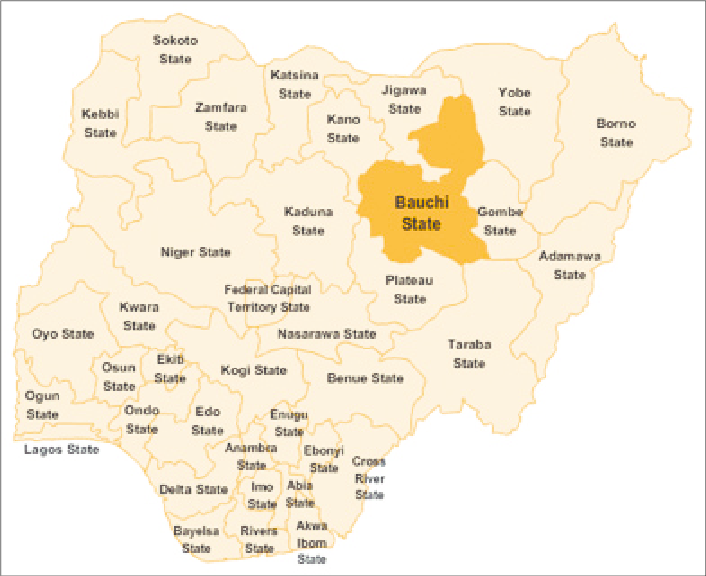
Who will be Bauchi’s next governor?

By Mukhtar Jarmajo

In a democratic setting, politics is perennial. Even as governance occurs, political actors make permutations, align and counter-align ahead of future elections. The actions of politicians in power largely determine what becomes of the political terrain. Essentially, the performance of an administration eventually tells of the kind of political game that will be played in the next elections.

In Bauchi State, a historically hot political plate, politics is daily, and the electorate plays particular roles in the democratic process. With the Bala Mohammed-led administration almost halfway through, discussions have begun on different fora about who will become the state’s next governor.

This time, the discussions border on issues, given that many people yearn for and aspire to better education, healthcare, agriculture, housing, pipe-borne water supply, security and safety, and employment and pay. There is also a growing concern for a more effective House of Assembly in the state.

Given that no democracy can endure a weak legislature, certain quarters feel that Bauchi State would have been a better place to live and work if it had a more active legislative arm. So, to be placed on a higher development threshold in the future, the state will need a more people-oriented executive arm of government and a legislature that can check its excesses and genuinely represent the people.

Thus, even as the search for a competent politician for the exalted and vital position of the governor of Bauchi State ahead of the 2027 elections widens, it is also right to search for quite experienced and qualified politicians to fill in the thirty-one legislative seats at the Bauchi State House of Assembly.

While several politicians have indicated interest through actions for the governorship, some are believed to be testing the waters from the background. Yusuf Maitama Tuggar is Nigeria’s Foreign Affairs Minister. At different times, he was a member of the House of Representatives and Nigeria’s Ambassador to the Netherlands. Tuggar is on the watch list, given that it is not yet clear whether or not the erstwhile diplomat will throw in the towel when the political bell for 2027 rings. The former legislator is, however, known to have pursued a governorship ambition in the past on the platform of the defunct Congress for Progressives Change (CPC).

Professor Muhammad Ali Pate is Nigeria’s Coordinating Minister of Health and Social Development. The trained medical doctor has been several times the Director-General of the National Primary Healthcare Development Agency (NPHCDA) and Minister of State Health. Pate has contested the governorship of Bauchi State in the past under the Peoples Redemption Party (PRP). In the APC governorship primary election ahead of the 2023 general elections, the Chigarin Misau contested and scored nil.

Air Marshal Sadique Baba Abubakar (rtd) was Nigeria’s Chief of Air Staff and Ambassador to Tchad at different times. He had a distinguished career in the Air Force, serving as a Cadet Military Training Course (CMTC 5) member in November 1979 and rising through the ranks to become the 20th Chief of Air Staff. During his tenure as Chief of Air Staff, he recorded remarkable achievements, including acquiring new aircraft, establishing new commands and formations, and enhancing the NAF’s capacity for airpower projection. 

In the governorship primary election ahead of the 2023 general elections, Sadique won with 370 votes to beat the runner-up, who got 278 votes. And during the general election, the erstwhile diplomat scored 432,272 votes as runner-up. Sadique, who has shown interest in contesting the Bauchi State governorship position again, is likely a strong contender in 2027, given his votes in the last governorship election.

Jarmajo wrote from Misau.