Nigeria

NBSL 2024: We must continue developing the game – Mahmud Hadejia

By By Muhammad Suleiman Yobe

The Coordinator of the Nigeria Beach Soccer League, Mahmud Hadeija, says the body remains committed to providing the necessary enablers for the game to excel in the nation.

Speaking with Sports Writers during the 2024 Nigeria Beach Soccer League, second round at Nnewi High School Beach Soccer Pitch, he said it would not relent in developing the sport through staging competitions.

While describing the game as unique and one of the fastest-growing leagues in Nigeria, he stressed that youngsters could demonstrate their skills and participate actively on a national scale through the game.

Hadeija, who is President of the African Beach Soccer League, emphasised that fostering a robust Beach Soccer League in the nation could enhance the growth of the game and the nation’s global sports presence.

“The good thing now is that we have the league that is ongoing for the fourth year, fourth season consistently and gradually both on the technical aspect, organisational aspect and also the structure of the teams.

He expressed gratitude to the Anambra State Beach Soccer Association for successfully hosting the event and providing the players with support services to pursue success.

Victor Madubuko, Contributing Chairman of Anambra State Beach Soccer Association, said his gift for innovation and passion for doing something new spurred him to contribute to the development of the game.

Madubuko said he was glad that the collaboration with stakeholders and sponsors, including Innoson Vehicle Manufacturing (IVM), was yielding the desired result.

One of the highest goal scorers in the league, Chimobi Ekwo, Anambra State Beach Soccer Team, said the team, which has remained unbeaten so far, would not relent in its determination to excel in the Super Four Competition slated to be held in Kaduna.

Six teams from Kebbi, Kaduna, Jigawa and Anambra States are participating in the League.

CC Oladeji takes community relations to grassroots, visits traditional rulers

By Sabiu Abdullahi 

In a bid to strengthen customs community relations, Comptroller Kola Oladeji of the Federal Operations Unit Zone A, has embarked on a familiarisation visit to traditional rulers in the South West Zone. 

During the visit, Comptroller Oladeji met with several traditional rulers, including the Alake and Paramount Ruler of Egbaland, Oba Adedotun Aremu Gbadebo, the Onikpokia of Ikpokia Kingdom, Oba Yisa Adeniyi Olaniyan, and the Olu of Owode Yewa Land, Oba Matthew Akindele. 

Comptroller Oladeji noted the importance of community support in achieving the Nigeria Customs Service’s (NCS) mandates, stating, “We attach much importance to these communities and seek the blessing and guidance of Royal Fathers to strengthen customs community relations.” 

He stated the innovative approaches introduced by the Comptroller-General of Customs, Adewale Adeniyi, which have enhanced the service’s performance. 

The Olu of Owode Yewa Land, Oba Matthew Akindele, appreciated the improved relationship between the customs service and the community, stating, “The chaos we experienced with customs officers has reduced drastically, thank you for that, and we also thank the federal government.” 

He also requested employment opportunities for youths and a more cordial relationship to foster peace and tranquility in the community. 

Comptroller Oladeji assured the traditional rulers that the NCS would continue to discharge its responsibilities within the ambits of the law and observations of rules of engagement.

MURIC urges minister to halt legal action on orphan girls’ wedding in Niger

By Uzair Adam Imam

The Muslim Rights Concern (MURIC) has called on the Minister for Women Affairs and Social Development, Uju Kennedy-Ohanenye, to retract her litigation and petition to the Inspector General of Police (IGP) concerning the planned marriage of 100 orphaned girls in Niger State.

Malam Hassan Sani Indabawa, Chairman of the Kano State Chapter of MURIC, made this appeal on Thursday night in a statement, urging Nigerians to respect one another’s culture and traditions.

Indabawa noted that the marriage arrangement, sponsored by the Speaker of the Niger State House of Assembly, Hon Abdulmalik Sarkin-Daji, is scheduled for May 24, 2024.

On Monday, the minister announced that she had approached a court to halt the speaker’s plan to marry off 100 prospective brides and had also petitioned the IGP regarding Sarkin-Daji’s intentions.

“We find the harsh and hasty decision taken by the Honourable Minister for Women Affairs over a matter that is entirely beyond the scope of her ministry. The minister’s attempt at media demonisation of marrying off 100 poor and orphaned girls, who were largely traumatised from losing both parents to brutal banditry and insurgency, shows her ignorance of the culture and traditions of the Muslim North. This elaborate media blitz was deliberately done to sway public opinion against the marriage institution and vilify Sarkin-Daji, who demonstrated genuine concern for his constituents’ needs,” Indabawa said.

He recalled that the speaker had explained his intention to support orphaned girls, especially victims of banditry attacks, following an appeal by religious and traditional leaders from his constituency.

Hon. Sarkin-Daji expressed surprise at the minister’s attempt to tarnish his reputation without conducting a background check or consulting him to hear his side of the story.

Indabawa also criticized the minister for her controversial public statements since her appointment, including a recent TV appearance where she suggested that children could be involved in producing toothpicks and sanitary pads, thereby promoting child labor, which her position should condemn.

“We, at MURIC, therefore, categorically and unequivocally call on Minister Uju Kennedy-Ohanenye to immediately withdraw the legal case and the petition she filed with the IGP to avoid imminent embarrassment because, in this matter, no law has been breached and no coercion was established,” Indabawa noted.

Tinubu welcomes Senegalese president to Aso Rock

In a historic visit, President Bola Tinubu received his Senegalese counterpart, President Bassirou Faye, at the Aso Rock Villa on Thursday.

This marks Faye’s first official visit to Nigeria since assuming office last month. 

Faye, who arrived at 3:09 pm, was greeted by President Tinubu at the Villa’s forecourt.

The Senegalese president’s victory in a delayed presidential election in April made him the youngest president in Senegal’s history, securing over 54% of the votes. 

The State House was adorned with both Nigerian and Senegalese flags in preparation for the visit, which was announced by President Tinubu’s social media aide, Dada Olusegun. 

During the meeting, the two leaders discussed strengthening bilateral relations and exploring areas of cooperation between Nigeria and Senegal.

The visit is seen as an opportunity to boost economic growth and development in the West African region. 

Faye’s visit marks a significant milestone in Senegal-Nigeria relations, building on a long history of cooperation between the two nations.

The outcome of the meeting is expected to be announced soon, but the visit has already highlighted the importance of strengthening ties between the two countries.

NIMET issued warnings to Kano residents about potential flooding

By Uzair Adam Imam

The Nigerian Meteorological Agency (NiMET) has issued a serious alert to Kano State residents concerning the impending danger posed by the possibility of flooding in 14 out of the state’s 44 Local Government Areas this year.

Dr. Nuraddeen Abdullahi, the NiMET Kano/Jigawa Territorial Coordinator, disclosed the high risk of flooding during a Disaster Risk Management Stakeholders Coordination Meeting on Seasonal Climate Prediction and Annual Flood Outlook in Kano.

Abdullahi named the LGAs to include Rimin Gado, Tofa, Kabo, Madobi, Garum Malam, Bebeji, Rano, Dawakin Kudu, Warawa, Wudil, Sumaila, Ajingi, Kura, and Dala.

He added that five other LGAs—Karaye, Takai, Bunkure, Dawakin Tofa, and Makoda, were moderately prone to high-risk flooding.

Abdullahi said, however, that the remaining 25 LGAs were at low risk, naming them as Doguwa, Tudun Wada, Kibiya, Garko, Albasu, Gaya, Kiru, Rogo, Gwarzo, Shanono, Tsanyawa, Bagwai, Bichi, Kunchi, Danbatta, Minjibir, Gabasawa, Gwale, Fagge, Nassarawa, Kano Municipal, Tarauni, Ungogogo, Kumbotso, and Gezawa.

According to him, the meeting was to stimulate discussion and devise plans on the best ways to avert the predicted flooding across the state.

Abdullahi said, “The meeting, in collaboration with the Kano State Emergency Management Agency (SEMA), became necessary to remind stakeholders of their responsibilities regarding the impact of climate change and the expensive nature of environmental disasters.”

He lamented that women and children are the most affected persons during the rainy season, calling on the people in the flood-prone areas to take all necessary preventing measures before.

Nigeria Customs Service decorates newly promoted members of management team

By Sabiu Abdullahi

The Comptroller-General of Customs, Adewale Adeniyi, decorated 13 members of his management team with their new ranks on Wednesday, May 15, 2024, at the Nigeria Customs Service Headquarters in Abuja.

The ceremony marked a significant milestone in the careers of the 5 Deputy Comptroller-Generals and 8 Assistant Comptroller-Generals who were promoted following the approval of their appointments by the Nigeria Customs Service Board (NCSB) on Tuesday, May 14, 2024. 

According to the service’s spokesman, Chief Superintendent of Customs Abdullahi Maiwada, the appointments followed due process and adhered to the Federal Character Commission’s laws and principles of seniority.

The promoted officers were chosen for their dedication and commitment to the service. 

Before decorating the officers, CGC Adeniyi charged them to redouble their devotion and determination to promote the Nigeria Customs Service selflessly.

He urged them to intensify their contribution to the fight against smuggling, revenue generation, and trade facilitation. The customs boss also noted the importance of shared vision among the new heads of departments to fulfill the mandate for each department. The decorated officers include: – Suleiman Bomai, DCG/Commander Training and Doctrine Command- Bello Jibo, DCG in charge of Enforcement Inspection & Investigation- Beatrice Nwafor, DCG in charge of Excise, Free Trade Zone & Industrial Incentives- Caroline Niagwan, DCG Tariff & Trade- Baba Imam, ACG Board- Adekunle Oloyode, ACG Trade & Tariff- Sambo Dangaladima, ACG/Zonal Coordinator Zone ‘B’- Abdulrazaq Abdulazeez, ACG/Zonal Coordinator Zone ‘D’- Sai’du Yusuf, ACG Human Resource Development- NP Umoh, ACG Training and Doctrine Command- Charles Obih, ACG/Zonal Coordinator Zone ‘C’- Ciroma Sulaiman, ACG Strategic Research and Policy The Comptroller-General described discipline and setting a good example for junior officers as very important. He said, “I must emphasise, as usual, that this level of your placement in the service requires your utmost discipline at all times. You must conduct yourselves in a manner that sets a good example for the officers behind you.”

Transforming the identity of the northern woman… honouring intelligence and beauty

By Kamal Buba Danladi

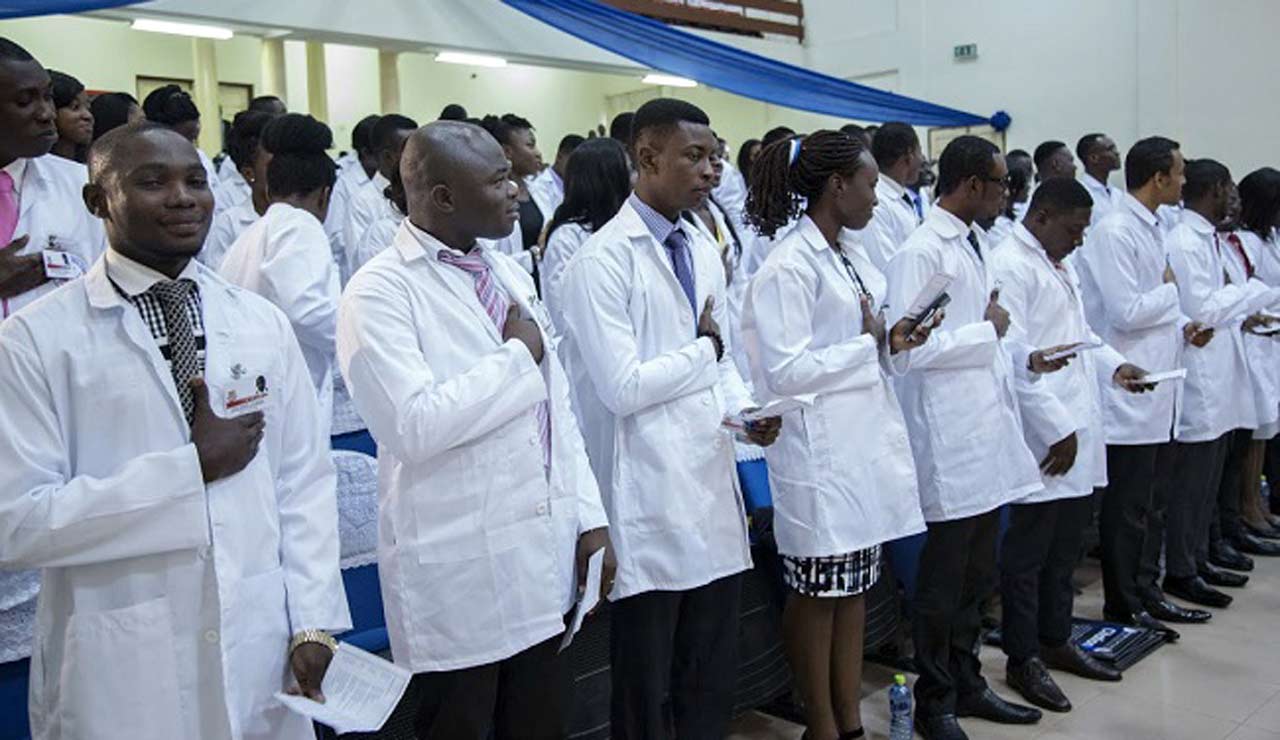
Amina Buba is the first female urologic surgeon from Northern Nigeria, and we got the opportunity to have a quick chat with her after achieving another milestone by being awarded the Mbonu/Anugwu prize as the best candidate in the West African College of Surgeons Urology Fellowship Examinations. This also makes her the third female urologist to be awarded the Urology prize in the college’s nearly 60-year history. 

Can you share some insights into your journey to becoming a urology specialist?

Interestingly, my journey into Urology was never planned. In fact, throughout medical school, I never contemplated specialising in Urology. I wanted to become a gynaecologist. I attended conferences and even won a prize for my work in obstetrics and gynaecology as a medical student. However, when I qualified as a doctor and did a rotation in gynaecology, I quickly realised that the surgery attracted me to that speciality. I also didn’t quite enjoy the immense pressure that obstetricians faced (with respect to my O&G colleagues). Long story short, I began my surgical training by writing the Membership examinations of the Royal College of Surgeons, England. Then, I returned home to start my residency at the University of Abuja Teaching Hospital, Gwagwalada, to become a Breast/Oncoplastic surgeon.  

My first rotation as a surgical trainee was in Urology, and I fell in love with this speciality. I worked in a team where, despite the challenges of practising in Nigeria, people gave their best care to patients. I love that there are so many subspecialties in Urology and that it is constantly evolving. I owe a lot of my success to the people who taught and inspired me at the University of Abuja Teaching Hospital, where I started and completed my surgical training.

 What challenges did you encounter during your urology fellowship preparation, and how did you overcome them?

Training to become a fellow is a lengthy process that requires tenacity, physical and mental strength, and God’s guidance. It is also a great lesson in the power of patience and perseverance. Willpower and unshakeable faith are what got me through. I always “prayed like I didn’t work hard and worked like I didn’t pray.” I am so thankful to God for His continuous grace, mercy, and guidance.

Throughout my training, I was very fortunate to have had a solid support system, which superseded the noise of the few people who tried to discourage me. I always give credit to my family, friends and bosses. My parents never questioned my decision to specialise in a male-dominated speciality; instead, they constantly motivated me. My mum is a nurse by profession, so she understands medical terminology. Sometimes, I would sit her down and explain what I have studied during my exam preparation. She would ask me questions and challenge me.

My mum would surprise me with study desks and chairs when she noticed my posture changed because of long study hours. My dad would sometimes stay up late to wake me up to study, and my two older sisters are priceless! They were always at the other end of the phone, full of encouraging words. I also have a very small but close network of friends on speed dial. I cannot even begin to speak about the immense support I had from certain colleagues and bosses. There are too many names to mention, but I am sure they’ll know I am talking about them when they read this.

I found studying for a major examination difficult while still working full-time. I would sometimes function on 4 hours of sleep at night. I quickly learnt how to utilise every single minute of the day. I also learnt that the fellowship examination tests cumulative surgical knowledge gained over several years of training. Preparing for the fellowship exams starts on day 1 of surgical residency. I think I calmed down a bit with “burning the midnight oil” when I recognised this.

 How does it feel to be recognised as the Best Candidate in Urology by the West African College of Surgeons?

It’s very humbling! I feel deeply honoured, and I don’t think words can adequately capture how it feels to have one’s work recognised like this.

 As the third woman to win the Urology prize in the West African College of Surgeons history, what message do you have for other aspiring female surgeons?

Do not be blinded by the ‘female surgeon’ title. As my colleagues would say, ‘We are all surgeons, and there is no woman in surgery’. Your patients depend on you just as they do your male colleagues, so do not expect any special treatment because of your gender. After all, when you are standing in the operating room, knife in hand, those bleeding blood vessels do not bleed less ‘because the surgeon is a woman’. However, they bleed less in the hands of a skilled surgeon who dissects with care and sticks to the right surgical planes. Surgery is an apprenticeship; mastery is key, so work hard, and your work will speak for itself by God’s grace. I am still a work in progress, and I am constantly learning. I believe the only way to achieve prowess is through hard work. There are no shortcuts in surgery. Strive for excellence and do not accept mediocrity.

What advice would you give to medical students or young professionals interested in pursuing a career in urology?

Believe in yourself. I do not have two heads. If I can do it, so can you. Remember, dishonesty is the greatest disservice you can do to yourself, so be honest with yourself. And carefully introspect – why do you want to do this? Do you enjoy helping people? Do you have the tenacity? Can you work under stress and pressure? If yes – then go for it and give it your best. Maintain a good work-life balance whilst at it. Make sure you have a life outside of Surgery, identify good mentors, work hard and pray hard.

How do you plan to continue contributing to the urology and surgical education field in West Africa?

I plan to assume clinical, teaching and managerial roles in shaa Allah. I would like to see universal health coverage in Nigeria being established in my lifetime. Like I always say, our leaders ought to focus more on healthcare. The knock-on effects of neglecting healthcare systems are numerous. For example, regarding surgical training, you need patients to train appropriately. Patients are unwell and need to be treated whilst surgeons need to operate. The more surgeries a surgeon performs, the better they get. Where will you get the caseload/volume from if people are too poor to go to hospitals because they cannot afford to pay out of pocket, as seen today in most parts of the country? Let’s not even talk about the detrimental human, personal and economic effects of a lack of universal health coverage.

 What role do you see for women in urology in the future, both in West Africa and globally?

Globally, women are doing great things in Urology. For example, one of the global experts in Holmium laser enucleation of the prostate is an American female urologist called Amy Krambeck. Canadian and Swedish studies published in reputable journals have found patient outcomes to be better when operated on by female surgeons. As stated by Prof McNally in an article published recently, “Those women who have gone through the extraordinarily complex, difficult hurdles to become surgeons are the best of the best”.

Here in West Africa, we slowly embrace the idea that women in surgery are here to stay and that we can only grow from strength to strength. I soon saw women in urology become experts in their chosen subspecialties, delivering world-class surgical care and taking on teaching, leadership, and managerial roles as they changed the narrative and inspired future generations. Remember that women are natural multi-taskers!       

The crisis of godfatherism 

By Bilyamin Abdulmumin

Since 2007, when the two-term tenure of Fourth Republic governors ended, one godfather crisis or another has occurred. The outgoing clung on to the anointing for several reasons: influence in godson administration, protection from their misgovernance, or, last and least for many godfathers, continuity (although it is the most important factor for good governance). 

The surprising succession crisis brewing recently involved Uba Sani and Nasir El-Rufai. It was unexpected because El-Rufai did not appear to be interfering with the Kaduna government. Unlike Wike, El-Rufai, known for reading and writing books, might have learned the lesson from previous cases, but Sani took the fight to his door. 

Uba Sani shook the table when, in a town hall meeting (apparently held to burst the bubble), he lamented the burden of loans he inherited and decried the lack of money not only for infrastructure development but also for threatening the state’s ability to meet its current expenditures.

That outburst was followed by mixed reactions. Some commentators point to hindsight, stating that it was their prophecy that came to pass. But for some, it was a big trouble for Uba Sani because, according to this category, he was given the green light to become a senator for one thing: to pave the way for getting the loan. So, this category sees Uba Sani as an accomplice rather than a victim. They unearthed his videos eulogising El-Rufai, which trended. 

The double trouble for Sani was that the effect of the loss was visible in Kaduna state, so wowing the public became an uphill task. However, the current dollar-to-naira exchange rate compared to when the loan was secured is rather unfortunate.

 One primary beneficiary of this situation is Shehu Sani. The former senator of Kaduna Central used the situation to settle scores. He took the case on social media, profiling himself vindicated. 

On the contrary, a Nigerian figure who will be taken aback by the looming political crisis in Kaduna state is his eminent Sanusi Lamido Sanusi. During the KADINVEST 7.0, SLM extols marvellous achievements in Lagos state thanks to the continuity. 

Bola Ahmed Tinubu laid the foundation for the modern Lagos state, which Fashola built upon. When Ambode came continued, but when he wanted to digress, it cost him his second term ticket (this can happen in Lagos, where a serving governor failed a primary election); the fruit of continuity is just bearing fruit in Lagos state under Babajide Sonwo-Olu. 

Uba Sani was shown nodding his head in belief during the SLS lecture. I told myself that Kaduna is lucky because if Uba Sani could only service the debt and continue with some uncompleted buildings, Kaduna would be great. 

El-Rufai remained quiet in the saga, unlike his disquieted son Bashir El-Rufai, who was a junior to Bello El-Rufai. Several commentators confuse Bashir with Bello- the current serving house Rep. The latter was cut between the devil and the deep blue sea, he recently gave an interview in which he eulogised Uba Sani as his mentor, mentioning how Sani paved the way for him, not his father. He even mentioned something philosophical: if anyone wants to go far, he can’t dare join issues with his master; someone aware of this philosophy must be tied down between supporting his father or his boss.

A theory explaining Sani’s outburst with El-Rufai was that the former was being cajoled by the presidency. With no love lost between El-Rufai and the presidency, he must part ways with his boss.  

Apart from the godfather himself, loyalties are a major factor fanning the flames of discord. The outgoing lieutenant’s influence will be hanging in the balance while the new government loyalties stampede to establish their loyalty to the new government. It becomes a struggle for survival. 

In the reactionary salvo that Kaduna state women leaders fire on Uba Sani, reading in-between the line, one could easily figure out self-serving because she decried how Sani has not been responding to her requests.

 The leaders involved in such a situation are in a delicate balance. They need deliberate effort to piece together the puzzle (provided that it is not too late); otherwise, the matter will blow out of proportion.

Bilyamin Abdulmumin wrote via bilal4riid13@gmail.com.

Nigeria Customs Service Signs MoU with China customs to boost economic growth

By Sabiu Abdullahi

The Nigeria Customs Service (NCS) has signed a Memorandum of Understanding (MoU) with the General Administration of Customs of the People’s Republic of China (GACC) to enhance bilateral trade and economic growth. 

Comptroller-General of Customs (CGC) Adewale Adeniyi, who led a management team to Shenzhen, China, on May 8, 2024, noted the significance of the partnership, stating, “The relationship will create a cooperative mechanism for NCS and the GACC to collaborate on supply chain security standards and enhance the economic stability of both nations.” 

CGC Adeniyi expressed optimism that the MoU will boost import-export operations and benefit Micro, Small, and Medium-sized Enterprises (MSMEs) in Nigeria.

He also showed the exponential rise in e-commerce development, saying, “We know a lot of Nigerian companies and SMEs take advantage of the opportunities aided through e-commerce.” 

Representing Vice Minister Sun Yuning, Mr. Wang Lingjun of the General Administration of Customs signed the MoU on behalf of China and praised

CGC Adeniyi’s vision for the partnership, stating that it will create opportunities for Nigeria and China to collaborate on a wide range of economic issues and trade facilitation. 

The CGC appreciated the interest shown by China in signing the MoU and acknowledged the significant trade volume between the two nations, saying, “China is making the biggest trade in Nigeria, and the basic context of International Trade is ‘your export is our import’.” 

This development is expected to strengthen trade relations between Nigeria and China, promoting economic growth and cooperation between the two nations.

Tinubu orders review of cybersecurity levy, postpones introduction

By Sabiu Abdullahi

President Bola Ahmed Tinubu has instructed the Central Bank of Nigeria (CBN) to postpone the introduction of the cybersecurity levy.

The source revealed that the President is “sensitive to what Nigerians feel” and does not want to proceed with implementing a policy that adds to the burden of the people.

Therefore, he has asked the CBN to “hold off on that policy and review things again.” 

The cybersecurity levy was enacted in 2015 and signed by former President Goodluck Jonathan, but its implementation was scheduled to begin during Tinubu’s administration.

However, the President has decided to review the law to ensure that his government is not seen as “insensitive” to the needs of Nigerians. 

The source stated, “The President’s goal is not to just tax Nigerians like that. That is not his intention.”

As a result, the CBN has held off on instructing banks to start charging customers the cybersecurity levy. 

This development is seen as a welcome relief to Nigerians who were concerned about the additional financial burden the levy would have imposed.

The review of the cybersecurity levy is expected to take into account the concerns of stakeholders and ensure that any future implementation is done in a way that is fair and considerate of the needs of Nigerians.