NCS

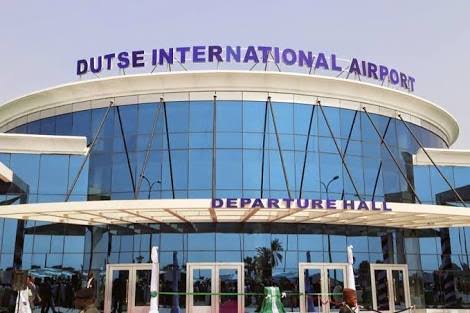
Governor Badaru and Governor Namadi and the Dutse International Airport: A Misuse of N11.5 Billion of Jigawa State’s Public Funds

–A costly decision demanding accountability, public scrutiny, trust, leadership priorities, and responsibility

By Nura Jibo MRICS, MNIQS, PQS, RQS, UN-DCP

If Muhammad Badaru’s eight-year stewardship as Jigawa State’s governor could not provoke his conscience to reflect on the abandonment of the N11.5 billion Dutse International Airport, from which Jigawa State’s public money was taken and used by Governor Sule Lamido, nothing will! 

If Governor Umar Namadi’s one-year display of overt leadership anger, just to play to the gallery while inspecting projects at Dutse General Hospital and Rasheed Shekoni, is any indication of god-fearing, at this point, he should be seeking Allah’s repentance and forgiveness for neglecting the Dutse International Airport that Governor Sule Lamido spent N11.5 billion to construct.

The issue is: It is not just about campaigning and winning public office. It is not about aspiring to be a governor, senator, minister, or president while relegating public responsibility. Indeed, it is about taking a substantial amount of Jigawa State’s money to build an airport that its ordinary citizens (Talakawa) have never benefited from. It is about earning public trust, accountability, responsibility, and excellence by safeguarding public funds and ensuring that the people of Jigawa State receive value for their money.

Anything short of this, one would inevitably appear before Allah SWT and answer for all misdeeds, inactions, and karmic retribution.

It is very painful to witness a project one participated in constructing being abandoned by Governors Badaru and Namadi after an enormous sum of N11.5 billion was spent on it. And the governors who do this are sleeping with both eyes closed! They forget that a day of reckoning is coming when they must appear before their Creator and answer the most difficult questions of their lives. 

The engineers from Jigawa State’s Due Process involved in this airport project are also unhappy with the abandonment of the Dutse International Airport.

The person who hired this writer as a supervising consultant for Dutse International Airport in 2013, Mallam Rabi’u Shuaibu Kazaure, then director of building at Jigawa State’s Due Process and Project Monitoring Bureau, has passed away. He was a man of integrity, sincerity, and honesty who diligently discharged his duties. May Allah bless him with Jannah and continue to reward his efforts in the airport project. 

Therefore, the deliberate killing and systemic lack of foresight and vision by the two governors regarding the Dutse Airport is not only negligent but also significantly affects the weak, crushing the innocent’s opportunity cost and marginal propensity to invest their billions in agribusiness and other Jigawa State science and technology developments.

Indeed, airport construction and management are not for everyone! It is not merely a governor’s affair! It is not a long-standing academic practice in which a governor would recruit or “shop” lecturers from universities and give them “lucrative” positions in Jigawa State, expecting them to perform miracles, while their true expertise lies in marking students’ scripts for years. They know nothing about industry knowledge beyond their rules of engagement as academics and their involvement in academic staff unionism, which they spent decades pursuing with little success! 

Managing Jigawa State’s departments and agencies is certainly beyond a mere academic exercise. It requires industry knowledge, not academic learning. It does not require mastery of the English language, where certain DGs in Governor Namadi’s cabinet, for example, could deceive the governor with all sorts of English grammar or polemics in the name of “fetching” Jigawa State government investors from abroad.

This could be elaborated more succinctly in a subsequent discussion on the mismanagement of Jigawa State’s funds by Governor Namadi and his DGs on foreign trips under the pretext of seeking investors for Jigawa State. If time permits, photos and videos could be released to substantiate this point!

Now back to the wasteful venture of the Dutse International Airport.

Governor Sule Lamido’s efforts must be acknowledged and appreciated for the construction of the Dutse International Airport. He single-handedly started this project in February 2013 and completed it in 18 months! This is certainly commendable for a governor who is primarily an administrator and a lifelong politician rather than a technical expert.

However, even Governor Lamido’s vision and mission for the airport could be faulted for his limited understanding of how airports are managed globally, particularly when the client (owner) lacks the resources to manage it. This writer has repeatedly communicated with Governor Lamido about the importance of handing over the entire airport to a reputable airline to operate it on behalf of the Jigawa State government. This is akin to an agreement reached with Captain Edward Boyo, the CEO of Overland Airways, who scheduled a three-day flight connecting Abuja, Dutse, and Bauchi. Unfortunately, the memorandum of understanding agreed upon with Overland was not honoured by Governor Badaru and his entire cabinet. Neither was it honoured by Governor Namadi, courtesy of political disputes arising from party differences, which ultimately led to the waste of Jigawa State’s people’s money and resources in perpetuity.

Very recently, in a conversation with top political office-holders in the state, they recounted their ordeals over their inability to make the airport functional and useful.

An investigation revealed that a South African company interested in the Dutse International Airport came and went without arriving at a common standpoint. Ethiopian Airlines was also revealed to have an interest in turning it into a cargo airport, but Governor Badaru and Governor Namadi’s lack of interest has hindered this line of business.

It is, therefore, foolhardy to talk about or dream of good governance when these two governors came and found a functional airport and, provocatively, made it dysfunctional for political reasons and personal interests best known to them, which are diametrically opposed to public interests. With this kind of behaviour alone, Allah SWT will, insha’ Allah, never allow them to go scot-free, given their lack of responsibility and public trust in sustaining the airport for well over 10 years now! The airport could have at least covered its full construction cost by now! 

For instance, the Murtala Mohammed International Airport in Ikeja, Lagos, is a federal asset managed by the Federal Airports Authority of Nigeria (FAAN) and the Nigerian Customs Service (NCS). Its Customs revenue alone as of 2025 was reported at N202.9 billion! The airport’s FAAN revenue in 2024 was the highest in Nigeria, accounting for an average of 67% of its total revenue of N256 billion.

Malam Aminu Kano International Airport in Kano generated N20.2 billion in revenue, accounting for 5.3% of FAAN’s total revenue in 2024!

Therefore, the Dutse International Airport could have generated at least N50 billion in 10 years (2015-2025) if it had not been left idle or used solely for Hajj ceremonial shuttling by Governor Badaru and Governor Namadi.

Though the revenue from the Ikeja and Kano airports goes to the federal government of Nigeria, by comparison, Lagos State and Kano benefit from increased economic activity due to the presence of NAHCO and SAHCO, as well as from personal income taxes paid by workers and businesses operating in the airports’ vicinity.

This is what the people of Jigawa lost due to Governor Badaru and Namadi’s neglect of the Dutse International Airport for well over 10 years! 

Indeed, on a daily basis, Ikeja airport’s customs could generate an average of N555 million in import/customs duties if its reported 2024/2025 revenue of N256 billion is anything to go by. 

Governors Badaru and Namadi’s avoidance of this airport responsibility since 2015, by portraying it as a ceremonial airport for commuting Hajj pilgrims, is not only detrimental but also exposes the political leaders’ lack of foresight and mismanagement of public funds. 

The indecision regarding the Dutse International Airport by Governor Badaru and Governor Namadi contravenes FAAN’s three measurable KPIs, which include on-time operations, revenue growth, and passenger satisfaction.

Solutions 

Globally, airports are assessed against standards and quality. Dutse International Airport was built to standard. Its runway is 3 kilometres long, and the airport’s width is 60 metres. It is, by all standards, suitable for large aircraft such as the Boeing 747 to land on its runway, with an average concrete and asphalt thickness of seven meters! This does not fall short of the global requirements for the longest runways at the world’s biggest and top 10 airports, with an average length of three to five kilometres.

The financial and economic losses at Dutse International Airport are significant due to the Jigawa state government’s lack of leadership priorities, as evidenced by the management of international airports in Rwanda, Addis Ababa, Qatar, Gatwick, and Heathrow, among others. Taking time, for example, by Governor Namadi to go to the Qatari Embassy in Abuja with a very junior high school colleague to meet with the Qatari Ambassador or inviting him to see the airport, is not the way to woo partners or encourage Qatar Airways to partner with Dutse International Airport. The ambassador’s duty is certainly diplomatic, not technical; he is not in any way going to help the Jigawa state government, technically speaking, make its airport useful. The Qatari people are law-abiding individuals known worldwide for their uprightness and accountability. They mostly engage in charitable and educational programs for deprived communities, as witnessed in Gaza, Palestine, Syria, and in Dutse and Hadejia, Nigeria.

To make Dutse International Airport useful, one must look beyond the banal and quibbling issues of political sentiments and personal interests.

The airport could have been taken in partnership with Qatar Airways if the proper partnership channels had been communicated to Qatar Airways’ commercial department in Doha. It could have been salvaged if, for example, direct contact had been established with Rwandan Airlines rather than Ethiopian Airlines. It could have doubled its construction cost in revenue if the two governors had done their homework very well through Jigawa State’s international partnerships and linkages. This department could have liaised with Gatwick or London Heathrow Airports, for example, in the United Kingdom, or even with Frankfurt Airport in Germany, to take over the management of Dutse International Airport and enter an agreement, inter alia and ab initio, at a 50-50 business fee. 

Lufthansa, for example, offers extensive partnerships and connections linking East and North Africa. There is no harm whatsoever in giving the Dutse International Airport management to Frankfurt’s Lufthansa as an up-taker, or to Madrid Barajas Airport (MAD), which is currently interested in African partnerships by shuttling its flights to connect to various African geographical locations such as Chad, Niger Republic, Rwanda, Ghana, Cameroon, Kenya, Uganda, Senegal, and Mali, to mention but a few. 

Royal Air Maroc could also have been a strong partner to the Jigawa State government and to Dutse International Airport, beyond the Overland domestic partnership that was caught up in Badaru’s and Namadi’s political acrobatics. Indeed, Dutse International Airport, within this 10-12-year period of neglect by the two governors, could have been used to provide serious dollars to the Jigawa State government from abroad and a couple of billions of naira on domestic flight arrangements and agreements, because it would have certainly offered the highest frequency of flight influx and a “buffer” zone from Europe to the west and Sahelian Africa, allowing easy accessibility to passengers and cargo into major African airports like Cape Town, Casablanca, and Addis Ababa etc.

Unfortunately, the current governor is busy shuttling between China and India to invite investors to invest in Jigawa State, with minimal progress that is often overamplified by his new media aides.

Therefore, what is wrong, useless, and should be avoided is what an academic once described as hot-air jargon, popularly known as Dogon Turanci. The Jigawa State government should take the management of its international airport seriously by inviting up-takers to handle the airport for a couple of years, with its staff and technical personnel. No Nigerian or Jigawa indigene should be employed to work at the check-in and check-out counters or security points to avoid passengers begging for money (dollars), which is typical of Nigerian-trained and employed airport staff and has caused significant damage to Nigeria’s integrity and national image. 

Nura Jibo writes for the West African Research Association (WARA) and the African Studies Centre at Boston University, United States.

Rebuttals to this piece are welcome and healthy. They can be submitted to jibonura@yahoo.com.

NCS denies viral social media list on 2025 recruitment shortlist

By Muhammad Sulaiman

The Nigeria Customs Service (NCS) has dismissed as false a viral social media post claiming to reveal the number of shortlisted candidates per state for the final stage of its 2025 recruitment exercise.

In a public disclaimer, the Service clarified that the publication did not originate from any of its official communication channels and urged the public, especially applicants, to disregard the information entirely.

According to the NCS, the ongoing recruitment process began with an official advertisement on December 27, 2024, attracting a total of 573,523 applications across the Superintendent, Inspectorate, and Customs Assistant cadres. After an initial documentary screening, 286,697 candidates were shortlisted for the first phase of the Computer-Based Test (CBT).

The Service further explained that while all cadres took part in the CBT, only successful applicants under the Superintendent Cadre were invited for the second phase, which will be conducted across the six geopolitical zones in line with candidates’ states of origin.

The NCS reaffirmed its commitment to a transparent, fair, and merit-driven recruitment process, in accordance with the Federal Character principle. It also advised applicants to rely solely on official updates via the NCS Recruitment Update Portal at https://updates.customs.gov.ng for verified information.

Customs, NIPR FCT chapter partner to promote professionalism, excellence in PR

By Sabiu Abdullahi

The Nigeria Customs Service (NCS) and the Federal Capital Territory (FCT) Chapter of the Nigerian Institute of Public Relations (NIPR) have pledged to work together to advance ethical standards, professionalism, and effective communication in the field of public relations.

This commitment followed a courtesy visit by the National Public Relations Officer of the NCS, Assistant Comptroller Abdullahi Maiwada, to the NIPR FCT Secretariat in Abuja on May 16, 2025.

Maiwada, who was accompanied by a team from the Public Relations Unit of the NCS, stated that the engagement was intended to build stronger institutional relationships and encourage the exchange of knowledge between the Service and the professional body.

“We believe that excellence and professionalism should be the hallmark of our practice of Public Relations in the Nigeria Customs Service and beyond,” he said.

He also noted that the unit he leads is powered by youthful determination and the consistent support of the Comptroller-General of Customs, Adewale Adeniyi.

In his response, the NIPR FCT Chapter Chairman, Stanley Ogadigo, applauded the NCS for its efforts in public communication, especially under the current leadership.

“We’re glad that the Comptroller-General of Customs has not disappointed us. He’s doing a great job and remains a shining example,” Ogadigo said.

He also gave assurance of the NIPR’s commitment to supporting projects aimed at raising standards in public sector public relations.

According to him, areas of cooperation would include capacity building, joint advocacy, and corporate social responsibility.During the meeting, participants explored opportunities for training, professional development, and ways to respond to the fast-changing media environment with improved public communication strategies.

Both organizations restated their commitment to continuous learning and to boosting the trustworthiness of public institutions through responsible and strategic public relations practices.

The engagement concluded with mutual assurance from both the NCS and NIPR FCT Chapter to explore beneficial partnerships that would enhance communication across the public sector.

NCS wraps up training workshop on strategic communication, new media

By Sabiu Abdullahi

The Nigeria Customs Service (NCS) has successfully completed a three-day workshop focused on equipping its Public Relations personnel with essential skills in digital communication and media strategy.

The training, which held from May 7 to 9, 2025, at the NCS Headquarters in Abuja, was organised in partnership with Youth Digest.

The hybrid event brought together Public Relations Officers from various Commands, as well as reporters, editors, and staff from the PR Unit.

The sessions covered several key areas including digital engagement, strategic communication, content creation, and media innovation.

Participants also explored topics such as editorial workflows, inclusive language, house style development, visual storytelling, design principles, and media law.

In his keynote address, delivered by Assistant Comptroller-General Isah Umar, the Comptroller-General of Customs, Adewale Adeniyi, underscored the importance of effective communication in achieving the Service’s modernisation goals and improving public engagement.

“Today marks a key step in the development of officers charged with promoting the Nigeria Customs Service,” ACG Umar stated. “Capacity building is essential. I urge our younger officers to learn from the expertise of the professionals gathered here.”

National Public Relations Officer and Assistant Comptroller Abdullahi Maiwada, who actively participated in the training, advised attendees to remain committed to learning and self-improvement.

“This training is vital. Knowledge is endless, and we must seize every opportunity to grow. What we’ve learned here can greatly enhance our professional effectiveness,” he said.

“In the past three days, we’ve shared valuable insights. Let’s apply these lessons to improve both ourselves and the Service.”

The workshop ended with a certificate ceremony acknowledging the participants’ dedication to enhancing their professional skills.

Nigeria Customs college graduates 50 officers from Junior Course 21

By Sabiu Abdullahi

Fifty officers of the Nigeria Customs Service have successfully completed the Junior Course 21 at the Nigeria Customs Command and Staff College (NCCSC), Gwagwalada.

The intensive three-month programme was designed to boost the management capacity of mid-level officers within the Service.

Activities marking the end of the course began with a regimental dinner held on Wednesday, 30 April 2025.

The formal graduation ceremony followed two days later, taking place on Friday, 2 May 2025, at the Ahmad Makarfi Hall within the College premises.

The Comptroller-General of Customs, Adewale Adeniyi, was represented at both events by Deputy Comptroller-General (DCG) Suleiman Chiroma, who is in charge of the Training and Doctrine Command (TRADOC).

In his address to the graduating officers, DCG Chiroma praised their dedication and resilience.

He encouraged them to remain steadfast in the values of discipline, integrity, and professionalism.

“The College has equipped you with the requisite knowledge for higher staff and command responsibilities,” he said. “Your value to the Service and your fatherland has been greatly enhanced, and you are now better prepared to contribute meaningfully to the attainment of our strategic objectives.”

Assistant Comptroller-General (ACG) Oluyomi Adebakin, who serves as the College’s Commandant, also spoke at the event. She congratulated the officers and reminded them of the institution’s high standards.

“The Nigeria Customs Service has invested significantly in your development. You must make the most of this opportunity. The College maintains zero tolerance for indiscipline and mediocrity will not be celebrated,” she stated.

The ceremony featured the award of certificates and the conferment of the Passed Junior Staff Course (PJSC) qualification on the officers.

The graduates expressed appreciation for the training, noting its positive impact on their leadership and operational skills.

The officers are now expected to assume key responsibilities across various commands and units, contributing to the Service’s national mandate.

NCS implements executive order to uplift local healthcare manufacturing

By Sabiu Abdullahi

The Nigeria Customs Service (NCS) has announced the implementation of a Presidential Executive Order aimed at strengthening local production of healthcare products, which will reduce the cost of medical equipment and consumables.

According to the NCS, President Bola Ahmed Tinubu approved the guidelines for this initiative through the Honourable Minister of Finance and Coordinating Minister of the Economy, Olawale Edun.As part of the directive, the government has granted a two-year exemption from import duty and Value Added Tax (VAT) on essential raw materials used in pharmaceutical production.

These include Active Pharmaceutical Ingredients (APIs), excipients, and other key materials required for manufacturing essential medicines, Long-Lasting Insecticidal Nets (LLINs), Rapid Diagnostic Kits, reagents, and packaging materials.

To ensure that only qualified manufacturers benefit from these incentives, eligibility is restricted to pharmaceutical producers recognised by the Federal Ministry of Health and Social Welfare.

Additionally, such manufacturers must possess a valid Tax Identification Number (TIN).In a move to enhance transparency and accountability, the NCS will generate quarterly reports detailing all importations under the policy.

These reports will include information on importers, quantities, and the value of imported items to ensure proper oversight.Reaffirming its commitment to supporting government policies, the NCS emphasised its role in trade facilitation, border security, and national development.

It also called on all stakeholders, including importers, manufacturers, and relevant government agencies, to collaborate in ensuring the success of this initiative.

“The successful implementation of this policy requires collaboration from all stakeholders, including importers, manufacturers, and relevant government agencies. Through our collective efforts, we can achieve the shared goal of a robust healthcare sector that meets the needs of all Nigerians,” the statement read.

Nigeria Customs Service, World Customs Organization launch dender diversity workshop

 By Sabiu Abdullahi 

The Nigeria Customs Service (NCS) has teamed up with the World Customs Organization (WCO) to host a workshop on “Gender Diversity” at the Old Federal Secretariat in Garki, Abuja.

The event, which began on Monday, October 28, 2024, reaffirms Comptroller-General Bashir Adewale Adeniyi’s commitment to creating a work environment where every officer thrives, regardless of gender. 

Chief Superintendent of Customs Zara Musa, representing Deputy Comptroller-General Caroline Niagwan, emphasized the workshop’s importance in fostering a workplace with equal opportunities for growth and success.

“This workshop will pave the way for officers to contribute fully to the Service’s success, regardless of gender. CGC Adeniyi remains committed to nurturing a gender-inclusive environment within the NCS,” Musa stated. 

This initiative follows a previous capacity-building session in April 2024 on gender inclusivity, demonstrating CGC Adeniyi’s efforts to advance gender equality across the Service.

“These initiatives form a series of efforts under CGC Adeniyi’s tenure aimed at advancing gender equality across the Service, promoting a culture where diverse perspectives contribute to enhanced Customs operations,” the National Contact Point added. 

Jennifer Goistene Burs from the WCO highlighted the strategic impact of gender inclusivity on service delivery.

“We are committed to supporting the Nigeria Customs Service in finalizing the draft action plan on Gender Equality and Diversity, which was developed following the sub-regional workshop organized in April,” she said.

Experts Sendra Chihaka from Zimbabwe and Johanna Tornstrom also shared insights on fostering a supportive workplace culture. 

The WCO has been actively promoting gender equality and diversity in customs administrations globally, providing tools and resources to support its members.

This collaborative effort between the NCS and WCO aims to strengthen inclusivity and empower officers to contribute to the Service’s success.

Nigeria Customs Launches B’Odogwu, unified management system to upgrade trade efficiency

By Sabiu Abdullahi

The Nigeria Customs Service (NCS) has launched B’Odogwu, a revolutionary Unified Customs Management System, commencing with a pilot phase in Lagos at Port & Terminal Multi-Services Limited (PTML).

This innovative platform represents a significant milestone in Nigeria Customs’ modernisation journey, aligning with global best practices. 

Comptroller General of Customs, Adewale Adeniyi, noted the significance of B’Odogwu, stating, “B’Odogwu is our new customs management system that embodies our vision for a paperless customs administration that facilitates seamless trade while maintaining robust security measures.”

He noted that B’Odogwu will eventually replace the current Nigeria Integrated Customs Information System (NICIS II) as the NCS Legacy System. 

The system’s development acknowledges the forthcoming National Single Window and will integrate with it upon implementation by the Federal Government.

Adeniyi revealed the legal framework supporting the initiative, citing sections 28 and 29 of the Nigeria Customs Service Act 2023, which empower the Service to develop, maintain, and employ electronic systems while ensuring transparency and stakeholder consultation. 

Adeniyi urged stakeholders to embrace the change optimistically, providing constructive feedback to refine and improve the system. “B’Odogwu will enhance our ability to streamline end-to-end business processes, provide stakeholders with customised integration capabilities, support more efficient and intelligent business decisions, and facilitate ease of doing business,” he said.

The Comptroller General expressed gratitude to terminal operators, customs officers, licensed customs agents, and the Trade Modernisation Project team for their support. He charged PTML command officers to take training seriously, as they will implement the system in other commands. 

The Association of Nigerian Licensed Customs Agents (ANLCA) has declared support for the initiative, acknowledging the transformation of the clearing profession.

Customs CG appoints new management members in acting capacity

By Sabiu Abdullahi

The Comptroller General of Customs, Bashir Adewale Adeniyi, has announced key management appointments and redeployments within the Nigeria Customs Service (NCS) following the statutory retirement of some management team members.

BM Jibo has been appointed as Acting Deputy Comptroller General of Finance Administration and Technical Services (FATS), while OA Alajogun takes on the role of Acting Deputy Comptroller General of Enforcement, Inspection and Investigation (EI&I).

IG Umar has been redeployed as Acting Assistant Comptroller General of Headquarters, OA Salefu as Acting Assistant Comptroller General of Training and Doctrine Command (TRADOC), BA Makinde as Acting Assistant Comptroller General of Human Resource Development (HRD), and T Bomodi as Acting Assistant Comptroller General of Enforcement, Inspection and Investigation (EI&I).

The appointments, made in acting capacity, aim to enhance strategic service delivery and are a testament to the officers’ exemplary services and dedication to the NCS.

Adeniyi congratulated the newly appointed officers, charging them to “redouble their efforts to ensure the Service achieves greater heights in its mandates of revenue generation, suppression of smuggling and trade facilitation.”

The Comptroller General also thanked the retired members of the management for their meritorious services.

Nigeria Customs Service vows to boost border security, facilitate trade with technology

By Sabiu Abdullahi

The Nigeria Customs Service (NCS) has pledged to strengthen its partnership with the Defence Research and Development Bureau (DRDB) to enhance security presence at borderlines across the country.

Comptroller-General of Customs, Bashir Adewale Adeniyi, made this commitment on Tuesday, July 30, 2024, when he received a delegation from the DRDB led by Major General Emmanuel Ndagi. 

Adeniyi stated the importance of leveraging technological advancements to achieve economic growth, stating, “I see a lot of possibilities that will continue to evolve between the Nigeria Customs Service and DRDB in the area of technology because we live in the age of technology now.” 

He highlighted the NCS’s commitment to research and development, saying, “We believe that any organisation that ignores research and developments might be digging its own grave… We have set up a structure devoted to our special intelligence, and a Command and Staff College, where we engage our students in periodic research and operations.” 

Major General Ndagi, Director-General of DRDB, expressed optimism about the partnership, stating, “Addressing these challenges with compassion and jointly developing technologies that address border security concerns will help us to fortify our border areas.” 

The partnership aims to combat border crimes using geospatial intelligence and coordinate significant operations at border areas across the federation.