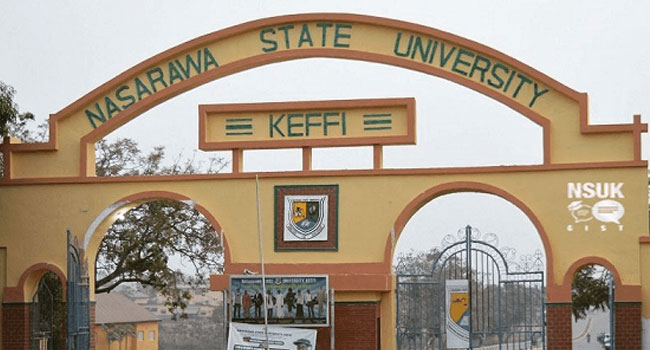
Nassarawa State University

A PhD Is Not A Souvenir

By Prof. Abdelghaffar Amoka

I know Nasarawa State University, Keffi (NSUK), to some extent. In fact, part of the reason I submitted a sabbatical application there in 2024 was to get to know the university better, though I did not receive a response.

From what I know, Nasarawa State University, Keffi, is one of the fastest-growing universities in Nigeria. I have friends there. I also have very close associates pursuing their PhDs there, and they are doing very well.

A major reason for the university’s steady rise is something many people do not talk about enough: since its creation, successive governors of the state have largely allowed the university’s administration to breathe. That kind of non-interference matters. Universities grow when politics does not sit permanently on the neck of scholarship.

Its proximity to Abuja also gives it an undeniable advantage. Patronage from the capital is high. In fact, from some parts of Abuja, NSUK is easier to reach than the University of Abuja. 

Now to the uncomfortable part.

The graduation of a very large number of PhD candidates naturally raises questions. It should. In a country where too many people now chase titles over scholarship, any university that produces large numbers of doctoral graduates will attract scrutiny. That scrutiny should not be treated as hostility.

Every university has strong PhDs and weak PhDs. That is the truth. No institution is automatically exempt. Personally, I have not yet encountered a weak PhD graduate from NSUK, which is why I did not rush to join the noise.

But let us be honest with ourselves: when academics raise questions about standards, it should not be dismissed as envy, malice, or institutional rivalry. It should be seen for what it ought to be — a call to tighten the loose nuts before the system becomes attractive to those looking for the cheapest possible route to a title.

There is no doubt that we are a people that is in love with titles. That is why you will see an HND holder who is a political appointee with a name and titles like Chief Dr Hajiya XXXX. But with the recent decision of the Federal Executive Council on the misuse of the Dr title by honorary doctorate awardees and the prohibition of awarding honorary doctorates to serving political officeholders, the quest for the cheapest possible route to a PhD for the Dr title will increase. Meanwhile, the integrity of these degrees is in our hands. 

As academics, the university system is our immediate constituency. For decades, academics have fought governments to prevent the collapse of Nigerian universities. It would be a tragic contradiction if we were now to become participants in the internal erosion of the very system we once defended against external destruction.

Our degrees must mean something. Our universities must remain places where scholarship is earned, not merely awarded. Whether we admit it or not, the quality of our young people in the future is being shaped in our lecture rooms, laboratories, and supervision meetings.
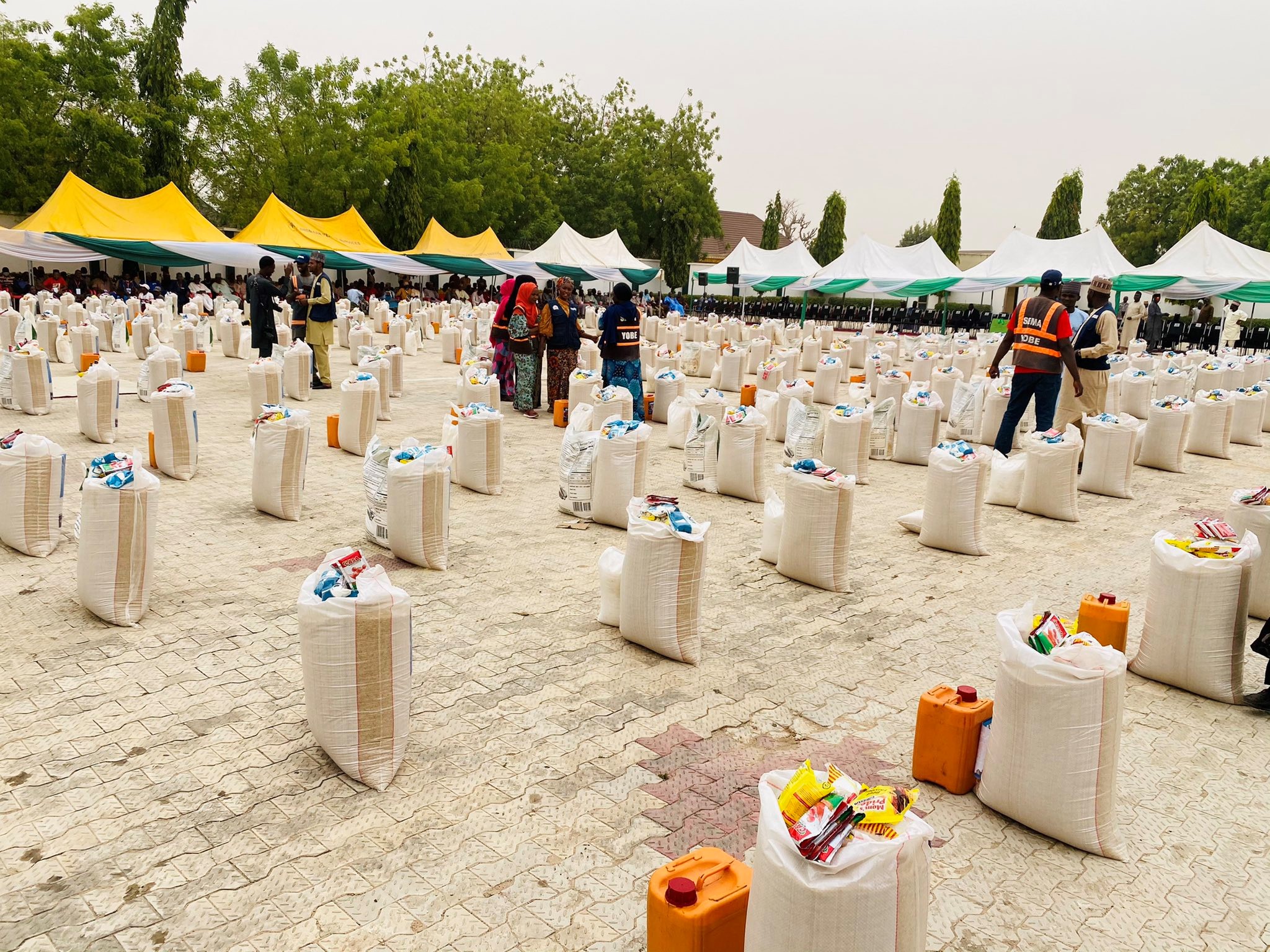
Palliative Tragedy: Distributions in tertiary institutions can go differently

Bello Hussein Adoto

The tragic deaths of two students and the injury of 23 more at the botched distribution of palliatives at Nasarawa State University on Friday is a disturbing addition to what has been a troubling period for undergraduates in Nigeria.

Just last Friday, nine students of Federal University Gusau regained their freedom after spending over 170 days in terrorists’ captivity. On Thursday, three medical students of Abia State University died in a road traffic accident while returning from their seniors’ induction.

Unlike these other tragedies, however, the Nasarawa stampede could have been envisaged and prevented. The successful distribution of similar palliatives at the University of Ilorin shows us how we can do things differently.

Following subsidy removal and the attendant inflation in the country, several state governments distributed palliatives—foodstuffs and stipends—to ease the economic burden on citizens. Some states like Kwara and Nasarawa recently extended the palliatives to students in their tertiary institutions.

The initial distribution of the palliatives across institutions in Nasarawa state was peaceful. A government statement released after Friday’s stampede noted that previous distributions were “a huge success.” Students got two 7.5 kg bags of rice and 5,000 naira each.

However, events leading to the stampede at Nasarawa State University, Keffi, points towards a mismanagement of crowd control by the organizers responsible for distributing the palliatives. According to media reports, the palliatives were scheduled at the university convocation square until students arrived in large numbers and disrupted the distribution.

“After our arrangement for the distribution of palliatives to the students which was to hold at the University’s convocation square, they (students) suddenly arrived at the venue in their numbers and overpowered the security,” said Yunusa Baduku, National President of the Nasarawa State Students Association, in a Punch Online report.

He added that the students “broke through the gate into the Convocation square where the bags of rice was to be shared,” leading to the stampede that consumed the two students and injured many more.

Sadly, such chaos is not new. In February, the Nigerian Customs Service had to suspend its sale of seized bags of rice after seven people died at one of its centres in Yaba, Lagos. Some two years ago, 31 people died at a stampede at the King’s Assembly in Rivers state church during the distribution of palliatives to church members; seven more were injured.

Although the state governor, in a statement by his Chief Press Secretary, was quoted as calling the tragedy “a needless stampede,” the state could have prepared better for it. Distribution events, especially those intended to provide aid or relief, tend to draw large crowds, making effective crowd control essential.

In Unilorin, for instance, where students received palliatives—cartons of noodles—from the Kwara State government, distributions were such that students did not have to gather in their numbers at the arena or use vouchers.

The government sent the palliatives to the university, who distributed them to the faculties. From the faculties, they were distributed to departments, where class representatives from each level went to retrieve the packages for their class. It was as seamless as public distributions go.

I suppose the Unilorin model could help other tertiary institutions plan more effectively. The university leveraged student associations and divided the population into manageable chunks. Such divisions made it difficult for hoodlums to gatecrash, as the class reps knew their colleagues. The strategy also eased accountability.

While I admit there is a risk of student representatives appropriating the palliatives or shortchanging their colleagues, this is more manageable than asking a crowd of desperate undergraduates to gather for government handouts.

A departmental or level advisor can be mandated to coordinate the distribution, even if he has to be paid or receive palliatives, too. It is not likely that the coordinator will conspire with the student reps to loot the palliatives. In the rare event that that happens, then so be it. Nigeria students have suffered enough than to die in avoidable stampedes.

Adoto writes from Ilorin via bellohussein210@gmail.com.