Muslims

From Proliferating Worship Places to Empowering Worshippers: A Reflection on Philanthropic Reprioritization in Nigeria (I)

By Abdullahi Abubakar Lamido

Alhaji Halilu is a popular, wealthy businessman. Famous for his continuous investment in constructing mosques, people in his town, surrounding villages and neighbouring states came to know him as Alhaji Mai-Masallatai (roughly, the Mosques Builder). His main motivation is the authentic hadith that promises a house in paradise for anyone who builds a mosque for Allah.

Thus, whenever Mai-Masallatai is approached with a request for mosque construction, he gives an automatic positive response. Alhaji dedicated all his philanthropic budget to building mosques, with virtually zero allocation to any other act of charity. He never says no to a mosque request. Within some time, he had constructed mosques for almost all the communities within his town and neighbouring villages. His ultimate goal is to own wonderful castles in heaven, and, Alhamdulillah, he has got a guarantee for that in constructing mosques from an infallible mouth. 

Now, three things happened. One, as there are not many communities lacking mosques, people started requesting him to repair the mosques he built for them last five, ten or seven years; to rebuild their mosque, repair it, or buy them new sound system, new carpet for the mosque, electricity generator, or “solar” and so on. Mai-Masallatai gradually transformed into Mai gyaran Masallatai, from building mosques to redecorating and making existing mosques “befitting” and ultramodern.

The second trend then followed. Since Mai-Masallatai is not the only aspirant for paradise, other wealthy persons joined the mosque construction endeavour. As a result, the number of mosques increases – two or more mosques in an unnecessarily close distance. A  community that needs one mosque would request a second one for flimsy reasons; we have Sheikh XYZ, who should be an imam and has no mosque; why not get one for him so the society would benefit from his imamship! And any rich man who builds a new house would ensure that a mosque is embedded from the inception of the architectural design. So, each neighbourhood or street, and almost each “big” house, has a mosque attachment built by a person who wants paradise. Soon the third issue began to arise; imams scarcity.

It is noteworthy that Mai-Masallatai and all his emulators live and do business within a Muslim community that has thousands of orphans who live in hunger, disease, illness and squalor. They coexist with hundreds of widows who survive in shabbiness, battling the spiritual ills, psychological traumas and socio-economic vulnerabilities associated with poverty, ignorance and starvation. They reside in neighbourhoods bedevilled with noise, air and dirt population, with zero consciousness of environmental challenges; where people often urinate and defecate in the open, at public passages and places as crucial as mosques and marketplaces and stadia. They live in communities that use firewood as an energy source but with near-zero interest in planting trees.

Mai-Masallatai builds mosques for communities where well above 80% of the people cannot correctly recite the Fatiha and are mostly ignorant of the basics of purification, ablution and prayer. The worship places are beautiful, “befitting”, and “ultra-modern”. But the worshippers are ultra-ignorant, extra-hungry and super-poor. While the mosques are decorated, the mosque attendants are neglected.

The community severely lacks qualified imams and doesn’t have a plan to train religious scholars or imams. Nearly all are accidental scholars and imams. Most imams are less qualified, semi-qualified, or simply unqualified. Those with minimum requirements have no access to any “on the job training” and retraining. They have no grounding in jurisprudence nor appreciation of the complexities of their time and place. They might know a little of actually elementary Islamic texts, but not of their context. They continue to recycle their khutbas, reading for their congregation – often with a lot of mistakes – imported sermons presented for the 20th-century audience in Egypt or Morocco or Saudi Arabia or Algeria (depending upon the inclination of the imams), which are compiled in a collection of sermons or al-khutab al-minbariyya. The sermons are in Arabic, reread for an audience dominated by over 90% of people who do not understand Arabic except, perhaps, “Allahu Akbar”!  

Dear reader, to what extent is your community better than Mai-Masallatai’s? Should building worship places take priority over building the worshippers? Should we continue to construct “befitting”, “ultramodern”, and “world-class” mosques for largely poor, ignorant and confused Muslim communities? Should we, while, of course, building mosques where they are truly needed, not also prioritize producing a Muslim population that is religiously educated, morally upright, intellectually sound, socio-economic dignified and religiously conscious. What better serves the essence of the mosque as an Islamic institution: a beautiful building or an educated congregation? Should building mosques be the only priority in a village where there is not even a single person learned in the Qur’an and the jurisprudence of purification, ablution, prayer, fasting, and other rituals?

More questions are begging for answers. For example, what will be more critical between saving people’s faith through addressing their basic needs of life, thereby shielding them from the onslaughts of evangelism and other anti-Islamic missions on the one hand, and mere building a mosque where there are no qualified imams and scholars to teach them creed and worship on the other? Should we continue to have “comfortable places” for ignorant and hungry worshippers rather than building conscious and educated worshippers? 

Given the current religious and socio-economic realities of Muslims in Nigeria, what should be the focus and priority areas of intervention in terms of philanthropy? Please don’t mistake my position. No Muslims will disagree regarding the centrality of mosques as Islamic symbol numero uno. Where there is no mosque, it is a collective responsibility upon the Muslims to build one to the best of their ability. What, however, may need reflection is the question of when, where and why building a mosque should take primacy vis-à-vis other Muslim priorities and when not. Is it not imperative, for instance, for us to begin to remind ourselves that much as we can get a shortcut to paradise through building mosques, there are other philanthropic acts that not only guarantee paradise but even assure of a choice area and unmatchable edifice in Jannah?

Abdullahi Abubakar Lamido is the Chairman Zakah and Waqf Foundation Gombe, Nigeria. He can be reached lamidomabudi@gmail.com.

Viral video shows how IPOB insurgents decapitate 2 Muslims

By Muhammad Sabiu

A viral video clip shows how some suspected terrorists working for the Indigenous People of Biafra (IPOB) beheaded two Northern Nigerian Muslims.

Daily Nigerian, an online newspaper, reports that the terrorists could be seen displaying the heads near an open fire, as they were jubilating “their feat and identifying the nose and forehead of one of the victims as “Hausa”.

As they were chanting different inciting words, juggling one of the two heads, one of the perpetrators said in the Igbo language, “This is a Hausa man now”, while another argued that the head was of a Fulani man.

Recall that IPOB terrorists maimed one driver of the Ɗangote trailer and some of his assistants in the past weeks.

IPOB has been notorious for killings and setting government and other detention facilities on fire.

The group leader, Nnamdi Kanu, was some months ago apprehended abroad and repatriated, and he is currently standing trial for treason, jumping bail and illegal possession of arms.

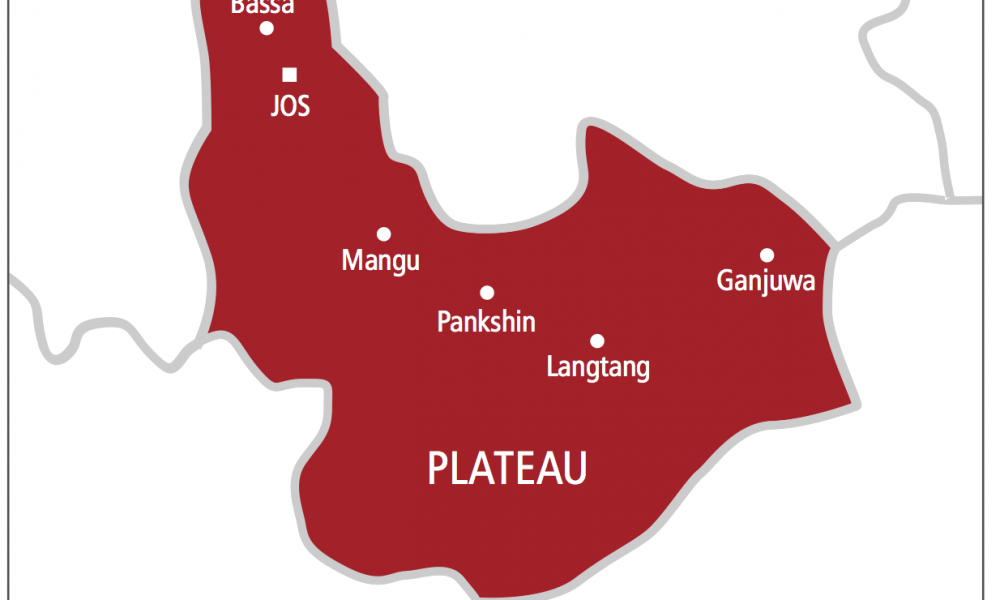
No Maulud procession in Plateau this year—Troops

By Muhammad Sabiu


The troops saddled with the responsibility of maintaining peace and order due to the fragile peace in Plateau State have declared that there would be no Maulud procession across the state this year.

The Troops, also codenamed as Operation Safe Heaven, have in a statement signed by their spokesperson, Major Ishaku Takwa, said they had been directed “to ensure that no group organises any form of procession during the period of the Maulud.”

According to the statement, “Operation Safe Haven has noted the arrangement by some Muslim Youths on the Plateau to hold a procession to commemorate the birth of Prophet Muhammad SAW (PBUH) on Tuesday, 19 October 2021.

“Information received also indicated that the procession is organised without the knowledge of Jamaatul Nasir Islam (JNI), security agencies and the Plateau state government.

Nevertheless, the troops indicated that “While felicitating with the entire Muslim ummah on the birth of Prophet Muhammad SAW (PBUH) and recognising the right to such processions under different circumstances, it is, however, expedient to state that the fragile peace on the Plateau does not present a conducive atmosphere for any form of procession at the moment.

“Further to this, Operation Safe Haven, therefore, wishes to draw the attention of the youths and members of the public on the ban of any kind of protest and procession in force in the state.

“The Military task force encourages Muslim faithfuls to observe the Maulud without any form of procession.

“The Commander, Operation Safe Haven, Major General Ibrahim Ali has directed troops to ensure that no group organises any form of procession during the period of the Maulud.”

Recall that there were in recent months a series of ethno-religious violent attacks and reprisals that led to the death of many and many others sustained injuries.

Maulud: Tuesday is public holiday—FG

By Muhammad Sabiu

Tuesday, October 19, has been declared by the Federal Government of Nigeria as a public holiday in commemoration of the Maulud celebration.

According to a statement signed by the Permanent Secretary, Ministry of Interior, Shuaib Belgore, on Friday, the Minister of Interior, Rauf Aregbesola, congratulated all Nigerian Muslims on the occasion of Eid-ul-Maulud.

Mr Aregbesola was quoted as saying, “As the indisputable leader of our race, we (Nigerians) must show responsible leadership in Africa.

“Irrespective of faith, ideology, social class and ethnicity, I urge you to cooperate with President Muhammadu Buhari’s administration in its effort to build a progressive and enviable nation that all citizens would be proud of.”

Making Waqf a serious business in Nigeria

By Abdullahi Abubakar Lamido


Waqf, translated as Islamic endowment, simply means a perpetual charity. As a strategic Islamic socio-economic institution, it entails dedicating a benefit-creating or revenue-generating asset for the sustainable provision of free public services to the society – especially for the less privileged. It can be created by an individual, a group of individuals, a corporate body or even a governmental institution. Waqfable asset is that which is legally owned by the endower and is cable of perpetually creating benefit or generating revenues which would be channelled to defined religious or charitable purposes.

From the dawn of Islam passing through the periods of the companions, Umayyads, Abbasids, Ayyubis and the Ottomans, waqf was maximally utilized as a unique instrument for addressing virtually all aspects of societal religious, economic, educational, healthcare and environmental development needs. In fact, what “substantial historical evidence” suggests, as established by Islamic economic historians like Murat Cizakca and before him, Marshall G.S. Hodgson, is that, “waqf, not zakah was the most important institution for redistribution of wealth” in Muslim history.

Historically, waqf has sufficiently financed virtually all aspects of public welfare and developmental needs, especially education and healthcare. To wit, in the area of education, it was used for building schools, libraries, laboratories, student hostels and lodgings for teachers, scholars and researchers. It also funded scholarships, payment of teachers’ salaries and the provision of food, clothing, learning and instruction materials as well as creating conducive teaching-learning atmospheres. Great Muslim Universities were built as waqfs and have continued to be substantially financed from waqf proceeds. It grew so ubiquitous that “A person can be born in a house belonging to a waqf, sleep in a cradle provided by that waqf, be educated in the school of the waqf and read the books provided by it, become a teacher in the waqf school, earn a waqf-financed salary and at his death be placed in a waqf-provided coffin for burial in a waqf cemetery”.

Relating to health, waqf has been used to build hospitals, clinics and medical laboratories which provide a wide range of free medical services, including surgery. It is documented that it was due to the advancement in service provision through waqf that the need was not even felt for governmental ministries or departments for education and health, as these were fully financed by waqfs.

Education and health were not the only areas of waqf interventions. Waqfs sustainably financed all forms of social, economic and community development services including transportation, environmental protection and beautification among others. At some historical epochs, various Muslim nations relied on waqf sources for a substantial portion of their national income.  Waqfs were used to finance the building and maintenance of mosques, traveller’s lodgings, orphanages, bridges, water-wells, public conveniences, soup kitchens, roads, street lights and gardens.  In fact, in many Muslim communities, waqfs were created for the sustainable provision of all conceivable public welfare services. Until the colonization of Muslim societies, waqf remained a significant contributor to socio-economic development in many Muslim countries. It was colonialism that changed the subject of the formula.

Having realized how waqf provided social, cultural and economic independence to especially Muslim scholars and intellectuals, who incidentally were usually the most resilient class against selfish imperial policies; the colonial “monsters”, implemented well-orchestrated policies that saw to the hibernation of the waqf sector. They syphoned many waqf assets, weakened many, deliberately rendered many irrelevant, and calculatingly destroyed the functioning and autonomy of waqfs by subjecting them to government control. They created governmental ministries that coordinate waqfs, with all the negative consequences of that.

Worth stressing is the fact that western imperialists destroyed the waqf system in Muslim lands only after they had already copied the concept from the Muslim Middle East through the crusaders, and then developed it as an instrument for financing developmental services. In her celebrated 1988 study titled “The Influence of the Islamic Law of Waqf on the Development of the Trust in England: The Case of Merton College”, Monica Gaudiosi established that it was actually the waqf institution that gave birth to the concept of Trusts and Foundations in the West.  Modified and enhanced waqf was used to establish great western institutions such as the Merton College which still shares clear similarities with the waqf institution. And except for a few changes in the English law of Trust, most features of waqf have remained unchanged in the western practice of Trusts till date.

Interestingly, for more than two decades now there has been a growing global waqf reawakening. From the Middle East to Africa, and from the West to the East, waqf consciousness has continued to balloon. Despite the big blow that colonialism did to the waqf sector, making it reduced to merely an atomized institution concerned with financing some aspects of the spiritualties, the global Muslim communities have now rejuvenated their commitment to reposition waqf as a dynamic Islamic, third sector socio-economic institution. Waqf is seen and promoted as an engine of poverty reduction, wealth creation and distribution, employment generation and socio-economic development. In 2016, the World Bank noted that if properly harnessed “even if partly”, waqf, alongside zakah, can eradicate poverty in Africa, the Middle East and Southeast Asia. For a long time, combine global assets are estimated to be close to USD 1 trillion and growing.

Conversely, the story of waqf in Nigeria is largely different from other Muslim communities like Turkey, Morocco, Egypt, Saudi Arabia, and even others like Malaysia, Indonesia and Singapore. Yes, waqf knowledge and practice have existed in Nigeria for well over a millennium. But for several reasons, including historical, it was not comprehensively institutionalized in Nigeria’s pre-colonial history as a holistic, comprehensive socio-economic institution that provides a wide range of public welfare and developmental services. Its knowledge and practice have largely been reduced to the religious waqf, mostly mosques, cemeteries and religious schools. Even these waqfs, hardly had other revenue-generating waqfs for their sustainable funding as obtained in other climes.

But why should waqf be of great significance to Nigerian Muslims? It is of course factual that poverty is largely a Muslim phenomenon in Nigeria. All official statistics show that the states with the highest poverty rate are the Muslim dominated states. The majority of the Muslim population live in sorry conditions of socio-economic deprivations; poverty, hunger, squalor, illiteracy and poor healthcare. Muslims account for the highest number of out of formal schools and vulnerable children. These – combined with other factors – have resulted in rising insecurity and underdevelopment. For long, the solution to this has been largely viewed by many as the sole responsibility of the government. Only a few have realized that while governments have a great responsibility, Muslims can only alleviate their sufferings if they explore, among other things, Islamic socio-economic institutions in addition to agitating for good governance.

One important instrument that can significantly reduce the poverty and socio-economic backwardness of the Nigerian Muslims is no doubt the waqf institution. The flexibility and dynamism of the waqf institution provide for the mobilization of diverse resources in the forms of cash, landed properties, real estate, and other resources, which would be developed and invested, such that their revenues and fruits would be channelled to developmental services.

Nigerian Muslims already have the potentials for this. The long history of Islamic belief and practice, the enthusiasm of the population towards anything connected to Islam, the high spirit of giving that exist within the rich, middle class and even the masses, the availability of Islamic intuitions such as mosques, Islamic schools and media channels, the prevalence of governmental and non-governmental zakah and waqf institutions, among others, all provide a handy infrastructure that can be explored and utilized in the campaign for a new holistic waqf regime in Nigeria.

Particularly, the growing atmosphere of waqf consciousness among the elites and Islamic scholars, as exemplified in the increased awareness creation and establishment of Islamic charitable foundations in especially the last five to seven years, all point to existing opportunities for making waqf a veritable instrument for socio-economic empowerment. All this can also be added to the vast arable land an array of professionals and intellectuals that the Muslim community is blessed with.  It is our opinion that with these and several other potentials, if philanthropic waqf were to be well studied, promoted, institutionalized and maximally harnessed and utilized, poverty would be largely reduced and socio-economic empowerment would be greatly triggered in Nigeria.

In this regard, there is the need to utilize several platforms for waqf discourse such that its potentials would be unearthed, its dimensions analyzed, its impediments examined; goals defined, priorities set and methods of actualizing the dream well spelt out. These platforms should bring together the Islamic scholars, business persons, professionals, community leaders and all important stakeholders to common thinking tables. In the light of this, the AZAWON Newsletter presents itself as a primary platform for debating, dialoguing and analyzing waqf matters (alongside other Islamic social finance instruments).

Scholars, intellectuals, professionals and other concerned citizens are therefore invited to continue contributing articles, reports (written, pictorial or otherwise), opinions, comments and all valuable information that can enrich and smoothen the journey to making waqf a serious business in Nigeria.

Malam Abdullahi Lamido is the Chairman, Zakah and Waqf Foundation, Gombe, Nigeria. He can be reached via lamidomabudi@gmail.com.
September 11 Attack: the unresolved mystery

By Salisu Yusuf

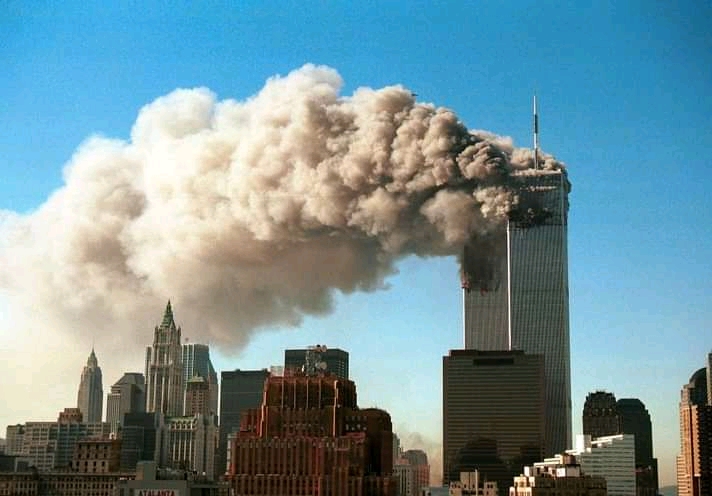
Saturday, September 11, 2021, marks exactly 20 years since the attack on the USA allegedly by a group of Arab Muslims. Forget about conspiracy theories; the 9/11 attack will continue to raise unanswered questions on America’s foreign policy on Muslims and their countries. Issuance of visas and visa bans on some Muslim countries, America’s Green Card, former President Bush’s ‘ you’re with them or with us’ rhetoric reminiscent of the holy war are all glaring issues of stigmatizing of Muslim community for a supposed fault of a few. 

The bizarre and mob driven death of former Libyan leader, Muammar Ghaddafi in 2011, Saddam Hussein’s decapitation while being hanged in 2006, America’s attitude towards the deposition of democratic Muslim Brotherhood in Egypt and the strange death of its leader, Mohammed Morsi, during his trial say a lot about Muslim countries in the eyes of America.

The above actions and inactions strip America naked of all her so-called democratic garments. Today, Libya is rocked, divided and destroyed. Yet, America folds her arms and watches as hundreds of people get killed daily. Setting up Guantanamo Bay in Cuba, where hundreds of allegedly Al-Qaida and Taliban fighters and sympathisers were held, tortured is the biggest of human rights abuse. Some were recently released after undergoing a series of traumatic experiences. They could neither be indicted nor tried for lack of evidence. Why were they captured and detained in the first place? Because they’re Muslims, so they should be stereotyped? 

America’s occupation of Afghanistan is the biggest mistake of all. Thousands of Afghans, Americans and other nationals are still being killed. Recently, Americans realised their mistake, the cost of the war, and Afghanistan’s ungovernable nature without the Taliban. Thus, they reached out to Qatar, called out a summit between former President Ghani and the Taliban. Earlier, they’d designated Taliban terrorists, then met with the terrorists and handed over Afghanistan to terrorists with a pact that the terrorists must not accommodate any foreign terror group!  

The 9/11 attack will continue to be a mystery. Khaled Sheikh Mohammed (KSM), a Kuwaiti national is under America’s custody for 20 years, yet, for 20 years, he could neither be indicted nor tried. An FBI agent called Pellegrino had pursued Khaled for over 3 DECADES in connection with terrorism before the 9/11 tragedy, yet, America couldn’t capture Khaled to avert the 9/11 attack! His lawyer (an American) recently told the BBC that it might take another 20 years to complete the longest trial in history.  

Moreover, Pellegrino, the man who had interrogated Khaled, who’s also to serve as a witness, delayed his retirement from the service by 3 years in the hope that Khaled’s MILITARY TRIAL trial at Guantanamo would be completed. 

The FBI also linked Khaled in connection with the 1993 bombing of the World Trade Center. In 1995, he was also linked to a plot to blow up multiple international airliners over the Pacific. The question is, are all these allegations mere suspicions and assumptions? If not, come open, try, convict and sentence him as murderers and killers are tried in American courts. According to the BBC, in 2003, Khaled was arrested in Pakistan because the FBI’s Pellegrino had reported him. He’s taken to ‘Black Site’ (is an obscure camp in Pakistan where criminals are tortured) using ‘enhanced interrogation technique.  

In Guantanamo and America, Khaled was waterboarded at least 183 times (BBC). Waterboarding is a torture technique where a wet rag is placed in the mouth, pouring water through the rag into the victim’s mouth. As a result, the victim would torturously feel like drowning in a sea. He and hundreds of other prisoners were also subjected to rectal rehydration (a technique where victims are fed through the anus). Other techniques used by the CIA on innocent Muslims include stress position (where a victim may be asked to stand on the ball of his feet for hours), sleep deprivation (where you’re denied sleep). 

Khaled’s MILITARY TRIAL that began in 2008 had 8 judges who presided over the case. The recent one is the 9th! Many of the judges resigned over abnormalities in the trial. A trial in New York wasn’t successful, nor were those in Guantanamo. The excuse is that Covid-19 compounded the trial. Poor Covid! Currently, there are over 35,000 pages of previous hearings and motions before the current judge starts presiding over the case. ” It’s the most controversial trial,” says the BBC.

Salisu Yusuf writes from Katsina. He can be reached via salisuyusuf111@gmail.com.

Reminiscence of 7th September Jos Crisis

By Mohammad DonHussy

Tuesday was exactly 20 years since the breakdown of peace among communities and the beginning of the so-called ethno-religious conflict in Jos. Since then, thousands of innocent lives have been mercilessly killed, properties worth billions of naira destroyed, and hatred has been deeply entrenched, more than ever before, in the minds of the younger generation; vengeance has become a mantra on their lips. Thus, 7th September was a dreadful day that shouldn’t have repeated itself. But, unfortunately, it became the beginning of an era of chaos, conflicts and incessant killings.

Two things led to these horrible events. Firstly, religious leaders from both sides of the aisle did much to spawn the conflict either by abstaining from condemnation and reprimanding their audiences or fanning the flame with hate preachings. Secondly, and more morally reprehensible, politicians agreeably encourage the clash by not stepping up to quell the prerequisites that lead to the unrest. As a result, the conflicts have become a potent political weapon exploited by the elite to either consolidate power or amass luxury. Thus, the masses became pawns who reap the harmful consequences of the seed they never sow.

The crises have been heaped around many myths—that the conflict is an ethno-religious conflict is not only a hoax but an absurd claim that seeks to cast an illusion on the minds of the masses. Again, that Hausa-Fulanis have any grand plan to take over the helm of affairs in Plateau State is false. And, conversely, that the Christians are collectively responsible for the destruction of Jos Main Market, which plunged the Hausa’s into economic hardship, is equally false.

Few cabal members engineer these unfounded narratives to swerve the attention of the masses from demanding accountability from their incompetent leaders and have paved the way for kleptomaniacs and opportunists to reach up and embezzle our funds. To understand this better, reflect on what Samuel Ortom, the governor of Benue State, said, and I quote, “As Jesus died on the cross for Christians, I am prepared to die for Benue people.” The same person has now refused to pay civil servants their salaries and remain negligent on development and infrastructure. Scenarios similar to this are countless. By the way, Shari’a was once exploited by northern governors to mislead gullible Muslims. So it is more about vested political interests and amassing of wealth than faith or ethnicity.

Luckily, the panacea to this menace is within reach of the masses; all they need is the necessary introspection to grasp the problem for what it is: class warfare. And it’s also to resist the temptation of acquiescing in the vile tactics of divide and rule. If one scrutinises the conflicts, the masses, not elites, are constantly the victims of the mayhem. What sort of a people will be so adamant about inflicting such untold suffering to each other?

Does the killing of fellow humans strengthen anyone’s determination or make anyone’s life better? Why then the insanity and the insensitivity towards each other while those vultures are relentlessly sucking the masses and plundering the state’s treasury? The masses must understand that they share a common enemy, whether Christians or Muslims and that their enemies are within their respective faith or ethnic group. Regardless of any differences, the elite are hellbent on enriching themselves; neither their children nor closed ones participate directly in any conflict for whatever reason.

It is time for the masses to reflect on their actions, grasp reality and tolerate one other. The series of events that unfolded from the onset of the first crisis to today have caused indescribable suffering to the people of Plateau. It has slowed development and clogged prosperity. However, peace has no alternative, and tolerance is the only rational covenant.

Mohammad DonHussy writes from Jos. He can be reached via donhussy95@gmail.com.

BUK promotes Dr Sani Rijiyar Lemo, Dr Umar Sani Fagge, others to professorial chairs

By Muhammad Sulaiman

In recognition of their significant contribution to scholarship, research and development at the Faculty of Arts and Islamic Studies (FAIS), the governing council of Bayero University, Kano (BUK) has approved the promotion of Dr Sani Umar R/Lemo, Dr Umar Sani Fagge, others, to the coveted professorial positions.

The following faculty members have been promoted to full professor status: Shehu Ahmad (Arabic), Aminu Lawal Auta (Nigerian Languages), Usman Sani Abbas (Islamic Studies), Sani Ayagi ( Islamic Studies) and Umar Abdulkadir (Islamic Studies).

Furthermore, the following have been promoted to associate professor status: Umar Sani Rijyar Lemo (Islamic Studies), Aliyu Harun (Islamic Studies), Nura Sani (Islamic Studies), Isa Yusuf Chamo (Linguistics), Aishatu Umar (English), Tijjani M. Naniya (History), Muhammad Wada (History), Umma Aminu Inuwa (Nigerian Languages), Maryam Mansur Yola (Nigerian Languages), Halima Abdulkadir Dangambo (Nigerian Languages), Ahmad Salisu (Arabic), Matabuli Shehu Kabara (Arabic) and Umar Sani Fagge (Arabic).

More members from other faculties have been equally promoted based on their value of excellence in teaching and scholarship, and service to BUK. However, as of during filing this report, the lists were still incomplete.

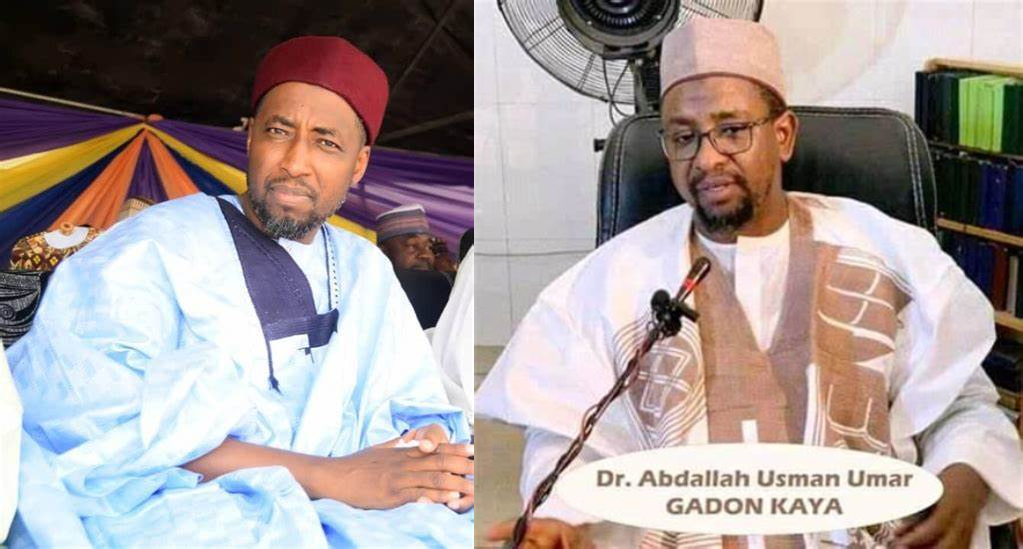
Prof. Maqari formally withdraws lawsuit against Dr Abdalla Gadon-Kaya

By Muhammad Abdurrahman

Today, the Abuja Central Mosque Imam, Prof. Ibrahim Maqari, formally withdrew his lawsuit against Dr Abdallah Usman Gadon-Kaya, seeking N20 million in damages for defamation.

The Daily Reality reported on September 1, 2021, that Dr Gadon Kaya’s lawyers had yet to receive any formal request to withdraw the lawsuit as of then. Instead, according to Barrister Ibrahim Umar Abere, all they saw was Prof. Maqari’s viral video alleging that he was compelled to withdraw it.

However, after appearing at the court today (6/9/2021) to defend their client, they got an official request from Prof. Maqari’s lawyers wherein the plaintiff withdrew the lawsuit in pursuit of peace.

Reacting to the reports that the defendant and his lawyers were preparing to file a counterclaim, Barrister Abdulrazak Kabiru Kofa said they had also shelved that plan. He cited a Quranic verse that says, “Peace is best” (4:128).

Recall that on July 23, 2021, Dr Abdallah Uthman Gadon-Kaya delivered a Friday sermon in a mosque in Kano State. That sermon did not go down well with Prof. Ibrahim Maqari. Thus, he appeared in a video warning Dr Abdallah to withdraw parts of the statement or meet him in court, which he eventually did.

The court order showed the case was due for hearing on September 6, 2021. Maqari demanded that Gadon Kaya retract the said statements, publish an apology in national dailies or pay the N20 million in damages.

The leaders we need in Nigeria

By Muhammad Auwal Ibrahim

This article is an attempt to highlight the leaders we need in our society. This becomes more relevant as election season comes and goes. We ought to know the leaders that are the best for us if we only want to succeed. This article, thus, would go a long way in addressing some of our major problems.

I am a Nigerian, and I am part of her in every situation, no matter how it may be. Be it good or bad; we share the feelings altogether. It is unfortunate that at this age of Nigeria, things are still happening upside down. Things are still falling apart. It is shameful.

Today, in Nigeria, any person can aspire to be a leader and be chosen either legitimately or illegitimately. But, mostly illegitimately, as asserted by Dr Usman Bugaje said in a paper he presented during Dr Sulaiman Kumo Memorial lecture at Gombe High School in 2018. This is one of the reasons that made me pen this.

However, Prof. Salisu Shehu, sometimes back, stated in his book Social Justice Leadership Responsibility in Islam that “It is because of the so-called democracy…”. I agree with him because even as young as I am, I still observed that some of our leaders are not competent or just, but they are still there to lead us. Some don’t even know where to start. Some still need to be trained and disciplined.

Dear Nigerians, do you vote for good leaders or looters with your eyes widely opened? Do you vote for competence or richness? Do you vote for your future wellbeing or for your present wellbeing that can perish in less than a day? Do you vote for the prosperity of your children: for them to enjoy the dividends of democracy, i.e. one who, if voted, would build schools, hospitals, construct roads, develop our infrastructures? Do you give somebody the mandate to rule you without paying particular attention to his qualities? Is it somebody that kills our economy, offers stimulants to our youth, destroys our society that you want to represent us?

Do you vote because you can or because it is an obligation and a right at the same time? Should we sit and fold our arms and watch them continue with their ruination, plundering, looting/embezzlement and squandering of public funds? What can we do, and how can we start? Think carefully about these questions.

The need for good leadership has been stressed earlier on. It is our fault since we failed to learn and implement the Islamic teachings, some of which the Sokoto jihad leaders deliberated on. Like the qualities of a leader. We cannot just stop on those mere democratic qualities.

Another critical point is that our people today seemed not to know their roles and obligations. This is not only in the case of the ruled but also the rulers. Why? The answer is very apparent. We need no further consultations. Sadly, most of them are not educated enough on leadership, not to mention their followers. This is indeed painful.

If I may ask some of our leaders, how many read books written on this topic of discussion ‘leadership’ by Sokoto jihadists like Shehu Usman Danfodio, his brother, Abdullahi Fodio, his son, Sultan Muhammad Bello and the rest of them? I think only a few would boast answering yes if any.

We, the subjects or more preferably the ruled or the led, have our various contributions to good governance at multiple levels of life. Aside from obedience and compliance with rules, so long as they are not evil and terrible. There are other positive contributions, like constructive criticisms, advising the government on good things and warning against evil and prayer, as asserted by Prof. Salisu Shehu in his book (Social Justice Leadership Responsibility in Islam). But today, we are relentless to all of these. Not all, but only a few of us are doing that.

Justice is an essential aspect of any given society. A leader, therefore, must be just. Consequently, we should pay special attention to this quality before selecting any leader.

Knowledge should be considered. Knowledgeable can be found in our learning institutions. Therefore, institutions should be put in place to teach our younger ones leadership traits before it becomes too late to overcome the present challenges. 

Competence is another most appealing quality. A leader’s ability to overcome situations and handle matters mattered a lot. But do we care? We should not just go ahead and select a person to represent us, knowing that that person is not competent.

These are the few characteristics of a leader. Some books address such issues. These include: Social Justice Leadership Responsibility in Islam and Shugabanci a Mahangar Musulunci: Yadda Al’amarin Yake A Nijeriya. I hope they will serve as a guideline to aspiring leaders.

In the end, I hope our young leaders will take heed of all these. Further, I pray that all aspiring leaders learn what leadership is all about before clinching any position of power.

Muhammad Auwal Ibrahim is an award-winning journalist, fellow African Investigative Journalism Conference (AIJC) 2020, Wits University, Johannesburg, South Africa. He can be reached via awwalbinibrahim@gmail.com.