Muslims

Islamiyya System: A perfect replacement for the archaic Almajiri system

By Muhammad Dattijo Kabir

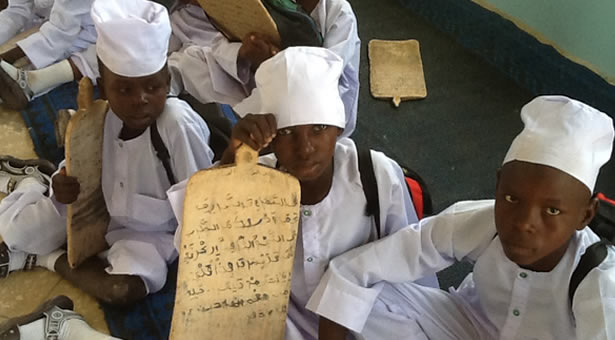
Islamiyya system has been proven to be an alternative to the Almajiri system. In the Islamiyya system, it is easier to commit the Qur’an to memory within the shortest period with decency. And it also allows the children to seek other knowledge that will aid them in confronting the present challenges. Almajiri system can only be insisted to be reformed when it is proven that that is the only way to learn the Qur’an. The system poses a lot of danger to the children, such as health challenges, inferiority and, of course, most of them become morally debased in the end.

Reforming this system alternatively means rewarding irresponsible parents for their irresponsibility, creating unsustainable programs which cannot see the light of the day. Instead, the government should ban and criminalise the system and absorb all the already enrolled Almajiri into formal schools. Then any other parent that wants his child to learn the Qur’an by traditional means must first provide shelter, food, and health facilities for the welfare of the child and must ensure that the child goes to school to at least get primary education.

No one is saying karatun allo should be banned. Karatun allo differs in content and operation from the Almajiri system. While the former entails learning Qur’an by the traditional design by all and sundry, the latter entails recruiting young persons to learn Qur’an by traditional means without provision for food, shelter and medical facility for children recruited. The said recruited army of children relies only on begging leftover food and tattered clothes for subsistence.

It requires no second thought to believe that this system of taking young children away from their parents at the ages they need their parents the most should be stopped and criminalised. No child under the age of 12 should be taken away from his parents’ house in whatever guise. There is nothing good in the Almajiri system as practised today. The system has served and outlived its usefulness. It became archaic and, to some extent, barbaric considering the conditions of the children involved in the system.

There are more decent systems which are alternatives to the already abused system. The system indirectly supports irresponsible parents to breed bundles of children they know they cannot cater for. The parents use the system to abdicate their parental responsibility of feeding, clothing, educating and sheltering their children.

Also, the half-baked Malllams use the system as a means of income. The activists are using it to get themselves employment from international NGOs. The nagging question is, can Qur’an be learned through a more decent system than this child molesting system? The answer is yes. Thousands of children have committed the entire Qur’an to memory through the modern Islamiyya system.

Let’s move on; the system is not viable in the present era. The era of dogma has passed. Let every child be supported by his father and take Quranic education before his parents while attending school. Any system that encourages parents to take their children to the street is barbaric and should not be encouraged.

Muhammad Dattijo Kabir. Muhammad is a lawyer, a human rights activist and a public affairs commentator. He lives in Kaduna and can be reached via jibrilmuhammad27@gmail.com.

Almajiri and the road to Armageddon: Nafisa Abdullahi is right

By Aminu Mohammed

I have observed the raging debate over the Almajiri debacle in the last few days, especially the antagonism against a Kannywood actress Nafisa Abdullahi. The actress voiced out against parents who send their children to urban centres to memorise the Quran under the guise of an Almajiri system.

This issue resonates with me because I was once an “Almajiri”, though in a modernised form of learning. I was a product of Arabic and Islamic education. I am still grateful to my late father for seeing the wisdom in sending me to the College of Islamic Studies Afikpo, a boarding secondary school in Southeastern Nigeria funded by a Saudi Arabia-based International Islamic organisation Rabita Alamul Islam (the Muslim World League). Unlike some of my schoolmates who later studied Islamic studies at Islamic University Madina and Azhar University Cairo, Egypt, I decided to study International Studies at the Ahmadu Bello University, Zaria, against my father’s wish, whose dream was for me to be an Islamic scholar.

I am still at a loss wondering why the actress is being pilloried for telling the truth. If you ask these intellectual lilliputians and Nafisa’s traducers whether they will be comfortable sending their children out to beg on the streets under the guise of Quranic education, they will never say yes.

Before you call me “Karen farautar yahudawa”, an agent of Jews, which our people are fond of calling those who seek societal change and are in tune with modern realities, let me clarify that I did not attend a conventional secondary school. I advocate an integrated education system involving the acquisition of both western and Islamic education. 

I will never advocate against memorising the Quran or acquiring Islamic knowledge because I was a beneficiary of that. At the boarding secondary school in Afikpo, Ebonyi state, we were taught Hadith, Fiqh, Balaga, Tafsir, Tajwid, Saqafa, Sirat, Ulumul Falsaf, Sarf and Nahw, among other subjects, by some Islamic scholars mainly from Pakistan, Egypt and India. I was able to speak Arabic with confidence on completing my secondary education. I even took some Arabic courses as an elective throughout my studies in Zaria. Even here in Germany, I still communicate with my neighbours from the Middle East in Arabic.

I am not worried that this article will generate antagonism in some quarters or be pilloried for triggering anger in some folks. But the truth of the matter is that we cannot continue on this trajectory. This system can no longer continue the way it is; otherwise, we may be heading towards the precipice. 

The word Almajiri is derived from the Arabic word “Almuhajirun”, meaning a person who migrates from his locality to other places in the quest for Islamic knowledge. During the colonial era and a few years after that, the schools were maintained by the state, communities, the parents, ‘Zakkah’, ‘Waqf’ and augmented by the teachers and students through farming.  “Bara”, begging as it is known today, was completely unheard of. 

Mallams and their pupils, in return, provide the community with Islamic education, reading and writing of the Qur’an, in addition, to the development of Ajami, i.e. writing and reading of the Hausa language using Arabic Alphabets.  Based on this system, which is founded upon the teachings of the Qur’an and Hadith, the then Northern Nigeria was broadly educated with a whole way of life, governance, customs, traditional craft, trade and even the mode of dressing.

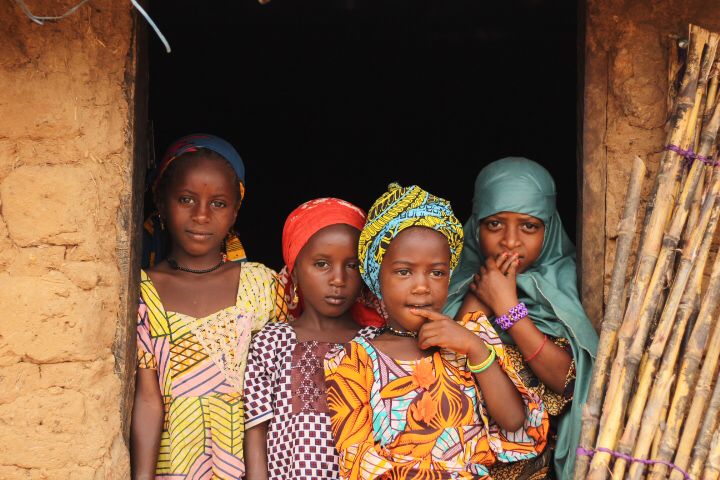
However, the system was corrupted in the past few decades, with teachers sending the children to beg for food on the streets. Similarly, many irresponsible parents were unwilling to cater to their children. Thus, they send them away to cities to purportedly acquire quranic education.

The current Almajiri system is not only archaic but atavistic. We must tell ourselves the truth that society is drifting. What we are facing today regarding security challenges in the North will be child’s play if our people refuse to change their ways. There is no gainsaying that the future is bleak if what we can boast of is an armada of malnourished and unkempt children who are roaming the streets under the guise of Islamic education. Eventually, the children may not acquire any meaningful skills to become useful members of society. 

I am not a prophet of doom and derive no joy in pessimism. But, I do not see a bright future for a region struggling with a depleted human resource, coupled with millions of underage children clad in tattered clothes with bowls roaming the streets begging for food. I do not foresee any meaningful progress and development in such a society.

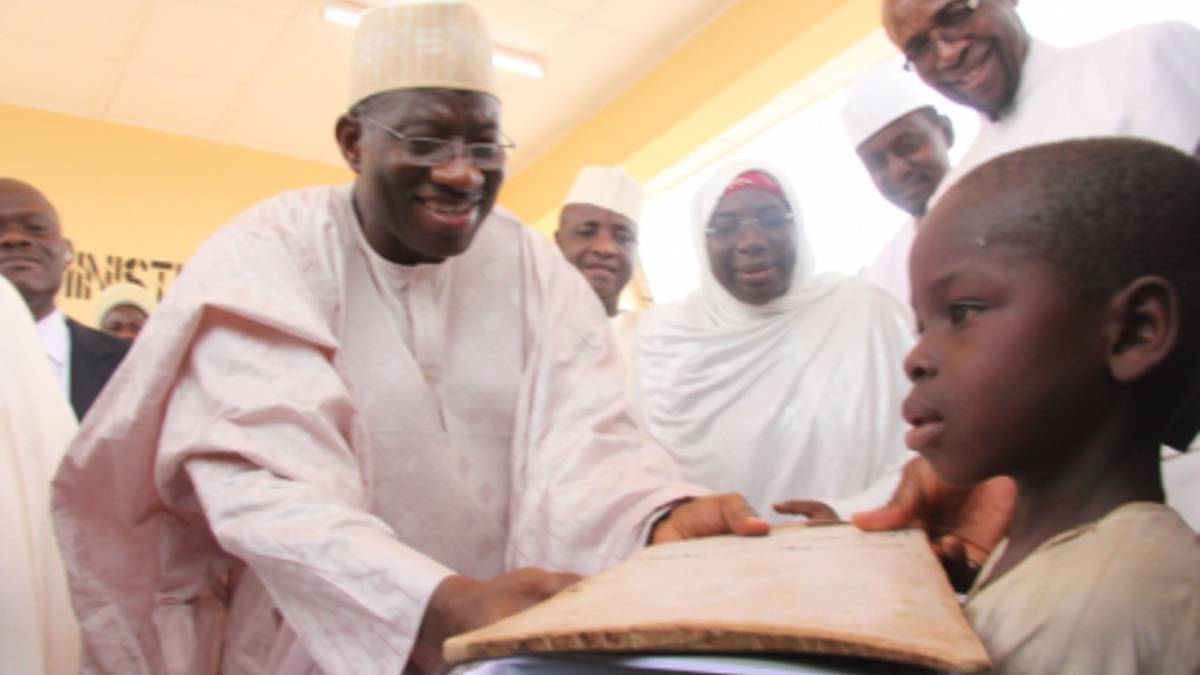
I still recall, in 2012, when former President Goodluck Jonathan visited Sokoto to inaugurate the Almajiri Integrated Model School in the Gagi area of the Sokoto metropolis. This boarding school was equipped with modern facilities. As a journalist working with THISDAY Newspaper then, I was there at the commissioning and even interviewed the school’s principal Malam Ubaidullah, a few months after the inauguration. I was excited that there would be a gradual process of taking Almajiris off the streets, as was promised by former Sokoto governor Senator Aliyu Magatakarda Wamakko. However, the euphoria was short-lived as governments in the region neglected the programme while the school buildings rotted away.

I wonder why our people antagonise those who want the system to be reformed or outrightly banned in the North. Are we comfortable seeing underage children roaming the streets under such dehumanising conditions? Have we pondered over the looming famine in the Sahel as forecasted by global development organisations, of which Northern Nigeria is part due to climate change worsened by overpopulation? Are we not witnessing the level of insecurity pervading the region because of societal neglect and marginalisation caused by a rapacious elite?. Do we sit down and pray and wait for a miracle to happen while expecting that our problems will go away?

Already we are battling with banditry in the Northwest due to societal neglect of a segment of the society that we use to mock because of their ignorance. And things will even get worse in future unless drastic action is taken to reform the system to enable children to memorise Quran in a friendly atmosphere devoid of hunger and deprivation. The current Almajiri system is a pathway to perdition.

Parents should stop sending children to cities if they are not ready to cater for them. These children should stay in their localities and learn under a school system presided by their Islamic teacher or Malam. The state governments must engage those Quranic teachers and pay them a stipend. I know this is doable because the government has the means to do that.

Unfortunately, much resource has been wasted on frivolities instead of channelling it towards revitalising the Almajiri system. We must wake up from our slumber and direct our energies toward finding a way to tackle problems in our society. Taking action is the key, and I believe that is the only way we can expect to have stability and peace in the polity.

Aminu Mohammed is at the school of Sustainability, Christian- Albrechts- Universität zu Kiel, Schleswig Holstein, Germany. He can be reached via gravity23n@gmail.com or stu219013@mail.uni-kiel.de.

Kaduna: Young man reportedly dies in sujuud while leading Tahajjud

By Ahmad Deedat Zakari

A young ustadh identified as Muhammad Sani Lawal passed away on the night of Saturday, April 23, 2022.

Abdull-azeez Ahmed Kadir, a Nigerian journalist and the General Manager of Liberty TV and Radio, reported the incident on his Facebook timeline. 

Kadir described the young man’s death as how many Muslims would want their end to be like, calling it the “Best Death”.

Kadir posted thus:

Muhammad Sani Lawal, a young Islamic scholar, died last night in Samaru Zaria in a manner many Muslims beseech Allah to take their lives. He died not just in the Holy Month of Ramadhan, not just in the last ten days that hosts the Night of Majesty, not just in prayers, but Ta’ajud, in sujud while also leading the prayer at night.”

Kadir prayed to Allah to rest the soul of the deceased. The post has garnered many positive reactions while the story goes viral on mostly northern Nigerian social media space.

MURIC to INEC: Warn Muslim haters among your staff

News Desk

The chairman of the Independent National Electoral Commission (INEC), Professor Mahmood Yakubu, yesterday announced that the closing date of the registration exercise for the 2023 general elections is 30th June 2022.

Reacting to this announcement, the Muslim Rights Concern (MURIC) has appealed to the electoral body to ensure that Nigerian Muslims are not disallowed from partaking in the exercise by overzealous Muslim-haters among INEC’s ad hoc and full staff who are in the habit of disallowing hijab, cap and turban-wearing Muslims from registration.

This was contained in a statement issued on Saturday, 23rd April 2022, by the director of MURIC, Professor Ishaq Akintola.

The statement reads:

“The chairman of the Independent National Electoral Commission (INEC), Professor Mahmood Yakubu, yesterday announced that the deadline of the registration exercise for the 2023 general elections is 30th June 2022.

“While we commend INEC for successfully carrying out its duties in the past few years, we sound a wake-up call to the electoral body to prevent the disenfranchisement of millions of Muslims in the coming 2023 general election.

“It is very common for Muslim haters among INEC’s full and ad hoc staff to harass hijab-wearing female Muslims as well as cap and turban-wearing male Muslims at the registration centers in a bid to frustrate and prevent them from registering for the election. They are ordered to remove their hijab, cap or turban during capture. Such orders are illegal, unlawful, illegitimate and unconstitutional.

“Only those who are ready to compromise their faith by obeying the illegal instruction are allowed to register while others are turned back. As a result of this intimidation, millions of Muslims are disenfranchised. The effect is a huge deficit in the numerical strength of Muslim voters. This will not be tolerated in the ongoing exercise.

“INEC is fully aware that it is illegal to disallow citizens from registering for election on the basis of religion. It is also a precursor to the rigging of elections in favour of Christian candidates all over the country. This practice is evil and provocative. It can lead to crisis before, during and after elections.

“It is a major threat to a peaceful election, particularly in the 2023 exercise. Judging by the announcement of the leading Christian firebrand Pentecostal wing, namely, the Redeemed Christian Church of God (RCCG) that it has formed political wings in all its parishes, it is clear that Nigerian Christians plan to hijack the 2023 exercise.

“While Muslims in the North are not likely to fall victims of the disenfranchisement, millions of Muslims in the South are definitely exposed to the danger because it is not a new phenomenon in the southern geo-political zones of the South West, South East and South-South. It occurred in 2003, 2007, 2011, 2015 and 2019. MURIC documented these ugly events.

“We, therefore, urge INEC to give necessary instruction and training to all its staff. They should be warned against coercing Muslims on account of their manner of dressing. Apart from internal memoranda, INEC should issue public statements whose copies Muslims can use to defend their appearances in case of intimidation. In addition, INEC should discourage the opening of registration centers in places of worship.

“MURIC advises Muslims who face victimisation of any sort in registration centers to maintain their stand by insisting on being registered with their hijab, cap and turban. They should not obey illegal orders. Any refusal to register them should be reported to the Imam in the nearest mosque, Muslim leaders and officials of Islamic organisations.

“As a precaution, MURIC will document all cases of illegal prevention of Muslims from registration. Where possible, details of INEC officials involved in such unlawful prevention will be provided. We shall also institute lawsuits in courts of competent jurisdiction against perpetrators.

“All state commissioners of INEC in the three geo-political zones in Southern Nigeria are advised to ensure that no single Muslim is denied his or her Allah-given fundamental human right, including the right to partake in voting through the denial of voters’ cards. We will hold each commissioner responsible for any infraction that takes place in his or her state.

“While MURIC and the generality of Muslim voters in Nigeria seek a peaceful electoral exercise, we call on INEC not to ignore our advice in the interest of peace. Nigerian Muslims will not stomach any attempt to disenfranchise them during the 2023 general election. INEC should therefore take necessary steps to avoid the persecution of Muslim voters by its officials.”

Reforming the Almajiri system: More action, less talking

By Khairat Suleiman Jaruma

It took too long for us to realize that one of our biggest problems in northern Nigeria is the Almajiri system, even though we still have a few slowpokes that believe there isn’t anything wrong with the archaic and inhumane system.

We have criticized and blamed the system enough. It’s high time we started doing more action and less talking. But how do we go about it? Can we stop the influx of children into the system? Completely? No, but to a very reasonable extent, yes. But, how do we deal with those in the system already? You might say they should be taken back to their parents, and you are not wrong, but some can’t even remember their parents or where they come from. We also have those who have lost their families and villages due to banditry and terrorism. So, how do you go about it?

Baffah (2022) explained, “The best way to check the Almajiri system is to empower local governments. When you create wealth at the local level, rural to urban migration becomes unattractive, economic equality is everything”. But there is more to do than just this.

It is almost impossible to abolish the Almajiri system, and previous – and even ongoing – efforts to ban it failed woefully. What the Almajiri system needs are sustainable reforms, as opposed to the white elephant reforms that have been made in the past.

NexTier SPD suggests government must adopt the Child Right Act, which is an effort by UNICEF to protect children and ease the prosecution of violators of child rights. It is equally vital that the government criminalizes the movement of Almajiris from one place to another. In addition, begging and child labour should be banned entirely.

Also, the government must work with informal structures such as religious and traditional institutions to support and promote reforms by emphasizing the gain of a reformed Almajiri system to individuals, parents, and the society at large while discouraging incessant childbirths and implementing childbirth control policies.

The importance of religious leaders and traditional stakeholders in sustainable Almajiri reforms can’t be overemphasized. But, it’s also essential that, as individuals, we stop using Almajiris as henchmen for committing heinous crimes or as a source of cheap labour.

Khairat Suleiman Jaruma wrote from Kaduna via khairatsuleh@gmail.com.

Should Muslims go dialoguing? The roadmap to understanding ‘interfaith’ in Nigeria

By Sadiya Abubakar Isa, PhD

It appals me to see the Muslim North divided on a trivial yet substantial religious issue like ‘interfaith’. I have for long heard Muslim clerics discrediting the whole idea of interfaith since the establishment of its centre in Bayero University Kano – one of North’s prestigious universities, something which was otherwise not their business. Still, thanks to this institution, interfaith is now localized enough to get such stimulating clerical attention in Northern Nigeria.

Having had the opportunity to study Islamophobia exploringly, I would say interfaith is significantly relevant where the identity of Islam is greatly contested. By definition, interfaith, whether as a dialogue in research or academic discourse, revolves around the peaceful, complaisant, and constructive interaction between people of different faiths for mutual benefit. It involves striking balance, a tolerable understanding of such interrelationships and beneficial engagements through dialogues, academic events, and activities aimed at peaceful coexistence. To say all these aren’t relevant for a Muslim community is a dismal misunderstanding of the whole concept and reasoning of interfaith.

The world witnessed an unprecedented rise in Islamophobia shortly after 9/11; statistics show that Islamophobia reached its peak in 2016. If you reside in the Western world in the decade after 9/11, you will understand the intricacy of the threat Islamophobia puts Muslims into. Especially for Muslim women who are more obviously identified than their male counterparts. Muslim women were subjected to hate speech, discrimination, and abuse, thanks to the incessant misrepresentation of Islam and Muslims in the Western media. Since the Muslims are a minority in such Western countries, their religious identity was at stake. As such, the results were provocative political discourses, foreign policies and the whole activities of the Islamophobia industry vigorously tarnished the image of Islam beyond doubt.

Islam was always portrayed as an intolerant and backward religion that advocates terrorism. Muslim men are seen as utter misogynists, violent, barbaric, and bloodthirsty fanatics, while Muslim women are said to be oppressed, voiceless, helpless, and subordinate in dire need of immediate liberation. Now, this has been the case centuries before 9/11, but the Orientalism surged after 9/11 because there was an agenda to create fear of Muslims and control the world using that purported fear—New World Order?

Consequently, 9/11, subjugation of women in Afghanistan, terrorist activities by ISIS, Boko Haram etc., were leveraged as justifications for those claims. The average Westerner believes every accusation about Islam and has little or no interest in discerning the images. One may ask, so what if they believed?

The consequences are bigotry against Muslims, vandalism of religious places, hate speeches, discrimination, loss of jobs (or other vital opportunities), rejection in the community they ought to belong to, and the worst is loss of lives. We have seen so many Islamophobic attacks on the Muslims, the New Zealand mosque shootings, for example. This misconception renders the Muslim communities in the West vulnerable. It puts them in constant fear of perceived danger and, consequently, loss of faith. Yes, look at it from the perspective of younger generations struggling to fit in.

Among many other factors, I acknowledge the efforts of Yaqeen Institute by Sheikh Omar Suleiman, a Palestinian American scholar. He has taken the lead in fighting Islamophobia through interfaith dialogues, among other methods. Why shouldn’t the Muslims engage in interfaith dialogue when it has been an avenue for discussing the Muslims’ predicaments? It has given Muslims a platform to talk about their real lives and share their religious practices contrary to the media’s narrative.

Interfaith dialogue has helped quell the flame of hate. It has given Muslims the room to openly operate as an inclusive religion – with lots of global moves to ascertain cultural harmony. It has opened laypeople’s minds about Islam which they would otherwise have remained unaware of. It has opened the door for discussion of religious differences politely and positively, which pushed many non-Muslims toward studying Islam.

Do you know the result of this increased curiosity about Islam? Acceptance of Islam, the Christian West has seen rapid growth in conversion to Islam. So, where is that extreme hate of Islam/Muslims today? Alhamdulillah, there is a significant improvement in the situation, thanks to interfaith dialogue, among other efforts taken by anti-Islamophobes.


So is interfaith precarious to Muslims in Nigeria? Why all the debates?

Would Nigerians understand the need for an interfaith dialogue without foreknowledge of Islamophobia, global diplomacy and religious inclusiveness? It’s a fact that Muslims aren’t a minority in Nigeria, but ethno-religious crises are still ravaging, in the North especially; crises in Jos and Kaduna would have been addressed amicably if the interfaith dialogue was well embraced. It is utterly disconcerting to say that, in this age, people are having religious disputes.

Similarly, Boko haram has been synonymous with Islam in Nigeria in that it is always referred to as an ‘Islamic terrorist group’. Don’t we need to dispel the myth of Islam advocating terror in Nigeria? Are Muslims too big to have a peaceful inter-religious conversation in Nigeria? Are we blind to the fact that Islam is under attack in Nigeria? When professor Farooq Kperogi wrote on Islamophobia in Yorubaland, I was bemused because I never expected that of all the tribes in Nigeria, Yorubas would discriminate against their tribespeople based on religion. The rapidity at which Islamophobia is manifesting in Nigeria is quite alarming. Nigerian Christain’s support for Donald Trump in the last election spells out their desperation for Muslims’ continued exclusion.

Religious harmony is still farfetched in most regions of Nigeria. We are just pretending to be harmonious and tolerant. Little wonder how minuscule events easily trigger provocation. We need to talk about our differences positively and engage in healthy interactions to progress as a nation. Colonialists already bond us together, so unity in diversity becomes a necessity. Or do we wait until our children begin to ask us questions before we get to talk about our differences nicely? If not for anything, interfaith in Nigeria will allow non-Muslims to learn about your faith – Islam. Isn’t that a form of da’awa?

My research acknowledges how interfaith dialogue in the US, Europe and other parts of the world contributed to the curbing of Islamophobia by promoting peaceful coexistence. So to use religion to relegate the whole idea is quite imprudent. To quote Shafiq, Muhammad, and Mohammed Abu-Nimer, the authors of Interfaith Dialogue: A Guide for Muslims, “although a relatively modern term, interfaith dialogue has, in fact, had a long and enduring history for Muslims, underscored by a spirit of genuine inquiry and respectful exchange. The primary role of interfaith dialogue is to remove misunderstanding and accept difference….”

Some Ulamas in Nigeria have taken a critical stance on this matter. I listened to one yesterday opening that interfaith is an extension of secularism. While I appreciate his disposition, I beg to disagree that ‘we don’t need interfaith’ due to his stated reasons. It should be at the participant’s discretion to know the aim of every dialogue before engaging in one. My focal point is that whoever participates in interfaith dialogue should be cognizant of their religious jurisdiction and wary of their intentions. I kindly advise our Ulama to focus on ways to religiously liberate the Northerners from the abject poverty that has infested this region instead of the debates surrounding the appropriateness of interfaith – which is long overdue.

Dr Sadiya Abubakar Isa is interested in research related to Islamophobia. She can be contacted via sadeeyaa@yahoo.com.

Social media is another world

By Musa Idris Panshekara

The first human being was created single. Then another creature was created from him. Later all generations were created from the two. Then they were all dispersed on the face of the earth. Some are black, some are yellow, some are tall, some are short while, some are medium, some are fat, and some are thin. All these differences were prescribed for us to contemplate God’s creatures and better interact with one another.

Allah said in the glorious Qur’an, “…the camels, mules and donkeys (were created) for travelling and luxury, and He creates (continuously) what you (companions of the prophet and we) would not know.”

Allah, the alpha and the omega, the omnipotent, the omniscience and the omnibenevolent, knows all that human beings need for their better survival on this globe. That is why He creates us and provides us with all we will rejoice in in our lives.

As a result of technological advancement, it makes life expedient. As a result, the world has become small, and what are remote are brought closer. However, the ubiquity of cell phones resulted in a constant increase in social media users, whereas social media helps get the world close to one another too. These platforms are; Facebook, WhatsApp, Instagram, Twitter and Tiktok.

Some social media users utilise it in a meaningful manner, while others misuse and abuse it. The constant increase of users increase social media abuse. As a result, cybercrimes such as cyber fraud, phishing, social engineering, etc., also increase. On the other hand, some use it in a beneficial and meaningful manner, such as teaching and learning, mentorship, digital marketing, etc.

Some people think social media brings, helps, and contributes to spreading some acts of immoralities. In contrast, some condemn the entirety of social media and label it a means of spreading numerous immoralities in our society. Nevertheless, I can neither deny nor accept all the claims.

Let us scrutinise the following analogies;

The producer produces cups and sells them in the market; consumers buy. Some will use them to drink water and tea, while some will use them to drink intoxicant drinks and other alcoholic beverages, and some will even use them to feed others with poisonous drinks. Therefore, how could the cups be blamed for the above mentioned positive and negative uses? You use your cup and drink cool water or juice. What if I use mine for drinking poison and committing suicide? Whose fault is that? The cup? Never!

Moreover, medicines are made to cure diseases and illnesses, but some people use them otherwise. If a hacker uses a computer and commits malicious acts like fraud, phishing, or hacking someone’s device, whose fault is it? The hacker or the computer? Allah created the world and its contents (social amenities) for human beings to enjoy and perform their prescribed worships (for them to be rewarded in the Hereafter). If humans did not utilise the opportunities and provisions provided to them righteously, who would be blamed?

Social media is no different from the physical world in so many instances. There are friends and acquaintances, family and relatives, teachers and students, mentors and mentees, just like the physical world. But, despite all these, it does not prevent someone from doing what they desire to do on social media. Similarly, all the personalities mentioned above do not prevent someone from misbehaving in the physical world.

We should not call social media terrible or obnoxious. On the contrary, social media is innocuous itself operated by humans. Therefore, it should be considered as another world. In this manner, you would find many people of your ilk (if you are good or otherwise), despite some users portraying their mirror side like a “hyena shrouded with a goat’s skin”.

If you want to benefit from social media, minimise using numerous platforms (you must not be on all platforms). Choose the most important ones and leave the rest. When you are on the selected ones, follow or befriend those whom you will benefit from their educative posts and speeches. Block and unfriend or do not follow those who spread immoralities, whose posts are devoid of knowledge and wisdom.

Avoid engagement in any controversial trending topics, and always remember that those who created the platform you are using are not illiterate or uneducated. They did not make it for charity rather than as a source of income. Therefore, do not let yourself be distracted from whatever you know is important to you. Finally, always remember God watches over you. Whatever you are doing, everywhere you are.

Musa Idris Panshekara wrote from Kano via pmusaidris@gmail.com.

Attack on al-Aqsa Mosque in Jerusalem leaves many injured

By Ahmad Deedat Zakari.

Israel Occupation Forces have attacked the grand al-Aqsa mosque in Jerusalem. 

The attack, which took place at the time of fajr prayer on Friday, April 14, 2022, left many injured. 

As reported by TRT World, Israel troops fired tear gas and stun grenades at worshipers inside the grand mosque. 

TRT World also reported that the Palestinian Red Crescent emergency service evacuated 67 injured people to the hospital early Friday morning.

According to the local news sources, about 200 worshipers were injured, and parts of the mosque and some properties were destroyed. 

The unfortunate attack on Palestinian Muslims, which is coming this time in the holy month of Ramadhan, has earned condemnation and backlash from many Muslims around the globe. 

A human rights activist, Zainab Chaudry, condemned the act on her verified Facebook account while posting the video of the assault. 

“This was a short while ago. Every Ramadhan [is] like clockwork. The assault on our beloved Al-Aqsa. On our brothers and sisters. The audacity. There will be justice; we know this iA [in sha Allah],” she wrote.

Letter to Nigerian Muslims

By Muhammad Rabiu Jibrin (Mr J)

I write this letter to you as a Muslim brother and a citizen who is deeply concerned about the gory happenings in this country and who prays for its betterment. It is undeniable that the trying time Nigerians live is uncalled-for. It is not what the citizens prayed for when voting for their leaders. Thus, it indicts the leadership system of all the three arms of government in the country, unfortunately

Should the government have worked holistically towards curbing the menace, the situation couldn’t have been worst like this. But, would the inferno ignite due to our leaders’ carefree attitudes, which seem to have been politicising virtually everything, be left consuming the spirit and the fabrics of our dear nation?

Truth be told, even a responsible and serious government can’t fight a politically created conflagration of multiple fronts alone, let alone a government with a lackadaisical attitude. Therefore, as Muslims of the ravaging county, we all have a role to play individually or collectively.

As we observe this blessed month of Ramadan, which has the best nights therein and in which the glorious Qur’an was revealed, we need to cry hard for God, the Almighty, to come to the rescue of our nation.

We must look inward and outward and return to God, the Most Merciful, the Most Powerful, the Compassionate and the Absolute Compeller. We should desist from committing sins and repent from our misdeeds. We should give to charities, recite the glorious Qur’an, supplicate and intensify prayers to God to see to the end of this mess.

Religious scholars should use their influence during tafsir, and Imams during their Juma’a sermons should pray immensely on this matter. Let Him choose for us the rightful leaders of all cadres. Let God the Almighty leave us not with our wisdom and selfish wishes and choices.

We can’t fold our hands, legs crossed, witnessing the downfall of this country under the watch of our leaders whom we entrusted but failed us. So let us all wake up from our slumbers and do the needful at the right time.

May we be governed by leaders who love us more than how we love them, leaders who prioritise our societies’ interests over their interests, leaders who think about giving their leadership account on the Day of Reckoning, amin.

Muhammad Rabiu Jibrin (Mr J) wrote from Gombe via muhammadrabiujibrin@gmail.com.

On interfaith

By Dr Babayo Sule

The revolution in social media, no doubt, made life fascinating for the present generation in information dissemination and data assembling but most importantly, in harnessing dialogue among inter-cultural and diverse complex groups cutting across the universe unprecedented. Many societies are positively utilising the leverage of social media to develop their political and socio-economic sectors individually and collectively. However, in Nigeria, social media is dangerously setting us on the path of collapsing our values and tolerance and it is ambitiously threatening to magnify ignoramus into the regalia of scholarship while scholars are being relegated to objects of caricature. This is anticipated in the warnings of Daniel J. Levitin in his Weaponised Lies: How to Think Critically in the Post-Truth Era and Nicole A. Cooke’s Fake News and Alternative Facts: Information Literacy in a Post-truth Era, that the era of honest ideas and truth is fast passing and this is palpable more in our environment where things are twisted deliberately for sentiment or personal agenda. This has manifested in the recent development in national issues where the bedevilling monster of insecurity is becoming worrisome. The high level of ignorance in understanding, interpreting, comparing and linking issues in Nigeria bordering religion, politics, economy and other social issues is nauseating. This is evident in the use and abuse of the term ‘Interfaith’ by social media interlocutors. 

The two Arabic terms are mixed up unconsciously by itinerant merchants of social media but most surprising, by even some religious Sheiks either deliberately or out of ignorance. The term ‘Wahdatul Adyan’ (unification of religions) in the Arabic language can never be the same as ‘Hiwar Al Adyan’ (interfaith dialogue). Unification of religion means collapsing of faith to become one while interfaith dialogue means debates, comparative studies and discussions of understandings as well as the relationship among followers of a different faith. The word ‘Hiwar’, dialogue, was mentioned three times in the Qur’an 18:34; 18:37 and 58:1.

How can Islam, for example, collapse and become one with Christianity when Islam philosophises the unity of Allah (SWT) while Christianity accepts the doctrine of ‘Trinity’ or how can Islam unite with Judaism that does not believe in Jesus Christ and Prophet Muhammad (SAW), at least, the current version of it? Or how can Christianity unite with Judaism that does not believe in Jesus Christ? Can Islam ever accept any form of law besides the Shari’ah principles? 

A scholar, popularly known as ‘Digital Imam’ made some utterances on escalating insecurity situation in a delivered sermon which eventually led to his removal. The crux of the matter is that I am not in support or opposing what the Imam uttered in his furious outburst. Many messengers have their philosophy, style, methodology and perspective of conveying messages based on their training, background, experience and the environment. How or why the Imam decided to deliver the message in the mode he did was not the main concern here. Some may see it right while others may see it as unfit and all are right in their perception. I am not in defence or support of the Imam and his words nor am I his spokesperson but some misperceptions, distortions and misrepresentations of the term ‘interfaith’ need to be cleared to avoid the created confusion. However, the annoying aspect of the issue is the way the ‘message’ was totally ignored and the messenger is being crucified on account of being what they called ‘Interfaith’. 

And what is interfaith? Is it a polytheistic process or a pronouncement that will disqualify one from Islam? Does interfaith has a basis from the religious roots and branches? Is our education level annihilated to the extent that our social media pedestrians could not understand what it is or is learning Islamic scholarship withering away to the level of misunderstanding Islam or misusing it? What is the link between sermon on insecurity and participation of Digital Imam in interfaith? Interfaith means dialogue among the various Abrahamic religions of Judaism, Islam and Christianity to promote peaceful co-existence and to understand more the philosophy of each other to avoid sustained mutual hostility. The Merriam Webster Dictionary defines interfaith as activities involving persons of different religious faith. Going by this definition, who is not involved in activities with persons of different faiths in Nigeria?

Islam is a religion that by virtue of its philosophy encourages logic, wisdom and reasoning. It challenges its believers to ponder on signs and symbols of the divinity and unity of Allah and the truthfulness of the religion. Allah (SWT) dialogues with His Angles on the wisdom, logic and the reason for creating the weak Adam (AS) and placing him on earth despite the weakness and the vulnerability to sins (Q. 2 verses 30-35). If Allah (SWT) wishes, He will simply create without consultation or dialogue and made the Angels prostrate compulsorily without any resistance or disobedience by Satan but for His prior knowledge of all, He wanted it that way. Is there no lesson for mankind in it to understand that reasons and logic are used in dialogue to convince?

Allah (SWT) in many places commands that believers should reflect and find faith in Islam not follow what is bequeathed to them by their ancestors presenting to them logical arguments, scientific facts, miracles and points of pondering. Prophet Nuh (AS) engaged his people in peaceful interfaith dialogue to convince them to believe in his religion for 950 years using alternative views and arguments (Q.7 verses 59-64; Q.10 verses 71-73; Q.11 verses 25-49; Q.21 verses 76-77; Q.23 verses 23-30; Q.25 verses 37; Q.26 verses 105-122; Q.29 verses 14-15; Q.37 verses 75-82 and Q.71 the complete chapter).

What about Prophet Ibrahim (AS)? He could have argued forcefully with the divine support and protection and ridiculed his people for worshipping idols that they had created with their hands but instead, he chose the path of wisdom and logic and the power of peaceful dialogue to make them understand particularly being careful of the presence of his father among the idolaters. Several Qur’anic chapters and verses (Q.2 verse 258; Q.14 verses 35-41; Q.19 verses 41-50; Q.21 verses 51-73; Q.26 verses 69-104; Q.29 verses 16-27; Q.37 verses 83-113 and Q.43 verses 26-31).

In all the chapters and verses above, Ibrahim (AS) used a superior dialogue with wisdom, chosen soft words and logic to explain his faith before the idolaters. Then take the instance of Musa (AS) who had not only debates with the Pharaoh and his people but went the extra mile in the demonstration of faith and interfaith dialogue under the command of Allah (SWT) in the Pharaoh’s palace. Many chapters and verses (Q.7 verses 103-173; Q.10 verses 75-93, Q.11 verses 96-99; Q.17 verses 101-105; Q.20 the complete chapter; Q.25 verses 35-36; Q.26 verses 10-68; Q.27 verses 7-14; Q. 28 verses 1-50 and several others too numerous to mention all here). It should be noted that Prophet Musa (AS) dialogued with his people profusely in convincing them against Shirk (polytheism) after he rescued them from Pharaoh using logic and wisdom (Q.2 verses 40-61; Q.7 verses 137-141 and Q.20 verses 83-97) and Prophet Musa (AS) also dialogue and went into a voyage of discovery with Khidr (AS) (Q.18 verses 60-86). 

Other Prophets (AS) dialogued in what is closer to interfaith with their people which time will not allow for all of them to be enumerated here but some few cases are still necessary. Prophet Ilyas (AS) dialogued with his people and showed them a reason to desist from worshipping a lamb as mentioned in Q.37 verses 123-132. Prophet Yusuf (AS) also convinced his inmates’ partners and his people of the unity of Allah (SWT) through an interfaith dialogue (Q.12 verses 37-41). Prophet Isa (AS) was shown the path of dialogue by Allah (SWT) when he was asked if he is behind the instigation for people to worship him when he responded beautifully, respectfully, logically and scientifically in this way (Q.5 verses 116-120) and he also tried and convinced his disciples on the miracle and powers of Allah (SWT) when they challenged him for manna (Q.5 verses 112-115) and elsewhere (Q.19 verses 30-33), Prophet Isa (AS) dialogue with his people to convince them while in his infancy that his mother Maryam (AS) was innocent and that he was a miracle of Allah (SWT). 

The most astonishing aspect of those who wanted to confuse interfaith with unity of faith is their lack of acumen in understanding ‘Asbabul Nuzul’ (purpose of revelation of Qur’anic verses) otherwise they would have saved their ignorance before the public humiliation. One of the outstanding characteristics of the Makkan chapters and verses of the Glorious Qur’an is the dialogue between the Prophet (PBUH) and Makkan infidels to scientifically show them the logic and reason of worshipping Allah (SWT) alone and the dirtiness of idolatry. These chapters and verses are too many to mention here. When Christians from Najran (Nazareth), a place near Madina in those days, heard the preaching and teaching of Prophet Muhammad (PBUH) on Jesus Christ, they approached the Prophet (PBUH) for interfaith dialogue and that was the reason for the revelation of Q.3 verses 33-83 as mentioned by Al-Ghazali in his book ‘Asbabul Nuzul’ and also as narrated by Imam Ibn Kathir in his ‘Tafsir’ (Qur’anic exegesis or commentary). 

The Prophet (PBUH) did not only engage in interfaith dialogue but he agreed that Muslims under threat and vulnerability can seek shelter in other places of different religions when necessary. He asked his companions to migrate to Ethiopia where a Christian king was ruling, Najjash (Negus). The Makkan oligarchs, Abu Jahl and Abu Sufyan sent a delegation to King Negus to convince him to return the Muslim believers to Makka so that they could persecute them until they revert to idolatry. They went to the king with gifts and presents but he rejected their request.

The representatives of Makkan infidels adopted emotional manipulation by telling King Negus that Prophet Muhammad (PBUH) and his followers were also saying evil things about Mary and Jesus Christ (AS). The king summoned Muslims to his palace and questioned them. One of the companions, the Prophet’s cousin, Ja’afar Bin Abi Talib, explained to him their idolatry and decadent situation before the emergence of Islam and went ahead to recite before him the Surah Maryam Q.19 verses 16-40. The scholars of history like Ibn Hisham and Ibn Kathir reported that king Negus and his people wept on hearing these verses which was the reason for revealing Q.5. verses 82-85. Later. King Negus converted to Islam and the Prophet (PBUH) prayed for him from Madina which served as the juristic justification for ‘Salatul Gha’ib’. 

Apart from the above views on interfaith dialogue, many companions of the Prophet (PBUH) were reported in authentic hadiths by Bukhari and other reporters and scholars of the history of engaging Jews in Madina, Christians and pagans in interfaith dialogue using the Qur’an and other sources heard from the Prophet (PBUH). Ibn Taymiyyah, one of the medieval Islamic respected scholars devoted an entire book of two volumes in interfaith dialogue with Christians titled Al Jawabul Sahih li man Baddala Dinal Masih (Answer to those who Altered the Religion of Jesus Christ). Besides, contemporary Islamic jurists have their views on interfaith dialogue. For instance, Ismael Raji Al Faruqi characterises dialogue as Da’awah which includes preaching Islamic teachings, promoting virtues and avoiding vices and providing comprehensive knowledge to understand the purpose of life. 

The Christians and Jews are addressed with respect in the Qur’an ‘as people of the book’. The Prophet (PBUH) was reported to have been visiting the ill in Madina irrespective of their faith (Tirmidhi). The Prophet was sympathetic, patient and understanding with people of other faith. He never imposed Islamic laws on them. Abu Hurairah narrated that once a group of Jewish scholars came to the Prophet (PBUH) and declared that one of them committed adultery. The Prophet (PBUH) judged the matter using the Jewish scriptures and not Islamic laws (Al Tabari).

In essence, most Islamic jurists agreed that Islamic teachings are not in favour of eliminating the preaching of other faiths. Islam is, instead, in favour of counterbalance as a means of creating a harmonious environment instead of confrontation. This is mentioned in the Quran (Q.22 verse 40). It is based on this that the power of Qur’anic dialogue challenged the entire universe to produce its like or to ponder on the saved corpse of Pharaoh Menerpter as a sign of miracle of Islam and the Glorious Quran open for a challenge by those interested. An attempt to do so earned Islam valuable converts such as Professor Mike Moore, Professor Maurice Bucaille, Professor Gerald Dirk, Dr Gary Miller and many famous global scholars of various fields of human endeavour. 

The question to ask ourselves is, if not because of the flavour and the assistance of interfaith dialogue, how could the gallant intellectuals armies of Islam confront the entire world with intellectual discourses of comparative knowledge? The blessed Sheikh Ahmed Deedat, Sheikh Dr Zakir Naik, Dr Abu Ameenah Bilal Philips and other ones who stand tall in the hall of fame of comparative religion and remain unchallenged by all religions when it comes to dialogue and reasons. How many hundreds of thousands or millions have they converted to Islam successfully? Could those against interfaith serve Islam in this capacity? What about the blessed Adnan Oktar aka Harun Yahya who solely demolished Darwinism and Marxism by the mighty power of his Islamic dialogue pen?  Have we forgotten our own, Sheik Auwal from Jigawa State who has been busy propagating Islam in America? What about the blessed Sheik Hussaini Yusuf Mabera? What about the good work of the Da’awah Institute of Nigeria in bridging the gap of knowledge closer to what even a layman can comprehend? Please what is the name of what they are doing? What about Nigerian Inter-Religious Council? What is it and who are the members? It is a civil society of interfaith dialogue and action involving the supreme spiritual leader of Islam, his Eminence, the Sultan of Sokoto and the Chairman of the Christian Association of Nigeria (CAN), other distinguished scholars of Islam and Christianity just for the information of the misguided interfaith antagonists. 

It is frightening that the Nigerian Ummah is gradually drifting towards Al Qaradawi’s description of extremism and Abdulkadir Oudah’s ignorant followers and incapable scholars. Al Qaradawi in his book, Islamic Awakening Between Rejection and Extremism warned that extremism is an uncalled duty to Islam by ignorance which has six symptoms including bigotry and intolerance, commitment to excessiveness, uncalled for austerity, severity and harshness, thinking ill of others and Takfir stage which is the dangerous one. Abdulkadir Oudah in his view argues that Islam and Muslims are suffering from the comity of ignorant followers and the inaction of incapable scholars aided by amoral leadership.

The debates on interfaith by some scholars wrongly and the perception of ignorant followers exhibited this fear and it is tilting towards the symptoms of extremism warned by Al Qaradawi which we must be cautious of. Of course, some of the views may not lack relevance to late Dr Yusuf Bala Usman’s postulation of the manipulation of religion in Nigeria but it is shameful and uncalled for. Saying an opinion or a view before the public must have a moral burden. Ibn Qayyim Al Jawzi in his book Ilamul Muqi’ina an Rabbil Aalamin exponentially exposed us to the intricacies of those who can speak on Islamic issues and fatwas and the chain of authorities that can qualify one to be among them. I don’t think the interfaith interlopers qualified to be among the ones listed by Ibn Qayyim.

I am not in any way in convergence with Digital Imam on that fateful sermon. It is wrong to advocate for a boycott of the election in a democratic clime. It is an unpatriotic, irreligious and social disservice.  We differ completely in this perspective. Instead, I am an unrepentant advocate for voting and election and a transparent one for the better. In an era where the leaders failed glaringly but their failure is not instilling remorsefulness in them to desist from power scramble, how could the voters sacrifice their legitimate opportunity to vote? In essence, I am calling on Nigerian voters not only to vote but to vote a protest vote on target. To identify candidates on their own, sponsor them, vote for them and guard their votes to succeed for better governance without regarding any party (parties that lack ideology or even principles) do not matter in developing democracies more than individuals in elections. 

Based on the above observation, I am suggesting the following as remedies against this detrimental degeneration that will consume us if we are not careful.

1. The Digital Imam and other religious leaders should invoke the saying of Allah (SWT) in delivering their messages Q. 16 verse 125 “call to the way of your Lord with wisdom and goodly exhortation, and reason with them in the best manner possible. Surely your Lord knows best who has strayed away from His path, and He also knows well those who are guided to the Right Way”. 

2. People should desist from throwing themselves into the arena of knowledge and scholarship based on anecdotal stories and emotions while those who know but are trying to divert the subject matter or discussions should fear Allah (SWT) and relay that which is the truth because “Not a word does he utter but there is a sentinel by him, ready (to note it)” (Q.50 verse 18) and “And do not pursue that of which you have no knowledge. Indeed, the hearing, the sight and the heart – about all those [one] will be questioned” (Q.17 verse 36). 

3. Matters should be dealt with accordingly instead of manipulated. Matters of security discussed by a cleric should not be dismissed away for trivialities such as interfaith. Interfaith is a different subject matter so also a sermon and issues of insecurity why lump them unnecessarily?

4. The social media abuse should be checked by authorities before another Tunisian model is engineered deliberately out of ignorance or sentiments. Government has the legal duty to do so. In an era where wise people are using social media for business, we are busy abusing it for the promotion of ignorance.

5. A strong Shura committee is needed to check fatwas and online scholars that are incapable of judging a simple matter or need rigorous scholarship training before their views can see the light of the day. 

6. Ahlul zikr should kindly intervene and educate our Ummah on critical issues to avoid misperceptions, distortions and misrepresentations of facts that can drag our youth into ideologies that will throw our society into further disaster.

Dr Babayo Sule is the H.O.D International Relations, Faculty of Social Sciences, Federal University of Kashere, Gombe State.