Muslims

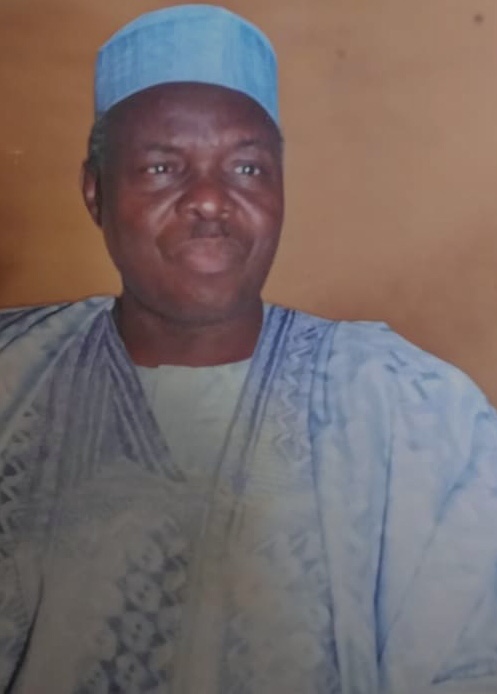
Outrage as suspected army personnel kill Islamic cleric in Yobe

By Uzair Adam Imam

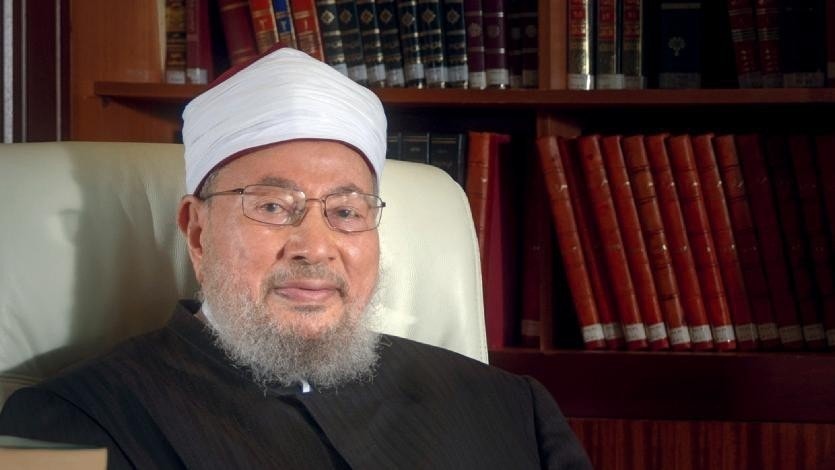
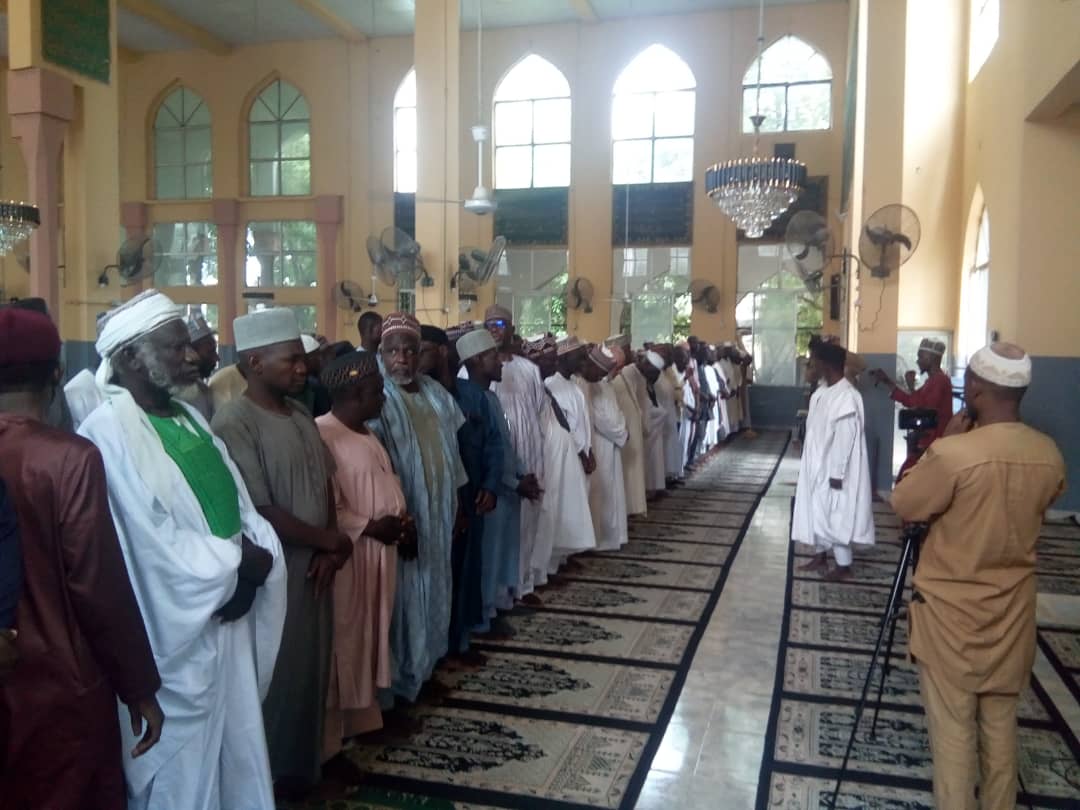
Hundreds of people have clamoured for the immediate prosecution of the two suspected killers of a Yobe-based Islamic cleric, who are alleged to be personnel of the Nigerian army.

The news of Sheikh Goni Aisami’s murder went viral at the weekend and threw thousands of people to express shock and outrage at such a significant loss in the country, especially to the Muslim North.

 Reports from Yobe indicate that Aisami was gunned down Friday at about 10 pm while en route to Gashua from Nguru after he gave a lift to one Lcpl John Gabriel.

 DSP Dungus Abdulkarim, the spokesman of the Yobe Police Command, said the suspect claimed to be a soldier attached to 241 Recce Model Battalion, Nguru.

Gabriel bites the hand that fed him

Abdulkarim stated, “Aisami was driving his car to Gashua from Nguru when the principal suspect, who was in mufti and carrying a camp bed, pleaded with him for a lift to Jaji-Maji.

“On approaching Jaji-Maji, the cleric stopped the car to urinate,” he said, adding that as soon as he returned to continue the journey, the principal suspect brought out an AK-47 and shot him twice to death.

Abdulkarim further stated that the suspect tried to run away with the Sheikh’s car but failed, as it got stuck in the mud and the vehicle could not start.

“He put a call through to the second suspect, who drove another vehicle to the scene. Unfortunately for him, his drive shaft broke.

“The two suspects then requested help from a vigilance group in Jaji-Maji. When the group arrived at the scene to tow the broken down vehicles, incidentally, Aisami’s body was found at the scene,” he added.

‘It’s so traumatic; bring perpetrators to book’

A lecturer with Bayero University, Kano, Malam Aliyu Yakubu Aliyu, who expressed deep concern, said the development was deplorable.

He said, “It is very unfortunate to have read that the security personnel were the people involved in this criminality. Their job is to protect lives, not to take them.

“Often, the security personnel at different levels hatch in plotting to do unlawful things in various places, including schools and banks,” Aliyu decried.

A Kano cleric, Sheikh Abdussalam Baban-Gwale, decried the traumatic incident, calling on the government to exercise justice.

He said, “Government should ensure social justice and security in the country. Back in February this year, we were also attacked by unknown gunmen on our way to Bauchi from Jos.

“Often, society does not know about the end story of such criminals. Government should, therefore, ensure their prosecutions public to help end criminality in the country.”

In a Facebook post, a security analyst, Barrister Audu Bulama Bukarti, called on the government to prosecute the people behind the killing of Sheikh Aisami.

Goni Aisami’s murder regrettable – Gov Buni

Governor Mai Mala Buni of Yobe State has expressed sadness over the murder of the Sheikh and commiserated with the family over the loss.

In a statement issued in Damaturu by his Director-General Press and Media Affairs, Alhaji Mamman Mohammed, Buni described the circumstances surrounding the murder as sad, regrettable and most unfortunate.

“The alleged circumstances surrounding the death are most unfortunate and will be investigated thoroughly. [The] government will ensure that every detail is investigated and anyone found wanting will face the full wrath of the law.

“The state government will work closely with the security agencies to unravel every detail to ensure justice is done,” he said.

Buni also called on the residents to remain calm and law-abiding as an ongoing investigation would be pursued to its logical conclusion.

In remembrance of Alhaji Babayo Mustapha

By Mallam Musbahu Magayaki

On Thursday, 11 August 2022, my elder brother and I went to charitably donate a mini solar inverter under the auspices of Babayo Mustapha Charity Foundation, founded by Bello Mustapha (Kogunan Katagum), to a mosque behind “Gidan Babale”.

Patiently, we waited for a while before Mallam showed up in order to inform him of the donation we had brought about by this foundation aimed at helping the vulnerable, low-income, and most importantly, upgrading the true religion of Allah (Islam) by contributing to what is needed in rendering religious services based on the foundation’s economic status.

As Mallam came out of his house to attend to us, we sat faithfully before him and exchanged pleasantries, after which we briefed him of what had brought us there. After giving him all the details, he agreed to receive the package but insisted that he wanted to know the actual donor, to which we reluctantly replied that it was Bello Mustapha (Kogunan Katagum), the son of the late Alh. Babayo Mustapha.

Upon hearing that famous name, Babayo Mustapha, he asked us to sit down properly. He wanted to share a good testimony of the late Alh Babayo Mustapha’s acts, which he didn’t want to reveal to anyone, including his family and friends during his life.

Mallam starts by saying that the deceased provided the plot of land where that mosque was built. And he was the first religiously concerned individual who began laying the mosque’s foundation up to its completion. He extensively went on to state that there were several mosques within and outside Katagum built by the late Alh. Babayo Mustapha. But he didn’t want the mosque preservers to tell the general public that he was the person who built them.

Sincerely, Mallams’ words keep ringing in my ears, demonstrating what the late Alh. Babayo Mustapha left behind are seemingly following in their father’s footsteps by taking over from where he ceased. In the sense that they are fully committed to rendering all sorts of religious contributions in the likeness of their late father.

In conclusion, I pray for the late Alhaji Babayo Mustapha to have the highest place in Jannah for promoting his religion. And I would like to equally encourage those he left behind to continue stepping up their efforts in doing similar religious services as their father.

Mallam Musbahu Magayaki writes from Sabon Fegi, Azare.

On the unity of the elites and the disunity of the masses in Nigeria

By Hassan Ahmad

Isn’t it surprising that despite the widespread public outcry, there is no real effort by any arm of government, traditional rulers or influential individuals to resolve lingering strike action by university teachers? This is just one of numerous simple but logical questions we should ask ourselves. 

As diverse as Nigeria is culturally, religiously, regionally, and even developmentally, her elites are the most united people you can find. But this unity managed to be sustained with a price: making sure the masses were united in hunger, unemployment, insecurity, lack of good education, access to poor amenities and others too numerous to mention. 

For instance, only ignorance would make Christians in Plateau revolt against Ja’iz bank’s reconstruction of the Terminus market based on a PPP agreement with the state government. While a Christian-dominated government sees its benefits, the common Christian masses wouldn’t see it that way. 

Isn’t it poverty that makes the northern Muslim send his child to the city to be fed by the public under the façade of pursuing Islamic knowledge? This same man would use all his energy to defend a politician from his region because he doesn’t want another man from another area to be his president.

Then you’ll have another set of educated and informed masses. The elites use this set as defenders. They are the intermediaries between the elites and the ordinary people and serve as their social media warlords. They defend their misdoings and praise their good acts no matter how unsatisfying. These people are stuck on a narrow path. They are not meant to be offered jobs in “juicy” government organizations and parastatals according to the design made by the elites. 

President Buhari, in his Sallah message, mentioned, “We don’t have jobs in government anymore. With technology, governments are becoming smaller, nimble and efficient”. He did not lie, but the truth remains that there will always be jobs for the children of the elites. 

What is more frightening is that you’ll find even the educated folks among the masses fighting the shackles of poverty not to better themselves and show a pathway to others but to belong to the elite class and continue with the abysmal state of dualism. 

In making sure they create a small world for themselves and their progeny, the elites put aside their differences – religion, region or political affiliation. This, in no small measure, makes them comfortable. They know that no matter who is at the helm of affairs, their businesses, investments, properties and status remain intact and unchallenged. 

Hence, a business mogul from Kano can go to Lagos to establish a refinery without being uneasy about it. Likewise, another owner of a travelling company from the east can have his vehicles go round the country to fetch him money. Again, a Northern governor can give out his daughter in marriage to the son of a South-Western governor. 

But then, when you come down to the masses, the tomato seller from the North is the number one victim of regional tension in the South. So also, the Igbo trader who finds his way to the remotest village in the North becomes the victim of religious tension—forgetting that they are all victims of misrule and deliberate segregation from the elites. 

As the situation grows further, it becomes more dangerous from the masses killing their relatives in the northeast in the name of establishing an Islamic caliphate to those killing their brothers in the southeast as separatists and bandits from the northwest terrorizing the poverty-ridden villagers.  

In all these, while the masses are the perpetrators, the masses are also the victims. But things have already gone so bad. The elites, too, are not guaranteed safety if the advancing motorcade of the C-in-C can be attacked. 

At this stage, the elites are under necessary, if not compulsory, reciprocity to make Nigeria stable again. The country has done so much for them in the past. The chickens are back home to roost. There is no need to point fingers at each other. 

To do this, the government must make sure that social justice prevails over any sentimental arrangements that have been in place. The government must understand that there is too much illiteracy and poverty in the land, and since they are the primary tools that lead to criminality, efforts must be made to curb them. 

The next administration can be said to be the most important in the history of our country. It mustn’t get it wrong. 

To the masses, we should understand that we are at a crossroads. As we can see in our country’s situation, we need not be begged not to sell our votes. You can sell your votes at the expense of your safety. If things go south, the elites have places to go around the globe in their private jets. You and I will be left to face our deaths in the hands of exciting gun-wielding criminals. Some of us were already asked to take arms and defend ourselves in Zamfara and Katsina states. The handwriting is already written on the wall. 

So please, don’t sell your votes and vote wisely. 

Hassan Ahmad Usman is a student of economics at the Federal University of Lafia. He can be reached on basree177@gmail.com or 77hassan.a.u@gmail.com.

Man in tears after walking from UK to Makkah for Hajj

By Ahmad Deedat Zakari

Adam Muhammad, who lives in the UK, said he cried when he first arrived at Makkah for the 2022 pilgrimage. 

“I cried when I first arrived,” He told reporters. 

According to a report by Islamic Channel, the 53-year-old electrical engineer from the UK travelled around 4000 miles on foot to reach Saudi Arabia. 

He thanked the Saudi government for granting him and his family Hajj permits.

“The Saudi government granted my family and me Hajj permits when it knew I was travelling from the UK to Makkah on foot. I met with my family in Madinah after they arrived from the UK and walked together to Makkah. I feel grateful to them,” Adam said. 

While commenting on the journey, Adam said it was difficult, and he made it solely for Allah’s sake. 

“I would feel mentally exhausted, unable to eat or drink too. But then something inside me would tell me that what are you afraid of? You have Allah by your side, and you can make it. I have lived for 52 or 53 years for myself. Why can’t I dedicate 10 or 11 months to Allah?” He said. 

According to reports, Adam reached Ayesha Mosque in Makkah on June 26, where a huge crowd received him. 

Adam had documented the progress of his journey on TikTok, where he is very active with over 2.8 million likes.

Hamas: The faith triumphant

By Bala Muhammad

Every Israeli Prime Minister makes it an article of faith to attack Palestine – both the West Bank and the Gaza Strip. But as the West Bank is usually led by the compliant and complacent so-called Palestinian Administration of PLO inheritors, it is mainly spared the fury of Israel. But Gaza, the home of HAMAS and Islamic Jihad, always takes the brunt whenever an Israeli leader wants to flex muscle and show ‘manhood’.

With each passing day of the Israeli aggression against the Palestinians, with each additional death of a child or mother, Muslims worldwide are becoming more militant, more fundamentalist, and more jihadic. This is very ominous for the West, on whose behalf Israel is doing what it is doing.

Samuel Huntington, who died not too long ago, wrote Clash of Civilisations. Now, more than ever before, this Clash is at hand. If there is any cause that unites Muslims today, it is the Palestinian Question; if there is any future war that Muslim youth would gladly join and wage, it would be the Jihad to liberate Al Aqsa, Al Quds and Palestine. But for the Western-propped-up Arab regimes encircling Gaza, many young people would have gone into the Strip to join the martyred army of Hamas and Islamic Jihad.

In the matter of HAMAS, Faith will always be Triumphant. Incidentally, The Faith Triumphant is the title of Chapter Eleven in one of the most important books of the Islamic Movement, Ma’alim fit Tariq (Milestones), written by the Movement’s leading intellectual and Martyr, Sayyid Qutb (1906-1966) of the Muslim Brotherhood, Ikhwan al Muslimun.

In Milestones, Qutb wrote: “Allah says, ‘Do not be dejected or grieve. You shall be the uppermost if you are Believers’ (3:139). The first thought which comes to mind on reading this verse is that it relates to the form of Jihad, which is actual fighting, but the spirit of this message and its application with its manifold implications is greater and broader than this particular aspect. Indeed, it describes that eternal state of mind that should inspire the believer’s consciousness. It describes a triumphant state which should remain fixed in the believer’s heart in the face of everything, every condition, every standard and every person; the superiority of the Faith.

“It means to be above all the powers of the earth which have deviated from the way of the Faith, above all the values of the earth not derived from the source of faith, above all the customs of the earth not coloured with the colouring of the faith, above all the laws of the earth not sanctioned by the Faith, and above all traditions not originating in the Faith. It means to feel superior to others when weak, few and poor, as well as when strong, many and rich. It means the sense of supremacy which does not give in before any rebellious force.

“Steadfastness and strength on the battlefield are but one expression among many of the triumphant spirit which is included in this statement of Almighty God. The superiority through faith is not a mere single act of will nor a passing euphoria or a momentary passion but is a sense of superiority based on permanent Truth centred on the very nature of existence.

“The person who takes a stand against the direction of the society – its governing logic, its common mode, its values and standards, its ideas and concepts, its error and deviations – will find himself a stranger, as well as helpless, unless his authority comes from a source which is more powerful than the people, more permanent than the earth, and nobler than life.

“Conditions change, the Muslim loses his physical power and is conquered; yet the consciousness does not depart from him that he is most superior. If he remains a Believer, he looks upon his conqueror from a superior position. He remains certain that this is a temporary condition which will pass away and that faith will turn the tide from which there is no escape. Even if death is his potion, he will never bow his head. Death comes to all, but for him, there is martyrdom. He will proceed to the garden while his conquerors go to the fire. What a difference!”

So wrote Sayyid Qutb. Let us now end today’s treatise with the following story on Challenge, the type the Palestinians are facing: “The Japanese love fresh fish. However, the waters close to Japan have not held many fish for decades. So to feed the Japanese population, fishing boats got bigger and went farther. The farther the fishermen went, the longer it took to bring in the catch. If the return trip took more than a few days, the fish were not fresh. The Japanese did not like the taste.

“To solve this problem, fishing companies installed freezers on their boats. They would catch the fish and freeze them at sea. However, the Japanese could taste the difference between fresh and frozen, and they did not like frozen fish. So fishing companies installed fish tanks. They would catch the fish and stuff them in the tanks, fin to fin. After a little thrashing around, the fish stopped moving. They were tired and dull but alive. Unfortunately, the Japanese could still taste the difference. Because the fish did not move for days, they lost their fresh-fish taste. The Japanese preferred the lively taste of fresh fish, not sluggish fish. So how did Japanese fishing companies solve this problem?

“To keep the fish tasting fresh, the Japanese fishing companies still put the fish in the tanks. But now, they add a small shark to each tank. The shark eats a few fish, but most of the fish arrive in a very lively state. Because they are challenged, they kick and protest and ultimately arrive fresh. Or martyred.”

Allah has put a tiny shark (Israel) in the Arab tank. Only some fish called Hamas, Islamic Jihad and Hezbollah are kicking. The others are frozen stiff. RIP. After all, L. Ron Hubbard once wrote: “Man thrives, oddly enough, only in the presence of a challenging environment.”

May Allah help the Palestinians.

Dr Bala Muhammad wrote from Kano, Nigeria. He can be reached via balamuhammad@hotmail.com.

Book Review: The Walking Qurʾan: Islamic education, Embodied Knowledge, and History in West Africa

  • Book time: The Walking Qurʾan: Islamic education, Embodied Knowledge, and History in West Africa
  • Author: Rudolph T. Ware III.
  • Date of Publication: 2014
  • Number of Pages: 330
  • Publisher: The University of North Carolina Press
  • Reviewer: Shamsuddeen Sani

After recently reading a book about Quranic Schools in Northern Nigeria, I was left hungry for a less Western way of presenting the subject matter. So I serendipitously laid my hands on this book, and knowing that I have read about the author in the past, I didn’t hesitate to devour it.

Following a broad introductory section, the book delves deeply into an interdisciplinary examination of the knowledge philosophy underlying Quranic education. This required an in-depth historical ethnography of the institution in modern-day Senegambia, which lays the way for comprehension of the conceptualization and transmission of knowledge. It also strengthens the case that internalizing texts, even by swallowing them, was crucial to understanding and remembering the material. This book’s central concept represents the embodiment and actualization of Islamic knowledge.

Importantly, these early chapters look at the emergence and long-term evolution of a native West African clerisy. Ware underscores how these African Islamic instructors and thinkers were the primary agents of Islamization in a continent unperturbed by the early Islamic conquests. In order to avoid rulers (and maintain their independence), they established a unique framework for the interactions between political and religious powers. It also emphasizes both moral and political economies of studying and teaching the Qur’an throughout the 18th century focusing on how the growth of the Atlantic slave trade led to the breakup of this model of pious distance from power.

As we near the middle of the book, Ware thoroughly explored the historical account of the enslavement of ‘huffaz’ in Senegambia from the 1770s until the advent of the French colonial rule in the late 19th century. With clerics viewed as embodied exemplars of the Quran, such incidents of enslavement were perceived as more than just violations of Islamic law, but as desecrations of the Book of God.

The book meticulously illustrates the chronological narrative of Senegambia’s revolts, rebellions, and even revolutions inspired by the enslavement of “the walking Qur’an.” Without going further into spoilers, these historical happenings culminated in the climactic radical movement by African Muslim clerics and their disciples, with a cascade of events leading to the overthrow of hereditary slave-owning kings in 1776, the abolition of both the Atlantic slave trade in the Senegal River Valley and the slavery institution itself.

These narratives would lack crucial context if they did not include the efforts of formerly enslaved people and other oppressed groups to use the legal abolition of slavery in the French colonial state to assert their dignity through the dissemination of the Qur’an in the early 20th century. They fought to transform their very selves through Islamic education while doing so from within the epistemology of embodiment and in opposition to regional traditions that stigmatized their bodies because of their social standing. The establishment of mass Sufi organizations and the emergence of new French and Muslim teaching forms were only two of the many changes in colonial Senegal’s political and educational landscapes fueled by this knowledge-sifting process.

This outstanding work profoundly serves as the first step for anyone interested in learning about Qur’anic instruction in West Africa. A significant chunk of detail about Quranic education in West Africa jumps right off the page, you can feel the author’s passion, and as he claims, this is the narration from within. The writing style is genuinely simple and engaging and has a powerful sense of atmosphere. It gives you a lot to chew on and is one of those books that it would not feel right if you didn’t give it the five stars it deserves.

Rudolph T. Ware III is a historian of West Africa at the University of California, Santa Barbara. He formerly taught at the University of Michigan and then at Northwestern University. His work aims to confront and dispel Western misconceptions about Islam.

Kano loses pilgrim in Saudi Arabia 

By Ahmad Deedat Zakari

A Kano State pilgrim in Mecca has passed on in the holy city of Mecca. 

The Executive Secretary of the Kano State Pilgrims Welfare Board, Alhaji Muhammed Abba-Muhammad, disclosed this to the press on Saturday, August 6, 2022. 

The Executive Secretary said Idris Muhammad, who hailed from Madobi Local Government Area, passed on after a brief illness in a Hospital in Mecca. 

“The deceased has been buried according to Islamic rites at Grand mosque at Masjid Haram Shira yard in Mecca,” He said

He also prayed for the deceased and extended his condolence to his family.

Tinubu-Shettima joint ticket and politics of religion in Nigeria

By Babatunde Qodri

The heated arguments for and against Bola Tinubu and Kashim Shettima’s joint ticket started when the presidential candidate of the ruling All Progressives Congress (APC) paid a courtesy visit to President Muhammadu Buhari in his hometown, Daura, Katsina State. The party’s flag bearer hinged his decision on the expedient need to perpetuate the stay of the ruling party in power. But, laudable as it may seem to APC lovers, Nigerians outside the ruling camp have faulted the decision citing likely consequences.

However, this short piece was inspired by a passionate conversation between one of my mentors and me. He frustratingly shared his view on the joint ticket, stressing that it is at variance with the country’s mood, especially regarding religion. According to him, the ticket became inevitable for the ruling party bent on winning elections without minding the implications for the people. He added it’s unarguably a design for electoral victory and will be tested at the polls. I agree with him.

Nigeria is a religiously polarized entity managed by politicians who deploy religion as a tool for political advantage. In a glaringly fragile country like ours, one would expect that every political decision should be underscored by the religious sensibilities of the people, at least for peace. But instead of politicians to consider this, they go about politics that stands detrimental to the country. This is what the APC Muslim-Muslim ticket suggests.

This is not to pander to the sentiments of some religious bigots whose outcry is rooted in what they stand to benefit from the calculation. Instead, it’s instructive to note that every political calculation that disregards the need for balance must be challenged. Of course, nations of the world develop without recourse to some silly religious sentiments. However, we need to be reminded that Nigeria, giving its very foundations, has been tied to religion, a consideration that political players must pay attention to.

Some might want to remind me of the June 12 1993, presidential election. Others might also talk about the 1979 election involving Azikwe-Audu and Awolowo-Umeadi combinations. Even in Nigeria of those innocent years, this presidential election ended in favour of Shehu Shagari, who used Alex Ekweme as his running mate. Nigeria is dreadfully divided along religious lines, thanks to our putrid politics. What about those who have justified the Tinubu-Shettima ticket based on competence? I have this answer for them.

Nigeria is a generously blessed country. We have Muslim technocrats who can do well in politics, so there are intelligent Christian politicians. The late President Musa Yar’adua, during his brief time in the office, used Goodluck Jonathan while Jonathan partnered with Namadi Sambo. These running mates did all they could in the course of serving their principals. If not for a decision made in response to the threat posed by influential candidates such as Atiku Abubakar (PDP), Peter Obi (LP) and Rabiu Kwankwanso (NNDP), what else explains the hypocrisy of the APC Muslim-Muslim ticket? Whatever it means to you, this decision would negatively affect the country in the following ways.

There would be an ethnoreligious tension in the country. There is no denying that ethnicity is inevitably bound to religion here. Our politics is deeply situated in religion and ethnic affiliations. Hence, people vote for a party based on how much such attunes to their religious and ethnic sentiments. And any political decision that trivializes these fundamentals might be thrashed away, and the country journeyed into needless rancour.

Plus, the ticket will hamper the chances of the ruling party in 2023. Some have argued that it’s not a threat since most votes come from the North, a region that overwhelming installed Buhari’s regime. Those people need to be told that such a point is stale in the context of reality today. Is this nice for the country in the long run? 2023 isn’t far.

Finally, a Muslim-Muslim ticket in a country beset by systemic killings and other vices inspired by religious sentiments isn’t an excellent idea. If our politics continue to disregard the fundamental polarity of Nigeria in terms of region and religion, then I am afraid the result won’t be friendly at all. However, all this is a reflection of Nigeria’s political retrogression. We need a new order where people will be convinced by neither region nor religion as the basis to choose who should lead them. I hope we get there soonest.

Babatunde qodri wrote via babatundelaitan@gmail.com.

From false dignification to blasphemy: My take on Abduljabbar Nasiru Kabara (II)

By Alkasim Harisu Alkasim

I think Abduljabbar hires out for the Western world. AlhamdulilLahi! Our learned scholars bird-dogged his heinous acts and pulled him down. In his illusions, he aspired to transform Islam and thought he could play sports with the scholars of Kano. He did this to buy himself a public advantage and attention. In his book, Minhajus Sunnah, the erudite scholar Ibn Taimiyyatal Harrani quoted Nana A’isha thus: the Prophet says that he who seeks public attention by sinning against Allah, Allah will draw the attention of people to him and make them love him. But in the end, Allah will turn people against him … (My paraphrase).

Truth be told, Abduljabbar is not well-read. As of late, he was asked by a government lawyer about his studentship. He affirmed that since his father’s death in 1996, which is 26 years now, he has stopped learning before a teacher. He has only been revising for all that long. For your information, when his father died, Abduljabbar was in his mid-twenties. I can bet my last dollar that, at that very moment, he could not have completed the study of the six books of hadith. I also doubt if he has ever read a single many-volumes book from start to finish. A person who knows Abduljabbar very well and shares blood with the family of Sheikh Nasiru Kabiru once told me that the former had not completed the jurisprudence book titled Almukaddimatul Iziyya when he fled the majlis his father taught people. 

How Abduljabbar translates and misinterprets prophetic traditions that do not sit well with his faulty faculty shocks many people. This leads him to ascribe to the Prophet what even the likes of Abu Lahab, Abu Jahl, Walid bn Mugira had never done to the Prophet. His mistranslating of prophetic traditions illustrates how he lacks the nitty-gritty of translation. The fact that he has never taken his time to be adequately mentored destroys him. I have never seen as big a laughingstock as Abduljabbar. He thinks he is glorifying the Prophet despite all these horrible things. How can one magnify the Prophet by describing him with names even Satan will feel angry when one addresses him with?

I suspect this man is selling the secrets of his religion. I was wondering if a sensible person would ever do this. I can remember a tradition he once cited that reduced the Prophet’s charm. The first time I glanced at it, I got physically numb. As I checked the reliability of the reporters in Alhafizuz Zahabi’s book Mizanul I’itidal fi Naqdir Rijal, the hadith turned out to be counterfeit thanks to the weakness of the reporters. Sure enough, such traditions he falsified are mind-boggling and should not be attributed to the person of the best of Allah’s creatures. Therefore, I advocate his refusal of such traditions.

What is funny with Abduljabbar here is his ignorance of the fact that there are books whose singular themes are the history of reporters of hadith. There are also those books that did not necessitate only authentic or sound traditions. Thus, one can find all sorts of traditions ranging from the authentic, sound, and weak to even false ones. While giving the history of a reporter, the scholars mentioned some of the traditions they reported through him, directly or indirectly. If the reporter were weak, they would exemplify (a) weak (a)hadith he had reported. Such books comprise Tariku Baghdad by AlKadibul Baghdadi; Tariku Dimashqa by Ibn Asakir, to mention a few.

What motivated the above scholars and their likes to write down these ahadith was their thirst to show their absolute lack of authenticity. They brought forth the ahadith under the history of a particular reporter, as said earlier. For instance, any reporter of hadith, whether strong or weak, provided he had ever been to either Baghdad or Dimashqa, they wrote about him. 

Additionally, there are hadith texts whose authors preoccupied themselves with reporting ahadith a la classifying their teachers in alphabetical order. Such authors did not care to report even false ahadith they heard from their teachers. For instance, AlMuujamul Kabir, Ausad and Sagir by AdDabarani. Therefore, one can say it is a sin to report or mention a false hadith. Thus, it is noteworthy that such hadith scholars reported counterfeit traditions to show the world their falseness for people to avoid them.

There are books singled out to mention only false traditions, such as Abdullahi Bn Adiy’s book Alkamil fi Du’afa’ir Rijal, etc. Strangely, Abduljabbar cited ahadith from this book, not knowing that it was purposely written to give accounts of weak hadith reporters. This faux pas has illustratively emphasised the ignorance of Albduljabbari. Therefore, this and other shockers are enough to discredit his scholarship.

The Scholars’ Verdict on Blasphemy

Doubtless, the abominable utterances Abduljabbar has made against the Prophet demonstrate him as blasphemous. Like it or not, he is a blasphemer who has tried to tarnish the image of the Prophet, his companions and their righteous followers. His badmouthing of the religion of Islam cannot be reduced to writing. The extent to which his muddy utterances have reached in reducing people to tears is enough to tell you about the gravity of the situation. A young girl listened to one of such unprintable assertions of this fake scholar and immediately broke into tears.

Indeed, any Muslim that blasphemes against Allah or His Prophet deserves death. After citing many other scholars, Iyad bn Iyad bn Musa and Ibn Taimiyyah ruled that any Muslim that blasphemes against the Prophet will be condemned to death even if he repents. His repentance neither spares him nor assures him Allah’s forgiveness. Contrarily, if a nonbeliever blasphemes against Allah or His Prophet, he can be spared if he converts to Islam. Otherwise, he will go to the gallows. 

Last, the right action should be taken against any blasphemer regardless of their rank in society. This is to make people revere the Prophet all the more and watch their tongue. May Allah guide us, amin.

Alkasim Harisu Alkasim wrote from Kano via alkasabba10@gmail.com.

Tinubu and the proverbial Hobson’s choice

By Sule Abubakar

The contention has recommenced, and I wonder why I should be worried over my enemy’s self-immolating adventure. The brouhaha has resurfaced, and with the usual vigour, social media has been littered with a weightless torrent of abuse, criticism and name-calling! Please, as Nigerians would say, “No dey take a panadol for another person’s headache”!

The highly controversial topic of a Muslim-Muslim ticket re-appeared soon after Bola Ahmed Tinubu officially announced Senator Kashim Shettima, the former Governor of Borno State, as his running mate for the 2023 general election. Tinubu had been on the horns of a dilemma. A situation like that demands wits because any ill-conceived decision might result in the ignominious internment of his political career.

So, Tinubu did the inevitable thing. However, in a rare moment of candour, picking a Muslim running mate is reprehensible, and, admittedly too, that’s the inescapable political cross Tinubu has to carry if really he is out to win the 2023 presidential election!

On June 14, 2022, I noted something in my article “APC, Tinubu and the Burden of a Muslim-Muslim Ticket”. I said: “First things first, one of the principal objectives of any political party is to win an election. So, without being politically correct, APC as a party is out to contest the presidential elections, and with the sole aim of winning! And since winning is their major target, they have the constitutional right to decide what could help them actualise their plans. If it’s a Muslim-Muslim, Christian-Christian, Muslim-Christian or Christian-Muslim ticket they think guarantees their victory; the sole decision is theirs to make. And if the plan unfortunately backfires, with calamitous results, it means they’ve been hoisted with/by their own petard. You can call that a Frankenstein monster!” This is still very relevant in today’s controversy over the Muslim-Muslim ticket.

The obvious truth is this, Tinubu has to pick a ‘politically relevant’ northern Muslim to strengthen his chance of winning the election because, strangely enough, that’s the only Hobson’s choice before him! Hobson’s choice simply means taking the only available option or nothing! And according to some people, making such an insensitive choice is self-immolating. But if you critically evaluate your ethno-religious sentiments, you will see that that’s the right thing any sane person in Tinubu’s shoes would do. No serious politician, especially in Nigeria, succumbs to the pressure of religious balance to their political detriment. 

Picking a Muslim running is not even destructive; not picking it would’ve been more disastrous for Tinubu and the APC! And if Tinubu had not made that objectionable choice, it would’ve even been the deadliest self-immolating political choice in his political career – because a true leader makes a seemingly unimaginable choice and firmly stands by it. And that’s what Tinubu has just done here!

According to the structure of Nigerian politics, which I have keenly observed so far, religion is only relevant to our politicians before elections. After all, elections are conducted, they jettison religion and then drift back to their sacrilegious activities. To most Nigerian politicians, religion is an art or a tool of fraudulence that they use to bamboozle gullible Nigerians. This has been happening for years, but it takes careful inspection to notice this. I laugh when I see people who blabber on social media. The earlier you know that the election isn’t won through your monotonous jeremiads and sentimental religious outbursts, the better for all of you. Please, take my analysis as one from an unbiased analyst. 

Politics thrives on the wings of numbers. That is why candidates go for running mates that give them numerical strength. Tinubu knows this; hence, his desire to go for a Muslim-Muslim ticket. So, please, you should allow him to do what he knows best for him and his party! The same way other candidates chose those they think have more electoral advantage, that’s the same way Tinubu also chose somebody he thinks has more electoral value or advantage.

But, of course, Tinubu has the right to do that because the electorate has the equal right not to vote for him. But strangely enough, that’s even Tinubu’s only Hobson’s choice! And since you all think Tinubu has reached his political plateau by choosing a northern Muslim as his running mate, you can all rejoice because of his self-defeating, self-destructive and self-immolating crapshoot! After all, in politics, the downfall of one’s opponent is savoury!

Sule Abubakar wrote via suleabubakarmark2020@gmail.com.