Muslims

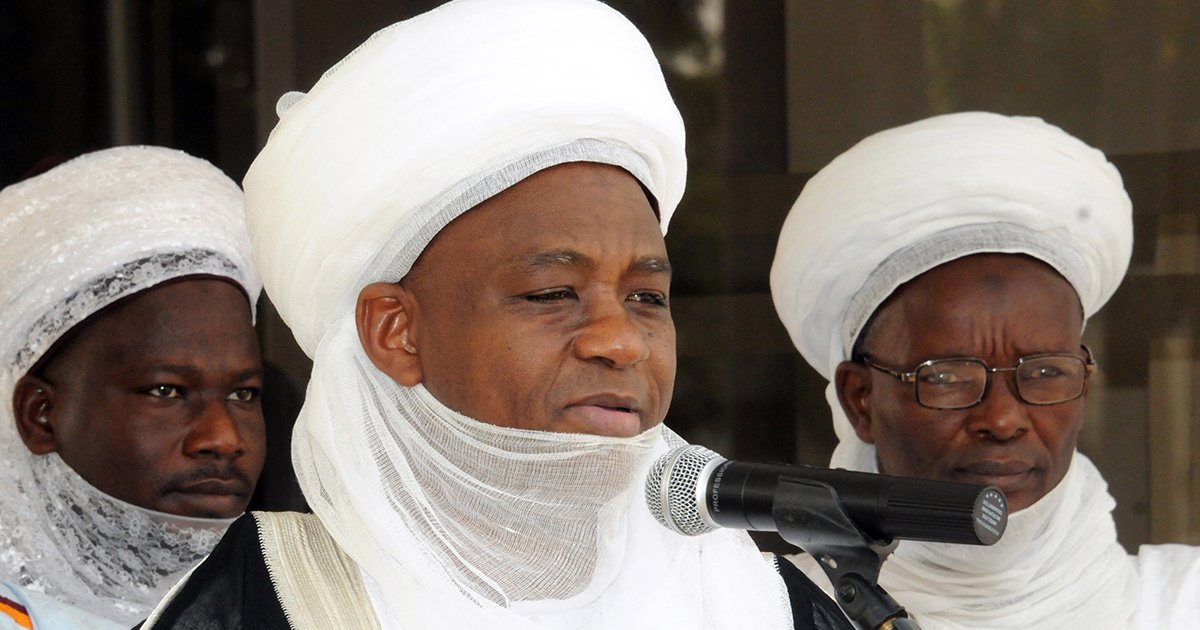
Ramadan starts Thursday, says Sultan

By Muhammadu Sabiu 

The Nigerian Supreme Council of Islamic Affairs has confirmed that the Ramadan crescent has been sighted in different locations in Nigeria.

This announcement was made by the Islamic Council in a statement on its official Facebook page on Wednesday night.

The statement reads, “His Eminence has received positive sighting reports of the Ramadan crescent from various locations nationwide. Thursday, 23rd March, is the first day of Ramadan.”

It added that an official statement would follow afterwards.

The sighting of the crescent marks the beginning of the ninth month of the Islamic calendar, in which Muslims fast for twenty-nine of thirty days before observing Eid al-Fitr.

Man refutes social media gossip about wife’s age

By Muhammad Abdurrahman

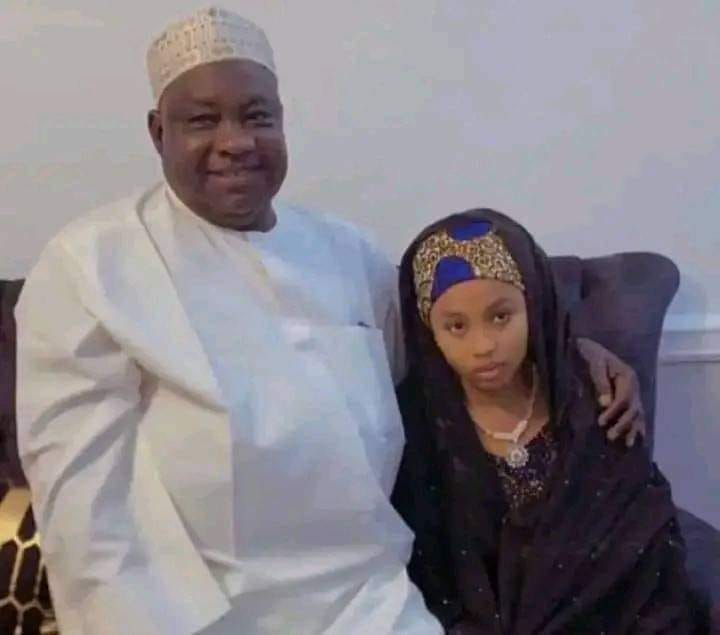
A photo and video clip of a man and his wife went viral in the past days on Nigerian social media. Several users, especially on Twitter, alleged that the wife was 11 years old while the man looked much older.

Others condemned the marriage, calling the man a paedophile and other unprintable words.

The man, identified as Aminu Danmaliki, debunked all these rumours. He those sharing them “blackmailers and doubting Thomas”.

Danmaliki, in a Facebook post, says:

“My recent marriage with Sakina has generated a lot of tension and unfounded allegations that I married an underage girl, some suggesting she is 11 years old and that she was forced to marry me. That is untrue.

“The wedding video went viral. We decided to keep mute, but [I] was advised to state the true facts. Here it is: My beloved wife is 21 years old. She made her own choice of me as her husband, and I loved her too.

“I hope the blackmailers and doubting Thomas will see the reality in this picture and leave us alone to enjoy our honeymoon.”

Alhaji Aminu Danmaliki and his bride, Sakina

Danmaliki, per his social media profile, hails from Bauchi. However, he now lives in Abuja. The Daily Reality has not been able to contact him for further information.

Sheikh Sudais marks 40 years as the Imam of Masjid Al Haram

By Ahmad Deedat Zakari

Sheikh Abdulrahman Sudais, the renowned Islamic cleric and revered Imam of the grand mosque in Makkah, has completed forty years as Imam of the mosque. 

According to reports by the Haramain Sharifain on Tuesday, Sheikh Sudais was appointed as Imam of Masjid Al Haram, Makkah, by Royal Decree issued by the Late Custodian of the Two Holy Mosques, King Fahad bin Abdulaziz in 1984/1404 at the young age of 22.

Sheikh Sudais led his first Salah on 22 Sha’ban 1404, corresponding to May 1984. His First Salah in the Haram was the Asr Prayer.

Below is the brief biography of Sheikh Sudais:

Sheikh Sudais was born in the Islamic year 1381 in the City of Qassim, Saudi Arabia. He got his early education in Riyadh, and by the age of 12, he had memorized the whole Quran under the supervision of Sheikh Abdul Rehman Al Firyan.

Sheikh Sudais graduated from the Faculty of Sharia in the year 1402, Completed his final years of Studies at Umm Al Qura University in Makkah and earned a PhD Degree in Sharia in 1416.

He was appointed Imam of Masjid Al Haram in 1404 at the very young age of 22. Since then, Sheikh Sudais has been leading Taraweeh every year, and in 1441, he completed his 40th time of completing the Quran and reading the Khatam ul Quran Dua.

In 1433, he was appointed as the President of General Presidency for the Affairs of the Haramain in a decree ordered by the Late King Abdullah of Saudi Arabia just before the Grand Expansion started in Masjid Al Haram

Sheikh Abdul Rahman As Sudais was appointed by King Salman to deliver the Hajj Khutbah in the year 2016/1437. Later, by Royal Decree issued by the Custodian of the Two Holy Mosques, Sheikh Sudais was reappointed as President of the General Presidency for a period of 4 years in 1441.

In 1444, Sheikh Sudais completed 40 years of his appointment as Imam and Khateeb of Masjid Al Haram, Makkah.

2023 Ramadan: Qatar reduces prices of 900 consumer goods

By Ahmad Deedat Zakari

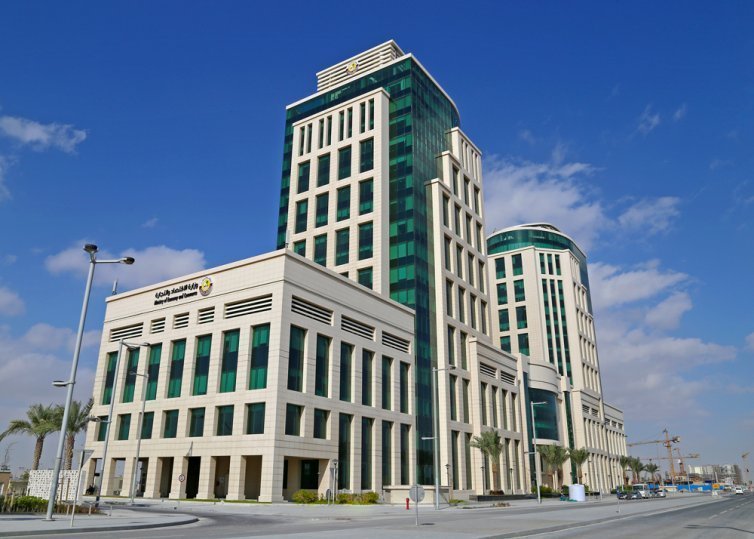
As Muslims all over the world prepare for fasting in the holy month of Ramadan, Qatar has announced a reduction of prices of 900 consumer goods for citizens of the country.

On Monday, the Qatar Ministry of Commerce and Industry (MoCI) made the announcement of the reduction of prices for hundreds of goods during Ramadan.

“Prices of more than 800 commodities have been reduced in coordination with major outlets in Qatar, starting from Wednesday, March 23, until the holy month of Ramadan,” MoCI said.

The Ministry added that the types of discounted goods include the most important food and consumer goods required by a family during Ramadan like:

Honey, flour and its products, cereals and corn flakes, yoghurt and dairy products, powdered and condensed milk, cheeses, juices, sugar, coffee and its products, dates, mineral and bottled water, tin foil (aluminium), paper napkins, washing powder, trash bags, pastries and pasta, legumes, rice, frozen vegetables, poultry and its products, eggs, meat products, tomato paste, tea, ghee, yeast, salt, personal hygiene items and household cleaning detergents and edible and cooking oils.

Unlocking West Africa’s Intellectual Legacy: The book unborrowed from Yale Library for 120 years

By Muhammad Jameel Yusha’u, PhD

On Friday, March 3rd, 2023, I attended two events at the Divinity School. The first was a lecture convened by Professor Ousmane Kane, and the second was a joint symposium called the Zaytuna-Harvard Symposium. These two events shared similarities in that they both aimed to highlight the intellectual heritage of sub-Saharan Africa in various fields of knowledge and the importance of traditional means of knowledge acquisition.

The former was a presentation by Ustadh Umar Sheikh Tahir, the son of a prominent Nigerian scholar Sheikh Tahir Bauchi and a current PhD candidate at Columbia University. His presentation was titled “Rediscovering 18th Century Knowledge Tradition: Alkashinawi’s (d.1742) Intellectual Networks in Bilad Al-Sudan and Hijaz.” The latter was a presentation by Sheikh Hamza Yusuf, President of Zaytuna College, who spoke on “The Arts of Understanding Prerequisites for Unlocking the Islamic Tradition.” Sheikh Hamza Yusuf studied traditionally with scholars in Mauritania, West Africa.

Ustadh Umar presented the story of Muhammad Alkashinawi, a West African scholar from today’s Katsina province in Northern Nigeria. Alkashinawi developed proficiency in Arabic language, logic, mathematics, and jurisprudence in West Africa. When he moved to Hijaz, his scholarship was acknowledged, and he became a respected scholar from whom society was learning. When he died in Egypt, he was buried in the cemetery of scholars. Alkashinawi’s story highlights the journey of a scholar whose intellectual depth was developed in West Africa and whose scholarship transcended geographical boundaries.

The uniqueness of Alkashinawi’s work was not as prominent as it should have been, and Ustadh Umar’s work is more relevant in that he is translating Alkashinawi’s book into English. Interestingly, some of Alkashinawi’s work is only available at Yale University, and his book was not borrowed from the library at Yale for 120 years until Ustadh Umar asked for it.

The unborrowed book from Yale Library for 120 years

Sheikh Hamza Yusuf’s presentation highlighted the importance of traditional means of knowledge acquisition and how it translates into scholarship that transcends geographical boundaries. Both presentations mesmerised the audience, providing evidence that knowledge is a human heritage that belongs to those who work to acquire it. It is neither the monopoly of a region, ethnicity, nor race but a heritage that beautifies a society that values it.

During the symposium, I sat among the students of Zaytuna College. One of the students asked me where I was from, and I responded Nigeria. He then introduced me to one of his schoolmates from Texas, who was a descendant of Sheikh Uthman ibn Fodio. I found it interesting how the family of Uthman Dan Fodio crossed the Atlantic and still keeps the story of their genealogy intact.

Takeaway: Knowledge is a human heritage. It belongs to those who work to acquire it.

Muhammad Jameel Yusha’u, PhD, is a candidate for a Mid-Career Master’s in Public Administration at Harvard University, John F Kennedy School of Government. He can be reached via mjyushau@yahoo.com.

Muslim-Muslim Ticket: An evolution

By Abubakar Usman Almajiri

The Christian Association of Nigeria, CAN, is more of an albatross to Christianity and Christians. The excessive aggression and confrontational behaviour of its ranks have always caused Muslims to rise, be on the alert, and engage in retaliation or reprisals. The latest in the reaction of Muslims to CAN intrigues is their response to the so-called Muslim-Muslim presidential ticket. 

In this same country, we have seen Generals Aguiyi-Ironsi and Yakubu Gowon rule with a Christian head and Christian 2iC. Not a single person raised an eyebrow. We have also seen a time when Moshood Abiola, a Muslim, contested with a Muslim 2iC and won. 

Today, Bola Tinubu has contested a Muslim-Muslim ticket just as a matter of winning strategy, not a religious sentiment. People within CAN who felt they should be the VP candidates, Babachir Lawal and co, went hey war. They rallied CAN and Christians against that. And they mislead Christians into the idea of a Christian candidacy that has just failed. 

The failure is not even the problem. The problem is in what translates to in the future. Nigerians will now openly engage in religious politics with all the dangers that spell. The atmosphere is already overcharged by that, and almost nothing can be done. 

Let us not forget that CAN, a religious minority in Nigeria compared to Islam, has always banked on the death of Muslim presidents to clinch power. 

President Umar Musa ‘Yaradua died in power under controversial circumstances. He was believed to have been poisoned. In any case, his choice to succeed General Olusegun Obasanjo was made after scrutinising the medical files of serving PDP governors under Obasanjo. The one who is most terminally ill, ‘Yaradua, was opted for. The objective was for him to die in power so a CANist could take over. 

CANists taking over is not a problem. The problem is always how they run governance in the most despicably lopsided manner. A manner that hurts and kills people of the North and Muslims. We have an example in Goodluck Jonathan’s regime. Also, in the Obasanjo regime.

Obasanjo has done the most heinous maltreatment of Muslims before him. He also attempted to extend his tenure beyond constitutional provisions. He attempted to change the constitution to favour his self-succession bid. When that failed, he searched for the most sickly Nigerian governor to hand over to so that power would return to him via his pawn. That happened. The pawn he had in place betrayed him but remained a CAN puppet. 

Boko Haram grew from an Obasanjo strategy to the monster it became under Jonathan. Via fight against Boko Haram, the beautiful and commerce burbling City of Bags was completely burned to ashes by Gen. Ihejerika under Jonathan. A civil war hero, Gen. Shuwa, was murdered cold-bloodedly in suspicious circumstances.

Jonathan, like Obasanjo, used the opportunity of inheriting the presidency under emergent situations to lure serving a governor in a Muslim-dominant state (i.e. Kaduna) with Vice Presidential positions so that their Christian deputies would become governors. 

That happened in Kaduna State with Vice President Namadi Sambo, who chose to accept the Vice-President position, paving the way for Patrick Yakowa. Yakowa ruled Kaduna state in the most lopsided manner. He rigged his re-election bid, and to protect his rule, the entire Muslim side of Kaduna was kept with soldiers and sandbags every inch. We lived like that for years until Yakowa died in a plane crash. Boni Haruna had the opportunity to run Adamawa state similarly. 

There were hues and cries, but I am unsure what happened there. 

CAN now has this strong penchant for having Muslim rulers die in office. The death of Yar’adua was openly celebrated even though he was a perfect gentleman. President Muhammadu Buhari almost died due to a suspicious ailment. The celebration began even before he died. And they kept expecting him to die. They even propounded the theory of ‘Jubril of Sudan’ to assert that he died and was exchanged. That’s how desperate they are. 

The Muslim-Muslim ticket would not have been in vogue it is without the desperate aggressions CAN employs.

I know many people who despised Kaduna’s Muslim-Muslim experiment and are now very happy with the National Muslim-Muslim ticket.

Abubakar Usman Almajiri wrote from Kaduna State.

Short-term gain, long-term pain

By Dr Raji Bello

Nigerians are not known for their ability to figure out the long-term consequences of their actions. This is a major national handicap since some choices which produce short-term gain could lead to long-term pain. For instance, in 1999, the governor of Zamfara state introduced a new social order in the state in defiance of the authority of the Federal Government of Nigeria. The new order spread across the northern states along with a strong wave of triumphalism. 

In the years that followed, groups of non-state actors across the country learnt something from what happened in Zamfara – that a group of determined people within a defined geographical area could defy the Federal Government and impose their will without any consequences. Inspired by this knowledge, a new Islamic militant group soon appeared somewhere in Yobe state, which later grew into Boko Haram – and the rest is now history.

Militants in the Niger Delta, who were also observing developments in the North, concluded that the Federal Government was indeed weak and its authority could be challenged without consequences. An insurgency soon took firm roots in the area. Many years later, young herdsmen around the country and secessionists in the Southeast also decided that it was time to take on the government and Nigerian society. Over 20 years later, long after the triumph of 1999/2000 has faded, we are still living with the pain of the chain of developments that it had sparked.

Once again, there is palpable triumphalism in the land. Our newly-elected Muslim-Muslim presidency has elicited exuberance in the Muslim community and foreboding on the Christian side. Prominent Muslims are already lining up to claim ownership of the president-elect and his religious identity. The Muslims are glad that the apparent consolidated Christian vote for Mr Obi has failed to achieve its aim. Christians, on the other hand, see their voting preference as justified because of the sheer brazenness of the APC in coming up with a Muslim-Muslim ticket right at the end of the two terms of a Muslim president who was not even known for respecting diversity in his appointments.

The 2023 elections will mark the time when the religious cleavage in Nigeria deepened to dangerous levels. In fact, the frontlines of the religious battle have already shifted to some upcoming gubernatorial contests. In Taraba state, the CAN has allegedly circulated a statement alerting Christians in the state of the impending battle while Muslim clerics all over the North have united in charging Taraba Muslims for the solemn task ahead.

Also, in Nasarawa state, there is a fear that the Labour Party could repeat its earlier presidential election feat and elect a Christian governor for the state. Other states like Plateau, Gombe, Adamawa, Kaduna, Niger etc, may also witness more hardening of intercommunal attitudes going forward. 

There will be even more foreboding on the Christian side when the practical elements of the Muslim-Muslim presidency begin to manifest. For example, media coverage will show both the president and vice-president of Nigeria at Eid prayer grounds while only the SGF or senate president will be left to lead the celebrations of Christmas and Easter.

The other multiplier effects of this new paradigm can’t even be fully imagined now. I expect that in the fullness of time when all the predictable consequences are playing out, the few discerning ones among us will ask, was Bola Tinubu’s Muslim-Muslim ticket really worth it in the long run?

Raji Bello writes from Yola, Adamawa State.

2023 Presidency: Muslim students organisation, MSSN, endorses Tinubu

 By Muhammadu Sabiu
 
The Muslim Students’ Society of Nigeria (MSSN) has endorsed the candidature of Asiwaju Bola Ahmed Tinubu in Saturday’s presidential election.
 
In a statement signed by its National Amir and released on Tuesday, the Muslim body noted that it would be a “deadly hypocrisy” for it to sit on the fence regarding the 2023 elections, adding that it would give its support to Bola Tinubu.
 
The statement reads, “In matters of great importance and unquantifiable consequence, at a critical point in our national history we cannot afford to sit on the fence. Where the general interest of the Muslim Ummah is at stake, silence becomes a deadly hypocrisy.
 
“Having said this, in view of the circumstances surrounding the general election which comes up across the nation on Saturday, it has become necessary to take a definite stand to stand firmly where we have reasons to believe, the candidate has the most coloration of our identity and capacity to bring about stability and progress in the areas of the economy, security, education, and other sectors to facilitate self-actualization for our members.
 
“After due consultations with leaders of the Society at various levels, members and elders, we have come to the sincere conclusion that for the presidential election Asiwaju Bola Ahmed Tinubu is the best candidate for the good of the Muslim Ummah and our members across the 19 states of the North. Come Saturday, February 25th, we are calling on all our members across the North, to come out en masse, to vote for the ticket that is completely Muslim – vote for Asiwaju Bola Ahmed Tinubu and Kashim Shettima as President and Vice-President of the Federal Republic of Nigeria, respectively.”
 
Mr. Tinubu, the presidential contender under the All Progressives Congress, APC, is contesting against three other major contenders, including Atiku Abubakar of the People’s Democratic Party, Rabiu Kwankwaso of the New Nigerian People’s Party, and Peter Obi of the Labour Party.

Religion and the 2023 presidential election: A quick take

By Muhsin Ibrahim

Religion was central to Bola Tinubu’s emergence as the APC’s candidate for the 2023 presidential election. We discussed the issue as if it would not end. Since the 1993 annulled election of Abiola/Kingibe (both Muslims), no major candidate and his running mate have ever come from the same religion until now: Tinubu/Shettima (both Muslims). But, as the election approaches (we are, in fact, counting hours), only a few people talk about that. However, religion will play a significant role in the voting pattern.

The wild popularity of Labour Party’s Peter Obi on social media and his appeal to foreign media has something to do with his religion. I know this may sound controversial, but it is so. The three other front candidates are Muslims, while Obi is Christian. Besides this, I can’t see a glaring difference between him and NNPP’s Engr. Rabiu Musa Kwankwaso per se.

Tinubu and PDP’s Atiku Abubakar are in their 70s, while Kwankwaso and Obi are in their 60s. The four leading candidates are stinking rich and belong to 1% of the Nigerian elite. Interestingly, the candidates represent Nigeria’s so-called major ethnolinguistic groups of Yoruba, Hausa and Igbo, alias WAZOBIA.

Though, there is a parallel between Obi and Tinubu. Many people will vote for them because of their religious identities. I learned that many churches, especially in the North, had ordered their members to vote for Obi. Likewise, the faith-based civil liberties organisation Muslim Rights Concern (MURIC) recently “reminded Northern Muslims of their promise to support a Southern Muslim [i.e. Tinubu] in the 2023 presidential election”.

Given the above, I agree with some observers and analysts that Obi may surprise his critics, such as myself, in the upcoming election. The votes from his Christian brethren and others supporting him for other reasons will make a difference. However, Tinubu has many more advantages – being APC the ruling party and his decades-old political footprints, among others.

Anyway, we hope for the best and pray for peaceful elections. But, please, stay away from violence. Your safety should be your most treasured possession. No politician or political party is worth dying for.

With love from a disenfranchised Nigerian citizen.

Muhsin Ibrahim works and lives in Cologne, Germany and can be reached via muhsin2008@gmail.com.

Polygyny: The silenced narrative of an added wife

By Khalilah Yahya Aliyu

Nothing like polygamy has been grossly abhorred and misunderstood in marriage, especially among women. It trends both ways, be it positive or negative, with the latter being blown out of proportion – leading to an intense phobia for women young and old.

Please note that we Muslims don’t practice polygamy. What we are allowed to practice is polygyny. The difference here is that in polygamy, both men and women are allowed to have multiple wives or husbands, respectively, while polygyny refers to a husband taking more than one wife, four to be precise. So, I will use polygamy for this article.

The piece will be dominated by my point of view, garnished with some spicy personal experiences. Writing this has been difficult because I felt as though I was laying bare a part of my soul. After going through numerous articles and books on polygyny, I realised that much attention is given to the perspective of the first wife or existing wives. Their fears and insecurities when confronted with polygyny and ways to overcome them were discussed in detail. Therefore, the added wife is left to nurse her worries and insecurities alone as it is being treated as non-existent.

During my secondary school days, we did ask ourselves questions regarding polygyny, and we all wanted to be the first wife. This position to our understanding back then, comes with these benefits:

Societal empathy towards the first wife, with the man and his new wives, considered wrongdoers, conspiring to destabilise the existing wife’s life.

You enjoy the man’s prime years and resources, which translates to more attention and care. You get a clearer understanding of the man’s personality as a husband, having spent more years with him and his close and extended family.

Being his first and as humans, we tend to get sentimentally attached to our first of everything, be it a child, car, job, etc.

Those are a few of the benefits. They could be more or less depending on the person and the current situation. All these made me crave that position, too, to the extent of being willing to welcome co-wives so that I could hold on to the bragging rights of knowing him first. Well, fate has an entirely different story lying in waiting for me.

I met this amazing man. I have always been an incurable romantic at heart, placing emphasis on those zings and sparks you feel when you meet someone you share a strong chemistry with. “This here is the man of my dream,” I exclaimed to myself. The feelings were mutual; I am sure you will be like, “why didn’t you get married right away” as it is the only legal way to have a relationship with non-Mahram. It wasn’t that easy because here I am, a not previously-married young lady from a monogamous home presenting a married man as a suitor to her family. The more the number of wives, the more difficult it is for our parents to accept the man as a spousal choice for their girls. In my case, it was even wives, not a wife, an unsurmountable wall, it seemed.

As parts of the tenets of our Deen, we must accept “qadr”, otherwise known as the divine decree, regardless of how it comes. I drew strength from this and presented him as my choice. During the waiting period before the wedding, I was riddled with nerves and bouts of insecurities. This shows that added wives, too, have fears. What if the other wives are better looking, cooks and humans than I am? No day passes without my heart racing faster when I think about what lies ahead. Your intentions might be noble, but you can’t say the same about the other parties with the recent ugly trend of co-wives harming one another. The what-ifs were actually numerous, including the ability of our husband to treat us fairly.

I channelled the energy generated by these fears into finding a better version of myself, seeking religious knowledge and reading more on human psychology to understand better the tricks of maintaining a healthy relationship between humans—anything on polygyny I devoured keenly to better prepare for what lies ahead. Marriage is a lifetime journey, and no preparation is termed too much. So when I felt ready, armed with prayers and all I have learnt, I plunged bravely into it and “Alhamdulillah”, it was not as difficult as I envisaged.

Though no amount of preparation is adequate when reality finally hits, coping mechanisms are needed to maintain a healthy relationship when jealousy glares its ugly head. A naturally occurring phenomenon, even our mothers, the wives of our noble prophet (S.A.W), were not spared. Feeling bouts of jealousy is normal, but borrowing a leaf from how our role models, Mothers of the Faithful, dealt with theirs will keep this strong emotion in check. How you handle this emotion can make or break you. I try to always look at a person as a human first, and no matter how jealous or angry I get, I will try my best to treat the person humanely. No one is worth your “Iman” I repeat, never lose your “Iman” over anything. Keep striving to maintain a better version of yourself. Study your co-wives because understanding their temperaments will make it easier for you to relate with them accordingly. It might not lead to friendship per se, but an amicable relationship is assured.

Plus, always remember that humans are dignified creatures, and every soul has its unique form of beauty. As a famous saying goes, “beauty is in the eyes of the beholder” sister, you are beautiful. Indulge in many positive affirmations, eat healthy, exercise, and maintain positive hygiene to boost your self-esteem should you ever feel your co-wives are better.

Contrary to popular belief of competition between co-wives, you are there to compete with no one; be yourself and try as much as you can to support and not bring them down. Remember, as your sisters in Islam, you owe them that. Banters will be thrown, especially that of knowing him before you did or you coming to marry their husband. He was never meant for them alone; it was decreed that he would marry you all in the manner or order he did. You have the same right as any of them, but this shouldn’t make you disrespectful. Support your spouse; it takes a lot of spunk and sacrifice to maintain a wife and talk more about wives.

Personally, polygyny has been a blessing. Ask pizza lovers; having a slice of it is better than not having a taste at all. I wouldn’t have been able to enjoy the good moments with the man of my dreams if it wasn’t legal for him to marry me too.

Regardless of being the first or last, we are all advised to make it work. Equip yourself with what it takes to build a peaceful haven or sanctuary for yourself, your husband, and everyone visiting your home. He is yours; make every moment count. It is not how much time is spent but how qualitative it is. To the added wife, know this, you are brave and unique, and you’ve got nothing to fear. Be yourself, and I wish you the best.

Khalilah Yahya Aliyu writes from Kaduna and can be reached via khalilah20@gmail.com.