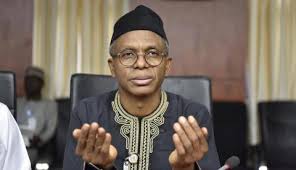
Muslim domination of Nigerian politics, El-Rufai’s remarks and the quest for a just social order!
By Ibraheem A. Waziri
1. As against the postulations of some, who think Nigeria to be a fantastic, British-contrived social experiment. Many believe it to be purely a product of inevitable historical processes that ordinary mortals should only play along with. So, it is said that statesmen and cultural priests cum social philosophers must – by the spirit of the time, fair universal human values and exigencies of frequent unassailable moments – always create and promote a narrative of a reasonable sociocultural balance for the country to continue to thrive.
2. In this, since religion is adjudged, by scholars of identity in history, to be the strongest factor in social mobilisation. It is safe to assume that the crème de la crème of the Nigerian military, who ruled the nation between 1983-1998, although mostly Northerners and Muslims, had good intentions; to have worked hard to ensure the provision of religious balance, between mainly Muslims and Christians, in the general administration of the national and sub-national units of the country.
The Justification
3. A casual review of both the 1st and 2nd Republic is enough to show tendencies to Muslims’ domination of the Nigerian political space. Also, since Islam is consistently found to be deeply expressive in the discourses and practices of its adherents daily, especially in Northern Nigeria, non-Muslims may not help but feel threatened – even if only imagined, not real – with marginalisation when individual Muslims are in power. This, regardless of whether their predilections do not suggest inclinations to any assumed extremist tendencies. Because often politics and politicians ride on only prevailing narratives and popular sentiments as major currencies during elections and subsequently in forming finer details of general governance policy direction!
4. This may have been why people like the late Capt. Ben Gbulie would maintain this in his book, Nigeria’s Five Majors, and much later when he responded to questions by late Barrister Yahaya Mahmood SAN during a session at the Oputa Panel. That one of their reasons for staging the January 1966 coup d’état that killed mostly Northerners Muslims in power was intel, they got and rigorously verified to confirm, by some standard, that the then Nigerian government, led by mainly Northern People’s Congress (NPC), was clandestinely planning a Jihad with the hope of Islamising the country.
5. The measures of balancing taken by the military may not be favourably viewed by modern reviewers, depending on the angle of vision one takes. But it is unmistakably clear that had the prevailing rhetoric of the Nigerian Muslim communities of the late 80s and 90s – that were even celebrating as heroes on various pulpits, figures and ideals of contemporary Islamist movements in Egypt, Iran, Algeria, Afghanistan and Sudan – met with a popular narrative of Muslim majority populated Nigerian state, the results would have been better imagined now.
6. Thus, during both the two aborted electioneering processes of 1992 and 1993, to usher in a democratic government, General Ibrahim Babangida (IBB), the Head of the Nigerian state, deliberately tried to ensure political parties presented bi-religious tickets for elections into offices of governors, everywhere there is a significant population of people of differing faith, and ultimately that of the Presidency.
7. Many scholars and pundits alike have concluded that it was the failure of the southern Muslim, Moshood Abioĺa, Social Democratic Party’s candidate, who is said to have won the election, to respect IBB’s wish to select Paschal Bapyau, a northern Christian, as Vice Presidential candidate that led to the annulment of June 12 1993 elections! The Quest for such religious balance was that important to IBB, as we can conveniently presume it to be part of his insight and blessed wisdom clinging to higher moral flanks, advancing the standard of a fair, indivisible Nigerian nation.
8. Fast forward to the events preparatory to ushering in the fourth republic in 1999. It was the same cream of former Northern Nigerian top military generals who insisted on a power shift to the South, particularly to a Christian president, who would, in turn, have a Muslim running mate from the North. Thus, Northerners or Muslims from the South were cajoled to stand down their ambitions in the name of peaceful, regional and religious balance!
To Every Action…
9. Yet, as the timeless law of physics stipulates, there is an equal and opposite reaction to every action taken. So also the decision to premise all the sociocultural discourses on Nigeria on the narrative of religious balancing. Religion as a determinant of who gets what, in the string of the political equation, and ultimately down the line on the food chain of the country’s rentier economy, also became the cheap tool providing the impetus for persistent conflicts and unending violence, particularly in some subnational units in Northern Nigeria.
10. In Kaduna, my state, there has been a wave of religiously motivated crises, coupled with agitation for territorialism and territorial expansion, more resource allocation and political representation, since 1987. After the ushering in of the fourth republic in 1999, it continued assuming an alarming direction, characterising every aspect of the policy discussion in the state. Every single appointment, political or otherwise, must factor in religion. Yet the wave of the crisis did not show any sign of going away. It kept consuming many lives and properties, casting a blight on every possible future of progress and development. Refugee camps became a distinct feature of satellite towns in the state.
11. Government, civil society and faith-based organisations became very busy and active daily on the issues of conflict resolution and rehabilitation and resettling of refugees more than any other thing. From 2013 to 2014, Reverend Joseph Hayeb, the present Kaduna State Christian Association of Nigeria’s Chairman and a Muslim cleric, Shaykh Haliru Maraya, served as Special Advisers to the then Kaduna State governor, Mal. Mukhtar Yero on Christianity and Islam, respectively. They partnered with an international peace promotion non-governmental organisation, Global Peace Foundation, in a state-wide campaign for peace and conflict resolution in the state. Malam Samuel Aruwan, who was to become the first Commissioner of Internal Security and Home Affairs in Kaduna 2019 – 2023, and I joined them on the invitation. We wrote essays and appeared with them at conferences, engaging in the discourses of why Muslims and Christians must find ways to live in peace!
2015!
12. the deployment of superior vigilance technology, by the Independent National Electoral Commission, in the conduct of the 2015 elections exposed the fallacy of the premise ascribed to the religious balancing narrative that has lasted for 30 years in Kaduna. Instead of the entrenched assumption that the religious demographic spread in the state is almost 50-50 between Christians and Muslims, it was realised that it was at most 30 – 70 in favour of Muslims!
13. This, unfailingly, was to give room to so much reflection, on the utility of the religious balancing narrative, in providing the needed peace and stability for the general administration of the state. In that, a fair and dispassionate assessment could be said that over the years, it has proven to be a burden to the state and is threatening the overall peace and stability of the Nigerian Nation! Even if it has once been useful in keeping peace and maintaining justice, providing stability and strengthening the foundation of the Nigerian Nation.
14. More so, the assumed justifiable reasons that made the northern military elite deploy it then can be said to be no longer there now. As Samuel Huntington projected in his 1993 seminal work, The Clash of Civilisations and the Remaking of World Order, the appeal of the universal call to Jihad among Muslims would lose its popularity in about 25-30 years. That Muslims world over would gradually appreciate and align with the values of democracy and its prescriptions in the rule of law and freedom of expression.
15. Global war on terror and the experience of the Muslims here, home to Boko Haram, has helped make Huntington’s prophecy real. It significantly changed the perspectives and disposition of the Muslim elites in the country. Many scholars and clerics have stopped identifying with Jihadi rhetoric and, in many cases, withdrawn or dissociated themselves from the earlier ones they once made. There has been a wide-ranging consensus among a larger section of them to work with the present multi-religious composition of Nigeria and support its established institutions!
16. Also, the era now is not a military era, where the earlier conceived balancing narrative can be sustained by fiat nationally and sub-nationally. Democracy is here, and its promises, based on the premise of popular participation and will, are bound to force the hands of society in a particular direction.
17 In 2019, the Pew Research Centre, an independent American think tank that specialises in social sciences, demographic research and analysis, published that, in 2015, Muslims in Nigeria constituted 50% of the population as against Christians who are less. And by 2050, Muslims will constitute about 60% of the people, while Christians will be less than 40%.
18. When I wrote about this on the 11th of July 2022, in a message wishing fellow Muslims well during Sallah celebrations, I also called them out to reflect on what Nigeria they would want. Many experienced pundits and senior citizens in my list submitted that the 60% per cent figure is most likely the population of Nigerian Muslims now. We are only hindered from knowing that for a fact because the past Nigerian military leaders had struck out religion as a variable in all official national headcounts. They believe that by 2015, Nigeria’s Muslim population will likely be 70 – 75%.
19. All these should point to the reality of the futility of struggle, for a just social order, in Nigeria while clinging to the religious balancing narrative.
The El-Rufai Example of 2019!
20. Malam Nasiru El-Rufai was elected into the leadership of Kaduna State on top of events significant to unravelling the wave of fallacies that made operational in the state, the religious balancing narrative. He was equally confronted with the reality of the non-viability or even risks associated with any attempt to perpetuate it.
21. In 2019, he won the election after confronting the operational, religious balancing narrative and crushing it. Amid cheers by the Muslim community, who are excitedly displaying an air of triumphalism, some of us must have assumed that the winner takes all maxim will be deployed. Yet Malam Nasiru went ahead in his acceptance speech on the 11th March 2019 to state: _“Let us all see and value each other as human beings descended from Adam and Eve. Let us end the misuse, abuse and manipulation of religion for personal gains. Religion should be a private matter. Our identities should not become barriers to common humanity. Our doors are open to a new chapter of concord.”
22. Subsequently, appointments and responsibilities were allocated based on merit, trust, commitment, party loyalty, and clearly outlined cause. Thus, many so-called sensitive positions, like the Accountant General, Commissioner of Internal Security and Home Affairs, and many others, go to non-Muslims!
23. In this, as an independent observer not speaking for Mal. Nasiru, I will say that one can see that if the Muslim-Muslim ticket has any purpose, it is only for burying the religious balancing narrative, which has proven to be cancer, in the body of our journey of development, into a just and prosperous society. It is also to serve as a teachable moment, to Muslim leaders, politicians, and the teaming youthful population, on operationalising the new narrative of the Muslim majority Kaduna and Nigeria, which is soon to be the new order of the day.
The Controversial Speech of 28th May 2023!
24. Nigeria’s 2023 elections, which saw the much-maligned success of a Muslim-Muslim ticket at the national level, had reasons to give Nigerian Muslims a feeling of triumphalism again. It has confirmed their numerical superiority and harbours the tendency of permanently killing the religious balancing narrative in our national politics. It also came with the risk of making some elements among Muslim politicians, clerics, and scholars alike start using it, in future, in a manner that would be inimical to the interest of their fellow Muslims, non-Muslims and the idea of the Nigerian nation.
25. The farewell dinner, Imams, clerics and Islamic scholars organised for Mal. Nasiru Elrufai, the 28th of May, 2019, in my opinion, was the best place for him to kick start the conversation about what the victory of the Muslim‐Muslim ticket should mean to the Muslims and the country in general. Both mark the end of the religious balancing narrative, religious politics and what future clear Muslim dominance or leadership should mean.
26. From the clips of the recordings circulating in social media and the translation of the entire speech by various news outlets. It is clear that though Elrufai spoke appealing to his audience’s sentiments and good feelings, he was also unequivocal that the Muslim leadership across history and his, in Kaduna, did not and shall not try to discriminate against non-Muslims. This is a call and a subtle cautionary appeal to those who may think otherwise to reflect and reconsider as an exemplary guide in future.
The Ways Forward
27. Nigeria has moved into a new era in its history and evolution. Not that it has only seen the futility and, ultimately, the end of the religious balancing narrative; it has also come to the era where the influence and wisdom of its retired military generals in its democracy is about to cease altogether. All hands must be on deck to help chart a new cause and craft a fresh narrative for its sustenance and maintenance on a just and equitable pedigree.
28. The country’s new reality of a sociocultural composition needs the attention of scholars, pundits and policymakers to ensure that the nation moves with reasonable speed on the lane of development. And this is what that speech by El-Rufai on that day should be seen to have helped to transit the national conversation quickly!
Ibraheem A. Waziri wrote from Zaria, Kaduna State. He can be reached via iawaziri@gmail.com.