Sexual Harassment: MAAUN Reaffirms Zero-Tolerance, Says Accused Lecturer’s Appointment Expired
By Uzair Adam
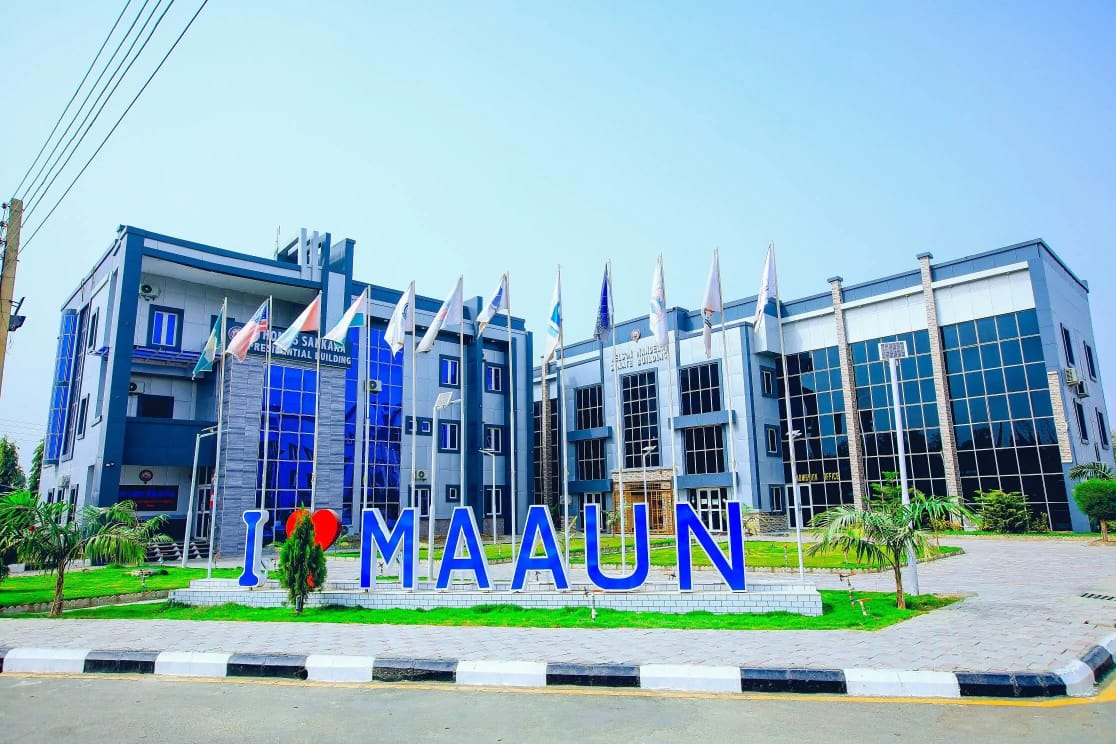
Maryam Abacha American University of Nigeria (MAAUN), Kano, has clarified that Dr Nasa’i Gwadabe, who has been linked to sexual harassment allegations circulating on social media, is no longer a member of its academic staff, while reaffirming its zero-tolerance policy on sexual harassment, abuse and exploitation.
The clarification was contained in a statement issued on Thursday and signed by the university’s Registrar, Habibu Awaisu, who said Dr Gwadabe’s one-year appointment as a Visiting Lecturer expired in May 2026 and was not renewed.
The statement followed allegations that Dr Gwadabe attempted to sexually harass a female student who was reportedly under his academic supervision.
The allegations drew widespread public attention after a video circulated on social media showing the lecturer being assaulted by some men.
Social media users alleged that the men were the student’s husband and his friend, who reportedly lured him to a location where he had allegedly arranged to meet the student.
“The Management of Maryam Abacha American University of Nigeria wishes to clarify recent reports circulating on social media regarding Dr Nasa’i Gwadabe,” the statement read.
“His one-year appointment ended in May 2026 and was not renewed. He is therefore no longer affiliated with MAAUN.”
The university explained that visiting lecturers are employed on one-year contracts, with renewals based on satisfactory performance, institutional needs and management approval.
According to the statement, Dr Gwadabe’s contract expired alongside those of several other visiting lecturers, stressing that the decision not to renew his appointment was unrelated to the allegations currently attracting public attention.
The management reiterated that MAAUN maintains a strict zero-tolerance policy on sexual harassment, abuse and exploitation.
It added that the university’s founder had instituted a N5 million reward for any female student who reports and provides credible evidence of sexual harassment or sexual assault involving any lecturer or staff member through the appropriate reporting channels.
The university also dismissed claims circulating online that a student was delayed for two years because of the alleged misconduct or that one of the alleged victims was a postgraduate student.
According to the statement, both claims are false, noting that MAAUN only recently graduated its first set of students and has yet to commence postgraduate programmes.
The management urged journalists and members of the public to report the matter accurately and avoid referring to Dr Gwadabe as a current staff member, insisting that his affiliation with the institution ended in May 2026.
To support its position, the university released a letter dated April 27, 2026, signed by its President, Prof. Mohammad Israr, notifying Dr Gwadabe that his application for reappointment as a Senior Visiting Lecturer had been unsuccessful.