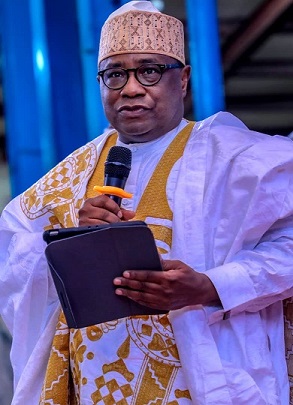
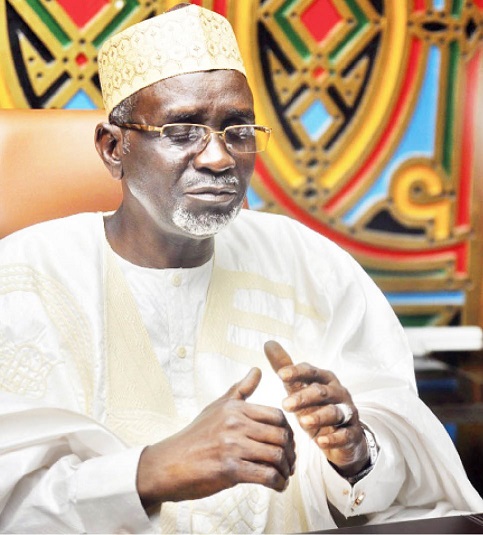
Malam Ibrahim Shekarau

Dr Bala Muhammad and the A Daidaita Sahu phenomenon

By Alhassan Hassan Salihu

Few men leave a mark on society without holding office, wearing a uniform, or carrying authority. Bala Muhammad is not just a media scholar; he is a guardian of culture, discipline, and an architect of greatness.

In the early 2000s, Kano’s streets were alive with sound and colour. Markets bustled, commercial tricycles darted through traffic, and the rhythm of daily life carried on as it had for generations. But beneath the energy, a different reality was taking shape, one of disorder.

Road signs were ignored. Tricycle drivers cut across lanes at will. Pedestrians crossed wherever they pleased. Public order, once a matter of pride, seemed to be slipping away.

A renowned but marked by growing disorder, congestion, and a fragile sense of control that hinted at deeper challenges ahead.

It was in this climate that a quiet movement began, not through the force of law or the threat of arrest, but through the power of a voice. That voice belonged to Bala Muhammad.

A respected media scholar, newspaper columnist, and familiar voice on the radio, Bala had built a reputation for delivering reasoned and honest commentary. People trusted him because he spoke plainly and honestly. He explained ideas without lecturing, and he criticised without insulting.

When Malam Ibrahim Shekarau-led Kano State Government launched a programme called A Daidaita Sahu, meaning “straighten the public order” in Hausa, it aimed to restore discipline and order in public life. Many regarded it as just another government slogan that would soon fade away.

Bala saw something else; to him, “A Daidaita Sahu” was not just a policy, but a chance to change the city’s mindset.

He took to the airwaves, writing and speaking about the programme in a way the public could connect with. His columns carried titles like “DISCIPLINE AS A WAY OF LIFE”, “THE ORDERLINESS WE LOST”, and “ADAIDAITA SAHU: OUR CULTURAL RETURN.”

But instead of listing rules, he told stories. He spoke of a time when people queued without being told, when elders were given seats on buses without being asked, and when the street belonged to everyone, not just to the loudest or most aggressive.

His message was clear: public order was not something foreign. It was part of Hausa culture and Islamic tradition. It was part of the city’s heritage.

Bala’s campaign was not limited to print and broadcast. He visited mosques, speaking after Friday prayers. He went to motor parks, markets, and universities. Everywhere he went, his refrain was the same: “A Daidaita Sahu is not politics. It is a mirror showing us what we are supposed to be.”

At first, some thought he was being idealistic. But slowly, change began to appear; Tricycle drivers started queueing properly at parks, and street vendors kept their stalls cleaner. 

Schools invited him to speak to students about discipline and respect. These changes were not the result of fines or enforcement. They came because people were reminded of their own values.

Bala’s approach was simple but powerful: it shows people that discipline is not an enemy of freedom, but the framework that makes freedom possible.

Over time, the city’s atmosphere began to shift. Kano remained vibrant, but there was less chaos. The A Daidaita Sahu movement grew into one of the most ambitious civic initiatives in the state’s history. Its real success, however, was not in official reports, but in the everyday behaviour of ordinary people!

Bala Muhammad had no power to arrest, fine, or shut down businesses. All he had was a pen, a microphone, and an unshakable belief that people could rise to a higher standard when reminded of their shared culture and faith.

That belief proved stronger than any law.

By the height of the movement, Bala was more than a commentator. He had become a trusted voice in Kano, a voice that seemed to walk alongside people on the streets, even when he was not physically there.

A Daidaita Sahu’s story is proof that lasting change does not always begin with authority or force. Sometimes, it starts with one person speaking to the hearts of the people, telling them that they already have what it takes to live better.

Years later, many still recall the movement. Some remember the radio programmes. Others remember hearing Dr Bala at their local mosque or market. Still others remember reading his words in the newspaper and feeling proud of their city again.

His legacy is a reminder that you can write laws, but without public belief, they remain words on paper. True order comes when people take ownership of it.

Kano in the early 2000s was a noisy, restless, and often chaotic place. The city’s energy was undeniable, but it lacked direction, with disorder slowly eroding its social fabric. It was during this period that Dr Bala, through patience, wisdom, and unwavering conviction, helped the city rediscover a sense of balance. He guided it back to a rhythm rooted in respect, discipline, and communal harmony, restoring hope and dignity to everyday life.

Not with force, not with fear, but with faith; faith that the people of Kano could remember who they were and live up to it.

Let’s do it again!!!

Bala Muhammad demonstrated that respect, patience, and order were not Western imports; they were Hausa and Islamic values, deeply rooted in our identity.

He’s not just a man of letters; he is a man of legacy, who turned words into movement, and movement into memory.

Rarara’s Invective Barbs: innuendoes, body shaming, and Kano politics

By Prof. Abdalla Uba Adamu

For the past 43 years that I have been a researcher, there were two areas I stay clear of: politics and religion. If you see my hand in any of these two, then the entry point is popular or media culture. For instance, I have recorded a lot of Kano Qadiriyya’s Anfasu zikr, not as a devotee, but as an ethnomusicologist – focusing on the body percussion and movements (after studying the wonderful works of Margaret Kartomi on body percussion while in Morocco). Similarly – and to balance things somewhat – I recorded Tijjaniyya zikr sessions at Chiranci in the city of Kano as part of a larger study on religious performances. All my recordings were uploaded to a dedicated YouTube public channel. I was, therefore, amused when people try to pigeonhole me either as Qadri or Tijjani. I am neither.

Politically, I am apolitical, meaning I really don’t care who rules the country. I don’t even vote, having done once a long time ago (at the insistence of a dear friend), and promised never to do it again. But performance arts brought my attention to protest songs and the prosecution of singers in Kano. The end product was a paper, “Poetic Barbs: Invective Political Poetry in Kano Popular Culture” which I am sure is floating somewhere in a modified form. And I thought that was it.

In 2014 I came across a song that I found amusing. I was playing it on my laptop when someone exhibited surprised that I was listening to the songs of Dauda Adamu Abdullahi Kahutu, with a stage name of Rarara. That was the first time I even heard the name. The song was “Zuwan Maimalafa Kano.” It attracted my attention in two ways. First, its lyrical construction, as well as its delivery, was just amazing. Rapid fire. He should have been a rapper, a genre of music I am totally besotted on (old school DMX, 2Pac, Snoop Dogg, Ice Cube, Queen “The Equalizer” Latifah, y’all). It was clear Rarara was singing off the cuff, not reading from a setlist or lyrical sheet. Second, it was the most detailed invective song I have heard in the Hausa Afropop music genre. I started digging and latched on to him and his songs. So, for the last seven years or so, I have been following every song he released using the invective matrix.

So, what is an invective song? Invective is the literary device in which one attacks or insults a person or thing through the use of abusive language and tone. If you like, “zambo/shaguɓe”. Invective is often accompanied by negative emotion. Invective can be divided into two types: high and low invective. High invective requires the use of formal and creative language, while Low invective, on the other hand, makes use of rude and offensive images. From 2010, Rarara became a master of popular Hausa invective oral poetry. He used his skills to abuse, insult and body shame anyone he was paid to insult. Including former masters and associates.

A pattern evolved. His switchbacks. Chronologically, his earliest non-invective song was “Saraki Sai Allah” (in honour of then Governor Ibrahim Shekarau’s turbaning as Sardaunan Kano in 2010 by the late Emir of Kano, Alhaji Ado Bayero). In 2011 – barely a year later – when Shekarau failed to anoint Rarara’s ‘master’, Deputy Governor Abdullahi T. Gwarzo, to succeed him, Rarara became ballistically invective – and established a career in body shaming, abuses and innuendoes against various previous masters. Shekarau bore the blunt of colorist abuses – often a case of the kettle calling the pot black. No one was spared his invective barbs. Deeply cut. Insulting. Spread over 39 songs, from 2014’s “Malam Ya Yi Rawa Da Alkyabba”, to 2023’s “Tangal-Tangal.”

I have seen social media calling Rarara out on his not being a Kano indigene, getting rich in Kano through his songs, and yet insulting Kano’s leaders. This is all true. However, ‘da ɗan gari a kan ci gari’ (enemy within). Only about three songs in my analytical corpus by Rarara were free-standing (i.e., unsponsored). All the others were commissioned and paid for – by politicians from Kano, to abuse other politicians from Kano. Rarara always acknowledges his sponsors in the opening doxology of his performances.

Rarara was a highly unprincipled and unethical businessman. Show him the money, and he will praise his closest friend and abuse the friend’s enemy. Show him more money, and he will insult the same friend he praised, and heap praises on the enemy he insulted. Does anyone remember that the glorified “Ɗan Ƙaramin Sauro” (irritating mote) was part of the demeaned “Banza Bakwai” (Bastard Seven)? The bromance did not end well, did it? Business unusual.

In any event, Rarara’s invective braggadocio came back to hit him hard on 5th April 2023 when his opponents used his mother’s picture in unflattering terms and splattered it all over social media and gave her a feminine variation of an insulting name he used against one of his targets. Apparently when the shoe is on the other foot, it pinches.

Thus, instead of focusing on political ideology and promises of creating a better life for the electorate, often politicians in Kano (and I think Kano, as usual, is the only state that uniquely does this) would pay more attention to denigrating, shaming, and condemning opposing candidates, creating an unfavorable imagery of the politician to prevent his being voted. Rarara was a perfect malleable puppet in this process. He has the same emotional value to Kano politicians as an alien from Saturn. Despite his lyrical brilliance and acerbic wit, he was expendable. How many singers from Kano can you recall doing the same invective insults as Rarara to Kano politicians? Two? Three? Their corpus is not as extensive as that of Rarara. Conversely, how many politicians from Katsina pay Rarara money to insult other Katsina politicians? I can only remember one.

Wary of possible legal action against direct defamatory speeches, politicians often find it easier to engage what I call ‘political drones’ to communicate their defamatory messages through the popular medium of singing. In this way, when push comes to shove, it is the singer who would face legal – or in some cases, physical – wrath in one way or other. Unethical singers like Rarara – who was arrested, but not charged in 2014 over “Zuwan Maimalafa Kano” – were willing to pay the price in exchange for the stupendous amount of money they will receive. At least they will have enough for medical care when their houses were wrecked, assaulted and incapacitated to continue singing.

And the politician who caused it all? He can’t even remember the song that made him popular, having moved on to greener political pastures. Until the next election cycle when he will latch on another expendable drone to help him heat up the polity through more invective songs using campaign words he does not have the guts to utter himself.

Rarara’s defense of not uttering specific names in his invective taunts and body shaming do not stand up to scrutiny under Nigeria’s defamation laws, and demonstrates that while he was a brilliant lyricist, he needs to understand the law. This is because his invective defamation in the form of his songs is publicly available (indeed, he made them so), created a narrative about individuals that are easily identifiable either by their physical appearance or public behavior, created a negative impression on the person being so targeted, and was not misquoted as Rarara’s utterances (from his songs) were publicly available and subject to an only interpretation as intended. A clever prosecutor would have enough to jail Rarara on listening to any of his invective songs, if someone complained hard enough.

Invective songs can often have their positive sides in the sense of making politicians – or their targets – aware of public perception of their misdemeanors, or at most, errant behaviors. Rarara’s invective narrative in the selected songs I analyzed, however, do not demonstrate their oversight functions in public accountability for politicians. Regardless of whether explicit names were uttered or not, their narrative was focused on kicking them when they are down, and subjecting them to public ridicule. This questions the artistry of Rarara as a purveyor of aesthetic values of the Hausa oral arts.

Academicians ignore Rarara and his art – and I think that’s a mistake. True, some would argue that his songs have no aesthetic, intellectual or ideological value. On the contrary, they do. In their own way. They are beautiful as lyrical discourses. His delivery is truly artistic, even if the content is inelegant. Unlike other songs in the repertoire of political communication, his are not protest songs, and thus lack ideological focus. They neither educate, illuminate or illustrate any aspect of political culture. They only entertain – at the expense of the dignity of the people he attacks. His songs synthesize Hausa rural lexicon overlayered with abusive, often self-constructed urban jargon to enhance general appeal – and act as rabble rousers for politicians who think like him. It is a unique, if unadmirable business model in the performing arts.

Subsequently, Rarara’s songs cannot be compared, by any stretch of imagination, with the classical Hausa protest poets such as Sa’adu Zungur, Mudi Sipikin, Aƙilu Aliyu, Abba Maiƙwaru and Aminu Kano, whose artforms were fueled by educative political ideology, certainly not profit. Mudi Sipikin, for instance. used his poetry to attack the system of colonial rule. Aƙilu Aliyu wrote poems directly attacking the NPC. Abba Maiƙwaru wrote a 10-line NEPU poem for which he and Aminu Kano were arrested in the mid-1950s.

Zungur used his poetry originally to warn the emirs of the north of the necessity for reform, as illustrated in his central work, Jumhuriya ko Mulukiya [Republic or Monarchy]. In this work, he called for political and social problems to be solved on the basis of the existing Islamic institutions, rejecting alien political concepts. He later used his poetry to appeal directly to the common people. In a similar vein, one of the earliest poems written for a northern political party was by Aminu Kano, and called ‘Waƙar Ƴancin NEPU-Sawaba’ [Freedom poem for NEPU-Sawaba], and published in 1953 and put in the final form by Isa Wali. It was one of the earliest statements of Nigerian nationalism.

Despite all these, I argue that as researchers we can’t afford to ignore a current of knowledge flowing right at our feet. But the cold shoulder given to Rarara by our community, opposed to Aminu Ladan Abubakar (ALAN Waƙa) who is a toast to the academic and intellectual community, merely emphasizes the expendable and ephemeral nature of Rarara’s art. Ten years after the release of any ALA song, it will still have relevance. The relevance of Rarara’s songs rarely last to the next song release. Instantly forgettable.

Nevertheless, just as we struggled for the recognition and documentation (if not acceptance) of the Kano Market Literature in the 1990s when everyone was denigrating it, we need also to document the stream of popular culture, including Rarara – warts and all – flowing around us at all times. As far as I can see, only Maikuɗi Zukogi has focused attention on two of Rarara’s songs. More needs to be done.

As soon as I tell myself that I will wrap up the research, he will release a song insulting a former master or associate. Subsequently, I delayed publishing the research until he insulted two people, and true to expectations, he did. These were President Muhammadu Buhari (Matsalar Tsaro) and Governor Abdullahi Umar Ganduje (Lema ta sha ƙwaya). With the ‘Hankaka’ barb against Ganduje in the Lema song, my fieldwork became almost complete. His destruction of “ɗan ƙaramin sauro” leaves only the references to be completed. As I argued, based on his corpus, Rarara sells to the highest bidder with neither conscience nor ideology. The huge profit he makes serves as insurance against future loss of earnings when Kano politicians become mature enough to stop patronizing him to insult each other (and themselves) and utilize his skills in more constructive ways.

My thanks to a team of eager research assistants, headed by my ever-faithful and close companion, Hassan Auwalu Muhammad – a former songwriter and lyricist himself. He was the one who mainly, patiently, transcribed the songs, which I wove into a narrative going to almost 40 pages! I plan to upload the lot during my Summer break when the children are all here on holiday! By then, the threatened wobbling ‘Tangal-Tangal’ had stopped and probably settled for a four-year legal battle.

Professor Abdalla Uba Adamu can be contacted via auadamu@yahoo.com.

INVESTIGATION: Inside abandoned Muslim converts’ house in Kano

By Uzair Adam Imam

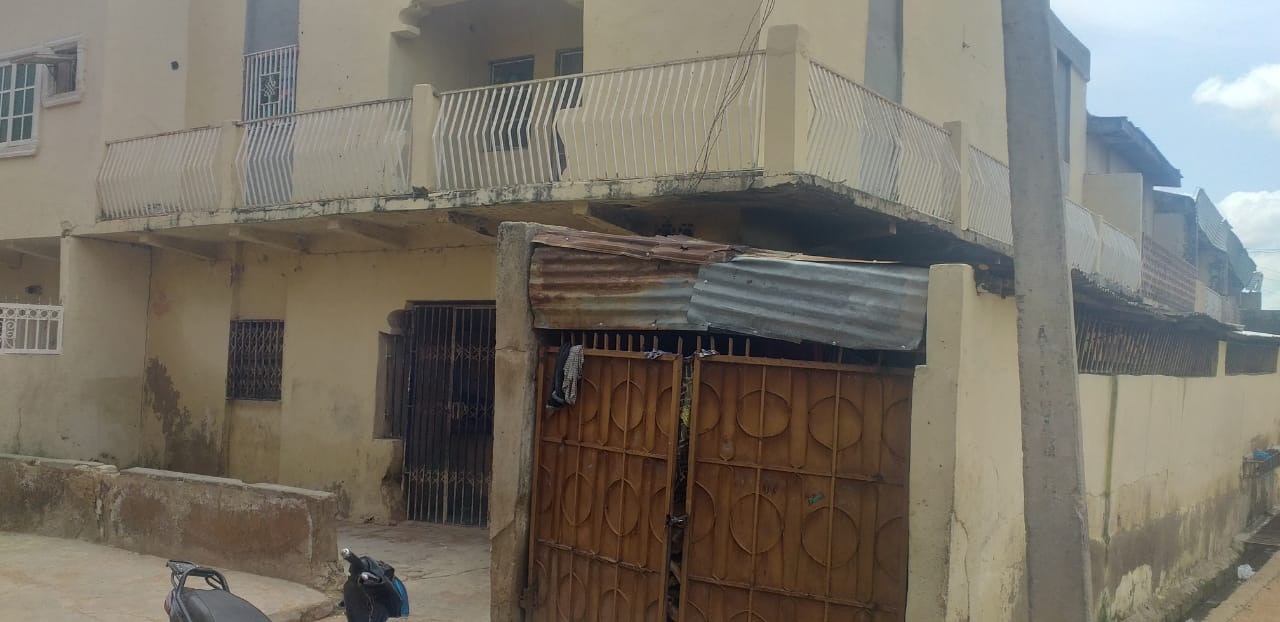
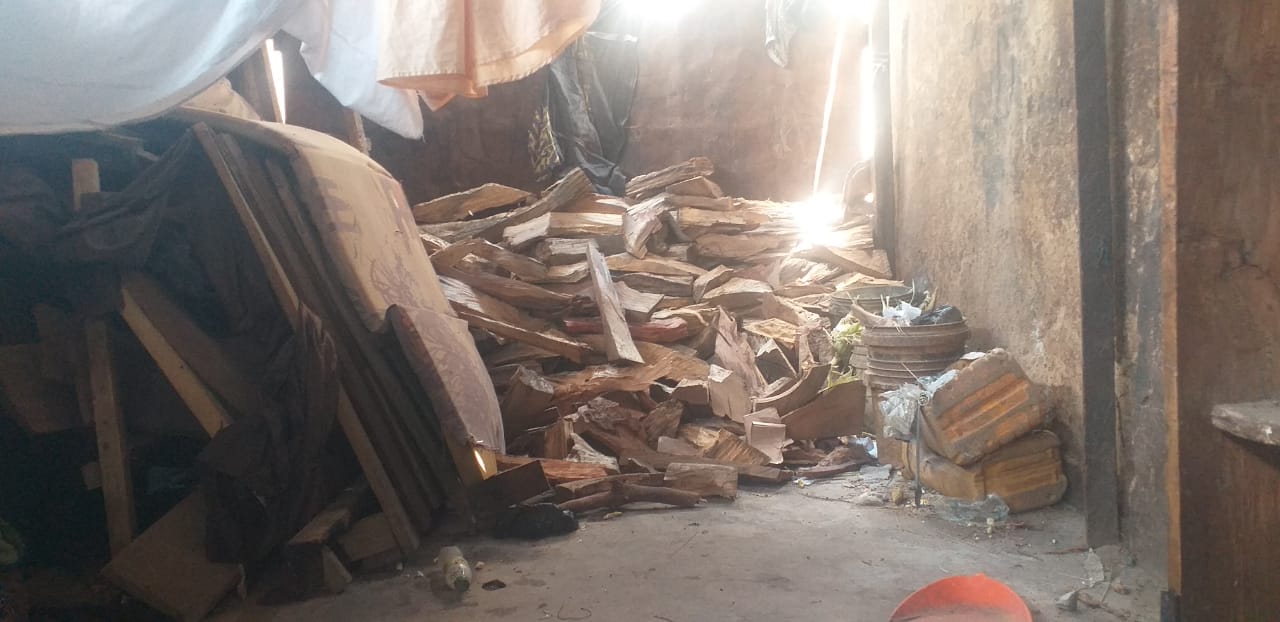
A man diligently taking care of a house meant for Muslim converts in Gwale LGA, Kano State, has opened up on the tough times the people are going through.

Malam Hassan Tela described to The Daily Reality how the Kano State Government had abandoned the house located at Hauren Wanki, Gwale LGA, without food and basic necessities for over 11 years amidst the biting economic hardship in Nigeria.

Hassan Tela said that the forsaken converts are now under the care of a few individuals who shoulder their responsibilities since the government had turned its back on them.

He stated that the house is under the Kano State Shari’ah Commission, founded by the former governor of the state, Malam Ibrahim Shekarau, in his first tenure in 2004.

The Daily Reality gathered that during the Shekarau administration, the converts were well taken care of and had their foodstuffs provided every month, including soaps and detergents to wash their clothes.

The end of Shekarau’s tenure throws converts into a dilemma

However, the end of Shekarau’s term opened the door of hardship and hunger for these abandoned converts for over a decade, leaving them stranded and, sometimes, starved.

Tela said, “During Shekarau administration, the governor provided foodstuffs such as rice, beans, maize, yam and other items to the converts, including the pocket money.

“The government also sponsored the children to continue their studies from primary to tertiary institutions. Books, shoes, bags, and uniforms were also provided for them. Life then was smooth. I also had my N15,000 allowance every month.”

However, when Engineer Rabi’u Musa Kwankwaso was elected as Kano state governor in 2011, he stopped the feeding and the allowance. Likewise, Governor Ganduje, whose administration has marked its 7th year.

Our reporters gathered that despite all the pleas by Tela and his Da’awa preaching colleagues, the government turned a deaf ear to the plight of the converts and those taking care of them. This development has forced many of the converts to drop out of school.

‘We sell our preaching bus to feed converts’ – Tela

“Because we cannot keep human beings without food, and the converts numbering thirty-seven, we had to sell our bus we used to go for preaching to sustain this activity.

“Some people that came to our rescue purchased a tricycle (Adaidaita Sahu) for us. After spending some years and the machine was old enough to work, because it broke down almost every day and we didn’t save anything because we used the money for our daily shopping, we had to sell it too to buy foodstuffs.

“In those days, when goods and services were cheap, N2500 was enough for me to do all the shopping, but now, I spend N5000, and we are still managing.

“But Alhamdulillah, the founding fathers of Hanan and Abu Hanifa schools, including the current deputy governor of Kano State and a few others, have lent us their helping hands.”

It’s difficult for us – converts

Some of the converts that spoke to The Daily Reality have voiced a passionate plea to the government to come to their aid.

A convert, Aisha Hassan, pleaded with the government to come to their aid, saying, “Sometimes we would wake up, and we have no money to shop.”

A convert, Ummu-Salma Musa, said, “Some of us are in school, but we don’t have reading materials such as books and bags, and we also need some clothes to wear.”

Another convert who identified herself as Hafsat, and has completed her diploma programme, said, “We really face many challenges including lack of soaps, detergents, slippers and sandals for our younger ones going to primary and secondary schools. We also hope to further our education.”

Aisha Danjuma said, “We also need to learn some skills as some of us are not going to school.”

When contacted, the Director Public Enlightenment of Kano State Shari’ah Commission, Malam Aminu Musa, said he could not comment on the allegations.

He said, “I know of the issue. But as of now, honestly speaking, I cannot say anything about it. In addition, there have been changes and appointments in the commission, and I am one of those appointed that assumed duty on Monday.”

Atiku donates N50m to Kwari market flood victims

By Muhammad Aminu

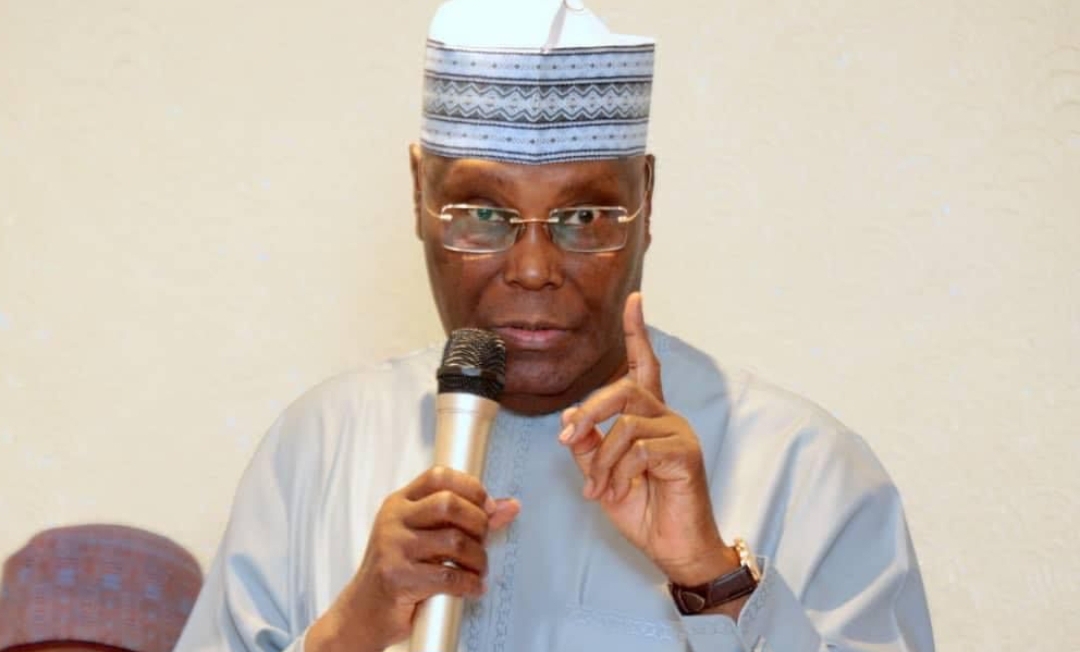
The presidential candidate of the People’s Democratic Party (PDP), Atiku Abubakar, has donated N50 million to Kantin Kwari textile market in Kano following a flood that affected the market.

The Star earlier reported that Kano has been witnessing torrential rainfall in the last few days that has led to floods in many parts of the metropolis, including the Kwari textile market.

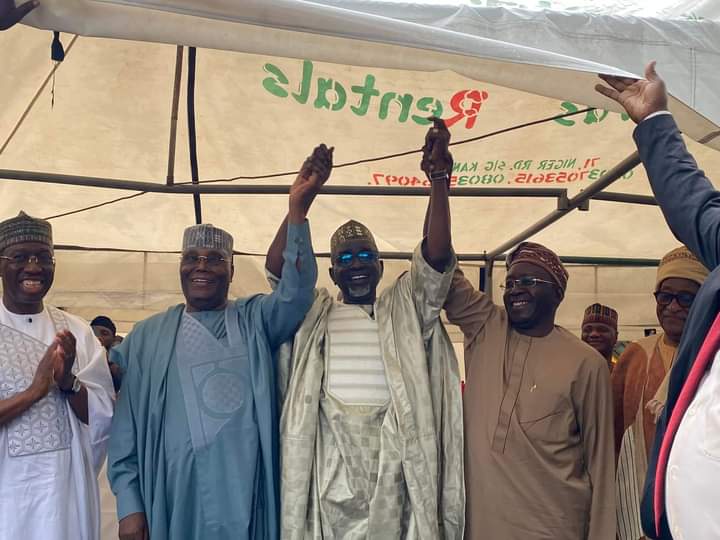
The presidential candidate announced the donation Monday while welcoming former Kano State Governor Ibrahim Shekarau to the PDP.

He sympathized with the businessmen and women who were already suffering from an unfriendly business environment with economic hardship.

According to him, Shekarau’s defection is a win for the people of Kano State, the PDP and the country.

The former Kano State governor argued that Atiku was the most qualified candidate to get Nigeria working again come 2023.

Atiku was in Kano since Sunday alongside his running mate Governor Ifeanyi Okowa, Governor Aminu Waziri Tambuwal of Sokoto State, former Governor of Jigawa State, Sule Lamido, former Minister of Transportation, Senator Abdullahi Umar Idris, among other party chieftains.

2023: Shekaru, associates dump NNPP, join PDP in Kano

By Muhammadu Sabiu

Malam Ibrahim Shekarau, a former governor of Kano State, has formally rejoined the Peoples Democratic Party (PDP).

Shekarau joined the PDP on Monday in Kano after leaving the New Nigeria Peoples Party (NNPP).

The PDP’s presidential candidate, Atiku Abubakar, Iyorchia Ayu, the party’s national chairman, and other PDP members met with the former governor.

Shekarau joined the NNPP from the All Progressives Congress (APC) and left it two months later.

Shekarau, a senator for Kano Central, previously served as Kano’s governor for two terms and as Nigeria’s minister of education.

He also contested for president of Nigeria in the 2011 general elections.

I own single house in Kano, I pray to afford one in Abuja – Shekarau

By Muhammad Aminu 

Former Kano State Governor and Senator representing Kano Central Zone, Ibrahim Shekarau, has said he only owns a single house in Kano.

Shekarau, who said he still rents a house in Abuja, added that he is yet to afford a personal home in the Federal Capital Territory.

He was reacting to an allegation that he was given $1 million in a bid to push him out of Kwankwaso’s New Nigeria People’s Party (NNPP) to another undisclosed party.

He made the statement while engaging his followers, the Shura council and committees on the brewing crisis in the NNPP.

He contended that in his over 40 years of public engagement, there is no money that could influence his decision.

“In my 42 years as a leader, I was a principal of GSS Hadejia with 500 students and 64 teachers. This hand has signed and approved whatever amount of money one can think of. My commissioners are alive; I have never dictated who should be given contracts in a council meeting.

“We have handled uncountable contracts with both foreign and local contractors. So I challenge any contractor to come out and say there was a time we negotiated on a particular contract.

“I challenge every political appointee or contractor who brought one Naira to me. If it happens and they keep quiet, I will not forgive him. 

Shekarau added that as precious as plots are in Kano, he has never allocated a foot-length of land to himself in his eight years reign as a governor.

He said: “It is not that we don’t like the money, but our dignity is more important than wealth. Therefore, whoever knows any house outside the one built for me based on pension agreement, I have given it to him.”

Shekarau further pointed out that he maintains a good relationship with high-profile politicians within and outside the party, and associating or visiting each other shouldn’t be an issue.

He argued that the recent comment credited to Senator Rabiu Musa Kwankwaso necessitated him to brief his followers on the latest happening in the NNPP and the rumoured defection.

Tricycle operation in Kano: To ban or to regulate?

By Tijjani Ahmad

Before banning the use of commercial motorcycles, popularly known as “Achaba”, most of us couldn’t imagine life in Kano without them. At that time, most Kano metropolis residents relied on Achaba as a means of local transport. 

The business of commercial motorcycles was booming and popular during that time, known for its lucrative nature, employment generation and ease of use to residents. 

Suddenly, the then governor of Kano State, Dr Rabiu Musa Kwankwaso, announced the ban on 22 January 2013. The government explained that many crimes, particularly attacks on security operatives in the Northern Nigerian state, were carried out by men on motorcycles.

Even though there was no specific arrangement for the alternative means from the government’s side, the ban was effective and gave birth to the rise of the tricycle popularly known as “A-Daidaita Sahu”.

A Daidata Sahu was not new in Kano because it was first implemented by the then Kano State governor, Malam Ibrahim Shekarau, in 2005 but was not popular because of Achaba. 

However, immediately after Achaba, investors started diverting their investment to A Daidaita Sahu. And residents accepted it since there were no alternative means of transport. It was reported that most of the Achaba riders also followed their investors and started trooping the streets of Kano.

For almost a decade, A Daidata Sahu has been found wanting in many offences, from criminal to civil. On that account, the government took many decisions to regulate the operation of commercial vehicles generally in Kano.

Unfortunately, the purpose of these decisions has been defeated by concentrating on the monetary aspect of most of the policies meant to curb insecurity and regulate motorists’ activities within the state.

Now, Kano State Government placed another ban on A Dadaita Sahu – restricting its operations at night, from 10:00 pm to 6:00 am. The question is, how sure are we this will solve the problem of insecurity?

Kano, one of the largest cities in Africa – known for commerce, agriculture and industrialisation, is becoming more sophisticated as its population grows, new businesses emerge and naturally expand. Therefore, whatever policy we bring, we should consider the consequences on the populace, businesses and the environment. 

Despite these, it seems like proactive measures are not what we are interested in; we are instead scratching the surface. That’s why it is always quick banning, restrictions, curfew and many more reactive moves. 

If we are indeed serious, we don’t need to borrow money and install CCTV in the name of curving insecurity. All we have to do is regulate the activities of commercial vehicles within the state and block the leakages of revenue generated from their activities. This will go a long way in checking the crimes and improving the overall revenue of the state.

Three years ago, my friend, a key player in the industry, asked my opinion on whether the government should ban it due to insecurity.

I said this could be done through an effective and efficient database where all the players within the industry, from owners, riders, sellers and service providers, and warehouses. The data must be linked with BVN and NIN. To be part of the industry, you must comply with the requirements. 

By doing so, no motorcycle or any player within the industry should be seen on the street or within the city without registration. Furthermore, each person’s number or tracking ID should be placed on the bike and should correspond with what is in the database. So that whenever any player perpetrates a crime, all you have to do is to know the tracking number. 

This can be used to know the owner and the rider of the motorcycle used to commit that crime. My friend is trying to implement this within their company. Where all their riders can be tracked in real-time using GPD enable tracker. Thus, this is all we need: regulation, not reactive measures such as banning.

Tijjani Ahmad wrote from Kano via ahmatee123@gmail.com.

Kano APC Crisis: Presidency summons Ganduje, Shekarau

Ibrahim Nasidi Saal

The Presidency has stepped into the ongoing crisis in the Kano chapter of All Progressives Congress (APC) between Governor Abdullahi Umar Ganduje and Senator Ibrahim Shekarau, The Daily Reality reliably gathered.

A source familiar with the development said the Presidency dispatched a jet Friday night from Abuja to Kano to convey Ganduje and Shekarau for an emergency meeting towards resolving the crisis.

The meeting is said to be a major part of the plan to forestall the planned decamping of Shekarau to the new but fast-growing New Nigeria People’s Party (NNPP).

The NNPP is led by another former governor of Kano and leader of the Kwankwasiyya Movement, Dr Rabiu Musa Kwankwaso.

Many bigwigs of the APC and the opposition People’s Democratic Party (PDP) have been joining the party. Shekarau was expected to formally announce his decamping to the party on Saturday.

However, late Friday evening, Governor Ganduje visited the former governor at his Mudunbawa Kano residence in what sources said was a last-minute attempt to stop the planned decamping.

Sources said it was after the closed-door meeting that they started making arrangements to jet off to Abuja.

People in Kano State are keenly observing all the political moves of the giant political gladiators and are desperately waiting for the 2023 elections.

President Goodluck Jonathan walked the Almajiri talk

By Engr. Mustapha Habu Ringim

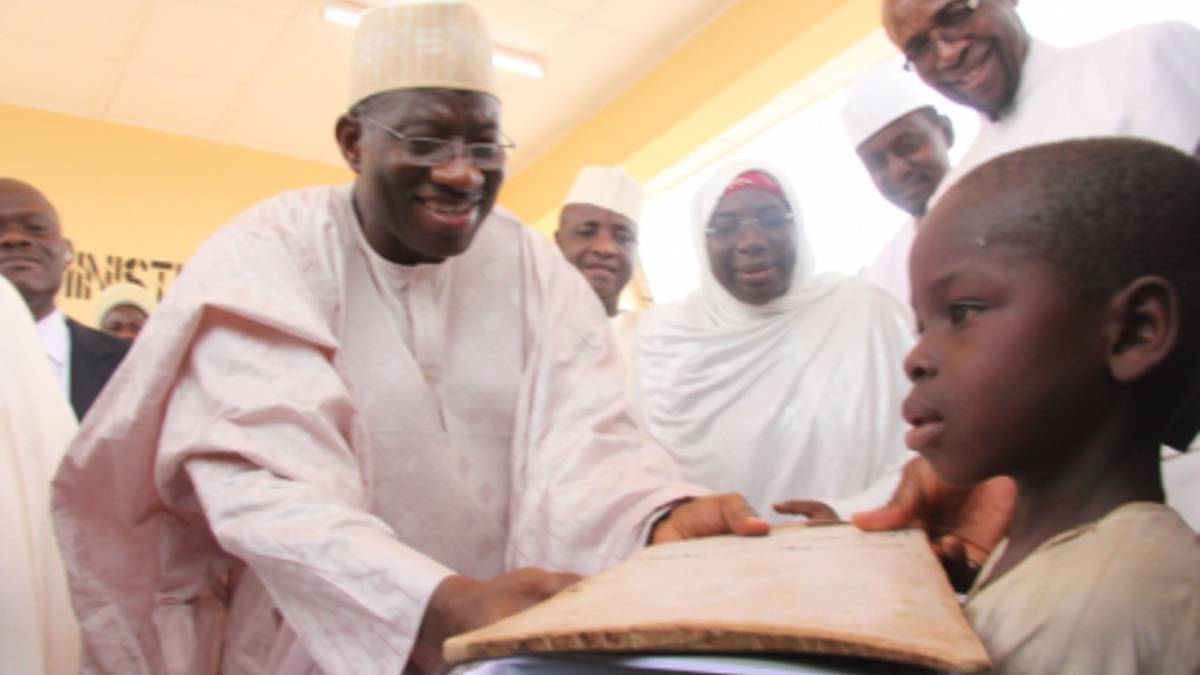
The innovative Almajiri School Initiative of President Goodluck Ebele Jonathan (GEJ), directly or indirectly, challenged northern Nigerian elites on the intense need for a proper plan and execution of any sustainable way of curtailing the menace of the Almajiri system of education. He did his best during his tenure. We expect the incumbent government and the next one to build on where that administration stopped to ensure continuity.

I don’t know how Northern Nigeria is becoming so loose that our communities find it difficult to maintain essential infrastructures like those installed during the GEJ government. Instead of optimising the system, we allowed the structures and the equipment to rot away. We abandoned the schools. Today no one cares to adopt the strategy even in our localities, neither our philanthropists nor any NGO.

Most of our elites are only good at criticism. You will never see them when it comes to action. They instead spend their energy on empty talks and promises. While in a situation like the one Arewa is subjected to, action is mostly needed, with less noise. Though we all agree that “facta non verba”, actions speak louder than words, we always end up talking the wrong walk instead of walking the right talks.

Alhamdu Lillah, we started a model of such a system within our jurisdiction, called ENGAUSAR ALMAJIRAI, under Engausa Global Tech. Hub, which has recently attracted an intervention from NITDA Nigeria and a solo philanthropist from JOS Plateau State, Alh. Yusuf Yahaya Kwande. I don’t want to say much about the outcomes at the moment until we achieve enough to discuss. I always prepare walking the talk instead of the opposite.

We had witnessed a similar effort to revamp the TSANGAYA SYSTEM in Kano State during Malam Ibrahim Shekarau’s tenure. Shekarau transformed the Tasanga (Almajiri School) system and provided Almajirai and their teachers (Malaman Tsangaya) with sustainable means of livelihood. But unfortunately, the innovative Tsangaya System, sphere-headed by Dr Bashir Galadanci, a man with a sincerity of purpose, was abolished by the successor of Shekarau. And all the achievements recorded from the innovative system were brought back to square one.

Moreover, this is how the monotonous lack of continuity in governance, lack of patriotism, and focus are consuming every program or policy designed to transform our socioeconomic and sociocultural activities. In the same way, Kano ICT Park and Jigawa Galaxy Back Borne and Informatics suffered from the unpatriotic people at the helm of the affairs of Nothern Nigeria. Both Jigawa and Kano would have been ahead of Lagos regarding the digital ecosystem and digital economy. As of 2005, Jigawa was rated as the best ICT State in Nigeria due to the achievements recorded from those iconic “digital wings”.

Our society needs a new set of purposeful leaders, the likes of Borno State Governor Prof. Babagana Umara Zulum. We require leaders who are ready to sacrifice their lives for any struggle necessary to save our society from obscurity to prominence. With such Zulum’s prominent achievements, the progress recorded under Shekarau in Kano, and that of Goodluck at the federal level, we now have a concrete reason to disagree with anyone who thinks Nigerians will never be taken to the proverbial promised land.

Engr. Mustapha Habu Ringim wrote from Kano via ringims@gmail.com.

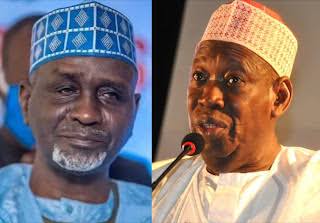
BREAKING: Ganduje defeats Shekarau faction in court of appeal

By Uzair Adam Imam

The Court of Appeal in Abuja has invalidated the ward and local government congress by the APC faction led by Senator Ibrahim Shekarau in Kano.

The court has rejected the judgment of an FCT High Court, which declared the Shekarau faction victorious.

The courts’ decisions were delivered on Thursday morning by Justices Haruna Tsammani, B. I. Gafai and J. Amadi.

APC crisis is one of the issues that has been raising dust between the factions long since Shekarau was declared to have defeated Ganduje.

The court has also described the crisis as an internal matter, not a pre-election matter.

Attorney General and Commissioner of Justice for Kano State, Barrister Lawan Musa, said that the judgment of the lower court had been set aside.

Barrister Lawan Musa, “The judgment of the lower court has been set aside for lack of territorial jurisdiction and also because it is an intraparty affair.

The third ground is that even the originating process used to file the case was wrongly done, as such, even the originating process was set aside. All the decisions are unanimous,” he added.