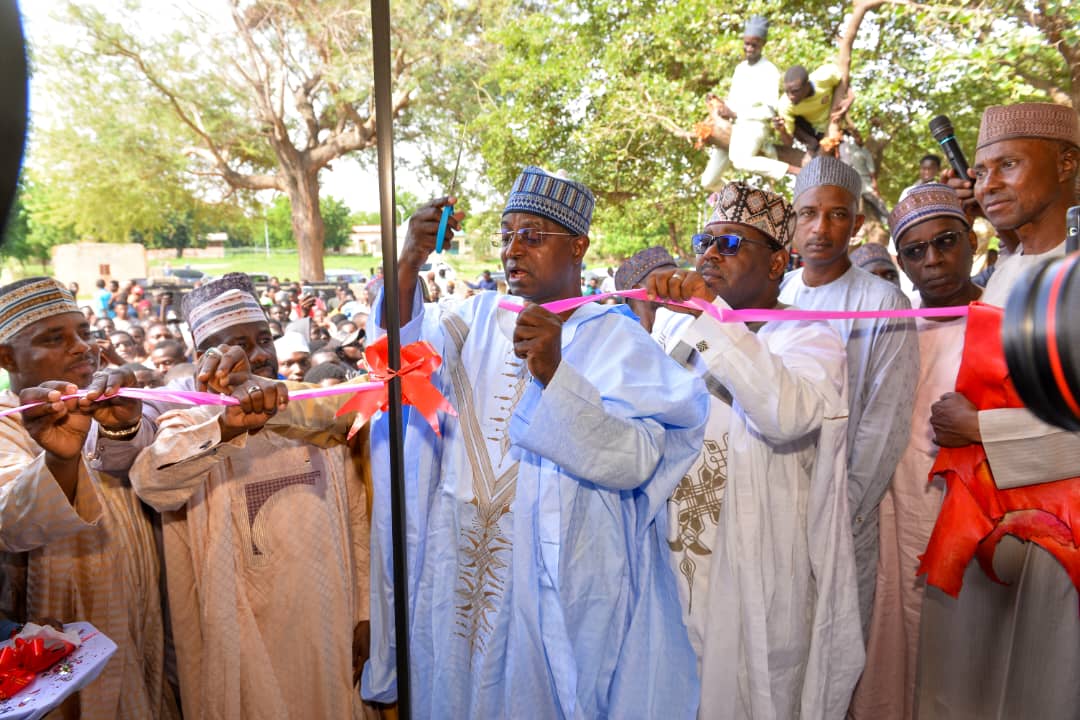
Livestock Minister Commissions Leather Enterprise Centre at ABCOAD to Boost Skills Development
By Ibrahim Yunusa
The Honourable Minister of Livestock Development, Alhaji Idi Mukhtar Maiha, officially commissioned and handed over the Leather Enterprise Centre to Audu Bako College of Agriculture, Dambatta (ABCOAD), describing the project as a major Federal Government investment in vocational education, youth empowerment, and the development of Nigeria’s leather industry.
The centre is expected to provide practical training, promote research and innovation, and equip students with entrepreneurial skills that will create employment opportunities.
Speaking at the ceremony, the Provost of ABCOAD, Dr Hassan Ibrahim, thanked the Federal Government and the Ministry of Livestock Development for establishing the facility.
He said the centre would strengthen practical teaching in leather technology, shoe production, and other leather products while serving as a hub for research and enterprise development.
He also highlighted the college’s contribution to agricultural manpower, noting that most extension workers in Kano and Jigawa States are graduates of the institution, and announced the launch of a Mobile Veterinary Service for livestock farmers.
Representatives of the Kano State Government praised the project as a significant boost to technical and vocational education.
They said the Leather Enterprise Centre would equip young people with marketable skills, encourage entrepreneurship, create jobs, and contribute to economic growth.
They also urged the Federal Ministry of Livestock Development to sustain its partnership with ABCOAD, given ABCOAD’s strategic role in developing skilled agricultural and livestock professionals.
While handing over the facility, Minister Maiha reaffirmed the Federal Government’s commitment to investing in institutions that promote innovation, skills acquisition, and entrepreneurship.
He said the centre would prepare students to become employers of labour rather than job seekers, adding that vocational education remains essential for job creation, economic diversification, and sustainable national development.
The event attracted government officials, traditional rulers, academics, industry stakeholders, development partners, students, and members of the public.