Literature

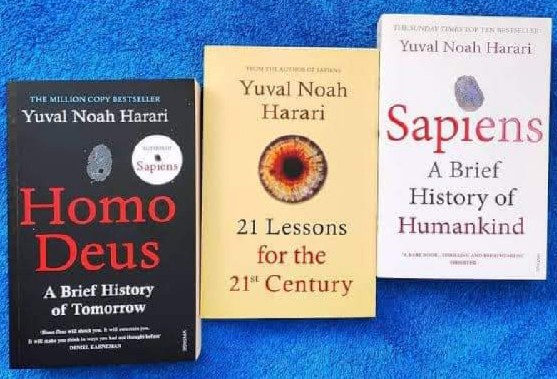
In defence of Professor Yuval N. Harari

By Rabiu Muhammad Gama

Prof. Yuval N. Harari might be a fake scholar, as some critics are desperately “begging” us to accept and believe. Some critics also imply that he might be the most grossly over-hyped and rigorously marketed scholar in the West. Harari might be basking in unearned attention. He might even be an irritating know-it-all or an intellectual nuisance.

The scientific community might have debunked most of his claims. His works might be riddled with some historical and scientific errors here and there. He might not deserve the wide global acclaim he is receiving today. His works might be replete with idle speculations and groundless generalizations that many scholars find annoying.

However, you cannot dismiss the fact that Harari always asks the big questions – the earthshaking questions that every intellectual worth his salt should be obsessed with. And there’s some “indismissable” magic that seems to clothe his books: when you read his books, you can’t help but feel a bit smarter and/or more informed than anyone who hasn’t read them.

To say Harari is highbrow is a sheer understatement. He is a perfect definition of a polymath. He is blessed with an unusual brain, a razor-sharp brain. His grasp of the esoteric world of science and the humanities is as baffling as it is admirable. Very few scholars can merge science and the humanities as Harari does.

If anything, the torrent of bashings and roastings that Harari is receiving lately from some of the finest critics in the world is a testimony that he has come up with something fascinating that makes his readers curious and his critics restless. Of course, some people might like to dismiss him as a mere talented storyteller. Nonetheless, and at the risk of sounding hyperbolic, he is one of the greatest intellectuals around!

Rabiu Gama wrote from Kano, Nigeria via rabiumuhammadgama0@gmail.com.

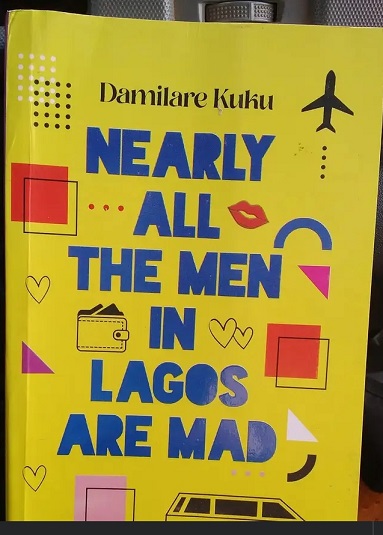
Book Review: Nearly All The Men in Lagos Are Mad

  • Title: Nearly All The Men in Lagos Are Mad
  • Author: Damilare Kuku
  • Genre: Fiction
  • Date of Publication: 2021
  • Page: 198
  • Publisher: Masobe Books
  • Reviewer: Aliyu Idris

It is the author’s debut. It entails twelve short stories narrated in cooperative narration; almost every story revolves around a subject regarding the woman or feminine gender.

From the book title, you may sense that it’s questionable, derogatory and disrespectful to men. However, the book exposes the sufferings of women and how the men of Lagos behave, especially towards women. It involves the story of sacrifice, endurance, rape, patriarchy and phallocentric, deceit and betrayal. Women are presented as saints. But, as it happens in reality, some characters found in some stories are the reason for their suffering.

Another crucial issue highlighted and promoted in the book is the concept of feminism. Just like contemporary feminists, I am not flabbergasted to find out that one of the author’s inspirations to produce the book is a feminist (Ngozi Chimamanda Adichie).

Almost every female writer who writes in any genre of literature promotes feminism right from the 19th and 20th-century feminists such as Virginia Woolf, Simone de Beauvoir, and Kate Millet down to the present-day feminists.

Because contemporary feminist writers do not stick to one feminist ideology but many subcategories. For instance, every story in the book has a different class of feminist ideology. For example, the first story titled “Cuck-Up” uses Amazon feminism to potray how defiant women are despite appearing weak and passive.

The last story in the book, “Independence Day,”  uses cultural feminism, showing women’s kindness and gentility.

Eco-feminism in the story “Anointed Wife” emphasises that patriarchial societies are detrimental to women.

Charles E Brazzler, in his book Literary Criticism An Introduction to Theory and Practice Fifth Edition, asserts that it’s the view of contemporary feminists that subjugation of women still exists worldwide. Issues such as rape, prostitution, social injustice, early marriages, polygamy etc., the feminist writers continue to add their voices to protest through their pens and papers.

It should be noted that feminism has been broadly international in scope, and many local and general factors dictate its disposition. For example, writers from Arab traditions such as Fatima Mernissi and Leila Ahmed have attempted to articulate a feminist vision distinctly marked by their specific cultural concerns. The same is true of African-American feminists such as Alice Walker and feminists of Asian heritage such as Gayatri Spivak (Habib 2005:669).

Poetic Wednesdays: Putting us on the right side of history

By Junaid Sharfadi 

For many a century, poetry has been used as a veritable tool to pass on religious, historical and social ideas in northern Nigeria. In Kano, for instance, scholars during my grandad’s generation – and beyond – were good at deploying Arabic and Hausa poetic means when forming an opinion.

Women and children too never missed an opportunity to ululate and chant poetic verses, laden with moral messages, when conveying a bride or on other occasions. The famous Charmandudu poem or the works of Sultan Bello, Aƙilu Aliyu, Nasir Kabara, Mudi Spikin, Asma’u Bint Fodio and Modibbo Kilo serve as an example.

Thus, Art and Culture enthusiasts and promoters like the late Abubakar Gimba or Professor Abdallah Uba Adamu would be delighted to see a literary fraternity sprouting from the fertile land of northern Nigeria, spreading its maturing branches across the country. 

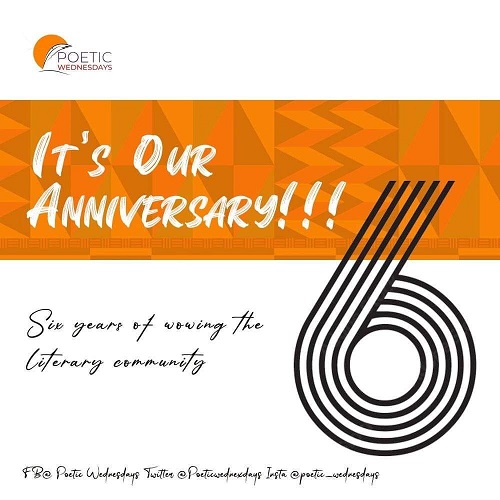
Poetic Wednesday (PW) Initiatives started six years ago as an online platform for poets to engage, grow, entertain and convey impactful messages every Wednesday. From agriculture to artificial intelligence, climate change, peace, conflict, education, love etc. the group writes on diverse, important issues.

The founders, led by Salim Yunusa, have succeeded in unleashing the full potentials of the weekly participants by critiquing and publishing their beautiful and virgin poems that drown readers into poemgasms. Budding poets have since joined to unbutton their poetic minds on marginless screens. No boundaries or limitations, just pure chutzpah and truth that reveal the primordial yet sacred content of the heart.

It is imperative to state that Poetic Wednesdays’ remarkable online presence has been effectively utilized in organizing webinars, competitions and workshops to fuel the passion for literature among youth. Prof. Hussein Nasr was right when he emphasized the significance of poetry in shaping Persian, Arab and Chinese societies. Therefore, with literary groups like PW, this society is on the right side of history.

Consolidating literary strides: Six years of Poetic Wednesday initiative

By Tijjani Muhammad Musa

Poetic Wednesday Initiatives (PW) was started by a group of poets of Arewa extract, but global in netizenry that have their muses tied confidently and securely to their minds.

Young, talented, prolific and spontaneous males and females write poetry with a passion that can surpass the fieriness of the sun as well as the soft and gentle subtleness of a sprouting flower.

As a poet myself, I have had close contact with the founding pillars of the movement and have interacted poetically with their brilliant works at an individual level on various literary platforms on and offline.

And when they, Salim Yunusa, Nasiba Babale, Abdulbasit Abubakar Adamu and a few others decided to unite as one, pulling their writing prowess and resources together and initiating PW, I knew something big was in the offing.

What I find fascinating about the whole Poetic Wednesday Initiatives thing is the innovation and strategy with which the youthful minds developed the idea into a viable literary concept that has turned out to be a force reckon with.

Soon, it became the in-thing to have a poet’s piece published on their platform or else it’s not worth reading. Everybody eventually started talking about the beautiful works coming from different hitherto unknown bards, all thanks to their featuring on Poetic Wednesday.

Budding poets on this side of the divide and those across the Niger river found it a challenge to up their writings to meet the unofficial standards set by the PW team. And on social media, the “Poetic Wednesday!” echo was all over the place.

To encourage further participation by shy and underdeveloped poets, PW started offering poetic lessons and coaching to young and not so young struggling poets to develop their skills. They even began a state by state tour in which they taught many the basics of writing good poetry.

Many who have benefitted from such an initiative have developed not just their words craftsmanship, but the confidence to share their poetry on various social media poetry sites. So many were the collections had never seen the light of the day earlier.

There is no doubt that the initiative within the first six (6) of its existence has successfully awakened the inert poets residing in many of us. The question now on many people’s minds is; how do PW consolidate on its success and achievements so far?

Well, for a start, PW is no more a mere platform for poetic talents, both budding, seasoned or veterans, to come and showcase their creative stuff and then walk away. The PW guys have turned the set-up into a fully incorporated business entity. Way to go!

Having been upgraded into a registered business outfit, PW is hoped to set out not only to promote creative literary works but, in collaboration with other stakeholders, to make it its affair to promote, sponsor, and publish writings from writers and poets, making them published authors among other things.

As part of their future strives, PW should also look into the potential of organizing literary workshops, seminars, webinars, shows etc. that will give opportunities to talents in the literary circle to be taught how to measure up in meeting requirements for entering and winning competitions and contests at local, national and international levels.

It will also be an outstanding achievement on PW’s part if it can organize sponsored literary competitions and contests for primary, secondary, and even tertiary institutions to discover hidden literary talents in society and connect them with corporate sponsors to publish their books and anthologies.

I would not mind seeing PW start an institution of learning where poetry, poets and writers in other genres of literature from across the world can find a haven to come and exchange ideas and technical knowhow towards furthering the development of writing skills in various languages such as Hausa, Yoruba, Igbo, Nupe, Kanuri among others via the art of writing.

Congratulations to the PW team for achieving such a monumental milestone. It has been six exciting and value-adding years for society. This is definitely worth going to the moon for. Thus we are pleased to associate with you and your success and believe that if careful planning, focus and dedication to execution would hold sway, more wins are assuredly guaranteed.

Tijjani Muhammad Musa – Poetic Tee is the Chairman of the Association of Nigerian Authors (ANA) Kano Chapter.

Jolly times with Poetic Wednesday

By Namse Udosen

I came across Poetic Wednesday on Facebook. It was refreshing to see young people telling their stories in verse. During the Covid-19 lockdown, I followed keenly as Eclectic voices sang tunes that ranged from despair to hope.

Poetry is a beautiful part of literature often not paid deserved attention in this climes. It breathes colours and creates philosophy. Therefore, immersing myself in the words of the poets of Poetic Wednesday provides me with a refreshing view of life in Northern Nigeria.

Aside from providing an outlet on social media for budding poets, they have organized a series of offline creative writing workshops for more than 300 secondary school students in Kano, Katsina, Yobe, and Kaduna. These workshops provide opportunities for non-formal education in creative writing. These workshops also expand the thinking range of these students and them better in their academic work. As a result, many young writers have participated in and won writing competitions which are essential for building confidence.

Poetic Wednesday has used its online presence to drive narrative around pressing societal issues in Arewa. The works have been bold and daring, covering domestic violence, Almajirci, drug abuse, and girl-child education. The conservative toga around Northern Nigeria is regularly broken by the strength of the poetry published.

I have also had the opportunity of attending some of the physical poetry events. Asides from the big players in Kaduna, they have one of the best poetry events in Kaduna.

They have been able to collaborate and partner with several literary organizations such as The Art-Muse Fair, Open Arts, Ahmadu Bello University Arts Festival (ABUFEST), Poets In Nigeria (PIN), Creative Writers Club, ABU Zaria, Minna Book and Arts Festival (MinnaBAF), For The Love of Poetry, Campus Watch, The AlhanIslam Tutoring Center, Chapter One, Open Arts, Hausa International Book and Arts Festival and several others to support and promote literary activities.

I am glad to be part of their growth and successes. I don’t know where they get their drive from, but I appreciate the sacrifices of the young men and women behind the initiative. Long live Poetic Wednesday.

Namse Udosen wrote from Kaduna via namse.udosen@gmail.com.

Who can deliver us from the clutches of tyrants in the jungle?

Nigerian Universities lament…

Are we not akin to nursing mothers?

With maternal tenderness and compassion, we breed.

Etiquettes and knowledge in our students

Isn’t it from our breast they suckle?

The milk of freedom and wisdom

To enable them differentiate right from wrong

And to make their future bright

But melancholically,  with choppers, these tyrants unceasingly chopped off our udders.

Who delivers us from the clutches of tyrants in the jungle? 

Nigerian students lament

Dear Mother, beloved patron of our course.

In every whisper, they hear your anguish

In lieu of salvation, to the ground, they malevolently choose to turn their ears.

From the serenity of academic society, they always exile us

To the ennui of waiting idly in our parents’ home

When and what will halt this malice?

When do we have our basic rights to education?

Who will shake sense in the diseased brain of these monsters?

Who can deliver us from their shackles?

Inhabitants of Northern Nigeria lament.

Our beloved students and varsities

Your blues and agonies we are sorry for…

By her visage, we say the country is extremely sick

And remedy from the omnipotent Lord we should only seek 

Strong security measures they feigned

Yet in homes, our lives are at stake

We are famished but our  farmlands irrigate with our blood

Enroute to worship, work,  business places we are waylaid

Quotidian reports place our pogroms and theft at a toll of  hundreds of thousands rate

But to the mercy of the blood-sucking beast we are always left.

Chorus: God we are helpless in the hands of tyrants. 

Only You can deliver us from the clutches of their mischief…

Abba Muhammad Tawfiq is a 500L Medical Rehabilitation Student University Of Maiduguri.

Mentorship is all they need

By Maryam Muhammad Lawan

They both entered Ammi’s room with crestfallen faces.

“Ammi, I don’t know what’s wrong with this boy. I saw him in the afternoon wandering about the street with those ludicrous coteries and now with a gamepad instead of a book!” Yaaya exclaimed. 

Ammi sighed as if she could not utter a word.

I know she could, for she has been trying her best. Anis would only pick his book to study when Ammi sounds emphatic. Not sure if it’s hearty, for he would start to sleep shortly after he starts reading, and that will be the end. 

Yaaya broke the silence in the silent room with a query. “What exactly do you want?”

Mentorship! I answered the question for Anis quiescently.

 He continued, “Unless you straighten up and fly right, our efforts will be fruitless.”

Anis is blessed with a quick cognitive capacity but is prone to play.

 “I’ll try my best and make sure he get his acts together, but he’s listless now. Tomorrow will be a better day,” I said to myself. 

The Next Day

I stealthily entered Anis’s room and met him ironing his sport wears. 

 “This is supposed to be done before today, my friend,” I said teasingly.

 He replied amusingly, “I heard you, but not well. However, I may hear you well when you go out and say Assalaamu Alaikum.”

Deep down, I know he’s trying to requite, for this is always what I say whenever he bangs into my room without saying the Salaam. 

I went out, said the Salaam and entered. 

I soothingly asked about his preparation(s) for the forthcoming exams.

 “Which preparation?” He asked. “Y’all should know that this JAMB is just luck,” he added. 

“So you wrote the exams before, wow! What was your score? “I uttered innocuously. 

“Look, Anis, can you please give me a listening ear?” This time around, it’s more of motherly. 

He switched off the iron and turned his attention to me. 

“Last year, when I did my JAMB examination, were you not proud of my score? Were you not the one that added that to your status with ‘can ur sis be brilliant like this’ as the caption? Do you remember how that result trended? Why? It’s all because of the score, Anis. I wasn’t the only one that wrote JAMB that same year, but mine trended most.” Can you remember how I read hard? Why don’t you do that, Anis?”

The room was silent for a while.  

“There’s nothing like luck, except that in almost everything, there may be a refutation. Some candidates may prepare well, but fail, while others will pass without preparing, but this is a hen’s teeth. I want you to train hard and pray harder, please, dear. Will you do that? “ 

He astonishingly answered in the affirmation. 

“I remember how some students mocked us (me and my friends) just because we were preparing hard. How foolish? None of them scored more than 130. Karina was among them; she scored 98. I know you can still remember that. So, in case you come across those sets of people, get them the cold shoulder. But, eventually, we shall smile together,” I said. 

“It’s almost 7:30 am. Let me leave before your school bus arrives. Peace out, bro, I said and added “no procrastination please,” when exiting out of the room. 

“Anis!! I shall celebrate with you as well, “I said this when I saw him reading voraciously after coming back from Islamiya in the evening. 

I could see happiness in Ammi’s and Yaaya’s faces. 

It’s time for the Maghrib prayers, so the young boy must keep everything and pray. 

He stood up while uttering, “So help us, God.” I wasn’t the only one that said “Ameen.”

Yaaya was at the parlour, ready to move on to the mosque, while Ammi was there to pick the phone she left at the dining table. I, Yaaya and Ammi said that Ameen happily.  

The young boy moved on to the restroom to perform his ablution.

 He held Ammi and Yaaya in awe, they happily prayed for him, and they both left. 

Maryam Muhammad Lawal wrote from Kaduna via mmafamam@gmail.com.

A day in the jungle of love

By Uzair Adam Imam

Looking at her eyes, it was clear that the decision taken by her parents wasn’t favourable. Soon, a shiver began to run down my spine that I couldn’t help standing, but fell to my knees. My hands supported my head, and I quickly sank deeply into the thought of how our love led to the ruination.

Hot-felt tears had already begun racing down my innocent cheeks; I felt drunk with the world playing magic to me, turning around like a bicycle wheel peddled by a fast rider. However, I couldn’t tell about happenings around me.

I got started when her soft hands held both of mine tightly. She lifted me and drew me closer to her; then she whispered into my ears: “I can’t let you go, dear,” she said with her engrossing eyes which tore my heart out looking into mine, then continued “, All creatures have various can’t do-without things. Your love is to me as water is to a fish.”

“It’s indeed known to everyone that we love each other and no word can describe our relationship – it’s, without a doubt, incalculable and immeasurable,” I responded, paused, cleared my throat and continued, “this is our destiny, and we’ve no option but to accept it.”

“I have an idea,” she said.

“What can that be?” I quickly interrogated.

“We shouldn’t run away to save our love and get a secret marriage elsewhere,” she suggested.

“Certainly no! Love is a sacrifice, and now it’s my turn to pay you back, for I’m indebted to you beyond the settlement,” I said rather emotionally and added, “if you really love me, accept it.”

“I do for your sake. But a favour, please! Don’t forget me for whatsoever reason. For me, you’re undeletable; the blood that pumps by my heart and circulates in me.” She retorted hopefully with misty eyes.

“I won’t!” I said. “You’re indeed unforgettable. Even though the thought of losing you would have soon killed me, my life won’t be for nothing because I have very good news for my friends and relatives who have gotten their residence permit in the great beyond many years now – the story of our exemplary love,” I managed to say though in a shaky voice.

For the uncertainty on when our next meeting shall be again, we departed after getting our point across to each other. I stood to leave but only to feel forcefully halted; as I turned, it was her hand clutching the tail end of my kaftan. She smiled, then words flowed on her blessed lips, “we’re destined to each other. So I know we’ll reunite again.”

Her words created in me the reflection of the stream of affection we’ve passed through. No love tangle had ever existed in our voyage since we began crushing on each other. So that our relationship had always been quarrel-free, I found it difficult to reply to her words. Instead, I nodded and smiled warmly. But inside me, my mind grew heavier and my heartbeat at the rate of three times a second or so, I thought, making me doubt my chest’s ability to bear it.

I didn’t wait for a taxi or bus. Therefore, I made for home and arrived after a trek of more than an hour. I entered my dilapidated room, laid on my ramshackle and crumpled bed with my head conveniently placed atop a decaying pillow made of dirty old clothes, looking high up to the dusty and unworkable ceiling fan. I was, all this while, trying to discard the thought of my execrable situation with which I became like a conjoined-twin, but yet failed. My heart was enveloped with the flashback of my first encounter with Aisha, to mention her name.

After four years of silence, one blessed Monday on my way to call on my friend, I saw a pretty girl of about eighteen, the apparel of whom I instantly admired, the beauty of whom shouted for attention. I tried but failed to hide my surprise that was now all over my face, so she couldn’t notice.

As she came nearer, the pleasant scent of the Malaysian perfume, she wore struck my nostrils. She gave me an attractive, though tricky, smile.

The girl alluringly passed by without uttering a word. Her beauty is indeed beyond description. But, to my utmost surprise, seeing the girl for a brief moment, I suddenly began to feel a strange feeling descending on me. I couldn’t figure out the meaning of this peculiar feeling, but a few days later, I got to know what the feeling was all about. And I also came to know her name and her address.

She lives in a mansion and is fathered by a well-known rich man in Kano. My heart was full of fear of rejection. But interestingly enough, I was lucky! My proposal was accepted.

In the spot of our existence, we became the talk of the town, whereas our relationship travelled far on the lips of our contemporaries. Thus, she couldn’t deny me a gingering and auspicious text if she denied me her face, and so did I.

Nevertheless, no sooner had her parents stood on our path than we started calculating the ramification that led to the break-off of this journey. Love, from then, proved itself bitter, not better since it produced something short of sweet. Indeed we’re knifed apart as our dreams fell apart.

Uzair Adam Imam writes from Kano and can be reached through uzairadamimam@gmail.com.

One last truth

By Zaynab Abdool

It’s winter morning, a new day, and I’m awake, Alhamdulillah. When my foggy gaze fell upon the aesthetic rays of sunshine that sneaked through the holes in the window, surged past the transparent curtains, and stood grandly on my bedroom’s plain wall, I couldn’t help but admire its gracious beauty while my soul sent praises to the creator of man and nature. 

‘Zainabuwa, what on earth are you still doing in bed? Reincarnating?’         

A lusty yet irritating voice accompanied by a loud knock sailed me back from my small world of imagination. That was Husna, my new friend who just moved next door a month ago. The love we both had for certain things, such as the love for books, poetry, cats, henna and hijab, truly helped blow the flames of our friendship. So, we were on good terms.    

Stepping down from my bed, I yawned lazily, ignoring the annoying voice behind the closed door. After taking off my crystalline PJ’s, I slipped on a black gown and strolled across my room to get to the door. Glowering Husna was all I saw before I was kicked aside, and the next was the elegant Husna clad in a light blue hijab that complemented her black skin, cat-walking towards my bed while reciting a poem with the zestiest voice ever:

‘Habibi, you carried          

The weight of my poem         

Like pen amidst thy fingers,          

You stole my lines, stanzas         

And my entire muse         

With just a blink.’

After listening to those lines, I was shocked out of my wits. 

‘WTF! I’ve always thought you’re only into dark poetry! Don’t tell me you wrote that piece!”

‘Babe, forget about those dark kinds of stuff, I’m a phoenix now, and I’ve finally found him,’ she said happily with stars in her eyes.

‘Him? Who?’ I asked, confused.’ My knight mana,’ she replied with a sly smile plastered on her pretty face.

‘Oh! Do you mean to tell me that you’ve found a handsome male lad in those web novels you downloaded lately?’

‘Damn! I found one last night, and he’s so damn amazing that I felt like dying in his arms…’

I scooped and sat beside her on the bed, rolling my eyes.

‘You’re a fool, you know?’, she reacted to my body language. 

‘Yeah, a pretty fool,’ I chuckled before adding: ‘You need to get back home and return after I had my breakfast. It’s hot milk and chips today.’

‘I hate milk and chips,’ she frowned.’ Oh, wow! Stay and feel at home then,’ I exclaimed gladly.

‘Stingy brat, now let’s discuss some serious kinds of stuff.’ 

‘Oh, okay, let’s discuss fast; I’m hungry,’ I yawned

‘My man’s birthday party is in five days and, of course, I will be there because I’m his queen,’ she stated happily. 

I stared blankly at her flushed face, uttering: ‘What’s she talking about,’ I thought, still finding it hard to believe what I just heard.

‘What man? What birthday party? What queen? Do you want to slay? Or you wanna join the movie industry?’ I asked hectically.

‘Yeah, babe, I wanna slay for my boo. He’s worth it,’ she replied while browsing through her phone’s gallery. ‘Here, meet my prince,’ she flashed me a photo on her screen which got me back from my blackout state. ‘Huh!’ My jaw dropped. All I saw was a bronze skin guy with dreadlocks, dressed in sophisticated cocktail attire. The stiff aura around him emits a strong ‘arrogant playboy’ vibe.

‘How on earth did she even meet him? He’s so disgusting,’ I thought. ‘Erm, hmm Husna yo…you fancy him? Erhm, I, I mean you love him?’ I asked in between stammers.

‘Yeah, I truly love him. He’s charming and amazing… He’s not what you’re thinking, Zainab. He’s an overall different person inside. Don’t judge him by his appearance.”

‘So, to you, he’s worth imitating to your future kids?’ I asked in a low muttering voice. 

‘Yes, at least that’s what I think, and nobody’s perfect anyway. So, what do you suggest I wear to the party? ‘He said I should appear as classy and sexy as possible, even though he claimed to do something about my black skin before the D-day. I still need to give in some effort, right?’

‘What nonsense!’ I thought.

‘Husna, you’ve changed,’ I whispered. She chuckled before saying, ‘love has changed me.’

‘What love? This is pure bullshit. Have your parents even acknowledged him?’ I asked, finally coming back to my senses, knowing quite well that Husna’s parents – being the typical Hausa parents who will strictly push their kids towards the Deen; the type of parents who will teach their kids that Islamic education and good morals are far more important than anything – would never acknowledge her ‘so-called boyfriend’ as their son-in-law.      

‘No! Wallahi, you’re so dumb. Can’t you understand that we are into a secret relationship?’ she almost barked. 

‘Whatever the case, you’ve to break up with that demon you call a prince. You deserve someone far better than him-someone that will accept all your flaws and appreciate everything about you, someone with the ilm to defend his religion, a man of Deen whom your kids will be so proud to call ‘papa.’ You deserve someone whose testimonials are inspiring, someone whose effect on you would extend beyond this Dunya, a man who will walk you to Jannah, a man you can hold on to, a man you can proudly call the source of your true happiness and external strength. Not someone that will encourage you to bleach your skin and change who you are, not someone that will persuade you to flaunt your beauty and mess up your goals.’ I stopped to breathe.

‘You don’t have to impress anybody, my dear, you don’t have to sacrifice your happiness to anyone-the happiness your parents put so much effort to build and protect…’ I paused again and stared blankly at the walk with misty eyes, not sparing Husna a glance.

‘Our parents had gone through a lot to make us who we are today. They have sacrificed their blood and sweat to give us happiness, yet we chose to, to…’ I paused as tears of pity flowed down my cheeks to seek solace on my lips—tears of pain, the pain of betraying their thoughts and trust.

I restricted my gaze from the plain wall and pasted it on Husna’s forlorn face. I was shocked when I saw tears rolling down her flushed cheeks.

‘But it’s a free world, Husna, and as a friend, I’ve played my role here to guide you. So now it’s left for you to decide because hell is free, anyway,’ I said as I stood up lazily, wiped my tears and walked to the door. ‘I need to get my breakfast, Habibty; feel at home,’ I said, holding the doorknob. 

Innalillahi, I almost destroyed my life. What was I thinking, Astagfirullah’ I heard Husna mutters to herself from behind. 

I smiled, let out a sigh of relief and closed the door behind me before walking to the kitchen in high spirit.


© Zaynab Abdool (abdullateefzainab96@gmail.com)

The most dreadful experience of my life

By Yahuza Abdulkadir

Many a time, I listen to people expressing their feelings and emotions, telling their beautiful and ugly stories, talking about the experiences they encountered through their journeys.

But then, there’s this story I wanted to write, but I couldn’t. Whenever I tried to, fear overwhelmed me. So, I overcame my fears and summoned the courage to write this story today.

In April 2021, while travelling to Funtua in Katsina State, I had a dreadful experience that left a big scar on my heart.

On that day, I reached Kano at around 6:30 PM and boarded the ‘Adaidata Sahu’ tricycle to Rijiyar Zaki Park because I was told that it’s only there I could get a car that would take me to Funtua by that time.

We started the journey to Funtua at around 9:00 PM. It was late and a lovely friend who happened to know how the road used to be at night advised me to stay till morning. But I couldn’t heed her advice because I wanted to reach Funtua that night and complete my assignment the following day.

I started regretting why I embarked on the journey when our car spoiled at Malumfashi. The driver tried to get the car back to work for almost an hour but no progress. Finally, he decided to walk a few metres away to get a mechanic. And we were lucky that he came back with one. After several trials, the car engine started, and it got back to work.

I can still echo the voices of the two women seated at the back, pouring blessings upon the mechanic who helped fix the car’s problem. He really tried, but God’s miracle has taken place, I believe.

As we continued the journey – chatting and listening to other passengers telling their stories, I fixed my eyes on the road, and many thoughts knocked me on the head. When I noticed no car coming from the other side of the road, fear robbed my mind. My heart kept beating. I wanted to tell the driver that I was uncomfortable with this journey, but silence kissed my lips. I kept mute for some minutes. But deep inside of me, I wasn’t feeling okay.

A few kilometres to Bakori, we spotted torchlights reflecting from a close distance. And I heard the driver saying, “Inna-lillahi Waa Inna Ilaihir-rajiun,” meaning: “From Allah we are, and unto him is our return.” He tried turning the car to escape the trap in our front, but the sound of gunshots flying in the air made him stop the car.

I couldn’t remember what happened, but I saw people with guns and torchlights telling us to get out of the car. We went out, and I was terrified. Some voices began to whisper into my ears, “Had I known, I could have stayed in Kano till the following day like my friend said, but my stubbornness got me into this, it’s not my fault; this is my fate.”

That night we were robbed. “The Children of the Night” collected all our money and that of the driver. Then, they took away our cell phones and walked into the bush, shooting in the air.

When they left, I got into the car, shivering. Then, I realized that my smartphone was inside my small travelling bag, which I kept close to where I sat. I put the phone into the bag earlier because its battery was flat. So, I was lucky that my smartphone was still with me, though they took my small phone I used for calls. I know that we were lucky enough to be alive that night.

We stayed there till dawn because our car couldn’t get back to work again. We were thinking of what to do next when a car carrying bags of maize showed up. We waved hands for the driver to stop. And he did. He got out of the car and headed to where we stood. We told him about the incident, and he showed his concern, sympathizing with us. He told our driver that he was rushing to get to his destination. Then I saw him removing some money from his pocket and offering it to our driver. The driver thanked him and asked us to do the same. This man is very kind. Humanity lies in his heart, I whispered.

We kept waiting there till an empty commercial bus came. Then, after discussing with its driver, he asked us to get in. And we headed to Funtua. Our driver left his car with the intention to get a mechanic at Funtua who could repair it.

When we reached Funtua, I wished the other passengers well and prayed for their safety everywhere they would be. Then, I took my travelling bag and walked to my destination.

Although I have been travelling along the Damaturu-Maiduguri highway, I have never felt shocked and frightened like this before.

This was the most dreadful experience of my life. It’s a memory I can never forget.

Yahuza Abdulkadir wrote via yahuzaabdulkadir50@gmail.com.