Lifestyle

How to survive without a housemaid

By Aisha Musa Auyo 

The current trends of housemaids poisoning their employers are so sickening and scary. It happened countless times, and one can’t escape seeing one or two videos of such heinous acts. From sexual and physical to mental abuse, housemaids and their masters always have these issues in their relationship.

Whenever I encounter such an incident, I wonder why we continue to employ maids or why others leave their homes and work with people they hate. I had maids, and I grew up with maids in our house. But things are different now. People do not fear God. Humanity is lost. From the employee to employers, we are all at fault. 

As much as we agree, the maids are vulnerable and more likely to become victims. Unfortunately, these maids have upped their games, and the family employed them are becoming the victims. I’m not here to tell who is right or wrong, but I know that maids had abused us, taken advantage of our kindness, stolen from us, and deceived us to the extent that we decided we no longer have maids in our home.

Is it easy? No. Is it doable? Yes. We can bring an end to this problem. This issue is almost none existence in developed countries. Regardless of how educated or wealthy you are, cleaning your home is something one takes pride in doing, except for celebrities and rich people who employ the services of cleaning agencies who can hardly be cheated on and are less likely to betray too.

Another advantage of doing your house chore is that it helps you burn calories. Moving your body here and there, doing this and that makes you burn calories, makes you more energetic and more alert. As a result, you gain most of the advantages that come with doing exercise. Researchers have proven that active women around the home are healthier and less likely to be attacked with a certain illness than women who sit and do nothing all day.

As a homemaker, I’ve devised ways to survive without a maid, and with the help of Allah, I’m doing fine, if not great. I don’t have the constant apprehension of trying not to harm another person or be hurt by that person. The peace that comes with this feeling is priceless. 

1. Wake up earlier than others, or simply reduce your sleep hours. You will be surprised what an extra hour will do to make your work faster and your home cleaner. This can be an hour before everyone wakes up or an hour after everyone else sleeps. This will give you undivided attention to do whatever needs to be done.

2. Engage other family members. From your kids to whomever you are living with, allocate an age-appropriate chore to everyone, and ensure they do it. Even if it’s just cleaning up after their mess. A five-year-old can wash their plate and spoon. Can pick up toys, and older than/six years old can change the bedding, bathe themselves, and clean up after using the loo.

3. Clean as you go. From always picking up dirt and cleaning drops with wipes or napkins to washing dishes as you cook and immediately after eating, you will manage to have a clean space almost all the time.

4. Reduce the number of plates for dishing up. All those fancy food flasks, jugs, spoons, forks, saucers, knives, and big trays are not a must. Use only what you need except when you have visitors. I mostly dish up from the pot straight to the plate (there are elegant plating styles to please the eyes) or a plate and a bowl. Fruits could be served or arranged in a big bowl for everyone to eat together. Drinks can be served directly in used water bottles or paper cups, so you can just throw them away after use. 

5. Hire a one-day help at intervals. The point here is to get someone to help you with things you find hard and time-consuming. For example, laundry is my number one weakness, so we employed someone to do this, as the person doesn’t have to go and stay with us to achieve this. You can engage them weekly or bi-weekly, so they can help you with bulk cleaning, like removing the cobwebs, cleaning the compound, brushing sofas and rugs, and doing other deep cleanings that will help keep the house sane throughout the weeks. If this is not an option for you, you can just take the clothes to laundry services, as you will need all the help you can get.

6. The toilets. Depending on the number of people using it, a bathroom should be washed every other day. In between, ensure that every mess is cleaned after usage.

7. Fridges and freezers; the fridge can be cleaned and decluttered once a week, and the freezer can be cleaned once a month, depending on how you shop and cook.

8. Buy machines that will make your work easier. From a washing machine, a strong blender that can blend Tiger nuts and beans, a vacuum, a dishwasher, and many others, depending on your pocket size, you need all the help you can get. This is where your husband comes in. He should know that you made a sacrifice for the safety and sanity of the family, and you need his financial support and understanding.

9. Husbands, we need your support here. You see, all those allowances that should have been used to pay a maid, we need it, in two or three folds. We are the glorified house helps now. We keep the home set and safe. A token will motivate us to do better.

Verbal support is a must. Commend her efforts for taking good care of the homeland and everyone in the family. It’s not easy. I know it’s her duty, but one or two good words won’t hurt, you know?

Still, the husband should try to overlook when she sometimes errs in caring for the house. She is only human, with two hands. And if you can sometimes help with one or two things when you are less busy, that will be a plus for you and her, if you know what I mean.

If you can afford it, make water and electricity 2/47-thing. This is a necessity, not a luxury. She needs this to make work easier for her. Almost all the tasks at home need either electricity, water, or both.

10. Look for temporary help when you are sick or pregnant. Find someone reliable from your family or friends to help you before you get back on your feet.

11. If you can afford it, carve out a playroom or a play area for your kids so that they limit their playing objects to that place. Your living room should always be clean; a toy here and there will make that mission impossible.

12. Lastly, start the day with prayers and a potent stimulant. A hot black tea or coffee will do the trick. Trust me; you need it. If you are an addict like me, ensure you never run out of it. Also, habitually do the zikrSubhanallah, Alhamdulillah, and Wallahu Akbar – while you go around your daily routines. Our prophet taught Nana Fatima this when she asked him to give her a slave to help her with domestic chores. He said this would be best for her, here and hereafter. Listen to radio, podcasts, Quranic recitations, music, or audiobook. This will energise, entertain, educate and make housework less burdensome and easy for you.

My fellow woman, this piece is not for the sick, pregnant, lazy, or full-time working mom (9-5). If you are lucky with your maid, hold on to her, don’t come and kill yourself with work.

But if you are healthy, up and doing, have a flexible job, or not working at all, this is for you; congratulation. You will be rewarded immensely for this. You will have peace of mind, thus not constantly worrying about what’s happening in your house. You will raise a family who will learn to manage a home without depending on others. You won’t raise another person’s child at the expense of yours. And trust me, it won’t last forever. Once the kids are all grown, you can relax and do minor chores.

Whenever I feel overwhelmed and think of getting a maid, this idea will often cross my mind, especially if I can afford it. I ask myself, how will I cope if I live in a Western country? This resets me.

Aisha Musa Auyo is a Doctorate researcher in Educational Psychology, a mother of three, a Home Maker, a caterer and a parenting/ relationship coach.


Success is not attained in the comfort zone

By Abdurrazak Mukhtar

Comfort is often seen as a golden ticket to happiness – where we can bask in the serenity and put our feet up. But what if I told you that staying in your comfort zone for too long could be the very thing holding you back from success? This saying suggests that to thrive genuinely; one must be willing to trade comfort for discomfort.

Imagine a world where you never challenge yourself and always stick to the tried and true. Chances are, your life would remain much the same, devoid of growth and new experiences. But that’s not the kind of life anyone of us wants, right? The key to unlocking our full potential is embracing discomfort.

Risks are the building blocks of progress. By stepping outside our comfort zones, we open ourselves to a world of possibilities. Only by testing our limits can we discover what we’re truly capable of. Every time we push ourselves to be uncomfortable, we grow, and our comfort zones expand.

Being uncomfortable doesn’t mean feeling miserable and stressed. It’s about embracing a new challenge and putting ourselves in a position to learn, grow, and succeed. And as we progress, we’ll find that the things that once made us anxious and nervous become second nature.

So, my friend, next time you are cosily nestled in your comfort zone, take a moment to reflect on this saying. Embrace the uncomfortable and watch as you attain new success and comfort levels in your life. The journey may be challenging, but the reward is worth it.

Abdurrazak Mukhtar  sent this article via prof4true1@gmail.com.

Are you still the person your spouse fell in love with?

By Aisha Musa Auyo 

The famous marriage counsellor, Maryam Lemu, advised couples to ask themselves often if they are still the person their spouse fell in love with. The answer would help one reflect and recognise which area to concentrate on in order to improve their marital relationship.

But, how can one achieve this if they are oblivious of the qualities that attracted their partner in the first place? Why did your partner choose to spend an entire lifetime with you despite millions of others worldwide? What are the qualities that attracted them and made them want to be with you for the rest of their lives?

You should, at least, know more than half of those qualities that attracted your person significantly, if not wholly. These qualities may range from your looks to character, smile, skill, gestures, intelligence, or even the way you laugh. I know of a man who married his wife because of her loud laughter. He said the sound of her laughter makes his worries vanish. Unfortunately, and sadly, she stopped laughing after a life-changing event that occurred in their life. They lost their two kids to gunmen, and from that day, she lost herself. (Story for another day).

Men are creatures of few words. Women should pay attention to whatever they say or indicate the slightest interest in. If you are lucky your partner is outspoken, work is easier for you.

 I know life happens, and changes are inevitable, but we should always strive to bounce back or be better versions of ourselves. Laziness destroys marriage, and not improving ourselves and relationships is one of the commonest laziness in our lives. We find silly excuses, blame nature, work, kids, our significant others, and anything we can lay reasons on. But trust me, with willpower and dedication, we can improve our relationship daily with small, consistent steps.

This write-up is a wake-up call for you and myself as I have been slumbering too – I stopped writing almost entirely. I abandoned my PhD thesis completely, my relationship write-ups forgotten. In fact, I neglected even the short motivational and inspiring pieces I used to write.

And one of the qualities that attracted my husband (then boyfriend) to me was writing. He’s amazed by my ideas and intellect, my zeal and inspiration to write. He loves my wordings and spends time reading my childish drafts. So he supported and cheered me.

He even bought me a modem for browsing, research and online publishing… (At that time, when one could only access the internet in the cafe… When we used to pay 50 naira for 30min and 100naira for an hour of internet surfing time, so modem was a big deal). I embraced penning down ideas to the fullest and made sure I published at least one well-researched article daily.

Then life happened, and I changed. I was not too fond of typing anymore. I only want to read and move on. Sometimes my husband would say, “As a matter of fact, you are becoming lazy; you no longer write,” and I’d reply with excuses like school, taking care of the kids, and running a catering business ain’t a joke. They are all fables. I still get free hours to surf the internet.

Whenever I share with him a beautiful write-up by others, he would be like, “Great write-up! I just wish it were your words”. Still, I wasn’t bothered. It didn’t hit me hard till the day he invited me to listen to a radio programme where they invited writers and poets for discussion. He was so attentive and enthusiastic. Of course, the woman in me got pissed off, as the guest was a lady that day. I pretended to share his enthusiasm, but I was boiling inside. That night, I thought about myself and the lazy girl I had become.

The reflection reminded me of the many messages I received asking why I stopped writing. My blog followers become concerned, some disappointed. Finally, I made up my mind to try to be better. I know deep inside me I can do better. I need to rekindle that flame.

Tonight, ask yourself, what qualities attracted my spouse to you? Is that quality still present in you? Have you improved in that area? What should you do to rekindle that attraction?

 Remember, a happy couple produces happy and healthy kids, creating a healthy family, state, nation, and the world. So this single and simple effort can go a long way in improving the world.

Aisha Musa Auyo is a Doctorate researcher in Educational Psychology. A mother of three, a Home Maker, caterer and parenting/relationship coach.

Marriage tests your character, makes you happy and matured

By Aisha Musa Auyo

Allah created marriage for lifelong pleasure and happiness. Therefore, beyond any other human relationship, marriage has the potential to make us happier. But there is a price to this happiness, which is CHARACTER. 

Marriage tests our character in every way. It tests our patience, work ethic, willingness to forgive, sensitivity to others, tolerance for those different from us, cooperation ability, endurance, and humility. Marriage is simply the biggest character test in life.

These tests integrate into our demeanour and give us a certain level of understanding, patience and maturity, and willingness to forgive. Moreover, it opens our eyes to the reality of life that unconditional love is exclusively for parents and children.

One needs to work more on his character, temperament, and personality to be able to live peacefully with others. Emotional intelligence plays a greater role in the relationship than anything else.

For most new couples, marriage was like a trip to the proverbial woodshed for the first several years. They were selfish, insensitive, angry and chauvinistic. After the first few years, many spouses were convinced that they had made a mistake in marrying their mate and that they were the cause of their misery.

But after lots of patience and endurance, when they look back at those times, they will realise that all the negatives that happened are crucial in forming their character. Many couples admit that they almost didn’t make it. They almost give up, but such circumstances forced them to decide to change and become more like Allah wants them to be… (patient, prayerful, selfless, understanding, and forgiving).

As a partner, know that your marriage will take a significant step forward every time you make a positive character change. Your spouse also will make positive character choices that will benefit your relationship, and you will have a great marriage, inshaAllah. It won’t be perfect, but you will be happier, contented, and at peace than ever before and will be glad to be committed to the lifelong journey.

Know that before marriage makes you happy, it will make you grow.

Aisha Musa Auyo is a Doctorate researcher in Educational Psychology. A mother of three, Aisha is a homemaker, caterer and parenting/relationship coach.

The unseen tears of firstborns

By Fatihu Ibrahim

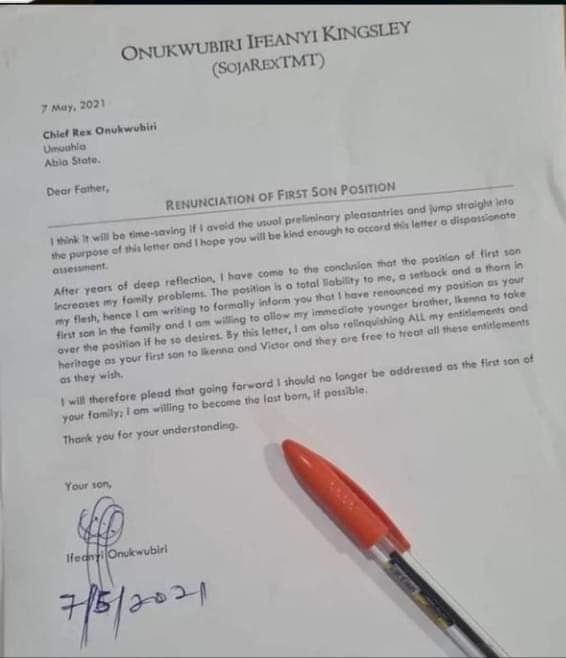
Going through my newsfeed,  I came across a letter dated the 7th of May 2021. Onukwubiri Ifeanyi Kingsley allegedly renounced his position as the first son in the family, because (as he said in the letter) the position increased his problems, increased his liability, and was a thorn in his flesh. 

I wonder if he graciously relinquishes his position out of fear of responsibilities. If this is the case, he is wrong to flee from his duties. This life is nothing but a set of examinations, tribulations and challenges, running from the one you may likely encounter superior challenges along your way. So the best solution is to face your challenges and try your best to conquer them.

Historically, in a patriarchal society like ours, the firstborn child’s role has been socially significant, particularly for a firstborn son. As a result, there are sets of expected do’s and don’ts in the lives of firstborns.

As the firstborns, our parents expect us to be 101% good. We have to set the example for other siblings; we have to be brilliant, extra careful, perfect, intelligent, great administrators, toppers in any exam, good athletes and the list goes on. The level of expectation on us is very high, and the burden on our shoulders is quite heavy.

Being the eldest son was never our choice nor our intention, but nature has its way of imposing things on us, and here we are as the firstborns, a position we will hold for our entire life. 

Moreover, our darling parents never see us the same as our fellow siblings but rather as alpha children moulded into hardworking gentlemen responsible for steering various homes’ wheels. This blend of expectation and motives sometimes stressed us, resulting in anxiety, which overclouded our verdicts. We fall prey to superfluous fear of the future, which affects our existence, dwindling our efforts in conquering dilemmas.

My advice to all the firstborns is never to see this position as a burden but rather as a blessing. Do your very best in all facets of life, and always look to the Mighty Lord for guidance. If by any chance you feel like losing hope, remember the Quran 26:62 “إنَّ مَعِیَ رَبِّی سَیَھدِ ینِ” “Indeed my Lord is with me, and He is going to guide me”. So when the lord is in control, we have to trust Him and play our part by doing our very best. 

To all the firstborns, hold your head high up. You have been endowed with qualities such as strength, struggle and some considered leadership characteristics.

May God bless our hustle, amin. God bless Nigeria, amin.

Fatihu Ibrahim sent this article via fisabbankudi123@gmail.com.

On learning to let go before it’s too late

By Aisha Musa Auyo

When I was in primary school, my grandmother visited us, and she was mesmerized by our nature-friendly environment. She said we were wasting resources by not utilizing the space with livestock. So she suggested animal rearing, that she would send a sheep first, and if all goes well, that sheep will give birth to many others, and in a few years, we will have a flock. She kept her words and sent a pregnant sheep. It was assigned to me since I’m the eldest.

The Fulani in me took over, and the bonding was natural for my sheep and me. I fed her morning and night. I brought her out and tied it with a rope in the afternoon for grazing. I then returned her to the barn in the evening. On a fateful Friday afternoon, I brought her out and tied her to a guava tree in our compound so that it would graze as usual.

I can’t recall what happened, but she cleverly freed herself. (That euphoria when a captive gains independence ). She walked, played, jumped and danced! Then, when she became aware of her absolute freedom, she began to run, somewhere far away from our house, and I followed her. The race continued, but I managed to hold the rope.

My sister went in to let my parents know of the happening. I was still holding the rope, but I fell while that ‘wicked’ sheep was still running. I was somersaulting and screaming but still managed to see my parents laughing like crazy outside. My world was spinning, and I had bruises all over my face.

Finally, when I couldn’t bear it anymore, I let go of the rope, thus the sheep, and as I managed to open my eyes, my parents were at the spot to pick me up, but still laughing at my stupidity. ‘Yar fari’ (first daughter), they all chorused! Firstborns are believed to be idiots!

They calmed me down, soothed my wounds and finally, they said, “This could be avoided. You should have simply let go of the rope and the sheep. She will come back”.

This is a life lesson I learned the hard way. I’m glad it happened in my early days of life, as within two days, the wounds healed, and all the bruises disappeared in a week. All thanks to the fruits and medication that I’ve been taking. But from that day, I learned to let go of anything I perceive as a threat to my life or my happiness with immediate effect.

My instincts always alert me of immediate danger, and I respond unhesitatingly. Sometimes even too early that people around me think I do not give people or situations the benefit of the doubt or that I make early conclusions. Still, better early than late. Letting go comes easy because I’ve learned before that holding on to what doesn’t want to stay leads to bruises, wounds and pain.

The recent trends in domestic abuse have made me think, how can we reduce this menace in the upcoming generations? How can we raise mentally sound and selfless generations that will not abuse and tolerate abuse? What are we doing in our power to sensitize our wards of this growing menace?

People, especially women, tend to hold on to their mental and physical abusers be they friends, husbands, relatives, house helps or any other person. They endure all kinds of pain and suffering while trying to hold on to what they think is theirs until they are finally bruised, injured, suicidal, or killed. That’s when they let go. No, this has to stop!

I’m not in the position to punish abusers, but the little I can do now is to enlighten you, the reader, to learn to let go of that which harms you or threaten your happiness and or well-being. Learn to follow your instincts, they are there for a reason, and most often than not, they don’t fail us.

May Allah protect us from abusers, amin. May we never abuse anything under our care, amin. May Allah give us the strength to leave that which will harm us. May we never get attached to what isn’t ours, amin. May the love and respect we give be appreciated and reciprocated, amin. May we see the light even in darkness, amin.

Aisha Musa Auyo is a Doctorate researcher in Educational Psychology. A mother of three, Home Maker, caterer, parenting and relationship coach. She can be reached via aishamuauyo@gmail.com.