Lagos State

Lagos declares end of COVID-19 fourth wave

By Muhammad Sabiu


Akin Abayomi, the Lagos State Commissioner for Health, claims that a steady decline in COVID-19 case positive has signalled the end of the state’s fourth wave.


On Saturday, Mr Abayomi made the announcement via his verified Twitter account @ProfAkinolaAbayomi, while presenting the state’s COVID-19 report for January 20.


According to the News Agency of Nigeria (NAN), the state notified the start of the fourth wave on December 7 as the virus’s daily infection rate increased.


According to Mr Abayomi, COVID-19 infection positivity rates have decreased from 29.3 percent on December 21 to 1.9 percent on January 20.


According to him, bed capacity utilization is currently at 2%, with a death rate of 0.71 percent.


On the reporting date, 46 additional infections were confirmed, bringing the total number of COVID-19 illnesses in the state to 98,284.


Since the start of the epidemic in the state, 1,023, 203 sample tests have been performed, he said.


To further minimize the transmission of the virus, Mr Abayomi recommended residents be vaccinated and continue to follow non-pharmaceutical approaches.

I’ve confidence about my 2023 presidency ambition—Tinubu

By Muhammad Sabiu

Former Lagos State governor and leader of Nigeria’s ruling All Progressives Congress, Bola Ahmed Tinubu, has expressed his confidence that he would win the 2023 presidential election, noting that stakeholders’ reactions are behind his optimism of becoming the president.

Mr Tinubu stated this when he paid a visit yesterday to Rashidi Ladoja, a former governor of Oyo State.

Mr Tinubu was quoted as saying, “Life is a challenge, and you must be ready to confront challenges and overcome. I have the confidence that I will overcome any form of challenge.

“The reactions of critical stakeholders to my presidential ambition have been very positive, encouraging and overwhelming, and these have spurred me on with the strong conviction that we would succeed and emerge victorious after the election.

“We are forging ahead, and with the strong support of the masses of Nigerians, we are going to achieve a resounding victory.”

Recall that the APC leader had told President Muhammadu Buhari that he was interested in contesting for the office of the president come 2023.

Police arrests housemaid who abducts 2-year old boy in Lagos

By Uzair Adam Imam


A 14-year-old housemaid identified as Favour Iwuozor has allegedly abducted her mistress’s two-year-old son, planning to take him to Amraku Umorsu in Isiala/Mberna Local Government Area, Imo State.


Daily Post reported that the maid took the boy from a Sunday school class in church, pretending the mother sent her, but she made away with him and started begging for alms to raise money for transportation.


The maid had identified the 2-year old abducted boy as her younger brother left behind by their parents, who she lied died in an accident in December.


Reports have disclosed that while begging for alms at Yaba, Lagos, one Victoria Nwafor, who observed that the boy was very ill, took both of them to her house in the Sagamu area of Ogun State on December 22, 2021.


Mr Abimbola Oyeyemi, the Ogun State Police Public Relations Officer, has confirmed the incident on Tuesday, 4th January 2022.


He said: “immediately the boy fully recovered, the suspect wanted to single-handedly take him to Imo State,” saying this aroused the woman’s suspicion; hence she reported at Sagamu police division on Monday.


“Upon the report, the DPO of Sagamu division, CSP Okiki Agunbiade, detailed his detectives to go and bring the girl and the little boy.


“On interrogation, the girl confessed that she was a maid to the mother of the little boy and that she left with the boy since the 19th of December, 2021, with the intention of taking the boy to Amraku Umorsu in Isiala/Mberna Local Government Area of Imo State,” Oyeyemi explained.


Oyeyemi added that the maid had confessed that “she took the baby from the church during Sunday school period, and since the Sunday school teacher knows her with the baby’s mother, she had no problem releasing the boy to her.”

MURIC mourns Prof. Hussein, Dr Datti Ahmad

By Muhammad Abdurrahman

The death of two foremost Islamic scholars, Professor Hussein Akande Abdul Kareem and Dr. Ahmad Datti, has been announced. Professor Abdul Kareem died in Lagos on Sunday, December, 26, 2021, while Dr. Ahmad Datti died in Kano on Thursday December, 30, 2021. An Islamic human rights organisation, the Muslim Rights Concern (MURIC), has described them as two giant scholarly figures.  

MURIC’s reaction was contained in a statement issued by its director and founder, Professor Ishaq Akintola, on Thursday, 30th December, 2021.

MURIC said: “Islamdom in Nigeria has been hit by the loss of two great scholarly figures who died within four days of each other. Professor Hussein Abdul Kareem died in Lagos on Sunday, 26th December, 2021 while Dr. Ahmad Datti died in Kano on Thursday 30th December, 2021.

“Professor Hussein was a former president of the Muslim Students Society of Nigeria (MSSN). He was one of the founding fathers of the Islamic Welfare Foundation (IWF), the Islamic Study Group (ISGON) and many others Islamic organisations. He was a great motivator, a team player and a transparently honest man. He was a profound ascetic who shunned worldly luxuries.  

“A professor of biochemistry, he taught and researched in several local and overseas universities including the University of Khartoum, Sudan, University of Maiduguri and the Lagos State University. He retired voluntarily in 2006 and became a full time Islamic worker. He was nominated by the International Biography Centre, Cambridge, England as the International Man of the Millenium Award in 1999. Professor Hussein died at the age of 85. He has since been buried in Badagry, Lagos State.

“Dr. Ahmad Datti was an energetic Islamic activist of no small measure. A trained medical doctor, he was the president of the Supreme Council for Shariah in Nigeria (SCSN). The deceased played a prominent role in the spread of Shariah in the Northern states of the country from 1999 onwards.

“A pragmatic Muslim leader, Dr. Datti encouraged Muslims to join politics in order to bring the teachings of Islam on probity, accountability and good governance to bear on politics and Muslim politicians. He practiced what he taught by becoming an aspirant of the Social Democratic Party (SDP) in the early 90s.

“He became a household name particularly in the whole northern Nigeria. He also participated in the activities of several Islamic organisations and he was the chairman, Board of Trustees of the Usman bin Affan Islamic Trust, Gadon Kaya, Kano. He died after a protracted illness at the age of 83. He was buried at the Tarauni Cemetery, Kano. Dr. Datti has left a vacuum that will be difficult to fill.

“The death of these two giant Islamic scholars has left MURIC in deep grief. We are devastated. We pray that Almighty Allah will overlook their trespasses and repose their souls in Al-Jannah Firdaus. We also pray that Allah will give their families the fortitude needed to bear the losses.

“As we commiserate with the governor of Lagos State, Babajide Sanwo-Olu, MSSN, ISGON and the Lagos Muslim Community on the death of Professor Hussein Abdul Kareem, we equally condole with the governor of Kano State, Abdullahi Umar Ganduje, MURIC Kano Chapter and the good people of Kano, over the demise of Dr. Datti Ahmad.”

Customs intercept guns packaged in TV container in Lagos

By Uzair Adam Imam

Officials of the Nigeria Customs Service attached to Tin Can Island Command have on Friday confirmed the interception of a 1x40ft container carrying guns and other deadly weapons.

Reports have discovered that the container owner had allegedly declared its content as plasma televisions, but the customs officers discovered it was a carton of guns.

Mr Uche Ejesieme, the Public Relations Officer of the Tin Can Customs, confirmed the incident.

“The officers intercepted a container loaded with weapons, but as we speak, what we have done as a command is that we have written to the terminal to evacuate the container immediately to enforcement unit for 100 per cent examination so that we can actually ascertain the quantity and other relevant information.

“So, as we speak, we expect the terminal to evacuate the container to the enforcement unit where we intend to strip it, and the quantity, names of people involved, and other further information would be available,” he said.

He added that, in line with service protocol, the command would inform the Customs high command in Abuja after the container had been thoroughly examined at the enforcement unit of the command.

“This is why we have not issued an official statement regarding the seizure.

“As we speak, we do not have full details of who is behind the import, country of import and the model of guns.

“All these will be made known at the end of investigations,” he added.

The customs, however, vowed to thoroughly look into the matter to its very roots and apprehend those in connection.

“Most times, the suspect you see is those freight forwarders and agents coming for examination, but we are more interested in getting to the importer and everyone involved in that criminal importation to nip it in the bud,” he assured.

Governors’ forums do more harm than good in Nigeria

By Abubakar Ibrahim

Those looking for devolution of powers to make the states more powerful than the centre had forgotten about history.

The Soviet Union (USSSR) collapsed when it gave more powers to its states.

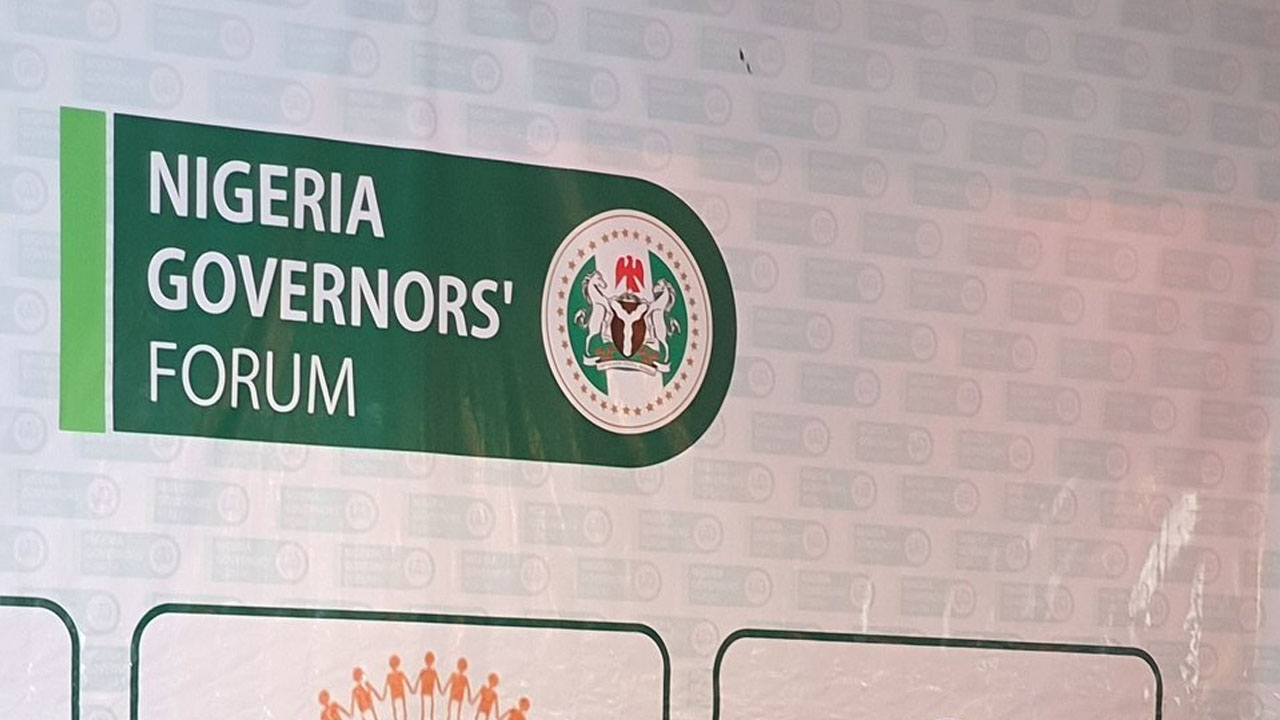
Nigeria government has given Governors’ clubs (governors forum; southern governors forum, northern Governors forum, etc.) leverage to the extent that they are now flaunting executive orders.

No governor obeyed the executive order to give monthly allocation directly to local government councils, legislature and judiciary in their respective states.

The antics of southern governors, especially of Rivers, Lagos and Ogun, will send Nigeria to its waterloo.

Governors forums have made them act as devils instead of angels. They have frustrated the inflow of funds to LGAs, state legislatures and judiciary. They have refused to pay the correct minimum wage.

Governors forums have done more harm than good. They are only good at wasting state resources in crisis, crossing the skies in charted flights attending their meetings at various locations. The worst scenario is they will leave their states at the mercy of nobody. Hence, this stagnates work until they are back.

It is time for these unproductive governors forums to be abolished. We like to see state governors behaving like former governors with integrity, people like late Governor Jakande, who had never travelled outside Nigeria and never run away from his state responsibilities throughout his tenure.

Governors like Audu Bako, through under a military regime, would only travel out to bring back goodies for the ordinary person, such as “irrigation schemes” that Kano people are still benefiting from after all these long years. It is a legacy he left behind.

Nigerians should come back from supporting politicians who are only good at building themselves and championing the course of disintegration.

Abubakar Ibrahim can be contacted via ai869802@gmail.com.

IGR, VAT controversies: a bright future for northern Nigeria

By Muhammad Sagir Bauchi

Adam Smith, in “Wealth of Nations”, while discussing what he tagged as “Canon of Taxation”, outlines some principles he describes as “Principles of Good Taxation”. These principles include fairness, certainty, convenience and efficiency. By the principle of fairness, he meant that the taxpayer’s condition should be considered before enforcing tax on him; this is in addition to the ability of the taxpayer to pay the tax. By certainty, the taxpayer should be informed on why he needs to pay his tax and how such taxes are levied on him. By the convenience, he refers to how the taxpayer finds the process of paying the tax as easy as it is. The final principle of efficiency described how the tax payment should have no negative effect on the distribution of resources in the economy.

In a short story, a man came to someone and asked him, “what should I be giving you every day?” He replied: “Sand”. So, as requested, whenever he meets that person, he picks up sand on the ground and hands it over to him. 

One day, that man came to him to collect the sand, but he looked at him abruptly and said, “Why can’t you bend down and fetch it by yourself? Why should I be giving you what you can have if you work hard?”

Recently, there has been an uproar between Federal Inland Revenue Services (FIRS) and Ekiti State Government. As a result, the state government came up with a law regulating Value Added Tax (VAT) collection. With the new law, the Ekiti state government will have absolute power to utilise the VAT generated from that state instead of the usual remittance to the Federation Account! Ab initio, a State high court granted an order to the Ekiti government to move on with their new VAT policy since they have already enacted a law to that effect. Still, a move by the FIRS through the Appeal Court blocked Ekiti State Government from putting the law into effect.

In the beginning, the will to challenge the Federal Government on VAT collection by the states was spearheaded by a single state. Still, by looking at the fruition that may come out from the success of such a legal battle, some states from the South-South joined Ekiti in the suit, thereby sending their representative to the Appellate Court.

Before going further, we need to understand what VAT refers to; for that, we will shed more light on the desperation and motives of these states to have the right to deduct VAT within the economy of their states.

According to FIRS, VAT is “a consumption tax paid when goods are purchased and services rendered“  to this, “all goods produced within or imported into the country are taxable except those specifically exempted by the VAT act”.The authorities responsible for the deduction of the VAT are; indigenous companies with non-resident companies within the country; government ministries, statutory bodies and other agencies of government; and companies operating in the oil and gas sector. These are the statutory bodies saddled with the responsibility of deducting the VAT in Nigeria.

From 2016-2020, Nigeria recorded more than five trillion naira from VAT deduction, but surprising, about three point nine trillion of that amount came from Ekiti and Lagos State. And as usual, the whole amount was shared between the three tiers of government with some amount given to the FIRS for its VAT deduction services! Naturally, human beings are similar to those two people mentioned that one gives sand and the other received, which at the end one expressed tiredness. 

Sentiment aside, it is hard to imagine how a state or region would work diligently harnessing such a hefty amount, in which, in the end, it will be shared with others that contributed little out of it.

Before discovering oil in commercial quantity, the Northern Region of Nigeria was the main contributor to GDP growth, which means that the agricultural sector was the primary source of foreign exchange to the country. But today, despite the contribution of agriculture to the GDP, Northern States rely primarily on what is given from the federation account. Today, it is no longer a secret that only some few Northern states can stand on their own to pay their workers salaries and wages, fulfil their financial commitments, not to mention financing their annual budgets. Most of them would go broke and insolvent if the federal government decided to withhold their monthly allocation for a single month!

To some analysts, the action of Ekiti and Lagos State Governments is nothing but a display of absolute selfishness. Still, to me, it is nothing but expressing their worth and importance to their counterparts.

Amidst this VAT controversy, a new statistical report on Internally Generated Revenue (IGR) of the 36 states of the federation for the fiscal year of 2020 was released. Lagos State is topping the list with about 418bn, Rivers with 117bn and Delta as the third. The report stated that only two Northern States are among the top 10 states with highest IGR, that’s Kaduna and Kano State. And it is not surprising since Kano is the commercial hub of the North. But, surprisingly, even the commercial nerve of the North is generating less IGR than Kaduna. Are commercial activities taking place in Kaduna greater than that of Kano? This shows that there’s transparency and accountability in Kaduna state more than that of Kano.

If one analyses that IGR statistical report and the five-year VAT table, he will weep for the sorry state of the northern states! And the implications of the possible ruling favouring those two states (Ekiti and Lagos) by the Appellate Court against the federal tier, then not only the northern states, but the remaining 34 states would find themselves in deep economic crises.

Then, what should the Northern policymakers do to improve their IGR and move away from dependence on monthly federal allocation?

I foresee a bright future for the northern states out of this development if only their policymakers pursue policies with a serious positive impact on the income of its majority (who are peasant farmers) other than policies that could only favour the wealthy and those in the government. For instance, if the agricultural sector will be given proper attention, thereby coming up with policies that could boost commercial farming through accessibility to quick/soft agro related loans, hybrid seeds with the ability to stand these ever-changing climatic conditions, mechanised farming equipment, setting up subsidised agro-allied chemical industries in the region, provision of good accessible roads connecting all the remote areas, all year round farming and a fair export zones, with these, its unemployed youths will surely seize that opportunity and venture into agro-businesses without looking up to the government for job opportunities in the government sector. But imagine an agricultural intervention program meant to cushion farmers difficulties is deeply flawed in I don’t care attitude of government officials, deliberate delays and nepotism, in the end, such interventions may not meet the majority of farmers on time!

Other regions in Nigeria cannot feed themselves without the support of the Northern farmers. So, why should we be panicking when they try to withhold their money? Why can’t the North stand up and bring out those opportunities? 

Despite the insecurity in almost all parts of the Northern region, one fact that can never be denied is that the area is blessed with arable land, enough for cultivating in dry and rainy seasons. Therefore, adequate farming inputs and machinery should be provided, either in loans or at a subsidised rate by the Northern states governments.

Curbing insecurity is another point that all the governors of the 19 northern states should work hand-in-hand to achieve.

Senators, Representatives and States Assembly members should focus on things that harmonise them with their governors to formulate policies that will boost their states IGR, rather than engage in their usual political war, which deprives millions of citizens of opportunities that may bring development to their livelihood and the region at large.

The impact of Small and Medium Enterprises (SMEs) in boasting every economy can never be neglected in every sound economy. But in northern Nigeria, those SMEs are either forced to shut down due to unfriendly tax policies or poor environment to carry out their activities. So, those SMEs should be given more reason to be alive than to seize to exist, thereby granting them soft loans with zero interest or a low interest rate and a friendly environment to carry out their activities.

Most of those states with high IGR have different means of gathering or sourcing revenue within their states. But in the North, both the tax collectors and taxpayers are not up to their responsibility. Therefore, a transparent and professional agency should be enacted in every state with the sole aim of creating awareness on the importance of paying tax, why they should be taxed and the transparent manner in which their tax is utilised.

Lastly, the principle of fairness, certainty, convenience and efficiency should be put into practice to generate more tax to boost IGR for those states.

Sagir writes from Bauchi State and can be reached via ibrahimsagir1227@gmail.com and 07019718681.