Katsina

Corps members advised to desist from seeking relocation

By Muhammadu Sabiu 

The 2023 Batch ‘B’ Stream II Corps members deployed to Katsina State have received advice from retired deputy director of the National Youth Service Corps (NYSC), Fadimatu Muhammad, to refrain from seeking relocation and instead embrace their mandatory one-year service in the assigned state. 

This advice was given during a lecture at the NYSC permanent orientation camp along Mani Road in Katsina. With a total of 1,070 corps members inducted on August 18, the three-week orientation course aims to provide participants with a solid foundation for their upcoming service year. 

Mrs. Muhammad emphasised the significance of unity among Nigerians and explained that continuous requests for relocation could undermine the very purpose of the NYSC scheme. 

During her lecture, Mrs. Muhammad delved into the historical background, mission, and vision of the NYSC, urging corps members to participate actively in the in-camp Skills Acquisition and Entrepreneurship Development (SAED) program. 

She stressed that cultivating relevant skills would be essential in a landscape where traditional white-collar jobs are becoming scarcer.

Katsina gov’t reacts to receiving palliative from FG

By Uzair Adam Imam

The Katsina State Government disclosed that it received the sum of N2 billion out of the N5 billion palliative approved to states by the federal government.

The state Commissioner for Information, Culture and Home Affairs, Malam Salisu-Zango, relayed the clarification to journalists in a statement on Wednesday.

Zango’s disclosure was in reaction to the insinuation that the federal government released N5 billion to the state.

He said that: “The attention of the state government has been drawn to news going round in the media that N5 billion has been released to states by the Federal Government for palliative.

“I wish to state that, [the] Katsina State Government received only N2 billion for procurement of grain to be distributed to the citizens of the state”.

Zango further stated that the state government had so far utilised N2 billion to procure 40,000 bags of rice for distribution to vulnerable persons in all the polling units across the state.

He added that the government would also utilise the next tranche of the fund from the federal government to purchase maize for distribution to deserving households.

How Naira redesign, cashless policy, affect prices of farm produce in Katsina

By Aliyu Ya’u Baraje

I have consistently written against the greediness of Nigerian agricultural produce suppliers since the implementation of the cashless policy. I am now fully convinced that a typical Nigerian is potentially greedy and corrupt, especially when presented with the opportunity.

There is no doubt about the scarcity of Naira, which economics has taught is a characteristic of money. This scarcity has created hardships for Nigerians, particularly for rural dwellers whose voices are hardly heard. This is partly due to a lack of modern education, IT literacy, and little or complete absence of media coverage. When visited, rural areas now seem like mourning grounds, faces barely smile, just silence, and black faces.

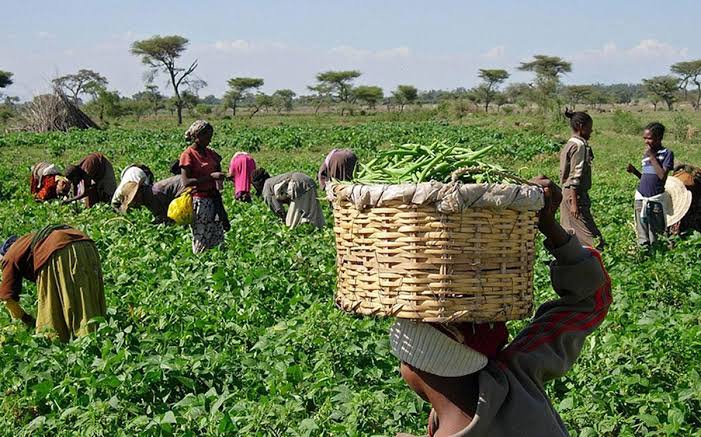
As a farmer and rural dweller, I feel it’s my duty to bring to light the ongoing exploitation of local farmers by produce suppliers. These suppliers are taking advantage of the cashless policy to profit at the expense of farmers whose main source of income is selling produce or livestock.

The prices of produce and livestock have plummeted dramatically. For example, the price of maize per 100kg has fallen from 22,000 to 13,000, rice from 26,000 to 15,000, beans from 42,000 to 25,000, and soybeans from 32,000 to 18,000. This trend is also seen in other produce such as millet, groundnuts, sesame, sugarcane, yams and cassava.

Farmers are offered two prices, one for a cash-and-carry deal and another for bank transfers. Those who need cash are given the lowest price, while those who require a transfer receive an increase of about 3,000 to 4,000.

This exploitation is unacceptable, especially since prices of other commodities have skyrocketed. I stand against this mistreatment of farmers and the erosion of their livelihoods.

I am from the southern part of Katsina State, which includes the local government areas of Sabuwa, Dandume, Funtua, Faskari, Danja, Qafur, and Malumfashi. This region is renowned as an agricultural hub not only in Katsina State but throughout northern Nigeria. This is due to the fertile land and extensive use of industrial

fertilizers and manure. The local government areas are rivaled only by the Saminaka, and neighboring local government areas.

Those who are familiar with this region will attest to the fact that its inhabitants are engaged in farming activities, not just subsistence farming but also what could be described as mechanized farming. In this region, farmers producing hundreds of tons or thousands of bags of the listed produce can easily be found. If one is a resident of this region, he is either a farmer or from a farming family. Even those who have switched to other businesses or occupations, most of their extended families are still farmers.

Given this, it should not be surprising that the exploitation of farmers by suppliers is a source of concern for those in the region.

2) In today’s Nigeria, the prices of processed and refined commodities have risen dramatically, with some even doubling, tripling, or quadrupling. The price increase for some commodities is so significant that it’s difficult to describe. So, why are farmers the only target for this exploitation?

3) In southern Katsina State, farming is done on a large scale, making it more of a business. This leads to the excessive use of agricultural chemicals, the prices of which have skyrocketed multiple times. For example, NPK fertilizer is sold for 32,000 Naira, Urea is sold for 22,000 to 23,000 Naira, Moroccan OCP (mixed fertilizer) is sold for 15,000 to 17,000 Naira, and the locally made Dan-Buhari fertilizer made from Kankara Local Government is sold for 10,000 to 15,000 Naira. Given these high prices, it’s understandable why a farmer would not be happy with selling their produce for less than 15,000 Naira.

Moreover, the use of tractors and other heavy engines for farming activities such as harrowing, tilling, harvesting, and transportation requires diesel, which now costs over 900 Naira per liter. The use of small equipment for dry-season farming, mobilization, pesticides, and herbicide spraying also requires petroleum, which now costs between 350 and 400 Naira. The prices of other chemicals such as pesticides, herbicides, and preservatives have not only doubled but have tripled or even worse.

This means that when a farmer who needs cash takes their produce or livestock to local markets, they feel like they are being shortchanged or receiving only a fraction of what they spent months or years nurturing. As a result, many farmers go home feeling like they have been robbed and have nowhere to turn for help

4) I seek to draw public attention to the exploitation of farmers in Southern Katsina state. The rise in prices of agricultural chemicals and equipment, along with the exploitation of farmers by produce suppliers, have led to a situation where farmers are not able to make a fair profit from their hard work. I categorizes those who are happy with the situation into two groups: those who are exploiting the farmers for their own gain (like suppliers) and those who are not involved in farming and only care about purchasing cheaper produce for domestic consumption (the consumers).

5) It is unfortunate that the farmers who work hard to produce the commodities are being exploited by the suppliers, hoarders, and processing industries. The lack of government price control mechanisms, excessive taxes and restrictions on foreign goods, and competitors. The selling of finished products at high prices, even higher than those imported from other countries has shown that farmers are intentionally targeted. This creates a situation where the farmers receive low prices for their produce while the final products are sold at high prices, leaving the farmers with little profit and often feeling exploited. It is important to address this issue and find ways to support and protect the livelihoods of local farmers

6) The exploitation of farmers in Nigeria has become a major concern as they are being targeted by suppliers, hoarders, and companies. The prices of agricultural chemicals and equipment used in farming have skyrocketed, making it difficult for farmers to make a profit from their produce. The lack of government price control and foreign competition, as well as excessive tax charges, have added to the farmers’ burden. Despite the high prices of commodities, the owners of processing, refining and packaging factories have not reduced their prices (per kg from suppliers), and instead sell the finished products at exorbitant prices. This has made life in rural areas even tougher, as the local farmers are unable to compete with foreign imports and are being forced to sell their produce at low prices. The suppliers have also adopted a cashless policy, which has made it difficult for farmers in rural areas to receive payment for their produce. The lack of recognition of wired transfers and poor network and electricity coverage in rural areas has further complicated the situation.

It’s important for the government to consider all factors and individuals, including rural settlers, when making decisions on the cashless policy. The government should strive to ensure that all citizens have equal access to financial services, regardless of their location.

Aliyu Yau Baraje, Dandume Local government area Katsina. He can be reached via: aliyuyau900@gmail.com fb: Aliyu Baraje
Jubilation in Katsina as 13-year-old girl memorizes, writes Qur’an in 4 years

By Uzair Adam Imam

Zuwaira Ahmed, a 13-year-old girl, from Katsina state has memorised and written the complete sixty sections of the Holy Qur’an by heart.

The girl, adored and admired by many, hailed from Kagara village of Kafur Local Government Area of the state.

The Daily Really gathered that Zuwaira memorised the Holy Qur’an in four years, the development which her parents said was a blessing to them, let alone the girl.

At the Walimah occasion on Sunday, organised to honour the girl, the district head of Mahuta, Alh. Bello Abdulkadir, has commended the girl and urged parents to continue supporting their children towards such a noble cause.

Abdulkadir also commended her parents, teachers and community leaders in what he described as proper upbringing.

Also speaking, the Chairman of Kafur LGA, Alh. Garba Abdullahi-Kanya, assured support for her education at secondary and tertiary levels.

Qur’an is the Muslim Holy book revealed to the last prophet and messenger of Allah, Muhammad, peace be upon him. Muslim find it interesting, appealing and a source of blessing to memorize its whole content by heart.

Suspected bandits kill councilor, abduct wives

By Uzair Adam Imam

A newly-elected councillor in Katsina State was gunned down as bandits rampaged through Gozaki town of Kafur local government area of the state.

The late councillor, Alhaji Nasiru Magaji, was killed in his residence in the wee hours of Wednesday.

Multiple sources confirmed the incident, saying the bandits had also abducted the two wives of the slain councillor.

A resident, Abdullahi Gozaki, said the bandits, who were about ten stormed the community, killed Magaji and abducted his wives.

However, the wives have reportedly regained freedom without any ransom.

“They attacked in the early hours of today (Wednesday) around 12:30 am, killed the councillor and abducted his two wives but later sent them back home,” he said.

Phone snatching exacerbates in Kano

By Hussaina Sufyan Ahmed

Kano is one of the states that records fewer security challenges in the northwestern part of Nigeria. The relative security in the state is an indication that not all northern states experience insecurity like the current happenings of kidnapping, banditry and armed robbery, as seen in Kaduna, Zamfara and Katsina. However, this calm is coming to an end considering the most recent menace of stabbings in the state.

Recently, people have been victims of phone snatching in Kano. This has become general mayhem in the state in that people do not take out their gadgets when going out on night strolls, and for some students, no more night out strolls anymore.

This problem is gradually becoming a national one. Families continue to bereave as their loved ones are brought to their end in their pool of blood due shed by snatchers of phones, laptops, wallets and other portable valuables.

According to the Daily Post, on July 4, 2021, an event occurred at the bridge undergoing construction close to Kantin Kwari market. The phone snatching brought about the death of a man called Umar Muhammad, staff at the National Commission for Museums and Monuments.

The most recent victim was Muhammad Sulaiman, a newly-wed schoolteacher stabbed to death in front of his wife around the Sharada industrial area on September 20, 2021.

These happenings continue to occur despite the various safety measure of the government, such as Karota agents, vigilante groups, others. Thus, people wonder what these security personnel do daily.

Phone snatching is usually carried out at night and around isolated pathways. In rare cases, it happens in broad daylight. The crimes occur in places like under the bridges, lone paths that lead out of POS points, ATM stations, children parks, corners of streets and even on roads without lamp-lights.

For the above reasons, security experts suggest some preventive measures that include:

When walking, stay very conscious of who is trailing you and of the environment around you. During this period, one needs to be very aware of who is behind, beside or ahead of them. Often, when at a crowded place, crime culprits hardly succeed or they get apprehended for it.

Another precautionary measure is to have an alternative phone which is very cheap and look simple.

Where will Buhari retire to?

By Ahmadu Shehu, PhD

Since The Daily Reality has become the darling medium through which northern elites are called to task, I would instruct them to extend a short message to President Muhammad Buhari this weekend. Although Nigerians are used to the deafening silence of this administration to most of our perils and concerns, the president needs to be reminded of a few disturbing, foreseeable facts.

Let me first state that the people of this country, especially his brothers and sisters in the north, can’t wait to see the end of his rule. His ethnic group, the Hausa-Fulani, have carried his cross for too long. For over a decade, they gave their lives, wealth and resources for his candidature, and for seven years, they bore the blames, stereotypes and animosities for his presidency. What is their gain? An avoidable but seemingly inevitable genocide. If the president does not know, I will tell him that the people of this region are tired! They are no longer looking for what he can do for or to them. They are only anxious to survive the remaining days.   

I want the president to observe a few things. First, all Nigerian leaders lucky to have left the Villa alive went back to their hometowns after their tenures. For instance, Shehu Shagari, who was overthrown by then General Muhammadu Buhari, moved permanently to Shagari, securing a serene, fruitful life after that. While in retirement, Shagari remained relevant and served in various traditional positions within the Sokoto Caliphate. His love for his people, his engagements with his roots throughout his career, his pride in his people and culture and constant, persistent and proud leaning to his region endeared people to him even after his tenure. That love held him physically and psychologically intact, made him relevant and happy all through his old age.  

General Ibrahim Badamasi Babangida, who succeeded Gen. Buhari, retired to Minna, his birthplace from where he and his wife established great organizations that engendered socio-economic development. As a result, Babangida’s home became a centre of excellence in Minna metropolis, and people trooped to his doors for all kinds of support and favours.

General Abdussalami Abubakar became the Head of State after the death in office of Gen. Sani Abacha. Abdussalam followed the footsteps of his predecessors and retired in Minna, his hometown. This was possible for the two Generals only because of their good to their people and region. To date, Niger and indeed the North-Central are thankful for their service as Heads of State. They gained relevance and recorded developmental strides hitherto impossible without the emergence of their worthy sons.   

Then came Olusegun Obasanjo, who returned to power for the second time. After eight years in office, Obasanjo moved to Otta – not even Akure – to start a new life as a statesman. While Yar’adua died in office, his successor, President Goodluck Ebele Jonathan, immediately vacated Asorock for Otuoke, his birth village and assumed his gentle duty as the breadwinner of his people and region. Jonathan has was devilishly maligned as the enemy of the north, the clueless president of the country. But he ensured that the Niger Delta amnesty program succeeded, for he was conscious of life after office in the creeks. He, therefore, begot for himself and his people a place to live in peace. 

Here at home, the breadwinner of Adamawa state, former vice president, Alhaji Atiku Abubakar, ensured that the state’s economic strength is sustained. He established institutions, provided hundreds of thousands of employments, empowered businesses and established banks for entrepreneurs and start-ups. Atiku Abubakar built his retirement home in Jada and moved his business headquarters to the state. He ensured that human development services, such as education, healthcare, media and IT industries only obtainable in the cultural West are brought home to the doorsteps of his compatriots. Thus, he was able to stay at home and proceed with his political career gracefully.  

But with all the situations in the northwest, especially Katsina – his home state – and Kaduna – his preferred haven, where does President Buhari intend to retire and spend the rest of his life? For one, at 80, Buhari will be the oldest Nigerian president to leave office and probably the sickest at that weak point of human life. That is the moment he needs people the most and will undoubtedly go through the most painful retrospections of his administration’s actions and inactions. Then, he would face realities – poverty, inhumanity, misery, deprivation, etc. – that have become the norm on Nigerian streets. At that point, Buhari would need Nigerians, and Nigerians would not need him for anything.

The excoriating economic disaster in Buhari’s northwestern region today has not been seen in a long time. Thousands of people are homeless, hopeless and desperate for food and shelter. In Daura, for instance, hundreds of thousands of youth are unemployed. At the same time, his close relatives and families have bought over most farms and grazing lands around the emirate, extending the wicked hands of poverty to more people than ever. As it stands, hundreds of thousands of people are fleeing this region for safety, as kidnapping and banditry have overtaken citizens’ daily lives. Worse still, the president’s disposition and sheer lack of concern on anything “north” make it impossible for him to enjoy his cult-like mob that kept his military retirement years afloat.

Sadly, there is no going to be Buhari the messiah, Buhari Maigaskiya or Buhari jagoran talakawa. There will be only one Buhari in the world: the one who became president and failed to help his people. The one that has disappointed his most loyal supporters; the messiah that couldn’t save his people from hunger, deprivation and poverty. The Buhari who oversaw the worst economic period of his country. That Maigaskiya supervised the most criminal and cruellest regimes of corruption. The one that promised heaven but gave hell. How life looks for someone at that age in this condition will be very interesting to see.

Dr Ahmadu Shehu is a nomad cum herdsman, an Assistant Professor at the American University of Nigeria, Yola, and is passionate about the Nigerian project. You can reach him at ahmadsheehu@yahoo.com.

Waiting for repentant bandits

By Ibrahim Mustapha

The war against Boko Haram is nearing an end. The news emerging daily that many members of the deadly group are surrendering is cheering. However, mixed reactions have continued to trail their repentance. Since the group appeared to wage war against Nigeria, Boko Haram is reported to have killed over 100,000 Nigerians in addition to displacing millions of others. However, our committed and gallant soldiers deserve a pat on their back for ensuring they sustained the onslaught against the insurgents.

At least, the northeastern states, especially Borno, which is ravaged by the group’s activities, are heaving a sigh of relief after many years of horrible experiences. For the group members believed to have a strong link with ISIS to backtrack, repented and embraced amnesty, this is an indication of victory over them. Also, in a country overwhelmed by many security problems, the news of their repentance is a welcome development.

Ironically, while many Boko Haram members are surrendering and the government is rolling out programs to rehabilitate them, bandits in the northwestern states inflict more harm on the helpless, poor communities. In Kaduna, Katsina, Zamfara and Niger states, bandits have become kings. They impose taxes and only allow local farmers to harvest their crops if certain levies are paid.

In the last three months, there have been increasing cases of students’ abduction for ransom. The continued abduction of students has forced governments to close schools with dire consequences to the education development of the region. Sadly, these daredevil bandits have continued to rake billions of naira from the victims’ low-income families. Disturbed by the continued killings of his people, Governor Aminu Bello Masari of Katsina State recently directed his people to arm and protect themselves against the rapacious bandits. However, Governor Masari’s self-defence statement indicates the government’s failure or inability to protect the lives and property of Nigerians as guaranteed by the constitution.

The last straw that broke the camel’s back was the recent shameful invasion of the Nigerian Defence Academy (NDA) by bandits. Whether it was a security breach as alleged by the military or not, the audacity of those bandits proved the poor security network in our military formations. The unfortunate attack should serve as a wake-up call to the government that, like Boko Haram, the bandits are not only attacking soft targets but also highly secured places.

Ibrahim Mustapha writes from Pambegua, Kaduna State. He can be reached via imustapha650@gmail.com.

Are Funtua communities this vulnerable?

By Umar Haruna Tami

We have already lost count of how many times kidnappers came and abducted people from different locations in Funtua. Still, the ease with which they carry out their operations day by day is alarming. The two successful kidnappings that occurred in the past weekend – Saturday’s in a single house near GRA, Sunday’s in mass in Sabuwar Abuja – symbolise the fragility of the security agents that are meant to protect the town and its people from these monsters.

The security agents and the residents of almost every community have already been defeated through fear. Even a rumour of kidnappers’ presence sends fear around the town and that with a single gunshot, everyone would end up running for their life. Even the “‘Yan Karota” volunteers’ confidence to confront the monsters has since been defeated upon realising that the machine guns the kidnappers carry cannot, in any way, match the plug-bulleted ones they have. Thus, they too run for their lives, even though what they do defines good citizenship.

So a city as big as Funtua, with routes linking it to many towns and villages from East, West, South and North, is under security threat. These links make it easier for the kidnappers to make away with whoever they have successfully carried with little chance of being tracked and attacked. This also makes their operations tricky to thwart in poor-populated areas.

They failed to conduct only two operations that targeted Rabe Sale’s children and that of NAK’s family. But the abortions of these two kidnap attempts have anything to do with the connection between the would-have-been victims and the reserved soldiers brought to the town for special operations simply because they are aristocrats.

But what would be the fate of community members that have already been defeated by the fear of being potential victims of kidnappers even when they shut and lock their doors but have no connection to the soldiers for emergency aid and one of those elites happens to not live among them? The latest kidnap of over ten people in Sabuwar Abuja at only 10 pm — thank God that the captors released them — signifies nothing bolder than the community’s vulnerability and the limited chances the sophisticated security agents have to abort their operations or exchange fire with them. But, on the other hand, they now have the assurance that it wouldn’t cost them much to do whatever they want and at any time!

What Funtua communities need now, just as the other Northern communities need, is making available the reachable lines of those special forces for emergencies. Second is the provision of more of these agents—both the soldiers and policemen — with weapons they can use to repel the kidnappers’ attacks in areas not far from where their help could be needed in time. Third we, the community members, need to reduce the extent of our collective fear for the kidnappers that we can stand up to them, not always run away. It is time for us to start being responsible for where our political choice has landed us.

Umar Haruna Tami wrote from Funtua, Katsina State. He can be reached via umartami1996@gmail.com.

20 suspected internet fraudsters arrested in Katsina — EFCC

By Muhammad Sabiu

Twenty suspected internet fraudsters, otherwise known as Yahoo! Boys, have on Friday been nabbed by the Kano Zonal Office of the Economic and Financial Crimes Commission in Katsina State’s Dutsinma Local Government Area.

Announcing the apprehension via its official Facebook handle, the Commission said, “The suspects who were mostly youth in their early twenties were arrested by a team of operatives of the Commission following intelligence indicating that some Internet fraudsters were perpetrating fraudulent activities around Dutsinma.”

Investigations into the matter are ongoing as, according to the Commission, the suspects would be charged to court in due course.

There has been an increase in cybercrimes in recent times as the Commission has on several occasions made similar raids and apprehension in different parts of the country.