Kashim Shettima

‘It’s high time we ended tanker explosion in Nigeria’—VP Shettima

By Anwar Usman

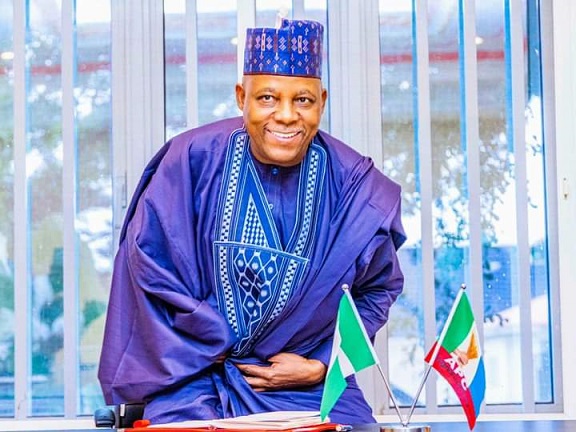
Vice President Kashim Shettima sympathized with the victims and government of Enugu State over the fuel tanker fire which claimed lives in the state.

He added that it is time to bring an end to avoidable tanker accidents and explosions.

The fuel tanker had on Saturday skewed off course and burst into flames along the Ugwu-Onyeama section of the Enugu-Onitsha Expressway.

In his condolence message to those who lost their lives and injured, signed by the spokesperson to the vice president Stanley Nkwocha, the vice president noted that President Bola Tinubu was very concerned and disturbed by the incident and other tanker explosions in recent times.

He said, “It was with a heart full of sadness that I received news of the fuel tanker explosion that occurred on Saturday, January 25, 2025, in Ugwu Onyeama Local Government Area of Enugu State. I am deeply saddened that another tanker accident would lead to the loss of lives of Nigerians, leaving others injured in the gory incident.

“President Bola Ahmed Tinubu is seriously worried by the frequency of these tanker explosion incidents on public roads and residential areas, which are ordinarily avoidable. Just as he has directed the relevant agencies in his message of condolence on Sunday, I want to reassure Nigerians that the government will stop at nothing to put an end to tanker accidents on our roads”.

The vice president promised that following Mr President’s directive, the government will engage relevant agencies, including the Federal Road Safety Corps (FRSC), on possible ways the road traffic authorities, as well as federal and state transportation ministries can cooperate to urgently forestall further tanker accidents and explosions across the country.

World Economic Forum: Pan-Africanism in VP Shettima

By Lawan Bukar Maigana

I have always maintained the opinion that aid is a mechanism used by the so-called powerful nations to underdevelop weaker countries—though not deliberately, especially in African countries where insecurity is caused by terrorism or ethnic cleansing, which is a crime against humanity or genocide.

In Africa, particularly Nigeria, our major problem is poverty—a singular issue that has metamorphosed into intractable insecurities, including but not limited to the Boko Haram insurgency, banditry, and kidnapping, among others. Many people might argue that Boko Haram and the Biafra movements are ideological in nature, but the truth is that those ideological elements have long since faded, leaving the agitations as an economic venture for certain nefarious countries and individuals to exploit.

They recruit jobless, uneducated, desperate, and misguided young people into their criminal community to kill not just their enemies but anyone who upholds peace and stability. I was born and raised in Maiduguri, and I’ve never left the ‘Home of Peace’ even for a day because of the insurgency—not even when it was at its peak. Therefore, I am qualified to say a few things regarding the phenomenon. We’ve witnessed how young people were recruited into the deadly and infamous sect known as Boko Haram.

Some were paid 50k weekly, some received 150k to 300k monthly, depending on the nature of the work assigned to them, and some of the payments were in hard currencies. The same thing happens in the North Western region of Nigeria, where banditry and kidnapping thrive in the open — dozens of lives are lost, and women and children are left in depression, poverty, and psychological trauma. 

This has attracted many INGOs and subsequently led to the formation of local NGOs in the country, whose assistance is largely unsustainable and dependent. They provide cash and food items, with only a few engaging in ‘goat and sheep empowerment’, similar to the initiative recently unveiled by the Kano State Government. That initiative, too, is ineffective, as more than two-thirds of the beneficiaries, if not all, sell these items at the distribution venue. This arises because it is aid, not a partnership for economic growth.

Vice President Kashim Shettima, who is attending the World Economic Forum in Switzerland, shares my opinion. His remarks reflect a deep understanding of global economic dynamics and the need for sustainable development in Africa. Leaders like him talk about Nigeria’s untapped potential as a partner for global powers and investors. 

Instead of perpetuating the cycle of aid dependency, he spoke about the urgent need for the world to recognize Nigeria’s potential as a hub for industrialization, which would provide opportunities for millions of youth and contribute to global economic growth.

Africa, and particularly Nigeria, has long received foreign aid, often with good intentions but yielding unsustainable results. Aid might address immediate crises, but it does not tackle the root causes of poverty or unemployment. Instead, it fosters dependency, undermines local capacity, and creates temporary solutions. As Sen. Shettima’s example illustrates, Nigeria does not need fish handed to it; it needs to be taught how to fish through strategic partnerships that prioritize industrialization, skill development, and innovation.

By working together to build industries, Nigeria can unleash the potential of its vast, youthful population and ensure long-term, self-sustaining growth.

World powers and private investors must recognise Nigeria for what it truly is: a land of opportunity. With a population of over 250 million, Nigeria represents one of the largest consumer markets globally, along with an abundance of natural resources and human capital. Establishing industries in sectors such as manufacturing, technology, agriculture, and renewable energy would not only tackle the country’s unemployment crisis but also offer global investors access to untapped, profitable markets.

Partnerships that create factories, manufacturing plants, and tech hubs will empower Nigeria’s youth, reduce migration pressures, and ultimately benefit the global economy. The need for industrialisation cannot be overstated. Nigeria’s youths, brimming with talent and ambition, are eager to contribute meaningfully to the nation’s development. 

However, without opportunities, many remained unemployed, looking forward to migration in search of greener pastures. The international community can help transform Nigeria into a global production hub by establishing industries and leveraging its demographic dividend to drive innovation and development. This is the position of Sen. Shettima, who advocates for economic empowerment rather than reliance on foreign assistance.

Furthermore, industrialisation offers a win-win scenario for both Nigeria and the world. While Nigeria gains employment opportunities, technological transfer, and a diversified economy, global powers and businesses secure access to a vibrant and emerging market. Beyond economic benefits, these partnerships strengthen political stability, reduce security threats, and position Nigeria as a strong ally on the global stage. 

Sen. Shettima’s representation at the World Economic Forum emphasised this potential as he spoke about Nigeria’s challenges and its vast opportunities for collaboration and growth.

The message is that Africa, particularly Nigeria, does not require handouts. It needs partnerships that promote self-reliance, innovation, and sustainability. The world must transition from giving aid to creating opportunities. Let industries rise, let innovation flourish, and let Nigeria demonstrate to the world that, with the right tools and partnerships, it can be a formidable force. 

Lawan Bukar Maigana, Daily Trust’s 2024 Unsung Hero, writes from Maiduguri, Borno State, and can be reached via email: LawanBukarMaigana@gmail.com.

Tax reform bills: VP Kashim leads urgent NEC meeting with state govs

By Abdullahi Mukhtar Algasgaini

Vice President Kashim Shettima is chairing the 147th Meeting of the National Economic Council.

The meeting is holding at the Council Chamber of the State House Abuja and is being attended by governors and some deputy governors from across the 36 states as well as some ministers, heads of agencies, and presidential aides.

In its 146th meeting held over three weeks ago, NEC issued three states and the FCT one week to submit their reports on the establishment of state police.

It had also expressed reservations about the new Tax Reform Bills and appealed to President Bola Tinubu to withdraw them to allow for wider consultations.

The 147th meeting is expected to consider the reports on state police and also make its position known on the matter.

VP Shetima hails BUK for excellence in education, fair admission policies

By Uzair Adam

Vice President Kashim Shettima has commended Bayero University, Kano (BUK), for its commitment to delivering quality education and maintaining equitable admission practices over the years.

The vice president, represented by Dr. Nurudeen Zauro, Technical Adviser to the President on Development Finance and Financial Inclusion, gave the commendation while inaugurating the BUK Class of 2004 Reunion at the university’s Main Campus on Saturday.

He praised BUK for its longstanding reputation for unbiased admission policies, emphasizing that the university has consistently offered opportunities to students regardless of religious or ethnic backgrounds.

“The contributions of Bayero University, Kano, in providing quality education for all Nigerians and its track record of equitable admission policies are truly commendable,” Shettima stated.

Highlighting some challenges faced by marginalized groups, including women, he underscored the need for innovative interventions to address systemic inequalities.

He urged participants at the reunion to leverage their expertise, networks, and resources to foster impactful solutions.

Shettima added, “With every challenge comes an opportunity. Together, as ambassadors of this institution, we can develop groundbreaking strategies and drive meaningful change. That is the essence of today’s reunion.”

The vice president reiterated the Tinubu administration’s commitment to collaboration with private sector stakeholders to achieve sustainable development.

He stressed that government efforts alone could not unlock Nigeria’s full economic potential.

“This gathering highlights the pivotal role of future leaders and partners in ensuring the successful implementation of our initiatives. Let us seize this moment to exchange ideas, design innovative strategies, and explore emerging opportunities, particularly in technology, to create lasting impacts,” he noted.

Shettima called for collective efforts to define impactful roles, establish partnerships, and implement community-driven initiatives.

He urged attendees to support the administration’s vision and transform the outcomes of the reunion into tangible results aligned with the Renewed Hope Agenda.

“We remain committed to translating these discussions into actions that will benefit our communities and the nation at large,” he concluded.

As Nigerians struggle, lawmakers push for new aircraft for VP Shettima

By Uzair Adam

While Nigerians grapple with economic hardship, Borno State House of Assembly Speaker, Rt. Hon. Abdulkarim Lawan, is urging the Federal Government to replace Vice President Kashim Shettima’s official aircraft, citing safety concerns.

Lawan’s call follows recent technical issues with the Vice President’s plane, including a damaged windscreen during a stopover in New York en route to the Commonwealth Summit.

Despite widespread financial strain affecting millions of Nigerians, Lawan highlighted the risks of Shettima’s continued reliance on the malfunction-prone aircraft, insisting that securing a replacement should be a priority.

His appeal, however, arrives at a time when citizens are facing inflation, fuel costs, and job cuts, sparking questions on the government’s spending priorities amidst nationwide hardship.

Shettima launches nutritional programme to tackle malnutrition

By Uzair Adam

Vice President Kashim Shettima has officially launched the federal government’s new nutrition initiative, aimed at addressing malnutrition and food insecurity across Nigeria.

The programme, named the “Nutrition 774 Initiative,” is set to improve nutritional outcomes in all 774 local government areas of the country.

Shettima emphasized the government’s commitment to ensuring that every household in Nigeria has access to nutritious food, beyond just availability in stores and warehouses.

He noted that the initiative aims to eradicate malnutrition through a community-based approach that empowers local actors, such as health workers and community leaders, to take charge of nutritional improvements in their areas.

At a roundtable meeting with development partners, Shettima called for their collaboration to make the programme a success. He explained that addressing malnutrition requires collective efforts from all stakeholders, including the government and development organizations.

The initiative also focuses on training local health professionals to better equip them in handling malnutrition at the grassroots level. Despite recent floods and global inflation affecting food security, Shettima highlighted the need for innovative solutions that directly tackle these challenges.

Coordinating Minister of Health & Social Welfare, Prof. Muhammad Pate, described the initiative as crucial in addressing malnutrition, particularly among vulnerable populations.

He stressed the importance of a multi-sectoral approach, integrating efforts from agriculture, health, water, sanitation, and social protection sectors to ensure the success of the programme.

Shettima, Ribadu, et al., and Tinubu’s eroding goodwill in Northern Nigeria

By Zayyad I. Muhammad

The aftermath of the ten-day “End Bad Governance” protests has conveyed three clear messages: two to President Asiwaju Bola Ahmed Tinubu, and one to the senior members of his administration from the North—notably Vice President Kashim Shettima, National Security Adviser Mallam Nuhu Ribadu, Secretary to the Government of the Federation George Akume, Deputy Senate President Barau Jibrin, Speaker of the House of Representatives Tajudden Abbas, and others.

Firstly, despite the protests in the North escalating into widespread looting, arson, underage participation, and political exploitation and hijacking, they have sent a clear message to President Tinubu. His two key policies—the removal of fuel subsidies and the floating of the naira—are deeply unpopular and have sent many people into prison poverty.

Secondly, the Tinubu administration has squandered crucial political goodwill in the North. Beyond the economic hardships, this loss of political support in the region is significant, as it could impact Tinubu’s prospects for a second term. The Tinubu/Shettima ticket was built on this very foundation. Furthermore, the protests took place nationwide on three unique political faces: they were a form of revolt in the upper North, and the Southeast remained silent. At the same time, the Southwest found itself in a catch-22 situation.

The third message from the aftermath of the protests is directed at the senior members of the Tinubu administration who hail from the North. They now face the Herculean task of restoring the Tinubu government’s lost goodwill in the North. To do so, they must address two critical issues. A deep and unbiased look at the “End Bad Governance” protests in the North reveals not only a message to Abuja but a kind of internal revolt—an uprising against ‘oneself,’ so to speak. 

Furthermore, Yobe, Bauchi, Borno, Jigawa, Katsina, Kano, and Kaduna states experienced the worst violence during the protests. Interestingly, a 2024 report shows that these states are among the top northern states with the highest rates of out-of-school children: Yobe (62.9%), Bauchi (55.7%), Borno (54.2%), Jigawa (51.1%), Katsina (45.9%), Kano (41.6%), and Kaduna (40.6%).

Northerners who are senior members of the Tinubu government must find a way, before 2027, to not only convince but also help Tinubu implement policies that will lift people out of poverty. A quick approach is to leverage the Dangote Refinery and other private and state-owned refineries. Given that Nigeria’s daily fuel consumption hovers around 45–50 million litres, the government should step up its programme to boost crude production specifically for local refineries, allocating it to them in naira and at a lower cost. This would lead to more affordable fuel prices, eliminate the need for imports, and save foreign exchange. 

Furthermore, to be fair to the Tinubu government, it inherited Nigeria’s finances in the ‘red’. Tinubu has two options to get the books into the blue—the hard and the simple options. Tinubu chose the simple option: remove the fuel subsidy and float the naira. The hard way, which is the more sustainable one, involves fixing all the state-owned refineries, increasing crude production to at least 2 million litres per day, supplying local refineries with cheap crude to translate to affordable pump prices, and boosting food production by helping genuine farmers with farm implements, soft financing, and extension services.

The northern elites, both in government and outside, must read between the lines and comprehend them well. For example, the northern members of Tinubu’s government must understand that the government’s public relations (PR) efforts for Northern consumption are currently communicated in a ‘language’ that the masses do not understand. This approach requires not just a revitalisation of strategies but a complete overhaul of its managers and a redesign of its medium.

Zayyad I. Muhammad writes from Abuja via zaymohd@yahoo.com.

FG takes steps for return of Niger IDPs – Shettima

By Uzair Adam

The Vice President, Senator Kashim Shettima, has announced that the federal government is implementing measures to ensure the return of residents displaced by insecurity and floods in Niger State.

Speaking during a visit to an Internally Displaced Persons (IDP) camp in Gwada, Shiroro Local Government Area, Shettima expressed the administration’s commitment to alleviating the suffering of affected individuals.

He stated that his visit was a directive from President Bola Ahmed Tinubu to assess the conditions of the displaced residents and assure them of government support.

The Vice President also launched the distribution of relief materials at the camp, highlighting that each state had received N3 billion to address the impacts of floods and security challenges.

Shettima emphasized that states like Niger, Borno, Sokoto, Bayelsa, and Jigawa, which have been significantly affected by these crises, would receive additional support from the federal government.

He called on citizens and organizations to assist the government in providing relief to those affected by disasters across the country.

The Vice President was joined by other key officials, including the Minister of Information and National Orientation, Mohammed Idris, and the Minister of State for Agriculture, Senator Aliyu Sabi.

Niger State Governor, Mohammed Umaru Bago, disclosed that 14 out of the 25 local government areas in the state had experienced flooding this year, resulting in loss of lives and property.

VP Shettima leads FG delegation on condolence visits to Minister Uzoka-Anite, Senator Na’Allah

By Abdullahi Mukhtar Algasgaini 

Vice President Kashim Shettima, representing President Bola Tinubu on Wednesday led a high-level federal government delegation on a condolence visit to the Minister of Industry, Trade and Investment, Dr. Doris Uzoka-Anite, to express sympathies over the passing of her mother, Mrs. Victoria Immaculata Uzoka. 

The delegation included several key cabinet members, including the Minister of Agriculture and Food Security, Senator Abubakar Kyari; the Minister of Special Duties and Inter-Governmental Affairs, Hon. Zaphaniah Bitrus Jisalo; the Minister of State for Steel Development, Uba Maigari Ahmadu; the Minister of Youth Development, Jamila Bio Ibrahim; and the Minister of State for Labour and Employment, Hon. Nkeiruka Onyejeocha, among others. 

Later, VP Shettima also paid condolences to Senator Bala Ibn Na’Allah on the death of his wife, Hajiya Safiya Na’Allah, who passed away Tuesday evening in Abuja. 

Senator Na’Allah, who formerly represented Kebbi South Senatorial District, served as Deputy Majority Leader in the Eighth Senate.

‘We won’t rest until we eliminate banditry, terrorism’

By Abdullahi Mukhtar Algasgaini

Nigeria’s President Bola Tinubu said his administration would not rest on its oars until banditry, terrorism and other forms of insecurity are completely eliminated from the country.

President Bola Ahmed Tinubu, who was represented by his deputy, Mr. Kashim Ibrahim Shatima, opened the session of the North West Peace and Security Summit with the theme, “Regional Cooperation for Securing Lives and Livelihoods in North West Nigeria.”

The summit was organised by the North West Governors’ Forum in collaboration with the United Nations Development Programme (UNDP) at Government House, Katsina State.

In his remarks, he declared that the Tinubu administration will not rest on its oars until banditry, terrorism, and other forms of insecurity are completely eliminated from the country.