Kano State

NNPP names Abiya acting Kano chairman as leadership crisis deepens

By Uzair Adam

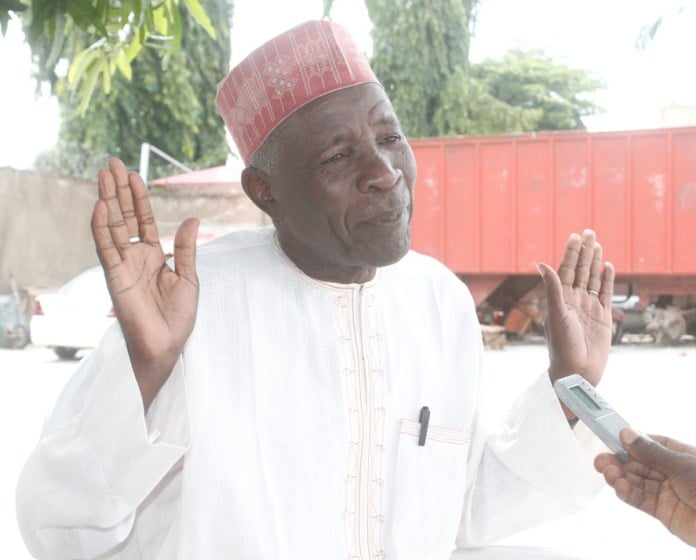
The leadership crisis rocking the Kano State chapter of the New Nigeria Peoples Party (NNPP) has intensified following the appointment of Abdullahi Zubairu Abiya as Acting State Chairman after the removal of the former chairman, Hashimu Dungurawa.

The Daily Reality reports that the decision was announced after an emergency meeting of the NNPP State Executive Committee held at the party’s secretariat in Kano, where members endorsed Abiya’s appointment in line with the party’s constitution.

Speaking on the development, the party’s Assistant Legal Adviser, Barrister Yusuf Mukhtar, said the emergence of Abiya followed due process and was consistent with the provisions of the NNPP constitution.

He explained that the move came after Dungurawa was rejected and removed at the ward level.

Party sources disclosed that the action was based on a formal resolution submitted by the Dawakin Tofa Local Government Executive Committee, which recommended the sack and expulsion of Dungurawa over alleged anti-party activities.

It was gathered that the resolution originated from the Gargari Ward Executive Committee in Dawakin Tofa Local Government Area and was forwarded to the state leadership by the local government executive, led by Hon. Abdullahi Ali Uban Iya Dawanau.

The ward-level decision was reportedly adopted at the second executive meeting of the Gargari Ward, held about two weeks after the general election, where Dungurawa was accused of actions deemed inimical to the party’s interests.

After reviewing the report, the State Executive Committee ratified the resolution and approved Abiya’s emergence as Acting State Chairman, party officials said.

NNPP officials described the move as part of efforts to restore internal discipline, strengthen party unity and reposition the party for future political engagements in Kano State.

Reacting to his appointment, the Acting Chairman, Hon. Abdullahi Zubairu Abiya, said the party would ensure fairness and justice for all members.

He added that the Kano NNPP would remain loyal to the party’s national leader, Senator Rabiu Musa Kwankwaso, as well as the Kano State Governor, Engr. Abba Kabir Yusuf.

[OPINION]: A swift response to insecurity: commending Governor Abba Kabir Yusuf

By Anas Abbas

The launch of Kano State Security and Neighbourhood Watch Guard on December 23 by Governor Abba Kabir Yusuf is a timely and reassuring response to growing concerns about insecurity across the state.

At a moment when residents were increasingly raising alarm over safety in their communities, the governor chose action over silence.

In recent months, reports of petty crimes and organised disturbances have unsettled many neighbourhoods, threatening Kano’s long-held reputation as one of the more peaceful states in the North.

These concerns were not distant headlines but daily experiences discussed in markets and almost everywhere in Kano state. Acknowledging this reality, Governor Abba Kabir Yusuf’s administration moved swiftly to confront the challenge.

Central to the initiative is the deployment of 2,000 security personnel, carefully drawn from all local government areas of the state. This structure ensures broad representation, local knowledge, and community trust key elements in effective crime prevention. By embedding security personnel within familiar environments, the government strengthens early detection and rapid response.

The neighbourhood watch guard complements existing security agencies rather than replacing them. It is designed to close the gaps where formal policing alone may struggle, particularly at the grassroots. This layered approach reflects a practical understanding that modern security requires cooperation, intelligence sharing, and community participation.

Beyond physical protection, the initiative delivers psychological reassurance. Visible security presence restores confidence, discourages criminal behaviour, and reassures residents that the government is attentive to their fears. Insecurity thrives where people feel abandoned; decisive leadership reverses that narrative.

Governor Abba Kabir Yusuf deserves commendation for the timing of this intervention. Launched during a period of heightened social and economic activity, it demonstrates foresight and sensitivity to public safety risks. It also reinforces the principle that governance must be proactive, not reactive.

However,as implementation unfolds, sustained training, accountability, and respect for human rights will be essential to long-term success. If properly managed, the neighbourhood watch guard can become a durable pillar of community safety.

In taking immediate steps to safeguard lives and property, Governor Abba Kabir Yusuf has sent a clear message: the security of Kano’s people is paramount. This initiative stands as a strong example of responsive leadership in challenging times.

JUST IN: Kano assembly loses two serving members

By Uzair Adam

The Kano State House of Assembly on Wednesday recorded the death of two serving lawmakers who reportedly died within minutes of each other.

One of the deceased is Sarki Aliyu Daneji, a member of the Assembly representing Kano Municipal Local Government Area. His death was announced shortly after confirmation of the passing of Hon. Aminu Sa’adu, who represented Ungoggo Local Government Area.

The deaths were confirmed by the spokesperson to the Kano State Governor, Sanusi Bature Dawakin Tofa, in a post on his official Facebook page.

The development has left members of the Assembly and residents of the state in mourning.More details later.

[OPINION]: AKY, security and the road ahead

By Engr. Kabiru Garba

Kano State remains one of Nigeria’s most populous states, where security is not an abstract policy but a daily reality.

For every citizen, security is the bedrock of daily life, commerce, and culture. It is undoubtedly a concern that resonates from the crowded city markets to the vast, farm-lined hinterlands.

For Governor Abba Kabir Yusuf, confronting this challenge has demanded a strategy that is equally multifaceted. It requires moving beyond a centralised command to embedding safety within the communities themselves. This is not a top-down decree, but rather a ground-up compact.

This conviction now drives a multi-million naira, multi-layered initiative aimed at turning the tide through visibility, mobility, and local intelligence.

The most visible symbol of this compact is the newly inaugurated Kano State Neighbourhood Watch Corps.

On Tuesday, at the Sani Abacha Stadium, the governor stood before 2,000 recruits, comprising of 1,870 men and 130 women drawn from every one of the state’s 44 Local Government Areas.

Their passing-out parade activated a frontline distinct from the conventional vigilante groups. These corps members have undergone formal training and will be legally equipped. Their primary advantage is intrinsic: they are local. They know the alleyways, the dialects, the rhythms, and the people.

Their mandate is to act as the first line of defence and intelligence, helping to combat crimes like banditry, kidnapping, and rural violence that have tested the region’s peace.

Recognising that even the most knowledgeable personnel need mobility to cover ground, the state has made a substantial investment in logistics.

At the inauguration, Governor Yusuf commissioned 88 new Hilux patrol vehicles and 440 motorcycles for the corps. This fleet is a force multiplier, designed to make security presence constant. The practical goal is to shrink emergency response times, enable patrols across difficult terrain, and ensure a visible, reassuring presence that deters crime before it begins.

This deployment is part of a sustained financial commitment. Just before the launch, the governor approved N484 million to procure 300 Boxer motorcycles to further amplify the corps’ reach at the community level.

This sequential investment reveals a strategy of layered reinforcement, building capacity piece by critical piece.

The neighbourhood watch initiative is the Kano’s newest layer in a security architecture that has been under construction.

Months earlier, in November, the governor targeted areas under acute pressure. He provided 10 vehicles and 50 motorcycles to the federal-state Joint Task Force (JTF). This aimed at boosting their operational efficiency in seven frontline local government areas: Kiru, Tsanyawa, Kunchi, Gwarzo, Shanono, Tudun Wada, and Doguwa.

This support was a direct response to immediate threats, enhancing rapid response and inter-agency coordination in the state’s most vulnerable regions.

Perhaps the most forward-thinking layer of Governor Abba’s strategy focuses on protection beyond immediate conflict.

In May this year, he approved the immediate recruitment of 17,600 security guards for public schools across Kano.

This move, while distinct from law enforcement, addresses a deep societal anxiety. By hardening these soft targets, the government seeks to safeguard not only buildings but the state’s future, its children, and to restore a fundamental sense of normalcy and security to education.

Taken together, these actions sketch a comprehensive philosophy that simply says security is interconnected. It requires empowering formal task forces, establishing legitimate community-based forces, and proactively protecting critical social infrastructure.

Analysts observe that the governor’s approach tackles Kano’s complex security situation on three fronts: strengthening formal joint operations with the JTF, establishing a dedicated, locally-rooted armed corps, and hardening soft targets like schools.

Meanwhile, the substantial allocation of resources, from hundreds of millions for motorcycles to over a hundred patrol vehicles signals a clear prioritization of security expenditure in our dear state, Kano.

Therefore, it is the hope of every citizen that the true measure of this security compact will determine the state’s trajectory of peace and prosperity for years to come.

Journalists should treat emergency reporting as life-saving, not sensationalism—Media expert

By Uzair Adam

Journalists have been urged to treat emergency reporting as a life-saving public service, given the powerful role of the media in shaping public understanding and behaviour during health crises.

The call was made at a two-day Emergency Risk Communication workshop for journalists organised by the Kano State Centre for Disease Control (KNCDC) with support from the FCDO–Lafiya Programme, aimed at strengthening ethical and responsible health reporting during public health emergencies.

Delivering a session on Emergency Reporting and Ethical Guidelines for Public Safety during Health Crises, media expert and editor with The Daily Reality Newspaper, Malam Aisar Salihu Musa, said information often spreads faster than disease during outbreaks, stressing that the way journalists report emergencies can either reduce harm or fuel fear and panic.

“Where trust is strong, public health succeeds. Where trust is weak, fear becomes the real outbreak,” he said, noting that trust remains the most valuable currency during health emergencies.

He explained that journalists serve as information gatekeepers, with a responsibility to verify reports that could affect public health outcomes and to collaborate closely with health authorities in sharing credible information.

According to him, emergency reporting presents ethical challenges, including balancing urgency with accuracy, avoiding sensational headlines, and protecting the dignity and privacy of patients and their families.

Musa urged journalists to communicate risk clearly and proportionately, translate medical terms into simple language, and always include practical steps the public can take to protect themselves.

“Words can either save lives or cause harm,” he said, adding that responsible, transparent and empathetic journalism strengthens public trust and supports effective public health response.

He concluded by calling on journalists to see themselves as partners in public health, committed to countering misinformation, promoting preventive behaviours and reporting emergencies in ways that protect lives and strengthen society.

Kano disease control agency chief tasks journalists on responsible emergency health reporting

By Uzair Adam

The Director General of the Kano State Centre for Disease Control (KNCDC), Prof. Muhammad Adamu Abbas, has urged journalists to prioritise responsible and ethical reporting during public health emergencies to prevent the spread of misinformation and public panic.

Prof. Abbas made the call during a two-day Emergency Risk Communication workshop organised to strengthen media engagement and information management during disease outbreaks and other health emergencies.

He stated that the workshop followed the identification of critical gaps in Risk Communication and Community Engagement during recent Joint External Evaluation and multi-hazard preparedness assessments conducted in the state.

“This workshop was designed to address the gaps identified during the Joint External Evaluation and multi-hazard preparedness assessment,” Prof. Abbas said, adding that the media remains a key partner in managing public health emergencies.

The Daily Reality reports that the workshop, with support from the FCDO–Lafiya Programme, revolved around improving media engagement during outbreaks, ethical emergency reporting, managing misinformation, strengthening collaboration between journalists and health authorities, and developing a media-focused Emergency Risk Communication plan for Kano State.

The DG further stated that journalists have a responsibility to prevent the spread of false information, correct myths and harmful practices, and promote evidence-based decision-making that strengthens public trust in official health guidance.

He added that responsible media engagement should also encourage preventive behaviours such as hand hygiene, vaccination, safe food practices and environmental sanitation, while reinforcing official public health advisories.

The workshop was attended by journalists from print, broadcast and online media organisations, alongside public health officials and communication experts.

Governor Yusuf orders probe after assault victim alleges irregular release of suspect

By Uzair Adam

Kano State Governor Abba Kabir Yusuf has ordered an immediate investigation into an alleged assault case involving Rabi Hamza Danladi Nasidi, following widespread public concern generated by a social media video in which the victim appealed for the governor’s intervention.

The development was confirmed in a press release issued on Sunday by Abubakar Tijjani Ibrahim, the Special Assistant on Media to the Attorney General and Commissioner for Justice, Kano State.

The statement outlined the circumstances surrounding the case and the government’s response.

According to the release, Rabi Hamza Danladi Nasidi was allegedly attacked at her residence by one Kabiru Aminu, resulting in injuries that left her in a fragile condition.

Although the suspect was initially remanded by Magistrate Court No. 36 until January 20, 2026, the victim later discovered that he had been released—an action that triggered significant public outrage and questions about possible irregularities in the handling of the case.

The viral video, in which the victim appealed directly to Governor Yusuf for justice, brought renewed attention to the matter.

The governor, described as deeply concerned by both the severity of the allegations and the circumstances of the suspect’s release, immediately directed the Attorney General, Abdulkarim Kabiru Maude, SAN, to conduct a thorough investigation.

The Attorney General has since assured the governor that all necessary legal steps will be taken and that anyone found complicit—whether in the alleged assault or in any procedural lapses—will be held accountable in line with the law.

The statement reaffirmed the Kano State Government’s commitment to protecting citizens’ rights, strengthening public trust in the justice system, and ensuring that cases of this nature are handled transparently and without prejudice.

Kano landowners, gov’t strike 50-50 deal on disputed lands

By Uzair Adam

After several twists and turns, the Kano State government and landowners in the Dangoro community, Kumbotso Local Government Area, have reached an understanding over the use of disputed farmlands.

The development follows a session with the Commissioner of Land, Abduljabbar Umar Garko, on 27 November.

The dispute began when the government announced plans to relocate the Yan Lemo Fruit Market and Yankaba Vegetables Market to Dangoro, sparking fears among residents that their lands could be seized.

Earlier appeals to Governor Abba Kabir Yusuf had not yielded immediate intervention, heightening tension in the community, especially among the landowners.

On Saturday, the leadership of the landowners held a meeting to brief members on their meeting with the commissioner ahead of the expected commencement of government work scheduled for next Monday.

Speaking after the meeting, the chairman of the Landowners Association for the Struggle, Alhaji Gambo Saminu Adamu, said the gathering was meant to reassure landowners that the agreement reached with the government would be implemented fairly.

“We convened this meeting to inform landowners that, God willing, government officials will begin work on Monday. We have met with the Commissioner of Land, and both sides have reached a mutual understanding,” he said.

He added that arrangements were made to ensure representation for landowners who were absent or living abroad, guaranteeing that everyone’s interests would be protected.

“We have agreed on a fair 50-50 plan. The Commissioner gave us his assurance, and we trust that Governor Yusuf, known for his fairness, will ensure no injustice. We also urge members to exercise patience,” Adamu said.

Another landowner, Sunusi Haruna, an Esco, explained that the agreement was communicated to the wider community. “We informed our people about the reasons behind the decision and the government’s plan. We also made it clear that any actions contrary to this agreement will not be accepted,” he said.

Resident Jami’u Akilu emphasised the need for fairness in implementing the plan. “The Yan Lemo Fruit Market and Yankaba Vegetables Market will be relocated to the area. The market should benefit the community as agreed, not outsiders. We call for strict adherence to the 50-50 arrangement and transparency in its execution,” he said.

Residents expressed cautious optimism, welcoming the government’s development plan while insisting on justice and protection of their lands.

Earlier, the Kano State Government, through the Ministry of Land and Physical Planning, unveiled a plan for the use of the disputed Dangoro farmlands.

Under the arrangement, landowners are to retain 50 percent of their lands, while the government takes the remaining 50 percent for development purposes.

For instance, if a landowner has space to build 10 shops, five would be allocated to the government and the other five would remain with the landowner.

The plan aims to balance development with the protection of landowners’ rights.

Security situation in Kano should not be taken lightly, Kwankwaso tells FG

By Uzair Adam

Former Kano State Governor, Engr. Dr. Rabi’u Musa Kwankwaso, has warned the Federal Government to take the security situation in Kano seriously, emphasizing that recent attacks along the state’s borders should not be underestimated.

Kwankwaso made the statement on Saturday during the 4th convocation ceremony of Skyline University, held at the Amani Event Centre, Kano.

Addressing the audience, he said, “The security challenges in Kano, especially along the border with Katsina State, must not be taken lightly.

“Lives and properties are at risk, and the government must act decisively to protect the people,” he added.

He further added that Kano has historically been one of the more secure states in northern Nigeria.

“When I served as the governor, the state invested heavily in security infrastructure and training, successfully curbing threats from Boko Haram and other criminal groups.”

However, in recent years, he added, banditry has surged, particularly along local government borders with Katsina State. Areas such as Tsanyawa, Shanonu, Bagwai, Gwarzo, and Karaye have reportedly faced repeated attacks, with criminals crossing state lines, committing crimes, and returning to their bases.

Kwankwaso criticized local accords with bandits in neighbouring states, arguing that such arrangements create safe havens that allow criminal activities to spill into Kano.

He stressed that the federal government, as commander-in-chief, has the ultimate responsibility to secure the nation’s borders and protect citizens.

“The banditry started like a joke in Zamfara and has now spread to Sokoto, Kebbi, and parts of Kaduna. Kano and Jigawa were the only relatively safe areas in the northwest, but recent attacks from neighbouring Katsina show that the problem is growing,” Kwankwaso added.

He called on the government to implement more effective measures to curb banditry and safeguard lives and properties, warning that the ongoing security challenges should not be underestimated or ignored.

Language is a tool; it’s not the destination | A look at Kano’s Hausa-only school policy

By Prof. Abdalla Uba Adamu

I rarely discuss politics, policy, or religion at any level on social media. These three are totally beyond my modest capabilities. However, the Educationist in me stirred when it became news in November 2025 that a bill was being proposed in the Kano State House of Assembly, titled the Kano State Mother Tongue (Hausa Language) Education Enforcement Bill. It was introduced by Musa Kachako, a member representing Takai under the New Nigeria Peoples Party (NNPP). 

The Bill seeks to ensure that all instruction in primary and secondary schools in Kano (presumably those under Local Education Authorities) is conducted in the Hausa language. According to online reports, when presenting the bill during plenary, Kachako stated that the initiative followed global best practices in education, citing countries such as China, Japan, and India, which he noted had made significant strides in science and technology by teaching children in their native languages from an early age. Kano State can do this because Education, being on the Concurrent Legislature, gives room for any policy variation of Education from that of the Federal Government’s Exclusive list. 

Certainly, the idea of teaching all subjects in Hausa springs from a noble intention — to enable children to learn in the language they understand best, and to reaffirm local identity against the long shadow of colonial linguistic domination. I witnessed this during my tenure as a Teaching Practice Supervisor in various schools in Kano. Students tended to understand language lessons more fluidly than those in other languages. And we are talking about over 40 years ago. Along the line, I even came up with how to use Hausa proverbs to teach science, based on over 30 curated Hausa proverbs with scientific content (e.g. gravity in “komai nisan jifa, ƙasa zai dawo”) and trained dozens of teachers in Jigawa (ironically enough, Kano was not interested at the time!) on this much later.   

Yet, the success of such a language policy depends on its contextual intelligence — its ability to strike a balance between local comprehension, national unity, and global relevance. In all cases of such debates, the examples of China, Japan, and India are the most commonly cited as best practices that have worked. With its virtual monolingual Hausa population (perhaps the only State in the Federation with this attribute), elevating Kano as “Little China” certainly sound, albeit contradictorily, post-colonially romantic. This all sounds inspiring. But, without taking the shine off it, how realistic is it?

There is a certain merit to the idea, but only to a certain extent. Research everywhere agrees: children learn faster and think better when taught in their native language. Even UNESCO and Nigeria’s own education policy support this approach for the first few years of primary schooling, where community languages are encouraged, rather than metropolitan languages. Let’s look at some cases.

Ethiopia is perhaps the only country in Africa with a continuous mother-tongue education system. The country did not suffer the horrors of colonisation on the same scale as the rest of Sahelian African countries, as it was only briefly occupied by Italians between 1936 and 1941. It uses regional languages (Amharic, Tigrinya, Oromo, Somali, etc.) as the medium of instruction in primary and secondary education. In universities and higher education, Amharic or English is used depending on the region and field. Thus, Ethiopia’s system is perhaps the closest to continuous mother-tongue instruction, although English dominates technical and postgraduate studies.

In Tanzania, Swahili is the dominant language in primary schools, but English is introduced from secondary schools up to universities, especially in fields such as science, medicine, and law. In Rwanda, the medium of instruction in schools was switched from French to English in 2008, while Kinyarwanda remains the mother tongue in early primary education. In Mozambique, Portuguese dominates in secondary and tertiary education, and local languages such as Makhuwa, Sena, and Tsonga are used in early primary school. 

This pattern is repeated in other African countries, such as Ghana (Twi/Ewe in early schooling, English later), Senegal (local languages in the early years, French later), and Kenya (Kikuyu, Luhya, Dholuo in early schooling, English later). Thus, no colonised African country has fully implemented mother tongue instruction from primary through university, rejecting colonial languages entirely.

In Kano, where everyone speaks Hausa, the policy could genuinely improve comprehension and reduce dropout rates. Pupils won’t have to struggle with English before grasping basic concepts in classrooms. That’s a win. However, there is a catch, and it lies in the regular comparison with China, Japan, and India, as if Kano is a nation, rather than a State within a nation that has 400 languages. Let us look at the language policies of these countries closely.

China has between 281 to 305 languages and dialects. However, it took decades — from the early 1900s to the 1950s — to standardise Mandarin (Putonghua), reform writing, and establish a comprehensive teacher-training and translation system, enabling everyone to be educated in one language. 

Japan is relatively homogeneous, but still has dialect diversity with 16 living languages. Although Japanese is the dominant language of instruction, there is no law declaring it the official language of the country. In fact, a school could use other languages. There are now a few schools that use English to teach science and mathematics classes. Japan created a national standard (based on the Tokyo speech) during the Meiji era (late 1800s) — alongside massive investment in textbooks, printing, and teacher training. India, on the other hand, is multilingual by law — it has 22 official languages and hundreds more in daily use. Each state uses its local language for early schooling, but keeps English for higher education and technology. 

So, what worked for these three was not language alone, but long-term state planning, standardisation, and bilingual balance. Each of these countries went through a long, continuously sustainable process of deliberate policy strategies that ensured the success of their language policies in Education, backed by political stability. In Kano, policies are routinely changed with new regime changes, regardless of their merit. Let us look at the obstacles. 

English remains the principal language of science, technology, and international communication. A policy that sidelines it completely in early and middle education could restrict students’ ability to compete globally and to access higher education resources. Unless a bilingual model is adopted, the system may produce students with strong local literacy but limited global mobility.

Nigeria’s labour market — in public service, academia, commerce, and technology — operates primarily in English. Graduates from a Hausa-only system would face difficulty transitioning into these environments without adequate English proficiency. This could widen inequality rather than close it. Unless there are expectations that students from Kano, who will be the products of this policy, will never work in any Federal government agency in the country. 

Nigeria’s educational bureaucracy is highly centralised. Curriculum design, examination systems (NECO, WAEC), and tertiary entry assessments (JAMB) all operate in English. Switching Hausa to the medium of instruction at primary and secondary levels, without corresponding policy alignment at higher levels, would isolate Hausa-medium students from tertiary education pathways. Thus, despite Education being on the concurrent list, centralised examinations are under the Federal Exclusive list. Kano cannot create its own WAEC, NECO, and JAMB examination boards; it must use Federal agencies for this purpose. These agencies are in Nigeria’s official language, which is English.  

Next would be concerns about teachers. Currently, and without being aware of the timeline for implementing the Bill, if it is passed successfully, there are not enough trained teachers in Kano with adequate linguistic competence to teach science, mathematics, or social studies effectively in Hausa. 

Moreover, curricular materials, textbooks, and terminologies for specialised subjects (such as chemistry, ICT, or physics) are largely underdeveloped in Hausa — except for some pioneering efforts by the Northern Nigerian Publishing Company and NTI Kaduna in the 1980s–1990s, and more recently by a few authors. For instance, the Centre for Research in Nigerian Languages, Translation, and Folklore at Bayero University, Kano, has produced eight Science textbooks in Hausa for students of primary, junior, and senior secondary schools in northern Nigeria. 

Written by Mika’ila Maigari Kashimbila of the Department of Physics, Bayero University, these are Kimiyya Da Fasaha Don Makarantun Firamare Books One to Three, Lissafi Don Kananan Makarantun Sakandare Books One to Three, Kyamistare Don Manyan Makarantun Sakandare, and Fizis (Physics) Don Manyan Makarantun Sakandare. He had earlier written Lissafin Makaratun Sakandare Na 1. 

I was even part of the committee set up by Bayero University Kano to “launch” these books, although things faltered, and I don’t think the launch ever took place. Wonderful as these books and efforts are, I believe they would serve as supplementary readers to the core textbooks, where they help to deconstruct the more esoteric prose of the English textbooks. 

Other concerns are sociological. For instance, making Hausa the exclusive medium in primary and secondary education in Kano risks political backlash from non-Hausa-speaking communities. In a multilingual federation, such a policy could be perceived as linguistic imperialism, deepening ethnic tensions and further alienating minorities. It may also entrench regionalisation rather than national integration — the very problem English was meant to solve.

Additionally, if Hausa becomes the sole instructional language, students from Kano may face difficulties participating in the global economy, digital platforms, and higher education, which remain English-dominated. True, the increasing use of Artificial Intelligence might alleviate some of these fears – but that is not the same as captive learning. A purely Hausa-medium system would require parallel translation of scientific and technological vocabulary to prevent intellectual isolation — a task that even developed monolingual nations struggle with.

On the positive side, a well-planned Hausa-medium system could revive indigenous literacy traditions, encourage the translation of modern science into local epistemologies, and restore pride in local knowledge systems. It could also expand Hausa publishing, radio, and digital content industries — thereby democratizing access to learning for those currently excluded by the dominance of English.

But the devil is in the details. Policy flip-flops reflecting a lack of consistency are the biggest danger. As antecedents have shown, this particular political climate might favour this move, complete with a law backing it. The next political class might very well destroy it simply because it was not its idea. This has always been the central characteristic of Kano politics.