Kano State

N10bn loan: NLC pleads with Ganduje to prioritise outstanding gratuities

By Muhammad Aminu 

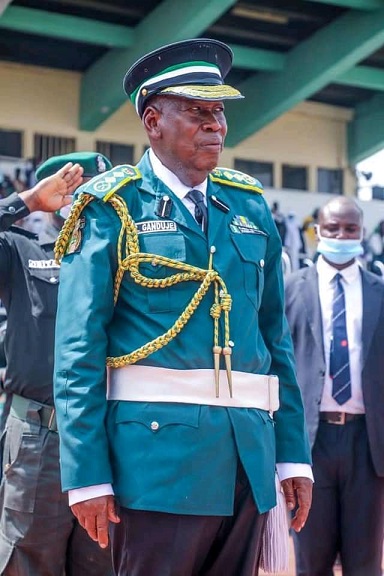
The Nigerian Labour Congress (NLC) Kano State Chapter has pleaded with Kano State Governor Abdullahi Ganduje to prioritise payment of outstanding retirement benefits than installing CCTV in the State.

The Union described the recently-approved loan for security infrastructural development in Kano as a misplaced priority in the face of over N27 billion outstanding retirees’ benefits.

In a statement co-signed by NLC Kano Chairman, Comrade Kabiru Minjibir and Acting Secretary Hussaini Budah on Friday,  the Union urged the Governor to secure another loan to settle retirees’ benefits.

“We wish to appeal to His Excellency the Executive Governor to make a case to the State House of Assembly for their assent to secure another loan to settle the outstanding gratuity and other retirees’ benefits in the best interest of justice and humanitarian consideration. In fact, what is good for the goose is also good for the gander.”

“While the Congress is not in any way against improving the security of lives and properties or its Citizens, which is one of the sole responsibilities of the Government, we are of the opinion that, in the face of over 27BN outstanding retirees benefits, such a step amounts to robbing Peter to pay Paul.

“The congress acknowledges the giant strides by the Government in providing security to the citizens, we wish to argue that providing CCTV in the name of improving security is curative, while payment of gratuity and other retirees benefits is preventive, taking into consideration the multiplier effects.”

The Union acknowledged that the outstanding gratuity is cumulative from previous administrations, it, however, said it is time for the incumbent administration to do the right thing in order to make a difference in the spirit of its “change mantra”.

“We are hopeful and optimistic that His Excellency would consider this our ‘save our souls’ submission in view of the multiple advantages such a positive step by the Government will provide.”

It can be recalled that The Daily Reality reported that the Kano State House of Assembly had approved a loan request of 10 billion naira for Gov Ganduje’s security Infrastructure development in Kano.

Kano assembly approves fresh N10 billion loan for Ganduje

By Muhammad Aminu

The Kano State House of Assembly has approved a loan request of ten billion naira (N10,000,000,000.00) by Governor Abdullahi Ganduje. The request was contained in a letter forwarded to the Assembly by Governor Ganduje and read by the Speaker, Hamisu Chidari.

According to the letter, the loan will be used for security infrastructure development in Kano. The Daily Reality gathered that part of the security infrastructure to be developed includes an installation of CCTV cameras in Kano to improve the security architecture.

In the letter, Gov. Ganduje said the development became necessary considering the recent security challenges facing the State.

In another development, the Kano State House of Assembly has appointed Magaji Zarewa as its deputy majority leader, following the resignation of Alhaji Abdullahi Iliyasu Yaryasa.

Yaryasa resigned his appointment after dumping the All Progressives Congress (APC) for the New Nigeria People’s Party (NNPP).

The speaker, Hamisu Chidari, who read Yaryasa’s resignation letter at a plenary, wished him well in his new party and thanked him for his numerous contributions to the house.

Zarewa, who represents the Rogo constituency, appreciated the house for finding him worthy of the new appointment.

The fall of a giant: A tribute to Professor Olofin

By Murtala Uba Mohammed, PhD

“The source of concern is not in losing an erudite but getting his replacement”, Hausa adage.

It was around 1:54 pm on Tuesday 14th June 2022 that I learned about the death of the Emeritus Professor Emanuel Ajayi Olofin, popularly known as EAO among the staff of the Department of Geography, Bayero University, Kano (BUK). The sad news was first broken to us on the departmental WhatApps platform by his colleague and our respected teacher, Professor J. Afolabi Falola. Although already octogenarian, the death came to many with a shock because we were unaware our professor was sick. 

Born in 1941, Olofin started his Bachelor of Geography at the University of Nigeria Nsukka, but due to the outbreak of the Nigerian Civil War in 1967, he and his coursemates were transferred to the University of Ife, where he graduated. He was also the first Nigerian to attend the Malaysian Premier University of Malaya for his master’s degree. He joined the services of Bayero University, Kano (BUK), immediately after his return to Nigeria. He later went to Ahmadu Bello University (ABU) Zaria for his PhD, specialising in Fluvial Geomorphology.

Professor Emanuel Ajayi Olofin was not only a teacher of teachers of Geography, his name was synonymous with Geography at BUK. Until his retirement from the services of Bayero University in 2015 and his subsequent demise, Olofin remained the first name to know and remember in the Department of Geography. Until he left BUK, Olofin had been one of the most respected names in the defunct Faculty of Social and Management Science (SMS) and the University at large.

While many a time, a scholar is respected for the depth of their knowledge or soundness of their character, Olofin was respected for his exquisite mastery of Geography, and those who came across him would testify to that. Here was a man who crossed the proverbial seven oceans, came to settle in a foreign land, and not only made a name but secured a good position, having been nicknamed “mutumin kirki” by the university community, which is located in a predominantly Muslim society. The Ekiti-born Professor of Geography remained the longest-serving staff in BUK, and he served the University for forty-one years (1974 to 2015).

I first heard the name Olofin in 2001 when I was still an IJMB student at the Kano State College of Arts, Science and Remedial Studies (CAS, Kano). The name was mentioned several times by one of his students and my teacher, Malam Adamu Mustapha (now a Professor of Hydrology), during Landforms classes. When I was admitted to study B.Sc. Geography at BUK in the year 2003, my hope then was only to meet this man we were told that he was a reservoir and encyclopedia of geographical knowledge. Interestingly, he was the only person described in the Departmental Handbook as a Professor of Geography (others were either Professors of Rural, Water Resource or Soil Geography).

Throughout my level 200, I always yearned to meet him, thinking that he would teach us Kano Region (GEO2201), for which he authored a book titled Some Aspect of Physical Geography of Kano Region together with Human Response, which remains, until now, the most authoritative guide for teaching the course. But, unfortunately, that very year, the course was assigned to, and taught by, another veteran geographer and his only contemporary then, the late Mr Oyeniyi.

The first course that connected me with Olofin was Introductory Geographical Hydrology (GEO3214). Honestly speaking, I never came across any person teaching hydrology in a simple and innovative way as Olofin. In addition, I also attended his lectures of 400-level courses, namely, Environment and Development (GEO4302) and System Approach to Geomorphology (GEO4325). For all his courses, Olofin did not only lecture us, as the tradition was in those days but also recommended good teaching materials in addition to the books he had authored, which he gave as guides to students to xerox.

The beauty of Olofin’s class was in its good illustration, lucid language, deployment of humour and riddles, and imparting good morals. In addition, Olofin had carved a name for himself as an embodiment of good character, whose courses one hardly fails unless they were not either attending lectures or failed to sit for exams. It is well known that Olofin informed his students as to when he would take attendance.

I recalled that in one of his classes, Professor Olofin complained, with a gloomy face, that some students would fail a course no matter how much he or any other teacher tried. When we asked for his reason, he narrated what transpired between him and one of our coursemates.

The story was that the student missed his test, which was announced weeks before it was conducted. The student did not complain to the Professor, rather, it was Olofin that came to the class and looked for the student; he asked the student to see him after the class. When the student went to his office, he queried if the student was ready to take the test, and he responded that he was not ready. Instead, an assignment was given to the student to write before the closing hours. The student submitted the assignment to the Professor in time, but when he checked the assignment, he suspected that the writing looked so good to be ascribed to that student. Therefore, he passed a paper asking the student to write his name and registration number. Unfortunately, his handwriting was conspicuously different from the one on the assignment. Olofin asked the student, “who wrote the assignment for you?” After insisting, the student informed him that his friend, a lady, wrote it for him! He counselled the student to be committed to his studies and always be honest and upright!

Professor Olofin had retired from active service and only taught as a contract staff when I joined the services of the Department in 2012. I could not recall a time when he missed his lecture, refused to attend staff meetings, or submitted his marked sheets/scripts late. In fact, Olofin always submitted his marked sheet earlier than any staff of the Department despite his age and the fact that all the staff of the Department, except late A.D. Maiwada and Prof. J.A. Falola, were his students at either their undergraduate or postgraduate levels.

Olofin can be described as jovial and accommodating in terms of interpersonal relationships. I recall his famous joke and parable on Nigeria that when the Almighty was creating nations of the earth, he gave each country a resource or two. But when it came to Nigeria, he put so many resources under its land. People, out of inquisitiveness, asked why did He do so? The Almighty replied: “Wait and see the kind of humans I will populate it with”. This parable describes the real situation of the so-called “African Giant” that is paradoxically rich and poor. Nigeria has all it takes to blossom as an Iroko but remains a low dwarf shrub due to its corrupt leadership and docile followership.

Olofin was not only an epitome of good character and knowledge, he was faithfully dedicated to his job. I can testify to this though not to the extent that his old students can do.

From the little I learned when we were neighbours (his office was next to mine), he used his office hours mainly for writing, teaching and research. He rarely engaged in frivolous discussions outside classrooms or meetings. Instead, he was constantly working with his computer, reading different genres, and reviewing students’ dissertations/theses. For this, he was not only a geographer but a consummate poet and essayist. His anthology of poetry titled Lifeless Line is eloquent testimony.

By a way of conclusion, I wish to say that the death of Olofin is one of the greatest losses to Geography as a discipline and Nigerian academia. It is not only because he was the first Professor of Geography in BUK and the first in the Faculty of Social and Management Science; it is not because he was the longest-serving member of the faculty; it is not also because he was among the first five to be awarded Emeritus Professors in BUK; but because he was an amalgam of a sound knowledge of his discipline, dedication to duty and moral uprightness.

In the realm of geographers, Olofin’s name can only be written with those of other giants such as Akin Mabogunje Nurudden Aloa and RK Udo. For these reasons, I write to extend my condolences to his family, colleagues, students, Bayero University, the Association of Nigerian Geographers and academia at large. May the Almighty Allah give his family the fortitude to bear the loss, amen!

Murtala teaches Geography at the Department of Geography, Bayero University Kano and can be reached via murtalamuhammadu@gmail.com.

Nigeria records 252 new cases of COVID-19 in one week

By Ahmad Deedat Zakari

Nigeria Centre for Disease Control, NCDC, has announced that 256 new people have been diagnosed with the deadly Coronavirus in the country.

The NCDC disclosed 52 new cases of the virus on their verified Facebook page on Tuesday, June 14, 2022. This brought the total number of confirmed cases within one week to 256. 

The 52 new cases were reported in Lagos, Rivers, FCT and Delta State. While Lagos tops the chart of states with most cases, others like Imo and Kano featured prominently in the reported diagnosis.

According to the NCDC report, the 52 new patients made the total number of people confirmed to be affected with the virus to 256 404, while the total number of discharged patients was put at 250,137. The number of people who were confirmed to have died due to the virus was put at 3,144. This made the fatality rate about 3% of the total confirmed cases. 

However, many Nigerians do not believe in the existence of Coronavirus, and this poses a significant challenge to the administration of vaccines. Many others believe in its existence but are sceptical of the situation being used as a conduit pipe for government officials to divert public funds.

Why Kwankwaso deserves more accolades

By Najib Ahmad, PhD

We often hear people saying that ‘he [Sen. Rabiu Musa Kwankwaso] did it with the government funds.’ And so? Oh, you expect him to do it with his money; then, you will ponder whether he’s worthy of their gratitude. But, this is not how things have been done right from the inception.

If you read over the history of the previous great Muslim rulers like Umar Ibn Abdulaziz (61-101 AH), may Allah have mercy on him, you will realize the incredible impressions he left on people despite being a caliphate for a short period. But, it is known that all he had achieved and built weren’t from his funds. Still, he’s remembered and admired.

People often appreciate the history of how other nations developed, which primarily transpired through human development. But, for example, how do you think today’s China and Singapore got it right? Do you think they only wake up to all this in the morning? No, it was because some leaders decided to do it right and went on to create policies that enabled them to reach where they are today.

For instance, if you take China, they unconditionally relish Deng Xiaoping – the architect of modern China. While Singapore’s Lee Kuan Yew is also highly recognized as the founder of modern Singapore, they constantly appropriate him for its development. During their time as leaders of developing nations, all they have accomplished weren’t with their funds but with the government funds.

Those leaders’ priorities then were primarily policies on education and the industrial revolution transformation. Sending students, including the peasant farmers’ children, to universities worldwide via scholarships was part of Mr Xiaoping’s most significant policies that China benefited from. His initiatives have matured into a whole system, i.e., the China Scholarship Council (CSC) and China Postdoctoral Science Fund. This remarkable initiative alone helps them strengthen their universities and vocational colleges with a quality workforce and, in turn, enables them to become the world’s industrial powerhouse.

Today, check all your household belongings to verify the above. Those two leaders are still relevant in China’s and Singapore’s present days. You can’t underestimate their significance no matter how you try due to the enormous opportunities and equal advantages they created for their people.

I understand your frustrations, which is why one person out of more than 12 million people of Kano is receiving too many accolades. First of all, it is their choice to appreciate him, mind you. This is because he means so much to them. The good thing is, you can’t deny them this satisfaction even if you try. So, why the resentment? Allow those that prefer to do what suits them to continue thanking and re-thanking him till the end of time, if that is their wish. What’s your problem with their choice, fisabilillahi?

Above all, the main thing to look at is that appreciating Kwankwaso’s effort doesn’t physically hurt you or anyone else or destroy any of our fundamental values. In fact, it is teaching people to learn to recognize good deeds and be thankful to whoever is responsible or part of their progress in life. Isn’t this a harmless mannerism to learn, emulate, and propagate?

Dr Najib Ahmad is a Postdoctoral Researcher at Shandong University, China. He can be contacted via namuhammad03@gmail.com.

Battling financial insecurity in Nigeria

By Nusaiba Ibrahim Na’abba

It is indeed sickening and quite unfortunate to have been part of the Nigerians alive to witness the gruesome killing of Harira and her children and two others in Anambra State. We haven’t even been relieved of tensions that arose from the derogatory remarks on our beloved Rasul SAW. And amid these tensions, another heartless fellow has murdered his niece in Kano – a similar event as Hanifa’s.

Undoubtedly, these seven years since the administration of President Muhammadu Buhari kicked off have been the most unprecedented for many Nigerians. Stressful periods have made killings assume a state of normalcy, especially in the Northern part of the country, and many horrendous activities now don’t even get into the spotlight.

While we continue to deal with post traumas after witnessing more than enough horrifying stories of senseless murders and killings of innocent lives, we continue to fiercely battle financial uncertainties from different angles, coming in distinct shapes and sizes. There has never been a time when we have found ourselves at risk of losing our earnings. From a series of unfounded mobile messages to mysterious calls and emails from strangers, we have been bombarded with multiple ‘Yahoo! or 419’ daily. We think one step to securing our earnings while these ‘intellectuals’ are already a hundred miles ahead. Such is the cruel world we live in a while our leaders wander in a desultory fashion.

To begin with, are the ‘Yahoo intellectuals’. In this context, they have proven beyond any iota of doubt that they are efficient to prosper and have almost always never missed their targets by successfully outsmarting technologies our private financial institutions, alias banks, breaching secured accounts of innocent people in order thieve their hard-earned money – only God knows the kind of cumbersome efforts put in to get them. They are perfectly immune to any countermeasure provided by these banks. Only a few of them are being traced.

The height of this situation will not puzzle you until you hear a bank staff declaring that it is not the bank’s fault but ‘yours’ – the customers’ fault – who exposed your bank details to a ‘Yahoo Pro’ unknowingly. Ideally, banks are supposed to be substitutes for traditional means of saving assets, but the current situation shows that they’re becoming dangerous institutions. Filing a complaint is intensely laborious as your insignificant earnings do not matter so much to the banks. You’d spend hours in a queue to face your worst fear – they can do nothing to help you.

In a recent report published by FJI Nigeria, a student’s $2000 was stuck and only released after their report. Similarly, just on May 8, 2022, the same FJI Nigeria published how a nurse based in Ogun State lost her N95,000 after her ATM card got stuck in the ATM and after her communication with one of the GT bank’s staff. Millions of peoples’ earnings have continued to slip away through untraceable means as banks claim or through multiple deductions from the banks. In some southern states, you could be robbed with a gun when withdrawing cash from an ATM and others adopt POS machines for these fraudulent activities.

There is also another set of dubious humans that use religious covers to decorate their Yahoo strategies. For example, you’d receive calls from unknown fellows claiming to be in good spirits, giving references from the Holy Qur’an and directing you to a strange place where they want you to keep the money for them, and they help you in return. Sounds hilarious, though, but it still happens. Another way they opt for is by sending random text messages about a critical condition of their family member, and they’d threaten you to send a stipulated amount to them or fear the unthinkable happening to you.

Let me highlight that the current wave of rancorous political exchanges in the primary elections is also enshrouded by financial insecurity. We have all vividly seen the disparity in the offers presented to ‘delegates’; it all boils down to ‘money’. Of course, it unveils how deep-seated corruption is in our country, but it also paves the way for us to see that not only the ruled are financially unstable. As the delegates go for the highest bidder, so do the aspirants try to bid the highest amount or withdraw from the race and embrace the likely winner for basically financial and political advantages. For the aspirants, some are very calculative to either invest where they’ll win or save what they’ve pocketed.

I wouldn’t do justice to this discourse without reiterating the kidnap for ransom mishap that continues to flourish without any sign of slowing down. The ‘business’ has now reached a stage of maturity such that Nigerians are challenged to save for unwary expectations indirectly. You may not be directly involved, but your support would be needed when an outrageous amount of money is demanded from a person you know.

The dangerous convergence of economic hardship, lack of political will, and financial insecurity has placed Nigerians grievously. The damage done to widows, orphans, families, workers and students is unimaginable. Assets aren’t safe at home and are neither safe at the banks. And with the continuous devaluation of the Nigerian currency, the means of our sustenance has become an uneasy endeavour.

For now, the government is overwhelmed with so much politicking – divergences, convergences and calculations are taking a toll on virtually everything. So, since the major financial institutions that deal with the exchange of money are private, and the government has proven its incompetency to bring solace to our impediments being at the receiving end, we can offer solid suggestions on how best we can be treated with dignity by these banks.

Securing our dignity and finance at this point means banks must make a move to create codes that we can use to halt the operation of our accounts when necessary. It’s distressing how they have created codes for transfers and recharge card purchases without prioritising securing our accounts. This can be a gigantic step to counter our susceptibility to fraudsters as they are fully aware that their malicious intentions can only be crushed when the damage is done.

Then, it would be worthwhile for the government to equip its legal system to challenge these private financial institutions to ensure sanity in their operations. I firmly believe they aren’t above the law, and nobody is.

Nusaiba Ibrahim Na’abba is a master’s student from the Department of Mass Communication, BUK. She is a freelance writer and researcher. She can be reached via nusaibaibrahim66@gmail.com.

Inside Kano hospital where patients use sachet water to bath, flush toilets

By Uzair Adam Imam 

The level of dilapidation in Sir Muhammadu Sunusi Specialist Hospital, Yankaba, Kano, has graduated something not less monstrous.

Despite the Kano State Government’s claim that Governor Abdullahi Umar Ganduje’s second tenure would pay more attention to health and education, patients in the hospital have recounted their harrowing tales of how they live miserably without water and light.

Our reporter visited the hospital. He met some patients in dire situations, fighting excessive heat with their hand fans, which has thrown many of them into a dilemma.

The Daily Reality learned that all the taps in the hospital are not working, except one borehole, which the patients said works for less than one hour every day.

Recounting their experiences, some patient sitters complained that they used sachet water, alias pure water, to bathe, flush toilets, make ablutions and wash their dishes. 

They also complained about the lack of electricity, which they said was responsible for many problems in the hospital. 

A patient, who pleaded anonymity, complained that he spent days without bathing because almost all the sources of water in the hospital were dead.,

He said, “I spend days without bathing because there is no water. Sometimes our brothers go outside the hospital and call a water vendor (“dan garuwa“).

“Also, after all these difficulties, we slept in the dark without light at night. Mosquitoes exploit the opportunity to disturb our nights. The situation is just terrible.” 

Also, a patient sitter, Mukhtar Muhammad (not real name), stated that they really faced difficulties mainly at night.

He said, “There is neither electricity nor water in the hospital. Thus we live in the heat with mosquitos singing and biting our patients and us.

“I have wanted to use water since yesterday. But there is no water in the tap. So I had to go outside in search of a water vendor.”

No water to wash new-born babies 

Aishatu Isma’il decried that it was indeed a slap on the face for a big hospital like Sir Sunusi to allow this problem to be exacerbated.

“How can you imagine the state of a hospital without water or electricity? You would have shaded tears if you see women as they gave birth; there would be no water to clean the mother or her baby,” she bitterly said.

Dry taps

A group of four women, who happened to be patient sitters of their relatives, confided in our reporter that they used sachets water for there was no water in the hospital. 

They added that there was no water in the hospital to even flush the toilets after being used.

They added that the condition of the hospital’s pharmacy too was deplorable as one would only get one or two medicine out of the five or six he was looking for. 

The patients also urged the Kano State Governor, Dr Abdullahi Umar Ganduje, to set up a committee to investigate the matter.

Responding, the Managing Director of the hospital, Dr Abdussalam Usman Danjaji, told our reporter that all preparations to address the issues were in top gear.

Danjaji said, “Due to the electricity problem, the diesel provided to us by the government was never enough to use for thirty days.

“And we don’t want to add additional charges to what people are paying. If we do that, we can provide people with light, only that many people cannot afford to settle their bills,” he added.

Nigeria Health Watch trains Kano journalists on ‘solution journalism’

By Uzair Adam Imam 

An online media platform, Nigeria Health Watch, has organised a workshop on promoting media adoption on Solutions Journalism (SOJO) in Kano state.

The one-day workshop titled “Integrating Solutions Journalism Practices in Media Production in Kano State” took place Saturday, May 28, 2022, at the GearHub, 45 Lamido Crescent, Nassarawa GRA, in the state.

The intent of the workshop was said to equip participants with the knowledge, skills, and networks they would need to consciously discover and report stories about people’s responses to social issues in their news bulletins and other forms of reporting.

However, solutions journalism is understood to mean investigating and explaining how people try to solve widely shared problems.

The idea was reportedly aimed at adding rigorous coverage of solutions rather than just reporting problems as “responses to problems are also newsworthy”.

Speaking at the event, the convener, Misbahu El-Hamza, stated that there was a need for journalists to embrace solutions journalism (SOJO) instead of the normal way of just reporting issues.

However, El-Hamza lamented that many people resisted patronising news to escape heartbreaking reports that ended in scaring people.

The participants that graced the event included journalists from various media organisations from Kano State.

Bashir Ahmad rejects outcome of primary election

By Ahmad Deedat Zakari

Former media aide of President Muhammadu Buhari, Bashir Ahmad, has rejected the outcome of the primary election, which was conducted on Saturday. 

In a press statement on Sunday, May 28, 2022, Ahmad gave reasons for denouncing the outcome. 

According to him, the electoral process was marred with irregularities that threatened the election’s credibility.

He alleged that delegates, who were mostly his supporters, were denied entrance to the election venue and consequently could not cast their votes. 

“To the best of my knowledge, election at the primaries stage requires delegates to cast their votes, and a winner emerges with the majority votes. It, therefore, implies that there could not have been any voting process that occurred considering majority of the delegates were neither allowed to vote nor even granted access to the venue.” He stated.

Ahmad also said he was denied entrance to the voting area, which almost culminated in violence.

“On my arrival to the venue as an aspirant too, I was denied access to the voting area. My supporters who were around the premises for the primaries resisted the unjust treatment I was given and attempted insisting on my entrance into the voting area.” He said. 

Ahmad contested for the APC’s ticket to represent the people of Gaya/Ajingi/Albasu Federal Constituency and lost to the incumbent lawmaker, Mahmud Gaya, in the controversial election.

I left primary election venue because of thugs – Bashir Ahmad

By Ahmad Deedat Zakari

President Muhammadu Buhari’s former media aide, Bashir Ahmad, has disclosed why he had to leave the venue of the ruling party’s primary election.

According to him, he left the venue because of the security of the majority of delegates, which was being compromised by the presence of thugs. 

Ahmad stated this on his verified Facebook account on Friday, May 27, 2022. 

“As an aspirant, I left the venue of [the] primary election for Gaya, Ajingi and Albasu Federal Constituency because of the security of our majority delegates, if want to compete with the best, thugs shouldn’t be part of any election. A dakace mu [Wait for us]! “He posted

Ahmad had earlier resigned from the president’s media team to vie for the position of member in the Green Chamber, the country’s House of Representatives.

As at the time of fielding this report, the election result has not been announced.