Kano State

Demons called phone-snatchers

By Sulaiman Maijama’a

In recent times, the most vicious of all vices in our society is phone snatching. This dastardly act is perpetrated by gangs of youth of 15 to 25 years who carry weapons and terrorise people. Sometimes, these youth injure their victims or even stab them to death.

This evil act usually is plotted and carried out at night, but sometimes, in broad daylight, the youth disguise themselves as tricycle operators and unleash their cruelty against people. There is hardly a week that would pass on without a report of a victim of phone snatching.

This activity becomes a nightmare for people and poses a great threat to the freedom of movement of innocent citizens, making it difficult for them to go about their everyday business, especially at night, without the fear of being attacked by phone snatchers.

It is common knowledge that phone snatching continues to be pervasive in different states of the North. It assumes a higher degree in states like Kano, Bauchi, Plateau, and Gombe.

The nefarious activity can be directly or indirectly attributed to a lack of proper parental care and broken homes. The youth who lack good parental care or come from broken homes usually move with the wrong people, and their movements are not queried or followed up, thus having the freedom to do anything without being probed.

Peer pressure is another cause of youth involvement in social vices. The youth who spend more time with their friends easily get influenced due to their weak nature and tender age.

Youth have a high level of curiosity to learn, have fun and practice new things, thus making them deviate. And as the saying goes, “Show me your friends, and I will tell you who you are” The significance of friends and how they influence lives is so enormous that many youths were conscripted into phone snatching.

Parents’ negligence also makes the wards turn to their friends for love, emotions, care, and advice, who can lure them into deadly acts. An abandoned child can look up to their friends for love and affection. Some maids, house helpers, and family members who are always around children without parents can introduce these vices to them.

Not only that, but unemployment has also added intensity to immorality that graduates to this monster called phone snatching that threatens the social well-being of the people. 

According to the report by a Global consulting firm KPMG, titled “Global Economic Outlook”, Nigeria’s unemployment rate was projected to rise further to 40.6 per cent this year. This revelation is alarming and must be uppermost in the mind of every responsible citizen. “An idle mind”, as an adage says, “is a devil’s workshop”.

Drug abuse is another social determinant. Despite the pronouncements of the efforts by the National Drug Law Enforcement Agency to curb the menace, the percentage of drug abusers is on the rise, and they quickly and freely access the hard drugs of their choice. This allows the youth to be intoxicated before they carry out their devilish act of phone snatching.

It is pertinent that all stakeholders should rise against social vices. Youth that engage in these dangerous acts need help, advice and rehabilitation for the addicted ones.

Parents need to know their children’s friends, status, and other people the children associate with. This is majorly the role parents should play in their children’s lives. Mothers should, in particular, be close to their children. Close monitoring and time should be given to children by parents. Children should be taught the moral values that might help shape their cognitive abilities.

The media ought to be playing their roles of education and information by organising forums to enlighten people about the dangers associated with social vices. Similarly, they should be playing surveillance by warning early on of any potential danger.

Security operatives, government and all stakeholders must be active and alert to caution, rehabilitate or punish (where necessary) any person seen as a threat to others.

All hands must be on deck to combat the menace of phone snatching in our societies.

Maijama’a wrote from the Faculty of Communication, Bayero University, Kano. He can be contacted via sulaimanmaija@gmail.com.

The Daily Reality offers scholarship for BUK students

The Daily Reality (TDR) online newspaper management is pleased to announce the opening of its Endowment Fund Program and invites eligible and interested applicants to apply.

In light of the recent rise in registration fees at Bayero University, Kano (BUK), TDR plans to offer a grant to students who have had their articles published on the platform as a way of support.

Thus, if you are a BUK student and have your article published by TDR, please, contact us via contact@dailyrealityng.com or thedailyrealitynews@gmail.com. Please, submit proof of your student status at BUK, such as a copy of your ID or admission letter, along with the title of your article. The application closes on July 16, 2023, at 11:59 pm.

Please, join us in supporting young people’s education. Every contribution counts.

Sincerely yours,

TDR Editorial Team

Tracing the crime of phone snatching

By Adnan Abdullahi Adam

Even before his swearing-in as Kano State Governor, Abba Kabir Yusuf had issued a public warning that any state government land or property awarded by former Governor Ganduje’s administration to any private individuals would be revoked and demolished and reverted as own state property.  Soon after his swearing-in, the execution of the Governor’s exclusive order started. Heavy-duty bulldozers were deployed near Kano Race Course and Daula Hotel at midnight. Soon, the new buildings developed by Ganduje were raised down into piles of rubble.

 At the speed of light, pictures and video clips filtered on social media platforms carrying the demolishing scene instantly became a trending topic. And the out of the blue, just before dawn, youths rushed to the scene “looting”, carrying away everything valuable that may be sold for reuse or recycling. It is like a free for all; a hundred youths went out scampering and carting away so-called “Booty” from roofing sheets, doors, iron rods, and wood, among other things of valuable importance.

Similarly, the next day multiple shops building outside the parameters of historic Old Eid Ground, along IBB Way, were demolished. Again, hundreds of youths went out pillaging and carting away people’s valuable goods and properties. Likewise, rumours spread about the following line of demolishing.  In anticipation, some youths converged and burst into The Triumph Newspapers Publishing House Building and carted away doors, windows, iron rods, and other expensive building materials.

Before this “looting” by the youths, there were many outcries across the residents of Kano about the rising crimes of phone snatching in Kano. The city is becoming dangerous, primarily by night; it is impossible to walk across busy streets carrying your smartphone freely. This may amount to losing one’s life. Several disturbing stories from media houses reported mobs carrying dangerous weapons and robbing unsuspecting victims of their phones and valuable goods. If he plays a hero or tries to resist, they attack him with knives and pointed steel objects. In many cases, the victim is killed or sustained life-threatening injuries.  

Hardly a week goes by without the PRO of Nigeria Police Force, Abdullahi Musa Haruna Kiyawa, parades apprehended suspects of various crimes from stealing cars or motorcycles, phones robbery, killings, homicide, clashes between thugs, drug peddling and addiction, among others. Recently, the spate of rising crimes perpetrated by some harmful youth elements has changed the tranquil city of Kano, the second biggest commercial city in Nigeria.

Worried and disturbed by the incessant phone-snatching crimes, some Kano residents call for the death sentence to be meted out to the culprits of this capital punishment, including a summary death sentence on the spot; some even justified a jungle justice on phone snatchers.

Firstly, we must constantly remind ourselves that youths are the backbone of society. If they are empowered, guided, educated and equipped with in-demand skills, they will develop their community and make it a good place to live. Likewise, society will fail if society neglects its youth’s potential resources, both male and female. Therefore, youths are like a double-edged sword to serve as an ingredient of potential development or a recipe for impending great disaster.

Secondly, we should not just look for the outward behaviour of youths but also its deep causative agents. There are immediate and remote causes of this ever-increasing crime rate among the youth. We must dig deep to know why things have become how they are. In single shot execution of criminals cannot blot out crimes in society. There is the law of cause and effect. Youth must be redirected, guided, and oriented toward achieving a meaningful and productive life. 

They say, “Satan finds some mischief still for the idle hands”. Something must be found to fill the void of the prime time of the youths. Youths must be made to know how to learn. They must be educated and learn positive thinking, which will birth positive action. It is only when a person knows better that they can do better.

Thirdly, elders and parents must set a good example for the younger ones. Children learn from imitation rather than just verbal admonishing. Children are brilliant. They do not listen to what their parents say but copy from their habits and patterns. If you want your children to tell the truth, start by telling the truth yourself in your words and action. Only after you earn respect from your children, you may likely emulate them. In the same analogy, if a politician tries to get power by hiring youth thugs giving them drugs and arms to attack opponents or buying them phones to bully his political opponent on social media, he inevitably has set a negative pattern.

Fourthly, no society would know peace if drugs could be bought and sold cheaply and easily like pure water. There is a correlation between the availability of drugs and rising crimes. Many heinous were traced to be committed under the potent influence of drugs. And among all Godly creations, thinking and reasoning are the qualities of only human beings; if a man loses his human sense, he becomes a wild beast. So to all fight crimes, first and famous you must fight drugs. 

In addition, media has a profound influence, especially television, smartphones, and computers. The Russian Communist leader, Joseph Stalin, called TV “The “greatest propaganda machine to be invented”. It can retain attention and indoctrinate a person or even an entire community. As we lack reading culture, we consume and learn from TV content more than radio, newspapers, and magazines. Most films and music videos our youths watch nowadays glorify thug life, drugs and sex. It has brainwashed our youths to think of thuggery, drug taking and having extra-marital sex as the best thing to do on earth. So to stamp out social evils and every form of crime, including phone snatching, parents should guide children to watch only educational programs and other non-toxic entertainment programs. 

Lastly, our first line of action, if we want to stamp out the menace of crimes, phone snatching and many social vices in Kano and elsewhere, we must trace the root cause. Capital punishment, jungle justice or summary execution is not enough to break the jinx of the rising crime rate. It is like a saying,” so much to be done, but so little is done”. So also, it would not yield the desired outcome of mitigating crimes among youths. If not, our action will become like a proverbial Hausa saying of killing a snake without cutting its poisonous head. 

Adnan Abdullahi Wrotes From Kano Ungogo via adnanadam37@gmail.com.

Kano State governor swears in 19 commissioners

By Muhammad Abdurrahman

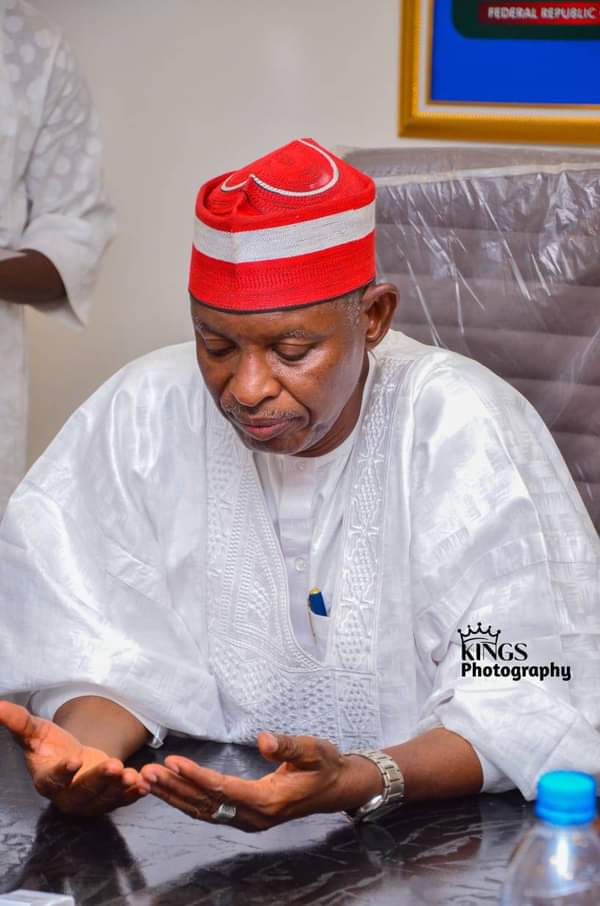
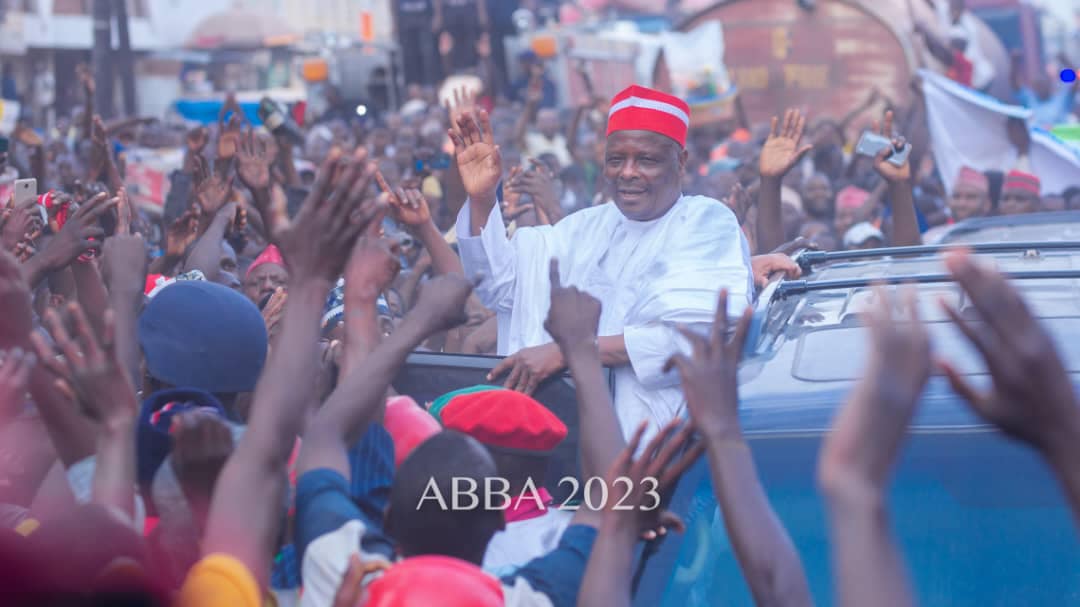
Today, the Executive Governor of Kano state, Engr. Abba Kabir Yusuf, swore in his newly appointed commissioners and assigned them to their respective ministries.

During the governor’s speech, he urged the appointed commissioners to prioritize honesty and sincerity and avoid any involvement in corrupt practices.

The commissioners and their ministries are as follows:

1-Comr. Aminu Abdulsalam  – Ministry for Local Government

2-Hon. Haruna Umar Doguwa -Commissioner for Education

3-Hon. Ali Bukar Makoda -Commissioner for Water Resources

4-Dr. Abubakar Labaran Yusuf – Commissioner Ministry of Health

5-Engr. Marwan Ahmad – Commissioner Ministry of Works, Housing and Infrastructure

6-Barr. Haruna Dederi – Commissioner Ministry for Justice

7-Dr. Yusuf Kofar Mata – Commissioner Ministry for Higher Education

8-Hon. Nasiru sule Garo-Commissioner Ministry for Environment

9-Engr. Muhammad Diggol – Commissioner Ministry for transport

10-Hon. Abbas Sani Abbas-Commissioner Ministry for Commerce and Investment

11-Hon. Hamza Safiyanu-Commissioner Ministry for Rural Affairs

12-Dr. Danjuma Mahmoud -Commissioner Ministry for Agriculture

13-Hon. Musa Sulaiman Shanono – Commissioner Ministry for Budget and Planning

14-Haj. Ladidi Garko -Commissioner Ministry for Culture and Tourism

15-Hon. Adamu Ali Kibiya – Commissioner Ministry for Land and survey

16-Hon. Tajuddeen Othman- Commissioner Ministry for Science and Technology

17-Hon. Baba Halilu Dantiye – Commissioner Ministry for Information

18-Sheik Tijjani Auwal – Ministry for Religious Affairs.

19-Aisha L. – Commissioner Ministry for Women Affairs

Gov. Yusuf meets designer of demolished Golden Jubilee roundabout, vows to rebuild it

By Uzair Adam Imam

The Kano State Governor, Abba Kabir Yusuf, has met with the designer of the demolished Kano Golden Jubilee Edifice of the Government House Roundabout.

The governor who made this disclosure Monday on his verified Twitter handle, said the roundabout will be reconstructed along Na’ibawa Flyover, Zaria Road.

According to the governor, the demolition of the Government House Roundabout was for security purposes and structural considerations.

He stated, “Recently, we took the decision to move the Kano Golden Jubilee Edifice from the Government House Roundabout, due to security and structural considerations. 

“It was therefore in that regard, I met with its designer, at the structure’s new home, along the Naibawa Flyover, Zaria Road. 

“Our government is highly committed to the massive improvement of Kano’s infrastructural architecture, and its accessibility to all,” he added.

The Daily Reality recalls that the demolition of the roundabout a few weeks ago generated painful arguments with many people saying the demolition was meant to satisfy the political anger of the Abba’s Godfather, Kwankwaso, against the immediate past governor, Ganduje.

Reimagining education in Kano State: A call for visionary leadership

By Huzaifa Dokaji

Imagine a bustling city nestled in the heart of West Africa that radiated intellectual brilliance and creativity long before the Europeans reached the region. This is Kano, a city whose intellectual achievements have shone brightly throughout history, never hidden from the world’s gaze. A state North African merchants describe as “a city like a thousand city”. Allow me to paint a vivid picture of Kano’s intellectual past, a portrait that will captivate your imagination and unveil the greatness that lies within.

Centuries before the arrival of colonial powers, Kano was a thriving centre of learning, attracting scholars from far and wide. It was a place where minds converged, knowledge was cherished, and intellectual pursuits flourished thanks to state and privately-sponsored academic spaces. In the corridors of Kano’s renowned educational institutions, such as the intimidating Madabo centre, scholars delved into the depths of philosophy, science, literature, and Islamic studies. They engaged in intellectual debates, exchanged ideas, and produced works that left an indelible mark on the intellectual landscape of their time and beyond. This legacy, however, is at peril more than ever.

In a state that once boasted of kings and emirs renowned for their generous support of scholars and students, state scholarships are now only disbursed on the eve of elections, serving as mere tools for vote canvassing. Our schools are among the worse in the world. Although once a space where literary production was at its fines, schools in Kano lack access to any useful library resources. Lecturers resort to illegally downloading books online or relying on pirated copies to fulfil their teaching duties.

It is genuinely dismaying that a junior lecturer in our universities must spend nearly half their monthly wage to order an essential textbook on Amazon, while students at even the poorest universities in America have access to such materials through interlibrary loans. Adding to this bleak scenario, for example, over three years, Stony Brook University in New York spent about half of our 2023 budget for education to renovate its Student Union building. As worrying as this is, I believe Kano State still possesses the potential to emerge as a shining example of educational brilliance once again. My intervention is limited to institutions of higher learning.

To transform the Kwankwasiyya vision for education into a reality, we must transcend the mere provision of basic educational infrastructure and sponsoring students to study abroad. We must embrace a bold approach that surpasses the efforts of our Nigerian and West African counterparts. We need visionary leadership and innovative infrastructure. We need leaders who understand that education is not merely about constructing classrooms and dashing out scholarships; it is about providing qualitative and enduring infrastructure and creating an environment that fosters intellectual growth, critical thinking, and cutting-edge research. We need leaders who recognise that the quality of education is directly proportional to the quality of infrastructure provided and the system created.

Imagine a Kano State where universities boast state-of-the-art research laboratories with cutting-edge technology. Envision lecture halls that facilitate interactive and engaging teaching methods, equipped with the latest audiovisual tools and comfortable seating arrangements. Picture libraries filled with a vast array of books, journals, and digital resources, providing students and faculty with access to a world of knowledge at their fingertips. Imagine campuses adorned with green spaces, inspiring architecture, and modern facilities that foster an atmosphere conducive to learning and intellectual exploration. Imagine a Kano where lecturers are paid a decent wage.

We must transcend those dilapidated buildings that even counties are ashamed of building abroad. There is a critical need to dream beyond the limitations of what other Nigerian governors have failed to achieve. We must look to the examples set by leaders in more progressive societies and strive for such excellence. Let us aim to provide our students and faculty with infrastructure that not only meets their basic needs but also inspires them to reach new heights of knowledge and innovation. This should be the Kwankwasiyya vision.

The interventions

a. Infrastructure

To realise this vision, it is crucial to prioritise the modernisation and expansion of our universities’ infrastructure. Outdated facilities, overcrowded classrooms, and limited resources hinder the educational experience and impede the pursuit of cutting-edge research. It is time to break free from the shackles of mediocrity and invest in infrastructure that reflects our commitment to academic excellence. We need well-equipped laboratories, not just buildings with nothing to offer our science students. By allocating a significant portion of the state budget to education and ensuring the judicious utilisation of funds, we can establish a sustainable funding model that facilitates the development of world-class infrastructure.

The above investment will benefit our universities and attract renowned scholars and researchers from around the world. They will see Kano as a place where they can pursue their academic endeavours in an environment that supports and nurtures their intellectual growth. By looking at what governors in more advanced regions are doing, we can identify innovative approaches to infrastructure development. These leaders understand that modernising educational institutions goes beyond constructing buildings; it involves creating spaces that foster collaboration, critical thinking, and creativity. They invest in research facilities, technological resources, and student support services that enrich the educational experience and provide students with the skills needed to thrive in the global economy.

b. Wages and Allowances

There is a pressing need for Governor Abba Kabir Yusuf to reconsider the current remuneration package for lecturers in our state-owned higher institutions. It is essential to rise above the confines of the narrow mindset that accepts the prevailing notion of meagre salaries for lecturers on the selfish idea that it is what all states and the federal government are paying. In this era, marked by heightened awareness and accountability, there is no plausible justification for not paying a reasonable wage when politicians have continued to show ingenuity in sourcing money to fund their expensive and outrageous lifestyles. Paying lecturers a meagre salary of $200 a month undermines their professional dedication and the essence of a vibrant and dynamic education system. Recognising the invaluable contributions of these esteemed educators, Governor Yusuf must transcend the limitations of prevalent practices and champion a new paradigm of valuing and rewarding academic expertise. By offering a respectable and competitive wage, he can demonstrate his unwavering commitment to nurturing an environment that attracts and retains top-notch scholars, who, in turn, inspire students to reach new intellectual heights.

c. Grants and fellowships

The absence of grants in Kano universities is not only a concern for the institutions themselves but also a reflection of the broader condition of education in our beloved state. No society can truly develop its education system and produce graduates who can address the nation’s needs without ensuring access to basic resources, such as grants, which fuel academic progress and knowledge dissemination. To rectify this pressing issue, there is an urgent need to prioritise establishing grant programs that cater to the needs of faculty members and students across all universities in Kano State. It is imperative to allocate funds in the state budget specifically dedicated to supporting and rewarding research, innovation, and academic excellence.

For several reasons, grants and fellowships are crucial in developing academic research, especially in developing countries. First, they provide financial support to researchers who may not have the resources to pursue their studies. Second, they facilitate collaborations between researchers worldwide, enabling the exchange of ideas and knowledge. Third, grants and fellowships often come with opportunities for training and mentorship, which can enhance the skills and expertise of researchers. Finally, supporting academic research, grants, and fellowships can lead to the developing of new technologies, products, and services that can have significant social and economic benefits for developing countries.

The government should collaborate with private organisations, philanthropists, and international institutions to establish a successful fellowship and grant program in Kano. By working together, the government can leverage existing resources to create a sustainable program that supports research and innovation in academic institutions.

Grants, both for lecturers and students, are crucial lifelines that enable universities to flourish and produce graduates equipped with the skills necessary to thrive in today’s rapidly evolving world. They will provide financial support for research projects, allow for acquiring state-of-the-art equipment and resources, and facilitate collaboration with industry partners. Without grants, universities face a significant impediment to progress and risk falling behind in the global academic landscape. Establishing fellowships and grants in Kano can help bridge the gap between local and international education systems by attracting talented scholars and researchers worldwide. This will give students and scholars access to diverse ideas and perspectives, enabling them to compete globally.

Grant investments will demonstrate Abba Kabir Yusuf’s commitment to developing Kano’s education system. It will make him, perhaps, the only governor to establish such in the entire Northern region. Such a move will enhance the quality of education and attract renowned researchers, industry partnerships, and prestigious grants to our universities. The ripple effect of such investment will position Kano State as a hub for innovation, drive economic growth, and nurture a generation of graduates ready to tackle local and global challenges.

Denying students access to grants limits their potential and hampers their ability to engage in hands-on, practical research experiences that enrich their educational journey. By investing in grants, we empower our students to contribute meaningfully to their respective fields upon graduation. Moreover, these programs will create a culture of research and innovation in academic institutions, leading to increased productivity and competitiveness.

In conclusion, by embracing visionary leadership, investing in infrastructure, and establishing grant programs, Kano State can transcend the limitations of the past and emerge as a leader in educational excellence. Let us not settle for mediocrity but strive for greatness in our pursuit of knowledge and innovation. The future of Kano’s education system lies in our collective commitment to providing world-class infrastructure and nurturing a generation of scholars capable of making significant contributions to society. Together, we can transform Kano into an educational powerhouse that inspires and empowers future generations.

Huzaifa Dokaji is a PhD student and teaching assistant at the Department of History, State University of New York at Sony Brook. He can be reached via huzaifa.dokaji@stonybrook.edu.

Restoring Muhammadu Sanusi II

By Dr. Aliyu U. Tilde

History repeats itself, they say. However, that recurrence was less frequent in the history of rulers of Northern Nigeria. While historians can remember two, we may be at a point of witnessing the third.  

Sometime in December 1652, Muhammadu Kakuna, the 33rd Sultan of Kano, was ousted under the influence of the powerful Maidaki Auwa, who installed her son, Soyaki. Kakuna retreated to Zaria and, within days, fought back his way to the throne just before the year ran out. That was the only time a ruler of Kano was restored.

In 1901, the British colonialists occupied Kontagora—tudu makwantar rikici—and deposed its 3rd Emir, Ibrahim Nagwamatse, for his notorious slave expeditions. They installed his son. For some reason, after just two years, the British returned Ibrahim from exile in 1903 and made him the Sarkin Sudan, and he reigned until he died in 1929.  

Muhammadu Sanusi II, the 14th Emir of Kano, may soon be the third. Like in the case of Kakuna, many saw his removal by Governor Abdullahi Umar Ganduje on the grounds of insubordination as a live specimen of highhandedness, intolerance, and vengeance. The Emir was arrested and banished to Loko, Nassarawa State, for confinement, an action which he successfully fought against before a federal high court in Abuja. On 30th November 2020, the court declared the internment and the Emirate Council Law under which it was undertaken unconstitutional. It restored the fundamental rights of the deposed Emir to human dignity and personal liberty.  

In contrast to Maidaki Auwa of 1652, Governor Ganduje went beyond the Emir and balkanised the Emirate. He divided it into five independent emirates to prevent the emergence of any strong Emir of Kano in the future. This act of downgrading the system, the first of its kind since Bagauda founded Kano 1,025 years ago, is understandably repugnant to the Kano ruling family and many of its subjects. If the malware, they argue, had only changed the driver file—in this case, the Emir—the system could tolerate that and continue with the same speed. But corrupting the entire system files and downgrading its performance to a status of a photocopier cannot be tolerated. A ‘system restore’ is necessary.  

Restoring the Kano Emirate system to its 9 March 2020 date is now on the fingers of the new administration in the State. It will undoubtedly be greeted with mixed feelings in the next few days, especially as it will portend restoring its unified disk configuration and the deleted driver file.  

History is about to witness that restoration if the feelers from Kano are accurate. How the ancient city would absorb the heat of the operation and bounce back as one of the most important emirates in the region is a matter of immediate concern to its citizens. As Nigerians, we can only hope that it does so without boiling.

Dr Aliyu is a former Bauchi State Commissioner of Education. He can be reached via Twitter @Dr_AliyuTilde.

Climate Crisis: Challenges for Nigeria’s new administration

By Nusaiba Ibrahim Na’abba

There are so many things on the table awaiting the newly inaugurated administration. With insecurity topping the list, there is a great task of realising viable and sustainable economic alternatives, developing a solid healthcare structure, and battling an ever-evolving overwhelming climate reality. The just-inaugurated administration will undoubtedly be challenged by many of what its predecessors fought. Addressing these issues of high public priority is an invaluable facet of the success of Bola Tinubu’s administration.

Unifying the country after a rigorously contested election is another challenge the incoming administration will face. The recently held elections have unveiled another dimension of disunity in this country. Unity is always an essential asset in any country’s development, which is why it is a pillar upon which societies thrive. Even before the new president was elected, the Muslim-Muslim ticket that filled the air was refuted by opposition parties.

Environmental challenges have dreaded many plans to succeed in Nigeria. Recently, because they are primarily multi-faceted. In 2022, they brought an unprecedented climate crisis in Nigeria and the world. Floods have devastated communities in Southern parts of the country, and many of the communities in the North were displaced. The inherent consequences of climate-related problems in our country are truly worrisome.

Over 12,000 farmlands across 14 local government areas were destroyed in Kano State due to heavy and torrential rainfalls. These figures were pronounced by the Kano State Emergency Management Agency (SEMA). In addition, several families were forcefully displaced from their homes.

In Jigawa State, many homes were destroyed by heavy rains and floods. Numerous families had to be dispersed across schools, serving as relief camps for the displaced. Some innocent lives were lost after being buried by the building, an effect of heavy rainfall. A substantial number of farmlands were said to have been destroyed too. These issues occurred while the President Buhari administration was nearing its end and political campaigns heightened.

The federal and state governments rushed to cushion the effects by sharing palliatives with affected communities. Philanthropists also played an essential role in supporting the victims affected. Many families had lost everything, including their only source of livelihood, farming. This challenge intensified living conditions for average Nigerians in these parts of the country as prices of commodities hiked and the cost of living rose significantly.

Now after a year, we’re back at it again. The Nigerian Meteorological Agency (NIMET) has started highlighting forecasts of what we would expect during this year’s rainfall season, and indicators are frightening; heavy rains and thunderstorms are the pointers. And because the foresight comes as a warning signal, many families in these areas are already baffled with unimaginable thoughts, picturing last year’s experiences.

Apart from heavy floods, the inconsistency of rainfall in the Northern part of the country is another climate wrinkle. If not managed with the right agricultural methodologies, the inconsistency of rain will only worsen access to food supplies. Policies of the just concluded government in terms of border closure and later ban on importing products like foreign rice have hit hard a large percentage of Nigeria’s population. Most average Nigerians have long relied on these foreign food supplies for survival. Even with the supposed increase in agricultural activities as the alternative induced by the Buhari administration, the prices are unbearable.

Heat is now persistent with the cut down of trees in the North. The severe effect has been felt by people, unlike heat seasons before. This year’s Ramadan season was barely scaled through because of excessive heat. By now, many are starting to realise the importance of building trees and the ills of cutting them down. Federal and state government initiatives at this stage in our lives must prioritise replanting of new and resilient breeds of trees in places set for infrastructural activities. Our experiences have highlighted that prior climate change initiatives in this respect are not enough.

Health problems are also being exacerbated as climate change continues to unravel. Continuous pollution consistently exposed Nigerians to various health hazards. Gigantic pyramids of waste in cities have polluted healthy air. In areas where the waste pyramids are later burnt down, people are forced to breathe in harmful substances that have long-lasting effects. More so, manufacturing companies in, for instance, Kano, have been hit with several allegations of releasing toxic substances after their production processes.

According to Wasteaid (2021), with no access to waste management services, one in 3 people worldwide have no choice but to dump or burn their waste. Open waste burning is a significant emitter of black carbon, CO2, carbon monoxide, and other harmful toxins. This explains the risks attached to indiscriminate waste generation and management.

The findings are vindicated by United Nations Environment Program (UNEP) 2021 in a study which identified that Nigeria produces more than 3 million tonnes of waste annually, and only 20 to 30 per cent is collected and disposed of. Uncontrolled wasted burning, which is one of the practices, contributes to deteriorating air quality in Urban centres.

In their recent publication this year, UNEP also states that in Nigeria, sachets have become increasingly widespread, especially in fast-growing cities like Lagos. Research shows that about 50 to 60 million used water sachets are thrown into the streets daily”. When you picture the whole of Nigeria in terms of this indiscriminate act, you know a bigger problem lies ahead unless necessary measures are implored. I have not forgotten about e-wastes that have found dwelling places in Nigerian cities.

I cannot possibly explore all the existential climate challenges within this single piece. On the one hand, the federal government is currently overwhelmed with subsidy removal, dollar instability and making appointments. On the other hand, at state/local levels, some governments a busy investigating the ills of just concluded administrations while others are trying to get a hold of the affairs of the states. Unfortunately, all these aren’t slow down the speech of climate-induced consequences.

In the southern part of the country, Nigeria has been fighting oil exploration problems which have disrupted livelihood. Floods have been a major occurrence in areas where oil is not being extracted. These challenges have to be creatively and carefully addressed.

Nigeria is blessed with enormous human resources capable of producing excellent ideas to combat some of these issues. As part of the government’s obligation to serve, it must consider accepting solutions from communities, creative youths, and start-ups. Many ideas can be supported with considerable investment to help the fight against climate-induced calamities.

Nusaiba Ibrahim Na’abba is a master’s student from the Department of Mass Communication, BUK. She is a freelance writer and researcher. She can be reached via nusaibaibrahim66@gmail.com.
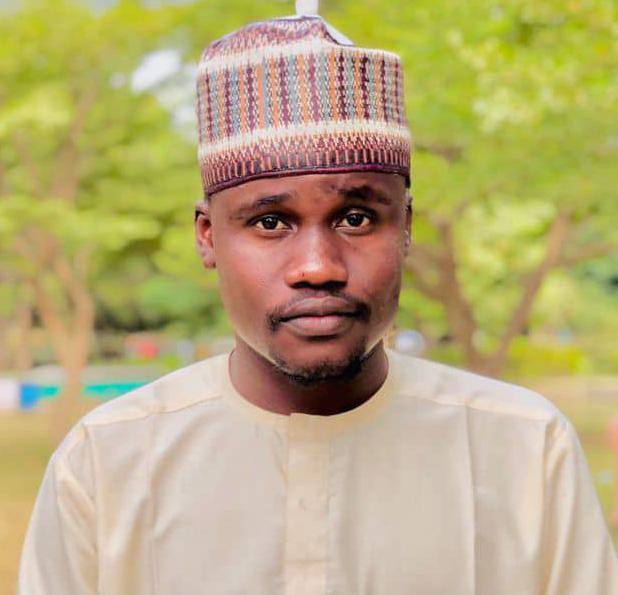
Eng Sagir Koki vows to bring positive change

By Abbas Datti

Our newly elected representative, Engineer Sagir Ibrahim Koki, promises to serve the people of the Kano Municipal constituency with integrity and dedication.

In a historic election victory, Engineer Sagir Ibrahim Koki has emerged as the newest member from Kano Municipal in the House of Representatives. Before his campaign, he promised to bring fresh perspectives and foster positive change within the esteemed legislative body. With the weight of public trust on his shoulders, Engineer Sagir steps into office, committed to serving the constituents and championing their interests.

Hailing from the Koki district of Kano State, he has already made waves with his dynamic campaign, installation of transformers, vocational training, distribution of JAMB forms, and rendering assistance to prospective NECO candidates, which resonated strongly with a diverse range of voters across the Municipal Local government area. The constituents were captivated by Engineer Sagir’s passion for public service, dedication to core issues, and vision for a brighter future.

Throughout his campaign, Eng Sagir has demonstrated an unwavering focus on crucial matters such as healthcare reform, economic revitalisation, education enhancement, and environmental sustainability. Drawing from a deep understanding of the challenges the Municipal Area Community faced, Sagir Koki outlined innovative policy proposals that garnered widespread acclaim and support.

As he assumes office, he is determined to turn those promises into tangible action. Eng Sagir’s primary objective is to represent the voices of his people, ensuring that their concerns are heard, amplified, and effectively addressed within the hallowed halls of the legislative chamber. Eng Ibrahim firmly believes that the foundation of a thriving democracy lies in empowering every citizen and working collectively towards progress.

One of Sagir’s key initiatives is bridging the gap between different political ideologies and fostering collaboration and compromise. By promoting bipartisan efforts, he aims to break down the barriers that have impeded progress in the past, seeking common ground to tackle pressing issues head-on.

Furthermore, Sagir Ibrahim understands the significance of transparency and accountability in public office. He has pledged to maintain open lines of communication with constituents, regularly hosting town hall meetings and actively seeking public input to shape his decision-making process. By being accessible, Sagir aims to establish a strong bond with his community, ensuring that their aspirations remain at the forefront of his legislative endeavours.

The road ahead of Sagir may be challenging, but his determination to serve with integrity, empathy, and dedication remains unshaken. He brings a wealth of experience, having worked tirelessly within the community as an advocate for positive change. Now, armed with the power of legislation, Sagir Koki is ready to effect lasting transformations that will profoundly impact the lives of the people of the Municipal he represents.

As the newest addition to the House of Representatives, Engineer embarks on a journey marked by hope, resilience, and an unwavering commitment to the betterment of the people of the Municipal. Therefore, Municipal people are eagerly anticipating the positive changes that lie ahead, placing their trust in the capable hands of their newly elected representative.

Abbas Datti writes from Kano Municipal and can be reached via abbasdattibashir@gmail.com.