By Abubakar Muhammad
Crime is a prominent feature of the city. The mitigation of crime and other social vices is a responsibility that falls not only on the government. The health of society is a responsibility that spans multiple dimensions, from authorities with direct power to families and residents of the community as a whole. The social health of the city is also the work of architects and planners.
Physical planning is an important factor in influencing the social health of society and its inhabitants. Respected voices in urban planning note how a great urban environment, in terms of design and social services, can enhance people’s quality of life and foster a sense of community. In this piece, I set out to use Zauren Mallam Aminu Kano as a social repair tool and a planning theory for combating crime and other social ills in our society.
We have recently heard the gruesome murder of an entire family in Kano, first in Tudun Yola and then in Ɗorayi, by the same alleged criminals. Cities are characterised by petty and violent crimes. The job of residents and governments is to implement policies that prevent crime to ensure the safety of inhabitants and the prosperity of the city. Sustainable urbanism involves governments at various levels, as well as city residents.
I was particularly happy weeks ago when I learned that communities around Dala have mobilised to construct a police station around Kuka Bulukiya cemetery to combat persistent phone snatching that has cost countless lives of innocent passersby. The idea of constructing security outposts in crime hotspots has been a productive strategy for combating crime. It is not only about fighting crime; it also replaces crime with security and constant human presence and activity. It not only prevents crime and protects lives but also brings life and economic activity to beleaguered areas.
My friend once took me to an area of the ancient city to pay my condolences. It was a long time ago I cannot remember the name of the neighbourhood. Those who know Kano intimately can piece together snippets from my narration to figure out the area. I can vaguely say that the area was around Mandawari, Yar Mai-Shinkafi, Gyaranya, Baƙin Ruwa, or Gwauran Dutse. We walked through the alleys after the condolence and appeared at the Aminu Kano Way.
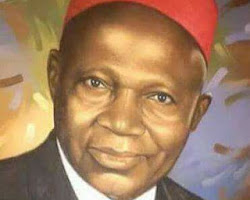
The neighbourhood has a shelter christened Zauren Mallam Aminu Kano. It is an open pavilion in the heart of the neighbourhood. I was intrigued not only by the discovery but also by the place’s name and social function. This was the first time I had ever heard of the place, or any shelter named Zauren Mallam Aminu Kano in the city. I began to think about the connection between the place and the famed radical politician.
I did not ask the naming history behind the shelter, but my imagination wagered that this must be the spot where Mallam Aminu Kano hung out with friends and conducted his public life. It must be the local context where he started his political career, a gathering place for the nightly schooling and political organising. My guess was supported by my assumption that the place is located within the ancient city, and not far from his initial dwelling at the Aisami/Sani Mainagge axis. I was intrigued by the place for its great potential to build a community.
The Zauren Mallam Aminu Kano is a mini square and public space for the community. It enables the residents to perform social and religious functions. Residents of the neighbourhood, particularly the elderly and retirees, use the pavilion to hang out. The community uses the open space to perform the funeral salat for the deceased. The main street around the space serves as a collector road, receiving people from nearby alleys and neighbourhoods. Thus, the open space becomes vibrant with life. Residents and visitors use the space to park their vehicles. Around the square, activities sprang up: informal people, vendors, and small entrepreneurs set up stalls offering services, various wares, delicacies like tsire and awara, and other household items that cater to the neighbourhood’s hospitality and social needs. The shelter becomes a living room of the community. My reading is that Zauren Mallam Aminu Kano is an open space that allows residents to do things that they cannot perform in the narrow alleys of their neighbourhood.
Part II
For this reason, Zauren Mallam Aminu Kano stays with me. I want to suggest an expanded version of this space be built in as many places as possible in the ancient city, its suburbs and major towns across the state. This is based on key spatial ideas for sociability and security of communities and neighbourhoods.
Ancient cities like Kano had been built around their traditional institutions. The city spread out from the Emir’s Palace, surrounded by other civic buildings such as the court and the central mosque, which eventually formed the city centre. Spreading in a radial pattern, subsequent expansions and settlements of the city and major towns followed the same tradition. All roads lead to the city centre. And the civic centre, or city centre, is almost always located in the vicinity of the traditional ruler’s dwelling. Outside the city, the Maigari’s or Dagaci’s house sat at the centre of the settlements.
The best location for the Zauren Mallam Aminu Kano is to look for the ugliest and most dangerous part of the neighbourhood and tear it down to create a large enough open space to build the shelter. This place should be the heartbeat of the area by consolidating basic services in one building: a small local clinic, a school, a library, administrative offices for Mai-unguwa, Dagaci, and security agents, and a conference room for important community meetings and non-partisan civic engagements.
A strong civic component and social life are essential. The idea is to overwhelm crime, blight and unsightly facades. The building can serve as a venue for adult literacy classes, mass education and public orientation centres for social mobilisation and political awareness. As a multipurpose building, the place can host activities such as elections, immunisation campaigns, skills and personal development training for local youth.
A mosque can be located close to the shelter. Around the mosque, the elderly sit, dine, and eat. It is where they enjoy calm, festive hours by day and night. Zauren Mallam Aminu Kano should be the agora and living room of the community. Clusters of civic buildings, residential and commercial uses can create sociability. This is not new; it is something that needs to be consciously improved upon existing traditions. Several Hausa villages have a santa or tsakar gari, which serves mixed purposes and brings people together. Since the shelter is located near the mosque, it should also serve as an open space for conducting funeral prayers. Commercial activities can be encouraged around the area to provide a more vibrant economic life. In Kano city, many neighbourhoods have ƴar kasuwa within walking distance, allowing residents to make purchases for their daily needs.
The small clinic located in the centre should offer first-aid services and cater to the health needs of the most vulnerable. It should deliver basic drugs and inexpensive medications, medical advice and other services that might not require a trip to the hospital. Local people with training in medical fields can volunteer to operate the place. They can also request NYSC corps members to be posted there. Funding can come from donations from wealthy residents of the community. People who have retired from active service in various walks of life can participate. Skilled individuals can also ask to set up offices and contribute their services to the community. Community services can serve as a clear benchmark for future political leaders. People can see what potential representatives have contributed to their local communities before they enter politics – what they have done for the people before asking for their votes.
It would not be a bad idea to allow car owners to park their vehicles in and around the shelter. Community-owned assets, such as donated vehicles for transporting the deceased, a power transformer, and water sources like a borehole, can be sited there. The underlying assumption is that communities would actively work to protect their assets and improve their neighborhood. Their commitment or otherwise to safeguarding their assets is clear proof of their collective responsibility, leadership, accountability and readiness for sustainable development.
The idea is to use Zauren Mallam Aminu Kano to make the targeted area active and vibrant with human activity. The dwelling of the traditional ruler should be sited there to continue to facilitate administrative functions and liaison with various levels of governments for record-keeping, issuing birth certificates and documents, and other civic engagements. The closest idea to this is Ofishin Wakili, which can be upgraded where they already exist. If built with magnificent architecture, places like this can become historic sites that represent the community and its traditions.
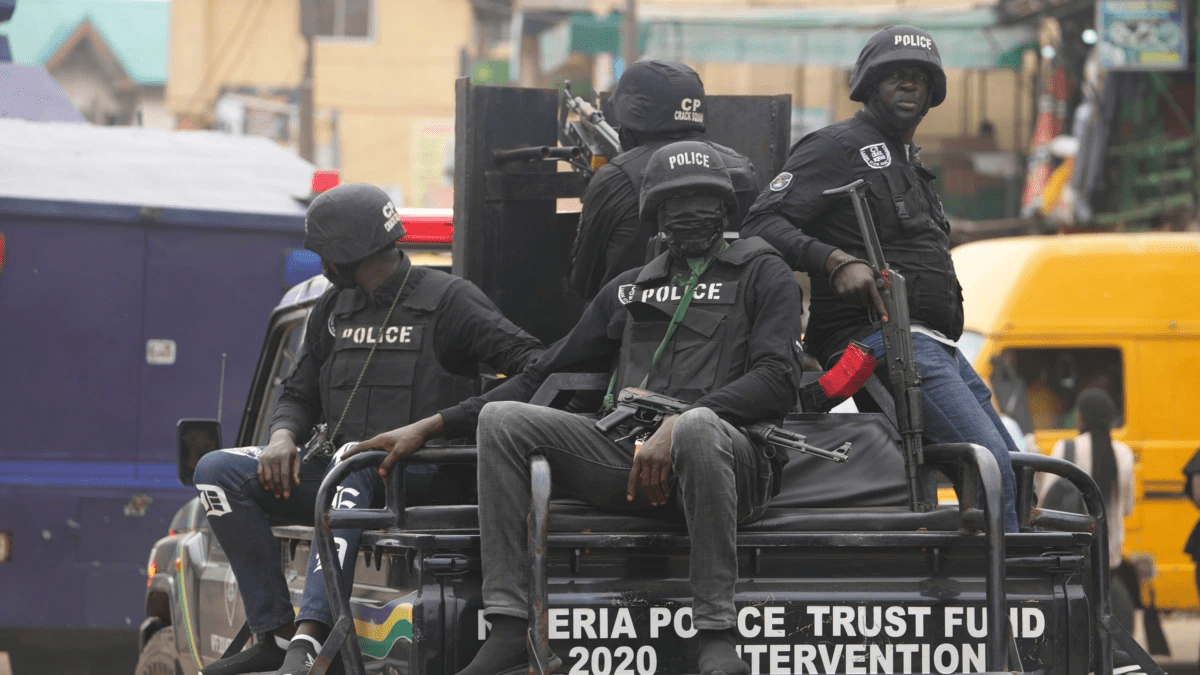
The building should house an office for joint security agencies, including the police and Hisbah. This is where disputes will first be reported. It will enhance coordination and timely reporting of suspicious activities to support early crime prevention. Emphasis is placed on civil matters and on preventing violent crimes. The activities and involvement of the security should be largely civil and minimal. The point is to increase safety through informal supervision. Security agents, the elderly, and small business operators are public figures who keep an eye on the neighbourhood. Retirees and the elderly also fill the void and silence when others are at work or school. They can alert parents – and the security agents – to what is happening in the neighbourhood. Sustainable urbanism can be achieved by densifying social life in hitherto dark corners without militarising the neighbourhood. The refurbishment of the neighbourhood is a valued alternative to blight, providing security through communal social space. Services and buildings can be distributed according to the community’s needs and resources. The purpose is to chase away the thugs from the heart of the community and bring light to the dark corners and crevices. In the process, services are brought closer to the people. Traditional institutions are involved more closely and meaningfully in public service for their immediate communities.
Stakeholders – government, traditional institutions, and community members – should work together to realise the Zauren Mallam Aminu Kano as a state-supported, neighbourhood-funded civic infrastructure across Kano State. Zauren Mallam Aminu Kano should be conceived as a community and family resources centre for the neighbourhood’s residents. It should be designed as a crime-prevention tool through visibility, social life, and shared spaces that strengthen grassroots governance and access to basic services. It is also an embodiment of the spatial practice of good neighbourliness, the warmth, and the communal character of the Mutumin Kirki society.
Abubakar Muhammad is from Kano, Nigeria.