Kano State

Troops arrest suspected kidnap kingpin, recover arms in Kano

By Uzair Adam 

Troops of the Joint Task Force have arrested a 55-year-old man suspected to be a notorious kidnapper during a security operation in Sumana village, Tundun Wada Local Government Area of Kano State.

The arrest was disclosed in a statement issued to journalists by Capt. Babatunde Zubairu, Assistant Director, Army Public Relations, 3 Brigade, on Tuesday. According to the statement, the suspect was apprehended on April 20.

He was later paraded before the Brigade Commander, Brig.-Gen. Ahmed Tukur, during the commander’s Easter visit to troops of the Forward Operating Base (FOB) in Falgore, Doguwa LGA.

The commander commended the troops for their courage and professionalism, describing the operation as a significant success in the ongoing campaign against criminality in the region.

A cache of arms and other items were recovered during the operation. These include a fabricated AK-47 rifle, one Den gun, nine rounds of 9mm pistol ammunition, a woodland camouflage uniform, a desert camouflage outfit, a camouflage vest, and a Bajaj motorcycle seat suspected to be used for concealing weapons.

Brig.-Gen. Tukur reiterated the Nigerian Army’s commitment to working with other security agencies and local authorities to restore peace and order in troubled areas.

“The army remains dedicated to its mandate of safeguarding lives and properties. We will not relent in our efforts to bring perpetrators of criminal acts to justice,” the statement read.

The suspect is currently in custody and undergoing a preliminary investigation.

Kano to launch statewide data collection Initiative

By Muhammad Sulaiman Abdullahi

The Kano State Government is set to begin engaging volunteer ad-hoc data collectors across the state’s 484 wards as part of efforts to establish a comprehensive multisectoral data bank and dashboard. The initiative, which is nearing 70 per centcompletion, has been approved by the Executive Governor, Alhaji Abba Kabir Yusuf.

According to the State Statistician-General, Dr. Aliyu Isa Aliyu, the volunteers, who must be residents of their respective wards, will be trained by the State Bureau of Statistics on the use of digital data collection tools. 

Dr Aliyu added that their responsibilities will include collecting demographic data such as births, deaths, maternal and child mortality rates from ward head registers and graveyards, as well as statistics on education, healthcare, security, and access to water and electricity.

Dr. Aliyu emphasised the importance of collaboration between volunteers, ward heads, and community stakeholders to collect accurate and timely data. He added that school teachers and health workers are strongly encouraged to apply once the application portal is made public.

“This is a collective responsibility and an opportunity for all of us who are committed to supporting our state,” he said. “Together, we shall make Kano great.”

Kano: My city, my state

By Huzaifa Dokaji

Kano is not a place you reduce to a headline or dismiss with a stereotype. It is a city with too many layers for that—too much memory, too many voices. This is the Kano of Muhammadu Rumfa, the ruler who gave it form and vision, and of Ibrahim Dabo, the scholar-king. The Kano of Kundila and Dangote, where wealth meets ingenuity.

It is the Kano the British once described as the ‘London of Africa,’ the Tripolitans praised as ‘a city like a thousand others’, each one magnificent—and its own people, knowing its complex social and ideological chemistry, named tumbin giwa, the intestine of an elephant: vast, winding, and full of hidden depths.

Kano has always carried many lives at once. It is the home of Shehu Tijjani Na Yan Mota and the sanctuary of Abdullahi dan Fodio when he felt the revolution had been betrayed. It is Madinar Mamman Shata and the home of Aminu Ala, the author of the philosophical Shahara and masterfully composed Bara a Kufai. This is the same Kano that made Dauda Kahutu Rara, the master of invective lyrics, and Rabiu Usman Baba, the Jagaban of Sha’irai.

Here, contradictions do not cancel each other, they coexist. It is the city of yan hakika and yan shari’a, of Izala and Tariqa, of Shaykh Rijiyar Lemo and of Shaykh Turi. It is the Kano where people will argue passionately about doctrine, then share tea afterward. Where silence and speech, mysticism and reform, are all part of the same long interesting yet boring conversation.

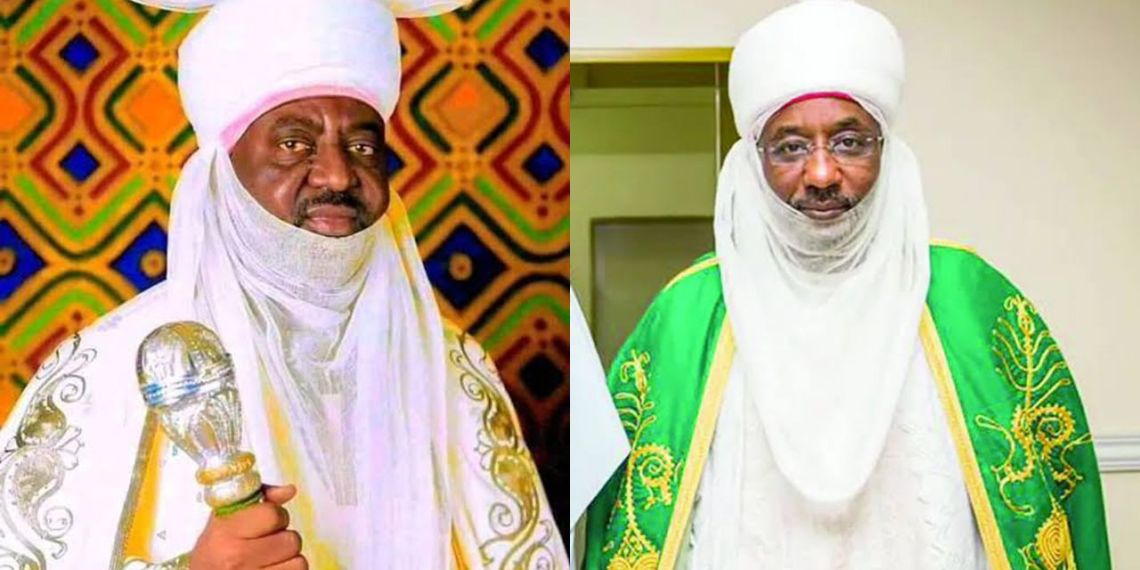
This is the Kano of the diplomatic Emir Ado Bayero and combatant Muhammad Sanusi II. Of Rabiu Kwankwaso, the red-cap-wearing jagora, and of the agreeable Ibrahim Shekarau. It is that same Kano of the incorruptible Malam Aminu Kano and Dollar-stuffing Ganduje. The cosmopolitan city of Sabo Wakilin Tauri and of the saintly Malam Ibrahim Natsugune.

If not Kano, then what other city could birth Barau Kwallon Shege, the bard of the profane, and welcome Shaykh Ibrahim Nyass, the towering saint of the mystics? Where else but Kano would you find Shaykh Nasiru Kabara- scholar and Sufi master- sharing the same cityscape with Rashida Yar Daudu and all the remembered and forgotten Magajiyoyin Karuwai? This is the Kano of yan jagaliya and attajirai, of the sacred and the profane, the pulpit and the street. The Salga and of Sanya Olu and Ibedi streets. Kano has never pretended to be a city of one truth, its greatness lies in the multitude it carries.

So when people speak carelessly about Kano, they miss the point. Kano is not a relic. It is alive. It debates itself. It holds its tensions with pride. And like Adamu Adamu said, “the story of this enigmatic city is simple and straight backward – and , in the end one can only say Kano is Kano because Kano is Kano – and that’s all; for; it is its own reason for being.”

You don’t explain Kano. You respect it.

Huzaifa Dokaji is a PhD student and teaching assistant at the Department of History, State University of New York at Sony Brook. He can be reached via huzaifa.dokaji@stonybrook.edu.

NNPP dismisses claims of Kwankwaso’s planned defection to APC

By Uzair Adam 

The New Nigeria People’s Party (NNPP) in Kano State has dismissed rumours suggesting that its 2023 presidential candidate, Senator Rabiu Musa Kwankwaso, is planning to defect to the All Progressives Congress (APC).

The state party chairman, Hashimu Dungurawa, made this known while reacting to growing speculation surrounding Kwankwaso’s alleged defection.

Dungurawa stressed that neither Kwankwaso nor the NNPP had any intention of joining the APC, which he described as a party that has failed Nigerians.

“Definitely, we (NNPP) don’t have that interest or intention. We see them (APC) as enemies of democracy. Look at where they’ve led the country today. People are only waiting for the day of the election to teach them a lesson,” Dungurawa stated.

He further noted the steady decline in the APC’s electoral support, saying, “In 2015, they had almost 20 million votes. In 2019, they got 16 million, and in 2023, it dropped to 8 million votes.”

This comes after the Chairman of the APC in Kano State, Abdullahi Abbas, welcomed the idea of Kwankwaso joining the APC but stated that it would be under certain conditions.

TikTok stunt gone too far: Hisbah arrests man for lewd act with goat

By Muhammad Abubakar

The Kano State Hisbah Board has arrested 24-year-old Shamsu Yakubu after a disturbing video showed him allegedly licking a goat’s genitals. The footage, which circulated widely on TikTok, sparked outrage among viewers and residents.

Yakubu reportedly asked someone to film the act in a bid to gain social media fame. “I did it to trend on social media and become famous,” he admitted in the video. 

However, under interrogation by Hisbah officials, he denied fully committing the act, saying, “I swear to Allah, I did not lick the goat’s genitals. I only put my mouth around the area.”

Hisbah officials were alerted after concerned residents, angered by the video, threatened to take matters into their own hands. A community leader intervened and reported the incident to the authorities.

Speaking on the arrest, Deputy Commander-General of the Hisbah Board, Sheikh Aminuddeen Abubakar, expressed dismay over the act, calling it a violation of religious and moral values. “Sadly, a Muslim man will use his mouth to lick the genitalia of a goat, without regard to religious teachings,” he said.

Sheikh Aminuddeen revealed that both the suspect and the goat will undergo medical testing. “We will test both for possible diseases before prosecution,” he stated, adding that Yakubu would also face psychiatric and drug evaluations.

He warned others against seeking online popularity through indecent behaviour, saying, “Anybody caught bathing in dirt or charcoal under the guise of fame will be arrested and dealt with accordingly.”

The incident has reignited conversations around the influence of social media on youth behaviour, with some calling for stricter regulations and moral guidance to curb extreme acts done for clout.

The better future lies on the shoulders of our younger ones

By Musa Idris Panshekara 

Everyone who cares about the future of our society must be terribly worried about some social media users’ behaviours in the name of trendsetting. One of the most trending topics these days is a video clip of a young boy pouring ashes and filthy charcoal over his head.

The youngster vividly states his motive and goal without considering the negative impact of the dust on his health. Earlier this week, another woman appeared, adopting the same style as the young boy. Who copies the other’s style is unbeknownst to me; however, they share the same approach.

Moreover, another young man comes out of the blue – licking a goat’s vagina and uttering his goal of doing the animalistic behaviour. He briskly and shamelessly urged his followers to share it for him to trend. Unfortunately, many people have been sharing and reacting to the post, forgetting that they are indirectly helping to popularise the malicious and extra-moral behaviour contained in the clip.

Nevertheless, setting a goal and working to achieve it is never a sin; rather, the nature of the goal is what matters. Nowadays, youth are desperately seeking popularity blindly, regardless of the means they employ.

Whoever lived in the two or three decades back will undoubtedly know how discipline and moral training are diminishing in our society. By reflecting on the current situation of our youth and the trajectory of their future, if deep thought is given to the scenario, there will be a great challenge in the near future. Our youth lose direction, and they are the so-called leaders of tomorrow. No concrete foundation has been made, yet they are eager for overnight success and popularity.

However, almost no one is safe – as long as there is a smartphone in your house, the moral discipline of your family is at stake of demoralisation. Most children have more interest in comical videos, and many comedians are now pornographising their videos to gain more viewers and followers, which is becoming normal. Thus, everyone can be victimised unknowingly and unintentionally.

How can these bad attitudes be stopped from spreading? Who is responsible for doing so? These two questions can occupy the minds of every good individual who seeks the betterment of society. Thus, if these two important questions were asked, people might have different opinions. But, to me, it is a collective responsibility, while providing individual responsibility remains constant.

We use our phones for personal reasons and have complete control over whom we follow and unfollow on social media. We have the power to decide which posts to like or share. No one besides ourselves has total control over these actions. Therefore, I urge everyone to take immediate action on this issue to shape, clarify, and prepare the future for our born and unborn children.

May Allah guide us to the straight path.

Musa Idris, HND. (Laboratory science technology microbiology), CERT. (Animal production technology), CERT.(Cybersecurity and Digital Forensics investigation), wrote from Panshekara, Kumbotso LGA, Kano.

FG, Edo State gov’t form fact-finding committee on Uromi killings

By Hadiza Abdulkadir

The Federal and Edo State Governments have established a fact-finding committee to investigate the recent killings of 16 travellers in Uromi. 

Governor Senator Monday Okpebholo announced this during a meeting with a delegation from Kano State, led by Deputy Governor Comrade Aminu Abdulsalam Gwarzo.

Okpebholo expressed President Bola Ahmed Tinubu’s discontent with the incident and emphasised the government’s commitment to ensuring the safety of all Nigerians. He also mentioned the need to address the underlying issues contributing to such violence.

Gwarzo thanked the governor for his response to the incident and shared that Kano has formed its own committee to verify the victims’ identities and next of kin. The governor assured that justice would be pursued transparently.

The meeting included various officials and culminated in a visit to Uromi, where they engaged with the local Hausa community.

Kano delegation embarks on fact-finding mission to Edo over travellers’ killing

By Uzair Adam

A high-powered delegation from the Kano State Government on Thursday departed for Edo State on a fact-finding and peace-building mission following the gruesome killing of 16 Kano travellers who were burnt to death in the Uromi community.

This was disclosed in a statement by Ibrahim Garba Shu’aibu, spokesperson to the Deputy Governor of Kano State, who said the visit aims to investigate the circumstances surrounding the incident and foster peaceful coexistence.

The Daily Reality reports that the committee was constituted in response to national outrage and concern over the violent attacks that led to multiple deaths and the displacement of residents, including indigenes of Kano living in the area.

The delegation is led by the Deputy Governor of Kano State, Comrade Aminu Abdussalam Gwarzo. It includes notable figures such as the Emir of Rano, Ambassador Mohammad Isa Umar, and commissioners from various ministries, including Religious Affairs, Local Government and Chieftaincy Affairs, Special Duties, and Women Affairs. Also in the team are the Chairman of Bunkure Local Government Area and other top officials.

Speaking at the Mallam Aminu Kano International Airport before departure, Deputy Governor Gwarzo emphasized the committee’s dedication to justice and peace.

“Our mandate is clear — to investigate, consult, and recommend sustainable solutions. This is not just a fact-finding mission, but a peace-building initiative aimed at restoring confidence and preventing further violence,” he said.

He noted that the tragic event last month has escalated tension in the area. During their week-long stay, the committee will meet with the Edo State Governor, security chiefs, traditional leaders, and civil society groups.

The statement also mentioned that the mission aligns with the Northern Governors Forum’s broader efforts to promote unity and address insecurity nationwide.

It concluded that “Further updates will be provided as the committee progresses with its engagement in Edo State. “

_________________________________

Muhsin Ibrahim, PhD

Institute of African Studies

University of Cologne 

Blogwww.muhsin.in

Kano Emirate names new officials in latest reshuffle

By Abdullahi Mukhtar Algasgaini

In a recent reshuffle within the Kano Emirate, key members of the royal family have been elevated to higher positions, signaling a renewed focus on leadership and tradition.

Alhaji Mannir Sanusi Bayero has been promoted from Wamban Kano to the prestigious title of Galadiman Kano, marking a significant step in his royal duties.

Meanwhile, Alhaji Kabiru Tijjani Hashim, formerly Turakin Kano, has been elevated to Wamban Kano, reinforcing his role in the emirate’s governance.

Alhaji Mahmud Ado Bayero, previously Tafidan Kano, has now been promoted to Turakin Kano, highlighting his increasing influence.

In fresh appointments, Adam Lamido Sanusi (Ashraf) takes on the title of Tafidan Kano, while Alhaji Ahmed Abbas Sanusi has been named the new Yariman Kano.

The changes aim to strengthen the emirate’s leadership, ensuring continuity and progress in Kano’s traditional governance.

IGP withdraws police invitation to Emir Sanusi following Sallah Day incident in Kano

By Hadiza Abdulkadir

The Nigeria Police Force has retracted its invitation to Alhaji Sanusi regarding the recent unrest during the Sallah celebration in Kano State on March 30, 2025. The invitation was initially extended to gather Alhaji Sanusi’s account of the events that led to the disruption of peace during the festivities.

Following consultations with key stakeholders, Inspector-General of Police, IGP Kayode Adeolu Egbetokun, emphasized the importance of keeping policing actions free from political bias and misinterpretation. Instead of requiring Alhaji Sanusi’s attendance at the police station, the IGP has directed the operatives of the Force Intelligence Department (FID) to go to Kano and obtain his statement directly.

Prior to the Sallah celebrations, police received credible intelligence suggesting that two rival emirs, Alh Ado Bayero and Alh Lamido Sanusi, intended to hold separate Durbar Festivals, a tradition that involves emirs parading on horseback. To prevent potential violence, IGP Egbetokun deployed Deputy Inspector-General of Police, DIG Abubakar Sadiq, to negotiate with both parties and the Kano State Government, resulting in an agreement to cancel the festivities.

Despite this understanding, Alhaji Sanusi proceeded to ride a horse in a procession post-Eid prayers, which led to escalating tensions with local youths and ultimately resulted in the death of one Usman Sagiru, along with several injuries.

The Nigeria Police Force has assured the public of its commitment to professionalism in investigating the incident, stating that those responsible will face justice. The police further clarified that their actions are driven by principles of neutrality and professionalism.

ACP Olumuyiwa Adejobi, the Force Public Relations Officer, reiterated the police’s dedication to conducting thorough investigations into the matter.