Judiciary

Kano judicial commission demotes registrar, penalizes others over misconduct

By Anwar Usman

The Kano State Judicial Service Commission has taken disciplinary action against a court registrar and two other staff over misconduct.

This is contained in a statement issued by Mr Baba Jibo-Ibrahim, the spokesperson of the Kano State Judiciary.

He said the decision was among the resolutions reached at the JSC’s 82nd meeting on Wednesday.

He said the commission, under its mandate to ensure discipline and integrity, adopted the recommendations of the investigation panel established by the Judiciary Public Complaints Committee.

The commission resolved to apply a series of disciplinary measures and administrative decisions.

The statement in part reads “Court Registrar Salisu Sule was demoted by one grade level after the JPCC found overwhelming evidence of misconduct in four separate complaints bordering on insults, intimidation, and abuse of office.

“The two reinstated magistrates are Chief Magistrate Mustapha Sa’ad-Datti and Chief Magistrate Rabi Abdulkadir,” Baba jibo further stated that, investigation shows that Sule consistently used the name of the judiciary to harass and intimidate the public while discharging his duties.

“The JSC had issued a warning letter to him dated Dec.19, 2024, and has now resolved to impose this stiffer sanction, demoting him by one grade level with immediate effect,” he said.

The statement added that after careful review, the Commission resolved that Mustapha Sa’ad-Datti and Rabi Abdulkadir should resume sitting and continue with their judicial duties.

“They are, however, admonished to uphold the highest standards of integrity, diligence, and professionalism in the discharge of their judicial functions,” the statement said.

Jibo-Ibrahim said Ahmad Aliyu Danmaraya, a Principal Registrar attached to the High Court Headquarters in Kano, was directed to proceed on compulsory retirement with immediate effect for acts of gross misconduct.

“The JPCC found Danmaraya guilty of forging an affidavit, affixing the High Court stamp and seal, and inscribing a fake receipt number, knowing fully well that he is not a commissioner for oaths,” he said.

Kano judiciary suspends two registrars, cautions two judges over misconduct

By Uzair Adam

The Kano State Judicial Service Commission has suspended two court registrars and issued formal warnings to two Upper Sharia Court judges for various acts of misconduct.

This was announced in a statement by the spokesperson of the Kano State Judiciary, Baba Jibo Ibrahim, on Sunday, April 27, 2025, according to SolaceBase.

The statement said the disciplinary measures were approved during the Commission’s 80th meeting held on April 22, 2025, based on the recommendations of the Judiciary Public Complaints Committee.

Principal Registrar II of the High Court of Justice, Ibrahim Adamu, was suspended without pay for six months and had his promotion delayed after being found guilty of verbally assaulting and attempting to physically attack his superior — actions that violated the Kano State Civil Service Rules 2004 and Judicial Service Commission Regulations. 

The statement noted that this was his second appearance before an investigative panel for violence-related misconduct.

In a related case, Maigida Lawan, a Principal Registrar of the Sharia Court of Appeal, was found guilty of demanding and receiving improper gratification under false pretences. 

Consequently, he was demoted from GL-13 to GL-12 and suspended without pay for six months.

Meanwhile, Upper Sharia Court Judge Alkali Mansur Ibrahim was issued a formal warning after evidence showed he used abusive language toward a litigant. 

Similarly, Upper Sharia Court Judge Alkali Nasiru Ahmad received a caution for ordering the detention of a judgment debtor in circumstances that suggested a conflict of interest and compromised judicial impartiality.

The Commission reaffirmed its zero-tolerance policy toward corruption and misconduct, warning that any court staff found guilty of such practices would face compulsory retirement. 

It stressed that judicial officers must uphold fairness, integrity, and respect for all court users to maintain public trust in the judiciary.

Jigawa judiciary sacks three, forces judges to resign over misconduct

By Uzair Adam

The Jigawa State Judicial Service Commission (JSC) has taken disciplinary action against several judicial staff for misconduct, including the dismissal of three officers, advising three Shari’a Court judges to resign, and reprimanding two others for dereliction of duty.

This was disclosed in a statement by Abbas Wangara, Director of Protocol and Publicity, Jigawa State Judiciary, on Sunday in Dutse.

According to the statement, the disciplinary measures were approved during the commission’s 178th meeting, held on January 7, following investigations into violations of judicial procedures and rules.

“In the outcome of the meeting signed by Auwalu Dan’Azumi, Secretary of the JSC, the commission received the report of an investigation committee from the High Court department in respect of two officers,” the statement said.

The affected officers, Iyal Ibrahim, a Higher Registrar on Grade Level 08, and Baffa Alhaji, a Principal Registrar on Grade Level 14, were found guilty of the illegal sale of two vehicles, exhibits of the Federal High Court, Dutse.

The commission terminated their appointments in line with Rule 5 (4) & (6) of the Jigawa State Judiciary Scheme of Service 2006 and Section 41 of the Judicial Service Commission Law, Cap. 20 Laws of Jigawa State 2012.

Additionally, the commission dismissed Abdu Aujara, a Chief Clerical Officer, for suppressing N965,000, a litigant’s deposit in a case of recovery filed by Ja’iz Bank before the Chief Magistrates Court Jahun. His dismissal was also in accordance with Section 41 of the Judicial Service Commission Law.

The commission further acted on reports from the Judiciary Public Complaint Committee (JPCC) against several Shari’a Court judges. One of them, Adamu Farin-Dutse, was accused of abusing judicial powers and misapplying the law.

Despite previous warnings, he was found liable for misconduct and advised to resign within two weeks.

Similarly, Muhammad Usman, another Shari’a Court judge, was accused of issuing a writ of possession before delivering judgment, thereby violating due process. He was also advised to resign within two weeks.

In another case, Judge Usman Zubair was found guilty of judicial irregularities, including mishandling inheritance cases and allowing unauthorized individuals to benefit from rulings.

He was similarly advised to resign. Two magistrates were reprimanded. Magistrate Munnir Abdullahi received a warning for improperly converting a civil matter to a criminal case and acting in a partisan manner.

Magistrate Yakubu Ibrahim was warned for abusing power and making derogatory remarks toward a litigant at Chief Magistrate Court Maigatari.

Wangara emphasized that these disciplinary actions reflect the commission’s commitment to ensuring a corruption-free judiciary and upholding professionalism and discipline among judicial staff.

He assured that the JSC would continue to take necessary measures to maintain standards and foster a fair working environment.

The commission reiterated its dedication to promoting a transparent and efficient judiciary in the state.

Kano judiciary suspends two court registrars over alleged land fraud

By Uzair Adam 

Following allegations of fraudulent activities, the Kano State Judicial Service Commission has suspended two Sharia Court registrars, Jamilu Ibrahim and Zubairu Sulaiman.

This was disclosed in a statement released by the Spokesman of the Kano Judiciary, Baba Jibo Ibrahim, on Friday. 

The commission took disciplinary action during its 75th meeting held on September 12, 2024.

According to the statement, the investigation revealed that Jamilu Ibrahim was involved in a fraudulent transaction linked to the illegal sale of two plots of land through a writ of possession. 

The investigative committee recommended his dismissal, but the commission opted for an indefinite suspension without pay, pending the outcome of his trial at a Magistrate Court.

Additionally, the investigation found that Zubairu Sulaiman, Registrar of the Upper Sharia Court, received one million naira into his personal account as a commission from the sale of the land. 

Consequently, the Judicial Service Commission has suspended him for four months without pay.

The statement reiterated the commission’s commitment to enforcing disciplinary measures against staff involved in misconduct, particularly those in judicial roles, to protect the integrity and accountability of the judiciary while maintaining public confidence.

Rising concerns on ‘judicial impartiality’: A closer look at recent verdicts

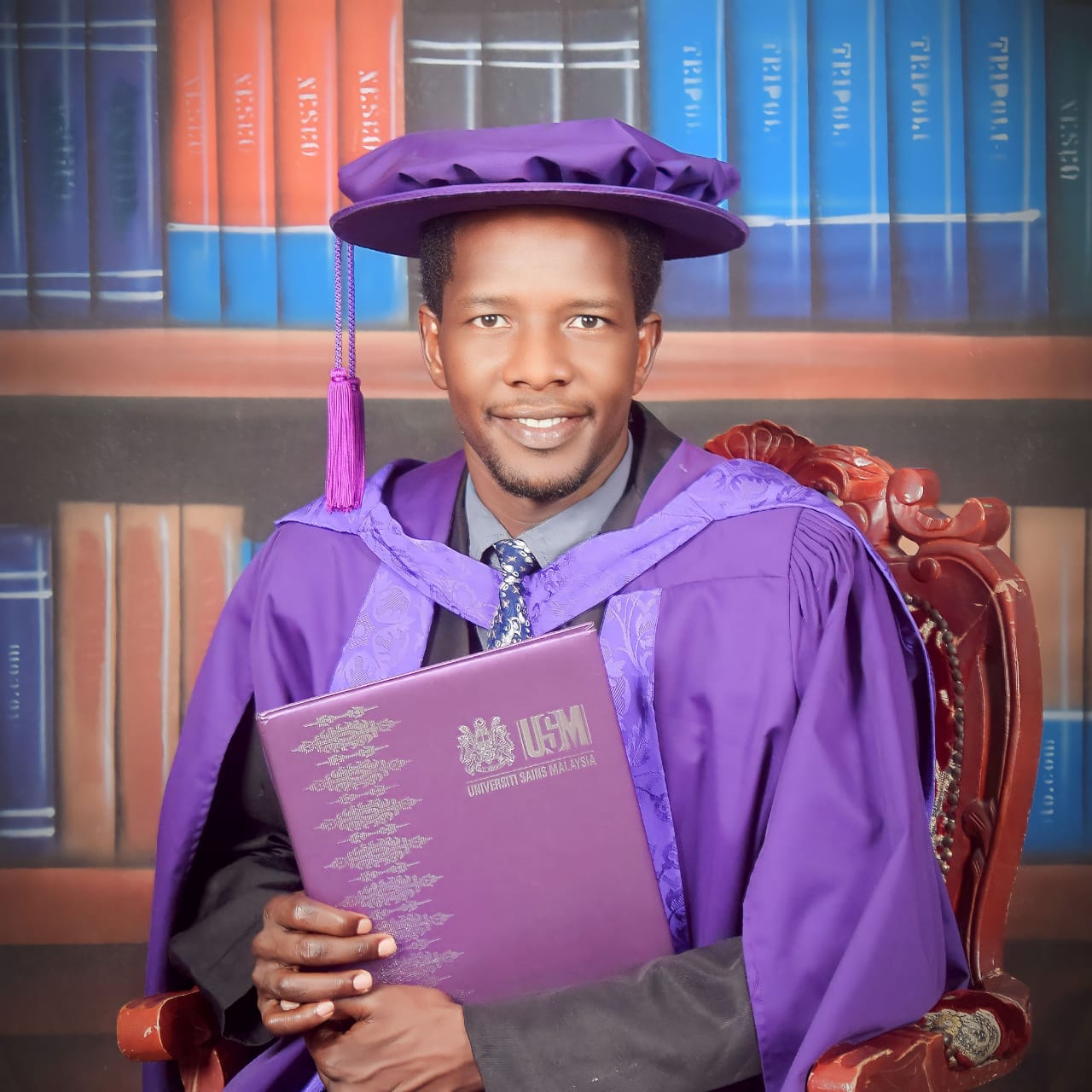
Mansur Hassan Ph.D

The Nigerian Judiciary system, often regarded as the third arm of government, holds a pivotal position as the last resort for the common citizen seeking for justice.

However, concerns have arisen recently about its impartiality, with allegations of undue influence from the executive branch of government.

A prime illustration of this ambiguity is the recent verdict delivered by the Kaduna state Gubernatorial Elections Tribunal, which appears to contradict what transpired last week in Kano.

In the aforementioned case, the tribunal declared that it lacked the authority to invalidate votes announced by the Independent National Electoral Commission (INEC). Yet, perplexingly, a similar tribunal, convened in Kano nearly one week ago, asserted the power to cancel over 165,000 votes that had been cast in favor of HE Abba Kabir Yusuf , the duly elected governor and leader of the most populous state in Nigeria.

These inconsistent judgements have left many citizens bewildered and concerned about the integrity of the judicial system. The judiciary, often seen as a beacon of hope for justice, now faces scrutiny for potentially yielding to external pressures, particularly when it comes to cases involving the executive arm of government.

This has raised doubts about the judiciary’s ability to uphold the principles of fairness, transparency, and the rule of law, leaving individuals like yourself understandably perplexed about the state of affairs in Nigeria’s legal landscape.

Dr. Mansur Hassan Is a Senior Lecturer in the Department of Mathematics, Yusuf Maitama Sule University, Kano

Does bail mean acquittal? 

By Abba Kyari Mohammed

In the Nigerian legal system, terms such as bail, discharge, conviction, acquittal etc., have always confused the non-lawyers, leading them to take erroneous stands over some issues. Anytime there is a high-profile trial before our courts and bail is granted to the accused person, Nigerians will curse the entire justice system describing it as weak, ineffective and a system that rigs itself to favour the rich – all because the courts exercise powers vested in them in a constitutional way to preserve the rule of law. 

I, therefore, find it pertinent to clarify some of these terms so Nigerians will stop bashing the judiciary and can redirect their anger to the right quarters while recognising their rights in the event they come in contact with the justice system, which for all intent and purposes is there to dispense justice in the best possible way. 

Let’s start with Bail, which is what always sparks the uproar in Nigeria, especially on social media, where you expect people to have become conversant with this term yet have somehow been misconstrued to mean absolute discharge and even exculpation from the charges for which the person on bail is being tried. 

Bail simply means a temporary or conditional release of a person arrested, charged or convicted of a crime. It’s granted by the police pending the investigation of a matter before it, by the court when the case is pending determination, and by the court pending an appeal when a person must have been convicted (Which is rare and only under compelling circumstances).

When bail is granted, it doesn’t mean the person is exonerated of the charges; it only means that he is released on the condition that he attends his trial until the end. In the end, the court may find him guilty, then sentence him(punish) or not guilty, and discharge and acquit him(release and exonerate) of the charges. 

Why grant bail? 

Some may ask why grant bail to people who have done despicable things. Why not convict them outright since all the facts are as clear as crystal, such as having video evidence, a confession etc? There are so many whys on our minds; perhaps, this may explain. 

To start with, under Nigerian Law, there is the Presumption of Innocence under section 36(6) of the Constitution of the Federal Republic of Nigeria 1999 as amended. It means every person charged with a criminal offence shall be presumed innocent until proven guilty by a court. To prove a case before the court in Nigeria, there are procedures and requirements laid down by the law which must be complied with. It’s not enough for the media or anyone to believe the accused person is guilty or the amount of evidence people think there is. This means that the presumption of innocence can only be rebutted when a person is convicted for the offence charged by the court. 

Premised on the above, persons charged with an offence (since they are innocent) are entitled to the right to personal liberty generously guaranteed by section 35 of the Constitution and cannot be derogated except in the circumstances justified by the Constitution or other extant laws. This means bail is a constitutional right enjoyed by persons accused of committing crimes, just like all of us do.

The courts, therefore, grant bail not because they are paid off or have regard for the criminals because of their status or offices but because it’s their constitutional right which cannot be trampled upon unless it is legally justifiable. However, bail is only granted upon an application made to the Police or the Court by the accused or his surety(s). It means you must ask the court to release you and explain why it should release you. Some may wonder why many low-profile criminals rot in a dungeon while others are released even though the crimes differ in gravity. The simple explanation is that “They don’t ask”. 

Then discharge. It is similar to discharging a person from the hospital but not entirely the same. Suppose a man has cancer and he was taken to a hospital for treatment, but the family does not have enough money to proceed with the surgery prescribed by doctors; the man is discharged, perhaps, to be brought later when the money is realised or may not be brought depending on the circumstances.

To discharge an accused person by the court doesn’t mean the court finds him innocent, but it means the court is letting him go because there is not enough evidence on the part of the prosecution to ground his trial or the prosecution withdraws the case etc. In these circumstances, the person can be rearrested and brought to court when the prosecution gathers enough evidence, just like in the case of the cancer patient when the family raised enough funds.  

Acquittal means that the court has found the accused person innocent of all the charges preferred against him after carefully looking at the facts and evidence presented by the prosecution. In a criminal trial, the case is said to have been unsuccessful and failed because the prosecution is unable to prove his case beyond all reasonable doubts.  Once the accused is acquitted, the doctrine of autre fois acquits is activated under Section 36 (9) of the Constitution of the Federal Republic of Nigeria [as amended] 1999, which means the person cannot be arrested or tried again for the same offence. It is similar to removing the cancer in the patient. Once it is removed, he is free from it. 

The Take-home therefore are:

Bail is a temporary and conditional release of an accused person pending when his trial is concluded. The accused goes home and always comes to court during his trial. In the end, the court may jail him or set him free. 

Discharge is the release of the accused person by the court but not a declaration of innocence. The person can be rearrested and brought to court again. 

Acquittal is the complete and total exoneration of the accused from the charges after the conclusion of a trial and the evaluation of evidence. 

Abba Kyari Mohammed can be reached via abbakyari2013@yahoo.com. 

Jigawa: Gov’t approves compulsory retirement of Judge Dabi over collecting bribe

By Muhammad Sulaiman Yobe

Jigawa State Judicial Service Commission has approved the compulsory retirement of a Upper Sharia Court Judge, Alkali Safiyanu Muhammad Dabi, for collecting bribe.

A statement issued by the Director Publicity and Protocol Matters, State Judiciary, Abbas Rufai Wangara, stated that the Commission also approved the promotion of four senior staff of the state judiciary to various positions.

The statement added that the commission also approved the appointment of Barrister Aliyu Muhammad as Deputy Chief Registrar II, Sharia Court of Appeal; Barrister Abdulrashed Al`asan, Chief Inspector Sharia Court; Barrister Muhammad Lawan, Zonal Deputy Chief Inspector Sharia Court of Appeal while Barrister Muhammad Adamu was appointed as Zonal Deputy Chief Inspector, Sharia Court of Appeal.

Similarly, the commission warned that any judicial officer found wanting in the discharge of their duties would face the wrath of the law.

Abubakar emerges Chief Justice as ABU inaugurates students’ judiciary

By Ahmad Deedat Zakari

The Faculty of Law, Ahmadu Bello University (ABU) Zaria, has inaugurated its students’ judiciary.

The inauguration ceremony was held at the Faculty of Law, ABU Moot Court, Kongo Campus, on Monday. 

The event was attended by teachers and students of the faculty and other faculties across the country. 

Mustapha Abubakar, an award-winning final-year student, emerged as the Chief Justice of ABU. 

Mr Abubakar, who, until his appointment, was Justice of the ABU Court of Appeal. He is a recipient of several awards.

In 2019, Abubakar emerged as the best Advocate of Ahmadu Bello University, Zaria. 

The same year, advocacy took him to the national level as he emerged as the best and winner of the 2019 National LAWSAN moot competition.

He was also announced best and winner of the NAMLAS Moot and Mock competition in 2019.

In 2019, he also won Best Brief Writer and Best Oralist Of The Clinical Legal Education (CLE) Annual Mock and Moot Championship.

Mr Abubakar left the student Bar to the student Bench in 2020 as a Justice of the Court of Appeal, where he received a Medal of Honour as a distinguished justice of the court 2020.

The ABU Faculty of Law is where the country’s most distinguished jurists and legal practitioners were thoroughly bred. This explains why there is something particularly unique and different about the ABU student judiciary. It is the microcosm of the Nigerian Judiciary. The Courts are arranged from the Supreme Court down to the Sharia Court of Appeal.  

The Supreme Court is headed by the ABU Chief Justice, who must be a final-year Law student and must be knowledgeable in procedural and substantive law. Other final-year students are appointed as justices of the Supreme Court. 

Then we have the Court of Appeal headed by the President Court of Appeal, who must be a final-year Law student. Other justices of the Court of Appeal are appointed from the 400 level. 

The High Court is headed by a Chief Judge of the High Court, and a Grand Khadi heads the Sharia Court of Appeal. Other judges and Kadis are appointed to aid the efficient learning of the law. 

The arrangement of the court helps students in the procedural and practical aspects of the law. This is because procedures might be similar but are different in all courts.

Court declares Malami’s amendment of RPC illegal

By Ahmad Deedat Zakari

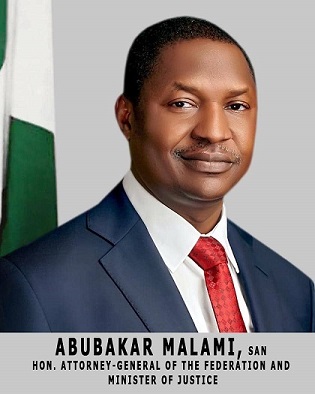
The Federal High Court sitting at Abuja has declared illegal and null and void the unilateral amendment of Rules of Professional Conduct (RPC) by the Attorney General of the Federation (AGF), Abubakar Malami, SAN.

The Vice President 1 of the Nigerian Bar Association (NBA), John Aikpokpo-Martins, Esq, who led the NBA legal team, disclosed this on Wednesday.

“NBA WON.
FHC/ABJ/CS/77/22: The Nigerian Bar Association Vs Attorney General of the Federation.

We got it right again.

The rule of law will always prevail over impunity. We are condemned to challenge that which we must challenge. Hala NBA.” Aikpokpo-Martins posted

In a detailed judgement, Justice Donatus Okorowo dismissed the preliminary objections filed by the AGF and granted judgement in favour of the NBA.

To the dismay of the NBA, Malami unilaterally amended the RPC in September 2020.