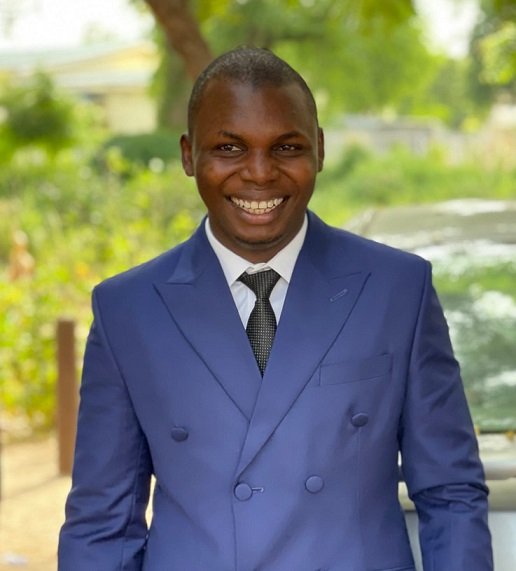
By Abba Kyari Mohammed

In the Nigerian legal system, terms such as bail, discharge, conviction, acquittal etc., have always confused the non-lawyers, leading them to take erroneous stands over some issues. Anytime there is a high-profile trial before our courts and bail is granted to the accused person, Nigerians will curse the entire justice system describing it as weak, ineffective and a system that rigs itself to favour the rich – all because the courts exercise powers vested in them in a constitutional way to preserve the rule of law. 

I, therefore, find it pertinent to clarify some of these terms so Nigerians will stop bashing the judiciary and can redirect their anger to the right quarters while recognising their rights in the event they come in contact with the justice system, which for all intent and purposes is there to dispense justice in the best possible way. 

Let’s start with Bail, which is what always sparks the uproar in Nigeria, especially on social media, where you expect people to have become conversant with this term yet have somehow been misconstrued to mean absolute discharge and even exculpation from the charges for which the person on bail is being tried. 

Bail simply means a temporary or conditional release of a person arrested, charged or convicted of a crime. It’s granted by the police pending the investigation of a matter before it, by the court when the case is pending determination, and by the court pending an appeal when a person must have been convicted (Which is rare and only under compelling circumstances).

When bail is granted, it doesn’t mean the person is exonerated of the charges; it only means that he is released on the condition that he attends his trial until the end. In the end, the court may find him guilty, then sentence him(punish) or not guilty, and discharge and acquit him(release and exonerate) of the charges. 

Why grant bail? 

Some may ask why grant bail to people who have done despicable things. Why not convict them outright since all the facts are as clear as crystal, such as having video evidence, a confession etc? There are so many whys on our minds; perhaps, this may explain. 

To start with, under Nigerian Law, there is the Presumption of Innocence under section 36(6) of the Constitution of the Federal Republic of Nigeria 1999 as amended. It means every person charged with a criminal offence shall be presumed innocent until proven guilty by a court. To prove a case before the court in Nigeria, there are procedures and requirements laid down by the law which must be complied with. It’s not enough for the media or anyone to believe the accused person is guilty or the amount of evidence people think there is. This means that the presumption of innocence can only be rebutted when a person is convicted for the offence charged by the court. 

Premised on the above, persons charged with an offence (since they are innocent) are entitled to the right to personal liberty generously guaranteed by section 35 of the Constitution and cannot be derogated except in the circumstances justified by the Constitution or other extant laws. This means bail is a constitutional right enjoyed by persons accused of committing crimes, just like all of us do.

The courts, therefore, grant bail not because they are paid off or have regard for the criminals because of their status or offices but because it’s their constitutional right which cannot be trampled upon unless it is legally justifiable. However, bail is only granted upon an application made to the Police or the Court by the accused or his surety(s). It means you must ask the court to release you and explain why it should release you. Some may wonder why many low-profile criminals rot in a dungeon while others are released even though the crimes differ in gravity. The simple explanation is that “They don’t ask”. 

Then discharge. It is similar to discharging a person from the hospital but not entirely the same. Suppose a man has cancer and he was taken to a hospital for treatment, but the family does not have enough money to proceed with the surgery prescribed by doctors; the man is discharged, perhaps, to be brought later when the money is realised or may not be brought depending on the circumstances.

To discharge an accused person by the court doesn’t mean the court finds him innocent, but it means the court is letting him go because there is not enough evidence on the part of the prosecution to ground his trial or the prosecution withdraws the case etc. In these circumstances, the person can be rearrested and brought to court when the prosecution gathers enough evidence, just like in the case of the cancer patient when the family raised enough funds.  

Acquittal means that the court has found the accused person innocent of all the charges preferred against him after carefully looking at the facts and evidence presented by the prosecution. In a criminal trial, the case is said to have been unsuccessful and failed because the prosecution is unable to prove his case beyond all reasonable doubts.  Once the accused is acquitted, the doctrine of autre fois acquits is activated under Section 36 (9) of the Constitution of the Federal Republic of Nigeria [as amended] 1999, which means the person cannot be arrested or tried again for the same offence. It is similar to removing the cancer in the patient. Once it is removed, he is free from it. 

The Take-home therefore are:

Bail is a temporary and conditional release of an accused person pending when his trial is concluded. The accused goes home and always comes to court during his trial. In the end, the court may jail him or set him free. 

Discharge is the release of the accused person by the court but not a declaration of innocence. The person can be rearrested and brought to court again. 

Acquittal is the complete and total exoneration of the accused from the charges after the conclusion of a trial and the evaluation of evidence. 

Abba Kyari Mohammed can be reached via abbakyari2013@yahoo.com. 

ByAdmin

3 thoughts on “Does bail mean acquittal? ”

Leave a Reply

Your email address will not be published. Required fields are marked *

In Case You Missed It

THE KANO RENAISSANCE: HOW GOVERNOR ABBA KABIR YUSUF IS REWRITING THE STORY OF DEVELOPMENTBy Dr. Saifullahi Shehu ImamAs Kano State marks the third anniversary of Governor Abba Kabir Yusuf’s administration, the evidence of purposeful leadership is visible across every corner of the state from the bustling metropolitan center to the remotest rural communities. Today, the popular expression #ABBAISWORKING is no longer a mere political slogan; it has become a verified reality, supported by over 1,000 major achievements that have fundamentally reshaped the developmental trajectory of Nigeria’s most populous state.Perhaps no sector reflects Governor Yusuf’s vision for human capital development more than education. His administration has fundamentally transformed education in Kano by declaring a State of Emergency and allocating an unprecedented 30–31% of the annual budget, the highest in the nation. This historic fiscal commitment was sustained through the subsequent fiscal cycles, securing education as the primary pillar of governance. Across all 44 Local Government Areas, the administration has directed over ₦1.9 billion through the Community Re-orientation Committee (CRC) to renovate thousands of primary classrooms, plus an additional ₦2.9 billion to build new classroom complexes, decongesting urban schools and constructing modern administrative offices. Over 80,000 sets of three-seater desks have been supplied, rescuing more than 240,000 students from learning on bare floors. The government has hired and integrated over 14,000 permanent, pensionable teachers, including thousands of former BESDA volunteers. Financial barriers have been lowered by providing free textbooks and uniforms for primary students, slashing tertiary registration and tuition fees by 50% at state-owned institutions, and funding examination fees for hundreds of thousands of secondary candidates. The state’s strict targeted funding model has borne immediate fruit, propelling Kano to the top of the national performance chart in the 2025 NECO exams. Furthermore, the revival of the 1,001 Foreign and Domestic Postgraduate Scholarship Scheme has cleared multibillion-naira arrears for stranded medical and engineering scholars in Cyprus and sponsored new cohorts to India and across Nigeria. This holistic investment in infrastructure, teacher welfare, and global scholarships represents the largest commitment to public education in Kano’s recent history, ensuring today’s students become tomorrow’s leaders.In healthcare, the administration has achieved monumental, system-wide progress by matching robust institutional investment with deeply compassionate public policy. This vision is explicitly backed by an aggressive fiscal strategy; for the 2025 fiscal year, over ₦90 billion amounting to an impressive 16.5 percent of the state’s total budget has been earmarked for healthcare development. This substantial investment underscores the administration’s unwavering commitment to making healthcare a cornerstone of its governance, moving far beyond basic audits and surveys into real, well-funded structural transformation. A landmark triumph of this commitment is the recovery, comprehensive modernization, and recommissioning of the Hasiya Bayero Pediatric Hospital, a vital 86-bed facility that had been controversially sold, now restored to provide specialized care for Kano’s children. In tandem, the administration has completely remodeled and equipped the critical accident and emergency section of the Murtala Muhammad Specialist Hospital (MMSH) and extensively renovated the Bamalli Nuhu Maternity Hospital to drastically combat maternal and infant mortality rates. To institutionalize these health safeguards, the Governor signed the pioneering Kano State Centre for Disease Control and Prevention Law alongside a mandatory Premarital Health Screening Law to shield future generations from preventable illnesses. These structural transformations ensure that high-quality healthcare is no longer a luxury reserved for a privileged few, but an accessible, everyday right for all Kano citizens.In the realm of agricultural transformation and food security, the administration has shifted Kano from a reliance on subsistence farming to a powerhouse of agribusiness. Championing a multi-billion naira input initiative, Governor Yusuf flagged off the historic distribution of 79,200 bags (132 trucks) of highly subsidized fertilizers from the Al-Yuma Fertilizer plant in Madobi Local Government, slashing procurement costs by a massive 50% for local farmers across all 44 LGAs. This was bolstered by an additional ₦1 billion worth of free NPK fertilizers distributed via the Kano Agricultural Supply Company (KASCO) specifically targeting smallholder, female, and disabled farmers. To expand year-round farming capacity, the administration has expanded farmlands and successfully rehabilitated major irrigation schemes across 11 Local Governments, bringing over 1,250 hectares under active development. A crown jewel of this infrastructural strategy is the approval of ₦6.8 billion for the massive Dansoshiya Dam and Irrigation Infrastructure Project in Kiru LGA, designed with a projected storage capacity of 3.1 billion liters of water to empower up to 3,000 farmers in its initial phases alone. These deliberate investments have reduced cultivation overheads, multiplied crop yields, and fortified the regional food supply chain.Youth empowerment and self-reliance form another vibrant pillar of the Kano Renaissance. Rejecting the old paradigms of political exploitation, Governor Yusuf launched a comprehensive master plan to empower 50,000 young people. The administration began by systematically reviving eight specialized entrepreneurship and vocational institutes that had been abandoned by the previous administration. Highlighting this return to functional capacity, a single cohort of 2,260 graduates recently completed training across these institutes including the Informatics Institute, the Horticultural Institute, the Driving Institute, and the Poultry Institute. These youths left the Government House not just with certificates, but with critical operational assets ranging from laptops, tablets, and toolkits, to livestock and feed, alongside financial seed capital to seamlessly launch their commercial journeys.On the security front, proactive, intelligence-driven governance has kept Kano State remarkably peaceful and stable despite intense national security challenges. Governor Yusuf has aggressively reinforced the state’s security architecture by assenting to the law establishing the state’s independent Kano State Security Neighborhood Watch, bringing community policing directly to the grassroots. To maximize operational efficiency and response times, the administration recently boosted the Joint Task Force (JTF) operations by distributing dozens of new vehicles and motorcycles across frontline Local Government Areas. This sustained tranquility stands as an absolute testament to a leadership that deeply understands that the first, most non-negotiable duty of government is the absolute security and welfare of its people.As the people of Kano celebrate these remarkable achievements, there is a growing consensus that continuity will be essential to consolidate the gains already recorded. The transformation witnessed across the state has inspired renewed confidence in leadership and strengthened public optimism about the future. It is therefore understandable that many citizens, stakeholders, professionals, traditional institutions, and community leaders increasingly look toward 2027 with the hope that Governor Abba Kabir Yusuf will be granted another mandate to deepen ongoing reforms and complete the noble work he has begun.May Almighty Allah continue to grant His Excellency wisdom, strength, good health, and divine guidance in the service of Kano State. And may the overwhelming achievements of the past three years pave the way for a successful re-election in 2027, ensuring that the Kano Renaissance continues uninterrupted for the benefit of present and future generations.