Journalism

Kano needs more journalists

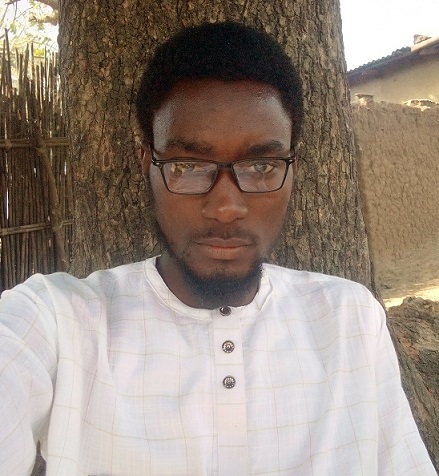
By Yakubu Nasiru Khalid

Journalists play a crucial role in the ruin of wrongdoings and corruption by reporting the news to the public through various media, research, interview sources, and writing accurate and balanced stories. They also hold those in power accountable by investigating and exposing wrongdoing and corruption. Journalists can simply be described as the voice of the voiceless. 

Moreover, Kano State is the second most populous state in Nigeria, with 44 local governments, and most local governments are outside of the Kano metro. As a result, the voice of the people living outside the metro is not heard. As a result of the lack of journalists that conduct rigorous investigations and research public problems, these rural areas remain neglected.

As gubernatorial elections and State Assembly were conducted in Nigeria on 18 March 2023, many polling units were declared inconclusive due to poor security operations, a snatch of ballot papers and arsons etc. This led to declaring some polling units as inconclusive.

Supplementary elections were held on 15 April 2023 in local governments like Tudun/Wada, Garko, and others. Unfortunately, a large number of thugs were brought into the respective polling units, and those that were legally and legitimately responsible for re-electing were denied and threatened by the thugs. But unfortunately, it is hard to get even a single journalist who eye-witnessed how the election was conducted. Most of these journalists only analysed reports based on their sentiments and opinions. 

In conclusion, journalists can positively impact rural areas by reporting objectively and accurately on public problems without pushing a partisan agenda. However, journalists must avoid promoting divisive rhetoric that pits rural communities against urban areas or different political factions. By investigating local government officials and other influential individuals, journalists can help ensure they act in the community’s best interests. However, this must be done responsibly and fairly without sensationalism or fear-mongering.

CMPA to partner EFCC, ICPC on quality journalism

By Ahmad Deedat Zakari

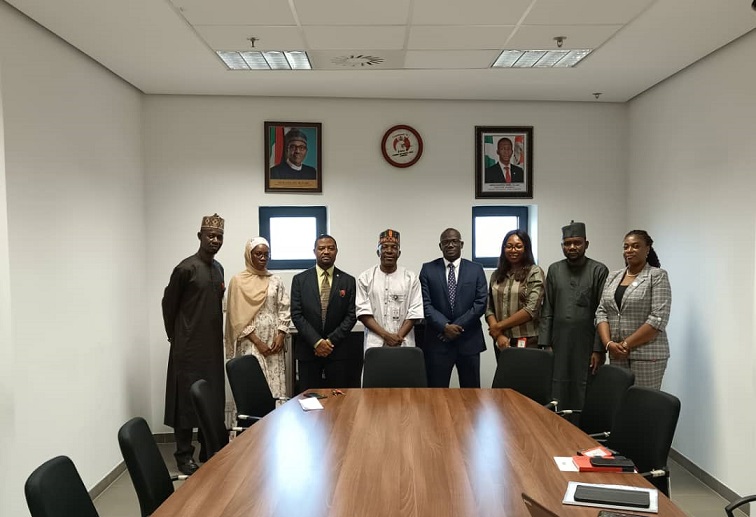
The Center for Media, Policy and Accountability, CMPA, has commenced implementation of the Nigeria Anti-Corruption Performance Public Reporting (NAPPR) Project 2023 in partnership with anti-corruption agencies in the country. 

The Center’s Director of Communication, Outreach and Advocacy, Ibrahim Uba Yusuf, made this known in a press release on Sunday. 

The Center disclosed that the project is funded by the MacArthur Foundation and primarily aims at partnership with anti-corruption agencies in Nigeria.

The Center also disclosed that it would be conducting research, advocacy and public engagement to enhance the capacity of the anti-corruption agencies in Nigeria. 

“The aim of the MacArthur Foundation-funded project is to conduct research, advocacy, public engagement and capacity development of Nigeria Anti-Corruption Agencies (EFCC, ICPC and CCB), CSOs, and media organizations on NAPPR project and to publish the first edition of a Harmonized Anti-Corruption Performance Report for 2017-2022.” The statement, signed by Ibrahim Uba Yusuf, partly reads.

The project manager, Dr Suleiman Amu Suleiman, had paid official visits to the Economic Financial Crimes Commission headquarters, EFCC, and the Independent Corrupt Practices and Other Related Offences Commission, ICPC, in furtherance of the project. 

While speaking at the visit, Dr Suleiman said the project was to support Nigerian anti-corruption agencies to develop a standard reporting template that would correctly highlight and project their work locally and globally.

Fact-check figures to change narratives smearing Northern Nigeria, Don tells journalists  

By Muhammad Aminu and Uzair Adam Imam

A Senior Lecturer at the Department of Mass Communication, Bayero University, Kano, Dr Ibrahim Siraj Adhama, has urged journalists to fact-check figures to change the narratives by the media that paint Northern Nigeria black. 

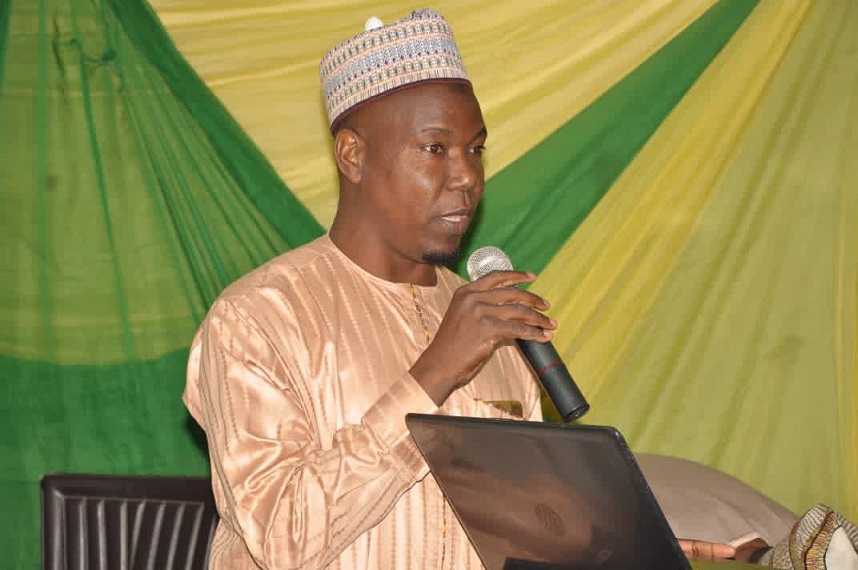
Adhama stated this at a One-Day Workshop for Early-Career Journalists on Reporting Northern Nigeria, Fake News and Journalism Ethics organized by a Kano-based online media organization, The Daily Reality. 

The workshop, which was held at Bayero University, Kano, was organized by the management team of The Daily Reality Newspaper to groom journalists in Northern Nigeria on reporting.

He said our northern reporters should have apparatuses to re-examine statistics by the World Bank and IMF, among others, before reporting them for public consumption. 

Adhama, who spoke on “Issues in Reporting Northern Nigeria: A Framing/Agenda Setting Perspective, said the north was represented in media as economically and educationally backward with a high number of out-of-school children. 

He said, “We need to stop swallowing statistics about us. Most of these statistics by the World Bank, IMF, etc., will never favour us. 

“Thus, we should have an apparatus to re-examine them before reporting them,” he added.

Speaking on how those reports affect Hausa-Muslim northerners and, by extension, other ethnic groups, Adhama maintained that all the things we read about us in the Southern media were in themselves, despite claiming objectivity, subjective.

Online politics and yellow journalism: A pathway to 21st century ideal journalism

By Aliyu Dalhatu

Journalism and politics are two distinct ways of serving the public. Know the limitation of the former and stop publishing fiction for your own interest.

Magaji Danbatta wrote in his autobiography “Pull of Fate”: “I knew that to be a good journalist, a reporter or a columnist, one must have a good command of English language, rich in general knowledge and specialization in one or more subjects which could come with wide reading. One must also be a keen observer and a clean thinker and posses the ability to mix with people easily, feeling equally at home with low, the high and the mighty” (p. 116-117).

That is not all, he also added that there are plentiful stories to be told if you are willing to be an all round journalist, such as healthcare, sports, legal matters, trade, commerce, cultural performances, entertainment, among others.

Journalism, whether we see it as a profession or craft, it deserves to be treated with high sense of accuracy, fairness, integrity and ethical judgement. Not quite long ago, I had a discussion with a one veteran journalist on the disgusting nature of the visual misrepresentation of journalism profession by guerilla journalists. One thing for sure that contributed to this journalistic ill is the emergence of Internet vis-a-vis User-Generated Content (UCG).

Though, media houses can use these new media technologies in reporting, editing, publishing and disseminating news and information to their diverse audiences, however, on the other hand, these modern technologies are now seen as the global social forces that have intensified in breeding yellow journalists on social media to disseminate and fabricate lies, disinformation, hate speech, misinform and defame the character of important personalities: politicians, traditional leaders, religious symbols and other institutions with the sole aim of seeking attention, patronage and other ethno-religious agendas.

Just recently, I attended a One-Day public lecture series organized by the Department of Mass Communication, Kano state Polytechnic.

As one of the special guests, I have learned a lot about the practice journalism profession from the Associate Professor, Mainasara Yakubu Kurfi, the Head Department of Mass Communition (BUK) who presented a paper on “The 21st Century Mass Communication Student” and the one on “Crime and Judicial Reporting” presented by the Chairman, National Union of Journalists, NUJ Kano state chapter, Comrade Abbas Ibrahim and the last one by Badamasi Aliyu Abdullahi a Bookworm, who talked on “Reading: A Pathway to Entrepreneurial Journalism.”

Such opportunity had exposed me to know that for you to be a 21st century journalist or in other words “a jack of all trades”, you should remember that the world is no longer a “global village” as coined by Marshal McLuhan but now a “global room.”

Therefore, in journalism profession, “it is better to miss the story than to mess the story” as advised by Comrade Abbas Ibrahim. Furthermore, publishing fiction is not journalism, but an act of junk journalism.

Mal. Aliyu Dalhatu writes from Kano State.

Journalism educators charge students on 21st-century skills

By Uzair Adam Imam 

Associate Professor Mainasara Yakubu Kurfi, and other journalism educators, urged Kano State Polytechnic journalism students to imbibe critical thinking in reporting their beats as journalists of the 21st century. 

Kurfi, who is the Head of Department, Mass Communication, Bayero University, Kano, tasked the journalists in the making, reiterating that the students should be jack of all trades and masters of none.

Kurfi stated this Thursday at a One-Day Lecture Series organised by the Department of Mass Communication, Kano State Polytechnic.

Speaking on the topic, The 21st Century Mass Communication Student, the university don added that there were numerous opportunities in the field and that the students should read a lot to upgrade their learning and skills.

In his words, Kurfi stated, “there are numerous opportunities in mass communication because the world is no longer a global village but rather a global room.

“For this reason, you only need to read hard and acquire the necessary skills. If you do that, you’ll be getting money from the comfort of your room.

“Some of the career opportunities for a 21-century mass communication student include; film production, photography, advertising, development communication, public relations, broadcasting, strategic communication, among others.”

Also speaking, the event convener, Malam Aisar Salihu Fagge, stated that the essence of the lectures was to prepare students for the basic need of 21st-century journalism.

He added that the event would also develop help the students develop entrepreneurial mind to enable them to learn the modern skills of the journalism profession. 

Academics from sister institutions, directors from various units, heads of departments, and alumni of the Mass Communication department graced the event.

The Head of Department, Mass Communication, Kano State Polytechnic, Malama Binta Muhammad Lawal, ably represented by one of the department’s lecturers, Malam Salihu Sule Khalid, commended the event.

Proliferation of media houses in Arewa and the dearth of intellectual journalism

By Kabir Musa Ringim

I took my pen to write on this topic with mixed reactions: on the one hand, it is indeed a welcome development to have the number of media houses increasing at a fast rate in Northern Nigeria, but on the other hand, it is worrying to listen to or watch most of the new breed of journalists on several FM radio and TV stations, majority of which are newly established.

I refer to myself as an accidental journalist because I am a Computer Engineer, and I hold MSc in Information Technology and work as a polytechnic lecturer. But all my life, I have been a lover of media. I was an ardent listener of radio since childhood. I can still remember with nostalgia how I used to ask my mother to wake me up when it was time for BBC Hausa’s morning and late evening program at 8.30 pm, followed by VOA Hausa’s 9 pm program. I just couldn’t afford to miss listening to the likes of the late Hindu Rufa’i Waziri and Elhadji Diori Coulibaly.

My love for radio influenced my passion for journalism and the media profession. I started going to media house after I finished my Diploma in Computer Data Processing and IT in 2005. Furthermore, I wrote my project on the impact of radio with a case study of Freedom Radio, Kano. Thereafter, after graduating from BUK in 2011, I joined Freedom Radio Dutse as a voluntary staff working in the newsroom. I later opened my blog (ringimkabir.wordpress.com) in 2015, where I share news articles after translating them from English to Hausa. Now, I’m a freelance editor with Sawaba FM, Hadejia and SkyDaily online newspaper.

I narrated my brief sojourn in the media profession to pave the way for my moral stand and justification in talking about the dearth of intellectual, intelligent and hardworking personalities in the majority of our media houses in Arewa. A vast number of our media personalities are those that find themselves studying mass communications or languages by accident, lazy and unserious individuals with no passion for media, no love for radio but masquerading themselves as journalists to earn a living through meagre salaries or brown envelope journalism that has become the order of the day.

It is really frustrating to listen to most radio stations, especially in big cities where there are many, like Kano and Kaduna. The grammatical blunder, the mispronunciation of names of VIPs, national figures and important towns, and the incorrect voicing of arithmetic figures, dates and even times are unforgivable. The newsroom culture is dead; no intellectual discussions and arguments concerning news reports, and there is little or no investigative journalism being practised. Just copy and paste, edit, translate and cast on air or publish.

Media plays a vital role in educating, entertaining, enlightening and informing the people. It is the voice of the voiceless, a pathway to freedom for the masses and, above all, the fourth estate of the realm. Media houses, most especially radio stations, have been second to none when it comes to news dissemination in Arewa since the pre-independence period. The power of radio in Northern Nigeria is enormous.

In my view, the problem that caused the scarcity of intellectuals in the media profession originated right from universities and other higher institutions. Our institutions have been churning out thousands of half-baked graduates year in, year out. I really wonder how someone can graduate with a bachelor’s degree in Mass Communications but cannot speak or cast news in English. The majority of journalists in newsrooms cannot translate news from English, the language of instructions, to Hausa, the mother tongue.

Finally, despite the sad situation I elaborate on, I still believe we can get it right. The human brain never stops learning, provided deliberate efforts are being made to learn new things. With hard work, courage and determination, we can be like our predecessors in the media profession.

I have no intention of remaining in the media profession for long, but I will forever love radio. As such, I found it an obligation for me to speak up and energize my fellow journalists to stand up to the challenge and make a bold statement about becoming better every day. I still hold the belief that if someone can do something, I can do it too, and you can do it as well.

Kabir Musa is a lecturer at Binyaminu Usman Polytechnic Hadejia and writes from Ringim, Jigawa State.

Between citizen and parachute journalism 

By Abdullahi A. Maiwada

“‘Parachute Journalism’ trivialize and sensationalize events that are more complex than a 30-second clip can capture” – Thomas L. McPhail.

However, this era of social media has made citizen journalists more dangerous than parachute journalists. While practitioners of the former are utterly ignorant about the basic principles of the profession, the latter is about placing journalists into an area to report on stories with little knowledge or experience. Lack of knowledge and tight deadlines often result in inaccurate or distorted news reports, especially during breaking news. 

While citizen journalists lack the fundamentals of news judgement, one cannot neglect their relevance in the business of news reportage. In some cases, the traditional media rely on citizen journalists for updates about issues in the form of eyewitness reports. 

The above implies that both parachute journalism and citizen journalism are interrelated at specific points. In most cases, their characteristics can be catastrophic and misleading instead of informing and educating. 

Even though I am not a fan of CNN, my recent update about the strategies by the new CEO Chris Licht making frantic efforts to redefine the usage of breaking news is a step in the right direction. “Moving away from alarming news distributing styles”, he said.

Both citizen journalists and mainstream media have fallen into the trap of fake news and hate speech precipitated by digital media. This is to satisfy the urge to take the lead in breaking the news.

In the word of my journalism lecturer Dr Kola Adesina “no time to think syndrome”. The outcome is having limited know-how to strike a balance between speed and accuracy. Thanks to convergence which created a blurry line between mainstream and digital media.

The primary reason we dish out content is to inform and not disinform, misinform and mal-inform. Why can’t we think twice and have a sober reflection before writing or talking? We should endeavour always to put a round egg in a round peg to avoid misleading society towards the direction of Rwanda. 

Influential media effect theories are still relevant in the digital age. The hypodermic needle/bullet, agenda-setting theories and the likes play a critical role in shaping the perception of the gullible and media illiterates who form the majority in our society. 

I have encountered a colleague who changed his perception of Russia based on an American movie. We have so many of them out there.

Finally, I will end my piece with the saying of our beloved Prophet (SAW). “Whoever believes in Allah and the day judgment should utter what is righteous or keep mute”. Gbam!!!

Abdullahi A. Maiwada is a superintendent of Customs attached to the Public Relations Unit, Nigeria Customs Service Headquarters, Abuja.

Nigeria Health Watch trains Kano journalists on ‘solution journalism’

By Uzair Adam Imam 

An online media platform, Nigeria Health Watch, has organised a workshop on promoting media adoption on Solutions Journalism (SOJO) in Kano state.

The one-day workshop titled “Integrating Solutions Journalism Practices in Media Production in Kano State” took place Saturday, May 28, 2022, at the GearHub, 45 Lamido Crescent, Nassarawa GRA, in the state.

The intent of the workshop was said to equip participants with the knowledge, skills, and networks they would need to consciously discover and report stories about people’s responses to social issues in their news bulletins and other forms of reporting.

However, solutions journalism is understood to mean investigating and explaining how people try to solve widely shared problems.

The idea was reportedly aimed at adding rigorous coverage of solutions rather than just reporting problems as “responses to problems are also newsworthy”.

Speaking at the event, the convener, Misbahu El-Hamza, stated that there was a need for journalists to embrace solutions journalism (SOJO) instead of the normal way of just reporting issues.

However, El-Hamza lamented that many people resisted patronising news to escape heartbreaking reports that ended in scaring people.

The participants that graced the event included journalists from various media organisations from Kano State.

The role of media in troubling times

By Muhammad Auwal Ibrahim

Nigeria is burning. We have to stop it. We can’t afford to lose our dear nation. But who can be of help? The media has a critical role in extinguishing the fire before it goes out of hand.

Information is power, thereby making the media a powerful tool for sending persuasive messages. The more the messages flow in our societies, the higher their ability to shape public discourse. Media is a powerful tool used in shaping public opinion and thereby changing the way people behave, think, and even live sometimes. Unfortunately, the power elites often use it to achieve their aims. In present-day Nigeria, where things are still falling apart, are the media organisations playing a positive or negative role? 

The media has the role of information dissemination, which is accurate, factual and unbiased to a large and scattered audience. Terrorism and insecurity information is not an exception. Therefore, the media should accurately inform the people about future threats, chaos and fear of terror attacks and how to avert them, should they occur.

Also, the media plays a critical role in every society by holding leaders accountable, especially in times of crisis. However, it should be noted that it is not lawful in any way for the media to undermine national security in the process of discharging such responsibilities. 

 Furthermore, it is no gainsaying that the media have to build a nation and not destroy its existing pillars. The media, in other words, can be said to be fire extinguishers and not fire fuel. Through this process, the media can only promote national security and harmony. 

The media can give several contributions to national growth and development if properly managed. However, when the reverse is the case, they will contribute to national underdevelopment or worse.

It is evident in Nigeria today that some media houses have been diverted from their role to being used to spread hate speech and fake news, which may result in violence or more troubles than the one Nigeria currently battles now. Supporting violence, sensationalism, and hatred will do nothing but add to the already burning fire in this country. However, these are not the responsibilities of the media, and hence, they should take heed.

A veteran journalist, Kadarai Ahmed, said, “Despite numerous examples that exist which have proved, including not too long ago in Rwanda, that the conduct of the media can help in, starting, promoting and perpetuating violence and ethnic strife, we have turned a deaf ear to pleas to not become a tool that enables hate. But we have failed to heed these warnings.”

“We have given platforms to the worst among us, the extremists and the bloodthirsty. We have turned militia leaders and criminals into champions. Instead of us to lead a calm and rational discussion on the existential challenges we face with a view to promoting actionable solutions, we have succumbed to hysteria and the next exciting clickbait headline.”

Therefore, the media can positively contribute to the prevention of terrorism, insecurity, and other threats by specifically portraying how other nations responded to such scenarios and how it yielded positive outcomes without bias. In other words, it is known as development journalism.

Muhammad Auwal Ibrahim is a multipleawardwinning journalist, fellow AIJC 2020, Wits University, Johannesburg, South Africa. He can be reached via awwalbinibrahim@gmail.com.