Jos Massacre

31 Muslim passengers lynched in Plateau: ABU Muslim Forum demands justice

By Muhammad Sulaiman Abdullahi

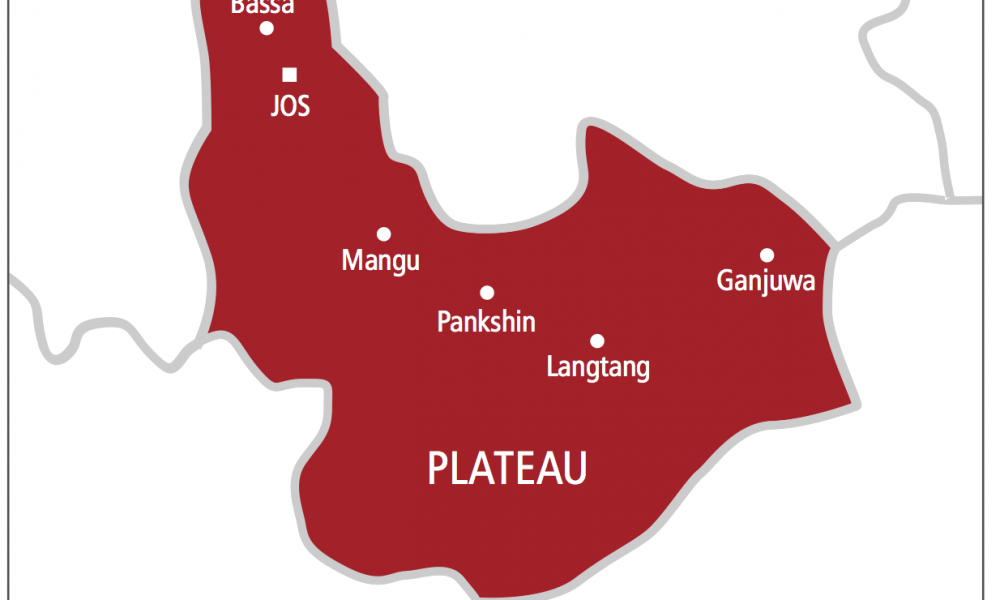
The Muslim Forum of Ahmadu Bello University (ABU), Zaria, has condemned the brutal lynching of 31 Muslim passengers in Mangu Local Government Area of Plateau State, describing the attack as a “horrific act of savagery and barbarism.”

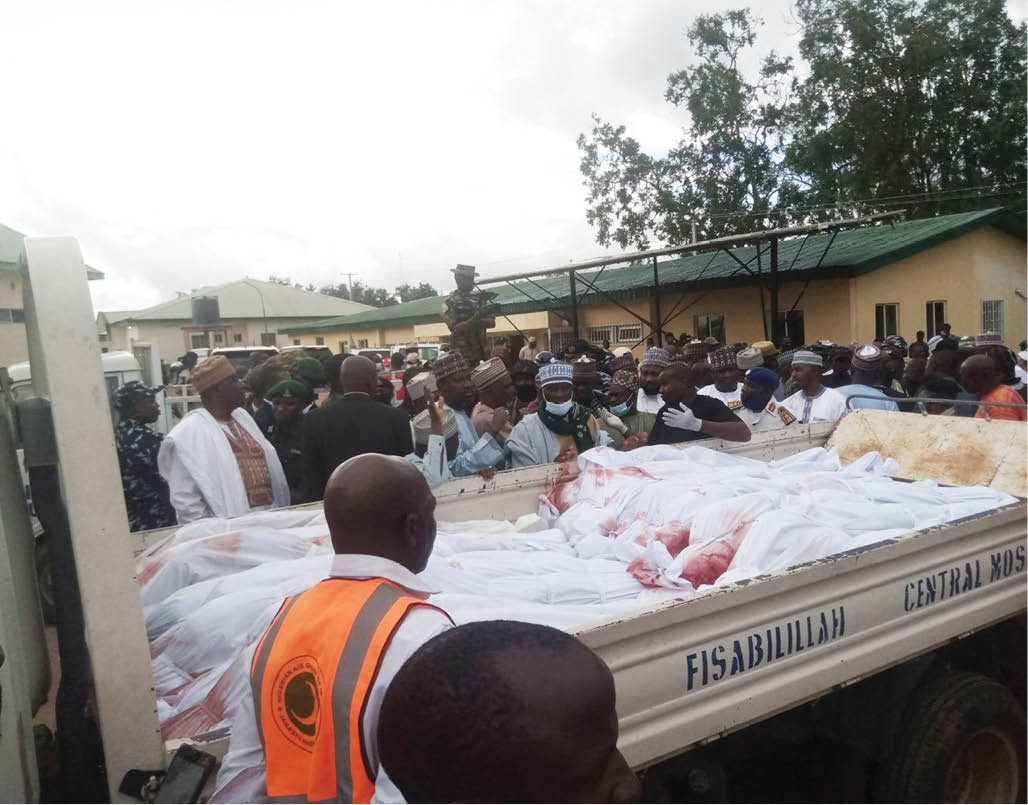
According to the Forum’s statement, signed by its Secretary-General, Dr. Munir Sani Ari, the victims—travelling in an 18-seater bus marked “ABU-Zaria”—were ambushed on Friday, June 20, 2025, while seeking directions in Mangu. Twelve passengers were reportedly killed and burned on the spot, while 18 others sustained serious injuries and are currently receiving medical care following military intervention.

Among the deceased was a staff member of ABU’s Department of Physics, who was reportedly transporting women and children to a wedding. The Forum emphasised that this was not an isolated incident but part of a “disturbing pattern of impunity-driven violence” against Muslims in Plateau State.

Criticising the response by Mangu LGA Chairman, Mr. Emmanuel Bala, who attributed the massacre to a “case of mistaken identity”, the Forum labelled the remark as “futile and insulting,” citing social media posts glorifying the attack as evidence of premeditated hate.

The Forum issued a set of urgent demands, including a full and independent investigation, public prosecution of those responsible, prompt compensation for victims, and immediate government intervention to prevent future attacks. It also called on the Kaduna State Government to support the victims’ families and cover medical expenses.

The Forum warned that continuing to fail to act decisively would only deepen national tensions, urging authorities to pursue justice beyond “mere rhetoric.”

The normalisation of atrocities on our roads: A call for accountability

By Kabiru Danladi Lawanti, PhD 

I cannot recall any incident where a vehicle or travellers were targeted simply because they were from Plateau State, in retaliation for the atrocities being committed by these savages.

Please, I challenge anyone to provide a single example—since 1914—where innocent travellers were attacked in Kebbi, Sokoto, Zamfara, Katsina, Niger, Kano, Jigawa, Bauchi, Gombe, Yobe, Adamawa, or Borno simply because they were seen as the “other.” 

Yet, we have countless documented cases from Tinno, Mambilla, Takum, etc., in Taraba; Riyom, Barikin Ladi, Jos, Mangu, etc., in Plateau; Agatu, Makurdi, etc., in Benue; and Gonin Gora, Koi, etc., in Kaduna, where innocent travellers were blocked, maimed, and killed—dismembered and buried or even burned alive—solely because of their identity as “others.”

These are normalised atrocities. The perpetrators are getting away with it because there have been no consequences. Only God knows how many lives have been lost in this manner between 2002 and 2025. 

Many of these crimes are well documented—some even recorded and posted by the criminals themselves, proudly sharing selfies while committing barbaric acts. Remember the Eid day massacre in Jos? Or the genocide in Mambilla? These incidents are documented by security agencies.

Tragically, these criminal gangs enjoy the backing of some politicians and community leaders. Take, for instance, the disturbing justification offered by the Chairman of Mangu Local Government Area regarding the killing of wedding-bound travellers from Zaria. Is that how a leader is supposed to speak?

Even more worrying is how these barbaric acts are celebrated on social media. Look at the screenshot of Kefas Gyang Pam that went viral yesterday, or the posts from a Facebook group in Bokkos openly celebrating the gruesome attack on the innocent Zaria travellers.

These individuals are not ghosts. They are known. And they can be easily traced.

Kabiru Danladi Lawanti, PhD, wrote from Ahmadu Bello University, Zaria.

The killing of Zaria travellers: A wake-up call to our failing conscience

By Muhammad Umar Shehu 

I read with deep shock and sorrow about the gruesome murder of innocent travellers from Basawa in Zaria LGA of Kaduna State. It is heartbreaking and disturbing. 

What is happening to our society? When did we become so heartless that taking a human life no longer moves us? When did we start watching these tragedies unfold without reacting, without speaking, without demanding justice? This is not normal. We are clearly losing our sense of humanity and conscience.

The killing of these travellers is wicked, and it must be condemned in the strongest terms. No matter the excuse, mob action is mob action. Whether it happens in Plateau, Uromi, Kaduna, or anywhere else, it is lawlessness. It is cruel. And it has no place in any society that wants to grow, that wants peace, that wants justice. The moment we begin to justify the unjustifiable, we open the door to more bloodshed and deeper division.

The Federal Government, Plateau and Kaduna State Governments, security agencies, traditional rulers, religious leaders, and all other concerned stakeholders must rise to the occasion. This crime must not go unpunished. It is not enough to issue statements. Action must follow. Those behind this evil must be arrested, investigated properly, and brought to justice. That is the only way this act can serve as a warning to others. We cannot continue to act as if all is well when innocent lives are being wasted with no consequences.

It is painful to admit, but we have become a society where people record killings with their phones instead of stepping in to stop the madness. Where is our sense of community? Where is our compassion? The silence and indifference from many quarters are just as dangerous as the violence itself. We must speak up, we must act, and we must demand better from those who claim to lead and protect us.

The media, civil society, and the public must not let this incident be buried under the weight of the next trending story. These lives mattered, and these families deserve answers. We must keep the pressure on until justice is served. A society that fails to protect the innocent will one day be a danger to everyone, including those who look away.

May the Almighty Allah forgive the victims, grant them eternal peace, and give their families the strength to bear this painful loss. And may we, as a people, wake up before it is too late.

Muhammad Umar Shehu is a writer and social commentator from Gombe and can be reached via umarmuhammadshehu2@gmail.com.

Letter to President Tinubu on Yelwata and Jos massacres

Dear Mr President, 

1. I hope you had a safe return after the visit to Yelwata, Benue State, to assess the killing spree that occurred there last week. While people like Mr Peter Obi and Dele Farotimi criticised your trip as one lacking compassion, I believe your presence there meant something. It is better than not going there. It means you have first-hand knowledge of how defenceless Nigerians are killed, not just in Benue, but across Nigeria, especially in the North. 

2. I write to draw the urgent attention of Your Excellency to a fresh tragedy. This afternoon, several national newspapers reported the killing of 12 Muslim passengers travelling from Zaria to Qua’anpan Local Government Area of Plateau State. They were ambushed in the Manjul community, Mangu Local Government Area, Plateau State. These innocent Muslim travellers were killed, and subsequently burned in the bus conveying them. Nineteen others are now nursing various degrees of injuries.

3. A survivor among the victims of this dastardly act was interviewed, and he remarked that they lost direction. Upon stopping and asking for directions, the locals at Manjul remarked that these are Hausa people and that they should be killed. In their words, as reported, “These are Hausa people, let’s kill them!”. This chilling statement underscores where we are as a country. Anyway, they successfully killed 12 and injured 19. It is in today’s newspapers – Daily Nigerian, Daily Trust, The Daily Reality, Punch Newspapers. 

4. Mr. President, no citizen should be targeted for their ethnicity or religion. Whether in Yelwata or Yorro, Mangu or Malete, Nigerians must be free to travel safely. Nigeria has tolerated this barbarism for too long. If terrorists in the forests remain elusive, those living in communities and attacking travellers should not be. What excuse does the state have when killers who can be easily traced and apprehended go unpunished? This silence by the system sends one loud message: you can kill and walk away. 

5. This is not the first time such horror has unfolded in Plateau State. In 2021, 20 members of the Tijjaniyya sect were killed in Rukuba, Jos, on their way home from a religious event in Bauchi. It is now 4 years. No justice has been served yet. In 2018, General Idris Alkali (rtd), a senior military officer and Chief of Army Administration, was ambushed and killed. His body was thrown into a pond in Dura Du. Suspects were arrested, but 7 years later, justice is being delayed. 

6. These cases remain open wounds. Mr. President, your influence should not stop at sympathy and condolence visits. Nigerians will feel more confident if you direct a full, public, and timely investigation into these recent attacks in Yelwata and Mangu. The perpetrators should be found, prosecuted, and punished—not just for justice but as a deterrent. Otherwise, each incident becomes an invitation for the next mob to strike.

7. Your Excellency, the time to act is now. Nigerians are watching. We can, for once, surprise the world and Nigerians themselves to know that Nigeria is not a jungle where anyone kills at will and goes about their everyday business. Where is the sanctity of life in this country? If the government cannot break this wanton bloodshed, then who will? You can decide to break this bad culture of letting killers get away. You can choose to be different from your predecessors. You can decide to let Nigerians know that this can be curtailed. Let this be the turning point. We have to give justice some opportunity to speak louder than violence. At this time, let us give the killers an opportunity to know that Nigeria is not a lawless country. 

8. Thank you. 

Ibrahiym A. El-Caleel wrote from Zaria, Kaduna State.

Reminiscence of 7th September Jos Crisis

By Mohammad DonHussy

Tuesday was exactly 20 years since the breakdown of peace among communities and the beginning of the so-called ethno-religious conflict in Jos. Since then, thousands of innocent lives have been mercilessly killed, properties worth billions of naira destroyed, and hatred has been deeply entrenched, more than ever before, in the minds of the younger generation; vengeance has become a mantra on their lips. Thus, 7th September was a dreadful day that shouldn’t have repeated itself. But, unfortunately, it became the beginning of an era of chaos, conflicts and incessant killings.

Two things led to these horrible events. Firstly, religious leaders from both sides of the aisle did much to spawn the conflict either by abstaining from condemnation and reprimanding their audiences or fanning the flame with hate preachings. Secondly, and more morally reprehensible, politicians agreeably encourage the clash by not stepping up to quell the prerequisites that lead to the unrest. As a result, the conflicts have become a potent political weapon exploited by the elite to either consolidate power or amass luxury. Thus, the masses became pawns who reap the harmful consequences of the seed they never sow.

The crises have been heaped around many myths—that the conflict is an ethno-religious conflict is not only a hoax but an absurd claim that seeks to cast an illusion on the minds of the masses. Again, that Hausa-Fulanis have any grand plan to take over the helm of affairs in Plateau State is false. And, conversely, that the Christians are collectively responsible for the destruction of Jos Main Market, which plunged the Hausa’s into economic hardship, is equally false.

Few cabal members engineer these unfounded narratives to swerve the attention of the masses from demanding accountability from their incompetent leaders and have paved the way for kleptomaniacs and opportunists to reach up and embezzle our funds. To understand this better, reflect on what Samuel Ortom, the governor of Benue State, said, and I quote, “As Jesus died on the cross for Christians, I am prepared to die for Benue people.” The same person has now refused to pay civil servants their salaries and remain negligent on development and infrastructure. Scenarios similar to this are countless. By the way, Shari’a was once exploited by northern governors to mislead gullible Muslims. So it is more about vested political interests and amassing of wealth than faith or ethnicity.

Luckily, the panacea to this menace is within reach of the masses; all they need is the necessary introspection to grasp the problem for what it is: class warfare. And it’s also to resist the temptation of acquiescing in the vile tactics of divide and rule. If one scrutinises the conflicts, the masses, not elites, are constantly the victims of the mayhem. What sort of a people will be so adamant about inflicting such untold suffering to each other?

Does the killing of fellow humans strengthen anyone’s determination or make anyone’s life better? Why then the insanity and the insensitivity towards each other while those vultures are relentlessly sucking the masses and plundering the state’s treasury? The masses must understand that they share a common enemy, whether Christians or Muslims and that their enemies are within their respective faith or ethnic group. Regardless of any differences, the elite are hellbent on enriching themselves; neither their children nor closed ones participate directly in any conflict for whatever reason.

It is time for the masses to reflect on their actions, grasp reality and tolerate one other. The series of events that unfolded from the onset of the first crisis to today have caused indescribable suffering to the people of Plateau. It has slowed development and clogged prosperity. However, peace has no alternative, and tolerance is the only rational covenant.

Mohammad DonHussy writes from Jos. He can be reached via donhussy95@gmail.com.

Justice for murdered innocent travellers in Jos

Nigerians woke up on Saturday last week with the bad news of the gruesome murder of innocent travellers returning from the annual national Zikr in Bauchi. They were intercepted along Rukuba, Gada-Biyu axis of Jos-North local government by suspected Irigwe ethnic militias who killed them and burned their buses. Every peace-loving Nigerian should condemn the atrocity.

The killing of these innocent travellers came at a time when Plateau State, the epicentre of ethno-religious crises, had started enjoying relative peace courtesy of Governor Simon Bako Lalong’s commitment to bring lasting peace. The militias who carefully selected their victims have a hidden or ulterior motive. Some of their reasons are to set the State on fire and fuel retaliation across the country. The victims came from other states of the country and were only on transit. What did they do?

Even before the unfortunate killings, there have been reported cases of innocent travellers being killed on some roads, which are considered no-go-areas for certain faith. If this crude way of life displayed by the mobs can be adopted in other states, one imagines the dire consequences it will bring to the peace, unity and development of the country.

I learnt that the Nigerian army apprehended some suspects. This is a good development. However, the problem is not whether the perpetrators of the heinous crime are arrested or not. The question remains, are the culprits going to face justice according to the laws of the land? So long as the government continues to temper justice with mercy on those who commit grave offences against humanity, we should rule out any possible end to the unnecessary carnage.

Ibrahim Mustapha, Pambegua, Kaduna State. He can be contacted via imustapha650@gmail.com.

Fulani attacks, Hausa-Muslims die

By Ishaq Habeeb 

The issue that allegedly triggered the recent violence in Jos was that a fortnight ago, men believed to be Fulani militia attacked the Irigwe community and killed 40 people, burnt down an unspecified number of houses and as is their style, vanished into thin air shortly after.

A fortnight later, the aggrieved Irigwe youth decided to block a road, stopped cars, cherry-picked Muslim passengers and slain them in cold blood in reprisal to the ‘Fulani attack’ on their community. 

Now one of the secondary dangers of this barbaric culture of reprisal that’s since become a norm, in Jos, southern Kaduna and other places, is that often, innocent Hausa Muslim travellers and remote village dwellers, where few Fulanis also reside (not the actual Fulani militia), end up as victims of such Fulani militia attacks on random villages at various times for whatever bad blood they must have against such places and also of the eventual reprisals by residents of the attacked communities.

The major reason for this silly idiosyncrasy isn’t far-fetched. For the ignorant, vicious, islamophobic residents of those villages, Fulanis and Hausa are mutually inclusive, since to them, the two appear culturally and religiously homogeneous. Hence, they must share the same agenda; the common denominator here is Islam. But, other than that, I don’t see how Hausa could strike any, as Fulani, physiologically and traditionally.

The shocker to this age-long madness of confusion has now added the Yoruba Muslims to the equation, seeing that as news has it, some of the slain motorists in the Irigwe community were Ondo Yoruba Muslims who were only in Jos for a quick visit.

The sick irony in all of this is that some Fulani pastoralists are only Muslim by birth and name. That aside, the only real religion they have is ‘Fulani’ itself and the real god they really worship and can kill and die for, any day, anytime, anywhere and whoever, is their cow (“nagge“). Their cattle is what they live for and the primary essence of their existence; mess with that and win yourself a lifelong enemy.

Now one easy way to put my theory to the test is to wait until any Hausa community dares to kill or rustle Fulani cattle the way some members of those attacked communities do sometimes – whether as revenge for having their farmlands devoured by the herd or simply for evil intent as is mainly cited. Then, you would see how the Fulani militia will unleash their wrath on such Hausa community in like fashion; the Islam identity you think we share becomes immaterial.

Thank God the Hausa people are not as half as vengeful as the Fulani and those other tribes could be. Otherwise, considering the numerical strength of the Hausa people, then Nigeria as we know it would have long been history by now.

May Nigerians have a sense,
May the Nigerian government grow a conscience,
May peace take over Africa and the world.

Ishaq Habeeb can be contacted via simplyishaqhabeeb@gmail.com.

Massacre of Muslim Travellers in Jos: the inside story

Barrister Lawal Ishaq is a resident of the area where Irigwe militias massacred scores of Muslim travellers. The Daily Reality (TDR) newspaper had an interview with him, thus:

TDR: Nigerian newspapers, blogs and so on have reported different figures as numbers of Muslim travellers massacre while passing through Jos, Plateau State. Can you tell us how many people were actually killed?

Barrister:  So far, the actual number is 26, and security operatives and good Samaritans rescued about 34 people.

TDR: Jos is known as a volatile state where religious crises have become a norm. Was this a sort of reprisal attack or what?

Barrister: Recently, there had been some misunderstanding and skirmishes between Fulani and Miyango tribe in Bassa Local Government. There have been attacks and counter-attacks between them for ages.  Recently, it was said that four people were killed, and their corpses were deposited at Plateau Special Hospital. They planned their funerals on Saturday. After they picked the bodies from the hospital, instead of conveying their corpses in the vehicle, they opted to come in large numbers and carried them on foot and were heard chanting war songs in their language. They were over two thousand. They trekked from Plateau hospital, passing “Operation Safe Haven” headquarter, but nobody said anything to them. Their large number was a warning signal, but fortunately, nobody cares.

As they were passing through Rukba Road, unfortunately, their victims were coming back from their annual Zikr event in Bauchi under the leadership of Sheikh Dahiru Usman Bauchi. The event takes place on the first Friday of every new year of the Islamic calendar. So, most of the people killed came from Ondo State. Most of them are Fulani, but they speak Yoruba more than even Fulfulde, and they were followers of the Tijjaniyya sect. They spent a night in Bauchi and left Bauchi early morning. The typical road for them to follow through Jos. They were in five buses, each containing eighteen passengers. So imagine the number.

TDR: You mean they attacked all those five buses?

Yes. All buses were attacked, killing 25 people instantly. One died later in the hospital.

TDR: How did they identify them?

Barrister: Unfortunately, their buses were all carrying the pictures of Sheikh Ibrahim Inyas to indicate that they were on a religious trip. And some of them were chanting Zikr. But there was nothing suspicious about them. It was apparent that they were only passing through Jos. And according to what they have told us, ordinarily, they would have passed Inuwa Nsunde (name of the street) peacefully. But because of the traffic gridlock caused by those people, that was how they met their death.

TDR How long did the attack last?

Barrister: It didn’t last long because already there was tension in that area. So the security operatives are always on high alert. And in this social media era, before you know it, some people were able to record and share images and videos on Facebook and WhatsApp groups.

TDR: Was there any gunshot in their bodies?

Barrister: No! No, any gunshot at all. They used machetes, knives and anything that can kill.

TDR: Any action from the state government?

Barrister:  The State Government had reacted promptly. The secretary to the state government came to the place immediately. The police commissioner was there, the director department of security service was there, and the Commandant of the Nigeria Security and Civil Defence Corps was also there. So we were together when they dispatched the security personnel team to the area. They retrieved the dead bodies and the injured, who were soon conveyed to the general hospital.

TDR: Was there any arrest?

Barrister: We stayed at the hospital until we were told to go and bury the bodies at 04:30 pm or thereabout. The burial took us more than an hour because we had to put them into a mass grave. We, later on, received information from the police command that about seven people were arrested. But the most important thing is that the resident of that area did not carry out the killing. Those people from Miyango village did this massacre.

TDR: What is the name of their tribe?

Barrister: Irigwe Tribe. They are predominantly Christians. That gives the whole thing a religious colouration because their victims were all Muslims. It took us a great deal to control the situation because some people were so agitated. That is why instead of burying them at the central burial ground, we took them to Dadin Kowa cemetery. That is about fifty kilometres from Jos.

TDR: Thank you, sir.

Barrister: You are welcome.