ISWAP

Boko Haram commanders surrender in Borno

By Muhammadu Sabiu 

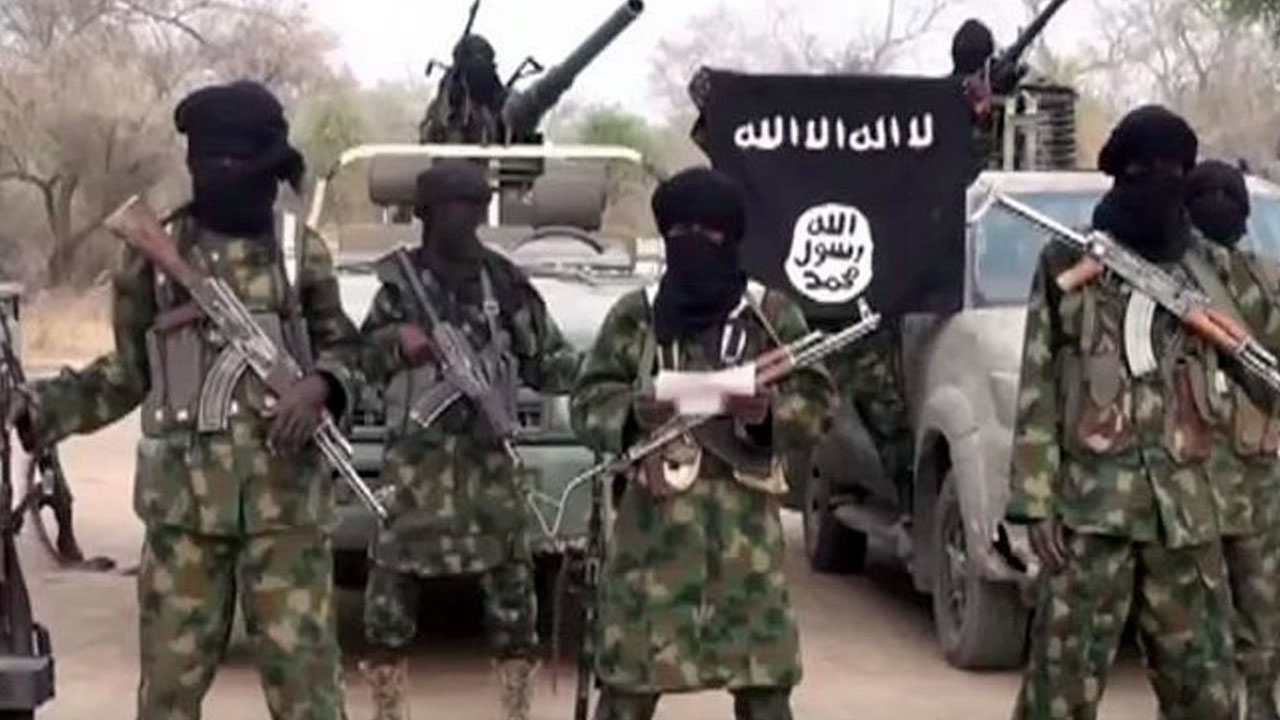
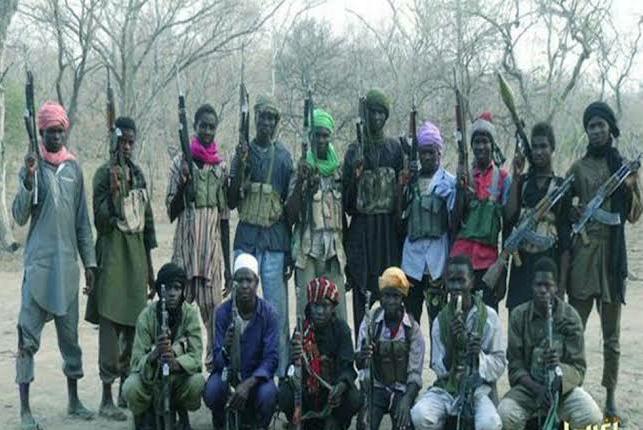
Four prominent members of Jam’at Ahl as-Sunnah lid-Da’wah wa’l-Jihd, popularly known as Boko Haram, have turned themselves into Nigerian forces in Borno State.

Commanders Mala’ana (Khalid), a Governor, Abu Dauda (Munzir), Modu Yalee (Commander), and Bin Diska (Nakif) submitted to Operation Hadin Kai (OPHK) soldiers on December 12, 2022, when they were patrolling the state’s Gwoza local government area.

This fresh intelligence reveals that the insurgents have emerged from the Sambisa forest where they had been hiding and are now waging terror attacks against the state, according to Zagazola Makama, a Counter-Insurgency Expert and Security Analyst in the Lake Chad region.

They once served as leaders at the Njimiya camp under Abubakar Shekau. 

Nevertheless, during the invasion of the Sambisa Forest in May 2021, they disarmed and joined ISWAP at Lake Chad, which finally led to Shekau’s demise.

The four Commanders later abandoned ISWAP and fled to Sambisa, where they established a camp and started acting independently.

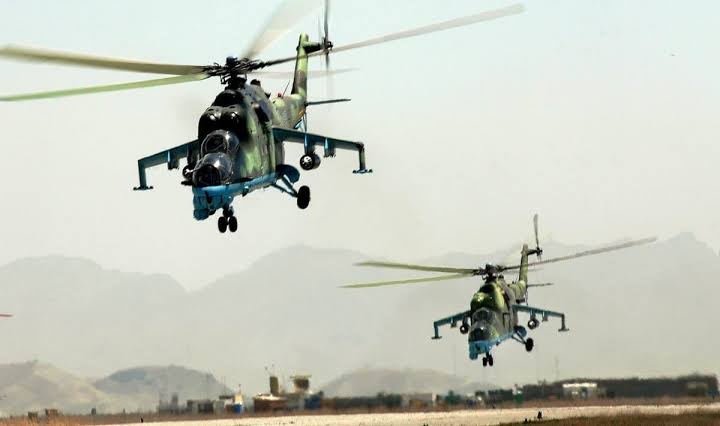
They were forced to surrender out of fear of being wiped out on the battlefield by a combination of a protracted, increased bombardment on terrorist hideouts and rivalry strikes.

Meanwhile, 83,000 Boko Haram fighters had been captured and were being treated for rehabilitation in Borno State, according to Major General Christopher Musa, the OPHK Theatre Commander.

ISWAP storms B/Haram enclaves, slaughters six in fresh attack

By Uzair Adam Imam

The Islamic State of West African Province (ISWAP) reportedly stormed the enclaves of Boko Haram and slaughtered six of its members, whom the ISWAP described as “infidels”, on weekend.

This is not the first time, in an inter-rivalry clash, that the ISWAP carried out a successful attack against Boko Haram, causing the group huge casualty and loss of weapons.

The development is believed to have been dragging Boko Haram insurgents down to their knees as they continue to count losses from the clashes.

It was gathered that the ISWAP had stormed the enclaves of Boko Haram insurgents in Gajibo, a town situated 95km northeast of Maiduguri, Borno State capital.

The ISWAP once vowed to battle more with Boko Haram than even with the Nigerian troops, worsening the rivalry clashes with bloodshed.

A counter-insurgency expert and security analyst in Lake Chad, Zagazola Makama, said the attackers also recovered five AK47 riffles from the Boko Haram terrorists.

Experts and analysts believe that the worsening of inter-rivalry clashes between ISWAP and Boko Haram may lead them to irreversible self-destruction.

Scores killed in ISWAP, B/Haram rival clash in Borno

By Uzair Adam Imam

A rival battle broke out between the late Abubakar Shekau’s Boko Haram faction and Islamic State West Africa Province (ISWAP) militants.

The Thursday incident also led to the killing of notorious commander Kundu and several other fighters at Dikwa and Bama local government areas of Borno State.

Reports disclosed that Kundu and his team members were on a robbery mission when ISWAP stormed them on six motorcycles, conveying three fighters on each, carrying deadly machine guns.

A security analyst and a counter-insurgency in Lake Chad, Zagazola Makama, confirmed the fight.

He said, “A heavy fight ensued between the terrorists resulting to dozens of casualties on the side of the Boko Haram terrorists, while few ISWAP terrorists were wounded.

“The Boko Haram terrorists took to their heels, leaving their motorcycles to the ISWAP terrorists.”

Shettima: The facts and fallacies of Boko Haram linkage

By Lawan Bukar Maigana

The emergence of Senator Kashim Shettima as the running mate to the All Progressives Congress  (APC) presidential aspirant, Ahmed Bola Tinubu, has continued to generate reactions from all corners of Nigeria.  

Most worrisome is the puerile attempt by some ill-intentioned social media influencers to link the former governor of Borno State to Boko Haram terrorism.

What could have influenced the attempt to link Shettima with Boko Haram?

While the paid and unpaid agents behind this vile propaganda have not provided any evidence to link the Senator to terrorism, it is necessary to examine some facts from the apparent fallacies of the opposition and separate the wheat from the chaff.

For instance, while travelling to Gamboru Ngala for a rally ahead of the 2019 presidential and National Assembly elections, Shettima’s convoy was attacked by Islamic State West Africa Province (ISWAP) members and three of his loyalists were killed. Many others sustained various degrees of injuries.

Characteristically, ISWAP claimed responsibility for the attack the following day. However, the then Special Adviser on Communications and Strategy, Malam Isa Gusau, confirmed the identities of the deceased, including a brave soldier and two staunch politicians.

According to Gusau, the attack aimed to attract global media attention to sustain the terrorists’ agenda of instilling fear in citizens and reducing the morale of the gallant troops.

The leader of the Boko Haram terrorists, Abubakar Shekau, who was later killed in an alleged suicide bombing, had threatened Shettima and top government officials in a 56-minute video where he ordered his members and foot-soldiers to kill them wherever and whenever they found them. Could Shettima have a link with Boko Haram, yet he would be the number one on their hit list?

In the video, Shekau boasted as follows: “You, former governor Kashim [Shettima], you present governor [Babagana] Zulum, listen – do not be deceived by your walking without shoes – be careful! If you sing these things we mentioned [Nigeria’s national anthem, national pledge, and the NYSC anthem], you are a disbeliever even if you recite them jokingly.”

It was not surprising that Shettima and Zulum were mentioned in the video because both personalities have consistently spoken against the evil of Boko Haram and worked assiduously with security agents and other stakeholders to decimate them. They have also been supporting Internally  Displaced Persons (IDPs) to recover from the damage the terrorists had done in their lives and relocate them to their respective, original communities.

It should also be noted that Shettima didn’t just stop at appealing to the Federal Government to intensify efforts aimed at eradicating terrorism. He committed enormous resources to support the military with security equipment and dozens of vehicles to ease mobility during operations. Is that a governor that has a link with Boko Haram terrorists?

Born and brought up in Maiduguri, I can authoritatively confirm that Shettima adequately funded the Volunteer Vigilante Youth Groups, popularly known as Civilian Joint Task Force (CJTF) in 2013, who were later trained in counter-terrorism operations, to strengthen the fight against Boko Haram terrorists.

He also provided adequate welfare and logistic support to over 20,000 CJTFs to strengthen the fight against Boko Haram elements. The motivation enhanced the crucial role of CJTF in intelligence gathering, easy identification, and arrest of suspected insurgents, among others. Could Shettima have a link with Boko Haram fighters and yet fund their tormentors?

Before the expiration of Shettima’s tenure as governor of Borno State, he was relentlessly calling for the deployment of military personnel and equipment to curb the threat of the terrorist group in the Northeast.  Considering the cost of the war on terror, Shettima was among the few personalities who persuaded state governors of the necessity of approving the sum of $1 billion from the Excess Crude Account for the counter-insurgency campaigns. He also defended the Federal Government’s plan to ensure the judicious utilization of the fund for the intended purpose.

Could Shettima have a connection with terrorists yet support counter-terrorism financing?

When Boko Haram terrorists destroyed churches in Borno, Shettima provided funds to reconstruct the places of worship and ensured adequate security protection of the areas.

In his testimony to this, the Chairman of the Christian Association of Nigeria (CAN), Borno Chapter, Bishop Mohammed Naga, said: “During Shettima’s visit to these areas, he released N100 million for the rebuilding of some of these churches. A committee was set up for that purpose. I was a member of the committee headed by a permanent secretary, Mr Justus Zare, as Chairman, and I am happy to inform you that presently we have used that money to rebuild 11 key churches which our people are now using. I am surprised to hear some people saying why don’t we rebuild all the churches. We cannot do that because there are many places that are still unsafe.”

Would church leaders praise Shettima if he had a link with Boko Haram fighters!?

In a nutshell, Shettima is neither an ethnocentric leader nor a religious bigot. On the contrary, he is a charismatic personality who believes in equity, justice, and fairness. Moreover, from his engagements and pronouncements, he has consistently advocated peaceful and harmonious relationships among different tribes and religions.

Therefore, it is unfair and unreasonable to link him with Boko Haram terrorism when he, in reality, has been their number one enemy and a prime target for years.

Lawan Bukar Maigana writes from Wuye District, Abuja. He can be reached via Lawanbukarmaigana@gmail.com.
Boko-Haram expansionism and the future’s gruesome picture

By Abdulhaleem Ishaq Ringim

The Abuja-Kaduna train attack has finally halted the speculations regarding Boko-Haram’s expansionism into North-West territories of Nigeria. Although warnings sounded as far back as 2-3 years ago were suggestive of the existence and operationalization of such an active expansionist agenda, it wasn’t until January 2022 that I saw what I consider the first official acknowledgement of the expansionist efforts of BH. This acknowledgement was contained in Kaduna State Ministry of Internal Security and Home Affairs’ annual security report wherein lies observations of escalating relationships between Boko-Haram groups and bandits.

It should be recalled that Boko-Haram ceased to exist as a single entity since 2014/2015 when factionalism befell the central entity. This factionalism yielded 3 different groups distinguishable by certain ideological and tactical contrarieties. They are; The Shekau Led Jama’atu Ahlis-Sunna Lidda’Awati Wal-Jihad (JASLWJ), The Al-Qaeda in the Islamic Maghreb (AQIM) supported Jama’atu Ansaril Muslimina fi Biladis Sudan (Ansaru) and The Islamic State (IS) supported Islamic State in West Africa Province (ISWAP). And they have been fighting one another for influence and jurisdiction ever since. 

Interestingly, establishing an influential presence in North-central and North-west Nigeria has always constituted a major aspect of these groups’ grand agenda. But for years, it had proven hard for this objective to be achieved by any of the groups even after staging several operations in the 2 subregions as none of them was able to establish that desirable level of hegemonic presence and influence. 

However, among the three groups, Ansaru remains the most influential in the North-west even though it is thought to have hibernated after the face-off that ensued from the factionalism. Terror watch reports suggest that while in hibernation, Ansaru embarked on a strategic recruitment exercise targeting NW’s most dominant non-ideological criminal groups – the bandits – through infiltration, training, tactical assimilation and arms supply. Apart from Ansaru, Shekau-led JAS through some commanders(like Adamu Bitri before he defected to ISWAP and eventually died) also established and maintained contact and relationship with leaders of some bandit groups. 

Last year, Nigeria’s terror network experienced heightened volatility due to the escalation of the conflagration between the two major terrorist organizations —the Shekau-led Jama’tu Ahlis Sunna Lidda’awati wal-Jihad (JAS) and Al-Barnawi-led Islamic State in West Africa Province (ISWAP) — operating in the North-east and Lake-chad basin. This resulted in the death of Abubakar Shekau by suicide which sparked serious disarray within the network and rendered the JAS somewhat defenceless. 

Consequently, ISWAP issued an ultimatum to all JAS commanders and fighters to either defect to ISWAP and pledge allegiance to Al-Barnawi or vacate all former JAS territories which now fell under their control. Some commanders and fighters complied and defected while many others surrendered to the Nigerian Army with the aim of becoming beneficiaries of the Nigerian government’s amnesty program(Operation Safe Corridor). The third group of JAS commanders and fighters who neither defected nor surrendered to the Nigerian army were thought to have migrated to NW to forge alliances with bandit groups. 

By implication, the above-stated events suggest that while Ansaru continues to remain the closest to NW bandits, ISWAP and former JAS fighters might have also re-ignited links with bandit groups in the NW. While ISWAP might have taken over control of the vast network of bandit groups that were formerly affiliated to Shekau-led JAS due to the carpet-crossing of JAS commanders (some of whom are the keepers of the link between JAS and the bandit gangs in the North-West just as Adamu Bitri) to the ISWAP side, JAS fighters that refused to surrender to both ISWAP and the Nigerian Army might, however, have also migrated to NW to forge alliances with bandits and escape ISWAP’s wrath. 

Now, the changing dynamics, improved weaponry and renewed offensive tactics seen in recent attacks thought to be staged by bandits are testimonials to an improved alliance between Bandits and members of BH groups. These attacks carry BH signatures all over from attacks on public infrastructure (as in the case of the two train attacks) to attacks on military formations (e.g NDA and the Birnin Gwari Army Forward Operational Base) and the efficient use of IEDs for offensive have increased in frequency in NW states. The recent videotape that was released in the aftermath of the release of the Bank of Agriculture’s MD also signals this unholy alliance. 

At this pace, North-west Nigeria is on the verge of becoming a deadlier terror zone than the North-East ever was. This is because we are dealing with two groups with complementary terror/criminal expertise synergy which holds the potential for the establishment of the most sophisticated terror network Nigeria has ever seen. The bandits indubitably boast of an unmatched knowledge of the local terrain and geography of North-west’s forests and other ungoverned spaces while BH groups, be it Ansaru or ISWAP, boast of a very deadly extremist-ideological core with a sophisticated array of terror-based expertise and affiliation to global terror networks through Islamic State(IS) African subsidiaries(for ISWAP) and Al-Qaeda in the Islamic Maghreb (AQIM) (for Ansaru) that allows them access to global terror resources and funding.

The bandits also have numbers sourced from a rich population of child soldiers. Their numerical preponderance, nonideological-cum-uneducated nature and relatively young base makes them extremely vulnerable to indoctrination and a suitable source for terror manpower. Sadly, the use of child soldiers for terror activities is attributed to both ISWAP and Ansaru, but ISWAP has gone further to institutionalize child recruitment and indoctrination using international terror recruitment standards. Hence, ISWAP might leverage this rich child-soldier manpower source opportunity more effectively. 

As I write this piece, I must confess to experiencing the oscillation of an overwhelming shockwave of fear that has been travelling through the deepest core of my body since I discovered ISWAP’s new recruitment and indoctrination strategy through open-source terror watch networks. And here is why:

The largest bandit-manpower source is predominantly the forsaken, uncivilized and uneducated population of forest-based Fulani. Several testimonies from victims of kidnapping further affirm that the bandits are mostly young boys aged 14-18. They have been adjudged to be tremendous in terms of population and now BH groups (ISWAP, ANSARU, fmr JAS) have infiltrated the vast bandit network due to the government’s avoidable mismanagement of the entire situation which metamorphosed from the farmer-herder crisis. Unfortunately, the continued mismanagement of this crisis now holds the potential of further transfiguring into an implosive generation-long extremist insurgency.

ISWAP has instituted a new recruitment and indoctrination initiative. This initiative aimed at recruiting an army they term “The Empowerment Generation” focuses on training and indoctrinating children aged 8-16 as seen in a propaganda video released by the group. The implementation of this training and indoctrination exercise is done through the instrumentality of a well structured educational institution named “Khilafah Cadet School”. Cadets, otherwise called “Cubs of the Caliphate” are drilled in extremist Islamic education; tactical military, arms and infantry training; and Jihad and enemy execution techniques. 

This school boasts of having a well-structured curriculum consistent with global terror standards and a strict entry requirement as students have to pass entrance exams before getting admitted. The school is well-funded and resourced. The scariest aspect of the video is the scene that shows the cadets practising special force warfare tactics. In the scene, the cadets are shown entering a building in special forces style to extract enemies. The enemies used for this drill were Nigerian soldiers captured by ISWAP. After the extraction, the 3 soldiers were made to kneel and they were all shot in the head by three different child soldiers barely aged 15. The precision, the tact and the efficiency in execution are consistent with that which is usually seen in war movies. 

The “Cubs of the Caliphate” are a product of a long-term strategy envisioned by ISWAP to continue the ideologically-driven war for another generation, serving as a formidable and inexhaustible manpower source for the terrorist army. As I watched that video, I reflected with fear on the young bandit population in the NW and the possibility that most of them might end up getting admitted into such kinds of indoctrination programs as a result of the strategic alliance between bandits and these terror groups. I could not help but weep at this gruesome picture of the future, asking what if Boko-Haram groups succeed in assimilating a major section of the young bandit population operating in this part of the country? 
The catastrophe that would result from this scenario is indescribable. Nigeria has managed to mismanage every security situation that it had ever faced. But we cannot afford to continue mismanaging this crisis for the future looks gruesome unless a de-escalation happens. But how do we tame this menace? 

The only security situations in Nigeria that the government had been able to manage to an extent are those that benefitted from robust dialogue and amnesty programs. And the closest we got to destroying insurgency through the use of brute force was when mercenaries were hired to fight Boko-Haram in 2015. But just like dialogue, the implementation of completely annihilating military offensives is as well another efficient option in countering terrorism and insurgency. But in Nigeria’s context, this method carries the smell of impossibility all over it. In fact, brute force clearly constitutes precedential failures in the fight against terror and insurgency in Nigeria.

The highest level of brute force(since the completely annihilating one has so far been simply unachievable) we have been able to exert could not tame Niger-Delta Militancy, it hasn’t been able to crush Boko-Haram for almost two decades now. And it is yet again proving inefficient in the fight against bandit-terrorists even before the infiltration of the very tactical and well-resourced Boko-Haram groups. 

We are left with two options; the Gumi option of dialogue and strategic engagement with stakeholders in the affairs of these bandits with the aim of securing a ceasefire and ultimately, surrendering of arms in exchange for amnesty and redress(before they completely get assimilated into the ideological war BH groups are fighting) or the Elrufai solution of engaging the services of mercenaries to perform a sweeping operation targeting all forests and hamlets harbouring these bandit-terrorists and their BH affiliates since the implementation of such method by our military seems impossible. 

Principally, the fundamental responsibility of every government is to safeguard the lives and properties of its citizens. Nigeria’s government under President Buhari has failed in that responsibility but we can no longer tolerate this failure for it holds the potential of consuming us and the country at large. Nigerians must rise up and demand an end to this barbarism NOW! 

Abdulhaleem Ishaq Ringim is a political/public affairs analyst. He writes from Zaria and can be reached through haleemabdul1999@gmail.com.

Nigeria drops to sixth position in Global Terrorism Index

By Muhammad Sabiu

Nigeria is now ranked sixth in the Global Terrorism Index, as the country’s struggle against Boko Haram insurgents gains more victories.

According to the report, Nigeria fell two spots from fourth place, which it had held since 2017.

Nigeria, Syria, and Somalia are the only countries among the ten countries most hit by terrorism to increase their scores from 2020 to 2021, according to the Global Terrorism Index (GTI) issued by the Institute for Economics and Peace (IEP), an independent and non-profit think tank.

The report reads, “Total deaths from terrorism in Nigeria fell to 448 in 2021, the lowest level since 2011. Terror-related casualties dropped by almost half compared with the previous year.

“However, the number of terrorist attacks increased by 49 per cent between 2020 and 2021. 36 per cent of attacks were claimed by ISWAP, Boko Haram being responsible for eight percent and 44 percent not attributed to any group.”

Boko Haram will be defeated before 2023 – Zulum

By Ahmad Deedat Zakari

Borno State Governor, Babagana Zulum, had expressed confidence that Boko Haram would end before the end of Buhari’s administration.

He said this on Thursday, February 10, while responding to questions from reporters in Abuja after meeting with President Muhammadu Buhari at the Presidential Villa.

When asked whether it would happen in his administration, he said: “Inshaa Allah. Even now in Borno State, we are doing very well, extremely well.”

He was pressed further if he meant Boko Haram activities would end before 2023. He said: “Inshaa Allah. You know what I mean by Insha Allah, God willing.”

Governor Zulum added that about 30,000 repentant terrorists from Boko Haram and Islamic State’s West African Province (ISWAP) have also surrendered without any incentive from the government.

Four abducted Chibok girls regain freedom

By Muhammad Sabiu


Residents of Chibok town claimed on Sunday that four girls abducted in Kautikari village in Chibok Local Government Area of Borno State in northeast Nigeria regained their freedom over the weekend.


The girls were among the 24 people kidnapped on January 14, 2022 in Chibok’s villages and adjacent villages, where the rebels also took food and other necessities from the inhabitants.


Chibok is around 150 kilometers from Maiduguri, the capital of Borno State, and has continued to be targeted by Boko Haram and ISWAP, prompting residents to speak out recently, accusing the government of abandoning them.


It should be remembered that nine residents of Kautikari village were abducted during the episode that led to the kidnapping, before the militants later freed two older ladies and some youngsters.


In addition, the insurgents took the four young ladies to Dille. Dille is a community in Borno State’s Askira Uba Local Government Area that has a boundary with the Sambisa forest. The community is also reported to be a hotspot for rebels in the area.


Kautikari lies roughly 15 kilometers east of Chibok town and is primarily populated by Christians.

According to locals, the attack on Kautikari village has occurred more than 20 times since the kidnapping of 276 Chibok girls in 2014, which brought the area to national attention.

Restraining the illegal circulation of firearms in Nigeria

By Mukhtar Ya’u Madobi

The proliferation of Small Arms and Light Weapons (SALWs), occasioned by illegal and porous national borders and a booming business of gun-running, are the main factors fuelling Nigeria’s security challenges, giving rise to criminal activities across the country.

The proliferation of SALWs is a global phenomenon arising from global conflicts. According to a study conducted by the Geneva-based Small Arms Survey (SBM), it is estimated that more than 857 million SALWs are currently in circulation aside from twelve billion rounds of ammunition produced annually. An estimated ten million SALWs are in Africa, with one million in Nigeria.

This is connected with previous and ongoing conflicts in West and North African countries such as Liberia, Sierra Leone, Cote d’Ivoire, Chad, Niger, Mali and Libya. The proliferation of SALWs aid non-state actors, including Boko Haram/ISWAP terrorists, bandits, militants etc., while undermining the state monopoly of instruments of coercion. The threats posed by the proliferation of SALWs are of such magnitude that a security strategy that contemplates monitoring their flow and use is required.

Another report by SBM Intelligence noted that about 6145000 SALWs are illegally circulating among civilian non-state actors and criminals in Nigeria. Meanwhile, the country’s security institutions have a paltry 586600 firearms in their possession.  Indeed, the proliferation of arms across borders along with human trafficking and drug trafficking, especially in the Sahel region, ranks high on the chart of criminal activities constituting threats to national and regional stability in Africa.

Experts had identified a lack of effective legislation and enforcement mechanisms as a major reason SALW proliferation has a significant impact on crises both within and across many national borders.

To stem the rising tide of illegal weapons circulation, the federal government has established the National Centre for the Control of the Small Arms and Light Weapons (NCCSALW). The centre is under the Office of the National Security Adviser (ONSA), Major General Babagana Monguno, with retired Major General AM Dikko as the Pioneer Coordinator. The National Security Adviser said the centre would operate similarly to the counter-terrorism and cybersecurity centres, both under his office.

The NCCSALW was established to replace the defunct Presidential Committee on Small Arms and Light Weapons and is expected to serve as the institutional mechanism for policy guidance, research, and monitoring of all aspects of SALWs in Nigeria. Apparently, the federal government believes that the transition from PRESCOM to NCCSALW would provide more effective coordination and monitoring of progress regarding the proliferation of small arms and light weapons. When fully operational, the NCCSALW would have six regional offices that will work closely with security and intelligence agencies to prevent and control proliferated arms and track weapons in the hands of non-state actors.

Among several functions, the National Centre will be responsible for controlling the proliferation of SALWs in Nigeria, implementing strategies, plans, and policies for eradicating SALWs, and supervising the implementation of same by relevant government bodies. It will also create and maintain small arms and light weapons register and a national database, receive reports on firearms registration from the Nigeria Police, and update the database with such information.

In addition, it will also register, store and destroy firearms and ammunition possessed illegally by security agencies, criminals and other non-state actors, maintain a database of registered firearms dealers in Nigeria, among others. Furthermore, the centre will be responsible for updating and transmitting the national database to the United Nations (UN), the African Union (AU) and the Economic Community of West African States (ECOWAS).

In its relations with these inter-governmental bodies, the National Centre will identify legitimate national defence and security needs and obtain the required exemptions from specific international protocols to meet these needs. The National Centre is also empowered to carry out public education and awareness at national, state and local levels, to involve Nigerians in the efforts to control the proliferation of small arms and light weapons.

No doubt, the establishment of the NCCSALW is a move in the right direction. Still, to achieve maximum impact, it is expected to open up new regional and international cooperation and strengthen existing efforts.

In 2001, UN countries adopted the Programme of Action to Prevent, Combat and Eradicate the Illicit Trade in Small Arms and Light Weapons in All Its Aspects.

In the instrument, member states agreed to, among others, improve national small arms regulations, strengthen stockpile management, ensure that weapons are properly and reliably marked, improve cooperation in weapons tracing and engage in regional and international cooperation and assistance.

According to the UN, one of the most critical components in the fight against SALWs proliferation is weapons tracing. Hopefully, when the centre discharges its mandate fully, it will undoubtedly lead to a drastic reduction in national, sub-regional and regional illegal possession of SALWs, which will be crucial in mitigating the rising level of armed violence.

The NSA has recently declared that the government is preparing to constitute a security outfit responsible for safeguarding the nation’s porous borders. The move is very apt because it will curb transnational organized crimes, thereby reducing the level of security challenges currently facing the country.

Mukhtar wrote from Kano via ymukhtar944@gmail.com.

ISWAP Commander Abou Maryam, other fighters killed in Nigerian military airstrikes

By Muhammad Sabiu

In airstrikes orchestrated around the shores of Lake Chad in Borno State, the Nigerian military killed an ISWAP Commander, Modu Kime, also known as Abou Maryam, and his militants, PRNigeria reports.

The senior ISWAP Commanding Officer met his death in airstrikes carried out on the river banks of Bisko and Tumbum Tawaye in the Abadam Local Government Area.

The operation was carried out after intelligence, surveillance, and reconnaissance (ISR) missions revealed the terror Kingpin’s position while coordinating strikes.

According to reports from the ground, scores of terrorists and the commander were killed due to the air interdiction.

An intelligence officer told PRNigeria that Abou Maryam, who has the phone number +22788036182, was on intelligence services’ radar.

The officer was quoted as saying, “For some times we had been intercepting his communication and his coordination of attacks by his terror group, mostly in Borno State.

“He had operated around the axis of Tumbum Tawaye, Bisko, Garere, Arkumma and Dumbawa, Zari and Gundumbali LGA.

“Abou Maryam coordinated attacks on military troops and soft-targets mostly around Damasak, Nganzai and Gajiram and sometimes on [the] outskirts of Maiduguri.”