Islam

As you prepare for success, make provision for failure

By Aisha Musa Auyo

One thing everyone wishes for and works towards is to succeed in life. From infancy to adulthood, up to old age, we aim to succeed in every part of our lives. But what we fail to do is also to prepare ourselves for failure. Yes, because it’s inevitable. 

One of the pillars of the Islamic faith is the belief in qadr (divine will and decree), good or bad. This means that good and bad will surely ensue in life, success and otherwise. It’s how life is designed. But why do we do nothing or very little in preparing ourselves and our wards for failure? Why are we shielding ourselves and wards from the reality of life? 

This may be why people cheat, as they cannot afford to fail. They just have to win at all costs. Others commit suicide. Some go on drugs because they have been unable in certain expectations or tasks.

So as parents and teachers or elders, we need to let ourselves and our wards know that failure, not consistently winning, or not being at the top is okay. It is acceptable, and life does not end there. We can always try later and do better. 

Let’s show our wards and significant others they can trust us to be there for them whenever they fail. Just as they will want to come to us with success stories, they should be free to do that with failure stories. This is what unconditional support is all about. We should be a shoulder to cry on. 

We should also, as parents, accept that we sometimes fail and let our kids see how we feel and how we are going about it. The norm is to show the kids that we are always succeeding and doing great, just so they can be inspired, but we are not helping them by doing so. 

In summary, these are the points I want us to reflect on and ponder. 

1. Prepare your child for failure. We will always have good and bad days. Let them know they cannot always win, and it’s okay.

2. Let us always put in the back of our minds and theirs that “Over every possessor of knowledge is one [more] knowing”. Qur’an 12:76 

Regardless of one’s intelligence, hard work, and luck, we will surely meet others who are better than us. Let us know that we are better than others too.

3. Failure is a learning process to know what to do and what to avoid in the future. If one fails in a certain task, one may succeed in another task.

4. We should learn to compete with ourselves, not others. Set a target for yourself, and work towards achieving it.

5. Life doesn’t end or begin with school grades, work promotions, or huge profits. There’s more to life than these.

6. Good relationships, emotional intelligence, compassion, contentment, and adaptability guarantee success in every life situation.

8. It’s lonely up there: If you cheat your way up or compete to be better than everyone else, people will leave you with your success. No one wants to be with someone who always wants to be on the top by hook or crook. Cheating often backfires. And if it doesn’t, the people who made it to the top by defrauding others end up very lonely and have no genuine person to share the success with. 

9. Healthy competition is okay. Being motivated by other people’s success stories is okay, but we should not cheat or compete. We are made differently.

10. Avoid social media attention or fame: The pursuit of likes, followers, and validation has led to detrimental effects on mental health, values, and overall well-being. The obsession with social media fame has resulted in a culture of superficiality, narcissism, and moral erosion, hindering the progress and development of society as a whole.

Parents and teachers must take responsibility and invest in youth development, focusing on their holistic growth, character development, and real-world contributions. By doing so, we can create a future where youth can realise their full potential and social media platforms can be used for positive change rather than as a means of self-promotion and validation.

11. School, parental, and peer pressure

School positions are not necessary; Those numbers instil unhealthy competition among students. Instead of children competing against themselves, they are pushed to compete with each other. 

A student should be encouraged to push himself harder to get better grades, not in comparison with another student. Teachers should do as much as possible to adopt learner-centred teaching so that each student receives the attention they crave.

Parents should learn to accept their children when they fail. We should know our capabilities and not push ourselves and our wards to be what we can’t be. I know it’s hard to accept defeat or reward failure, but that is the moment when self-love and support are needed most. If we know we did our best, we should not be disappointed. 

Parents should stop comparing siblings. Each child has his/her unique quality. A child lacking intellectual intelligence may score higher in emotional or social intelligence. Let’s focus on our highs instead of our lows.

When the storm is over, parents or guardians can discuss with the kids how to do better, with a reward or promise that will make the kid want to do better. We elders must learn to discourage cheating and encourage integrity and self-acceptance.

Aisha Musa Auyo is a Doctorate researcher in Educational Psychology, a wife, a mother of three, a Home Maker, a caterer and a parenting/ relationship coach.

Islamic New Year: Kano gov’t declares Wednesday work-free day

By Uzair Adam Imam

The Kano State Govenor, Abba Kabir Yusuf, has declared tomorrow Wednesday as a work-free day in commemoration of the 1445 Islamic new year.

A statement by the Commissioner of Information, Baba Halilu Dantiye, disclosed this on Tuesday.

The statement read in part ‘’The Governor who congratulated Muslims around the world on the dawn of the new Islamic year, enjoined the civil servants and the people in the state to pray for peace and tranquility as well as economic development of our dear state and the country at large.’’

According to Dantiye, the govenor also called on the good people of Kano state to live in accordance with the teachings of prophet Muhammad (SAW).

He added that, “The Governor also called on people to live their lives based on the teachings of Islam and practice the virtues of kindness, love and tolerance as exemplified by our Holy prophet Muhammad peace be upon him.”

Muslim domination of Nigerian politics, El-Rufai’s remarks and the quest for a just social order!

By Ibraheem A. Waziri

1. As against the postulations of some, who think Nigeria to be a fantastic, British-contrived social experiment. Many believe it to be purely a product of inevitable historical processes that ordinary mortals should only play along with. So, it is said that statesmen and cultural priests cum social philosophers must – by the spirit of the time, fair universal human values and exigencies of frequent unassailable moments – always create and promote a narrative of a reasonable sociocultural balance for the country to continue to thrive.

2. In this, since religion is adjudged, by scholars of identity in history, to be the strongest factor in social mobilisation. It is safe to assume that the crème de la crème of the Nigerian military, who ruled the nation between 1983-1998, although mostly Northerners and Muslims, had good intentions; to have worked hard to ensure the provision of religious balance, between mainly Muslims and Christians, in the general administration of the national and sub-national units of the country.

The Justification

3. A casual review of both the 1st and 2nd Republic is enough to show tendencies to Muslims’ domination of the Nigerian political space. Also, since Islam is consistently found to be deeply expressive in the discourses and practices of its adherents daily, especially in Northern Nigeria, non-Muslims may not help but feel threatened – even if only imagined, not real – with marginalisation when individual Muslims are in power. This, regardless of whether their predilections do not suggest inclinations to any assumed extremist tendencies. Because often politics and politicians ride on only prevailing narratives and popular sentiments as major currencies during elections and subsequently in forming finer details of general governance policy direction!

4. This may have been why people like the late Capt. Ben Gbulie would maintain this in his book, Nigeria’s Five Majors, and much later when he responded to questions by late Barrister Yahaya Mahmood SAN during a session at the Oputa Panel. That one of their reasons for staging the January 1966 coup d’état that killed mostly Northerners Muslims in power was intel, they got and rigorously verified to confirm, by some standard, that the then Nigerian government, led by mainly Northern People’s Congress (NPC), was clandestinely planning a Jihad with the hope of Islamising the country.

5. The measures of balancing taken by the military may not be favourably viewed by modern reviewers, depending on the angle of vision one takes. But it is unmistakably clear that had the prevailing rhetoric of the Nigerian Muslim communities of the late 80s and 90s – that were even celebrating as heroes on various pulpits, figures and ideals of contemporary Islamist movements in Egypt, Iran, Algeria, Afghanistan and Sudan – met with a popular narrative of Muslim majority populated Nigerian state, the results would have been better imagined now. 

6. Thus, during both the two aborted electioneering processes of 1992 and 1993, to usher in a democratic government, General Ibrahim Babangida (IBB), the Head of the Nigerian state, deliberately tried to ensure political parties presented bi-religious tickets for elections into offices of governors, everywhere there is a significant population of people of differing faith, and ultimately that of the Presidency.

7. Many scholars and pundits alike have concluded that it was the failure of the southern Muslim, Moshood Abioĺa, Social Democratic Party’s candidate, who is said to have won the election, to respect IBB’s wish to select Paschal Bapyau, a northern Christian, as Vice Presidential candidate that led to the annulment of June 12 1993 elections! The Quest for such religious balance was that important to IBB, as we can conveniently presume it to be part of his insight and blessed wisdom clinging to higher moral flanks, advancing the standard of a fair, indivisible Nigerian nation.

8. Fast forward to the events preparatory to ushering in the fourth republic in 1999. It was the same cream of former Northern Nigerian top military generals who insisted on a power shift to the South, particularly to a Christian president, who would, in turn, have a Muslim running mate from the North. Thus, Northerners or Muslims from the South were cajoled to stand down their ambitions in the name of peaceful, regional and religious balance!

To Every Action…

9. Yet, as the timeless law of physics stipulates, there is an equal and opposite reaction to every action taken. So also the decision to premise all the sociocultural discourses on Nigeria on the narrative of religious balancing. Religion as a determinant of who gets what, in the string of the political equation, and ultimately down the line on the food chain of the country’s rentier economy, also became the cheap tool providing the impetus for persistent conflicts and unending violence, particularly in some subnational units in Northern Nigeria.

10. In Kaduna, my state, there has been a wave of religiously motivated crises, coupled with agitation for territorialism and territorial expansion, more resource allocation and political representation, since 1987. After the ushering in of the fourth republic in 1999, it continued assuming an alarming direction, characterising every aspect of the policy discussion in the state. Every single appointment, political or otherwise, must factor in religion. Yet the wave of the crisis did not show any sign of going away. It kept consuming many lives and properties, casting a blight on every possible future of progress and development. Refugee camps became a distinct feature of satellite towns in the state.

11. Government, civil society and faith-based organisations became very busy and active daily on the issues of conflict resolution and rehabilitation and resettling of refugees more than any other thing. From 2013 to 2014, Reverend Joseph Hayeb, the present Kaduna State Christian Association of Nigeria’s Chairman and a Muslim cleric, Shaykh Haliru Maraya, served as Special Advisers to the then Kaduna State governor, Mal. Mukhtar Yero on Christianity and Islam, respectively. They partnered with an international peace promotion non-governmental organisation, Global Peace Foundation, in a state-wide campaign for peace and conflict resolution in the state. Malam Samuel Aruwan, who was to become the first Commissioner of Internal Security and Home Affairs in Kaduna 2019 – 2023, and I joined them on the invitation. We wrote essays and appeared with them at conferences, engaging in the discourses of why Muslims and Christians must find ways to live in peace!

2015!

12. the deployment of superior vigilance technology, by the Independent National Electoral Commission, in the conduct of the 2015 elections exposed the fallacy of the premise ascribed to the religious balancing narrative that has lasted for 30 years in Kaduna. Instead of the entrenched assumption that the religious demographic spread in the state is almost 50-50 between Christians and Muslims, it was realised that it was at most 30 – 70 in favour of Muslims!

13. This, unfailingly, was to give room to so much reflection, on the utility of the religious balancing narrative, in providing the needed peace and stability for the general administration of the state. In that, a fair and dispassionate assessment could be said that over the years, it has proven to be a burden to the state and is threatening the overall peace and stability of the Nigerian Nation! Even if it has once been useful in keeping peace and maintaining justice, providing stability and strengthening the foundation of the Nigerian Nation.

14. More so, the assumed justifiable reasons that made the northern military elite deploy it then can be said to be no longer there now. As Samuel Huntington projected in his 1993 seminal work, The Clash of Civilisations and the Remaking of World Order, the appeal of the universal call to Jihad among Muslims would lose its popularity in about 25-30 years. That Muslims world over would gradually appreciate and align with the values of democracy and its prescriptions in the rule of law and freedom of expression.

15. Global war on terror and the experience of the Muslims here, home to Boko Haram, has helped make Huntington’s prophecy real. It significantly changed the perspectives and disposition of the Muslim elites in the country. Many scholars and clerics have stopped identifying with Jihadi rhetoric and, in many cases, withdrawn or dissociated themselves from the earlier ones they once made. There has been a wide-ranging consensus among a larger section of them to work with the present multi-religious composition of Nigeria and support its established institutions!

16. Also, the era now is not a military era, where the earlier conceived balancing narrative can be sustained by fiat nationally and sub-nationally. Democracy is here, and its promises, based on the premise of popular participation and will, are bound to force the hands of society in a particular direction.

17 In 2019, the Pew Research Centre, an independent American think tank that specialises in social sciences, demographic research and analysis, published that, in 2015, Muslims in Nigeria constituted 50% of the population as against Christians who are less. And by 2050, Muslims will constitute about 60% of the people, while Christians will be less than 40%. 

18. When I wrote about this on the 11th of July 2022, in a message wishing fellow Muslims well during Sallah celebrations, I also called them out to reflect on what Nigeria they would want. Many experienced pundits and senior citizens in my list submitted that the 60% per cent figure is most likely the population of Nigerian Muslims now. We are only hindered from knowing that for a fact because the past Nigerian military leaders had struck out religion as a variable in all official national headcounts. They believe that by 2015, Nigeria’s Muslim population will likely be 70 – 75%. 

19. All these should point to the reality of the futility of struggle, for a just social order, in Nigeria while clinging to the religious balancing narrative. 

The El-Rufai Example of 2019!

20. Malam Nasiru El-Rufai was elected into the leadership of Kaduna State on top of events significant to unravelling the wave of fallacies that made operational in the state, the religious balancing narrative. He was equally confronted with the reality of the non-viability or even risks associated with any attempt to perpetuate it.

21. In 2019, he won the election after confronting the operational, religious balancing narrative and crushing it. Amid cheers by the Muslim community, who are excitedly displaying an air of triumphalism, some of us must have assumed that the winner takes all maxim will be deployed. Yet Malam Nasiru went ahead in his acceptance speech on the 11th March 2019 to state: _“Let us all see and value each other as human beings descended from Adam and Eve. Let us end the misuse, abuse and manipulation of religion for personal gains. Religion should be a private matter. Our identities should not become barriers to common humanity. Our doors are open to a new chapter of concord.”

22. Subsequently, appointments and responsibilities were allocated based on merit, trust, commitment, party loyalty, and clearly outlined cause. Thus, many so-called sensitive positions, like the Accountant General, Commissioner of Internal Security and Home Affairs, and many others, go to non-Muslims!

23. In this, as an independent observer not speaking for Mal. Nasiru, I will say that one can see that if the Muslim-Muslim ticket has any purpose, it is only for burying the religious balancing narrative, which has proven to be cancer, in the body of our journey of development, into a just and prosperous society. It is also to serve as a teachable moment, to Muslim leaders, politicians, and the teaming youthful population, on operationalising the new narrative of the Muslim majority Kaduna and Nigeria, which is soon to be the new order of the day.

The Controversial Speech of 28th May 2023!

24. Nigeria’s 2023 elections, which saw the much-maligned success of a Muslim-Muslim ticket at the national level, had reasons to give Nigerian Muslims a feeling of triumphalism again. It has confirmed their numerical superiority and harbours the tendency of permanently killing the religious balancing narrative in our national politics. It also came with the risk of making some elements among Muslim politicians, clerics, and scholars alike start using it, in future, in a manner that would be inimical to the interest of their fellow Muslims, non-Muslims and the idea of the Nigerian nation.

25. The farewell dinner, Imams, clerics and Islamic scholars organised for Mal. Nasiru Elrufai, the 28th of May, 2019, in my opinion, was the best place for him to kick start the conversation about what the victory of the Muslim‐Muslim ticket should mean to the Muslims and the country in general. Both mark the end of the religious balancing narrative, religious politics and what future clear Muslim dominance or leadership should mean. 

26. From the clips of the recordings circulating in social media and the translation of the entire speech by various news outlets. It is clear that though Elrufai spoke appealing to his audience’s sentiments and good feelings, he was also unequivocal that the Muslim leadership across history and his, in Kaduna, did not and shall not try to discriminate against non-Muslims. This is a call and a subtle cautionary appeal to those who may think otherwise to reflect and reconsider as an exemplary guide in future.

The Ways Forward

27. Nigeria has moved into a new era in its history and evolution. Not that it has only seen the futility and, ultimately, the end of the religious balancing narrative; it has also come to the era where the influence and wisdom of its retired military generals in its democracy is about to cease altogether. All hands must be on deck to help chart a new cause and craft a fresh narrative for its sustenance and maintenance on a just and equitable pedigree.

 28. The country’s new reality of a sociocultural composition needs the attention of scholars, pundits and policymakers to ensure that the nation moves with reasonable speed on the lane of development. And this is what that speech by El-Rufai on that day should be seen to have helped to transit the national conversation quickly!

Ibraheem A. Waziri wrote from Zaria, Kaduna State. He can be reached via iawaziri@gmail.com.

Book Review: The Unforgettable Queens of Islam

By Dr Shamsuddeen Sani

It’s very easy to ignore this book. Underrate it even. I found myself rereading it for many days, given the enormous importance of the topic, especially in the contemporary discourse in Muslim-majority countries about woman’s leadership. Being a recent publication in 2020, and although the author didn’t explicitly state it, it appears to be building to improve upon earlier work by the late Moroccan feminist writer and sociologist Fatima Mernessi with her book, The Forgotten Queens of Islam.

Shahla Haeri embarks on a journey of gendering the historical narrative of sovereignty and political authority in the Muslim world, shedding light on the lives of Muslim women leaders who defied the norms of dynastic and political power to rise as sovereigns in their deeply patriarchal societies.

The author’s usage of the term “queen” is not meant to be taken literally for all six prominent figures discussed in the book but rather to signify their immensely influential leadership roles during their respective eras. While recognising the significant impact of numerous women in Islamic history who exerted influence behind the scenes, Haeri emphasises those women who stood at the forefront of the political machinery, actively engaging with the structures of authority and power.

She doesn’t just relay the historical milestones of these great women in historical Islam but brings in a fresh perspective on how we look at the concept of women’s leadership in the Islamic tradition. The author situates women rulers’ rise to power within three interrelated domains: kinship and marriage, patriarchal rules of succession, and individual women’s charisma and popular appeal.

This book prompts deep contemplation on patriarchy within the pre-modern normative Islamic tradition. But one needs to be careful because the author appears to be overly problematising patriarchy in some instances significantly beyond what we consider as would have been normal in pre-modern Islam. She did allude, however, to the critical role of men in women ascending to positions of political authority. 

Structurally, this book has a Preface and Introduction and is broken into three main parts with two body chapters. Part I, Sacred Sources of Authority: The Qurʾan and the Hadith, lays the background for her accounts, with a deep examination of the primary sources of the Qurʾan and hadith, through the Qurʾanic story of the Queen of Sheba and the biography of the Sayyida Aisha (RA). Haeri relays the Quranic account of the dramatic encounter between King Solomon and the Queen of Sheba, popularly known as Bilqis. Drawing primarily from Tha’alabi and al-Tabari, the book cross-examines the sovereignty of Bilqis and connects the Quranic revelations with what she believes was the exegetes’ medieval patriarchal reconstructions.

Part II of the book is about Medieval Queens: Dynasty and Descent. In Chapter 3, the book explores the leadership life of the long reign of the Ismaili Shiite Yemeni queen. It examines Queen Arwa’s fascinating political acumen and how she survived the political and power succession tussle dealing with the 3 Fatimid caliphs of Cairo. Chapter 4 examines the short sovereign rule of the only female sultan of the 13th century Delhi Sultanate, Razia Sultan: ‘Queen of the World Bilqis-i Jihan. 

The 3rd part of the book, which explores the contemporary Queens and examines the institutionalisation of succession, provides an in-depth look at Benazir Bhutto and Megawati Sukarnoputri but will not spoil more here for the interesting details in the book.

Haeri concludes this work of ethnohistory which is deeply personal as she peppers in the concept of the “paradox of patriarchy,” which refers to the historical tradition of power succession among men, particularly fathers and sons, or even brothers, whose family ties legitimise the customary transfer of power. She quickly alludes that the relationship between fathers and sons can be a source of tension and rivalry, where they may fear, resent, or even seek to eliminate each other. In contrast, father-daughter relationships tend to be more personally fulfilling and have fewer political consequences for the father. The preference of patriarchs for their daughters is not only driven by self-preservation but also by their recognition of their daughters’ talents and political astuteness.

Dr Shamsuddeen Sani wrote from Kano. He can be reached via deensani@yahoo.com.

Pope Francis condemns Quran desecration in Sweden

By Muhammad Abdurrahman

Pope Francis expressed his strong disapproval of the burning of the Quran, stating that he was both angry and disgusted by the act. He rejected any notion that this action could be considered a form of freedom of speech.

Recently, there was an incident of Quran’s desecration in Sweden where a man burned a copy of the sacred book outside a mosque in the country’s capital city. The Pope has made remarks in response to this event.

On Sunday, 57 Muslim states — under the banner of the Organisation of Islamic Cooperation — said that collective measures are needed to prevent acts of desecration of the Quran and that international law should be used to stop religious hatred.

Swedish police had granted Momika a permit in line with free speech protections, but authorities later said they had opened an investigation over “agitation against an ethnic group”, noting that Momika had burnt pages from the Islamic holy book very close to the mosque.

Sweden’s government condemned Momika’s actions on Sunday, calling them “Islamophobic”.

Sokoto Killing: Stop jungle justice – MURIC

By Muhammad Abdurrahman

On Sunday 25th day of June 2023, the good people of Sokoto woke up and learnt about the murder of one butcher called Usman Buda over an alleged blasphemous comment against our noble Prophet Muhammad (SAW).

Sources revealed that some of the victim’s closest business associates at the Sokoto abattoir made frantic efforts to rescue him, but they equally sustained injuries and have been admitted to the hospital sequel to the attack.

Sokoto State Chapter of the Muslim Rights Concern (MURIC), in a statement signed by its chairman Muhammad Mansur Aliyu Esq., has condemned the murder and urged the Muslim Ummah to stop taking the law into their hands each time there is an alleged blasphemy. It reads:

“We assert that Islam abhors jungle justice because it will lead to the taking of innocent lives and the destruction of the properties of innocent persons. Islam does not allow people to do what they like or take laws into their hands as they deem fit. It is only the courts (Shariah and common law courts) that have the power to execute offenders after proving them guilty through a fair trial. This position can be found in many Qur’anic verses such as Qur’an 4:65, 6:57, 12:40 and 43:10 etc.

“It is not in dispute that Islamic law provides a death sentence against anybody who insults, defames or brings disrepute to the Prophet of Islam, Muhammad (Peace and Blessing of Allah be Upon Him). However, Islamic law does not leave the killing open in the hands of private individuals as it happened in the case of Usman Buda.

“In fact, Islamic law stipulates that the offence of blasphemy, like other offences, should be established through evidence by witnesses before a court of law, and the Court shall pronounce such person guilty of blasphemy before the execution could be carried out by the authorities.

“Finally, while we condemn the murder of Usman Buda, we also, in the strongest terms, urge Muslims to stop jungle justice and allow the law to take its course whenever issues of such nature arise. May the peace and blessings of Allah continue to be upon the noble prophet Muhammad (SAW).”

Book Review: History of Imamship of Kano

By Dr Shamsuddeen Sani

Where I got History of Imamship of Kano by Muhammad Wada is somewhat hazy in my memory, but it is an MA thesis that underwent a transformative process. The author undertook significant efforts to draw from diverse historical sources. This task merits recognition due to the inherent challenges associated with such an endeavour in the Kano historical tradition.

Despite its small physical size, this book ambitiously tackles a weighty subject matter. The initial chapter, which ideally should have served as a generous introduction, takes a look at the historical backdrop concerning the role of Imams within classical Sunni Islam. In doing so, it imparts valuable insights into their spiritual and intellectual significance. The second chapter charts the evolution of the Imams’ role within the classical religious culture of Kano before the advent of the Sokoto Jihad.

Commencing with the arrival of the Wangarawa during the 14th century, their influence played a pivotal role in the domestication of Islam as a state religion during that era. With the gradual expansion of their spiritual responsibilities and socio-political influence within the royal court, the Imams assumed a central position within the annals of Kano’s historical tradition.

The third chapter examines the transformative impact of the Sokoto Jihad at the turn of the 19th century, bringing about substantial changes to the role of Imams and how they were selected. These changes also served to define an expanded set of functions for the state-appointed Imam.

The author peppers fragments from the biographies of early post-Jihad Kano Imams alongside pivotal milestones punctuating their official lives. As the colonial powers exerted their influence in the early 20th century, the 4th chapter examines how the role of Imams underwent a notable shift, culminating in their formalisation within the judicial council, albeit with a subsequent reduction to primarily spiritual functions.

The book’s final chapter highlights the Imams and their ever-evolving roles from post-independence to the present. Moreover, it investigates the expansionist developments surrounding the establishment of Friday congregational prayer mosques across the state. While the book serves as a comprehensive introductory exploration of its subject matter, it might require additional intellectual depth that one might expect within broader, modern academic discourse.

There are also some ectopic clerical errors in the book that could have been identified and corrected before printing. While acknowledging the inherent challenge of achieving complete neutrality in historical works, it is reasonable to expect greater nuance and fairness in a work of this nature.

Dr Shamsuddeen Sani wrote from Kano. He can be reached via deensani@yahoo.com.

BOOK REVIEW: Wives and Work: Islamic Law and Ethics Before Modernity

Dr Shamsuddeen Sani

The modern discourse around housework for wives from the Islamic legal perspective has garnered beyond the adequate level of scholarly attention. It is as old as the marriage institution itself in the Islamic tradition.

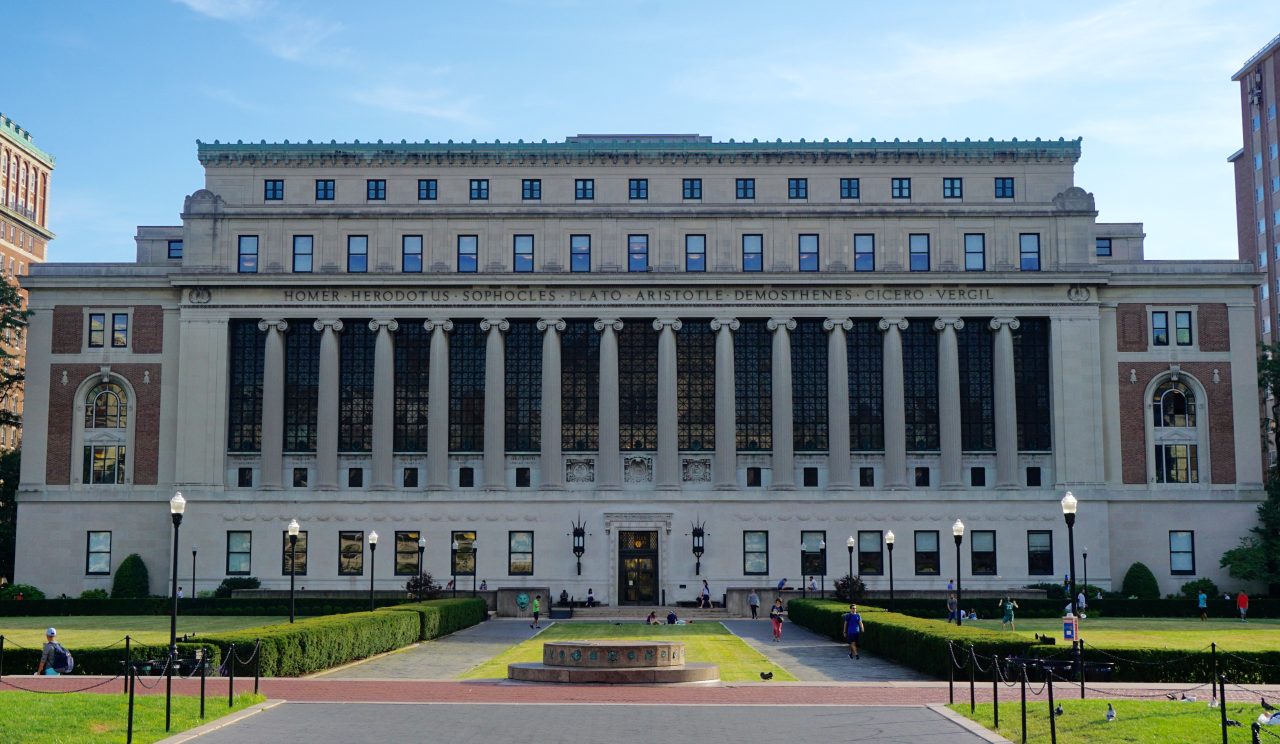
The book, Wives and Work: Islamic Law and Ethics Before Modernity, published in 2022 by Columbia University Press, is a compelling and intellectually rigorous work that broadly contributes significantly to Islamic studies and gender studies.

Marion Holmes Katz’s meticulous research and refined analysis dismantle stereotypes and offer a fresh perspective on the complex realities of Muslim women’s lives. By engaging with Islamic legal and ethical traditions, the author not only deepens our understanding of the past but also provides a platform for critical reflections on the contemporary challenges and possibilities surrounding women’s roles as wives and their engagement in the workforce within Muslim-majority societies.

The book adopts a well-structured framework with an elaborate introduction followed by four body chapters and concludes with a thoughtful synthesis. Each chapter is dedicated to the diversity and development of fiqh discussion of domestic labour for the respective periods of the four Sunni schools of law.

The first chapter emphasises the formative period of Islamic law (8th-9th century CE) with a profound exploration of the Islamic literary corpus reflecting the social realities of the early Islamic community, then focusing heavily on wives’ domestic labour in the Maliki legal school. 

Moving into the 10th century CE, the second chapter of the book examined the issue of domestic labour through the lens of Shafii scholar Abul Hasan al-Mawardi using his legal manual, Al-hawi al-Kabir, as a paradigm for deconstruction but at the same provided a captivating contrast through his ethical manual Adab al dunya wal din.

Chapter three navigates into the intellectual realm of the Hanafi school of law, specifically focusing on the legal manual Al-Mabsut by the esteemed Hanafi scholar al-Sarakhsi. This comprehensive investigation illuminates al-Sarakhsi’s profound analysis and interpretations pertaining to domestic labour, offering an in-depth understanding of the Hanafi school’s intricate perspectives.

Geographically and temporally shifting to the post-classical period in Damascus, chapter four directs its attention to the Hanbali school of law. The focal point of analysis lies in a meticulous exploration of Ibn Qudama’s seminal work, which would later face extensive challenges from the visionary scholar Ibn Taymiyyah. Ibn Taymiyyah’s radical approach to the subject matter promotes a ground-breaking and transformative vision of the ethics of marriage, firmly rooted in the Qur’an and hadith traditions.

Time to compensate El-Rufa’i with juicy post – Muric tells Tinubu

By Uzair Adam Imam

The Muslim Rights Concern (MURIC) has called on the President-elect, Bola Ahmed Tinubu, to reward Governor Nasir El-Rufa’i of Kaduna State with a juicy post for his enormous contribution towards the attainment of Tinubu’s success in the 2023 presidential elections.

MURIC made this passionate plea on behalf of El-Rufa’i in a statement by its Executive Director, Professor Ishaq Akintola, on Monday.

Akintola stated that MURIC deemed it germane to remind Tinubu of the need to pay debts owed and appreciate those who made his current status a fait accompli. 

According to him, this is important in order to start sowing the seed of success for the incoming administration as well as to secure a strong foothold for 2027.

He further stated that El-Rufa’i should reap the rewards for standing between those in the corridor of power and their inglorious choices. 

The statement read, “As the days inch closer to the inauguration of the new administration of Bola Ahmed Tinubu as President of the Federal Republic of Nigeria and Commander-in-Chief of the Nigerian Armed Forces, the Nigerian political spectrum has been inundated with power struggle intrigues and post allocation schemes. 

“This is not new to us since we know that failure is an orphan, but winners are always surrounded by all and sundry.

“However, we deem it germane to remind the President-Elect of the need to pay debts owed and appreciate those who made his current status a fait accompli. This is important in order to start sowing the seed of success for the incoming administration as well as to secure a strong foothold for 2027.

“Gratitude is a major characteristic of a good Muslim. Allah says in the Glorious Qur’an, “If you are grateful, I will increase my favours on you…” (Qur’an 14:7). If the President-Elect shows appreciation to the ‘Noble Dozen’ from the North, he will enjoy more of their solidarity.

“It is noteworthy that the ‘Noble Dozen’ (i.e. the twelve governors who insisted that power must shift to the South) was led by Governor Nasir El-Rufai of Kaduna State. There is no Nigerian who is unaware of the unique support and unequalled solidarity given by this Northern group to the President-Elect. El-Rufai, in particular, left his palatial office in Kaduna to spend days in Abuja.

“His contribution to our victory, the victory of the Muslim-Muslim ticket, is unquantifiable. He became the mouthpiece of the Muslim-Muslim ticket camp, moving from one media house to another. We must not allow all these to go in vain.

“In particular, we must remember the risk El-Rufai took as he stood between those in the corridor of power and their inglorious choices. We must not forget his bold confrontation of the central bank governor over the latter’s misguided, ill-fated and accursed naira discolouring.  

“It will beat all imaginations and expectations, particularly among Muslims if El-Rufai is not considered for a juicy post in the cabinet of Bola Ahmed Tinubu. We have played national politics the way it should be played. But now is the time to be focused. Choice positions should not be allowed to go to political charlatans, fairweather friends, hypocrites and parasites. El-Rufai is a different cup of tea. He is tested and trusted. He is the icon of Northern dignity.

“To the President-Elect, we have this to say: guard very jealously the good relationship and the alliance between the North and the South West. It is a union steeped in historicity. Compensate the North for its dignity and integrity without being unfair to the rest of the country. 

“We bequeath you the burden of Nigeria. Your road will be rough, no doubt about that, but with prayers and your well-known administrative acumen and political sagacity, Almighty Allah will clear the bumps and roadblocks for you,” the statement added.

Tribute to my dear friend, Abdulaziz Ahmad Adam

By Ahmad Deedat Zakari

The last time I saw Abdulaziz was on the evening of Tuesday, May 2, 2023. He was on the way to the sick bay supported by Waziri and Albani. Nasir, the NAMLAS president, was also in their company. A bike was eventually called upon to convey them there. Sadly, that was the last time I saw him in flesh and soul. In his infinite wisdom, the Creator has decreed that “every soul shall taste death.” And the time came for Abdulaziz on the evening of Thursday, May 4, 2023.

As Muslims, we believe and submit to the will of Allah. However, a week after Abdulaziz’s demise, I still live in self-denial. Everything seems too sudden, and I still wish it is a terrible nightmare. It’s somewhat unfathomable that he did not complete the examinations he so much prepared for and started with us. Like many final-year law students, Abdulaziz’s mind was already in the Nigerian Law School, and preparation was underway. His demise was the least expected way to say goodbye.   

I have known Abdulaziz since we assumed academic activities in January 2017 at the Faculty of Law. However, we became closer in our fourth year when we shared room 90 of Ali Akilu hostel. He would spend much of his time listening to scholars of comparative religion. Videos of Zakir Naik and the late Sheikh Ahmad Deedat dominated his phone gallery. He had an unquenchable thirst for the study of comparative religion, and he was ever ready to share this knowledge.

A week before his death, he had addressed us after morning prayers in Al-Muntada Mosque and emphasised the need to study comparative religion. He undertook to take the course to willing participants in the second semester.

Like many of us, Abdulaziz was a man with dreams for a great future. When we lived together, he narrated the ordeals that led him to study law after he completed NCE and became a certified teacher. That’s a pretty long story, but the bottom line is that he had a reason to work hard, and he worked very hard. He knew where he was going and what it took to get there, and he was set for the journey to greatness at dawn. Sadly but with gratitude to the will of the Almighty, his light was blown out in his prime.

Allah endears his loved ones to people. Abdulaziz was loved by many. This was evident in the crowd that graced his funeral. His teachers, colleagues, friends, students and even non-Muslims were all at Haruna Danja Mosque to bid him farewell. The love the people had for him did not end with him; it extended to his immediate family.

A few days after his death, classmates and friends raised more than half a million for his wife and the two children he left behind. I think he is loved by Allah, who perfected his character and made him the darling of everyone whose path he had crossed. He always met all of us with a cheerful countenance, and he was never known for engaging in frivolities. As much as this is my opinion, I am not subjective. My opinion about him would not have been different if he were alive. 

Abdulaziz will be missed for many reasons and by many people. He left a positive mark on the lives of many. The local chapter of the Muslim Student Society of Nigeria (MSSN) of the Faculty of Law will miss him dearly. He had been a committed official since his admission to the faculty and was committed till his transition.

Abdulaziz’s teachers and classmates will miss him greatly. He was an exceptional student who spoke and asked questions in class when necessary. I remember vividly how he was asked to translate Suratul Kafirun by Professor Danladi in our last Jurisprudence and Legal Theory class. Unfortunately, that was just two weeks from his unanticipated exit. 

He also left a vacuum to be filled at the Kongo Campus Islamiyya, where he taught Tawhid, amongst other courses. His learned brothers at the Student Bench and Counsel, who had appeared before him while he was Khadi of the student judiciary, will miss his judicial wisdom and excellent understanding of Islamic Law.

Besides his family, whose pain at this difficult time is unimaginable, Abdulaziz will be in our pleasant memories for a long time. As the reality of his death sets in, I feel his absence. May Allah forgive him, forgive us, console us and take care of his family, ameen